


2 Samuel 12:18
Bible text: King James Version (1769 Blayney text) · Public domain
Bible text: King James Version with Strong's numbers · Public domain
Bible text: Berean Standard Bible · Public domain
Bible text: American Standard Version (1901) · Public domain
Bible text: World English Bible, Messianic edition · Public domain
Bible text: Geneva Bible (1599) · Public domain
Bible text: Young's Literal Translation · Public domain
- וַיְהִיvay·Hiand it wasH1961Conj-w ¦ V-Qal-ConsecImperf-3msVerb Qal Consecutive Imperfect 3rd Singular Masculineוַandיְהִיit was
- בַּיּוֹםbai·Yomon the dayH3117Prep-b ¦ N-msNoun Singular Masculine Absoluteבַּon theיּוֹםday
- הַשְּׁבִיעִיha·she·vi·'I<the> seventhH7637Art ¦ Adj-msAdjective Numerical Position Singular Masculine Absoluteהַ<the>שְּׁבִיעִיseventh
- וַיָּמָתvai·Ya·motand he diedH4191Conj-w ¦ V-Qal-ConsecImperf-3msVerb Qal Consecutive Imperfect 3rd Singular Masculineוַandיָּמָתhe died
- הַיָּלֶדhai·Ya·ledthe childH3206Art ¦ N-msNoun Singular Masculine Absoluteהַtheיָּלֶדchild
- וַיִּרְאוּvai·yir·'Uand they were afraidH3372Conj-w ¦ V-Qal-ConsecImperf-3mpVerb Qal Consecutive Imperfect 3rd Plural Masculineוַandיִּרְאוּthey were afraid
- עַבְדֵי'av·Dei[the] servants ofH5650N-mpcNoun Plural Masculine Construct
- דָוִדda·VidDavidH1732N-proper-mNoun Proper Masculine
- לְהַגִּידle·ha·Gidto tellH5046Prep-l ¦ V-Hiphil-InfVerb Hiphil Infinitive Constructלְtoהַגִּידtell
- לוֹloto <the> himPrep-l ¦ 3msSuffix Personal 3rd Singular Masculineלto <the>וֹhim
- כִּיkithatH3588PrtParticle Conditional
- מֵתmethe had diedH4191V-Qal-Perf-3msVerb Qal Perfect 3rd Singular Masculine
- הַיֶּלֶדhai·Ye·ledthe childH3206Art ¦ N-msNoun Singular Masculine Absoluteהַtheיֶּלֶדchild
- כִּיkiforH3588PrtParticle Conditional
- אָמְרוּ'a·me·Ruthey saidH559V-Qal-Perf-3cpVerb Qal Perfect 3rd Plural common gender
- הִנֵּהhi·Nehhere!H2009PrtParticle Interjection
- בִהְיוֹתvih·Yotwhen wasH1961Prep-b ¦ V-Qal-InfVerb Qal Infinitive Constructבִwhenהְיוֹתwas
- הַיֶּלֶדhai·Ye·ledthe childH3206Art ¦ N-msNoun Singular Masculine Absoluteהַtheיֶּלֶדchild
- חַיChaialiveH2416Adj-msAdjective Singular Masculine Absolute
- דִּבַּרְנוּdi·Bar·nuwe spokeH1696V-Piel-Perf-1cpVerb Piel Perfect 1st Plural common gender
- אֵלָיו'e·Lavto himH413Prep ¦ 3msPreposition Definiteאֵלָיtoוhim
- וְלֹאve·lo'and notH3808Conj-w ¦ NegParticle Negativeוְandלֹאnot
- שָׁמַעsha·Ma'he listenedH8085V-Qal-Perf-3msVerb Qal Perfect 3rd Singular Masculine
- בְּקוֹלֵנוּbe·ko·Le·nuto our voiceH6963Prep-b ¦ N-msc ¦ 1cpNoun Singular Masculine Constructבְּtoקוֹלֵvoiceנוּour
- וְאֵיךְve·'Eikhand how?H349Conj-w ¦ InterrogParticle Interrogativeוְandאֵיךְhow?
- נֹאמַרno·Marwill we sayH559V-Qal-Imperf-1cpVerb Qal Imperfect 1st Plural common gender
- אֵלָיו'e·Lavto himH413Prep ¦ 3msPreposition Definiteאֵלָיtoוhim
- מֵתmethe has diedH4191V-Qal-Perf-3msVerb Qal Perfect 3rd Singular Masculine
- הַיֶּלֶדhai·Ye·ledthe childH3206Art ¦ N-msNoun Singular Masculine Absoluteהַtheיֶּלֶדchild
- וְעָשָׂהve·'a·Sahand he will doH6213Conj-w ¦ V-Qal-ConsecPerf-3msVerb Qal Consecutive Perfect 3rd Singular Masculineוְandעָשָׂהhe will do
- רָעָהra·'AhharmH7451N-fsNoun Singular Feminine Absolute
English is a literal word-by-word gloss of the Hebrew, not the KJV's wording. Why?
This is the original text the KJV's translators worked from — each Hebrew word with its own literal English meaning in this verse, prepared by scholars at Tyndale House, Cambridge. The KJV translates whole sentences, not word by word, so its wording differs: one Hebrew word can become several English words, and the KJV may choose “the LORD” where the gloss reads “Yahweh”. Both are faithful — they answer different questions. For the KJV's own rendering, switch to the KJV text.
Details
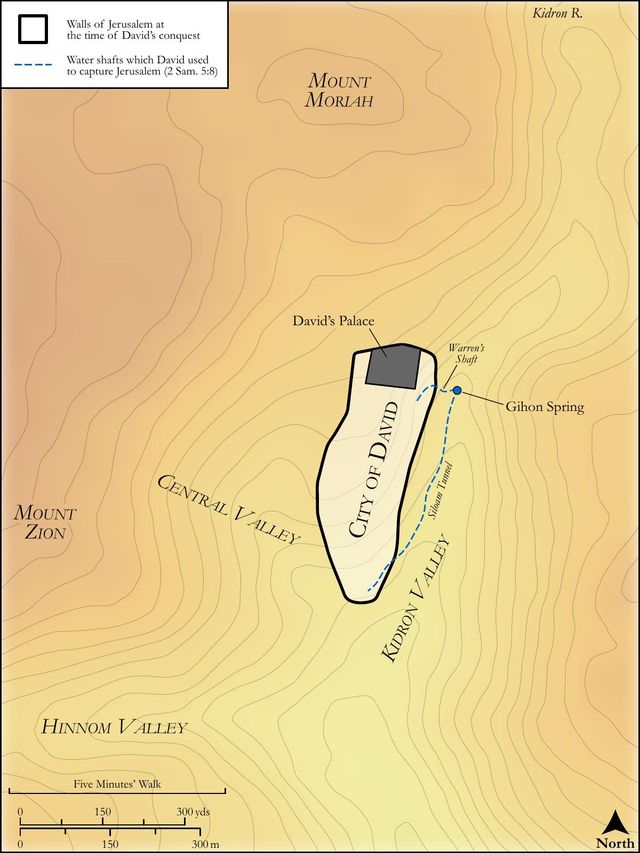
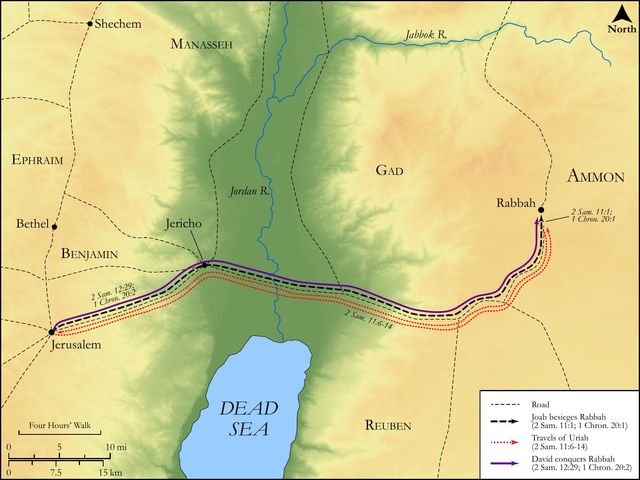
See on the biblical-era maps
Study this verse
Public-domain commentary
Matthew Henry
From his Commentary on the Whole Bible. Henry comments on passages, not single verses — this entry covers 2 Samuel 12:15–25. His three-level outline is real structure in the source text, so it is rendered as structure.
Nathan, having delivered his message, staid not at court, but went home, probably to pray for David, to whom he had been preaching. God, in making use of him as an instrument to bring David to repentance, and as the herald both of mercy and judgment, put an honour upon the ministry, and magnified his word above all his name. David named one of his sons by Bath-sheba Nathan, in honour of this prophet (Ch1 3:5), and it was that son of whom Christ, the great prophet, lineally descended, Luk 3:31. When Nathan retired, David, it is probable, retired likewise, and penned the 51st Psalm, in which (though he had been assured that his sin was pardoned) he prays earnestly for pardon, and greatly laments his sin; for then will true penitents be ashamed of what they have done when God is pacified towards them, Eze 16:63.
Here is, I. The child's illness: The Lord struck it, and it was very sick, perhaps with convulsions, or some other dreadful distemper, Sa2 12:15. The diseases and death of infants that have not sinned after the similitude of Adam's transgression, especially as they are sometimes sadly circumstanced, are sensible proofs of the original sin in which they are conceived.
II.David's humiliation under this token of God's displeasure, and the intercession he made with God for the life of the child (Sa2 12:16, Sa2 12:17): He fasted, and lay all night upon the earth, and would not suffer any of his attendants either to feed him or help him up. This was an evidence of the truth of his repentance. For,
1.Hereby it appeared that he was willing to bear the shame of his sin, to have it ever before him, and to be continually upbraided with it; for this child would be a continual memorandum of it, both to himself and others, if he lived: and therefore he was so far from desiring its death, as most in such circumstances do, that he prayed earnestly for its life. True penitents patiently bear the reproach of their youth, and of their youthful lusts, Jer 31:19.
2.A very tender compassionate spirit appeared in this, and great humanity, above what is commonly found in men, especially men of war, towards little children, even their own; and this was another sign of a broken contrite spirit. Those that are penitent will be pitiful.
3.He discovered, in this, a great concern for another world, which is an evidence of repentance. Nathan had told him that certainly the child should die; yet, while it is in the reach of prayer, he earnestly intercedes with God for it, chiefly (as we may suppose) that its soul might be safe and happy in another world, and that his sin might not come against the child, and that it might not fare the worse for that in the future state.
4.He discovered, in this, a holy dread of God and of his displeasure. He deprecated the death of the child chiefly as it was a token of God's anger against him and his house, and was inflicted in performance of a threatening; therefore he prayed thus earnestly that, if it were the will of God, the child might live, because that would be to him a token of God's being reconciled to him. Lord, chasten me not in thy hot displeasure. Psa 6:1.
III.The death of the child:
It died on the seventh day (Sa2 12:18), when it was seven days old, and therefore not circumcised, which David might perhaps interpret as a further token of God's displeasure, that it died before it was brought under the seal of the covenant; yet he does not therefore doubt of its being happy for the benefits of the covenant do not depend upon the seals. David's servants, judging of him by themselves, were afraid to tell him that the child was dead, concluding that then he would disquiet himself most of all; so that he knew not till he asked, Sa2 12:19.
IV.David's wonderful calmness and composure of mind when he understood the child was dead. Observe,
1.What he did.
(1.)He laid aside the expressions of his sorrow, washed and anointed himself, and called for clean linen, that he might decently appear before God in his house.
(2.)He went up to the tabernacle and worshipped, like Job when he heard of the death of his children. He went to acknowledge the hand of God in the affliction, and to humble himself under it, and to submit to his holy will in it, to thank God that he himself was spared and his sin pardoned, and to pray that God would not proceed in his controversy with him, nor stir up all his wrath. Is any afflicted? Let him pray. Weeping must never hinder worshipping.
(3.)Then he went to his own house and refreshed himself, as one who found benefit by his religion in the day of his affliction; for, having worshipped, he did eat, and his countenance was no more sad.
2.The reason he gave for what he did. His servants thought it strange that he should afflict himself so for the sickness of the child and yet take the death of it so easily, and asked him the reason of it (Sa2 12:21), in answer to which he gives this plain account of his conduct,
(1.)That while the child was alive he thought it his duty to importune the divine favour towards it, Sa2 12:22. Nathan had indeed said the child should die, but, for aught that he knew, the threatening might be conditional, as that concerning Hezekiah: upon his great humiliation and earnest prayer, he that had so often heard the voice of his weeping might be pleased to reverse the sentence, and spare the child: Who can tell whether God will yet be gracious to me? God gives us leave to be earnest with him in prayer for particular blessings, from a confidence in his power and general mercy, though we have no particular promise to build upon: we cannot be sure, yet let us pray, for who can tell but God will be gracious to us, in this or that particular? When our relations and friends have fallen sick, the prayer of faith has prevailed much; while there is life there is hope, and, while there is hope, there is room for prayer.
(2.)That now the child was dead he thought it as much his duty to be satisfied in the divine disposal concerning it (Sa2 12:23): Now, wherefore should I fast? Two things checked his grief: - [1.] I cannot bring him back again; and again, He shall not return to me. Those that are dead are out of the reach of prayer; nor can our tears profit them. We can neither weep nor pray them back to this life. Wherefore then should we fast? To what purpose is this waste? Yet David fasted and wept for Jonathan when he was dead, in honour to him. [2.] I shall go to him. First, To him to the grave. Note, The consideration of our own death should moderate our sorrow at the death of our relations. It is the common lot; instead of mourning for their death, we should think of our own: and, whatever loss we have of them now, we shall die shortly, and go to them. Secondly, To him to heaven, to a state of blessedness, which even the Old Testament saints had some expectation of. Godly parents have great reason to hope concerning their children that die in infancy that it is well with their souls in the other world; for the promise is to us and to our seed, which shall be performed to those that do not put a bar in their own door, as infants do not. Favores sunt ampliandi - Favours received should produce the hope of more. God calls those his children that are born unto him; and, if they be his, he will save them. This may comfort us when our children are removed from us by death, they are better provided for, both in work and wealth, than they could have been in this world. We shall be with them shortly, to part no more.
V.The birth of Solomon.
Though David's marrying Bath-sheba had displeased the Lord, yet he was not therefore commanded to divorce her; so far from this that God gave him that son by her on whom the covenant of royalty should be entailed. Bath-sheba, no doubt, was greatly afflicted with the sense of her sin and the tokens of God's displeasure. But, God having restored to David the joys of his salvation, he comforted her with the same comforts with which he himself was comforted of God (Sa2 12:24): He comforted Bath-sheba. And both he and she had reason to be comforted in the tokens of God's reconciliation to them,
1.Inasmuch as, by his providence, he gave them a son, not as the former, who was given in anger and taken away in wrath, but a child graciously given, and written among the living in Jerusalem. They called him Solomon - peaceful, because his birth was a token of God's being at peace with them, because of the prosperity which was entailed upon him, and because he was to be a type of Christ, the prince of peace. God had removed one son from them, but now gave them another instead of him, like Seth instead of Abel, Gen 4:25. Thus God often balances the griefs of his people with comforts in the same thing wherein he hath afflicted them, setting the one over-against the other. David had very patiently submitted to the will of God in the death of the other child, and now God made up the loss of that, abundantly to his advantage, in the birth of this. The way to have our creature-comforts either continued or restored, or the loss of them made up some other way, is cheerfully to resign them to God.
2.Inasmuch as, by his grace, he particularly owned and favoured that son: The Lord loved him (Sa2 12:24 and Sa2 12:25), ordered him, by the prophet Nathan, to be called Jedidiah - Beloved of the Lord: though a seed of evil-doers (for such David and Bath-sheba were), yet so well ordered was the covenant, and the crown entailed by it, that it took away all attainders and corruption of blood, signifying that those who were by nature children of wrath and disobedience should, by the covenant of grace, not only be reconciled, but made favourites. And, in this name, he typified Jesus Christ, that blessed Jedidiah, the son of God's love, concerning whom God declared again and again, This is my beloved Son, in whom I am well pleased.
Continue studying 2 Samuel 12:18 across the web’s major study libraries — every link below opens this exact verse, chapter, or book on the destination site.
Read & Compare
 BibleGatewayThis verse in more than 200 translations and 70 languages.
 Bible.comThe YouVersion reader — hundreds of translations, reading plans, and highlights.
 ESV.orgCrossway's official English Standard Version reader.
 NET BibleThe NET translation with 60,000+ translators' notes on every rendering decision.
 STEP BibleTyndale House's free study tool — original text, vocabulary, and scholarly resources.
 BibliaLogos Bible Software's free web reader.
 USCCBThe New American Bible (Revised Edition) with the U.S. bishops' study notes.
Commentaries
 BibleHub CommentariesDozens of classic commentaries on this verse, gathered on one page.
 StudyLightMore than 100 commentary sets — the largest collection on the web.
 BibleRefPlain-English commentary on what this verse means, verse by verse.
 Enduring WordDavid Guzik's free commentary on this chapter, widely used by Bible teachers.
 Bible Study ToolsVerse commentary alongside Greek and Hebrew study aids.
Original Language & Research
- BibleHub InterlinearThe verse word by word — original language, transliteration, and English.
- BibleHub LexiconEvery word's original-language definition and Strong's entry.
 Blue Letter BibleDeep-study tools — Strong's numbers, concordance, and word studies.
 SefariaThe Hebrew text with Rashi and centuries of Jewish commentary.
Sermons, Hymns & Audio


TrulyRandomVerse is not affiliated with these sites and doesn’t control their content. They’re linked because they’re genuinely useful.
Summary
The somber culmination of God's judgment against King David's sin, as the infant son born of Bathsheba tragically dies on the seventh day of his illness. This pivotal verse captures the immediate aftermath, detailing the profound apprehension of David's servants who, having witnessed his intense grief, fasting, and unresponsiveness during the child's sickness, fear the king's reaction to the devastating news, anticipating an even greater outburst of sorrow, self-affliction, and potentially destructive despair. It stands as a powerful testament to the painful, though often redemptive, consequences that can follow even forgiven sin, highlighting both the unwavering nature of divine justice and the depth of human anguish in the face of loss.
Context
ShowHideLiterary Context
This verse serves as the tragic climax of a deeply consequential narrative arc in David's life, directly following his seven-day period of fervent fasting, weeping, and prayer for his sick child, as detailed in 2 Samuel 12:15-17. The preceding chapters, particularly 2 Samuel 11, meticulously recount David's egregious sins of adultery with Bathsheba and the calculated murder of her loyal husband, Uriah the Hittite. The prophet Nathan, acting as God's messenger, confronted David with a powerful parable in 2 Samuel 12:1-14, exposing his guilt and pronouncing God's severe judgment. While David's life was spared due to his sincere repentance (2 Samuel 12:13), Nathan prophesied that the "sword shall never depart from your house" (2 Samuel 12:10) and, most directly relevant to this verse, that the child born of Bathsheba would surely die (2 Samuel 12:14). Thus, 2 Samuel 12:18 represents the precise, painful fulfillment of Nathan's prophecy, setting the stage for David's surprising and counter-intuitive reaction in the subsequent verses (2 Samuel 12:19-23).
Historical & Cultural Context
In ancient Israel, the death of a child, especially an infant, was a profound and devastating tragedy, often interpreted through a theological lens as a consequence of sin or divine judgment, whether directly linked to parental transgression or as part of a broader covenantal framework. The "seventh day" mentioned in the text is significant; it could mark the culmination of a full week of the child's illness and David's intense mourning, or it might hold symbolic weight, representing completion or the end of a cycle. Fasting, sackcloth, and lying on the ground, as David engaged in, were common and deeply ingrained practices for expressing repentance, profound grief, or fervent intercession for divine favor. Kings, while possessing immense power, were also expected to demonstrate piety and humility before God, and their personal conduct had public implications. The servants' palpable fear of David's reaction is culturally understandable; a king's grief could be volatile, and delivering bad news to a monarch, particularly one as emotionally intense as David, was often a perilous and delicate task. Their concern for David's well-being, even amidst his difficult and unpredictable behavior, speaks to the complex dynamics of a royal household and the personal bonds that could form between a king and his retinue.
Key Themes
ShowHideThis verse powerfully underscores several major themes woven throughout the books of Samuel and the broader Old Testament narrative. Firstly, it highlights the unavoidable consequences of sin, demonstrating that while God offers complete forgiveness for genuine repentance, there are often painful earthly repercussions that cannot be undone or avoided (Numbers 32:23). David's grievous sin brought sorrow and death directly into his household, fulfilling the prophetic word with precision. Secondly, it emphasizes divine sovereignty and unwavering justice. The child's death on the precise "seventh day" confirms God's ultimate control over all events and the certainty of His declared judgments, even when they are severe and seemingly contradictory to human desires. Thirdly, the narrative reveals the depth of human grief and the compassion of others. The servants' apprehension reflects their profound understanding of David's potential anguish, illustrating the universal experience of sorrow in the face of loss and the delicate nature of delivering devastating news. Finally, the episode touches upon the nature and limits of prayer. While David prayed fervently and desperately, his intercession did not alter God's specific decree in this instance, teaching that prayer is not a means to manipulate God's will but an act of communion, submission, and trust in His ultimate, often mysterious, purposes. This prepares the reader for David's later acceptance of God's will in 2 Samuel 12:20-23.
Exposition and Analysis
ShowHideKey Word Analysis
ShowHideThe verb H4191 (mûwth) signifies a literal or figurative cessation of life. In this context, it is the stark, undeniable reality of the infant's physical death, marking the tragic fulfillment of divine judgment. It conveys not just the biological end, but the profound finality and the crushing weight of loss that accompanies it, especially when it is seen as a direct consequence of sin.
The verb H3372 (yârêʼ) indicates a deep sense of dread, terror, or apprehension. It's more than mere worry; it speaks to a profound fear of David's potential reaction, suggesting they anticipated an outburst of uncontrollable grief, rage, or even self-harm. This fear highlights the volatile nature of David's emotional state and the precarious position of those serving a powerful, yet deeply troubled, monarch.
The verb H7451 (raʻ), often translated as "evil" or "bad," here conveys a state of profound affliction, distress, and emotional anguish. The servants' rhetorical question, "how will he then vex himself," implies their fear that David would be utterly shattered, overwhelmed by sorrow, and potentially engage in extreme, self-destructive, or irrational behavior. It points to a deep, internal suffering that goes beyond mere annoyance, suggesting a complete breakdown.
Verse Breakdown
ShowHide"And it came to pass on the seventh day, that the child died."
This opening clause delivers the devastating news with stark brevity, marking the tragic and precise fulfillment of Nathan's prophecy in 2 Samuel 12:14. The "seventh day" emphasizes the duration of David's intense intercession and the finality of God's judgment, underscoring that despite David's fervent prayers and repentance, the consequence of his sin remained.
"And the servants of David feared to tell him that the child was dead"
This clause immediately shifts focus to the profound apprehension of David's inner circle. Having witnessed his extreme and unconventional behavior during the child's illness—his intense fasting, lying on the ground, and refusal to eat—they are now paralyzed by the daunting task of delivering the ultimate bad news, fearing a catastrophic reaction from the king.
"for they said, Behold, while the child was yet alive, we spake unto him, and he would not hearken unto our voice"
This provides the rationale for their fear. It recounts their previous attempts to comfort David or persuade him to eat during the child's sickness. David was so consumed by grief and desperate intercession that he was completely unresponsive to their counsel. This prior experience of his unyielding distress made them acutely aware of his emotional fragility and the potential for a far worse response.
"how will he then vex himself, if we tell him that the child is dead?"
This rhetorical question encapsulates the servants' deep concern and illustrates their understanding of David's character. They correctly surmised that if David was already so inconsolable and self-afflicting while there was still a glimmer of hope, the news of the child's death would push him to an even greater, perhaps uncontrollable, state of emotional anguish, despair, or even destructive behavior. The term "vex himself" here implies a profound, overwhelming, and potentially harmful emotional collapse.
Literary Devices
ShowHideThe passage employs several potent literary devices to heighten the dramatic tension and emotional impact of the narrative. Foreshadowing is subtly present in the servants' apprehension, which builds suspense regarding David's anticipated reaction, even before it is revealed. Their rhetorical question, "how will he then vex himself," serves as a powerful instance of pathos, appealing directly to the reader's emotions by highlighting the depth of David's potential sorrow and the servants' compassionate, yet fearful, concern for their king. The stark contrast between David's intense, public mourning while the child was alive and the servants' expectation of an even greater "vexation" upon death creates a subtle sense of irony, especially when juxtaposed with David's actual, surprising and composed reaction in the subsequent verses. The narrative's terse, direct reporting of the child's death, immediately followed by the detailed description of the servants' fear and their internal dialogue, utilizes juxtaposition to emphasize the gravity of the event and the profound human response to divine judgment.
Theological and Thematic Connections
ShowHide2 Samuel 12:18 serves as a stark and sobering reminder that while God's forgiveness is complete and immediate upon sincere repentance, the earthly consequences of sin are not always immediately removed. This principle, often termed "natural consequences" or "divine discipline," underscores God's unwavering justice and the integrity of His moral order in the world. David's profound suffering, though a direct result of his own actions, also positions him as a figure who experiences the full weight of human brokenness and the painful reality that even those deeply loved and chosen by God are not exempt from the repercussions of their choices. This episode highlights the importance of understanding God's character as both merciful and just, and the necessity of humbly accepting His will even in the face of profound loss and unfulfilled desires, trusting in His ultimate wisdom.
Reflection and Application
ShowHideThe tragic death of David's child, a direct and painful consequence of his sin, offers a profound and challenging lesson for believers today. It compels us to confront the reality that sin, even when genuinely repented of and forgiven by God, can leave lasting scars and bring painful, often far-reaching, consequences into our lives and the lives of those around us. This is not to suggest a lack of God's boundless grace, but rather to emphasize the profound seriousness of our choices and the integrity of God's moral universe. We are called to genuine, heartfelt repentance, trusting fully in God's mercy and forgiveness, yet also to cultivate a humble acceptance of the consequences that may follow, understanding them as part of God's refining process. This narrative also speaks powerfully to the nature of grief and the compassion required when ministering to those in deep sorrow. Just as David's servants feared his reaction, we are reminded to approach those in anguish with sensitivity, understanding, wisdom, and a willingness to simply be present, allowing space for their pain while offering comfort rooted in God's enduring presence and love. Ultimately, this passage invites us to trust in God's sovereign plan, even when it involves suffering and loss, knowing that He works all things for the good of those who love Him, even through the crucible of consequence.
Questions for Reflection
ShowHideFAQ
ShowHideWhy did God allow the child to die if David had already repented and been forgiven?
ShowHideGod's forgiveness of David's sin (adultery and murder) was indeed immediate and complete upon David's confession, as explicitly stated in 2 Samuel 12:13. However, divine forgiveness of the guilt of sin does not always negate the earthly consequences of sin. Nathan's prophecy in 2 Samuel 12:10-14 clearly outlined that while David's life would be spared, the "sword shall never depart from your house," and the child born of this illicit union would die. This demonstrates God's unwavering justice and the seriousness with which He views sin, especially in His chosen leaders. The child's death served as a public demonstration of the severe repercussions of David's actions, upholding God's moral law and ensuring that David, and all of Israel, understood the gravity of what had occurred. It was a painful, yet ultimately redemptive, form of divine discipline, designed to refine David's character, deepen his understanding of sin's cost, and teach him, and future generations, about the integrity of God's word and the necessity of obedience.
Christ-Centered Fulfillment
ShowHideWhile 2 Samuel 12:18 vividly portrays the painful consequences of sin and the weight of divine judgment, it also subtly points forward to the ultimate solution and hope found in Jesus Christ. David's fervent, yet ultimately unsuccessful, intercession for his child highlights the limitations of human effort and the unyielding nature of divine decrees against sin. This contrasts sharply with the perfect and eternally effective intercession of Jesus Christ, who, as the Lamb of God who takes away the sin of the world, bore the full consequences of humanity's sin on the cross, satisfying divine justice once and for all (Romans 3:25-26). Unlike David's child, whose death was a consequence of another's sin, Jesus, the innocent and righteous Son, willingly laid down His life to atone for the sins of many (Isaiah 53:5-6). Furthermore, David's eventual acceptance of God's sovereign will and his hope of being reunited with his child in the afterlife (2 Samuel 12:23) foreshadows the glorious resurrection hope offered uniquely through Christ. In Jesus, God's justice and mercy perfectly converge, offering not just forgiveness of guilt but also the power to overcome sin's destructive consequences and the promise of eternal life, where sorrow, pain, and death are ultimately vanquished forever (Revelation 21:4).