


2 Samuel 12:19
Bible text: King James Version (1769 Blayney text) · Public domain
Bible text: King James Version with Strong's numbers · Public domain
Bible text: Berean Standard Bible · Public domain
Bible text: American Standard Version (1901) · Public domain
Bible text: World English Bible, Messianic edition · Public domain
Bible text: Geneva Bible (1599) · Public domain
Bible text: Young's Literal Translation · Public domain
- וַיַּרְאvai·Yar'and he sawH7200Conj-w ¦ V-Qal-ConsecImperf-3msVerb Qal Consecutive Imperfect 3rd Singular Masculineוַandיַּרְאhe saw
- דָּוִדda·VidDavidH1732N-proper-mNoun Proper Masculine
- כִּיkithatH3588PrtParticle Conditional
- עֲבָדָיו'a·va·Davhis servantsH5650N-mpc ¦ 3msNoun Plural Masculine Constructעֲבָדָיservantsוhis
- מִתְלַחֲשִׁיםmit·la·cha·Shim[were] whispering to one anotherH3907V-Hithpael-Prtcpl-mpVerb Hithpael Participle Plural Masculine Absolute
- וַיָּבֶןvai·Ya·venand he understoodH995Conj-w ¦ V-Qal-ConsecImperf-3msVerb Qal Consecutive Imperfect 3rd Singular Masculineוַandיָּבֶןhe understood
- דָּוִדda·VidDavidH1732N-proper-mNoun Proper Masculine
- כִּיkithatH3588PrtParticle Conditional
- מֵתmethe had diedH4191V-Qal-Perf-3msVerb Qal Perfect 3rd Singular Masculine
- הַיָּלֶדhai·Ya·ledthe childH3206Art ¦ N-msNoun Singular Masculine Absoluteהַtheיָּלֶדchild
- וַיֹּאמֶרvai·Yo·merand he saidH559Conj-w ¦ V-Qal-ConsecImperf-3msVerb Qal Consecutive Imperfect 3rd Singular Masculineוַandיֹּאמֶרhe said
- דָּוִדda·VidDavidH1732N-proper-mNoun Proper Masculine
- אֶל'eltoH413PrepPreposition
- עֲבָדָיו'a·va·Davhis servantsH5650N-mpc ¦ 3msNoun Plural Masculine Constructעֲבָדָיservantsוhis
- הֲמֵתha·Met¿ has he diedH4191Interrog ¦ V-Qal-Perf-3msVerb Qal Perfect 3rd Singular Masculineהֲ¿מֵתhas he died
- הַיֶּלֶדhai·Ye·ledthe childH3206Art ¦ N-msNoun Singular Masculine Absoluteהַtheיֶּלֶדchild
- וַיֹּאמְרוּvai·Yo·me·ruand they saidH559Conj-w ¦ V-Qal-ConsecImperf-3mpVerb Qal Consecutive Imperfect 3rd Plural Masculineוַandיֹּאמְרוּthey said
- מֵתMethe has diedH4191V-Qal-Perf-3msVerb Qal Perfect 3rd Singular Masculine
English is a literal word-by-word gloss of the Hebrew, not the KJV's wording. Why?
This is the original text the KJV's translators worked from — each Hebrew word with its own literal English meaning in this verse, prepared by scholars at Tyndale House, Cambridge. The KJV translates whole sentences, not word by word, so its wording differs: one Hebrew word can become several English words, and the KJV may choose “the LORD” where the gloss reads “Yahweh”. Both are faithful — they answer different questions. For the KJV's own rendering, switch to the KJV text.
Details
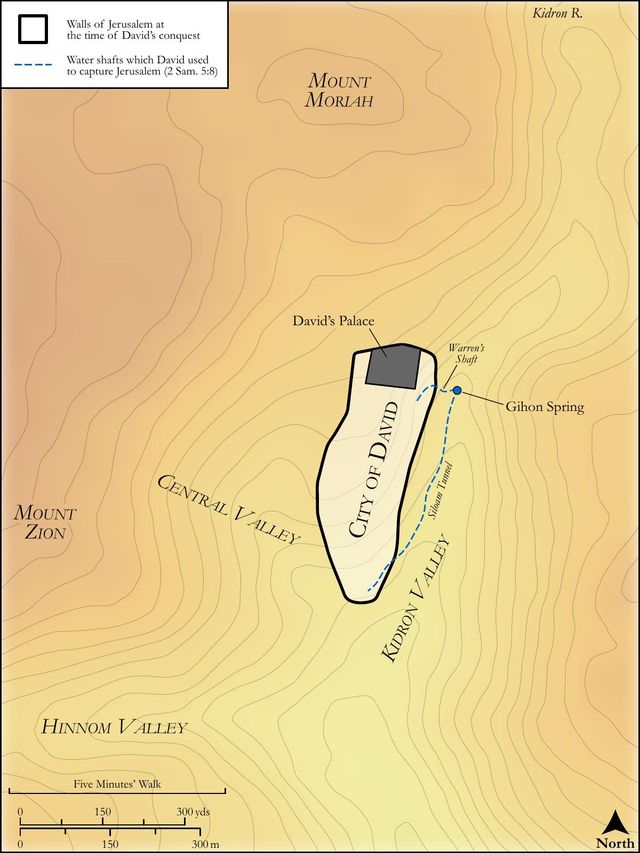
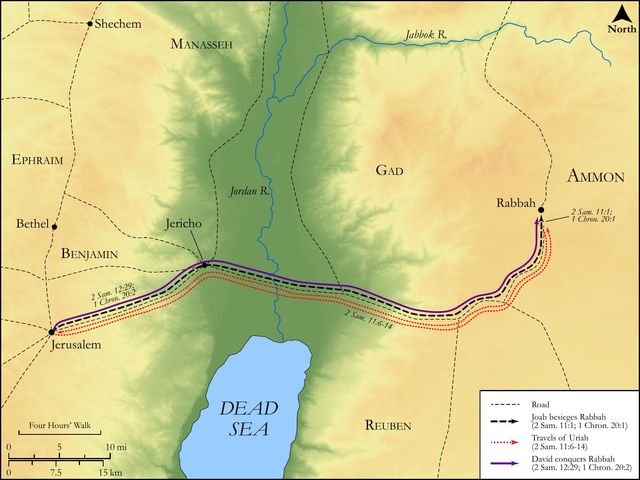
See on the biblical-era maps
Study this verse
Public-domain commentary
Matthew Henry
From his Commentary on the Whole Bible. Henry comments on passages, not single verses — this entry covers 2 Samuel 12:15–25. His three-level outline is real structure in the source text, so it is rendered as structure.
Nathan, having delivered his message, staid not at court, but went home, probably to pray for David, to whom he had been preaching. God, in making use of him as an instrument to bring David to repentance, and as the herald both of mercy and judgment, put an honour upon the ministry, and magnified his word above all his name. David named one of his sons by Bath-sheba Nathan, in honour of this prophet (Ch1 3:5), and it was that son of whom Christ, the great prophet, lineally descended, Luk 3:31. When Nathan retired, David, it is probable, retired likewise, and penned the 51st Psalm, in which (though he had been assured that his sin was pardoned) he prays earnestly for pardon, and greatly laments his sin; for then will true penitents be ashamed of what they have done when God is pacified towards them, Eze 16:63.
Here is, I. The child's illness: The Lord struck it, and it was very sick, perhaps with convulsions, or some other dreadful distemper, Sa2 12:15. The diseases and death of infants that have not sinned after the similitude of Adam's transgression, especially as they are sometimes sadly circumstanced, are sensible proofs of the original sin in which they are conceived.
II.David's humiliation under this token of God's displeasure, and the intercession he made with God for the life of the child (Sa2 12:16, Sa2 12:17): He fasted, and lay all night upon the earth, and would not suffer any of his attendants either to feed him or help him up. This was an evidence of the truth of his repentance. For,
1.Hereby it appeared that he was willing to bear the shame of his sin, to have it ever before him, and to be continually upbraided with it; for this child would be a continual memorandum of it, both to himself and others, if he lived: and therefore he was so far from desiring its death, as most in such circumstances do, that he prayed earnestly for its life. True penitents patiently bear the reproach of their youth, and of their youthful lusts, Jer 31:19.
2.A very tender compassionate spirit appeared in this, and great humanity, above what is commonly found in men, especially men of war, towards little children, even their own; and this was another sign of a broken contrite spirit. Those that are penitent will be pitiful.
3.He discovered, in this, a great concern for another world, which is an evidence of repentance. Nathan had told him that certainly the child should die; yet, while it is in the reach of prayer, he earnestly intercedes with God for it, chiefly (as we may suppose) that its soul might be safe and happy in another world, and that his sin might not come against the child, and that it might not fare the worse for that in the future state.
4.He discovered, in this, a holy dread of God and of his displeasure. He deprecated the death of the child chiefly as it was a token of God's anger against him and his house, and was inflicted in performance of a threatening; therefore he prayed thus earnestly that, if it were the will of God, the child might live, because that would be to him a token of God's being reconciled to him. Lord, chasten me not in thy hot displeasure. Psa 6:1.
III.The death of the child:
It died on the seventh day (Sa2 12:18), when it was seven days old, and therefore not circumcised, which David might perhaps interpret as a further token of God's displeasure, that it died before it was brought under the seal of the covenant; yet he does not therefore doubt of its being happy for the benefits of the covenant do not depend upon the seals. David's servants, judging of him by themselves, were afraid to tell him that the child was dead, concluding that then he would disquiet himself most of all; so that he knew not till he asked, Sa2 12:19.
IV.David's wonderful calmness and composure of mind when he understood the child was dead. Observe,
1.What he did.
(1.)He laid aside the expressions of his sorrow, washed and anointed himself, and called for clean linen, that he might decently appear before God in his house.
(2.)He went up to the tabernacle and worshipped, like Job when he heard of the death of his children. He went to acknowledge the hand of God in the affliction, and to humble himself under it, and to submit to his holy will in it, to thank God that he himself was spared and his sin pardoned, and to pray that God would not proceed in his controversy with him, nor stir up all his wrath. Is any afflicted? Let him pray. Weeping must never hinder worshipping.
(3.)Then he went to his own house and refreshed himself, as one who found benefit by his religion in the day of his affliction; for, having worshipped, he did eat, and his countenance was no more sad.
2.The reason he gave for what he did. His servants thought it strange that he should afflict himself so for the sickness of the child and yet take the death of it so easily, and asked him the reason of it (Sa2 12:21), in answer to which he gives this plain account of his conduct,
(1.)That while the child was alive he thought it his duty to importune the divine favour towards it, Sa2 12:22. Nathan had indeed said the child should die, but, for aught that he knew, the threatening might be conditional, as that concerning Hezekiah: upon his great humiliation and earnest prayer, he that had so often heard the voice of his weeping might be pleased to reverse the sentence, and spare the child: Who can tell whether God will yet be gracious to me? God gives us leave to be earnest with him in prayer for particular blessings, from a confidence in his power and general mercy, though we have no particular promise to build upon: we cannot be sure, yet let us pray, for who can tell but God will be gracious to us, in this or that particular? When our relations and friends have fallen sick, the prayer of faith has prevailed much; while there is life there is hope, and, while there is hope, there is room for prayer.
(2.)That now the child was dead he thought it as much his duty to be satisfied in the divine disposal concerning it (Sa2 12:23): Now, wherefore should I fast? Two things checked his grief: - [1.] I cannot bring him back again; and again, He shall not return to me. Those that are dead are out of the reach of prayer; nor can our tears profit them. We can neither weep nor pray them back to this life. Wherefore then should we fast? To what purpose is this waste? Yet David fasted and wept for Jonathan when he was dead, in honour to him. [2.] I shall go to him. First, To him to the grave. Note, The consideration of our own death should moderate our sorrow at the death of our relations. It is the common lot; instead of mourning for their death, we should think of our own: and, whatever loss we have of them now, we shall die shortly, and go to them. Secondly, To him to heaven, to a state of blessedness, which even the Old Testament saints had some expectation of. Godly parents have great reason to hope concerning their children that die in infancy that it is well with their souls in the other world; for the promise is to us and to our seed, which shall be performed to those that do not put a bar in their own door, as infants do not. Favores sunt ampliandi - Favours received should produce the hope of more. God calls those his children that are born unto him; and, if they be his, he will save them. This may comfort us when our children are removed from us by death, they are better provided for, both in work and wealth, than they could have been in this world. We shall be with them shortly, to part no more.
V.The birth of Solomon.
Though David's marrying Bath-sheba had displeased the Lord, yet he was not therefore commanded to divorce her; so far from this that God gave him that son by her on whom the covenant of royalty should be entailed. Bath-sheba, no doubt, was greatly afflicted with the sense of her sin and the tokens of God's displeasure. But, God having restored to David the joys of his salvation, he comforted her with the same comforts with which he himself was comforted of God (Sa2 12:24): He comforted Bath-sheba. And both he and she had reason to be comforted in the tokens of God's reconciliation to them,
1.Inasmuch as, by his providence, he gave them a son, not as the former, who was given in anger and taken away in wrath, but a child graciously given, and written among the living in Jerusalem. They called him Solomon - peaceful, because his birth was a token of God's being at peace with them, because of the prosperity which was entailed upon him, and because he was to be a type of Christ, the prince of peace. God had removed one son from them, but now gave them another instead of him, like Seth instead of Abel, Gen 4:25. Thus God often balances the griefs of his people with comforts in the same thing wherein he hath afflicted them, setting the one over-against the other. David had very patiently submitted to the will of God in the death of the other child, and now God made up the loss of that, abundantly to his advantage, in the birth of this. The way to have our creature-comforts either continued or restored, or the loss of them made up some other way, is cheerfully to resign them to God.
2.Inasmuch as, by his grace, he particularly owned and favoured that son: The Lord loved him (Sa2 12:24 and Sa2 12:25), ordered him, by the prophet Nathan, to be called Jedidiah - Beloved of the Lord: though a seed of evil-doers (for such David and Bath-sheba were), yet so well ordered was the covenant, and the crown entailed by it, that it took away all attainders and corruption of blood, signifying that those who were by nature children of wrath and disobedience should, by the covenant of grace, not only be reconciled, but made favourites. And, in this name, he typified Jesus Christ, that blessed Jedidiah, the son of God's love, concerning whom God declared again and again, This is my beloved Son, in whom I am well pleased.
Continue studying 2 Samuel 12:19 across the web’s major study libraries — every link below opens this exact verse, chapter, or book on the destination site.
Read & Compare
 BibleGatewayThis verse in more than 200 translations and 70 languages.
 Bible.comThe YouVersion reader — hundreds of translations, reading plans, and highlights.
 ESV.orgCrossway's official English Standard Version reader.
 NET BibleThe NET translation with 60,000+ translators' notes on every rendering decision.
 STEP BibleTyndale House's free study tool — original text, vocabulary, and scholarly resources.
 BibliaLogos Bible Software's free web reader.
 USCCBThe New American Bible (Revised Edition) with the U.S. bishops' study notes.
Commentaries
 BibleHub CommentariesDozens of classic commentaries on this verse, gathered on one page.
 StudyLightMore than 100 commentary sets — the largest collection on the web.
 BibleRefPlain-English commentary on what this verse means, verse by verse.
 Enduring WordDavid Guzik's free commentary on this chapter, widely used by Bible teachers.
 Bible Study ToolsVerse commentary alongside Greek and Hebrew study aids.
Original Language & Research
- BibleHub InterlinearThe verse word by word — original language, transliteration, and English.
- BibleHub LexiconEvery word's original-language definition and Strong's entry.
 Blue Letter BibleDeep-study tools — Strong's numbers, concordance, and word studies.
 SefariaThe Hebrew text with Rashi and centuries of Jewish commentary.
Sermons, Hymns & Audio


TrulyRandomVerse is not affiliated with these sites and doesn’t control their content. They’re linked because they’re genuinely useful.
Summary
Second Samuel 12:19 marks the somber and pivotal moment when King David, after a week of intense fasting and fervent prayer for his ailing child, intuitively discerns the child's death. Observing the hushed conversations and altered demeanor of his servants, David's deep perception leads him to directly inquire about the child's fate, receiving the devastating but definitive confirmation. This verse serves as the emotional climax of the narrative following David's grievous sin with Bathsheba and the prophetic judgment, signaling a transition from desperate supplication to a profound, albeit sorrowful, acceptance of divine will.
Context
ShowHideLiterary Context
This verse is strategically positioned as the culmination of a deeply tragic and consequential narrative arc unfolding in 2 Samuel 11 and 2 Samuel 12. Following David's adultery with Bathsheba and his calculated murder of Uriah, the prophet Nathan confronts David with a powerful parable and a direct prophecy of divine judgment in 2 Samuel 12:1-14. Specifically, 2 Samuel 12:10 declares that "the sword shall never depart from thine house," and 2 Samuel 12:14 pronounces the death of the child born of David's illicit union. Verses 2 Samuel 12:15-18 detail David's fervent, seven-day period of prostration, fasting, and pleading with God for the child's life. Verse 19 acts as the turning point, where David's desperate hope gives way to grim reality, setting the stage for his remarkable and unexpected shift in demeanor in 2 Samuel 12:20, moving from intense grief to worship and acceptance.
Historical & Cultural Context
In Israel and the nations round about, the health and succession of a king's offspring were matters of immense public and dynastic importance. The death of a child, particularly one born under such scandalous circumstances, carried significant weight and could be interpreted as a divine curse or judgment. While the general cultural practice might have involved public mourning and elaborate funeral rites, David's initial reaction of intense private supplication (fasting, lying on the ground) was a deeply personal act of humility and repentance before God, reflecting the gravity of his sin and the prophetic judgment. Servants in royal courts were acutely aware of their master's moods and the delicate nature of conveying bad news, especially to a powerful and potentially volatile king. Their "whispering" reflects this cultural sensitivity and fear of incurring the king's wrath, particularly given David's already distressed state and the sensitive nature of the news. The narrative highlights the stark reality that even a king, despite his power, was subject to divine judgment and the consequences of his actions.
Key Themes
ShowHideThis verse powerfully contributes to several overarching themes in 2 Samuel and the broader biblical narrative. Firstly, it underscores the theme of divine judgment and the immutable consequences of sin. Despite David's genuine repentance, the prophetic word of God concerning the child's death is fulfilled, illustrating that while God forgives sin and removes eternal condemnation, there are often painful, divinely ordained temporal consequences that follow, as highlighted in the principle of sowing and reaping found in Galatians 6:7. Secondly, it reveals David's keen perception and discernment, showcasing his intuitive understanding of human behavior and the gravity of the situation even before explicit confirmation. This demonstrates his wisdom and emotional intelligence, even in a state of profound distress. Thirdly, the verse sets the stage for David's profound grief and subsequent acceptance. His question, "Is the child dead?", reveals a desperate clinging to hope, but his immediate understanding and subsequent actions (as seen in 2 Samuel 12:20) demonstrate a remarkable capacity for surrendering to God's sovereign will, even amidst deep sorrow. This acceptance is a testament to his faith, even when God's answer is not what he desired, foreshadowing the hope found in God's ultimate plan of redemption.
Exposition and Analysis
ShowHideKey Word Analysis
ShowHideThe Hebrew word (לָחַשׁ, H3907) is a primitive root meaning "to whisper," "to mumble," or "to speak softly." It can also imply charming or conjuring. In this context, it signifies a low, guarded conversation, often used when conveying sensitive, difficult, or bad news that one is hesitant to speak aloud. The servants' use of whispering was a clear non-verbal cue, signaling their apprehension and the grim nature of the news they were withholding, a common practice in royal courts to avoid direct confrontation or angering the monarch.
This verb (בִּין, H995) means "to separate mentally," "to distinguish," or "to understand." It implies more than mere observation; it suggests a deep, intuitive comprehension of a situation, often involving mental processing, insight, and discernment. David didn't just see his servants whispering; he understood the implications of their hushed tones and changed demeanor, connecting it to the child's condition. This highlights his wisdom and emotional intelligence, even in his grief-stricken state.
This common Hebrew root (מֻות, H4191) means "to die" (literally or figuratively) or, causatively, "to kill." Its repeated use in this verse ("David perceived that the child was dead... Is the child dead? And they said, He is dead.") emphasizes the finality and undeniable reality of the child's passing. There is no ambiguity; the life is gone, underscoring the irreversible fulfillment of Nathan's prophecy and the tragic consequence of David's sin.
Verse Breakdown
ShowHide"But when David saw that his servants whispered"
This clause establishes David's keen observation and heightened awareness, even amidst his intense personal distress and focus on prayer. Despite his physical posture of supplication, he is still attuned to the subtle non-verbal cues of those around him. The servants' hushed conversation, likely accompanied by somber expressions, averted gazes, or a general air of solemnity, immediately signals to David that something significant, and likely negative, has occurred.
"David perceived that the child was dead"
This is the crucial moment of intuitive understanding and dawning realization. Based on his observation of their whispering and perhaps their general demeanor, David's mind connects the dots with remarkable speed and accuracy. He grasps the unspoken, painful truth: the child, for whom he had been desperately interceding and fasting, had succumbed to the illness. This perception is not a mere guess but a deep, almost certain, internal realization, a testament to his discernment.
"therefore David said unto his servants, Is the child dead?"
David's profound perception compels him to seek explicit, verbal confirmation of the dreadful truth he has already apprehended. His question is direct, blunt, and loaded with the immense weight of both a lingering, desperate hope and the dawning, crushing despair. It forces the servants to break their silence and confirm what he already knows in his heart, bringing the painful reality into the open and making it undeniable.
"And they said, He is dead."
This final, blunt statement provides the unequivocal and sorrowful confirmation. The servants' simple, direct answer removes all doubt, sealing the fate of the child and fulfilling Nathan's prophecy. The repetition of the word "dead" (first in David's perception, then in his question, and finally in their answer) underscores the absolute and tragic finality of the event, marking the end of David's period of intense intercession and the beginning of a new phase of grief and acceptance.
Literary Devices
ShowHideThe verse employs several powerful literary devices that enhance its dramatic impact and convey its profound meaning. The most prominent is Foreshadowing through the servants' "whispering." Their hushed tones and secretive communication immediately signal to the reader (and to David) that bad news is imminent, building palpable dramatic tension. This leads to an element of Dramatic Irony, where David (and the reader) understands the grim reality of the child's death before the servants explicitly state it. David's question, "Is the child dead?", is not born of ignorance but of a desire for confirmation of a truth he has already "perceived," creating a poignant moment of recognition and the inevitable release of the dreaded news. Furthermore, the powerful Repetition of the word "dead" ("David perceived that the child was dead... Is the child dead? And they said, He is dead.") serves to emphasize the absolute and irreversible finality of the child's passing, driving home the tragic consequence of David's sin and the fulfillment of God's unyielding judgment.
Theological and Thematic Connections
ShowHideThis verse profoundly illustrates the somber reality of consequences, even for the repentant. While David had confessed his sin and received God's forgiveness, the divine judgment pronounced by Nathan regarding the child's death was immutable. This highlights a critical theological principle: God's forgiveness removes the eternal condemnation of sin, but it does not always negate the temporal, earthly consequences. This painful outcome serves as a stark reminder of the seriousness of sin and its ripple effects, even upon the innocent. Yet, David's immediate perception and subsequent acceptance, as seen in the following verses, also point to the theme of trusting God's sovereignty even when His ways are painful and incomprehensible to human understanding. It's a testament to a faith that can mourn deeply but still submit to divine will.
Reflection and Application
ShowHideSecond Samuel 12:19 offers a profound lesson on facing difficult realities and the process of moving from desperate hope to acceptance. David's intuitive perception reminds us that sometimes, the truth is discernible even before it is explicitly spoken, requiring us to be attuned to our circumstances and the subtle cues around us. More importantly, this passage challenges us to consider our response when our fervent prayers are not answered in the way we desire. David had poured out his heart, fasted, and pleaded, yet the outcome was fixed. His subsequent actions (washing, anointing, changing clothes, going to the house of the Lord to worship, and then eating) demonstrate a remarkable pivot from intense supplication to a posture of trust and surrender to God's sovereign will. This passage encourages us to embrace the hard truths of life, to grieve authentically, but ultimately to find our peace and worship in God, even when His plans diverge from our deepest desires. It teaches us that true faith is not merely about receiving what we ask for, but about trusting God's character and wisdom regardless of the outcome.
Questions for Reflection
ShowHideFAQ
ShowHideWhy did David fast and pray so intensely if God had already declared the child would die?
ShowHideDavid's intense fasting and prayer, as described in 2 Samuel 12:16-17, reveal a profound understanding of God's character, particularly His mercy and sovereignty. While Nathan's prophecy was clear, David likely held onto a sliver of hope, believing that God, in His boundless compassion, could still relent if He chose to. This is consistent with other biblical accounts where repentance and fervent prayer lead to a change in a declared judgment (e.g., Nineveh in Jonah 3:10). David's actions were not a defiance of God's word but an earnest appeal to God's mercy, demonstrating his humility and his desperate desire for a different outcome. It was an act of faith, even if the ultimate answer was "no," and it allowed him to fully exhaust his human efforts before accepting the divine decree.
Christ-Centered Fulfillment
ShowHideWhile 2 Samuel 12:19 depicts the tragic consequence of human sin and the fulfillment of divine judgment, it also subtly points forward to the ultimate resolution of sin and death found in Jesus Christ. David's child dies as a direct result of sin, a poignant illustration that "the wages of sin is death" (Romans 6:23). Yet, David's subsequent acceptance and worship, despite his profound sorrow, foreshadow the greater hope. In Christ, we see the ultimate Lamb of God who bears the full consequence of sin, not His own, but ours (John 1:29). Jesus, the innocent Son, suffers and dies, not as a judgment against His parents, but as a substitutionary atonement for the sins of humanity (Isaiah 53:5). Through His death and resurrection, Christ conquers the power of sin and death, offering eternal life and true reconciliation with God, a reality far surpassing David's temporal acceptance of loss. Where David's child died, Christ died and rose again, offering the promise that "just as in Adam all die, so in Christ all will be made alive" (1 Corinthians 15:22). Thus, David's sorrowful perception of death in this verse is ultimately swallowed up in the victory of Christ, who brings life from death and hope from despair for all who believe (Romans 5:8).