


2 Samuel 12:29
Bible text: King James Version (1769 Blayney text) · Public domain
Bible text: Berean Standard Bible · Public domain
Bible text: American Standard Version (1901) · Public domain
Bible text: World English Bible, Messianic edition · Public domain
Bible text: Geneva Bible (1599) · Public domain
Bible text: Young's Literal Translation · Public domain
- וַיֶּאֱסֹףvai·ye·'e·Sofand he gatheredH622Conj-w ¦ V-Qal-ConsecImperf-3msVerb Qal Consecutive Imperfect 3rd Singular Masculineוַandיֶּאֱסֹףhe gathered
- דָּוִדda·VidDavidH1732N-proper-mNoun Proper Masculine
- אֶת'et<obj.>H853DirObjMParticle Object Indicator
- כָּלkolallH3605N-mscNoun Singular Masculine Construct
- הָעָםha·'Amthe peopleH5971Art ¦ N-msNoun Singular Masculine Absoluteהָtheעָםpeople
- וַיֵּלֶךְvai·Ye·lekhand he wentH1980Conj-w ¦ V-Qal-ConsecImperf-3msVerb Qal Consecutive Imperfect 3rd Singular Masculineוַandיֵּלֶךְhe went
- רַבָּתָהra·Ba·tahRabbah towardsH7237N-proper ¦ SfxNoun Proper LocationרַבָּתָRabbahהtowards
- וַיִּלָּחֶםvai·yi·La·chemand he foughtH3898Conj-w ¦ V-Niphal-ConsecImperf-3msVerb Niphal Consecutive Imperfect 3rd Singular Masculineוַandיִּלָּחֶםhe fought
- בָּהּbahagainst <the> itPrep-b ¦ 3fsSuffix Personal 3rd Singular Feminineבָּagainst <the>הּit
- וַיִּלְכְּדָהּVai·yil·ke·Dahand he captured itH3920Conj-w ¦ V-Qal-ConsecImperf-3ms ¦ 3fsVerb Qal Consecutive Imperfect 3rd Singular Masculineוַandיִּלְכְּדָhe capturedהּit
English is a literal word-by-word gloss of the Hebrew, not the KJV's wording. Why?
This is the original text the KJV's translators worked from — each Hebrew word with its own literal English meaning in this verse, prepared by scholars at Tyndale House, Cambridge. The KJV translates whole sentences, not word by word, so its wording differs: one Hebrew word can become several English words, and the KJV may choose “the LORD” where the gloss reads “Yahweh”. Both are faithful — they answer different questions. For the KJV's own rendering, switch to the KJV text.
Details
See on the biblical-era maps
Study this verse
Public-domain commentary
Matthew Henry
From his Commentary on the Whole Bible. Henry comments on passages, not single verses — this entry covers 2 Samuel 12:26–31.
We have here an account of the conquest of Rabbah, and other cities of the Ammonites. Though this comes in here after the birth of David's child, yet it is most probable that it was effected a good while before, and soon after the death of Uriah, perhaps during the days of Bath-sheba's mourning for him. Observe, 1. That God was very gracious in giving David this great success against his enemies, notwithstanding the sin he had been guilty of just at that time when he was engaged in this war, and the wicked use he had made of the sword of the children of Ammon in the murder of Uriah. Justly might he have made that sword, thenceforward, a plague to David and his kingdom; yet he breaks it, and makes David's sword victorious, even before he repents, that this goodness of God might lead him to repentance. Good reason had David to own that God dealt not with him according to his sins, Psa 103:10. 2. That Joab acted very honestly and honourably; for when he had taken the city of waters, the royal city, where the palace was, and from which the rest of the city was supplied with water (and therefore, upon the cutting off of that, would be obliged speedily to surrender), he sent to David to come in person to complete this great action, that he might have the praise of it, Sa2 12:26-28. Herein he showed himself a faithful servant, that sought his master's honour, and his own only in subordination to his, and left an example to the servants of the Lord Jesus, in every thing they do, to consult his honour. Not unto us, but to thy name, give glory. 3. That David was both too haughty and too severe upon this occasion, and neither so humble nor so tender as he should have been. (1.) He seems to have been too fond of the crown of the king of Ammon, Sa2 12:30. Because it was of extraordinary value, by reason of the precious stones with which it was set, David would have it set upon his head, though it would have been better to have cast it at God's feet, and at this time to have put his own mouth in the dust, under guilt. The heart that is truly humbled for sin is dead to worldly glory and looks upon it with a holy contempt. (2.) He seems to have been too harsh with his prisoners of war, Sa2 12:31. Taking the city by storm, after it had obstinately held out against a long and expensive siege, if he had put all whom he found in arms to the sword in the heat of battle, it would have been severe enough; but to kill them afterwards in cold blood, and by cruel tortures, with saws and harrows, tearing them to pieces, did not become him who, when he entered upon the government, promised to sing of mercy as well as judgment, Psa 101:1. Had he made examples of those only who had abused his ambassadors, or advised or assisted in it, that being a violation of the law of nations, it might have been looked upon as a piece of necessary justice for terror to other nations; but to be thus severe with all the cities of the children of Ammon (that is, the garrisons or soldiers of the cities) was extremely rigorous, and a sign that David's heart was not yet made soft by repentance, else the bowels of his compassion would not have been thus shut up - a sign that he had not yet found mercy, else he would have been more ready to show mercy.
Continue studying 2 Samuel 12:29 across the web’s major study libraries — every link below opens this exact verse, chapter, or book on the destination site.
Read & Compare
 BibleGatewayThis verse in more than 200 translations and 70 languages.
 Bible.comThe YouVersion reader — hundreds of translations, reading plans, and highlights.
 ESV.orgCrossway's official English Standard Version reader.
 NET BibleThe NET translation with 60,000+ translators' notes on every rendering decision.
 STEP BibleTyndale House's free study tool — original text, vocabulary, and scholarly resources.
 BibliaLogos Bible Software's free web reader.
 USCCBThe New American Bible (Revised Edition) with the U.S. bishops' study notes.
Commentaries
 BibleHub CommentariesDozens of classic commentaries on this verse, gathered on one page.
 StudyLightMore than 100 commentary sets — the largest collection on the web.
 BibleRefPlain-English commentary on what this verse means, verse by verse.
 Enduring WordDavid Guzik's free commentary on this chapter, widely used by Bible teachers.
 Bible Study ToolsVerse commentary alongside Greek and Hebrew study aids.
Original Language & Research
- BibleHub InterlinearThe verse word by word — original language, transliteration, and English.
- BibleHub LexiconEvery word's original-language definition and Strong's entry.
 Blue Letter BibleDeep-study tools — Strong's numbers, concordance, and word studies.
 SefariaThe Hebrew text with Rashi and centuries of Jewish commentary.
Sermons, Hymns & Audio


TrulyRandomVerse is not affiliated with these sites and doesn’t control their content. They’re linked because they’re genuinely useful.
Summary
Second Samuel 12:29 marks the triumphant conclusion of the protracted siege of Rabbah, the Ammonite capital, as King David personally leads the final assault and secures its capture. This pivotal moment signifies David's re-engagement with his kingly duties and military leadership following a period of profound personal and national crisis stemming from his sin with Bathsheba and Uriah. The verse underscores God's continued faithfulness to His covenant with David and Israel, demonstrating that even amidst severe personal consequences for sin, divine purposes for the kingdom can still be advanced through a repentant leader.
Context
ShowHideLiterary Context
This verse is strategically placed as the resolution to a significant military campaign that has been ongoing since 2 Samuel 10, and more immediately, as a counterpoint to David's profound personal moral failures detailed in 2 Samuel 11. The narrative arc moves from David's scandalous adultery and murder, followed by the prophet Nathan's searing divine rebuke in 2 Samuel 12:1-14, and the subsequent death of his child, to his decisive re-engagement with his kingly responsibilities. Joab, David's loyal general, had been leading the siege, but in a shrewd move recounted in 2 Samuel 12:26-28, he calls David to the front to ensure the king receives the credit for the final victory. This action solidifies David's authority and prestige after his recent moral decline. This verse, therefore, represents a crucial narrative shift, signaling David's return to active leadership and the continuation of God's plan for Israel despite human sin.
Historical & Cultural Context
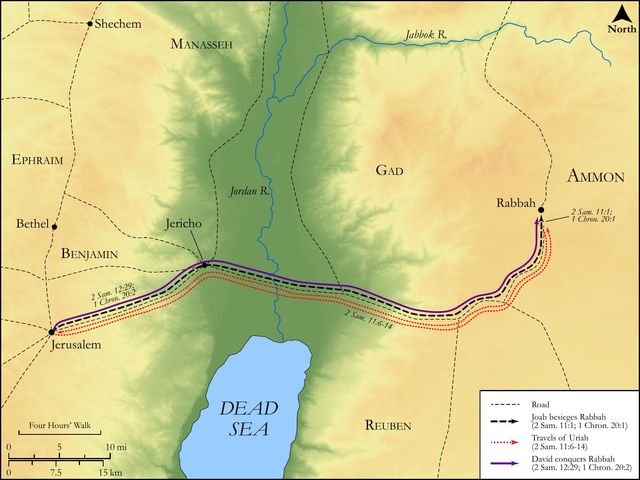
Rabbah, modern-day Amman, was the formidable capital of the Ammonites, a long-standing and often hostile enemy of Israel. Its capture represented a major military and strategic victory, securing Israel's eastern frontier and extending its regional influence. Warfare in that day frequently involved lengthy and arduous sieges, and the personal presence of the king was paramount for maintaining troop morale, legitimizing the campaign, and ultimately claiming the victory. Kings were expected to lead their armies into battle, and David's earlier absence from the battlefield in 2 Samuel 11:1 was a significant deviation from this cultural norm, setting the stage for his subsequent moral failures. His return to Rabbah, therefore, was not merely a military maneuver but a public demonstration of his resumption of kingly duties and a powerful reassertion of his authority in the eyes of his people and neighboring nations. The Ammonites' earlier egregious insult to David's envoys, as recounted in 2 Samuel 10:1-5, also made this conquest a matter of national honor and retribution.
Key Themes
ShowHideThis verse powerfully illustrates several key themes central to the narrative of 2 Samuel and David's reign. Firstly, it highlights the resumption of leadership and the restoration of purpose for David. Despite the painful and public consequences of his sin (the death of his child, the prophetic judgment, and future family strife), God's covenant with David (see 2 Samuel 7:12-16) remained intact, allowing him to continue fulfilling his divine calling as king. Secondly, it showcases divine grace amidst consequences. While David suffered profound personal loss, God continued to work through him for the good of His people, demonstrating that His sovereign plans are not ultimately thwarted by human failure, especially when accompanied by genuine repentance (as seen in 2 Samuel 12:13). Thirdly, the capture of Rabbah signifies a momentous military triumph and kingdom expansion, solidifying Israel's regional dominance under David's reign. Finally, Joab's insistence on David's presence (as detailed in 2 Samuel 12:28) underscores the importance of the king's visible leadership for the morale of the troops and the undeniable legitimacy of the victory.
Exposition and Analysis
ShowHideKey Word Analysis
ShowHideThis primitive root (H622) signifies assembling for any purpose, implying a deliberate and authoritative act of mobilization. In this context, it highlights David's active role in bringing together the military forces, taking command, and preparing for the decisive assault. It marks a significant contrast with his previous detachment from the war in 2 Samuel 11:1 and signals his re-engagement as the supreme commander.
This primitive root (H3898) means "to feed on" or "to consume," and by implication, "to battle" or "to make war." Its use here emphasizes direct, active combat. It indicates that David did not merely oversee the capture from a distance but personally participated in the final, decisive engagement. This active participation was crucial for his image as a warrior-king and for the morale of his troops, especially after the long and arduous siege.
This primitive root (H3920) means "to catch" (in a net, trap, or pit), and more generally, "to capture or occupy." This verb denotes a complete and decisive seizure or conquest. The use of this strong verb highlights the finality and success of David's campaign, bringing the long and arduous siege of Rabbah to a definitive and victorious end.
Verse Breakdown
ShowHide"And David gathered all the people together"
This phrase emphasizes David's direct and personal initiative in leading the final phase of the campaign. "All the people" refers to the entire Israelite fighting force, signifying a unified and comprehensive effort under the king's direct command. This act of gathering underscores his reassertion of leadership after a period of moral and personal turmoil and public disgrace.
"and went to Rabbah"
This highlights David's physical presence at the site of conflict. His journey to Rabbah, undertaken at Joab's strategic urging, was a public demonstration of his commitment to his kingly duties and his intention to personally oversee the conquest of the Ammonite capital. It was both a symbolic and a practical act of leadership, restoring his visible role as commander-in-chief.
"and fought against it"
This clause confirms David's active participation in the battle. He did not merely arrive to claim a victory already won but engaged directly in the combat necessary to subdue the city. This reinforces his identity as a warrior-king and underscores the intensity and personal involvement in the final assault.
"and took it"
This final, concise statement declares the successful capture of Rabbah. It signifies the culmination of the entire campaign, a decisive victory that secured Israel's eastern border, brought the Ammonite threat under Israelite control, and fulfilled the military objective. This act of "taking" represents the full and undeniable realization of the strategic goal.
Literary Devices
ShowHideThe verse employs clear Narrative Progression, moving sequentially through David's decisive actions: gathering, going, fighting, and taking. This creates a powerful sense of forward momentum and culminates in the successful conquest. There is also a significant implicit Contrast with David's earlier absence from the battlefield in 2 Samuel 11:1, highlighting his profound return to active, responsible leadership after a period of moral failure. The actions described, particularly "fought" and "took," serve as Metonymy for the entire military campaign and its successful conclusion, summarizing a complex series of events in concise, impactful terms. Furthermore, the capture of Rabbah itself functions as potent Symbolism, representing not only a significant military victory for Israel but also, for David, a symbolic step towards personal and national restoration, demonstrating God's continued, though chastened, favor on his reign.
Theological and Thematic Connections
ShowHideThe capture of Rabbah by David, immediately following the severe consequences of his sin with Bathsheba and Uriah, presents a profound theological paradox: God's continued use of an imperfect, even deeply flawed, leader. This victory is not an indication that David's sin was trivialized or that its consequences were negated; rather, it testifies to God's unwavering faithfulness to His covenant promises to David (as found in 2 Samuel 7) and His overarching plan for Israel. It underscores that while God judges sin, He also extends grace and allows for restoration for those who genuinely repent. This event demonstrates that God's purposes can be achieved even through broken vessels, highlighting His sovereignty and redemptive power. It teaches that divine forgiveness does not always remove earthly consequences, but it does open the door for continued usefulness in God's kingdom.
Reflection and Application
ShowHideDavid's story in 2 Samuel 12:29 offers a powerful message of hope and challenge for believers today. It reminds us that even after significant moral failures and the painful consequences that may follow, God's grace is sufficient to allow for restoration and continued purpose. David's return to lead the final assault on Rabbah, despite his recent personal humiliation and grief, exemplifies the importance of genuine repentance, humbly accepting the consequences of our actions, and faithfully re-engaging with the responsibilities God has entrusted to us. It highlights that God does not abandon His plans or His people because of our imperfections, but rather, He works through our brokenness when we turn back to Him in humility and faith. This verse encourages us to persevere in our callings, even when our past casts a long shadow, trusting in God's ability to redeem our stories and use us for His glory, demonstrating His power perfected in weakness.
Questions for Reflection
ShowHideFAQ
ShowHideWhy did Joab send for David to take Rabbah, even though Joab had done most of the fighting?
ShowHideJoab, David's shrewd and loyal general, understood the profound political and psychological importance of the king's presence. As described in 2 Samuel 12:26-28, he had already captured the "city of waters" (the vital water supply), effectively ensuring the main city's imminent fall. By sending for David, Joab ensured that the king would receive the glory and credit for the final victory. This was crucial for solidifying David's reign and preventing any potential challenges to his authority, especially after the recent scandal involving Bathsheba and Uriah. It was a strategic move to bolster David's public image as a strong and victorious leader and to maintain the proper hierarchy within the kingdom, ensuring that the ultimate triumph was attributed to the king, not merely his general.
Does this victory mean David was fully "forgiven" and free from all consequences of his sin?
ShowHideWhile David was indeed forgiven by God upon his genuine and heartfelt repentance (as indicated in 2 Samuel 12:13), this victory does not mean he was free from all consequences of his sin. The prophet Nathan explicitly declared that the sword would never depart from David's house, and public shame and family strife would follow (see 2 Samuel 12:10-12). These painful consequences tragically unfolded in the subsequent chapters of 2 Samuel, particularly through Absalom's rebellion and the internal strife within David's family (e.g., 2 Samuel 16:20-22). The capture of Rabbah demonstrates God's continued faithfulness to His covenant with David and His people, allowing His divine purposes to advance, even as David personally experienced the painful repercussions of his choices. Forgiveness addresses the guilt and eternal condemnation, but it does not always negate the temporal, natural, or even divinely appointed consequences of sin.
Christ-Centered Fulfillment
ShowHideDavid's conquest of Rabbah, where a flawed king ultimately secures victory and expands his earthly kingdom, serves as a powerful, albeit imperfect, foreshadowing of the ultimate King, Jesus Christ. David, despite his profound moral failures, was God's chosen king, a "man after God's own heart" (1 Samuel 13:14), whose reign brought peace and expansion to Israel. His victory over Rabbah speaks to the establishment and expansion of God's kingdom on earth through a human agent. However, Jesus, the true Son of David (Matthew 1:1), achieves a far greater and eternal conquest. He does not conquer through military might against earthly foes but through His perfect obedience, sacrificial death, and triumphant resurrection. Christ's victory is over sin, death, and the spiritual powers of darkness (Colossians 2:15; Hebrews 2:14-15). He is the King who perfectly fulfills all righteousness, whose reign is eternal, and whose kingdom is spiritual and universal (Revelation 19:11-16). Unlike David, who experienced consequences for his sin, Jesus, the spotless Lamb of God (John 1:29), bore the consequences of our sin, offering ultimate forgiveness and true restoration to all who believe. His triumph at the cross and resurrection is the definitive "taking" of the enemy's stronghold, establishing a kingdom that will never end.