


2 Samuel 12:30
Bible text: King James Version (1769 Blayney text) · Public domain
Bible text: King James Version with Strong's numbers · Public domain
Bible text: Berean Standard Bible · Public domain
Bible text: American Standard Version (1901) · Public domain
Bible text: World English Bible, Messianic edition · Public domain
Bible text: Geneva Bible (1599) · Public domain
Bible text: Young's Literal Translation · Public domain
- וַיִּקַּחvai·yi·Kachand he tookH3947Conj-w ¦ V-Qal-ConsecImperf-3msVerb Qal Consecutive Imperfect 3rd Singular Masculineוַandיִּקַּחhe took
- אֶת'et<obj.>H853DirObjMParticle Object Indicator
- עֲטֶרֶת'a·te·ret[the] crown ofH5850N-fscNoun Singular Feminine Construct
- מַלְכָּםmal·Kamtheir kingH4428N-msc ¦ 3mpNoun Singular Masculine Constructמַלְכָּkingםtheir
- מֵעַלme·'Alfrom onH5921Prep-m ¦ PrepPrepositionמֵfromעַלon
- רֹאשׁוֹro·Shohis headH7218N-msc ¦ 3msNoun Singular Masculine Constructרֹאשׁheadוֹhis
- וּמִשְׁקָלָהּu·mish·ka·Lahand its weightH4948Conj-w ¦ N-msc ¦ 3fsNoun Singular Masculine Constructוּandמִשְׁקָלָweightהּits
- כִּכַּרki·Kar[was] a talent ofH3603N-fscNoun Singular Feminine Construct
- זָהָבza·HavgoldH2091N-msNoun Singular Masculine Absolute
- וְאֶבֶןve·'E·venand a stoneH68Conj-w ¦ N-fsNoun Singular Feminine Absoluteוְandאֶבֶןa stone
- יְקָרָהye·ka·RahpreciousH3368Adj-fsAdjective Singular Feminine Absolute
- וַתְּהִיva·te·Hiand it wasH1961Conj-w ¦ V-Qal-ConsecImperf-3fsVerb Qal Consecutive Imperfect 3rd Singular Feminineוַandתְּהִיit was
- עַל'alonH5921PrepPreposition
- רֹאשׁrosh[the] head ofH7218N-mscNoun Singular Masculine Construct
- דָּוִדda·VidDavidH1732N-proper-mNoun Proper Masculine
- וּשְׁלַלu·she·Laland [the] plunder ofH7998Conj-w ¦ N-mscNoun Singular Masculine Constructוּandשְׁלַל[the] plunder of
- הָעִירha·'Irthe cityH5892Art ¦ N-fsNoun Singular Feminine Absoluteהָtheעִירcity
- הוֹצִיאho·Tzi'he brought outH3318V-Hiphil-Perf-3msVerb Hiphil Perfect 3rd Singular Masculine
- הַרְבֵּהhar·BehmuchH7235V-Hiphil-InfAbsVerb Hiphil Infinitive Absolute
- מְאֹדme·'OdveryH3966Adj-msAdjective Numerical Singular Masculine Absolute
English is a literal word-by-word gloss of the Hebrew, not the KJV's wording. Why?
This is the original text the KJV's translators worked from — each Hebrew word with its own literal English meaning in this verse, prepared by scholars at Tyndale House, Cambridge. The KJV translates whole sentences, not word by word, so its wording differs: one Hebrew word can become several English words, and the KJV may choose “the LORD” where the gloss reads “Yahweh”. Both are faithful — they answer different questions. For the KJV's own rendering, switch to the KJV text.
Details
See on the biblical-era maps
Study this verse
Public-domain commentary
Matthew Henry
From his Commentary on the Whole Bible. Henry comments on passages, not single verses — this entry covers 2 Samuel 12:26–31.
We have here an account of the conquest of Rabbah, and other cities of the Ammonites. Though this comes in here after the birth of David's child, yet it is most probable that it was effected a good while before, and soon after the death of Uriah, perhaps during the days of Bath-sheba's mourning for him. Observe, 1. That God was very gracious in giving David this great success against his enemies, notwithstanding the sin he had been guilty of just at that time when he was engaged in this war, and the wicked use he had made of the sword of the children of Ammon in the murder of Uriah. Justly might he have made that sword, thenceforward, a plague to David and his kingdom; yet he breaks it, and makes David's sword victorious, even before he repents, that this goodness of God might lead him to repentance. Good reason had David to own that God dealt not with him according to his sins, Psa 103:10. 2. That Joab acted very honestly and honourably; for when he had taken the city of waters, the royal city, where the palace was, and from which the rest of the city was supplied with water (and therefore, upon the cutting off of that, would be obliged speedily to surrender), he sent to David to come in person to complete this great action, that he might have the praise of it, Sa2 12:26-28. Herein he showed himself a faithful servant, that sought his master's honour, and his own only in subordination to his, and left an example to the servants of the Lord Jesus, in every thing they do, to consult his honour. Not unto us, but to thy name, give glory. 3. That David was both too haughty and too severe upon this occasion, and neither so humble nor so tender as he should have been. (1.) He seems to have been too fond of the crown of the king of Ammon, Sa2 12:30. Because it was of extraordinary value, by reason of the precious stones with which it was set, David would have it set upon his head, though it would have been better to have cast it at God's feet, and at this time to have put his own mouth in the dust, under guilt. The heart that is truly humbled for sin is dead to worldly glory and looks upon it with a holy contempt. (2.) He seems to have been too harsh with his prisoners of war, Sa2 12:31. Taking the city by storm, after it had obstinately held out against a long and expensive siege, if he had put all whom he found in arms to the sword in the heat of battle, it would have been severe enough; but to kill them afterwards in cold blood, and by cruel tortures, with saws and harrows, tearing them to pieces, did not become him who, when he entered upon the government, promised to sing of mercy as well as judgment, Psa 101:1. Had he made examples of those only who had abused his ambassadors, or advised or assisted in it, that being a violation of the law of nations, it might have been looked upon as a piece of necessary justice for terror to other nations; but to be thus severe with all the cities of the children of Ammon (that is, the garrisons or soldiers of the cities) was extremely rigorous, and a sign that David's heart was not yet made soft by repentance, else the bowels of his compassion would not have been thus shut up - a sign that he had not yet found mercy, else he would have been more ready to show mercy.
Continue studying 2 Samuel 12:30 across the web’s major study libraries — every link below opens this exact verse, chapter, or book on the destination site.
Read & Compare
 BibleGatewayThis verse in more than 200 translations and 70 languages.
 Bible.comThe YouVersion reader — hundreds of translations, reading plans, and highlights.
 ESV.orgCrossway's official English Standard Version reader.
 NET BibleThe NET translation with 60,000+ translators' notes on every rendering decision.
 STEP BibleTyndale House's free study tool — original text, vocabulary, and scholarly resources.
 BibliaLogos Bible Software's free web reader.
 USCCBThe New American Bible (Revised Edition) with the U.S. bishops' study notes.
Commentaries
 BibleHub CommentariesDozens of classic commentaries on this verse, gathered on one page.
 StudyLightMore than 100 commentary sets — the largest collection on the web.
 BibleRefPlain-English commentary on what this verse means, verse by verse.
 Enduring WordDavid Guzik's free commentary on this chapter, widely used by Bible teachers.
 Bible Study ToolsVerse commentary alongside Greek and Hebrew study aids.
Original Language & Research
- BibleHub InterlinearThe verse word by word — original language, transliteration, and English.
- BibleHub LexiconEvery word's original-language definition and Strong's entry.
 Blue Letter BibleDeep-study tools — Strong's numbers, concordance, and word studies.
 SefariaThe Hebrew text with Rashi and centuries of Jewish commentary.
Sermons, Hymns & Audio


TrulyRandomVerse is not affiliated with these sites and doesn’t control their content. They’re linked because they’re genuinely useful.
Summary
2 Samuel 12:30 marks the triumphant conclusion of the siege of Rabbah, the Ammonite capital, by King David. This verse powerfully depicts the immense spoils of war, most notably the Ammonite king's crown, weighing a talent of gold and adorned with precious stones, which was subsequently placed on David's head. This act profoundly symbolizes David's complete subjugation of the enemy, the expansion of his kingdom, and the tangible manifestation of divine favor and military success, even as David wrestled with the profound consequences of his recent grave sins.
Context
ShowHideLiterary Context
This verse serves as the climactic culmination of the military campaign against the Ammonites, specifically the arduous siege of Rabbah. It directly follows the strategic acumen of Joab, David's military commander, who, after capturing the city's vital water supply, shrewdly invited David to personally lead the final assault on the capital (as detailed in 2 Samuel 12:26-29). This ensured that King David received the full honor and credit for such a significant victory. However, the entire narrative of the Ammonite war is deeply and tragically intertwined with the preceding account of David's profound sin with Bathsheba and Uriah, narrated in 2 Samuel 11. The prophet Nathan's courageous confrontation and the subsequent pronouncement of divine judgment upon David's household (2 Samuel 12:1-15) immediately precede this grand military success. Consequently, 2 Samuel 12:30 stands as a complex and poignant moment, showcasing God's continued faithfulness to His covenant with David by granting military triumph, even as the bitter and far-reaching consequences of David's personal sin were beginning to unfold within his own family.
Historical & Cultural Context
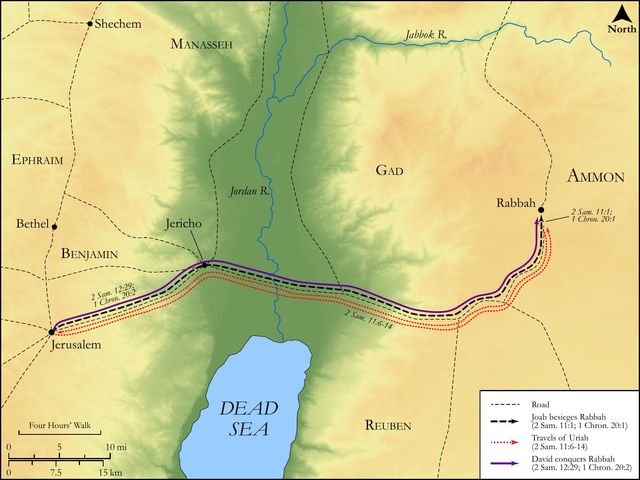
The Ammonites were a long-standing and often hostile enemy of Israel, descendants of Lot, whose capital, Rabbah, was a strategically vital city located in Transjordan. The practice of seizing the defeated king's crown and plundering the spoils of war was a common, highly symbolic, and universally understood act among the kings of that day. It signified the complete transfer of sovereignty, the utter humiliation of the conquered nation, and the preeminence of the victor's deity. The extraordinary weight of the crown—a talent of gold, equivalent to approximately 75 pounds (or 34 kilograms)—strongly suggests it was not a crown intended for daily wear. Instead, it was most likely a ceremonial or cultic object, perhaps even associated with their national god, Milcom (also known as Molech), to whom abhorrent child sacrifices were offered. Its appropriation by David would have been a profound theological statement, asserting Israel's God's absolute supremacy over the Ammonite deity and David's undisputed dominion over their territory. The mention of "the spoil of the city in great abundance" further underscores the typical economic and material gains expected from such a significant and decisive conquest.
Key Themes
ShowHideThe conquest of Rabbah and the broader events detailed in 2 Samuel 12 contribute significantly to several overarching themes woven throughout the book of 2 Samuel. Firstly, the theme of Divine Sovereignty amidst Human Sin is powerfully illustrated; despite David's profound moral failures, which are meticulously detailed in 2 Samuel 11, God's covenant faithfulness to David and His overarching plan for Israel's expansion remain operative, allowing military success. Secondly, the verse highlights Dominion and Kingship, as the transfer of the Ammonite king's crown to David unequivocally symbolizes the expansion and consolidation of David's kingdom and his divinely appointed role as Israel's sovereign. Thirdly, the Symbolism of Power is central, with the crown representing not merely earthly authority but also, implicitly, the spiritual dominion of Yahweh over the pagan deities of the conquered nations. Finally, while not explicitly stated in this particular verse, the broader narrative of 2 Samuel consistently underscores the Consequences of Sin, as David's personal failings, though not preventing this military victory, would inevitably lead to severe and lasting troubles within his own household, precisely as prophesied by Nathan in 2 Samuel 12:10-12.
Exposition and Analysis
ShowHideKey Word Analysis
ShowHideThis term (H5850) refers to a diadem or circlet, a symbol of royalty and authority. In this context, it is the most potent emblem of the Ammonite king's sovereignty and national identity. Its seizure by David signifies the complete transfer of power and the subjugation of the Ammonite kingdom.
This word (H3603) denotes a significant unit of weight, approximately 75 pounds (or 34 kilograms) of gold. The extraordinary weight of the crown indicates it was not designed for regular wear but was almost certainly a ceremonial, cultic, or possibly even an idol's crown, used for special, infrequent royal or religious occasions. Its immense material value underscores the wealth and significance of the conquered Ammonite kingdom.
This adjective (H3368), meaning "valuable" or "costly," describes the stones adorning the crown. The inclusion of "precious stones" further emphasizes the crown's opulence and immense value, signifying its status as a highly esteemed royal or sacred artifact. These stones would have added to its visual splendor and its symbolic power as an emblem of sovereignty and wealth.
Verse Breakdown
ShowHide"And he took their king's crown from off his head"
This clause describes the decisive action, either by David himself or under his direct command, of seizing the most potent symbol of the Ammonite king's authority. This act is a definitive sign of conquest, the humiliation of the defeated monarch, and the transfer of power.
"the weight whereof [was] a talent of gold with the precious stones"
This parenthetical description highlights the extraordinary value and ceremonial nature of the crown. The "talent of gold" emphasizes its massive material worth and its impracticality for daily wear, strongly suggesting its role as a cultic or ceremonial object. The addition of "precious stones" further enhances its regality and profound significance.
"and it was [set] on David's head"
This pivotal action signifies the transfer of kingship and dominion. While the crown's immense weight makes permanent wear unlikely, its placement on David's head, even if temporary or ceremonial, unequivocally declares his new supremacy over the Ammonites and their former ruler. It visually represents David's complete victory and his undisputed dominion over their territory.
"And he brought forth the spoil of the city in great abundance"
This final clause reinforces the completeness and totality of the victory. Beyond the symbolic crown, the vast material wealth, resources, and possessions plundered from Rabbah underscore the totality of the conquest and the substantial gains for David's kingdom, both in terms of power and riches.
Literary Devices
ShowHideThe passage employs several potent literary devices to convey its profound message. Symbolism is paramount, with the Ammonite king's crown serving as the central symbol of power, authority, and national identity. Its removal from the defeated king and subsequent placement on David's head powerfully symbolizes the complete transfer of sovereignty and the utter subjugation of the Ammonite kingdom. The description of its immense weight ("a talent of gold") functions as a form of hyperbole or exaggeration, emphasizing the extraordinary value and significance of the crown, thereby magnifying the magnitude of David's victory and the wealth of the conquered city. Furthermore, the entire scene of triumphant conquest stands in stark juxtaposition to the preceding narrative of David's profound moral failures. This deliberate contrast highlights the complexity of divine action, where God's covenant promises and overarching plans for His people can still advance even through flawed human instruments, creating a powerful tension between divine faithfulness and human accountability.
Theological and Thematic Connections
ShowHideThis verse, strategically situated immediately after Nathan's pronouncement of judgment on David, offers a complex yet profound theological insight: God's covenant faithfulness to His chosen king and His broader purposes for Israel's dominion can continue to unfold even amidst profound human sin and its personal consequences. While David would indeed face severe familial strife and personal suffering as a direct result of his actions with Bathsheba and Uriah, God still granted him military victory and the expansion of his kingdom. This demonstrates God's unwavering sovereignty, His ability to use imperfect instruments for His divine will, and the enduring nature of His promises to David (the Davidic Covenant). The taking of the crown is a tangible manifestation of God granting dominion and victory to His anointed king, solidifying Israel's position among the nations and powerfully illustrating the Lord's supreme power over the gods of other nations, particularly Milcom of the Ammonites.
Reflection and Application
ShowHideThe scene in 2 Samuel 12:30, where David receives the crown of his defeated enemy, offers a profound reflection on the intricate nature of God's grace and sovereignty. It serves as a powerful reminder that God's overarching plans and purposes for His kingdom are not ultimately thwarted by human imperfection or even profound sin. While David faced severe and lasting consequences for his moral failures, God's covenant faithfulness to him and to Israel's mission remained steadfast. This truth can be both a source of immense comfort and a significant challenge. It comforts us by demonstrating that God can still use flawed individuals and bring about His will even when we stumble, provided there is genuine repentance and humility, as beautifully exemplified in David's profound contrition expressed in Psalm 51. However, it also challenges us to recognize that divine blessing or success in one area of life does not negate the crucial need for personal accountability and the inevitable, often painful, consequences of unconfessed or unaddressed sin in others. True victory, in a spiritual and eternal sense, is not merely about external success, accumulated spoils, or earthly crowns, but about a heart fully surrendered to God, living in humble obedience, even in the midst of our brokenness and the ongoing process of sanctification.
Questions for Reflection
ShowHideFAQ
ShowHideWas the crown worn by David permanently, given its immense weight?
ShowHideIt is highly improbable that David wore the crown permanently or as a daily adornment. A talent of gold, weighing approximately 75 pounds (34 kg), would be far too heavy and cumbersome for practical wear. The placement of the crown on David's head was almost certainly a symbolic act, a temporary display of triumph, or a ceremonial gesture signifying the complete transfer of sovereignty from the Ammonite king to David. In the warfare of that day, such valuable spoils were often either displayed as trophies, melted down, or incorporated into the royal treasury. The primary significance lies in the symbolic act of conquest and the appropriation of the enemy's highest emblem of power, rather than its continuous physical wear.
What was the significance of Rabbah and the Ammonites in Israel's history?
ShowHideRabbah was the heavily fortified capital city of the Ammonites, a people descended from Ben-Ammi, the son of Lot, as recorded in Genesis 19:38. The Ammonites were a long-standing and often hostile neighbor to Israel, frequently engaging in conflict over territory and influence in Transjordan. Their national god was Milcom (also known as Molech), associated with abhorrent practices like child sacrifice, which made them a particular affront to Yahweh's covenant with Israel and His moral law. The conquest of Rabbah was a major strategic and military victory for David, securing Israel's eastern frontier, significantly expanding its territorial control, and demonstrating the supremacy of Israel's God over the Ammonite deity. This victory solidified David's dominion and was a key step in establishing the borders of the united kingdom of Israel. The account of David's earlier kindness to Hanun, the Ammonite king, which was met with insult and ultimately led to this war, is found in 2 Samuel 10:1-5.
Christ-Centered Fulfillment
ShowHideThe earthly triumph of King David at Rabbah, culminating in the symbolic wearing of the Ammonite king's crown and the acquisition of vast spoils, powerfully foreshadows the ultimate and eternal victory of Jesus Christ, the greater Son of David. While David's conquest was over an earthly kingdom and its material riches, Christ's dominion is spiritual, universal, and everlasting. He did not take a crown of gold and precious stones from a defeated earthly king, but rather, through His perfect obedience, profound suffering, and sacrificial death on the cross, He earned a crown of glory and honor (Hebrews 2:9). His victory was not achieved through military might or the plundering of cities, but through His triumph over the spiritual powers of darkness, "disarming the powers and authorities" and making a public spectacle of them (Colossians 2:15). The spoils of His victory are not earthly treasures but the liberation of humanity from the bondage of sin and death, and the establishment of an eternal kingdom that will never end. Jesus, the true King of Kings and Lord of Lords (Revelation 19:16), was not adorned with a heavy, temporary crown, but was exalted to the highest place, where "every knee should bow" to His name, and "every tongue acknowledge that Jesus Christ is Lord" (Philippians 2:8-11). David's reign, marked by both glorious triumph and profound personal failure, ultimately points to the flawless, perfect, and everlasting reign of Christ, whose dominion is righteous, just, and without end.