


2 Kings 19:4
- אוּלַי'u·LaiperhapsH194AdvAdverb
- יִשְׁמַעyish·Ma'he will hearH8085V-Qal-Imperf-3msVerb Qal Imperfect 3rd Singular Masculine
- יְהוָהYah·wehYahwehH3068N-properNoun Proper Title
- אֱלֹהֶיךָ'e·lo·Hei·khayour GodH430N-mpc ¦ 2msNoun Plural Masculine ConstructאֱלֹהֶיGodךָyour
- אֵת'et<obj.>H853DirObjMParticle Object Indicator
- כָּלkolallH3605N-mscNoun Singular Masculine Construct
- דִּבְרֵיdiv·Rei[the] words ofH1697N-mpcNoun Plural Masculine Construct
- רַבrav[the] chiefH7262N-msNoun Title Singular Masculine Absolute
- שָׁקֵהsha·KehcommanderH7262N-msNoun Title Singular Masculine Absolute
- אֲשֶׁר'a·SherwhomH834RelParticle Relative
- שְׁלָחוֹshe·la·Chohe sent himH7971V-Qal-Perf-3ms ¦ 3msVerb Qal Perfect 3rd Singular Masculineשְׁלָחhe sentוֹhim
- מֶלֶךְMe·lekh[the] king ofH4428N-mscNoun Singular Masculine Construct
- אַשּׁוּר'a·ShurAssyriaH804N-properNoun Proper Location
- אֲדֹנָיו'a·do·Navhis master<s>H113N-mpc ¦ 3msNoun Plural Masculine Constructאֲדֹנָיmaster<s>וhis
- לְחָרֵףle·cha·Refto tauntH2778Prep-l ¦ V-Piel-InfVerb Piel Infinitive Constructלְtoחָרֵףtaunt
- אֱלֹהִים'E·lo·Him[the] GodH430N-mpNoun Plural Masculine Absolute
- חַיChailivingH2416Adj-msAdjective Singular Masculine Absolute
- וְהוֹכִיחַve·ho·Khi·achand he will rebukeH3198Conj-w ¦ V-Hiphil-ConsecPerf-3msVerb Hiphil Consecutive Perfect 3rd Singular Masculineוְandהוֹכִיחַhe will rebuke
- בַּדְּבָרִיםba·de·va·Rim<in> the wordsH1697Prep-b ¦ N-mpNoun Plural Masculine Absoluteבַּ<in> theדְּבָרִיםwords
- אֲשֶׁר'a·SherwhichH834RelParticle Relative
- שָׁמַעsha·Ma'he has heardH8085V-Qal-Perf-3msVerb Qal Perfect 3rd Singular Masculine
- יְהוָהYah·wehYahwehH3068N-properNoun Proper Title
- אֱלֹהֶיךָ'e·lo·Hei·khayour GodH430N-mpc ¦ 2msNoun Plural Masculine ConstructאֱלֹהֶיGodךָyour
- וְנָשָׂאתָve·na·Sa·taand you will lift upH5375Conj-w ¦ V-Qal-ConsecPerf-2msVerb Qal Consecutive Perfect 2nd Singular Masculineוְandנָשָׂאתָyou will lift up
- תְפִלָּהte·fi·LahprayerH8605N-fsNoun Singular Feminine Absolute
- בְּעַדbe·'AdforH1157Adj-cscAdjective Numerical Singular common gender Construct
- הַשְּׁאֵרִיתha·she·'e·Ritthe remnantH7611Art ¦ N-fsNoun Singular Feminine Absoluteהַtheשְּׁאֵרִיתremnant
- הַנִּמְצָאָהha·nim·tza·'Ahwhich is foundH4672Art ¦ V-Niphal-Prtcpl-fsVerb Niphal Participle Singular Feminine Absoluteהַwhichנִּמְצָאָהis found
English is a literal word-by-word gloss of the Hebrew, not the KJV's wording. Why?
This is the original text the KJV's translators worked from — each Hebrew word with its own literal English meaning in this verse, prepared by scholars at Tyndale House, Cambridge. The KJV translates whole sentences, not word by word, so its wording differs: one Hebrew word can become several English words, and the KJV may choose “the LORD” where the gloss reads “Yahweh”. Both are faithful — they answer different questions. For the KJV's own rendering, switch to the KJV text.
Details
See on the biblical-era map
Study this verse
Public-domain commentary
Matthew Henry
From his Commentary on the Whole Bible. Henry comments on passages, not single verses — this entry covers 2 Kings 19:1–7. His three-level outline is real structure in the source text, so it is rendered as structure.
The contents of Rabshakeh's speech being brought to Hezekiah, one would have expected (and it is likely Rabshakeh did expect) that he would call a council of war and it would be debated whether it was best to capitulate or no. Before the siege, he had taken counsel with his princes and his mighty men, Ch2 32:3. But that would not do now; his greatest relief is that he has a God to go to, and what passed between him and his God on this occasion we have here an account of.
I.Hezekiah discovered a deep concern at the dishonour done to God by Rabshakeh's blasphemy.
When he heard it, though at second hand, he rent his clothes and covered himself with sackcloth, Kg2 19:1. Good men were wont to do so when they heard of any reproach cast on God's name; and great men must not think it any disparagement to them to sympathize with the injured honour of the great God. Royal robes are not too good to be rent, nor royal flesh too good to be clothed with sackcloth, in humiliation for indignities done to God and for the perils and terrors of his Jerusalem. To this God now called, and was displeased with those who were not thus affected. Isa 22:12-14, Behold joy and gladness, slaying oxen and killing sheep, though it was a day of trouble and perplexity in the valley of vision (Kg2 19:5), which refers to this very event. The king was in sackcloth, but many of his subjects were in soft clothing.
II.He went up to the house of the Lord, according to the example of the psalmist, who, when he was grieved at the pride and prosperity of the wicked, went into the sanctuary of God and there understood their end, Psa 73:17. He went to the house of God, to meditate and pray, and get his spirit into a sedate composed frame, after this agitation. He was not considering what answer to return to Rabshakeh, but refers the matter to God. "Thou shalt answer, Lord, for me." - Herbert. In the house of the Lord he found a place both of rest and refuge, a treasury, a magazine, a council-chamber, and all he needed, all in God. Note, When the church's enemies are very daring and threatening it is the wisdom and duty of the church's friends to apply to God, appeal to him, and leave their cause with him.
III.He sent to the prophet Isaiah, by honourable messengers, in token of the great respect he had for him, to desire his prayers, Kg2 19:2-4.
Eliakim and Shebna were two of those that had heard the words of Rabshakeh and were the better able both to acquaint and to affect Isaiah with the case. The elders of the priests were themselves to pray for the people in time of trouble (Joe 2:17); but they must go to engage Isaiah's prayers, because he could pray better and had a better interest in heaven. The messengers were to go in sackcloth, because they were to represent the king, who was so clothed.
1.Their errand to Isaiah was, "Lift up thy prayer for the remnant that is left, that is, for Judah, which is but a remnant now that the ten tribes are gone - for Jerusalem, which is but a remnant now that the defenced cities of Judah are taken." Note,
(1.)It is very desirable, and what we should be desirous of when we are in trouble, to have the prayers of our friends for us. In begging to have them we honour God, we honour prayer, and we honour our brethren.
(2.)When we desire the prayers of others for us we must not think we are excused from praying for ourselves. When Hezekiah sent to Isaiah to pray for him he himself went into the house of the Lord to offer up his own prayers.
(3.)Those who speak from God to us we should in a particular manner desire to speak to God for us. He is a prophet, and he shall pray for thee, Gen 20:7. The great prophet is the great intercessor.
(4.)Those are likely to prevail with God that lift up their prayers, that is, that lift up their hearts in prayer.
(5.)When the interests of God's church are brought very low, so that there is but a remnant left, few friends, and those weak and at a loss, then it is time to lift up our prayer for that remnant.
2.Two things are urged to Isaiah, to engage his prayers for them: - (1.) Their fears of the enemy (Kg2 19:3): "He is insolent and haughty; it is a day of rebuke and blasphemy. We are despised. God is dishonoured. Upon this account it is a day of trouble. Never were such a king and kingdom so trampled on and abused as we are: our soul is exceedingly filled with the contempt of the proud, and it is a sword in our bones to hear them reproach our confidence in God, and say, Where is now your God? and, which is worst of all, we see not which way we can help ourselves and get clear of the reproach. Our cause is good, our people are faithful; but we are quite overpowered with numbers. The children are brought to the birth; now is the time, the critical moment, when, if ever, we must be relieved. One successful blow given to the enemy would accomplish our wishes. But, alas! we are not able to give it: There is not strength to bring forth. Our case is as deplorable, and calls for as speedy help, as that of a woman in travail, that is quite spent with her throes, so that she has not strength to bear the child. Compare with this Hos 13:13. We are ready to perish; if thou canst do any thing, have compassion upon us and help us." (2.) Their hopes in God. To him they look, on him they depend, to appear for them. One word from him will turn the scale, and save the sinking remnant. If he but reprove the words of Rabshakeh (that is, disprove them, Kg2 19:4) - if he undertake to convince and confound the blasphemer - all will be well. And this they trust he will do, not for their merit's sake, but for his own honour's sake, because he has reproached the living God, by levelling him with deaf and dumb idols. They have reason to think the issue will be good, for they can interest God in the quarrel. Psa 74:22, Arise O God! plead thy own cause. "He is the Lord thy God," say they to Isaiah - "thine, whose glory thou art concerned for, and whose favour thou art interested in. He has heard and known the blasphemous words of Rabshakeh, and therefore, it may be, he will hear and rebuke them. We hope he will. Help us with thy prayers to bring the cause before him, and then we are content to leave it with him."
IV.God, by Isaiah, sent to Hezekiah, to assure him that he would glorify himself in the ruin of the Assyrians.
Hezekiah sent to Isaiah, not to enquire concerning the event, as many did that sent to the prophets (Shall I recover? or the like), but to desire his assistance in his duty. It was this that he was solicitous about; and therefore God let him know what the event should be, in recompence of his care to do his duty, Kg2 19:6, Kg2 19:7.
1.God interested himself in the cause: They have blasphemed me.
2.He encouraged Hezekiah, who was much dismayed: Be not afraid of the words which thou hast heard; they are but words (though swelling and fiery words), and words are but wind.
3.He promised to frighten the king of Assyria worse than Rabshakeh had frightened him: "I will send a blast upon him (that pestilential breath which killed his army), upon which terrors shall seize him and drive him into his own country, where death shall meet him." This short threatening from the mouth of God would do execution, when all the impotent menaces that came from Rabshakeh's mouth would vanish into air.
Historical interpretation
Historical reception
1 surviving comment on this verse from the historical church.
Faith unguarded is armed by God. Hezekiah, through the power of faith, proved stronger with his puny force than Sennacherib, king of Babylon and rich Nineveh, with his thousands. Sennacherib had enlisted the forces of Assyria and the realm of the Medes. Laying waste with his huge legions all the neighbouring kingdoms, he proceeded towards the city sacred to the Lord and against it alone concentrated his whole massive war machine. But as he made preparations for this, God hindered him, for warfare delayed his unholy designs. He sent to Jerusalem a letter brusque in its arrogant threats. Hezekiah received it with grief and bore it to the Lord before the altar. There in prostrate prayer accompanied by his people in mourning black, he read out those harsh words and bedewed the letter with abundant tears, and so he prevailed on God. By prayer alone, though absent from the scene, he won a shattering victory over the Assyrians, who suffered a grievous death when God warred on them. This favour he won was so considerable that he did not even clap eyes on the enemy he conquered. Once his tears of complaint had passed above the constellations, once his lament from a humble heart had risen beyond the stars and his devoted words had assailed the ears of highest Father, the lofty doors of heaven swung open and a winged angel glided down, breathing the fragrant air on his smooth descent. Armed with the sword of the Word, he smote that wicked army, and glorying in the silent slaughter of the sleeping foe, he brought simultaneous death to one hundred and eighty thousand men. A single night was the accomplice engagement on that scale. Next morning the king arose still threatening but then took flight with his depleted column, wretched because his army was thus stripped of its slaughtered soldiers. He fled from Hezekiah, though the prophet was far removed in another district, and though he had only recently in his presence threatened to clap his fetters on him. At that time Isaias was mediator for Hezekiah.
Continue studying 2 Kings 19:4 across the web’s major study libraries — every link below opens this exact verse, chapter, or book on the destination site.
Read & Compare
 BibleGatewayThis verse in more than 200 translations and 70 languages.
 Bible.comThe YouVersion reader — hundreds of translations, reading plans, and highlights.
 ESV.orgCrossway's official English Standard Version reader.
 NET BibleThe NET translation with 60,000+ translators' notes on every rendering decision.
 STEP BibleTyndale House's free study tool — original text, vocabulary, and scholarly resources.
 BibliaLogos Bible Software's free web reader.
 USCCBThe New American Bible (Revised Edition) with the U.S. bishops' study notes.
Commentaries
 BibleHub CommentariesDozens of classic commentaries on this verse, gathered on one page.
 StudyLightMore than 100 commentary sets — the largest collection on the web.
 BibleRefPlain-English commentary on what this verse means, verse by verse.
 Enduring WordDavid Guzik's free commentary on this chapter, widely used by Bible teachers.
 Bible Study ToolsVerse commentary alongside Greek and Hebrew study aids.
Original Language & Research
- BibleHub InterlinearThe verse word by word — original language, transliteration, and English.
- BibleHub LexiconEvery word's original-language definition and Strong's entry.
 Blue Letter BibleDeep-study tools — Strong's numbers, concordance, and word studies.
 SefariaThe Hebrew text with Rashi and centuries of Jewish commentary.
Sermons, Hymns & Audio


TrulyRandomVerse is not affiliated with these sites and doesn’t control their content. They’re linked because they’re genuinely useful.
Summary
In 2 Kings 19:4, King Hezekiah, in the throes of national crisis under the Assyrian siege, dispatches messengers to the prophet Isaiah. This pivotal verse captures the king's profound distress and his earnest, yet humble, plea that the sovereign God of Israel would acknowledge and respond to the blasphemous taunts of Rabshakeh, the Assyrian field commander. Hezekiah's hope is rooted in the belief that the "living God" will vindicate His own honor and, in so doing, deliver the beleaguered remnant of Judah, underscoring the critical role of intercessory prayer in the face of overwhelming spiritual and military adversity.
Context
ShowHideLiterary Context
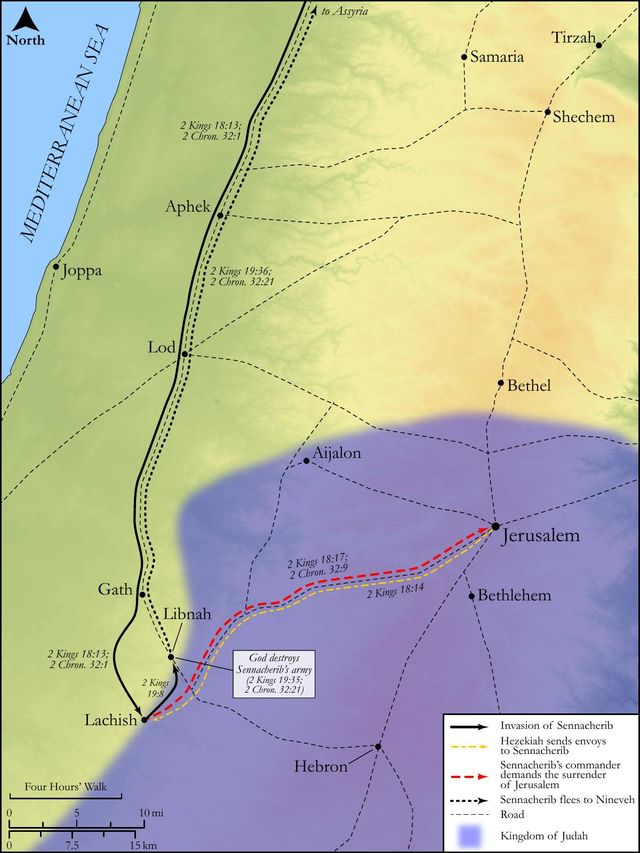
This verse is strategically placed at a dramatic turning point in the narrative of Judah's desperate stand against the formidable Assyrian Empire. Following King Sennacherib's successful subjugation of numerous fortified cities throughout Judah, he dispatches his high-ranking official, Rabshakeh, to Jerusalem. Rabshakeh's mission, detailed in 2 Kings 18:17-37, is not merely to demand surrender but to employ psychological warfare and, most critically, to blaspheme the God of Israel. He equates Yahweh with the impotent deities of other conquered nations, aiming to shatter the morale of Jerusalem's inhabitants and undermine their trust in God. Hezekiah's immediate and profound response, as recorded in 2 Kings 19:1-3, is one of deep humility and spiritual anguish: he tears his clothes, dons sackcloth, and enters the temple. His subsequent act of sending messengers to Isaiah in verse 4 is a direct manifestation of this distress, a desperate search for divine counsel and intervention, recognizing that the Assyrian challenge is fundamentally a spiritual confrontation.
Historical & Cultural Context
The late 8th century BCE was an era dominated by the ruthless Assyrian Empire, renowned for its brutal military campaigns, sophisticated psychological warfare, and policies of mass deportation of conquered populations. King Sennacherib's invasion of Judah around 701 BCE was a significant component of this relentless expansion. Rabshakeh's speech, as depicted, was a classic Assyrian tactic: to demoralize the enemy, sow internal discord, and present unconditional surrender as the only rational alternative. A key element of this strategy was the systematic mocking of the enemy's gods and leadership. For Judah, a nation whose identity, covenant, and very existence were inextricably linked to their unique relationship with Yahweh, the taunts directed at their God were far more than mere insults; they were direct challenges to their core beliefs and the perceived efficacy of their faith. The concept of "reproaching the living God" would have resonated deeply as an act of ultimate defiance against the one true deity, demanding an unequivocal divine response to preserve His honor and the integrity of His covenant people.
Key Themes
ShowHideThis verse powerfully contributes to several overarching themes prevalent in 2 Kings and the broader prophetic corpus. Foremost among these is the theme of God's Sovereignty and Vindication. Hezekiah's expressed hope that God will "reprove" the blasphemous words spoken against Him highlights a profound belief in Yahweh's unique power and authority over all other deities and earthly kingdoms. This theme is echoed and expanded upon in God's subsequent message to Sennacherib through Isaiah in Isaiah 37:21-29. Another crucial theme is the Efficacy of Prayer and Prophetic Intercession, demonstrating the conviction that God hears and actively responds to the earnest prayers of His people, particularly when channeled through His chosen prophets. This is dramatically illustrated by the divine intervention that follows, as recorded in 2 Kings 19:35-36. The explicit mention of "the remnant that are left" introduces the profound Theme of the Remnant, a recurring motif in biblical prophecy (e.g., Isaiah 10:20-22). This concept refers to the small, faithful portion of Israel preserved by God's grace amidst judgment or overwhelming adversity, underscoring divine preservation, faithfulness, and the enduring hope for restoration.
Exposition and Analysis
ShowHideKey Word Analysis
ShowHideThis verb (H2778) carries a strong and severe connotation of taunting, defying, or blaspheming. It signifies a direct, scornful, and public insult intended to dishonor and disgrace. In this context, Rabshakeh's words are not merely political threats but a deliberate and direct assault on the character, power, and reputation of Yahweh, designed to undermine the trust of His people and challenge His supremacy.
This potent phrase (H2416, H430) profoundly emphasizes God's active, dynamic, and life-giving nature. It stands in stark contrast to the lifeless, inert, and impotent idols worshipped by the Assyrians and other pagan nations. Hezekiah's deliberate use of this term underscores the unique, personal, and actively intervening character of Israel's God, who is not a static deity but a vibrant participant in history, capable of hearing and acting.
This verb (H3198) signifies to rebuke, correct, or judge. In the context of Rabshakeh's blasphemies, it implies God's decisive and authoritative response to the taunts. It suggests a divine act of vindication, where God will demonstrate His justice, power, and ultimate authority by nullifying the enemy's boasts and delivering His people, thereby defending His own honor.
Verse Breakdown
ShowHide"It may be the LORD thy God will hear all the words of Rabshakeh"
Hezekiah expresses a humble and hopeful anticipation, rather than a demand, that God will indeed take notice of the Assyrian's blasphemous and arrogant speech. This phrase reflects a deep-seated trust in God's attentiveness, His justice, and His willingness to intervene, even in a seemingly hopeless and desperate situation. It is a heartfelt plea for divine recognition of the profound gravity of the insult leveled against Him.
"whom the king of Assyria his master hath sent to reproach the living God;"
This crucial clause meticulously clarifies the true nature of Rabshakeh's offense: it is a direct "reproach" or blasphemy specifically aimed at Yahweh, the "living God." Hezekiah pointedly emphasizes that the insult is not merely against Judah or its king, but against the divine King Himself, thereby underscoring the profound spiritual dimension and ultimate theological stakes of the conflict.
"and will reprove the words which the LORD thy God hath heard:"
Hezekiah's hope extends beyond mere divine awareness to active divine response. He anticipates that God will actively "reprove" or rebuke these words, thereby demonstrating His supreme power and sovereignty by decisively disproving Rabshakeh's arrogant claims. This is a fervent plea for God to rise and defend His own honor and character against those who mock and defy Him.
"wherefore lift up [thy] prayer for the remnant that are left."
This constitutes Hezekiah's direct and urgent request to the prophet Isaiah. Recognizing Isaiah's unique prophetic authority and his privileged access to God, Hezekiah implores him for intercessory prayer. The poignant phrase "the remnant that are left" vividly highlights the dire and precarious situation of Judah, reduced to a small, besieged, and vulnerable population, emphasizing their desperate and absolute need for immediate divine intervention and deliverance.
Literary Devices
ShowHideThe verse masterfully employs several literary devices to convey its profound theological and emotional weight. Personification is clearly evident in the depiction of God "hearing" and "reproving" words, attributing human-like sensory perception and judicial action to the divine. This technique effectively emphasizes God's active engagement, His attentiveness to human affairs, and His responsiveness to blasphemy. Contrast is powerfully utilized through the phrase "the living God," which implicitly and explicitly contrasts Yahweh with the lifeless, impotent idols worshipped by the Assyrians and other pagan nations, thereby highlighting His unique, active, and omnipotent nature. The broader context of Rabshakeh's speech, which directly precedes and precipitates this verse, functions as a form of Intimidation and Psychological Warfare, meticulously designed to break the spirit and resolve of the besieged. Hezekiah's response, however, counters this with an appeal to a higher, divine power, demonstrating the profound Power of Prayer as a spiritual weapon against overwhelming physical and psychological threats. Furthermore, the term "remnant" carries significant Symbolic weight, representing not just the surviving population but also a deep theological concept of God's faithful preservation of a core, chosen group amidst judgment or destruction.
Theological and Thematic Connections
ShowHideThis verse powerfully articulates the foundational theological principle that God is not a distant, passive deity but is actively and intimately involved in human affairs, and is supremely jealous for the honor and sanctity of His own name. Rabshakeh's blasphemous taunts are not merely political rhetoric or military bluster; they constitute a direct and profound challenge to the very essence of the "living God," thereby necessitating a definitive divine response. Hezekiah's earnest plea for God to "reprove" these words reflects a deep and mature understanding of God's righteous character as one who will ultimately vindicate Himself against all forms of opposition and mockery. This critical moment in Judah's history underscores the profound and absolute reliance on divine intervention when all human resources and strategies have been exhausted, emphasizing that true hope and ultimate deliverance reside solely in God's sovereign power and His unwavering faithfulness to His covenant promises. It also highlights the critical and indispensable role of intercessory prayer, particularly from those endowed with prophetic authority, serving as a vital conduit for God's powerful action on behalf of His beleaguered and vulnerable people.
Reflection and Application
ShowHideIn our contemporary lives, we frequently encounter our own versions of "Rabshakehs"—voices of intimidation, doubt, and despair that seek to mock our faith, challenge our trust in God, or seem to overwhelm our circumstances with their sheer magnitude. These pressures may manifest from external societal narratives, cultural ideologies, or even from insidious internal struggles and personal anxieties. Like King Hezekiah, our immediate, most potent, and ultimately most effective response should be to turn to God in profound humility and earnest prayer, acknowledging His absolute sovereignty and seeking His divine intervention. This powerful verse serves as a profound reminder that when God's holy name is reproached, or when His eternal truth is challenged, He is never indifferent or disengaged. Our enduring hope is firmly rooted in His unchanging character—He is the "living God" who actively hears, sees, and acts to defend His honor, vindicate His truth, and deliver His people. Furthermore, Hezekiah's specific request for Isaiah's intercession underscores the vital importance of communal prayer and the spiritual strength derived from seeking the prayers of others, particularly those mature in faith, when we feel overwhelmed or spiritually besieged. We are called not only to pray for our own needs but also to actively "lift up prayer for the remnant that are left"—those who are vulnerable, persecuted, or facing desperate circumstances in our communities and across the globe, trusting implicitly that God hears and faithfully responds to the earnest cries of His devoted people.
Questions for Reflection
ShowHideFAQ
ShowHideWhy did Hezekiah send messengers to Isaiah instead of praying directly to God himself?
ShowHideWhile Hezekiah certainly engaged in fervent direct prayer to God (as powerfully evidenced in 2 Kings 19:15-19), sending messengers to Isaiah was a common and deeply significant practice in ancient Israel, especially during times of profound national crisis. Isaiah was recognized as a true prophet of the LORD, a divinely appointed intermediary through whom God frequently communicated His divine will and delivered His authoritative messages. Hezekiah's action demonstrates not only his deep humility but also his profound recognition of Isaiah's prophetic authority and his earnest desire to seek a definitive word from God through His chosen messenger. It highlights the enduring importance of seeking spiritual counsel and prophetic guidance, acknowledging that God often chooses to work through His faithful servants to bring comfort, clear direction, and unwavering assurance to His people, just as Isaiah indeed does in 2 Kings 19:6-7.
Christ-Centered Fulfillment
ShowHideThe desperate and humble plea of King Hezekiah for God to "reprove the words" of Rabshakeh finds its profound and ultimate fulfillment in the person and redemptive work of Jesus Christ. Rabshakeh's blasphemous taunts against the "living God" serve as a poignant foreshadowing of the ultimate reproach, scorn, and blasphemy leveled against God's own Son, Jesus, throughout His earthly ministry and, supremely, during His crucifixion. Just as Hezekiah sought God's divine vindication against an earthly accuser, so too does Christ represent God's definitive and decisive answer to the ultimate accuser, Satan, who ceaselessly reproaches God's character and humanity. Jesus, as the perfect Lamb of God, who takes away the sin of the world, willingly endured the most extreme reproach, suffering, and humiliation on the cross. He did not do so to be "reproved" by God, but rather to bear the full weight of sin's reproach for all humanity. His glorious resurrection, however, is God's ultimate and irrefutable "reproving" of the powers of darkness, sin, and death, definitively vindicating Christ's perfect obedience and establishing Him as Lord of all, to the glory of God the Father. Furthermore, Hezekiah's poignant call to "lift up prayer for the remnant" powerfully points to Christ, who is our great High Priest, who ever lives to make intercession for us and for His church, the spiritual remnant, before the Father's throne (Romans 8:34). In Christ, God not only hears the reproaches leveled against His people but has decisively defeated the very source of all reproach, securing eternal deliverance and salvation for all who believe.