


2 Kings 15:38
- וַיִּשְׁכַּבvai·yish·Kavand he lay downH7901Conj-w ¦ V-Qal-ConsecImperf-3msVerb Qal Consecutive Imperfect 3rd Singular Masculineוַandיִּשְׁכַּבhe lay down
- יוֹתָםyo·TamJothamH3147N-proper-mNoun Proper Masculine
- עִם'imwithH5973PrepPreposition
- אֲבֹתָיו'a·vo·Tavhis ancestorsH1N-fpc ¦ 3msNoun Plural Feminine Constructאֲבֹתָיancestorsוhis
- וַיִּקָּבֵרvai·yi·ka·Verand he was buriedH6912Conj-w ¦ V-Niphal-ConsecImperf-3msVerb Niphal Consecutive Imperfect 3rd Singular Masculineוַandיִּקָּבֵרhe was buried
- עִם'imwithH5973PrepPreposition
- אֲבֹתָיו'a·vo·Tavhis ancestorsH1N-fpc ¦ 3msNoun Plural Feminine Constructאֲבֹתָיancestorsוhis
- בְּעִירbe·'Irin [the] city ofH5892Prep-b ¦ N-fscNoun Singular Feminine Constructבְּinעִיר[the] city of
- דָּוִדda·VidDavidH1732N-proper-mNoun Proper Masculine
- אָבִיו'a·Vivhis ancestorH1N-msc ¦ 3msNoun Singular Masculine Constructאָבִיancestorוhis
- וַיִּמְלֹךְvai·yim·Lokhand he became kingH4427Conj-w ¦ V-Qal-ConsecImperf-3msVerb Qal Consecutive Imperfect 3rd Singular Masculineוַandיִּמְלֹךְhe became king
- אָחָז'a·ChazAhazH271N-proper-mNoun Proper Masculine
- בְּנוֹbe·Nohis sonH1121N-msc ¦ 3msNoun Singular Masculine Constructבְּנsonוֹhis
- תַּחְתָּיוtach·Tavin place of himH8478N-mpc ¦ 3msNoun Plural Masculine Constructתַּחְתָּיin place ofוhim
English is a literal word-by-word gloss of the Hebrew, not the KJV's wording. Why?
This is the original text the KJV's translators worked from — each Hebrew word with its own literal English meaning in this verse, prepared by scholars at Tyndale House, Cambridge. The KJV translates whole sentences, not word by word, so its wording differs: one Hebrew word can become several English words, and the KJV may choose “the LORD” where the gloss reads “Yahweh”. Both are faithful — they answer different questions. For the KJV's own rendering, switch to the KJV text.
Details
See on the biblical-era map
Study this verse
Public-domain commentary
Matthew Henry
From his Commentary on the Whole Bible. Henry comments on passages, not single verses — this entry covers 2 Kings 15:32–38.
We have here a short account of the reign of Jotham king of Judah, of whom we are told, 1. That he reigned very well, did that which was right in the sight of the Lord, Kg2 15:34. Josephus gives him a very high character, stating that he was pious towards God, just towards men, and laid out himself for the public good, - that, whatever was amiss, he took care to have it rectified, - and, in short, wanted no virtue that became a good prince. Though the high places were not taken away, yet to draw people from them, and keep them close to God's holy place, he showed great respect to the temple, and built the higher gate which he went through to the temple. If magistrates cannot do all they would for the suppressing of vice and profaneness, let them do so much the more for the support and advancement of piety and virtue, and the bringing of them into reputation. If they cannot pull down the high places of sin, yet let them build and beautify the high gate of God's house. 2. That he died in the midst of his days, Kg2 15:33. Of most of the kings of Judah we are told how old they were when they began their reign, and by that may compute how old they were when they died; but no account is kept of the age of any of the kings of Israel that I remember, only of the years of their reigns. This honour God would put upon the kings of the house of David above those of other families. And by these accounts it appears that there was none of all the kings of Judah that reached David's age, seventy, the common age of man. Asa's age I do not find. Uzziah lived to be sixty-eight, Manasseh sixty-seven, and Jehoshaphat sixty; and these were the three oldest; many of those that were of note did not reach fifty. This Jotham died at forty-one. He was too great a blessing to be continued long to such an unworthy people. His death was a judgment, especially considering the character of his son and successor. 3. That in his days the confederacy was formed against Judah by Rezin and Remaliah's son, the king of Syria and the king of Israel, which appeared so very formidable in the beginning of the reign of Ahaz that, upon notice of it, the heart of that prince was moved and the heart of the people, as the trees of the wood are moved with the wind, Isa 7:2. The confederates were unjust in the attempt, yet it is here said (Kg2 15:37), The Lord began to send them against Judah, as he bade Shimei curse David, and took away from Job what the Sabeans robbed him of. Men are God's hand - the sword, the rod in his hand - which he makes use of as he pleases to serve his own righteous counsels, though men be unrighteous in their intentions. This storm gathered in the reign of pious Jotham, but he came to his grave in peace and it fell upon his degenerate son.
Continue studying 2 Kings 15:38 across the web’s major study libraries — every link below opens this exact verse, chapter, or book on the destination site.
Read & Compare
 BibleGatewayThis verse in more than 200 translations and 70 languages.
 Bible.comThe YouVersion reader — hundreds of translations, reading plans, and highlights.
 ESV.orgCrossway's official English Standard Version reader.
 NET BibleThe NET translation with 60,000+ translators' notes on every rendering decision.
 STEP BibleTyndale House's free study tool — original text, vocabulary, and scholarly resources.
 BibliaLogos Bible Software's free web reader.
 USCCBThe New American Bible (Revised Edition) with the U.S. bishops' study notes.
Commentaries
 BibleHub CommentariesDozens of classic commentaries on this verse, gathered on one page.
 StudyLightMore than 100 commentary sets — the largest collection on the web.
 BibleRefPlain-English commentary on what this verse means, verse by verse.
 Enduring WordDavid Guzik's free commentary on this chapter, widely used by Bible teachers.
 Bible Study ToolsVerse commentary alongside Greek and Hebrew study aids.
Original Language & Research
- BibleHub InterlinearThe verse word by word — original language, transliteration, and English.
- BibleHub LexiconEvery word's original-language definition and Strong's entry.
 Blue Letter BibleDeep-study tools — Strong's numbers, concordance, and word studies.
 SefariaThe Hebrew text with Rashi and centuries of Jewish commentary.
Sermons, Hymns & Audio


TrulyRandomVerse is not affiliated with these sites and doesn’t control their content. They’re linked because they’re genuinely useful.
Summary
2 Kings 15:38 solemnly concludes the sixteen-year reign of King Jotham over Judah, recording his peaceful death and burial within the royal necropolis in Jerusalem, the city of David. This verse, a standard formulaic statement of royal succession, simultaneously marks the end of a generally righteous, albeit imperfect, period for the Southern Kingdom and heralds the commencement of the reign of his son, Ahaz, whose subsequent wickedness would plunge Judah into profound spiritual and political apostasy.
Context
ShowHideLiterary Context
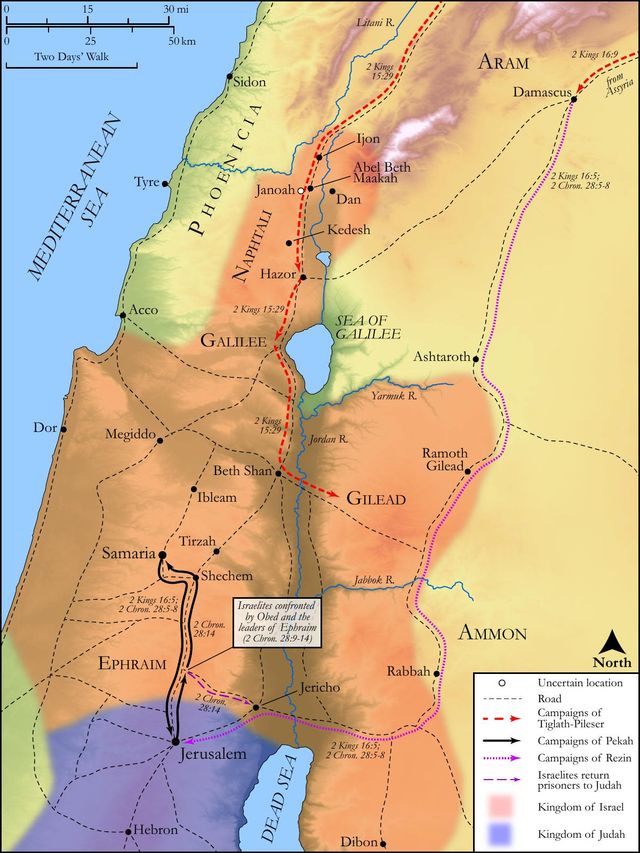
This verse serves as the concluding summary of Jotham's reign, which began in 2 Kings 15:32. The preceding verses characterize Jotham as a king who "did that which was right in the sight of the LORD, according to all that his father Uzziah did" (2 Kings 15:34). However, the narrative includes a crucial caveat: "Howbeit the high places were not removed: the people sacrificed and burnt incense still in the high places" (2 Kings 15:35). This persistent failure, common among even the "good" kings of Judah, underscores the nation's deep-seated struggle with idolatry and syncretism. The verse immediately preceding our text, 2 Kings 15:37, ominously mentions the Lord beginning to send Rezin king of Syria and Pekah son of Remaliah against Judah, setting the stage for the tumultuous Syro-Ephraimite War that would define Ahaz's reign in 2 Kings chapter 16. Thus, this verse acts as a bridge, closing one chapter and opening another, with a clear spiritual trajectory for Judah.
Historical & Cultural Context
The phrase "slept with his fathers" is a common idiom found in ancient Near Eastern royal annals and frequently employed in the biblical books of Kings and Chronicles. It signifies a peaceful, natural death and the king's honorable burial, joining his ancestors in the grave. The "city of David" refers to Jerusalem, specifically the royal burial grounds, likely located on the Ophel ridge, indicating Jotham's legitimate place in the Davidic dynasty and his esteemed burial. This period, the mid-8th century BCE, was characterized by increasing geopolitical instability in the Levant, with the formidable Neo-Assyrian Empire rapidly expanding its influence. While Jotham's reign witnessed some military success and significant building projects, the ominous clouds of future conflict and Judah's eventual subjugation were gathering. The transition from Jotham, who largely adhered to the Mosaic Law, to Ahaz, who would actively embrace foreign deities and practices, marks a critical turning point in Judah's religious and political history, reflecting the ongoing tension between covenant faithfulness and pervasive apostasy.
Key Themes
ShowHideThis verse encapsulates several profound and recurring themes prevalent throughout the Books of Kings. Firstly, it powerfully underscores the mortality of kings and the inevitability of royal succession, even within a divinely established dynasty. Despite their earthly power and divine appointment, human rulers are subject to the same finite existence as all humanity, highlighting the transient nature of temporal authority. Secondly, it reaffirms the continuity of the Davidic covenant, as the throne passes directly from father to son within the promised lineage, a divine pledge first articulated in 2 Samuel 7:16. This continuity, maintained even through the reigns of flawed kings, serves as a testament to God's enduring faithfulness to His promises. Thirdly, the introduction of Ahaz, a king whose reign would be marked by profound spiritual decline and disastrous political choices as detailed in 2 Kings chapter 16, foreshadows a significant spiritual downturn for Judah. This transition highlights the profound impact of a ruler's character on the spiritual health and destiny of a nation, emphasizing the weighty responsibility inherent in leadership.
Exposition and Analysis
ShowHideKey Word Analysis
ShowHideDerived from the Hebrew for "Jehovah (is) perfect," Jotham's name reflects a theological truth, contrasting with the imperfections of human rule. He was the son of Uzziah and king of Judah, whose reign is generally described as righteous despite the failure to remove the high places. His name's meaning subtly points to the divine standard against which human kings are measured.
A primitive root meaning "to lie down" for rest, decease, or other purposes. In this context, it is a common biblical euphemism for death, particularly for kings. This idiom, "slept with his fathers," signifies a peaceful, natural passing and the king's legitimate joining of his royal ancestors in the grave, emphasizing his place within the dynastic lineage rather than a specific theological statement about the afterlife.
Refers to a city, a place guarded by a watch. In this context, "the city of David" (with David from H1732, Dâvid', meaning "loving") specifically denotes Jerusalem, the capital of Judah and the designated burial site for its legitimate kings. Burial here signified a king's honorable standing and rightful place within the Davidic lineage, reinforcing the continuity and legitimacy of the monarchy.
A primitive root meaning "to reign" or, inceptively, "to ascend the throne." This word signifies the formal and legitimate transfer of royal authority. Its use here indicates the orderly and continuous nature of the Davidic monarchy, even as one king's reign ends and another's begins, underscoring the established system of succession.
Verse Breakdown
ShowHide"And Jotham slept with his fathers"
This initial clause succinctly marks the end of King Jotham's life and reign. The idiom "slept with his fathers" is a widely recognized biblical euphemism for death, particularly for monarchs, conveying a sense of a peaceful and natural end, and signifying that he joined the long line of his deceased royal ancestors. It emphasizes the universal mortality that even kings face.
"and was buried with his fathers in the city of David his father"
This part of the verse specifies Jotham's burial location and reinforces his legitimate status. His interment "with his fathers" in "the city of David" (Jerusalem) confirms his rightful succession and honorable standing as a king of Judah. This detail underscores his deep connection to the Davidic dynasty and the continuity of the royal line, indicating he received a proper royal burial.
"and Ahaz his son reigned in his stead"
This final clause announces the immediate and legitimate transfer of power to Jotham's son, Ahaz. It signifies the orderly continuation of the monarchy, despite the death of the previous king, and formally sets the stage for the narrative of Ahaz's reign, which would prove to be a period of significant spiritual decline and national peril for Judah.
Literary Devices
ShowHideThe verse employs several literary devices characteristic of the historical narratives in the Books of Kings. Formulaic Language is prominently featured, with the recurring phrases "slept with his fathers" and "reigned in his stead" serving as standardized markers for the conclusion of one reign and the commencement of another. This consistent formulaic structure provides a rhythmic and predictable framework for the historical accounts, emphasizing the cyclical nature of royal succession and the established order of the Davidic monarchy. There is also an implicit Juxtaposition between the generally righteous reign of Jotham (as described in the preceding verses) and the impending wickedness of his son Ahaz, whose introduction here subtly hints at a darker and more challenging period for Judah. This serves as a potent form of Foreshadowing, preparing the reader for the profound spiritual and political challenges that will unfold in the subsequent chapters, particularly in 2 Kings chapter 16, where Ahaz's apostasy is detailed.
Theological and Thematic Connections
ShowHideThis seemingly simple historical record carries profound theological weight, extending beyond a mere chronicle of events. It highlights God's unwavering faithfulness to His covenant promises, specifically the Davidic covenant, which guaranteed an enduring dynasty and a perpetual line of kings (2 Samuel 7:16). Even as individual kings, like Jotham, pass away, and even as the nation faces the prospect of wicked leadership under Ahaz, God's overarching plan for the Davidic line remains intact, demonstrating His steadfast commitment despite human fallibility. The mortality of Jotham underscores the inherent limitations of human kingship and the ultimate need for an eternal, perfect King. The transition also powerfully illustrates the principle of generational impact, where the actions and character of one leader can profoundly influence the spiritual trajectory of a nation for good or ill, emphasizing the weighty responsibility of those in authority to uphold covenant faithfulness.
Reflection and Application
ShowHideThe brief account of Jotham's passing and Ahaz's ascension serves as a powerful and poignant reminder of life's transient nature and the enduring impact of our legacy. Jotham, though imperfect in his reign, is remembered as one who "did right in the sight of the LORD," leaving behind a relatively positive spiritual and political inheritance for his people. Yet, his death underscores the universal truth of mortality: no position, power, or piety exempts one from the ultimate human experience. This prompts us to consider deeply what kind of legacy we are building, not just for our immediate families but for our communities, our churches, and the generations to come. Furthermore, the stark contrast between Jotham's reign and the impending wickedness of Ahaz highlights the profound influence of leadership. Whether in a family, a church, a business, or a nation, the character and choices of those in authority have far-reaching consequences, shaping the spiritual, moral, and social landscape. This calls us to pray diligently for our leaders, to hold them accountable to righteous standards rooted in God's Word, and to recognize our own spheres of influence, however small, as sacred opportunities to live faithfully and leave a positive spiritual imprint. Finally, amidst the ebb and flow of human leadership, this verse quietly testifies to God's unwavering sovereignty and faithfulness, assuring us that His divine purposes will ultimately prevail regardless of human failings or successes.
Questions for Reflection
ShowHideFAQ
ShowHideWhat does "slept with his fathers" mean?
ShowHide"Slept with his fathers" is a common biblical idiom used extensively in the Books of Kings and Chronicles to describe the death of a king. It signifies a peaceful, natural passing, indicating that the king joined his ancestors in the grave. This phrase does not necessarily imply a specific theological state or belief about the afterlife, but rather emphasizes the king's legitimate place in the dynastic succession and his honorable end. It serves as a formulaic way to mark the conclusion of a royal reign and the continuity of the lineage.
Why is the "city of David" significant for burial?
ShowHideThe "city of David" refers to Jerusalem, specifically the royal burial grounds located within or adjacent to the ancient city walls, likely on the Ophel ridge. Being buried "with his fathers in the city of David" was a significant privilege reserved for the legitimate kings of Judah who died in good standing. It signified their rightful place in the Davidic dynasty and their honored status, reinforcing the continuity of the royal line established by King David. This contrasts with instances where kings were not buried there due to their wickedness or ignominious deaths, such as Ahaz's son Manasseh, who was buried in the garden of his own house (2 Kings 21:18).
How does Jotham's reign compare to Ahaz's, and what are the implications?
ShowHideJotham's reign, as described in 2 Kings 15:32-38, is generally portrayed as righteous; he "did that which was right in the sight of the LORD" (2 Kings 15:34), though he failed to remove the high places. In stark contrast, his son Ahaz, introduced in 2 Kings 15:38 and detailed in 2 Kings chapter 16, was one of Judah's most wicked kings. Ahaz actively promoted idolatry, even sacrificing his own son (2 Kings 16:3), and sought alliances with Assyria rather than trusting God. The transition from Jotham to Ahaz signifies a profound spiritual downturn for Judah, highlighting how the character of a leader can dramatically impact the spiritual and political destiny of a nation, leading it either towards or away from God.
Christ-Centered Fulfillment
ShowHideThe seemingly mundane record of Jotham's death and Ahaz's succession subtly but profoundly points to the ultimate need for a perfect, eternal King, found only in Jesus Christ. The repeated phrase "slept with his fathers" underscores the inescapable mortality of every human king, even the righteous ones like Jotham. This constant cycle of death and succession, while affirming God's faithfulness to the Davidic covenant, also highlights the inherent limitations and imperfections of earthly rule. Each king, no matter how good or divinely appointed, eventually dies, leaving his people vulnerable to the character and choices of his successor. This continuous need for a new king ultimately foreshadows the one King who would never die and whose kingdom would have no end. Jesus, the true Son of David (Matthew 1:1), perfectly fulfills the covenant promise of an enduring throne (2 Samuel 7:16). Unlike Jotham, who "slept with his fathers" and remained in the grave, Jesus conquered death itself, rising victorious from the grave (Acts 2:24). His kingdom is not passed down through fallible human succession but is an eternal and incorruptible reign (Luke 1:32-33). He is the King who perfectly reigns, whose rule is righteous, and who lives forever to intercede for His people, ensuring a kingdom that will never know the end of its King or the instability of changing rulers (Hebrews 7:24-25).