


2 Chronicles 30:21
- וַיַּעֲשׂוּvai·ya·'a·Suand they observedH6213Conj-w ¦ V-Qal-ConsecImperf-3mpVerb Qal Consecutive Imperfect 3rd Plural Masculineוַandיַּעֲשׂוּthey observed
- בְנֵיve·nei[the] people ofH1121N-mpcNoun Plural Masculine Construct
- יִשְׂרָאֵלYis·ra·'elIsraelH3478N-properNoun Proper Location
- הַנִּמְצְאִיםha·nim·tze·'Imwho were foundH4672Art ¦ V-Niphal-Prtcpl-mpVerb Niphal Participle Plural Masculine Absoluteהַwhoנִּמְצְאִיםwere found
- בִּירוּשָׁלִַםbi·ru·sha·Limin JerusalemH3389Prep-b ¦ N-properNoun Proper LocationבִּinירוּשָׁלִַםJerusalem
- אֶת'et<obj.>H853DirObjMParticle Object Indicator
- חַגchag[the] festival ofH2282N-mscNoun Singular Masculine Construct
- הַמַּצּוֹתha·ma·Tzotthe unleavened bread<s>H4682Art ¦ N-fpNoun Plural Feminine Absoluteהַtheמַּצּוֹתunleavened bread<s>
- שִׁבְעַתshiv·'AtsevenH7651N-cscNoun Singular common gender Construct
- יָמִיםya·MimdaysH3117N-mpNoun Plural Masculine Absolute
- בְּשִׂמְחָהbe·sim·Chahwith joyH8057Prep-b ¦ N-fsNoun Singular Feminine Absoluteבְּwithשִׂמְחָהjoy
- גְדוֹלָהge·do·LahgreatH1419Adj-fsAdjective Singular Feminine Absolute
- וּמְהַלְלִיםu·me·ha·Limand [were] praisingH1984Conj-w ¦ V-Piel-Prtcpl-mpVerb Piel Participle Plural Masculine Absoluteוּandמְהַלְלִים[were] praising
- לַיהוָהla·Yah·weh<to> YahwehH3068Prep-l ¦ N-properNoun Proper Titleלַ<to>יהוָהYahweh
- יוֹםYoma dayH3117N-msNoun Singular Masculine Absolute
- בְּיוֹםbe·Yomin a dayH3117Prep-b ¦ N-msNoun Singular Masculine Absoluteבְּinיוֹםa day
- הַלְוִיִּםhal·vi·Yimthe LevitesH3881Art ¦ N-mpNoun Gentilic Plural Masculine AbsoluteהַtheלְוִיִּםLevites
- וְהַכֹּהֲנִיםve·ha·ko·ha·Nimand the priestsH3548Conj-w ¦ Art ¦ N-mpNoun Plural Masculine Absoluteוְandהַtheכֹּהֲנִיםpriests
- בִּכְלֵיbikh·leiwith instruments ofH3627Prep-b ¦ N-mpcNoun Plural Masculine Constructבִּwithכְלֵיinstruments of
- עֹז'ozstrengthH5797N-msNoun Singular Masculine Absolute
- לַיהוָהla·Yah·wehto YahwehH3068Prep-l ¦ N-properNoun Proper TitleלַtoיהוָהYahweh
English is a literal word-by-word gloss of the Hebrew, not the KJV's wording. Why?
This is the original text the KJV's translators worked from — each Hebrew word with its own literal English meaning in this verse, prepared by scholars at Tyndale House, Cambridge. The KJV translates whole sentences, not word by word, so its wording differs: one Hebrew word can become several English words, and the KJV may choose “the LORD” where the gloss reads “Yahweh”. Both are faithful — they answer different questions. For the KJV's own rendering, switch to the KJV text.
Details
See on the biblical-era map
Study this verse
Public-domain commentary
Matthew Henry
From his Commentary on the Whole Bible. Henry comments on passages, not single verses — this entry covers 2 Chronicles 30:21–27.
After the passover followed the feast of unleavened bread, which continued seven days. How that was observed we are here told, and every thing in this account looks pleasant and lively. 1. Abundance of sacrifices were offered to God in peace-offerings, by which they both acknowledged and implored the favour of God, and on part of which the offerers feasted with their friends during these seven days (Ch2 30:22), in token of their communion with God and the comfort they took in his favour and their reconciliation to him. To keep up this part of the service, that God's altar might be abundantly regaled with the fat and blood and his priests and people with the flesh of the peace-offerings, Hezekiah gave out of his own stock 1000 bullocks and 7000 sheep, and the princes, excited by his pious example, gave the same number of bullocks and a greater number of sheep, and all for peace-offerings, Ch2 30:24. By this God was honoured, the joy of the festival was kept up, and the strangers were encouraged to come again to Jerusalem. It was generously done of the king and the princes thus plentifully to entertain the whole congregation; but what is a great estate good for but that it puts men into a capacity of doing so much the more good? Christ feasted those that followed him. I believe neither Hezekiah nor his princes were the poorer at the year's end for this their pious liberality. 2. Many good prayers were put up to God with the peace-offerings, Ch2 30:22. They made confession to the Lord God of their fathers, in which the intent and meaning of the peace-offerings were directed and explained. When the priests sprinkled the blood and burnt the fat they made confession, so did the people when they feasted on their part. They made a religious confession of their relation to God and dependence upon him, a penitent confession of their sins and infirmities, a thankful confession of God's mercies to them, and a supplicatory confession of their wants and desires; and, in all these, they had an eye to God as the God of their fathers, a God in covenant with them. 3. There was a great deal of good preaching. The Levites (whose office it was, Deu 33:10) taught the people the good knowledge of the Lord, read and opened the scriptures, and instructed the congregation concerning God and their duty to him; and great need there was of this, after so long a famine of the word as there had been in the last reign. Hezekiah did not himself preach, but he spoke comfortably to the Levites that did, attended their preaching, commended their diligence, and assured them of his protection and countenance. Hereby he encouraged them to study hard and take pains, and put a reputation upon them, that the people might respect and regard them the more. Princes and magistrates, by owning and encouraging faithful and laborious preachers, greatly serve the interest of God's kingdom among men. 4. They sang psalms every day (Ch2 30:21): The Levites and priests praised the Lord day by day, both with songs and musical instruments, thus expressing their own and exciting one another's joy in God and thankfulness to him. Praising God should be much of our work in our religious assemblies. 5. Having kept the seven days of the feast in this religious manner, they had so much comfort in the service that they kept other seven days, Ch2 30:23. They did not institute any new modes of worship, but repeated and continued the old. The case was extraordinary: they had been long without the ordinance; guilt had been contracted by the neglect of it; they had now got a very great congregation together, and were in a devout serious frame; they knew not when they might have such another opportunity, and therefore could not now find in their hearts to separate till they had doubled the time. Many of them were a great way from home, and had business in the country to look after, for, this being the second month, they were in the midst of their harvest; yet they were in no haste to return: the zeal of God's house made them forget their secular affairs. How unlike those who snuffed at God's service, and said, What a weariness is it! Or those who asked, When will the sabbath be gone? The servants of God should abound in his work. 6. All this they did with gladness (Ch2 30:23); they all rejoiced, and particularly the strangers, Ch2 30:25. So there was great joy in Jerusalem, Ch2 30:26. Never was the like since the dedication of the temple in Solomon's time. Note, Holy duties should be performed with holy gladness; we should be forward to them, and take pleasure in them, relish the sweetness of communion with God, and look upon it as matter of unspeakable joy and comfort that we are thus favoured and have such earnests of everlasting joy. 7. The congregation was at length dismissed with a solemn blessing, Ch2 30:27. (1.) The priests pronounced it; for it was part of their office to bless the people (Num 6:22, Num 6:23), in which they were both the people's mouth to God by way of prayer and God's mouth to the people by way of promise; for their blessing included both. In it they testified both their desire of the people's welfare and their dependence upon God and that word of his grace to which they commended them. What a comfort is it to a congregation to be sent home thus crowned! (2.) God said Amen to it. The voice of the priests, when they blessed the people, was heard in heaven and came up to the habitation of God's holiness. When they pronounced the blessing God commanded it, and perhaps gave some sensible token of the ratification of it. The prayer that comes up to heaven in a cloud of incense will come down again to this earth in showers of blessings.
Continue studying 2 Chronicles 30:21 across the web’s major study libraries — every link below opens this exact verse, chapter, or book on the destination site.
Read & Compare
 BibleGatewayThis verse in more than 200 translations and 70 languages.
 Bible.comThe YouVersion reader — hundreds of translations, reading plans, and highlights.
 ESV.orgCrossway's official English Standard Version reader.
 NET BibleThe NET translation with 60,000+ translators' notes on every rendering decision.
 STEP BibleTyndale House's free study tool — original text, vocabulary, and scholarly resources.
 BibliaLogos Bible Software's free web reader.
 USCCBThe New American Bible (Revised Edition) with the U.S. bishops' study notes.
Commentaries
 BibleHub CommentariesDozens of classic commentaries on this verse, gathered on one page.
 StudyLightMore than 100 commentary sets — the largest collection on the web.
 BibleRefPlain-English commentary on what this verse means, verse by verse.
 Enduring WordDavid Guzik's free commentary on this chapter, widely used by Bible teachers.
 Bible Study ToolsVerse commentary alongside Greek and Hebrew study aids.
Original Language & Research
- BibleHub InterlinearThe verse word by word — original language, transliteration, and English.
- BibleHub LexiconEvery word's original-language definition and Strong's entry.
 Blue Letter BibleDeep-study tools — Strong's numbers, concordance, and word studies.
 SefariaThe Hebrew text with Rashi and centuries of Jewish commentary.
Sermons, Hymns & Audio


TrulyRandomVerse is not affiliated with these sites and doesn’t control their content. They’re linked because they’re genuinely useful.
Summary
2 Chronicles 30:21 presents a powerful tableau of spiritual renewal and national unity during King Hezekiah's reign, capturing the fervent observance of the Feast of Unleavened Bread in Jerusalem. It vividly depicts the children of Israel, alongside the Levites and priests, engaged in seven days of profound joy and continuous, vibrant praise to the LORD, utilizing loud instruments to express their deep gladness. This passage serves as a testament to a remarkable spiritual revival and a renewed commitment to God's covenant worship.
Context
ShowHideLiterary Context
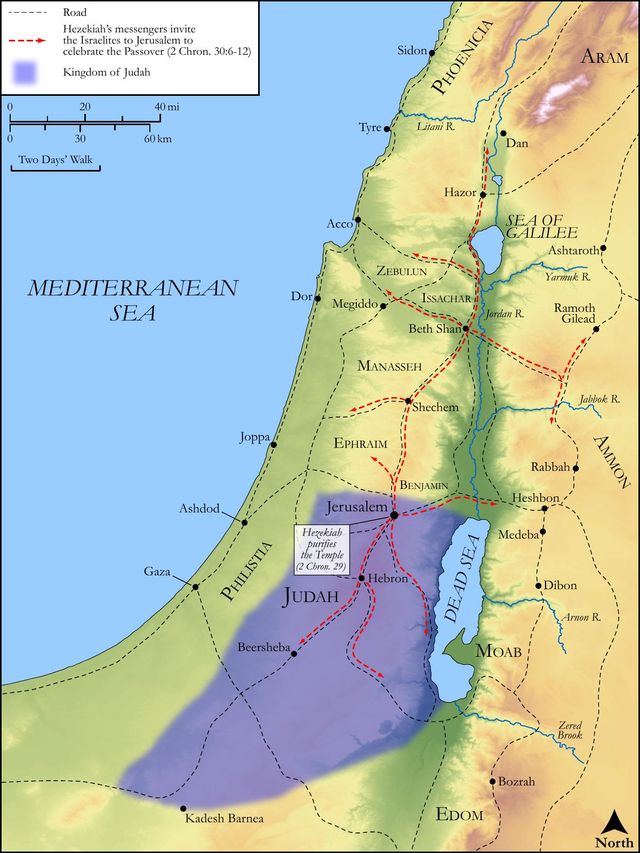
This verse is deeply embedded within the narrative of King Hezekiah's extensive religious reforms, which commenced with the purification and consecration of the temple in 2 Chronicles 29. Following generations of neglect and idolatry under previous kings, particularly his father Ahaz, Hezekiah initiated a radical return to Yahweh worship. The immediate context of 2 Chronicles 30 details Hezekiah's unprecedented invitation to all Israel, including the remnants of the northern kingdom, to celebrate the Passover and the subsequent Feast of Unleavened Bread in Jerusalem. This was an extraordinary event, as such a unified and comprehensive Passover had not been observed for centuries. The preceding verses describe the initial, somewhat irregular, Passover celebration, and the overwhelming joy that led the assembly to unanimously decide to extend the Feast of Unleavened Bread for an additional seven days, effectively making it a fourteen-day festival of rejoicing, as noted in 2 Chronicles 30:23. Verse 21 specifically focuses on the first seven days of this extended, jubilant observance.
Historical & Cultural Context
King Hezekiah ruled Judah from approximately 715 to 686 BC, a tumultuous era marked by the encroaching threat of the Assyrian Empire and profound spiritual decline within Judah. His father, Ahaz, had actively promoted idolatry, even closing the temple doors. Hezekiah's reforms were a direct and courageous reversal of this apostasy, demonstrating a resolute commitment to restoring the worship of Yahweh. The Feast of Unleavened Bread, immediately following the Passover, was one of the three annual pilgrimage festivals commanded by the Mosaic Law, as stipulated in Exodus 23:15. Its observance symbolized purification from sin and a renewed dedication to God's covenant, where all leaven (symbolizing sin and corruption) was removed from homes. The inclusion of "the children of Israel" from the northern kingdom, which had largely abandoned Yahweh worship and was on the brink of Assyrian conquest, was culturally and politically audacious, signifying a rare moment of spiritual unity across the long-divided kingdoms. The Levites and priests, as the divinely appointed ministers of the temple, were central to all aspects of worship, including sacrifices, teaching, and leading musical praise, making their active and continuous participation vital to the re-establishment of proper religious practice.
Key Themes
ShowHideThis verse and its broader narrative illuminate several profound theological and narrative themes. Foremost is Revival and Restoration, as Hezekiah's reign signals a dramatic turning point from national apostasy to renewed covenant faithfulness, with the feast serving as a tangible manifestation of this spiritual awakening. Secondly, Joyful Obedience shines brightly, emphasized by the phrase "with great gladness." This highlights that sincere obedience to God's commands, especially when accompanied by genuine repentance and restored fellowship, is not a burden but a profound source of delight, echoing sentiments found in Psalm 100:2. Thirdly, the passage underscores the Importance of Corporate Worship, as the entire community, under the leadership of the Levites and priests, unites in sustained and vibrant praise. This collective, uninhibited worship signifies the successful re-establishment of the temple as the spiritual heart of the nation. Finally, an implicit theme of Divine Forgiveness and Presence pervades the account; the "great gladness" is a direct result of experiencing God's mercy and His manifest presence among His people, who have returned to Him, reminiscent of the overflowing joy described in Nehemiah 8:17.
Exposition and Analysis
ShowHideKey Word Analysis
ShowHide(simchâh), this term denotes blithesomeness or glee, often specifically associated with religious or festival joy. It signifies a deep, inner rejoicing, a profound and exuberant delight that stems from the experience of God's presence, His blessings, and obedience to His commands. In this context, it indicates that the worship was not a mere ritualistic duty but a heartfelt, Spirit-infused response to God's grace and the restoration of their relationship with Him.
(hâlal), this primitive root means to be clear (originally of sound, but usually of color), to shine, and hence, to make a show or to boast. In the context of praising God, it implies a public, enthusiastic, and often clamorous declaration of His worth, glory, and mighty acts. It suggests an uninhibited, outward expression of adoration, contrasting sharply with any previous apathy or neglect of worship. This verb is famously the root of "Hallelujah" (Praise Yah!).
(kᵉlîy), this word refers to something prepared, any apparatus such as an implement, utensil, or vessel. In this context, it specifically refers to musical instruments designated for temple worship. While the KJV adds "loud," the Hebrew word H5797 ('ôz) from which "loud" is derived, means "strength" or "might," suggesting the instruments were played with force and vigor, producing a powerful and audible sound that would fill the temple courts and accompany the singing of praises. Their use underscores the vibrant, public, and uninhibited nature of the worship during this revival.
Verse Breakdown
ShowHide"And the children of Israel that were present at Jerusalem"
This opening phrase emphasizes the widespread participation in the feast. "Children of Israel" here encompasses not only the people of Judah but notably also those from the northern kingdom who responded to Hezekiah's invitation. This signifies a rare and profoundly significant moment of national unity, transcending political division, and reflecting a collective longing for spiritual restoration across all twelve tribes.
"kept the feast of unleavened bread seven days"
This clause highlights their faithful adherence to the Mosaic Law regarding the duration of the feast, as prescribed in Exodus 12:15. The fact that they observed it for the full prescribed period (and subsequently extended it, as noted in 2 Chronicles 30:23) demonstrates their deep commitment to fulfilling God's commands and their earnest engagement with the spiritual significance of the feast.
"with great gladness"
This is a pivotal descriptor of the emotional and spiritual state of the participants. Their obedience was not grudging or perfunctory but filled with profound, overflowing joy. This "gladness" stemmed directly from their experience of God's forgiveness, the purification of the temple, and the restoration of proper worship, indicating a genuine and widespread spiritual revival within the populace.
"and the Levites and the priests praised the LORD day by day"
This clause underscores the consistent, organized, and dedicated nature of the worship. The Levites and priests, as the divinely appointed ministers of the temple, led the people in continuous praise throughout the entire seven-day period. The phrase "day by day" emphasizes the sustained and unwavering devotion, signifying that this was not merely a one-time event but an ongoing, daily expression of worship and commitment.
"[singing] with loud instruments unto the LORD"
This describes the specific, vibrant manner of their praise. The bracketed "singing" is an accurate contextual inference, as musical instruments were primarily used to accompany vocal praise. The "loud instruments" (referring to instruments played with "strength" or "might") signify the enthusiastic, public, and uninhibited nature of their worship, designed to make a powerful declaration of God's glory and fill the atmosphere with adoration.
Literary Devices
ShowHideThe verse employs several literary devices to convey the profound nature and emotional intensity of this spiritual event. The use of Hyperbole is evident in the phrase "great gladness," which emphasizes the overwhelming and extraordinary joy experienced by the participants, suggesting a level of emotional intensity far beyond the ordinary. This is further amplified by the description of "loud instruments," painting a vivid auditory picture of uninhibited and powerful praise that would have filled the temple courts. Repetition is subtly utilized through the temporal markers "seven days" and "day by day," which underscore the sustained, continuous, and unwavering nature of the worship, highlighting the deep commitment and endurance of the people, Levites, and priests in their devotion. Furthermore, there is an implicit Contrast between the vibrant, joyful, and unified worship described here and the preceding decades of spiritual apathy, widespread idolatry, and neglect of the temple under previous kings, particularly Ahaz. This contrast powerfully highlights the dramatic transformation and profound spiritual revival that Hezekiah's reforms brought about. Finally, the entire observance of the Feast of Unleavened Bread functions as rich Symbolism, representing purification from sin, new beginnings, and a renewed covenant relationship with God, as the people ritually cleansed themselves of "leaven" (symbolizing sin and corruption) and committed to a life of holiness and devotion.
Theological and Thematic Connections
ShowHideThis verse powerfully illustrates the theological truth that genuine worship is characterized by joy and wholeheartedness. The "great gladness" of the people is not merely an emotional byproduct but a spiritual fruit of repentance, divine forgiveness, and restored fellowship with God. It demonstrates that when God's people sincerely turn back to Him, His manifest presence brings an overflowing joy that transforms obedience from a burdensome duty into a profound delight. The sustained, "day by day" praise led by the Levites and priests signifies the importance of continuous devotion and the re-establishment of proper, organized worship as central to the life of God's covenant community. This remarkable revival serves as a testament to God's enduring faithfulness in drawing His people back to Himself and His deep desire for their sincere, joyful adoration.
Reflection and Application
ShowHide2 Chronicles 30:21 offers profound and enduring lessons for believers today, challenging us to deeply examine the posture of our own hearts in worship and obedience. We are called to consider: Is our service to God marked by "great gladness," or does it sometimes feel like a reluctant duty? The passage powerfully reminds us that genuine spiritual revival, whether experienced personally or corporately within a community, is almost invariably accompanied by an outpouring of joy as we encounter God's forgiveness, grace, and manifest presence. The "day by day" praise of the Levites and priests underscores the critical importance of consistent, sustained devotion, teaching us that worship is not confined to isolated moments or weekly gatherings. Rather, our daily lives, in their entirety, should be characterized by an ongoing attitude of gratitude and praise. Furthermore, the unity of "the children of Israel" from various tribes coming together in sincere worship highlights the profound power and beauty of the body of Christ uniting in adoration, transcending any divisions for the singular purpose of glorifying God. This historical account serves as a timeless and powerful reminder that spiritual restoration is always possible when hearts genuinely turn back to God with sincere repentance and joyful obedience.
Questions for Reflection
ShowHideFAQ
ShowHideWhy was this celebration so significant in Israel's history?
ShowHideThis celebration was profoundly significant for multiple reasons. Firstly, it marked a national observance of the Passover and Feast of Unleavened Bread, an event that had not occurred in such a comprehensive and unified manner for centuries, certainly not since the division of the kingdom. Secondly, it represented a dramatic spiritual turning point under King Hezekiah, reversing decades of deep idolatry and neglect under his father, Ahaz, and signaling a widespread return to covenant faithfulness. Thirdly, the unprecedented invitation and subsequent participation of "the children of Israel" from the northern kingdom (Israel), which was largely apostate and facing imminent Assyrian conquest, symbolized a rare moment of spiritual unity and a deep longing for God's presence across the long-divided nation. The "great gladness" reported in 2 Chronicles 30:21 powerfully highlights the depth and impact of this spiritual renewal.
What does "loud instruments" imply about their worship and its relevance for us?
ShowHideThe phrase "loud instruments" (Hebrew keli shir, "instruments of song," with "loud" from 'oz meaning "strength" or "might") implies that the worship was vibrant, enthusiastic, and uninhibited. It suggests a passionate and public expression of praise, designed to fill the temple courts with sound and boldly declare God's glory. This contrasts sharply with any notion of subdued or merely ritualistic worship. For believers today, it suggests that sincere worship is not always quiet or reserved; it can and often should be an outward, joyful, and even boisterous expression of adoration, using all available means to glorify God. It encourages believers to engage fully and passionately in corporate worship, allowing their praise to be heard and felt, much like the call in Psalm 150 to praise God with various instruments and sounds.
Christ-Centered Fulfillment
ShowHideThe joyous and purifying Feast of Unleavened Bread described in 2 Chronicles 30:21 finds its ultimate and perfect fulfillment in Jesus Christ. The Passover, which immediately precedes this feast, prefigures Christ as the true Lamb of God who takes away the sin of the world, whose sacrificial blood secures our eternal redemption. The Feast of Unleavened Bread, with its profound emphasis on removing leaven (a potent symbol of sin, malice, and corruption, as articulated in 1 Corinthians 5:7-8), points directly to the purity and holiness that are now ours through Christ. He is our unleavened bread, the sinless One who makes us holy and enables us to live a life free from the leaven of sin. The "great gladness" and sustained praise of the Israelites foreshadow the far greater, eternal joy and continuous worship experienced by all who are redeemed by Christ. Our spiritual revival is not merely a temporary return to ritual, but a new life in Christ, where the Holy Spirit empowers us to worship God "in spirit and truth" (John 4:24). The "day by day" praise of the Levites and priests finds its ultimate expression in the ongoing, unceasing worship of God's people, both now and in the heavenly realms, where we will forever praise the Lamb who was slain and who reigns forevermore. Through Christ, we are truly cleansed, made new creations, and empowered to live lives of joyful, unceasing worship, far surpassing the temporary restoration experienced in Hezekiah's day.