


2 Chronicles 30:23
Bible text: King James Version (1769 Blayney text) · Public domain
Bible text: Berean Standard Bible · Public domain
Bible text: American Standard Version (1901) · Public domain
Bible text: World English Bible, Messianic edition · Public domain
Bible text: Geneva Bible (1599) · Public domain
Bible text: Young's Literal Translation · Public domain
- וַיִּוָּעֲצוּvai·yi·va·'a·Tzuand they took counselH3289Conj-w ¦ V-Niphal-ConsecImperf-3mpVerb Niphal Consecutive Imperfect 3rd Plural Masculineוַandיִּוָּעֲצוּthey took counsel
- כָּלkolallH3605N-mscNoun Singular Masculine Construct
- הַקָּהָלha·ka·Halthe assemblyH6951Art ¦ N-msNoun Singular Masculine Absoluteהַtheקָּהָלassembly
- לַעֲשׂוֹתla·'a·Sotto observeH6213Prep-l ¦ V-Qal-InfVerb Qal Infinitive Constructלַtoעֲשׂוֹתobserve
- שִׁבְעַתshiv·'AtsevenH7651N-cscNoun Singular common gender Construct
- יָמִיםya·MimdaysH3117N-mpNoun Plural Masculine Absolute
- אֲחֵרִים'a·che·RimanotherH312Adj-mpAdjective Plural Masculine Absolute
- וַיַּעֲשׂוּvai·ya·'a·Suand they observedH6213Conj-w ¦ V-Qal-ConsecImperf-3mpVerb Qal Consecutive Imperfect 3rd Plural Masculineוַandיַּעֲשׂוּthey observed
- שִׁבְעַתshiv·'atsevenH7651N-cscNoun Singular common gender Construct
- יָמִיםya·MimdaysH3117N-mpNoun Plural Masculine Absolute
- שִׂמְחָהsim·ChahjoyH8057N-fsNoun Singular Feminine Absolute
English is a literal word-by-word gloss of the Hebrew, not the KJV's wording. Why?
This is the original text the KJV's translators worked from — each Hebrew word with its own literal English meaning in this verse, prepared by scholars at Tyndale House, Cambridge. The KJV translates whole sentences, not word by word, so its wording differs: one Hebrew word can become several English words, and the KJV may choose “the LORD” where the gloss reads “Yahweh”. Both are faithful — they answer different questions. For the KJV's own rendering, switch to the KJV text.
Details
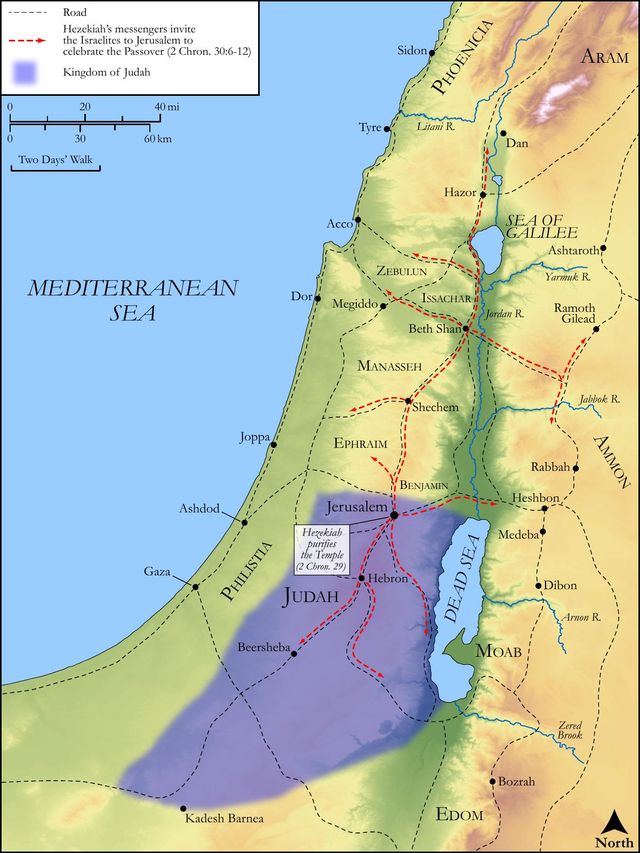
See on the biblical-era map
Study this verse
Public-domain commentary
Matthew Henry
From his Commentary on the Whole Bible. Henry comments on passages, not single verses — this entry covers 2 Chronicles 30:21–27.
After the passover followed the feast of unleavened bread, which continued seven days. How that was observed we are here told, and every thing in this account looks pleasant and lively. 1. Abundance of sacrifices were offered to God in peace-offerings, by which they both acknowledged and implored the favour of God, and on part of which the offerers feasted with their friends during these seven days (Ch2 30:22), in token of their communion with God and the comfort they took in his favour and their reconciliation to him. To keep up this part of the service, that God's altar might be abundantly regaled with the fat and blood and his priests and people with the flesh of the peace-offerings, Hezekiah gave out of his own stock 1000 bullocks and 7000 sheep, and the princes, excited by his pious example, gave the same number of bullocks and a greater number of sheep, and all for peace-offerings, Ch2 30:24. By this God was honoured, the joy of the festival was kept up, and the strangers were encouraged to come again to Jerusalem. It was generously done of the king and the princes thus plentifully to entertain the whole congregation; but what is a great estate good for but that it puts men into a capacity of doing so much the more good? Christ feasted those that followed him. I believe neither Hezekiah nor his princes were the poorer at the year's end for this their pious liberality. 2. Many good prayers were put up to God with the peace-offerings, Ch2 30:22. They made confession to the Lord God of their fathers, in which the intent and meaning of the peace-offerings were directed and explained. When the priests sprinkled the blood and burnt the fat they made confession, so did the people when they feasted on their part. They made a religious confession of their relation to God and dependence upon him, a penitent confession of their sins and infirmities, a thankful confession of God's mercies to them, and a supplicatory confession of their wants and desires; and, in all these, they had an eye to God as the God of their fathers, a God in covenant with them. 3. There was a great deal of good preaching. The Levites (whose office it was, Deu 33:10) taught the people the good knowledge of the Lord, read and opened the scriptures, and instructed the congregation concerning God and their duty to him; and great need there was of this, after so long a famine of the word as there had been in the last reign. Hezekiah did not himself preach, but he spoke comfortably to the Levites that did, attended their preaching, commended their diligence, and assured them of his protection and countenance. Hereby he encouraged them to study hard and take pains, and put a reputation upon them, that the people might respect and regard them the more. Princes and magistrates, by owning and encouraging faithful and laborious preachers, greatly serve the interest of God's kingdom among men. 4. They sang psalms every day (Ch2 30:21): The Levites and priests praised the Lord day by day, both with songs and musical instruments, thus expressing their own and exciting one another's joy in God and thankfulness to him. Praising God should be much of our work in our religious assemblies. 5. Having kept the seven days of the feast in this religious manner, they had so much comfort in the service that they kept other seven days, Ch2 30:23. They did not institute any new modes of worship, but repeated and continued the old. The case was extraordinary: they had been long without the ordinance; guilt had been contracted by the neglect of it; they had now got a very great congregation together, and were in a devout serious frame; they knew not when they might have such another opportunity, and therefore could not now find in their hearts to separate till they had doubled the time. Many of them were a great way from home, and had business in the country to look after, for, this being the second month, they were in the midst of their harvest; yet they were in no haste to return: the zeal of God's house made them forget their secular affairs. How unlike those who snuffed at God's service, and said, What a weariness is it! Or those who asked, When will the sabbath be gone? The servants of God should abound in his work. 6. All this they did with gladness (Ch2 30:23); they all rejoiced, and particularly the strangers, Ch2 30:25. So there was great joy in Jerusalem, Ch2 30:26. Never was the like since the dedication of the temple in Solomon's time. Note, Holy duties should be performed with holy gladness; we should be forward to them, and take pleasure in them, relish the sweetness of communion with God, and look upon it as matter of unspeakable joy and comfort that we are thus favoured and have such earnests of everlasting joy. 7. The congregation was at length dismissed with a solemn blessing, Ch2 30:27. (1.) The priests pronounced it; for it was part of their office to bless the people (Num 6:22, Num 6:23), in which they were both the people's mouth to God by way of prayer and God's mouth to the people by way of promise; for their blessing included both. In it they testified both their desire of the people's welfare and their dependence upon God and that word of his grace to which they commended them. What a comfort is it to a congregation to be sent home thus crowned! (2.) God said Amen to it. The voice of the priests, when they blessed the people, was heard in heaven and came up to the habitation of God's holiness. When they pronounced the blessing God commanded it, and perhaps gave some sensible token of the ratification of it. The prayer that comes up to heaven in a cloud of incense will come down again to this earth in showers of blessings.
Continue studying 2 Chronicles 30:23 across the web’s major study libraries — every link below opens this exact verse, chapter, or book on the destination site.
Read & Compare
 BibleGatewayThis verse in more than 200 translations and 70 languages.
 Bible.comThe YouVersion reader — hundreds of translations, reading plans, and highlights.
 ESV.orgCrossway's official English Standard Version reader.
 NET BibleThe NET translation with 60,000+ translators' notes on every rendering decision.
 STEP BibleTyndale House's free study tool — original text, vocabulary, and scholarly resources.
 BibliaLogos Bible Software's free web reader.
 USCCBThe New American Bible (Revised Edition) with the U.S. bishops' study notes.
Commentaries
 BibleHub CommentariesDozens of classic commentaries on this verse, gathered on one page.
 StudyLightMore than 100 commentary sets — the largest collection on the web.
 BibleRefPlain-English commentary on what this verse means, verse by verse.
 Enduring WordDavid Guzik's free commentary on this chapter, widely used by Bible teachers.
 Bible Study ToolsVerse commentary alongside Greek and Hebrew study aids.
Original Language & Research
- BibleHub InterlinearThe verse word by word — original language, transliteration, and English.
- BibleHub LexiconEvery word's original-language definition and Strong's entry.
 Blue Letter BibleDeep-study tools — Strong's numbers, concordance, and word studies.
 SefariaThe Hebrew text with Rashi and centuries of Jewish commentary.
Sermons, Hymns & Audio


TrulyRandomVerse is not affiliated with these sites and doesn’t control their content. They’re linked because they’re genuinely useful.
Summary
Second Chronicles 30:23 captures a profound moment during King Hezekiah's spiritual revival, where the entire assembly, having faithfully completed the divinely appointed seven-day Passover and Feast of Unleavened Bread, unanimously resolved to extend their celebration for an additional seven days. This unprecedented decision, born not from legal obligation but from an overwhelming spiritual hunger and deep-seated joy, powerfully illustrates the transformative impact of God's presence and the genuine gladness that accompanied their renewed devotion to Him.
Context
ShowHideLiterary Context
This verse serves as a climactic point in the narrative of King Hezekiah's extensive spiritual reforms, detailed across 2 Chronicles 29 and 2 Chronicles 30. Chapter 29 recounts Hezekiah's immediate actions upon ascending the throne: cleansing and consecrating the temple, and re-establishing proper Levitical worship. Chapter 30 then vividly describes his bold and unprecedented invitation to all of Israel and Judah to gather in Jerusalem for a unified Passover celebration, an event largely neglected or improperly observed for generations (2 Chronicles 30:1). The verses immediately preceding 2 Chronicles 30:23 detail the initial, challenging, yet ultimately successful observance of the Passover and the Feast of Unleavened Bread, including the purification of the priests and the people's repentance despite their initial ritual impurity (2 Chronicles 30:18-20). Verse 23 marks a spontaneous, Spirit-led extension of this joyous festival, demonstrating the profound depth of the spiritual awakening that had permeated the assembly. This extraordinary act of devotion then leads directly into the account of continued worship and the subsequent widespread destruction of idolatrous altars and symbols throughout the land in 2 Chronicles 31.
Historical & Cultural Context
Hezekiah's reign (c. 715–686 BC) followed a period of severe spiritual apostasy under his father, King Ahaz, who had not only closed the temple but actively promoted idolatry and even child sacrifice (2 Chronicles 28:24-25). The Passover, a foundational feast commemorating God's miraculous deliverance of Israel from Egyptian bondage (Exodus 12:1-20), had fallen into disuse or improper observance, symbolizing the nation's spiritual decline. By extending an invitation to both the southern kingdom of Judah and the scattered remnants of the northern kingdom of Israel (which had largely been carried into Assyrian captivity by this time), Hezekiah was attempting a national spiritual reunification and a comprehensive restoration to the worship of Yahweh. The extension of the feast, a voluntary act beyond the Mosaic Law's requirements (Leviticus 23:6), was unprecedented and signified a profound shift from mere ritualistic observance to a heartfelt, voluntary devotion. Feasts were central to Israelite life, serving as crucial opportunities for communal worship, thanksgiving, and remembering God's mighty acts, and the pervasive joy associated with them was often understood as a tangible sign of God's favor and presence (Deuteronomy 16:15).
Key Themes
ShowHideThe verse powerfully highlights several key themes central to the book of Chronicles and Hezekiah's reign. Revival and Restoration are paramount, as the people collectively turn back to God after generations of spiritual neglect and idolatry. The phrase "the whole assembly" underscores Unity, demonstrating a remarkable transcendence of the historical division between Judah and Israel, bringing them together in shared worship. Perhaps most striking is the theme of Voluntary Devotion: the decision to extend the feast was not a legal command but arose from a genuine, Spirit-prompted desire for more of God's presence, signifying a move beyond mere obligation to a spontaneous, heartfelt commitment. Finally, Joy in Worship is explicitly stated, with the assembly keeping the additional days "with gladness." This demonstrates that their renewed relationship with God was not burdensome but a source of profound spiritual delight and exultation, echoing the profound truth that "the joy of the Lord is your strength" (Nehemiah 8:10). This spontaneous, extended celebration vividly illustrates the depth of their spiritual transformation and God's abundant blessing upon their repentance.
Exposition and Analysis
ShowHideKey Word Analysis
ShowHideThis verb, derived from a primitive root meaning "to advise," implies a deliberate, intentional, and collective decision-making process. It suggests that the "whole assembly" engaged in a communal discussion and reached a unanimous agreement, rather than acting on a fleeting impulse. This highlights the corporate nature of their spiritual awakening and the wisdom guiding their decision to prolong their time in God's presence, signifying a deep, shared commitment to worship and communion with Yahweh.
This term denotes a deep, heartfelt joy, blithesomeness, and glee, often associated in the Old Testament with feasts, festivals, and the direct experience of God's presence and blessing. It signifies more than superficial happiness; it is an internal state of profound contentment, exultation, and spiritual delight that flows from a right relationship with God and the experience of His favor. The explicit mention of "gladness" underscores that their extended worship was not a burden or a mere ritual, but a source of immense spiritual fulfillment and profound delight in the Lord.
Verse Breakdown
ShowHide"And the whole assembly"
This opening phrase emphasizes the remarkable unity and comprehensive participation in this spiritual revival. It was not merely the king or a select group of priests, but the entire congregation—including individuals from both the northern kingdom of Israel and the southern kingdom of Judah—who were united in their spiritual fervor. This corporate solidarity highlights the pervasive nature of the revival and the overcoming of long-standing historical divisions in shared worship.
"took counsel to keep other seven days"
This clause reveals the unprecedented and voluntary nature of their decision. The initial Passover and Feast of Unleavened Bread were divinely ordained for seven days (Leviticus 23:6). The assembly's unanimous decision to extend this sacred time by an additional week demonstrates a profound spiritual hunger and an overwhelming desire to prolong their time in God's presence and worship. It signifies a move beyond mere legal obligation to a spontaneous, Spirit-led devotion born of deep appreciation for God's goodness.
"and they kept [other] seven days with gladness"
This final clause confirms the successful execution of their collective decision and vividly characterizes the atmosphere of the extended celebration. The active "keeping" or observing of the additional days demonstrates their unwavering commitment, and the pervasive "gladness" indicates that this extended worship was not a burdensome chore but a source of immense joy and spiritual delight. It stands as a powerful testament to the transformative power of God's grace and the genuine pleasure found in His presence.
Literary Devices
ShowHideThe verse effectively employs Repetition of "seven days" to emphasize the duration and extraordinary nature of the extended celebration, reinforcing the unprecedented depth of the assembly's devotion. The narrative structure also highlights Deliberation and Action through the sequence "took counsel" followed by "kept," underscoring the intentionality and unanimous execution of their collective decision. There is an implicit Contrast between the previous generations' neglect and improper observance of the Passover and this assembly's overwhelming desire to extend it, which powerfully underscores the depth and authenticity of Hezekiah's revival. The entire scene functions as a powerful Symbolism of true spiritual awakening: a people so profoundly moved by God's presence that they spontaneously desire more of Him, characterized by unity and profound joy. Furthermore, the narrative's consistent focus on "the whole assembly" employs Synecdoche, where the part (the gathered congregation) represents the unified nation, emphasizing a national spiritual renewal.
Theological and Thematic Connections
ShowHideThe spontaneous decision of the assembly in 2 Chronicles 30:23 to extend their feast by another seven days is a profound theological statement about the nature of true worship and spiritual revival. It demonstrates that genuine encounter with God's presence moves beyond mere duty or ritual to a place of profound desire and overflowing joy. This voluntary devotion, born of a transformed heart, is a hallmark of authentic spiritual awakening, where God's people are so delighted in Him that they long to prolong their communion and celebration. It underscores that God desires not just outward obedience, but a joyful, willing heart that finds its deepest satisfaction and pleasure in Him, reflecting the very nature of His abundant grace.
Reflection and Application
ShowHideThe scene in 2 Chronicles 30:23 offers a profound challenge and encouragement for believers today. It compels us to examine the nature of our own spiritual disciplines and worship: are they born out of mere obligation, a sense of duty to fulfill a religious requirement, or do they flow from a genuine, overflowing desire for God's presence? The "gladness" of the assembly reminds us that true worship is not a burdensome chore but a source of profound joy and spiritual delight, a reflection of the abundant life found in Christ. When we truly encounter God's goodness and grace, when His Spirit moves powerfully within us, our natural response should be a longing for more of Him—for deeper communion, for extended time in His presence, and for a life that continually seeks to honor Him. This verse invites us to cultivate a heart that finds its greatest pleasure and satisfaction in God, leading to spontaneous acts of devotion and a life characterized by joyful, voluntary service, reflecting the transformative power of His Spirit within us.
Questions for Reflection
ShowHideFAQ
ShowHideWhy did they extend the feast beyond the commanded seven days?
ShowHideThe extension of the Passover and Feast of Unleavened Bread beyond the divinely mandated seven days was not a legal requirement but a spontaneous, unanimous decision by "the whole assembly" (2 Chronicles 30:23). This extraordinary act was driven by an overwhelming sense of joy, profound spiritual renewal, and a deep desire to prolong their time in God's presence. After generations of spiritual decline and neglect of God's commands, the people experienced a powerful revival under King Hezekiah. The encounter with God's grace and the restoration of proper worship filled them with such gladness and spiritual hunger that they voluntarily chose to continue their celebration, demonstrating a transformed heart that delighted in God beyond mere obligation. It was a testament to the genuine and pervasive nature of the revival, where the people's hearts were so moved by God's goodness that they simply desired more of His presence.
What is the significance of "the whole assembly" taking counsel together?
ShowHideThe phrase "the whole assembly" is highly significant, highlighting the remarkable unity and corporate nature of the spiritual awakening during Hezekiah's reign. Historically, the kingdom had been divided into Judah and Israel for centuries, often in conflict. Hezekiah's invitation to the Passover extended to both the northern and southern kingdoms (2 Chronicles 30:1). The fact that "the whole assembly"—including people from both northern and southern kingdoms—"took counsel" together to extend the feast signifies a powerful moment of national spiritual reunification and solidarity. It demonstrates that the revival transcended political and historical divisions, bringing God's people together in a shared, unanimous commitment to worship and delight in Him. This collective decision underscores the depth and widespread impact of the spiritual transformation, showing that the entire community was united in their desire for God.
Christ-Centered Fulfillment
ShowHideThe joyous, voluntary extension of the feast in 2 Chronicles 30:23, driven by the assembly's profound gladness and hunger for God, finds its ultimate fulfillment in the person and work of Jesus Christ. The Old Testament feasts, including Passover, were divinely instituted shadows pointing to the greater reality found in Christ (Colossians 2:16-17). Jesus is the true Lamb of God who takes away the sin of the world, our ultimate Passover sacrifice, whose shed blood brings ultimate deliverance from sin and eternal new life (1 Corinthians 5:7). The Old Testament assembly's desire for an extended celebration, a spontaneous act of devotion beyond the law's requirement, powerfully foreshadows the unending, joyful fellowship believers have with God through Christ in the new covenant. Through the indwelling Holy Spirit, believers are empowered to worship God "in spirit and truth" (John 4:23-24), not out of obligation or ritualistic duty, but out of an overflowing love, gratitude, and delight for the redemption secured by Christ. The temporary gladness experienced by Hezekiah's assembly, though profound, pales in comparison to the "fullness of joy" found eternally in God's presence through Christ, who grants us bold and confident access to the Father's throne of grace (Hebrews 10:19-22). This extended feast, therefore, anticipates the eternal celebration and unending communion that awaits believers at the marriage supper of the Lamb, where joy in God's glorious presence will know no end.