


2 Chronicles 29:26
Bible text: King James Version (1769 Blayney text) · Public domain
Bible text: Berean Standard Bible · Public domain
Bible text: American Standard Version (1901) · Public domain
Bible text: World English Bible, Messianic edition · Public domain
Bible text: Geneva Bible (1599) · Public domain
Bible text: Young's Literal Translation · Public domain
- וַיַּעַמְדוּvai·ya·'am·Duand they stoodH5975Conj-w ¦ V-Qal-ConsecImperf-3mpVerb Qal Consecutive Imperfect 3rd Plural Masculineוַandיַּעַמְדוּthey stood
- הַלְוִיִּםhal·vi·Yimthe LevitesH3881Art ¦ N-mpNoun Gentilic Plural Masculine AbsoluteהַtheלְוִיִּםLevites
- בִּכְלֵיbikh·Leiwith [the] instruments ofH3627Prep-b ¦ N-mpcNoun Plural Masculine Constructבִּwithכְלֵי[the] instruments of
- דָוִידda·VidDavidH1732N-proper-mNoun Proper Masculine
- וְהַכֹּהֲנִיםve·ha·ko·ha·Nimand the priestsH3548Conj-w ¦ Art ¦ N-mpNoun Plural Masculine Absoluteוְandהַtheכֹּהֲנִיםpriests
- בַּחֲצֹצְרוֹתba·cha·tzo·tze·Rotwith trumpetsH2689Prep-b ¦ N-fpNoun Plural Feminine Absoluteבַּwithחֲצֹצְרוֹתtrumpets
English is a literal word-by-word gloss of the Hebrew, not the KJV's wording. Why?
This is the original text the KJV's translators worked from — each Hebrew word with its own literal English meaning in this verse, prepared by scholars at Tyndale House, Cambridge. The KJV translates whole sentences, not word by word, so its wording differs: one Hebrew word can become several English words, and the KJV may choose “the LORD” where the gloss reads “Yahweh”. Both are faithful — they answer different questions. For the KJV's own rendering, switch to the KJV text.
Details
See on the biblical-era map
Study this verse
Public-domain commentary
Matthew Henry
From his Commentary on the Whole Bible. Henry comments on passages, not single verses — this entry covers 2 Chronicles 29:20–36. His three-level outline is real structure in the source text, so it is rendered as structure.
The temple being cleansed, we have here an account of the good use that was immediately made of it. A solemn assembly was called to meet the king at the temple, the very next day (Ch2 29:20); and very glad, no doubt, all the good people in Jerusalem were, when it was said, Let us go up to the house of the Lord, Psa 122:1. As soon as Hezekiah heard that the temple was ready for him he lost no time, but made it appear that he was ready for it. He rose early to go up to the house of the Lord, earlier on that day than on other days, to show that his heart was upon his work there. Now this day's work was to look two ways: -
I.Atonement must be made for the sins of the last reign.
They thought it not enough to lament and forsake those sins, but they brought a sin-offering. Even our repentance and reformation will not obtain pardon but in and through Christ, who was made sin (that is, a sin-offering) for us. No peace but through his blood, no, not for penitents. Observe,
1.The sin-offering was for the kingdom, for the sanctuary, and for Judah (Ch2 29:21), that is, to make atonement for the sins of princes, priests, and people, for they had all corrupted their way. The law of Moses appointed sacrifices to make atonement for the sins of the whole congregation (Lev 4:13, Lev 4:14; Num 15:24, Num 15:25), that the national judgments which their national sins deserved might be turned away. For this purpose we must now have an eye to Christ the great propitiation, as well as for the remission and salvation of particular persons.
2.The law appointed only one goat for a sin-offering, as on the day of atonement (Lev 16:15) and on such extraordinary occasions as this, Num 15:24. But they here offered seven (Ch2 29:21), because the sins of the congregation had been very great and long continued in. Seven is a number of perfection. Our great sin-offering is but one, yet that one perfects for ever those that are sanctified.
3.The king and the congregation (that is, the representatives of the congregation) laid their hands on the heads of the goats that were for the sin-offering (Ch2 29:23), thereby owning themselves guilty before God and expressing their desire that the guilt of the sinner might be transferred to the sacrifice. By faith we lay our hands on the Lord Jesus, and so receive the atonement, Rom 5:11.
4.Burnt-offerings were offered with the sin-offerings, seven bullocks, seven rams, and seven lambs. The intention of the burnt-offerings was to give glory to the God of Israel, whom they owned as the only true God, which it was proper to do at the same time that they were by the sin-offering making atonement for their offences. The blood of those, as well as of the sin-offering, was sprinkled upon the altar (Ch2 29:22), to make reconciliation for all Israel (Ch2 29:24), and not for Judah only. Christ is a propitiation, not for the sins of Israel only, but of the whole world, Jo1 2:1, Jo1 2:2.
5.While the offerings were burning upon the altar the Levites sang the song of the Lord (Ch2 29:27), the Psalms composed by David and Asaph (Ch2 29:30), accompanied by the musical instruments which God by his prophets had commanded the use of (Ch2 29:25), and which had been long neglected. Even sorrow for sin must not put us out of tune for praising God. By faith we must rejoice in Christ Jesus as our righteousness; and our prayers and praises must ascend with his offering, to be accepted only in virtue of it.
6.The king and all the congregation testified their consent to and concurrence in all that was done, by bowing their heads and worshipping, expressing an awful veneration of the divine Majesty, by postures of adoration. This is taken notice of, Ch2 29:28-30. It is not enough for us to be where God is worshipped, if we do not ourselves worship him, and that not with bodily exercise only, which profits little, but with the heart.
II.The solemnities of this day did likewise look forward.
The temple service was to be set up again, that it might be continually kept up; and this Hezekiah calls them to, Ch2 29:31. "Now that you have consecrated yourselves to the Lord - have both made an atonement and made a covenant by sacrifice, are solemnly reconciled and engaged to him - now come near, and bring sacrifices." Note, Our covenant with God must be pursued and improved in communion with him. Having consecrated ourselves, in the first place, to the Lord, we must bring the sacrifices of prayer, and praise, and alms, to his house. Now, in this work, it was found.
1.That the people were free. Being called to it by the king, they brought in their offerings, though not in such abundance as in the glorious days of Solomon (for Judah was now diminished, impoverished, and brought low), but according to what they had, and as much as one could expect considering their poverty and the great decay of piety among them.
(1.)Some were so generous as to bring burnt-offerings, which were wholly consumed to the honour of God, and of which the offerer had no part. Of this sort there were seventy bullocks, 100 rams, and 200 lambs, Ch2 29:32.
(2.)Others brought peace-offerings and thank-offerings, the fat of which was burnt upon the altar, and the flesh divided between the priests and the offerers, Ch2 29:35. Of this sort there were 600 oxen and 3000 sheep, Ch2 29:33. Perhaps the remembrance of their sin in sacrificing on the high places made them more willing to bring their sacrifices now to God's altar.
2.That the priests were few, too few for the service, Ch2 29:34. Many of them, it is likely, were suspended and laid aside as polluted and uncanonical, for having sacrificed to idols in the last reign, and the rest had not the zeal that one might have expected upon such an occasion. They thought that the king needed not to be so forward, that there was no necessity for such haste in opening the doors of the temple, and therefore they took no care to sanctify themselves, and being unsanctified, and so unqualified, they made that their excuse for being absent from the service; as if their offence would be their defence. It is recorded here, to the perpetual shame of the priests, that, though they were so well provided for out of the offerings of the Lord made by fire, yet they did not mind their business. Here was work to do, and there wanted proper hands to do it.
3.That the Levites were forward. They had been more upright in heart to sanctify themselves than the priests (Ch2 29:34), were better affected to the work and better prepared and qualified for it. This was their praise, and, in recompence for it, they had the honour to be employed in that which was the priests' work: they helped them to flay the offerings. This was not according to the law (Lev 1:5, Lev 1:6), but the irregularity was dispensed with in cases of necessity, and thus encouragement was given to the faithful zealous Levites and a just disgrace put upon the careless priests. What the Levites wanted in the ceremonial advantages of their birth and consecration was abundantly made up in their eminent qualifications of skill and will to do the work.
4.That all were pleased. The king and all the people rejoiced in this blessed turn of affairs and the new face of religion which the kingdom had put on, Ch2 29:36. Two things in this matter pleased them: - (1.) That it was soon brought about: The thing was done suddenly, in a little time, with a great deal of ease, and without any opposition. Those that go about the work of God in faith and with resolution will find that there is not that difficulty in it which they sometimes imagine, but it will be a pleasing surprise to them to see how soon it is done. (2.) That the hand of God was plainly in it: God had prepared the people by the secret influences of his grace, so that many of those who had in the last reign doted on the idolatrous altars were now as much in love with God's altar. This change, which God wrought on their minds, did very much expedite and facilitate the work. Let magistrates and ministers do their part towards the reforming of a land, and ascribe to him the glory of what is done, especially when it is done suddenly and is a pleasing surprise. This is the Lord's doing, and it is marvellous.
Continue studying 2 Chronicles 29:26 across the web’s major study libraries — every link below opens this exact verse, chapter, or book on the destination site.
Read & Compare
 BibleGatewayThis verse in more than 200 translations and 70 languages.
 Bible.comThe YouVersion reader — hundreds of translations, reading plans, and highlights.
 ESV.orgCrossway's official English Standard Version reader.
 NET BibleThe NET translation with 60,000+ translators' notes on every rendering decision.
 STEP BibleTyndale House's free study tool — original text, vocabulary, and scholarly resources.
 BibliaLogos Bible Software's free web reader.
 USCCBThe New American Bible (Revised Edition) with the U.S. bishops' study notes.
Commentaries
 BibleHub CommentariesDozens of classic commentaries on this verse, gathered on one page.
 StudyLightMore than 100 commentary sets — the largest collection on the web.
 BibleRefPlain-English commentary on what this verse means, verse by verse.
 Enduring WordDavid Guzik's free commentary on this chapter, widely used by Bible teachers.
 Bible Study ToolsVerse commentary alongside Greek and Hebrew study aids.
Original Language & Research
- BibleHub InterlinearThe verse word by word — original language, transliteration, and English.
- BibleHub LexiconEvery word's original-language definition and Strong's entry.
 Blue Letter BibleDeep-study tools — Strong's numbers, concordance, and word studies.
 SefariaThe Hebrew text with Rashi and centuries of Jewish commentary.
Sermons, Hymns & Audio


TrulyRandomVerse is not affiliated with these sites and doesn’t control their content. They’re linked because they’re genuinely useful.
Summary
2 Chronicles 29:26 meticulously details a pivotal moment in King Hezekiah's spiritual reformation, illustrating the re-establishment of proper Temple worship through the distinct yet complementary roles of the Levites and priests. This verse highlights the Levites' active participation as musicians, utilizing the traditional instruments organized by King David, while the priests fulfilled their unique function by sounding the sacred trumpets. It signifies a deliberate and faithful return to God-ordained order, reverence, and the rich heritage of Israelite praise, underscoring the king's commitment to restoring covenant faithfulness.
Context
ShowHideLiterary Context
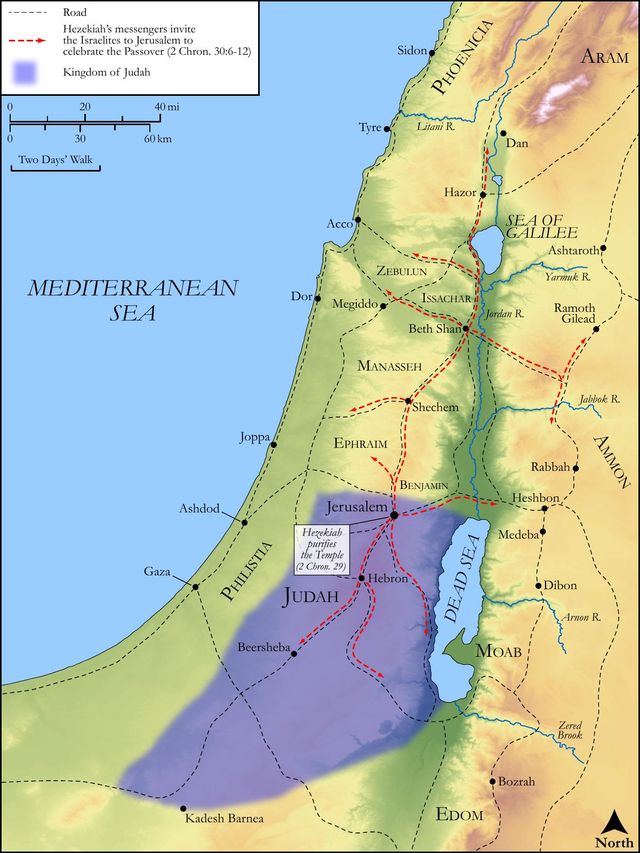
This verse is deeply embedded within the comprehensive narrative of King Hezekiah's zealous spiritual reforms, initiated immediately upon his ascension to the throne of Judah. Chapter 29 provides a detailed account of his actions to reopen and purify the Temple, which had been desecrated and shut during the idolatrous reign of his father, King Ahaz. Following the extensive cleansing of the Temple (verses 3-19) and the offering of sin and burnt sacrifices for national atonement (verses 20-24), verse 26 specifically describes the organized and reverent participation of the Levites and priests in the subsequent worship service. This orderly arrangement precedes the joyous singing and prostration that marked the re-inauguration of Temple worship (verses 27-30), emphasizing the meticulous restoration of every facet of the divine service according to established divine patterns.
Historical & Cultural Context
King Hezekiah's reign (c. 715-686 BC) represented a radical departure from the profound apostasy of King Ahaz, who had not only closed the Temple but also promoted pagan altars and practices throughout Judah. Hezekiah's reforms were a top-down, comprehensive initiative aimed at purging idolatry and restoring covenant faithfulness to Yahweh. The specific mention of "instruments of David" and "trumpets" reflects the deep historical and cultural roots of Israelite worship. The Levites, descendants of Levi, were divinely appointed for various Temple duties, with many organized by King David into specific musical guilds. The priests, descendants of Aaron, held exclusive rights to offer sacrifices and use sacred instruments like the silver trumpets, as explicitly commanded by Mosaic law. Thus, this verse powerfully signifies a return to the established, God-given patterns of worship, rejecting the syncretism of the preceding era.
Key Themes
ShowHideThe passage powerfully articulates several key themes central to the Chronicler's theological agenda. Firstly, it emphasizes the Restoration of True Worship, depicting Judah's decisive turn from syncretism and idolatry back to the exclusive worship of Yahweh, vividly demonstrated by Hezekiah's zeal to reopen and purify the defiled Temple. Secondly, it highlights the Order and Specialization in Service, demonstrating God's design for distinct, complementary roles within the community of faith, where Levites (as musicians) and priests (with sacrificial and signaling functions) each contribute essential elements to the sacred ceremony. Thirdly, the prominence of "instruments of David" underscores The Centrality of Music in Worship, showcasing its vital role in expressing praise, adoration, and setting a reverent atmosphere. Finally, the meticulous adherence to established practices, whether Davidic or Mosaic, powerfully conveys the theme of Obedience to Divine Ordinances, asserting that true worship must align with God's revealed will, not human innovation, echoing the principles found in Deuteronomy 12:32.
Exposition and Analysis
ShowHideKey Word Analysis
ShowHideMembers of the tribe of Levi, specifically designated for service in the Tabernacle and later the Temple. While their duties were varied, encompassing roles as guards, treasurers, and teachers, here they are primarily functioning in their capacity as organized musicians, a role greatly expanded and formalized by King David for Temple worship. Their presence signifies the re-establishment of the divinely appointed order of Temple service, ensuring that the musical component of worship, as prescribed, was properly executed.
This term refers to any apparatus or implement, and in this context, specifically denotes the various musical instruments—such as harps, lyres, cymbals, and possibly other stringed and percussion instruments—that King David had commissioned or organized for the Levites to use in the worship of Yahweh. The explicit mention of "instruments of David" signals a deliberate and faithful return to the rich, organized tradition of musical praise that David had instituted, emphasizing a continuity with a golden age of worship.
These were typically long, straight silver trumpets, distinct from the ram's horn (shofar). Their use was specifically prescribed for the priests (Numbers 10:8). They served multiple purposes: signaling for assembly, directing movements, sounding alarms, and, as here, accompanying sacrifices and solemn festivals. Their sound was a symbol of divine presence, proclamation, and the solemnity of the occasion, reinforcing the sacred and ordered nature of the worship.
Verse Breakdown
ShowHide"And the Levites stood"
This phrase indicates a posture of readiness, reverence, and active participation. "Stood" implies a prepared and engaged presence, ready to execute their divinely appointed roles in the solemn worship service. It speaks to the order and intentionality of the restored liturgy, highlighting that the Levites were positioned and prepared to fulfill their specific duties.
"with the instruments of David"
This clause specifies the Levites' primary function in this context: musical accompaniment and leadership in praise. The reference to "instruments of David" is crucial, emphasizing that Hezekiah's reforms were not innovative but a faithful restoration of worship practices established by David under divine inspiration, highlighting the importance of skilled and organized music in Temple praise as a means of honoring God.
"and the priests with the trumpets"
This parallel clause delineates the distinct, yet complementary, role of the priests. Unlike the Levites who played various instruments, the priests were uniquely authorized to sound the silver trumpets. This action was integral to the sacrificial rites, signaling the various stages of the ceremony, proclaiming the presence and activity of God, and reinforcing the sacred and ordered nature of the worship. Their sound served as a divine signal, marking the solemnity and significance of the occasion.
Literary Devices
ShowHideThe verse employs several literary devices to enhance its meaning and impact. Parallelism is strikingly evident in the balanced structure: "the Levites stood with the instruments of David, and the priests with the trumpets." This structural symmetry highlights the distinct yet complementary roles of these two groups in the worship service, underscoring the divinely ordained order and harmonious cooperation required for proper worship. The phrase "instruments of David" functions as a powerful metonymy, where the instruments themselves represent the entire organized musical tradition, the legacy, and the divinely inspired worship practices established by King David for Temple worship. Furthermore, the mention of specific instruments like "trumpets" and the implied "instruments of David" (such as harps, lyres, and cymbals) provides vivid imagery, allowing the reader to visualize the solemnity, grandeur, and auditory richness of the re-inaugurated worship. The entire scene is imbued with profound symbolism, representing the restoration of divine order, the importance of structured and reverent worship, and the return to covenant faithfulness after a period of profound apostasy.
Theological and Thematic Connections
ShowHideThis verse powerfully underscores God's desire for ordered, reverent, and joyful worship conducted according to His revealed will. Hezekiah's meticulous restoration of the Temple service, including the specific roles of Levites and priests, reflects a deep understanding that worship is not merely an emotional outpouring but a structured act of obedience and adoration. The emphasis on the "instruments of David" and the priests' "trumpets" demonstrates that both artistic expression and solemn proclamation are integral to God-honoring worship. This passage serves as a theological reminder that God values our gifts and talents, and that when offered in an organized and obedient manner, they contribute to a harmonious and powerful corporate witness. It speaks to the importance of continuity with sound biblical traditions while maintaining spiritual vitality, ensuring that worship is both deeply felt and properly expressed.
Reflection and Application
ShowHideThe scene in 2 Chronicles 29:26 offers profound insights for contemporary believers. Just as Hezekiah meticulously restored the Temple service to its God-ordained pattern, we are called to approach God with intentionality, reverence, and a commitment to biblical principles in our worship. This verse reminds us that genuine worship involves both heartfelt passion and disciplined adherence to divine instruction. It challenges us to consider how we utilize our individual and corporate gifts—whether musical, organizational, or otherwise—to honor God in our gatherings and daily lives. The distinct yet harmonious roles of the Levites and priests underscore the value of organized, specialized service within the body of Christ, where each member contributes uniquely to the glory of God. Our worship, like theirs, should be a deliberate act of returning to and upholding God's standards, fostering an environment where His presence is honored and His truth proclaimed, leading to spiritual renewal and corporate flourishing.
Questions for Reflection
ShowHideFAQ
ShowHideWhat were the "instruments of David" and why were they significant?
ShowHideThe "instruments of David" refer to the various musical instruments—such as harps, lyres, cymbals, and possibly other stringed and percussion instruments—that King David had specifically commissioned, organized, and perhaps even composed music for, to be used by the Levites in the Tabernacle and later Temple worship. Their significance lies in their connection to David, who was known as a "man after God's own heart" and a gifted musician and psalmist. The use of these instruments by Hezekiah's Levites signified a deliberate return to a divinely inspired and organized tradition of praise that had been neglected during the reign of his idolatrous father, Ahaz. It represented a commitment to restoring worship to its former glory and biblical purity, as outlined in 1 Chronicles 23:5.
Why were trumpets used by the priests, and what was their function?
ShowHideThe trumpets mentioned in 2 Chronicles 29:26 were typically silver trumpets (chătsôtsᵉrâh') and their use was exclusively reserved for the priests, as commanded by God through Moses. As detailed in Numbers 10:8-10, these trumpets served multiple crucial functions: they were used to signal the assembly of the congregation, to direct the movement of the camps, to sound the alarm for war, and significantly, to accompany sacrifices and solemn festivals. In the context of Temple worship, the sound of the trumpets by the priests symbolized divine presence, served as a call to attention, marked the solemnity of the occasion, and proclaimed God's intervention and blessings. Their distinct sound was an integral part of the Old Testament liturgical experience, emphasizing the sacred and ordered nature of the worship.
Christ-Centered Fulfillment
ShowHideThe meticulous restoration of Temple worship in 2 Chronicles 29:26, with its emphasis on ordered service, specific roles, and the use of instruments for praise and proclamation, finds its ultimate fulfillment in Jesus Christ. The Old Testament Temple, its rituals, and its personnel were shadows pointing to the reality found in Him. Christ is the ultimate High Priest, who, unlike the Aaronic priests, offered a perfect and final sacrifice for sins, making continuous animal sacrifices and their accompanying rituals obsolete (as seen in Hebrews 9:11-14). He is also the true Temple, in whom God dwells fully and through whom we now have access to the Father (John 2:19-21). Furthermore, the ordered praise of the Levites foreshadows the spiritual worship of the New Covenant, where believers, as a "royal priesthood," offer "sacrifices of praise" through Christ (1 Peter 2:9 and Hebrews 13:15). Our worship is no longer bound to a physical temple or specific instruments but is to be offered "in spirit and truth" through our union with Christ (John 4:23-24), who perfectly leads and embodies all true worship. The restoration under Hezekiah, therefore, points forward to the complete and perfect restoration of relationship and worship accomplished by Christ, establishing a new and living way to approach God.