


Numbers 10:10
Bible text: King James Version (1769 Blayney text) · Public domain
Bible text: King James Version with Strong's numbers · Public domain
Bible text: Berean Standard Bible · Public domain
Bible text: American Standard Version (1901) · Public domain
Bible text: World English Bible, Messianic edition · Public domain
Bible text: Geneva Bible (1599) · Public domain
Bible text: Young's Literal Translation · Public domain
- וּבְיוֹםu·ve·Yomand on [the] day ofH3117Conj-w ¦ Prep-b ¦ N-mscNoun Singular Masculine Constructוּandבְonיוֹם[the] day of
- שִׂמְחַתְכֶםsim·chat·Khemyour rejoicingH8057N-fsc ¦ 2mpNoun Singular Feminine Constructשִׂמְחַתְrejoicingכֶםyour
- וּבְמוֹעֲדֵיכֶםu·ve·mo·'a·dei·Khemand at your appointed feastsH4150Conj-w ¦ Prep-b ¦ N-mpc ¦ 2mpNoun Plural Masculine Constructוּandבְatמוֹעֲדֵיappointed feastsכֶםyour
- וּבְרָאשֵׁיu·ve·ra·Sheiand at [the] beginnings ofH7218Conj-w ¦ Prep-b ¦ N-mpcNoun Plural Masculine Constructוּandבְatרָאשֵׁי[the] beginnings of
- חָדְשֵׁיכֶםcha·de·shei·Khemyour monthsH2320N-mpc ¦ 2mpNoun Plural Masculine Constructחָדְשֵׁיmonthsכֶםyour
- וּתְקַעְתֶּםu·te·ka'·Temand you will give a blastH8628Conj-w ¦ V-Qal-ConsecPerf-2mpVerb Qal Consecutive Perfect 2nd Plural Masculineוּandתְקַעְתֶּםyou will give a blast
- בַּחֲצֹצְרֹתba·cha·tzo·tze·Roton trumpetsH2689Prep-b ¦ N-fpNoun Plural Feminine Absoluteבַּonחֲצֹצְרֹתtrumpets
- עַל'aloverH5921PrepPreposition
- עֹלֹתֵיכֶם'o·Lo·tei·Khemyour burnt offeringsH5930N-fpc ¦ 2mpNoun Plural Feminine Constructעֹלֹתֵיburnt offeringsכֶםyour
- וְעַלve·'Aland overH5921Conj-w ¦ PrepPrepositionוְandעַלover
- זִבְחֵיziv·Chei[the] sacrifices ofH2077N-mpcNoun Plural Masculine Construct
- שַׁלְמֵיכֶםshal·mei·Khemyour peace offeringsH8002N-mpc ¦ 2mpNoun Plural Masculine Constructשַׁלְמֵיpeace offeringsכֶםyour
- וְהָיוּve·ha·Yuand they will becomeH1961Conj-w ¦ V-Qal-ConsecPerf-3cpVerb Qal Consecutive Perfect 3rd Plural common genderוְandהָיוּthey will become
- לָכֶםla·Khemfor <the> youPrep-l ¦ 2mpSuffix Personal 2nd Plural Masculineלָfor <the>כֶםyou
- לְזִכָּרוֹןle·zi·ka·rOn<into> a memorialH2146Prep-l ¦ N-msNoun Singular Masculine Absoluteלְ<into>זִכָּרוֹןa memorial
- לִפְנֵיlif·Nei<to> beforeH6440Prep-l ¦ N-mpcNoun Plural Masculine Constructלִ<to>פְנֵיbefore
- אֱלֹהֵיכֶם'e·lo·hei·Khemyour GodH430N-mpc ¦ 2mpNoun Plural Masculine ConstructאֱלֹהֵיGodכֶםyour
- אֲנִי'a·NiIH589Pro-1csPronoun Personal 1st Singular common gender
- יְהוָהYah·weh[am] YahwehH3068N-properNoun Proper Title
- אֱלֹהֵיכֶם'e·lo·hei·Khemyour GodH430N-mpc ¦ 2mpNoun Plural Masculine ConstructאֱלֹהֵיGodכֶםyour
English is a literal word-by-word gloss of the Hebrew, not the KJV's wording. Why?
This is the original text the KJV's translators worked from — each Hebrew word with its own literal English meaning in this verse, prepared by scholars at Tyndale House, Cambridge. The KJV translates whole sentences, not word by word, so its wording differs: one Hebrew word can become several English words, and the KJV may choose “the LORD” where the gloss reads “Yahweh”. Both are faithful — they answer different questions. For the KJV's own rendering, switch to the KJV text.
Details
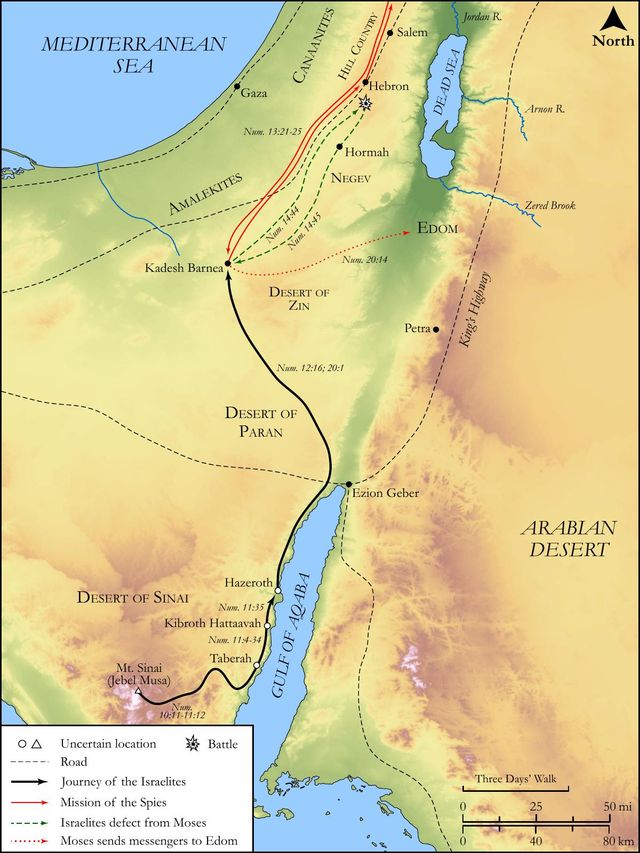
See on the biblical-era map
Study this verse
Public-domain commentary
Matthew Henry
From his Commentary on the Whole Bible. Henry comments on passages, not single verses — this entry covers Numbers 10:1–10.
We have here directions concerning the public notices that were to be given to the people upon several occasions by sound of trumpet. In a thing of this nature, one would think, Moses needed not to have been taught of God: his own reason might teach him the conveniency of trumpets; but the constitution of Israel was to be in every thing divine, and therefore even in this matter, small as it seems. Moses is here directed, 1. About the making of them. They must be made of silver; not cast but of beaten work (as some read it), the matter and shape, no doubt, very fit for the purpose. He was now ordered to make but two, because there were but two priests to use them. But in Solomon's time we read of 120 priests sounding with trumpets, Ch2 5:12. The form of these trumpets is supposed to have been much like ours at this day. 2. Who were to make use of them; not any inferior person, but the priests themselves, the sons of Aaron, Num 10:8. As great as they were, they must not think it a disparagement to them to be trumpeters in the house of God; the meanest office there was honourable. This signified that the Lord's ministers should lift up their voice like a trumpet, to show people their sins (Isa 58:1), to call them to Christ, Isa 27:13. 3. Upon what occasions the trumpets were to be sounded. (1.) For the calling of assemblies, Num 10:2. Thus they are told to blow the trumpet in Zion for the calling of a solemn assembly together, to sanctify a fast, Joe 2:15. Public notice ought to be given of the time and place of religious assemblies; for the invitation to the benefit or ordinances is general: whoever will, let him come. wisdom cries in the chief places of concourse. But, that the trumpet might not give an uncertain sound, they are directed, if only the princes and elders were to meet, to blow but one of the trumpets; less should serve to call them together, who ought to be examples of forwardness in any thing that is good: but, if the body of the people were to be called together, both the trumpets must be sounded, that they might be heard at the greater distance. In allusion to this, they are said to be blessed that hear the joyful sound (Psa 89:15), that is, that are invited and called upon to wait upon God in public ordinances, Psa 122:1. And the general assembly at the great day will be summoned by the sound of the archangel's trumpet, Mat 24:31. (2.) For the journeying of the camps, to give notice when each squadron must move; for no man's voice could reach to give the word of command: soldiers with us that are well disciplined may be exercised by beat of drums. When the trumpets were blown for this purpose, they mustsound an alarm (Num 10:5), a broken, quavering, interrupted sound, which was proper to excite and encourage the minds of people in their marches against their enemies; whereas a continued equal sound was more proper for the calling of the assembly together (Num 10:7): yet when the people were called together to deprecate God's judgments we find an alarm sounded, Joe 2:1. At the first sounding, Judah's squadron marched, at the second Reuben's, at the third Ephraim's, at the fourth Dan's, Num 10:5, Num 10:6. And some think that this was intended to sanctify their marches, for thus were proclaimed by the priests, who were God's mouth to the people, not only the divine orders given them to move, but the divine blessing upon them in all their motions. He that hath ears, let him hear that God is with them of a truth. King Abijah valued himself and his army very much upon this (Ch2 13:12), God himself is with us for our captain and his priests with sounding trumpets. (3.) For the animating and encouraging of their armies, when they went out in battle (Num 10:9): "If you go to war, blow with the trumpets, signifying thereby your appeal to heaven for the decision of the controversy, and your prayer to God to give you victory; and God will own this his own institution, and you shall be remembered before the Lord your God." God will take notice of this sound of the trumpet, and be engaged to fight their battles, and let all the people take notice of it, and be encouraged to fight his, as David, when he heard a sound of a going upon the tops of the mulberry trees. Not that God needed to be awaked by sound of trumpet any more than Christ needed to be awaked by his disciples in the storm, Mat 8:25. But where he intends mercy it is his will that we should solicit it; ministers must stir up the good soldiers of Jesus Christ to fight manfully against sin, the world, and the devil, by assuring them that Christ is the captain of their salvation, and will tread Satan under their feet. (4.) For the solemnizing of their sacred feasts, Mat 8:10. One of their feasts was called a memorial of the blowing of trumpets, Lev 23:23, etc. And it should seem they were thus to grace the solemnity of all their feasts (Psa 81:3), and their sacrifices (Ch2 29:27), to intimate with what joy and delight they performed their duty to God, and to raise the minds of those that attended the services to a holy triumph in the God they worshipped. And then their performances were for a memorial before God; for he takes pleasure in our religious exercises when we take pleasure in them. Holy work should be done with holy joy.
Continue studying Numbers 10:10 across the web’s major study libraries — every link below opens this exact verse, chapter, or book on the destination site.
Read & Compare
 BibleGatewayThis verse in more than 200 translations and 70 languages.
 Bible.comThe YouVersion reader — hundreds of translations, reading plans, and highlights.
 ESV.orgCrossway's official English Standard Version reader.
 NET BibleThe NET translation with 60,000+ translators' notes on every rendering decision.
 STEP BibleTyndale House's free study tool — original text, vocabulary, and scholarly resources.
 BibliaLogos Bible Software's free web reader.
 USCCBThe New American Bible (Revised Edition) with the U.S. bishops' study notes.
Commentaries
 BibleHub CommentariesDozens of classic commentaries on this verse, gathered on one page.
 StudyLightMore than 100 commentary sets — the largest collection on the web.
 BibleRefPlain-English commentary on what this verse means, verse by verse.
 Enduring WordDavid Guzik's free commentary on this chapter, widely used by Bible teachers.
 Bible Study ToolsVerse commentary alongside Greek and Hebrew study aids.
Original Language & Research
- BibleHub InterlinearThe verse word by word — original language, transliteration, and English.
- BibleHub LexiconEvery word's original-language definition and Strong's entry.
 Blue Letter BibleDeep-study tools — Strong's numbers, concordance, and word studies.
 SefariaThe Hebrew text with Rashi and centuries of Jewish commentary.
Sermons, Hymns & Audio


TrulyRandomVerse is not affiliated with these sites and doesn’t control their content. They’re linked because they’re genuinely useful.
Summary
Numbers 10:10 articulates a profound liturgical function for the silver trumpets, transcending their practical roles in assembly and movement. This divine decree mandates their solemn use during Israel's annual festivals, regular New Moon celebrations, and other significant observances, specifically accompanying burnt offerings and peace offerings. The blowing of these trumpets was ordained to serve as a potent "memorial before your God," signifying not only Israel's active remembrance of their covenant Lord but, more significantly, God's attentive and responsive remembrance of His people and their worship, ensuring His favorable presence and action.
Context
ShowHideLiterary Context
Numbers 10:10 concludes a distinct section (Numbers 10:1-10) entirely devoted to the divine instructions concerning the two silver trumpets. The preceding verses establish their initial, more practical purposes: summoning the congregation to the Tent of Meeting (Numbers 10:2), directing the orderly movement of the Israelite camp during their wilderness journeys (Numbers 10:5-6), and sounding an alarm in times of warfare (Numbers 10:9). These functions underscore the trumpets' role in the logistical, communal, and defensive aspects of Israel's national life. Verse 10, however, marks a significant pivot, integrating the trumpets into the spiritual and liturgical fabric of the nation. It emphasizes their crucial role within the sacrificial system and the sacred calendar, demonstrating that even instruments of practical utility are consecrated for worship. This progression highlights the comprehensive nature of God's commands, binding the daily life and movement of Israel to their covenant relationship with Yahweh. The placement of this command just before the Israelites break camp and resume their journey from Sinai (Numbers 10:11ff) powerfully suggests that their worship and remembrance of God were to remain central to their identity, progress, and divine protection throughout their wilderness wanderings.
Historical & Cultural Context
The command for the silver trumpets is given while Israel is encamped at Mount Sinai, a pivotal period characterized by the establishment of the Mosaic Covenant and the detailed revelation of the Tabernacle and its intricate worship practices. While the use of sound, particularly trumpets, was common among the nations for signaling, warfare, and religious ceremonies, the specific divine mandate for silver trumpets (חֲצֹצְרָה, ḥaṣoṣrah), meticulously crafted according to precise instructions (Numbers 10:2), set them apart. These silver trumpets were primarily associated with the priesthood and the Tabernacle, signifying their sacred authority and divine origin, distinguishing them from the more common ram's horn (שֹׁפָר, shofar). The mention of "days of your gladness," "your solemn days," and "beginnings of your months" refers to the comprehensive cycle of Israelite festivals and observances. "Days of gladness" would encompass major pilgrim festivals like Passover, Weeks (Pentecost), and Tabernacles, which were occasions for communal rejoicing and thanksgiving (Deuteronomy 16:13-15). "Solemn days" would include days of fasting and atonement, such as the solemn Day of Atonement (Leviticus 23:27-32). "Beginnings of your months" refers to the New Moon festivals, which were significant regular observances in the Israelite calendar, marked by special sacrifices (Numbers 28:11-15). The integration of the trumpets into these diverse occasions underscored the pervasive nature of worship and remembrance in Israel's national life, ensuring that God's presence and covenant were acknowledged at every turn of the sacred calendar.
Key Themes
ShowHideNumbers 10:10 contributes significantly to several key themes within the book of Numbers and the Pentateuch. Firstly, it reinforces the theme of Divine Order and Authority, demonstrating that every aspect of Israel's communal and spiritual life, even the sound of an instrument, was subject to God's precise commands. Secondly, it highlights the theme of Worship and Liturgy, emphasizing that Israel's relationship with God was to be expressed through prescribed rituals and offerings, not merely private devotion. The trumpets served as a divinely appointed element within this liturgical framework. Thirdly, the verse develops the theme of Remembrance and Covenant Faithfulness. The trumpet blast as a "memorial before your God" underscores the reciprocal nature of the covenant: Israel's acts of worship serve as a reminder to God of His promises, and God, in turn, actively remembers and responds. This concept of divine remembrance is foundational, as seen in God remembering His covenant with Abraham, Isaac, and Jacob (Exodus 2:24). Finally, the verse speaks to the theme of God's Presence Among His People. The sound of the trumpets, particularly when accompanying offerings, served as an audible sign of God's attentiveness and presence within their midst, bridging the earthly acts of worship with the heavenly realm of divine reception. This continuous acknowledgment of God's presence was vital for Israel's identity and journey.
Exposition and Analysis
ShowHideKey Word Analysis
ShowHideThis crucial term, derived from the root meaning "to remember," signifies more than a passive recollection; it denotes an active, effective remembrance or a memento. In the context of "before your God," it implies that the trumpet blast serves as a potent reminder to God of His covenant people and their offerings, prompting His divine attention and favorable action. It is not that God forgets, but that this divinely ordained act of worship, marked by the distinctive sound, "activates" or brings into effect His covenant faithfulness and presence. For the people, it also serves as a perpetual reminder of their covenant obligations and God's constant presence among them. This concept is deeply rooted in the Old Testament, where God "remembers" His covenant with Abraham, Isaac, and Jacob (Exodus 2:24), and where the Passover is instituted as a "memorial" (Exodus 12:14) for future generations.
These refer specifically to the two silver trumpets commanded by God in Numbers 10:2. Distinct from the shofar (ram's horn), the ḥaṣoṣrah were instruments of divine command and priestly authority. Their silver composition would have made them visually striking and their sound clear and penetrating, described as a "sundered or quavering note." Their use here, tied to offerings and specific sacred times, elevates them from mere signaling devices to instruments of worship, mediating the people's devotion and God's attention. The sound of these trumpets was a divinely ordained accompaniment to the sacrificial system, a sonic marker of sacred time and space, ensuring that Israel's worship was both heard and acknowledged by their covenant Lord.
This is a foundational covenant formula, frequently appearing in the Pentateuch, especially in the context of divine commands and laws (e.g., Exodus 20:2). It underscores the divine authority behind the command, reminding Israel that these practices are not human inventions but direct revelations from their covenant Lord. "The LORD" (Yᵉhôvâh) emphasizes God's personal, covenantal name, signifying His unchanging faithfulness and self-existence, while "your God" (ʼĕlôhîym) highlights His particular relationship with Israel, demanding their exclusive loyalty and obedience. This phrase serves as a powerful theological anchor, grounding the ceremonial use of trumpets in the very identity and character of God, who is both sovereign and intimately connected to His people.
Verse Breakdown
ShowHide"Also in the day of your gladness"
This refers to joyous occasions and festivals, such as the three annual pilgrim feasts (Passover, Weeks, Tabernacles), which were characterized by communal rejoicing and offerings of thanksgiving. The trumpets were to amplify this joy and consecrate it before God, ensuring that even their celebrations were acts of worship.
"and in your solemn days"
This contrasts with "gladness" and refers to days of serious religious observance, such as fast days or the Day of Atonement. These days were marked by humility, repentance, and solemn assembly. The trumpets here would signify the gravity of the occasion and call for God's merciful attention and remembrance of His covenant.
"and in the beginnings of your months"
This specifies the New Moon festivals, which were monthly observances marked by special sacrifices and communal gatherings. The trumpets ensured that these regular, recurring acts of worship were also accompanied by a distinct, divinely appointed sound, marking the sanctity of time.
"ye shall blow with the trumpets"
This is the direct command for the priests to sound the silver trumpets. The act of blowing was not merely a signal but an integral part of the worship, an audible expression of devotion, a call to divine attention, and a declaration of God's presence.
"over your burnt offerings, and over the sacrifices of your peace offerings"
This specifies the particular sacrificial contexts for the trumpet blasts. Burnt offerings (ʿôlâh) were wholly consumed, symbolizing complete dedication and atonement. Peace offerings (shelem) involved communal feasting, symbolizing fellowship, reconciliation, and thanksgiving. The trumpets consecrated these offerings, making them acceptable and memorable before God, signifying their divine reception.
"that they may be to you for a memorial before your God"
This is the stated divine purpose of the trumpet blasts. The sound served as a zikrôwn—a potent, active reminder—to God, ensuring His attentive presence and remembrance of His covenant and His people's worship. For the people, it was a constant auditory reminder of God's presence among them and their ongoing covenant obligations.
"I [am] the LORD your God"
This concluding covenant formula reasserts the divine authority and personal, exclusive relationship between Yahweh and Israel. It reinforces that these commands are from their faithful, sovereign, and self-existent God, who demands and deserves their worship, obedience, and exclusive loyalty, grounding the entire ordinance in His unchanging character.
Literary Devices
ShowHideNumbers 10:10 employs several literary devices to convey its profound message and underscore its divine authority. Parallelism is evident in the pairing of "day of your gladness" and "your solemn days," highlighting the comprehensive scope of the trumpets' use across the full spectrum of Israelite emotional and spiritual experiences, from joyous celebration to solemn contrition. This juxtaposition emphasizes that all aspects of life, whether celebratory or somber, were to be brought before God in worship. The Repetition of the possessive pronoun "your" ("your gladness," "your solemn days," "your months," "your burnt offerings," "your peace offerings") underscores Israel's active participation and ownership in these divinely ordained rituals, making the worship both deeply personal and profoundly communal. The entire verse functions as a Divine Command, delivered with absolute authority, culminating in the powerful Covenant Formula "I am the LORD your God," which acts as a theological stamp of authenticity and a reminder of God's unwavering and exclusive relationship with His chosen people. Furthermore, the trumpets themselves serve as potent Symbolism, representing not only divine communication and priestly authority but also the audible manifestation of Israel's worship, a sacred sound rising to God as an effective "memorial" and an invocation of His attentive presence.
Theological and Thematic Connections
ShowHideNumbers 10:10 profoundly illustrates the Old Testament understanding of worship as an intentional, audible, and divinely mandated act that actively engages God's attention. The concept of the trumpet blast as a "memorial before your God" reveals a God who is not distant or indifferent but actively attentive to the worship of His people. It underscores the reciprocal nature of the covenant: as Israel remembers God through their offerings and trumpet calls, God, in turn, remembers His covenant promises and responds with His presence and favor. This verse also highlights the integration of sacred time and daily life, showing how all aspects of the Israelite calendar, from joyous festivals to solemn fasts and regular New Moon observances, were consecrated through specific acts of worship. The sound of the trumpets served as a sonic bridge between the earthly realm of human devotion and the heavenly realm of divine reception, ensuring that Israel's worship was both heard and acknowledged by their covenant Lord, reinforcing His active involvement in their lives.
Reflection and Application
ShowHideNumbers 10:10 offers timeless insights into the nature of worship and our relationship with God. Just as the ancient Israelites were called to intentional, audible acts of worship at specific times, so too are believers today invited to cultivate a life of deliberate devotion. Our worship, whether expressed in corporate gatherings, private prayer, or acts of service, is not merely a human exercise but a "memorial before your God" – an offering that captures His divine attention and brings us into His presence. This verse reminds us that God is not a passive observer but an active listener who remembers His covenant and responds to the sincere cries and praises of His people. It challenges us to consider the "sound" of our lives before God: Is it a clear, intentional blast of devotion, or a muffled, inconsistent murmur? Embracing the spirit of this command means recognizing that every act of worship, every moment of remembrance, and every expression of gratitude serves as a sacred "memorial" that honors our attentive and covenant-keeping God. It calls us to infuse all our "days of gladness" and "solemn days" with conscious acts of worship, acknowledging God as the source of all joy and the refuge in all sorrow.
Questions for Reflection
ShowHideFAQ
ShowHideWhat is the difference between the trumpets (חֲצֹצְרָה) in Numbers 10 and the shofar (שֹׁפָר)?
ShowHideThe primary difference lies in their material, construction, and specific uses. The trumpets (חֲצֹצְרָה, ḥaṣoṣrah) in Numbers 10 are explicitly commanded by God to be made of silver, hammered out of a single piece (as detailed in Numbers 10:2). They were typically straight, with a flared bell, and were primarily associated with the priests (like Aaron's sons) for specific Tabernacle/Temple duties, signaling camp movements, summoning the congregation, sounding alarms in war (Numbers 10:9), and accompanying sacrifices on appointed days (Numbers 10:10). In contrast, the shofar (שֹׁפָר) is a ram's horn (or other animal horn) and has a more ancient and general use. It was used for broader purposes like announcing the Jubilee year (Leviticus 25:9), calling for war, signaling important events, and for general assembly, often played by non-priests. While both produced distinct sounds and served as signals, the silver trumpets were more specifically tied to divine ordinance, priestly authority, and the formal liturgical calendar of Israel.
How did the trumpets serve as a "memorial before God"?
ShowHideThe phrase "that they may be to you for a memorial before your God" (לְזִכָּרוֹן לָכֶם לִפְנֵי יְהוָה אֱלֹהֵיכֶם) signifies a profound spiritual dynamic. The Hebrew word zikkaron (memorial) implies an active calling to mind, not merely a passive recollection. For God, it means that the sound of the trumpets, accompanying the offerings and marking sacred times, served to "activate" His covenant promises and His attentive presence. It's not that God forgets, but rather that this divinely ordained act of worship served as a specific, audible reminder that invoked His covenant faithfulness and acceptance of the people's offerings. It was a means by which Israel could effectively present themselves and their worship before God, ensuring His favorable notice and remembrance of His relationship with them. For the people, it also served as a constant auditory reminder of God's presence among them and their ongoing covenant obligations. This concept is similar to how the Passover was to be a "memorial" (Exodus 12:14) – an act that both remembers God's past deliverance and invokes His continued presence and blessing.
Christ-Centered Fulfillment
ShowHideNumbers 10:10, with its emphasis on trumpets, offerings, and a "memorial before God," finds its ultimate and glorious fulfillment in Jesus Christ. The burnt offerings and peace offerings, over which the trumpets were blown, prefigured the perfect, once-for-all sacrifice of Jesus on the cross. He is the Lamb of God who takes away the sin of the world, whose single offering perfectly and eternally appeased God's wrath and established true peace between God and humanity (Hebrews 10:10-14). The "memorial before your God" finds its highest expression not in the sound of silver trumpets, but in the perpetual intercession of Christ, our great High Priest, who ever lives to make intercession for us before the Father's throne (Hebrews 7:25). His shed blood is the ultimate "memorial," speaking a better word than that of Abel (Hebrews 12:24). Furthermore, the "days of gladness" and "solemn days" of the Old Covenant calendar are fulfilled in the joyous reality of Christ's resurrection and the solemn truth of His atoning death, which we commemorate in the Lord's Supper, a New Covenant "memorial" of His body and blood (1 Corinthians 11:23-26). The sound of the trumpets, symbolizing divine communication and presence, is echoed in the "sound" of the Gospel, which heralds the good news of salvation through Christ to all nations (Romans 10:18). Ultimately, the trumpets of Numbers 10:10 point forward to the triumphant return of Christ, when the "trumpet of God" will sound, gathering His elect and ushering in the eternal day of gladness for all who are in Him (1 Thessalonians 4:16).