


2 Chronicles 1:10
- עַתָּה'a·TahnowH6258AdvAdverb
- חָכְמָהchokh·mahwisdomH2451N-fsNoun Singular Feminine Absolute
- וּמַדָּעu·ma·Da'and knowledgeH4093Conj-w ¦ N-msNoun Singular Masculine Absoluteוּandמַדָּעknowledge
- תֶּןtengiveH5414V-Qal-Imp-2msVerb Qal Imperative 2nd Singular Masculine
- לִיLito mePrep-l ¦ 1csSuffix Personal 1st Singular common genderלִtoיme
- וְאֵצְאָהve·'e·tze·'Ahso let me go outH3318Conj-w ¦ V-Qal-Imperf-1csVerb Qal Imperfect 1st Singular common genderוְsoאֵצְאָהlet me go out
- לִפְנֵיlif·Nei<to> beforeH6440Prep-l ¦ N-mpcNoun Plural Masculine Constructלִ<to>פְנֵיbefore
- הָעָםha·'omthe peopleH5971Art ¦ N-msNoun Singular Masculine Absoluteהָtheעָםpeople
- הַזֶּהha·Zeh<the> thisH2088Art ¦ PrtParticle Demonstrativeהַ<the>זֶּהthis
- וְאָבוֹאָהve·'a·Vo·'ahso I may comeH935Conj-w ¦ V-Qal-Imperf-1csVerb Qal Imperfect 1st Singular common genderוְsoאָבוֹאָהI may come
- כִּיkiforH3588PrtParticle Conditional
- מִיmiwho?H4310InterrogPronoun Interrogative
- יִשְׁפֹּטyish·Potwill he judgeH8199V-Qal-Imperf-3msVerb Qal Imperfect 3rd Singular Masculine
- אֶת'et<obj.>H853DirObjMParticle Object Indicator
- עַמְּךָ'a·me·Khayour peopleH5971N-msc ¦ 2msNoun Singular Masculine Constructעַמְּpeopleךָyour
- הַזֶּהha·Zeh<the> thisH2088Art ¦ PrtParticle Demonstrativeהַ<the>זֶּהthis
- הַגָּדוֹלha·ga·Dol<the> greatH1419Art ¦ Adj-msAdjective Singular Masculine Absoluteהַ<the>גָּדוֹלgreat
English is a literal word-by-word gloss of the Hebrew, not the KJV's wording. Why?
This is the original text the KJV's translators worked from — each Hebrew word with its own literal English meaning in this verse, prepared by scholars at Tyndale House, Cambridge. The KJV translates whole sentences, not word by word, so its wording differs: one Hebrew word can become several English words, and the KJV may choose “the LORD” where the gloss reads “Yahweh”. Both are faithful — they answer different questions. For the KJV's own rendering, switch to the KJV text.
Details
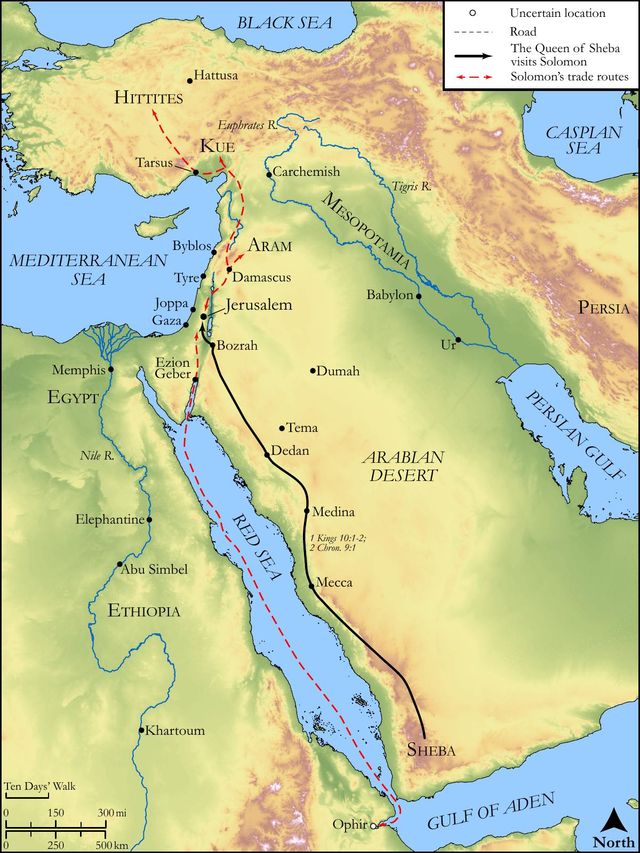
See on the biblical-era map
Study this verse
Public-domain commentary
Matthew Henry
From his Commentary on the Whole Bible. Henry comments on passages, not single verses — this entry covers 2 Chronicles 1:1–12. His three-level outline is real structure in the source text, so it is rendered as structure.
Here is, I. Solomon's great prosperity, Ch2 1:1. Though he had a contested title, yet, God being with him, he was strengthened in his kingdom; his heart and hands were strengthened, and his interest in the people. God's presence will be our strength.
II.His great piety and devotion.
His father was a prophet, a psalmist, and kept mostly to the ark; but Solomon, having read much in his Bible concerning the tabernacle which Moses built and the altars there, paid more respect to them than, it should seem, David had done. Both did well, and let neither be censured. If the zeal of one be carried out most to one instance of religion, and of another to some other instance, let them not judge nor despise each other.
1.All his great men must thus far be good men that they must join with him in worshipping God. He spoke to the captains and judges, the governors and chief of the fathers, to go with him to Gibeon, Ch2 1:2, Ch2 1:3. Authority and interest are well bestowed on those that will thus use them for the glory of God, and the promoting of religion. It is our duty to engage all with whom we have influence in the solemnities of religion, and it is very desirable to have many join with us in those solemnities - the more the better; it is the more like heaven. Solomon began his reign with this public pious visit to God's altar, and it was a very good omen. Magistrates are then likely to do well for themselves and their people when they thus take God along with them at their setting out.
2.He offered abundance of sacrifices to God there (Ch2 1:6): 1000 burnt-offerings, and perhaps a greater number of peace-offerings, on which he and his company feasted before the Lord. Where God sows plentifully he expects to reap accordingly. His father David had left him flocks and herds in abundance (Ch1 27:29, Ch1 27:31), and thus he gave God his dues out of them. The ark was at Jerusalem (Ch2 1:4), but the altar was at Gibeon (Ch2 1:5), and thither he brought his sacrifices; for it is the altar that sanctifieth every gift.
3.He prayed a good prayer to God: this, with the answer to it, we had before, Kg1 3:5, etc.
(1.)God bade him ask what he would; not only that he might put him in the right way of obtaining the favours that were intended him (Ask, and you shall receive, that your joy may be full), but that he might try him, how he stood affected, and might discover what was in his heart. Men's characters appear in their choices and desires. What wouldst thou have? tries a man as much as, What wouldst thou do? Thus God tried whether Solomon was one of the children of this world, that say, Who will show us any good, or of the children of light, that say, Lord, lift up the light of thy countenance upon us. As we choose we shall have, and that is likely to be our portion to which we give the preference, whether the wealth and pleasure of this world or spiritual riches or delights.
(2.)Like a genuine son of David, he chose spiritual blessings rather than temporal. His petition here is, Give me wisdom and knowledge. He owns those to be desirable gifts, and God to be the giver of them, Pro 2:6. God gave the faculty of understanding, and to him we must apply for the furniture of it. Two things are here pleaded which we had not in Kings: - [1.] Thou hast made me reign in my father's stead, Ch2 1:8. "Lord, thou hast put me into this place, and therefore I can in faith ask of thee grace to enable me to do the duty of it." What service we have reason to believe God calls us to we have reason to hope he will qualify us for. But that is not all. "Lord, thou hast put me into this place in the stead of David, the great and good man that filled it up so well; therefore give me wisdom, that Israel may not suffer damage by the change. Must I reign in my father's stead? Lord, give me my father's spirit." Note, The eminency of those that went before us, and the obligation that lies upon us to keep up and carry on the good work they were engaged in, should provoke us to a gracious emulation, and quicken our prayers to God for wisdom and grace, that we may do the work of God in our day as faithfully and well as they did in theirs. [2.] Let thy promise to David my father be established, Ch2 1:9. He means the promise of concerning his successor. "In performance of that promise, Lord, give me wisdom." We do not find that wisdom was any of the things promised, but it was necessary in order to the accomplishment of what was promised, Sa2 7:13-15. The promise was, He shall build a house for my name, I will establish his throne, he shall be my son, and my mercy shall not depart from him. "Now, Lord, unless thou give me wisdom, thy house will not be built, nor my throne established; I shall behave in a manner unbecoming my relation to thee as a Father, shall forfeit thy mercy, and fool it away; therefore, Lord, give me wisdom." Note, First, God's promises are our best pleas in prayer. Remember thy word unto thy servant. Secondly, Children may take the comfort of the promises of that covenant which their parents, in their baptism, laid claim to, and took hold of, for them. Thirdly, The best way to obtain the benefit of the promises and privileges of the covenant is to be earnest in prayer with God for wisdom and grace to do the duties of it.
4.He received a gracious answer to this prayer, Ch2 1:11, Ch2 1:12.
(1.)God gave him the wisdom that he asked for because he asked for it. Wisdom is a gift that God gives as freely and liberally as any gift to those that value it, and wrestle for it; and will resolve to make use of it; and he upbraids not the poor petitioners with their folly, Jam 1:5. God's grace shall never be wanting to those who sincerely desire to know and do their duty.
(2.)God gave him the wealth and honour which he did not ask for because he asked not for them. Those that pursue present things most earnestly are most likely to miss of them; while those that refer themselves to the providence of God, if they have not the most of those things, have the most comfort in them. Those that make this world their end come short of the other and are disappointed in this too; but those that make the other world their end shall not only obtain that, and full satisfaction in it, but shall enjoy as much as is convenient of this world in their way.
Historical interpretation
Historical reception
2 surviving comments on this verse. Each one is dated, so this reads as a timeline rather than a list.
Select a marker to jump to its quote. Markers stagger vertically where authors wrote within a few decades of each other.
“There was no wise man like you before you, and there will not be after you.” Therefore, because the Lord had given [Solomon] an abundance of prudence, “like the sand of the sea,” that he might judge his people “in wisdom,” thus he could exercise many virtues at the same time.
The truth, and the whole Word, is full of difficulty and obscurity; and as it were with a small instrument we are undertaking a great work, when with merely human wisdom we pursue the knowledge of the self-existent, and in company with, or not apart from, the senses, by which we are borne hither and thither and led into error, we apply ourselves to the search after things that are only to be grasped by the mind, and we are unable by meeting bare realities with bare intellect to approximate somewhat more closely to the truth and to mold the mind by its concepts. Now the subject of God is harder to come at, in proportion as it is more perfect than any other and is open to more objections, and the solutions of them are more laborious. For every objection, however small, stops and hinders the course of our argument and cuts off its further advance, just like people who suddenly check with the rein the horses in full career and turn them right round by the unexpected shock. Thus Solomon, who was the wisest of all people, whether before him or in his own time, to whom God gave breadth of heart and a flood of contemplation, more abundant than the sand, even he, the more he entered into the depth, the more dizzy he became, and he declared the furthest point of wisdom to be the discovery of how very far off it was from him.
Continue studying 2 Chronicles 1:10 across the web’s major study libraries — every link below opens this exact verse, chapter, or book on the destination site.
Read & Compare
 BibleGatewayThis verse in more than 200 translations and 70 languages.
 Bible.comThe YouVersion reader — hundreds of translations, reading plans, and highlights.
 ESV.orgCrossway's official English Standard Version reader.
 NET BibleThe NET translation with 60,000+ translators' notes on every rendering decision.
 STEP BibleTyndale House's free study tool — original text, vocabulary, and scholarly resources.
 BibliaLogos Bible Software's free web reader.
 USCCBThe New American Bible (Revised Edition) with the U.S. bishops' study notes.
Commentaries
 BibleHub CommentariesDozens of classic commentaries on this verse, gathered on one page.
 StudyLightMore than 100 commentary sets — the largest collection on the web.
 BibleRefPlain-English commentary on what this verse means, verse by verse.
 Enduring WordDavid Guzik's free commentary on this chapter, widely used by Bible teachers.
 Bible Study ToolsVerse commentary alongside Greek and Hebrew study aids.
Original Language & Research
- BibleHub InterlinearThe verse word by word — original language, transliteration, and English.
- BibleHub LexiconEvery word's original-language definition and Strong's entry.
 Blue Letter BibleDeep-study tools — Strong's numbers, concordance, and word studies.
 SefariaThe Hebrew text with Rashi and centuries of Jewish commentary.
Sermons, Hymns & Audio


TrulyRandomVerse is not affiliated with these sites and doesn’t control their content. They’re linked because they’re genuinely useful.
Summary
Second Chronicles 1:10 captures King Solomon's profound and humble prayer to God, where he requests wisdom and knowledge above all else. Recognizing the immense and sacred responsibility of leading God's vast and chosen people, Solomon prioritizes divine enablement over personal gain, seeking the necessary discernment and understanding to govern justly and effectively. This pivotal moment not only sets the stage for his celebrated reign, marked by unparalleled wisdom and prosperity, but also powerfully illustrates God's generous response to a leader who genuinely seeks His purposes.
Context
ShowHideLiterary Context
This verse serves as the theological climax of a significant encounter between God and Solomon at Gibeon. Immediately following his ascension to the throne after his father David's death, Solomon travels to Gibeon, a prominent high place where the Tabernacle of the Lord and the brazen altar were located, and offers a thousand burnt offerings as an act of worship and dedication 2 Chronicles 1:3-6. In response to this grand display of devotion, God appears to Solomon in a dream and invites him to ask for anything he desires 2 Chronicles 1:7. Rather than requesting personal wealth, long life, or victory over enemies, Solomon's response in 2 Chronicles 1:8-9 and then this verse, 2 Chronicles 1:10, reveals his profound understanding of his kingly duty and his absolute dependence on God. This selfless request directly precedes God's generous response, granting him not only wisdom but also riches and honor, thereby establishing the foundation for the Chronicler's narrative of Solomon's glorious and divinely blessed reign.
Historical & Cultural Context
Solomon inherits a unified and strong kingdom from his father, David, whose reign had successfully established Jerusalem as the political and religious capital. However, at this early stage of his reign, the Tabernacle, a central element of Israelite worship since the Exodus, was still located at Gibeon, a significant "high place" where legitimate sacrifices were offered before the construction of the Temple in Jerusalem. The act of offering a thousand burnt offerings was an extraordinary public display of devotion and an appeal for divine favor at the outset of his rule, demonstrating his commitment to the covenant. In the ancient Near East, the role of a king encompassed not only military leadership but also crucial judicial functions, requiring immense wisdom and discernment to administer justice among the people. The phrase "go out and come in" is a common ancient Semitic idiom signifying the full scope of one's public life, leadership, and daily activities, emphasizing the constant engagement and discernment required of a ruler. Solomon's acknowledgment of the people's "greatness" underscores the demographic and administrative challenge of governing a large and diverse nation, particularly one considered God's own.
Key Themes
ShowHideSolomon's request in 2 Chronicles 1:10 powerfully articulates several key themes that resonate throughout the biblical narrative. Firstly, it highlights Selfless Leadership, as Solomon's focus is entirely on his duty to God and his people, rather than personal gain, setting a stark contrast to typical human ambitions for power or wealth. This selfless posture is a prerequisite for divine blessing. Secondly, it underscores The Need for Divine Wisdom, as Solomon explicitly acknowledges his own inadequacy ("for who can judge this thy people, that is so great?") and recognizes that only divine wisdom and knowledge can enable him to effectively lead and judge God's vast and important nation. This reinforces the biblical principle that true, effective leadership—especially over God's covenant people—requires God's enablement, not merely human acumen. Finally, the verse showcases Humility and Responsibility, as Solomon, despite inheriting a powerful kingdom, approaches his immense role with a profound sense of humility, understanding the weighty implications of the crown and the spiritual significance of leading God's chosen nation. This humility is a consistent biblical principle for receiving God's grace and empowerment, as seen in God's subsequent response to his prayer in 2 Chronicles 1:11-12.
Exposition and Analysis
ShowHideKey Word Analysis
ShowHideThis term refers to practical skill, discernment, and the ability to apply understanding to real-life situations. It encompasses not merely intellectual knowledge but the capacity to act skillfully and prudently in governance, judgment, and daily affairs. Solomon sought the practical sagacity required to rule justly and effectively, reflecting a deep understanding of the demands of his office.
This word implies intelligence, consciousness, and insight, often carrying a connotation of discernment and moral judgment. While chokmâh is about the application of understanding, maddâʻ is about the foundational perception of truth and reality, crucial for a just ruler to distinguish right from wrong, understand complex situations, and make equitable decisions.
And H935 respectively, this is a common Hebrew idiom signifying the totality or full scope of one's public life, activities, and responsibilities. For a king, it encompassed everything from leading the army in battle ("going out") to administering justice in the city gates ("coming in"), managing daily affairs, and interacting with the populace. Solomon's request was for comprehensive divine guidance in all aspects of his kingly duties, indicating a desire for God's presence and direction in every public act.
Verse Breakdown
ShowHide"Give me now wisdom and knowledge"
This is Solomon's direct, humble, and urgent petition to God. The immediate "now" reflects the pressing need for divine endowment as he assumes the immense responsibilities of kingship. His prioritization of these spiritual and intellectual gifts over material wealth or personal power reveals a profound understanding of his role as God's chosen leader for Israel.
"that I may go out and come in before this people"
This clause clarifies the explicit purpose of his request. The wisdom and knowledge are not sought for personal gain, intellectual curiosity, or self-aggrandizement, but specifically for the practical and comprehensive task of leading, governing, and interacting with the vast Israelite population. It signifies his desire for comprehensive divine guidance in all his public and administrative functions as king, encompassing every decision and interaction.
"for who can judge this thy people, [that is so] great?"
This rhetorical question serves as Solomon's profound confession of inadequacy and a powerful justification for his request. He acknowledges the immense, overwhelming nature of the task of governing God's chosen people, emphasizing that they are "thy people" – God's possession – which implies a higher, divine standard of governance. This recognition of his own human limitations and the divine ownership of the people underscores his absolute dependence on God for enablement and the wisdom necessary to fulfill such a sacred trust.
Literary Devices
ShowHideThe verse effectively employs several Literary Devices to convey Solomon's humility and the magnitude of his request. The most prominent is the Rhetorical Question ("for who can judge this thy people, [that is so] great?"), which Solomon uses not to elicit a direct answer, but to powerfully emphasize the human impossibility of the task without divine aid and to underscore his own humility and profound dependence on God. This question highlights the immense weight of his responsibility and the unique nature of governing God's covenant people. Furthermore, the Idiom "go out and come in" succinctly conveys the totality and comprehensive nature of the king's public duties and daily interactions, implying a pervasive need for constant, divine wisdom across all aspects of leadership. There is also an implicit Contrast between Solomon's initial posture of humility and selflessness in this request and the later narrative of his unparalleled wisdom, riches, and honor, which serves to highlight God's generous and overflowing response to a selfless and God-honoring petition.
Theological and Thematic Connections
ShowHideSolomon's request for wisdom and knowledge stands as a powerful testament to the biblical truth that true leadership, especially within God's kingdom, is not founded on human strength, cunning, or self-sufficiency, but on divine enablement and discernment. His profound humility in recognizing the overwhelming nature of leading God's "great" people serves as an enduring model for all who are called to positions of influence, whether in the church, family, or society. God's immediate and generous response demonstrates His pleasure in those who prioritize His purposes and the well-being of His people over personal ambition. This narrative underscores that God delights in bestowing wisdom upon those who genuinely seek it for righteous governance and service, demonstrating His faithfulness to equip those He calls.
Reflection and Application
ShowHideSolomon's humble and selfless request in 2 Chronicles 1:10 offers profound and timeless lessons for believers today, regardless of their formal position or daily circumstances. It challenges us to critically examine our own priorities and the nature of our prayers. Do we, like Solomon, seek first what aligns with God's purposes and enables us to serve others effectively, or are our petitions primarily focused on personal gain, comfort, or power? This passage powerfully reminds us that in any role—whether as a parent, employee, community member, or church leader—we are called to acknowledge our inherent limitations and seek God's divine wisdom. The task of living a life pleasing to God, navigating complex decisions, and influencing others for good is far too great for our own strength, intellect, or experience alone. Just as Solomon needed divine wisdom to "go out and come in" before his people, we need God's discernment to navigate the complexities of our own lives and responsibilities. Embracing humility and recognizing our absolute dependence on God for guidance and strength is foundational to effective living and leadership that truly honors Him and bears lasting fruit.
Questions for Reflection
ShowHideFAQ
ShowHideWhy did Solomon go to Gibeon instead of Jerusalem to make his offerings and encounter God?
ShowHideAt this early stage of Solomon's reign, the Tabernacle of Meeting, which contained the great bronze altar, was located at Gibeon. While the Ark of the Covenant had been brought by David to Jerusalem, Gibeon remained a significant high place and a legitimate, established center of worship and sacrifice for the unified kingdom before the glorious Temple in Jerusalem was built. Solomon's journey to Gibeon and his grand offerings there demonstrated his commitment to traditional worship and sought God's blessing at a historically significant sacred site, fulfilling the established religious practices of the time.
What does the idiom "go out and come in" truly mean for a leader in this context?
ShowHideThe phrase "go out and come in" is an ancient Semitic idiom that signifies the totality and full scope of one's public life, activities, and responsibilities. For a king, it encompassed all aspects of governance: leading the army in military campaigns ("going out"), administering justice in the city gates ("coming in"), managing daily affairs, interacting with the populace, and making all decisions that affected the kingdom. Solomon's request for wisdom and knowledge to "go out and come in" before his people means he was asking for comprehensive divine guidance and discernment in every single facet of his kingly duties, from the most public and strategic to the most mundane and relational. He desired God's enabling presence in his entire public life.
How does Solomon's request for wisdom and knowledge differ from what most people would ask for if given such an opportunity by God?
ShowHideMost people, if given the chance to ask for anything, would likely request personal blessings such as immense wealth, a long life, victory over enemies, greater power, or widespread fame. Solomon, however, explicitly rejected these common desires, as noted in 2 Chronicles 1:11, where God affirms that Solomon "did not ask for riches, wealth, or honor, nor for the life of your enemies, nor did you even ask for long life." Instead, he asked for wisdom and knowledge specifically for the benefit of God's people and for the faithful fulfillment of his kingly duty to govern justly. This selfless, God-centered focus on his responsibility to lead God's people demonstrated remarkable spiritual maturity and pleased God greatly, leading to God's generous bestowal of not only the wisdom he sought but also the very things Solomon did not ask for: unparalleled riches and honor.
Christ-Centered Fulfillment
ShowHideSolomon's profound request for wisdom and knowledge, and God's subsequent granting of unparalleled discernment, points forward to a greater King and a more perfect wisdom embodied in Jesus Christ. While Solomon was indeed the wisest man of his age, his wisdom, though divinely given, was ultimately limited and imperfect, as evidenced by his later moral failures and the division of his kingdom. Jesus, however, is not merely wise; He is the very wisdom of God incarnate, the eternal Word through whom all things were made John 1:1-3. In Him "are hidden all the treasures of wisdom and knowledge" Colossians 2:3, signifying that He is the ultimate source and embodiment of all true understanding. The Queen of the South traveled far to hear Solomon's wisdom Matthew 12:42, yet Jesus declared that "something greater than Solomon is here," for He is the "wisdom from God" for His people 1 Corinthians 1:30. Jesus perfectly fulfills the kingly role of "going out and coming in" before His people, not merely as a human ruler but as the divine Shepherd and righteous Judge. He perfectly discerns, perfectly administers justice, and perfectly leads His people with absolute righteousness and truth, establishing an eternal kingdom that will never fail Luke 1:33. His reign is eternal, and His wisdom is the inexhaustible source of all true understanding, life, and salvation for all who believe John 14:6.