


2 Chronicles 1:8
- וַיֹּאמֶרvai·Yo·merand he saidH559Conj-w ¦ V-Qal-ConsecImperf-3msVerb Qal Consecutive Imperfect 3rd Singular Masculineוַandיֹּאמֶרhe said
- שְׁלֹמֹהshe·lo·MohSolomonH8010N-proper-mNoun Proper Masculine
- לֵאלֹהִיםle·lo·Himto GodH430Prep-l ¦ N-mpNoun Plural Masculine AbsoluteלֵtoאלֹהִיםGod
- אַתָּה'a·TahyouH859Pro-2msPronoun Personal 2nd Singular Masculine
- עָשִׂיתָ'a·Si·tayou have doneH6213V-Qal-Perf-2msVerb Qal Perfect 2nd Singular Masculine
- עִם'imwithH5973PrepPreposition
- דָּוִידda·VidDavidH1732N-proper-mNoun Proper Masculine
- אָבִי'a·Vimy fatherH1N-msc ¦ 1csNoun Singular Masculine Constructאָבִfatherיmy
- חֶסֶדChe·sedcovenant loyaltyH2617N-msNoun Singular Masculine Absolute
- גָּדוֹלga·DolgreatH1419Adj-msAdjective Singular Masculine Absolute
- וְהִמְלַכְתַּנִיve·him·lakh·Ta·niand you have made king meH4427Conj-w ¦ V-Hiphil-ConsecPerf-2ms ¦ 1csVerb Hiphil Consecutive Perfect 2nd Singular Masculineוְandהִמְלַכְתַּyou have made kingנִיme
- תַּחְתָּיוtach·Tavin place of himH8478N-mpc ¦ 3msNoun Plural Masculine Constructתַּחְתָּיin place ofוhim
English is a literal word-by-word gloss of the Hebrew, not the KJV's wording. Why?
This is the original text the KJV's translators worked from — each Hebrew word with its own literal English meaning in this verse, prepared by scholars at Tyndale House, Cambridge. The KJV translates whole sentences, not word by word, so its wording differs: one Hebrew word can become several English words, and the KJV may choose “the LORD” where the gloss reads “Yahweh”. Both are faithful — they answer different questions. For the KJV's own rendering, switch to the KJV text.
Details
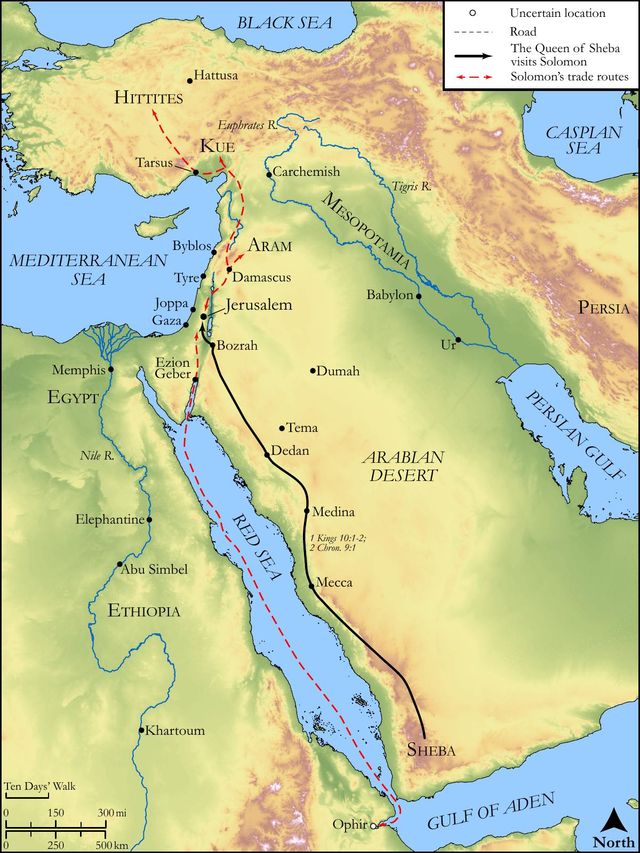
See on the biblical-era map
Study this verse
Public-domain commentary
Matthew Henry
From his Commentary on the Whole Bible. Henry comments on passages, not single verses — this entry covers 2 Chronicles 1:1–12. His three-level outline is real structure in the source text, so it is rendered as structure.
Here is, I. Solomon's great prosperity, Ch2 1:1. Though he had a contested title, yet, God being with him, he was strengthened in his kingdom; his heart and hands were strengthened, and his interest in the people. God's presence will be our strength.
II.His great piety and devotion.
His father was a prophet, a psalmist, and kept mostly to the ark; but Solomon, having read much in his Bible concerning the tabernacle which Moses built and the altars there, paid more respect to them than, it should seem, David had done. Both did well, and let neither be censured. If the zeal of one be carried out most to one instance of religion, and of another to some other instance, let them not judge nor despise each other.
1.All his great men must thus far be good men that they must join with him in worshipping God. He spoke to the captains and judges, the governors and chief of the fathers, to go with him to Gibeon, Ch2 1:2, Ch2 1:3. Authority and interest are well bestowed on those that will thus use them for the glory of God, and the promoting of religion. It is our duty to engage all with whom we have influence in the solemnities of religion, and it is very desirable to have many join with us in those solemnities - the more the better; it is the more like heaven. Solomon began his reign with this public pious visit to God's altar, and it was a very good omen. Magistrates are then likely to do well for themselves and their people when they thus take God along with them at their setting out.
2.He offered abundance of sacrifices to God there (Ch2 1:6): 1000 burnt-offerings, and perhaps a greater number of peace-offerings, on which he and his company feasted before the Lord. Where God sows plentifully he expects to reap accordingly. His father David had left him flocks and herds in abundance (Ch1 27:29, Ch1 27:31), and thus he gave God his dues out of them. The ark was at Jerusalem (Ch2 1:4), but the altar was at Gibeon (Ch2 1:5), and thither he brought his sacrifices; for it is the altar that sanctifieth every gift.
3.He prayed a good prayer to God: this, with the answer to it, we had before, Kg1 3:5, etc.
(1.)God bade him ask what he would; not only that he might put him in the right way of obtaining the favours that were intended him (Ask, and you shall receive, that your joy may be full), but that he might try him, how he stood affected, and might discover what was in his heart. Men's characters appear in their choices and desires. What wouldst thou have? tries a man as much as, What wouldst thou do? Thus God tried whether Solomon was one of the children of this world, that say, Who will show us any good, or of the children of light, that say, Lord, lift up the light of thy countenance upon us. As we choose we shall have, and that is likely to be our portion to which we give the preference, whether the wealth and pleasure of this world or spiritual riches or delights.
(2.)Like a genuine son of David, he chose spiritual blessings rather than temporal. His petition here is, Give me wisdom and knowledge. He owns those to be desirable gifts, and God to be the giver of them, Pro 2:6. God gave the faculty of understanding, and to him we must apply for the furniture of it. Two things are here pleaded which we had not in Kings: - [1.] Thou hast made me reign in my father's stead, Ch2 1:8. "Lord, thou hast put me into this place, and therefore I can in faith ask of thee grace to enable me to do the duty of it." What service we have reason to believe God calls us to we have reason to hope he will qualify us for. But that is not all. "Lord, thou hast put me into this place in the stead of David, the great and good man that filled it up so well; therefore give me wisdom, that Israel may not suffer damage by the change. Must I reign in my father's stead? Lord, give me my father's spirit." Note, The eminency of those that went before us, and the obligation that lies upon us to keep up and carry on the good work they were engaged in, should provoke us to a gracious emulation, and quicken our prayers to God for wisdom and grace, that we may do the work of God in our day as faithfully and well as they did in theirs. [2.] Let thy promise to David my father be established, Ch2 1:9. He means the promise of concerning his successor. "In performance of that promise, Lord, give me wisdom." We do not find that wisdom was any of the things promised, but it was necessary in order to the accomplishment of what was promised, Sa2 7:13-15. The promise was, He shall build a house for my name, I will establish his throne, he shall be my son, and my mercy shall not depart from him. "Now, Lord, unless thou give me wisdom, thy house will not be built, nor my throne established; I shall behave in a manner unbecoming my relation to thee as a Father, shall forfeit thy mercy, and fool it away; therefore, Lord, give me wisdom." Note, First, God's promises are our best pleas in prayer. Remember thy word unto thy servant. Secondly, Children may take the comfort of the promises of that covenant which their parents, in their baptism, laid claim to, and took hold of, for them. Thirdly, The best way to obtain the benefit of the promises and privileges of the covenant is to be earnest in prayer with God for wisdom and grace to do the duties of it.
4.He received a gracious answer to this prayer, Ch2 1:11, Ch2 1:12.
(1.)God gave him the wisdom that he asked for because he asked for it. Wisdom is a gift that God gives as freely and liberally as any gift to those that value it, and wrestle for it; and will resolve to make use of it; and he upbraids not the poor petitioners with their folly, Jam 1:5. God's grace shall never be wanting to those who sincerely desire to know and do their duty.
(2.)God gave him the wealth and honour which he did not ask for because he asked not for them. Those that pursue present things most earnestly are most likely to miss of them; while those that refer themselves to the providence of God, if they have not the most of those things, have the most comfort in them. Those that make this world their end come short of the other and are disappointed in this too; but those that make the other world their end shall not only obtain that, and full satisfaction in it, but shall enjoy as much as is convenient of this world in their way.
Continue studying 2 Chronicles 1:8 across the web’s major study libraries — every link below opens this exact verse, chapter, or book on the destination site.
Read & Compare
 BibleGatewayThis verse in more than 200 translations and 70 languages.
 Bible.comThe YouVersion reader — hundreds of translations, reading plans, and highlights.
 ESV.orgCrossway's official English Standard Version reader.
 NET BibleThe NET translation with 60,000+ translators' notes on every rendering decision.
 STEP BibleTyndale House's free study tool — original text, vocabulary, and scholarly resources.
 BibliaLogos Bible Software's free web reader.
 USCCBThe New American Bible (Revised Edition) with the U.S. bishops' study notes.
Commentaries
 BibleHub CommentariesDozens of classic commentaries on this verse, gathered on one page.
 StudyLightMore than 100 commentary sets — the largest collection on the web.
 BibleRefPlain-English commentary on what this verse means, verse by verse.
 Enduring WordDavid Guzik's free commentary on this chapter, widely used by Bible teachers.
 Bible Study ToolsVerse commentary alongside Greek and Hebrew study aids.
Original Language & Research
- BibleHub InterlinearThe verse word by word — original language, transliteration, and English.
- BibleHub LexiconEvery word's original-language definition and Strong's entry.
 Blue Letter BibleDeep-study tools — Strong's numbers, concordance, and word studies.
 SefariaThe Hebrew text with Rashi and centuries of Jewish commentary.
Sermons, Hymns & Audio


TrulyRandomVerse is not affiliated with these sites and doesn’t control their content. They’re linked because they’re genuinely useful.
Summary
2 Chronicles 1:8 presents King Solomon's foundational declaration to God at Gibeon, a profound expression of gratitude and acknowledgment of God's unwavering covenant faithfulness to his father, David. Solomon recognizes that his ascension to the throne is not merely a matter of human succession but a direct, sovereign act of divine mercy and appointment. This opening statement of praise and dependence establishes a humble spiritual posture, setting the stage for his pivotal interaction with God and his subsequent request for wisdom.
Context
ShowHideLiterary Context
This verse is strategically placed at the beginning of Solomon's reign, specifically during the grand assembly at Gibeon, as recorded by the Chronicler (2 Chronicles 1:1-6). It immediately precedes God's direct appearance to Solomon and the divine invitation for Solomon to ask for whatever he desires (2 Chronicles 1:7). Solomon's words in this verse are not a petition but a crucial preamble: a heartfelt acknowledgment of God's past grace and present sovereignty. This establishes a posture of humility and gratitude before the momentous divine encounter, emphasizing the divine legitimacy and endorsement of Solomon's kingship. The Chronicler, writing for a post-exilic audience, meticulously details this divine continuity, building upon the foundational promises made to David in 2 Samuel 7. The parallel account in 1 Kings 3:4-5 further illuminates the significance of this event.
Historical & Cultural Context
Solomon's journey to Gibeon was a highly significant act of national worship and dedication. While the Temple in Jerusalem had not yet been built, Gibeon was a prominent "high place" where the Tabernacle of Meeting and the bronze altar of Moses were located (2 Chronicles 1:3-6). It served as the legitimate, albeit temporary, central place of worship for Israel at that time. In the ancient Near East, transitions of power were frequently tumultuous and violent, often involving assassinations and political intrigue. However, Solomon's succession was remarkably peaceful and divinely orchestrated, a powerful testament to God's faithfulness to the Davidic covenant. Solomon's offering of a thousand burnt offerings (2 Chronicles 1:6) was an extraordinary act of devotion, signifying his commitment to seeking God's favor and guidance at the very outset of his reign, a common practice for new monarchs seeking divine legitimation.
Key Themes
ShowHideSolomon's declaration in 2 Chronicles 1:8 profoundly underscores several key themes central to the Chronicler's narrative and the broader biblical message. Firstly, it highlights Divine Sovereignty in kingship, asserting that God is the ultimate authority who "made me to reign in his stead," thereby emphasizing divine appointment over mere human inheritance. Secondly, it stresses Covenant Faithfulness, specifically God's enduring "great mercy" (Hebrew: ḥesed) to David, which extends to his lineage. This ḥesed signifies God's steadfast love and loyalty to His promises, a theme beautifully articulated in Psalm 89:28-37. Thirdly, the verse models a posture of Gratitude and Humility, demonstrating that a leader's initial response to divine blessing should be one of acknowledgment and thanksgiving, a principle echoed throughout wisdom literature, such as in Proverbs 3:5-6. Finally, it affirms the Continuity of the Davidic Dynasty, ensuring the stability and future of Israel's monarchy under divine guidance, a crucial message of hope and reassurance for the Chronicler's post-exilic audience.
Exposition and Analysis
ShowHideKey Word Analysis
ShowHideThis word, often translated as "mercy," "lovingkindness," or "steadfast love," is far richer than simple pity. Ḥesed denotes a deep, enduring commitment and loyalty, especially within a covenant relationship. When applied to God, as here, it signifies His faithful, benevolent love that endures through generations and keeps His promises. Solomon's use of "great mercy" (H1419 gâdôwl combined with H2617 chêçêd) underscores the magnitude of God's unwavering faithfulness to David and, by extension, to his son, Solomon, in upholding the divine covenant. It speaks to God's reliable and active goodness towards His chosen ones.
The verb form used here is the Hiphil stem of mâlak (H4427), indicating a causative action. It literally means "He caused me to reign" or "He made me king." This grammatical construction powerfully emphasizes God's direct and sovereign agency in Solomon's ascension to the throne. It is not merely that Solomon inherited the kingdom through natural succession, but that God actively installed him, highlighting the divine appointment and legitimization over any human claim or political maneuvering. This divine action underscores the theological reality that all true authority ultimately stems from God.
Verse Breakdown
ShowHide"And Solomon said unto God"
This opening phrase immediately establishes the context of a direct, personal encounter between Solomon and the divine. It indicates a moment of profound spiritual engagement, whether in prayer, vision, or prophetic utterance, setting the stage for a significant and intimate divine-human interaction. It highlights Solomon's recognition of God as the ultimate recipient of his address.
"Thou hast shewed great mercy unto David my father"
Solomon begins by acknowledging God's past actions, specifically His "great mercy" (ḥesed) shown to his predecessor, King David. This statement is a profound affirmation of God's faithfulness to the Davidic covenant, recognizing that the blessings and promises bestowed upon David are the foundational basis for Solomon's present position. It is an act of historical and theological recall, demonstrating Solomon's understanding of his place within God's ongoing redemptive plan and his gratitude for God's steadfast love.
"and hast made me to reign in his stead"
This concluding clause directly attributes Solomon's kingship to God's sovereign will and active intervention. It emphasizes that his rule is not merely a result of human inheritance or political maneuvering, but a divine appointment and installation. The phrase "in his stead" highlights the continuity of the Davidic dynasty under God's watchful eye, ensuring the fulfillment of the covenant promises through the legitimate successor. This acknowledgment of divine agency is crucial for a king who seeks to rule justly and wisely, recognizing his ultimate accountability to God.
Literary Devices
ShowHideThe verse employs several literary devices to convey its profound message. Acknowledgement is central, as Solomon explicitly recognizes God's hand in his father's reign and his own succession. This is not a request but a statement of profound fact and praise. The use of "great mercy" functions as Hyperbole to emphasize the immense, boundless nature of God's ḥesed, which extends beyond simple kindness to an unwavering covenant loyalty that is both vast in scope and enduring in time. Furthermore, the verse demonstrates Continuity, linking David's reign directly to Solomon's through God's consistent action, thereby validating Solomon's rule and reinforcing the enduring nature of the Davidic covenant. The structure of the statement, moving from past divine action ("shewed great mercy") to present divine action ("made me to reign"), creates a sense of Progression, illustrating the unfolding of God's redemptive plan through successive generations.
Theological and Thematic Connections
ShowHideSolomon's opening words are steeped in the rich theology of the Davidic covenant, found primarily in 2 Samuel 7:12-16. God's "great mercy" (ḥesed) to David was His unwavering commitment to establish his house, his kingdom, and his throne forever. Solomon understands that his own reign is a direct fulfillment and continuation of this divine promise, not earned but graciously bestowed. This foundational recognition of God's sovereignty and faithfulness is paramount for any leader, especially one entrusted with God's people. It underscores the biblical truth that all authority ultimately derives from God, and true leadership flows from a humble acknowledgment of this divine source. The Chronicler, writing for a post-exilic community, highlights this divine continuity to encourage hope and remind them of God's enduring promises despite their present circumstances.
Reflection and Application
ShowHideSolomon's initial response to his new kingship offers a powerful model for believers in any sphere of influence or personal circumstance. Before making any request or embarking on any significant endeavor, Solomon first acknowledges God's past faithfulness and sovereign hand in his life. This posture of gratitude and humble recognition of divine appointment is crucial. It reminds us that every blessing, every opportunity, and every position of responsibility is ultimately a gift from God's "great mercy." Rather than immediately focusing on our needs or desires, we are called to first reflect on God's unwavering ḥesed in our past and present. This foundational gratitude cultivates a spirit of dependence and prepares our hearts to seek God's wisdom and guidance for the future, knowing that He who has been faithful will continue to be so. It encourages us to view our lives not as self-made achievements but as stewardship under the gracious hand of God.
Questions for Reflection
ShowHideFAQ
ShowHideWhy did Solomon go to Gibeon instead of Jerusalem to offer sacrifices?
ShowHideAt this early stage of Solomon's reign, the magnificent Temple in Jerusalem had not yet been built. Gibeon was a highly significant "high place" where the Tabernacle of Meeting (the wilderness tabernacle) and the bronze altar, originally made by Bezalel, were located (2 Chronicles 1:3-6). It was a legitimate and central place of national worship before the Temple became the singular, divinely appointed location for sacrifices and worship in Jerusalem. Solomon's journey there with all the leaders of Israel was an act of national dedication and worship at the most prominent sacred site available, demonstrating his commitment to seeking God's favor from the outset of his rule.
What is the deeper significance of "great mercy" (Hebrew, ḥesed) in this context?
ShowHideThe Hebrew word ḥesed (H2617), often translated "mercy," "lovingkindness," or "steadfast love," is a cornerstone of biblical theology. It signifies more than just pity or compassion; it denotes a deep, loyal, and unwavering commitment, particularly within a covenant relationship. When Solomon speaks of God's "great mercy" to David, he is acknowledging God's absolute faithfulness to the covenant promises made to David in 2 Samuel 7, which guaranteed an enduring dynasty. This ḥesed ensures the continuity of God's plan and His benevolent care for His people, extending from David to Solomon and beyond. It highlights God's character as a covenant-keeping God who fulfills His word, demonstrating His reliable and active goodness towards His people.
How does this verse relate to Solomon's famous request for wisdom that follows?
ShowHideThis verse sets the crucial foundation for Solomon's request for wisdom in 2 Chronicles 1:9-10. By first acknowledging God's "great mercy" and His sovereign act of making him king, Solomon demonstrates a humble and grateful heart. He understands that his kingship is a divine trust, not a personal right or achievement. This posture of dependence and recognition of God's ultimate authority is precisely what prepares him to ask for the right thing – wisdom to govern God's people justly – rather than personal gain or power. His gratitude for past blessings precedes and informs his petition for future guidance, showing that true wisdom begins with acknowledging God's sovereignty and goodness.
Christ-Centered Fulfillment
ShowHideSolomon's kingship, established by God's "great mercy" and his reign "in his stead," powerfully foreshadows the ultimate King, Jesus Christ. While Solomon's reign was a divinely appointed continuation of the Davidic line, it was still limited by human frailty, marked by eventual compromise, and ultimately ended. Jesus, however, is the true and eternal Son of David, whose kingdom is not of this world and will never end (John 18:36). The "great mercy" (H2617 ḥesed) shown to David finds its fullest and most perfect expression in God's ultimate act of covenant faithfulness – sending His Son, the Lamb of God who takes away the sin of the world, to establish a new and everlasting covenant through His atoning sacrifice. Jesus reigns "in the stead" of all earthly kings, not merely as a successor but as the fulfillment of every promise, the King of kings and Lord of lords. His kingdom is eternal, righteous, and brings true peace and salvation to all who believe. As prophesied in Luke 1:32-33, Jesus, the descendant of David according to the flesh (Romans 1:3-4), sits on David's throne forever, not by human appointment but by divine decree, perfectly fulfilling the covenant promises to David through His everlasting reign and bringing God's ḥesed to its climactic realization.