


2 Chronicles 1:11
Bible text: King James Version (1769 Blayney text) · Public domain
Bible text: King James Version with Strong's numbers · Public domain
Bible text: Berean Standard Bible · Public domain
Bible text: American Standard Version (1901) · Public domain
Bible text: World English Bible, Messianic edition · Public domain
Bible text: Geneva Bible (1599) · Public domain
Bible text: Young's Literal Translation · Public domain
- וַיֹּאמֶרvai·Yo·merand he saidH559Conj-w ¦ V-Qal-ConsecImperf-3msVerb Qal Consecutive Imperfect 3rd Singular Masculineוַandיֹּאמֶרhe said
- אֱלֹהִים'E·lo·HimGodH430N-mpNoun Plural Masculine Absolute
- לִשְׁלֹמֹהlish·lo·Mohto SolomonH8010Prep-l ¦ N-proper-mNoun Proper MasculineלִtoשְׁלֹמֹהSolomon
- יַעַןYa·'anbecauseH3282ConjConjunction
- אֲשֶׁר'a·SherthatH834RelParticle Relative
- הָיְתָהha·ye·Tahit wasH1961V-Qal-Perf-3fsVerb Qal Perfect 3rd Singular Feminine
- זֹאתzotthisH2063PrtParticle Demonstrative
- עִם'imwithH5973PrepPreposition
- לְבָבֶךָle·va·Ve·khayour heartH3824N-msc ¦ 2msNoun Singular Masculine Constructלְבָבֶheartךָyour
- וְלֹאve·lo·Sha'and notH3808Conj-w ¦ NegParticle Negativeוְandלֹאnot
- שָׁאַלְתָּSha·'al·tayou have asked forH7592V-Qal-Perf-2msVerb Qal Perfect 2nd Singular Masculine
- עֹשֶׁר'O·sherwealthH6239N-msNoun Singular Masculine Absolute
- נְכָסִיםne·kha·SimrichesH5233N-mpNoun Plural Masculine Absolute
- וְכָבוֹדve·kha·Vodand honorH3519Conj-w ¦ N-msNoun Singular Masculine Absoluteוְandכָבוֹדhonor
- וְאֵתve·'Etand <obj.>H853Conj-w ¦ DirObjMParticle Object Indicatorוְandאֵת<obj.>
- נֶפֶשׁNe·fesh[the] life ofH5315N-fscNoun Singular Feminine Construct
- שֹׂנְאֶיךָso·ne·'Ei·kha[those who] hate youH8130V-Qal-Prtcpl-mp ¦ 2msVerb Qal Participle Plural Masculine Constructשֹׂנְאֶי[those who] hateךָyou
- וְגַםve·gamand alsoH1571Conj-w ¦ AdvAdverbוְandגַםalso
- יָמִיםya·MimdaysH3117N-mpNoun Plural Masculine Absolute
- רַבִּיםra·BimmanyH7227Adj-mpAdjective Plural Masculine Absolute
- לֹאlo'notH3808NegParticle Negative
- שָׁאָלְתָּsha·'A·le·tayou have asked forH7592V-Qal-Perf-2msVerb Qal Perfect 2nd Singular Masculine
- וַתִּשְׁאַלva·tish·'aland you have asked forH7592Conj-w ¦ V-Qal-ConsecImperf-2msVerb Qal Consecutive Imperfect 2nd Singular Masculineוַandתִּשְׁאַלyou have asked for
- לְךָle·Khafor yourselfPrep-l ¦ 2msSuffix Personal 2nd Singular Masculineלְforךָyourself
- חָכְמָהchokh·mahwisdomH2451N-fsNoun Singular Feminine Absolute
- וּמַדָּעu·ma·Da'and knowledgeH4093Conj-w ¦ N-msNoun Singular Masculine Absoluteוּandמַדָּעknowledge
- אֲשֶׁר'a·SherthatH834RelParticle Relative
- תִּשְׁפּוֹטtish·pOtyou will judgeH8199V-Qal-Imperf-2msVerb Qal Imperfect 2nd Singular Masculine
- אֶת'et<obj.>H853DirObjMParticle Object Indicator
- עַמִּי'a·Mimy peopleH5971N-msc ¦ 1csNoun Singular Masculine Constructעַמִּpeopleיmy
- אֲשֶׁר'a·SherwhichH834RelParticle Relative
- הִמְלַכְתִּיךָhim·lakh·Ti·khaI have made king youH4427V-Hiphil-Perf-1cs ¦ 2msVerb Hiphil Perfect 1st Singular common genderהִמְלַכְתִּיI have made kingךָyou
- עָלָיו'a·Lavover itH5921Prep ¦ 3msPrepositionעָלָיoverוit
English is a literal word-by-word gloss of the Hebrew, not the KJV's wording. Why?
This is the original text the KJV's translators worked from — each Hebrew word with its own literal English meaning in this verse, prepared by scholars at Tyndale House, Cambridge. The KJV translates whole sentences, not word by word, so its wording differs: one Hebrew word can become several English words, and the KJV may choose “the LORD” where the gloss reads “Yahweh”. Both are faithful — they answer different questions. For the KJV's own rendering, switch to the KJV text.
Details
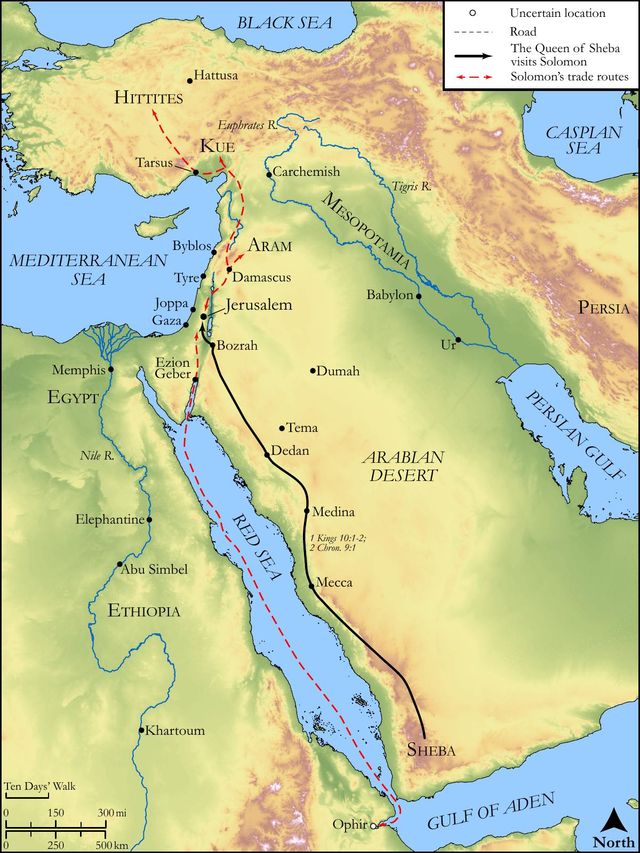
See on the biblical-era map
Study this verse
Public-domain commentary
Matthew Henry
From his Commentary on the Whole Bible. Henry comments on passages, not single verses — this entry covers 2 Chronicles 1:1–12. His three-level outline is real structure in the source text, so it is rendered as structure.
Here is, I. Solomon's great prosperity, Ch2 1:1. Though he had a contested title, yet, God being with him, he was strengthened in his kingdom; his heart and hands were strengthened, and his interest in the people. God's presence will be our strength.
II.His great piety and devotion.
His father was a prophet, a psalmist, and kept mostly to the ark; but Solomon, having read much in his Bible concerning the tabernacle which Moses built and the altars there, paid more respect to them than, it should seem, David had done. Both did well, and let neither be censured. If the zeal of one be carried out most to one instance of religion, and of another to some other instance, let them not judge nor despise each other.
1.All his great men must thus far be good men that they must join with him in worshipping God. He spoke to the captains and judges, the governors and chief of the fathers, to go with him to Gibeon, Ch2 1:2, Ch2 1:3. Authority and interest are well bestowed on those that will thus use them for the glory of God, and the promoting of religion. It is our duty to engage all with whom we have influence in the solemnities of religion, and it is very desirable to have many join with us in those solemnities - the more the better; it is the more like heaven. Solomon began his reign with this public pious visit to God's altar, and it was a very good omen. Magistrates are then likely to do well for themselves and their people when they thus take God along with them at their setting out.
2.He offered abundance of sacrifices to God there (Ch2 1:6): 1000 burnt-offerings, and perhaps a greater number of peace-offerings, on which he and his company feasted before the Lord. Where God sows plentifully he expects to reap accordingly. His father David had left him flocks and herds in abundance (Ch1 27:29, Ch1 27:31), and thus he gave God his dues out of them. The ark was at Jerusalem (Ch2 1:4), but the altar was at Gibeon (Ch2 1:5), and thither he brought his sacrifices; for it is the altar that sanctifieth every gift.
3.He prayed a good prayer to God: this, with the answer to it, we had before, Kg1 3:5, etc.
(1.)God bade him ask what he would; not only that he might put him in the right way of obtaining the favours that were intended him (Ask, and you shall receive, that your joy may be full), but that he might try him, how he stood affected, and might discover what was in his heart. Men's characters appear in their choices and desires. What wouldst thou have? tries a man as much as, What wouldst thou do? Thus God tried whether Solomon was one of the children of this world, that say, Who will show us any good, or of the children of light, that say, Lord, lift up the light of thy countenance upon us. As we choose we shall have, and that is likely to be our portion to which we give the preference, whether the wealth and pleasure of this world or spiritual riches or delights.
(2.)Like a genuine son of David, he chose spiritual blessings rather than temporal. His petition here is, Give me wisdom and knowledge. He owns those to be desirable gifts, and God to be the giver of them, Pro 2:6. God gave the faculty of understanding, and to him we must apply for the furniture of it. Two things are here pleaded which we had not in Kings: - [1.] Thou hast made me reign in my father's stead, Ch2 1:8. "Lord, thou hast put me into this place, and therefore I can in faith ask of thee grace to enable me to do the duty of it." What service we have reason to believe God calls us to we have reason to hope he will qualify us for. But that is not all. "Lord, thou hast put me into this place in the stead of David, the great and good man that filled it up so well; therefore give me wisdom, that Israel may not suffer damage by the change. Must I reign in my father's stead? Lord, give me my father's spirit." Note, The eminency of those that went before us, and the obligation that lies upon us to keep up and carry on the good work they were engaged in, should provoke us to a gracious emulation, and quicken our prayers to God for wisdom and grace, that we may do the work of God in our day as faithfully and well as they did in theirs. [2.] Let thy promise to David my father be established, Ch2 1:9. He means the promise of concerning his successor. "In performance of that promise, Lord, give me wisdom." We do not find that wisdom was any of the things promised, but it was necessary in order to the accomplishment of what was promised, Sa2 7:13-15. The promise was, He shall build a house for my name, I will establish his throne, he shall be my son, and my mercy shall not depart from him. "Now, Lord, unless thou give me wisdom, thy house will not be built, nor my throne established; I shall behave in a manner unbecoming my relation to thee as a Father, shall forfeit thy mercy, and fool it away; therefore, Lord, give me wisdom." Note, First, God's promises are our best pleas in prayer. Remember thy word unto thy servant. Secondly, Children may take the comfort of the promises of that covenant which their parents, in their baptism, laid claim to, and took hold of, for them. Thirdly, The best way to obtain the benefit of the promises and privileges of the covenant is to be earnest in prayer with God for wisdom and grace to do the duties of it.
4.He received a gracious answer to this prayer, Ch2 1:11, Ch2 1:12.
(1.)God gave him the wisdom that he asked for because he asked for it. Wisdom is a gift that God gives as freely and liberally as any gift to those that value it, and wrestle for it; and will resolve to make use of it; and he upbraids not the poor petitioners with their folly, Jam 1:5. God's grace shall never be wanting to those who sincerely desire to know and do their duty.
(2.)God gave him the wealth and honour which he did not ask for because he asked not for them. Those that pursue present things most earnestly are most likely to miss of them; while those that refer themselves to the providence of God, if they have not the most of those things, have the most comfort in them. Those that make this world their end come short of the other and are disappointed in this too; but those that make the other world their end shall not only obtain that, and full satisfaction in it, but shall enjoy as much as is convenient of this world in their way.
Continue studying 2 Chronicles 1:11 across the web’s major study libraries — every link below opens this exact verse, chapter, or book on the destination site.
Read & Compare
 BibleGatewayThis verse in more than 200 translations and 70 languages.
 Bible.comThe YouVersion reader — hundreds of translations, reading plans, and highlights.
 ESV.orgCrossway's official English Standard Version reader.
 NET BibleThe NET translation with 60,000+ translators' notes on every rendering decision.
 STEP BibleTyndale House's free study tool — original text, vocabulary, and scholarly resources.
 BibliaLogos Bible Software's free web reader.
 USCCBThe New American Bible (Revised Edition) with the U.S. bishops' study notes.
Commentaries
 BibleHub CommentariesDozens of classic commentaries on this verse, gathered on one page.
 StudyLightMore than 100 commentary sets — the largest collection on the web.
 BibleRefPlain-English commentary on what this verse means, verse by verse.
 Enduring WordDavid Guzik's free commentary on this chapter, widely used by Bible teachers.
 Bible Study ToolsVerse commentary alongside Greek and Hebrew study aids.
Original Language & Research
- BibleHub InterlinearThe verse word by word — original language, transliteration, and English.
- BibleHub LexiconEvery word's original-language definition and Strong's entry.
 Blue Letter BibleDeep-study tools — Strong's numbers, concordance, and word studies.
 SefariaThe Hebrew text with Rashi and centuries of Jewish commentary.
Sermons, Hymns & Audio


TrulyRandomVerse is not affiliated with these sites and doesn’t control their content. They’re linked because they’re genuinely useful.
Summary
2 Chronicles 1:11 captures God's profound affirmation of King Solomon's selfless and discerning request for wisdom at Gibeon. This pivotal moment highlights God's immense pleasure in a leader who prioritizes the welfare and righteous governance of His people over personal gain, material riches, worldly honor, or even a prolonged life. It underscores that true leadership, especially divinely appointed authority, requires a heart aligned with God's purposes, seeking His enablement to serve justly.
Context
ShowHideLiterary Context
This verse is situated immediately after Solomon's grand sacrificial offering of a thousand burnt offerings at Gibeon, where the Tabernacle of the Lord and the bronze altar were located. Following his father David's death and his own secure establishment on the throne, Solomon's act of worship at Gibeon demonstrates his initial devotion and recognition of God's sovereignty over his reign. The divine encounter in a dream, where God invites Solomon to ask for anything, sets the stage for this profound response. This account is a parallel narrative to the one found in 1 Kings 3:4-15, with the Chronicler emphasizing the theological significance of Solomon's choice and God's immediate, generous reply, which extends beyond the requested wisdom to include riches and honor. The Chronicler's focus is on the divine blessing and the proper exercise of kingship, laying the groundwork for Solomon's magnificent reign and the building of the Temple.
Historical & Cultural Context
Solomon ascended to the throne in a period of relative peace and prosperity for Israel, inheriting a unified kingdom from his father, David. The act of offering a thousand burnt offerings was a massive undertaking, signifying deep devotion and a plea for divine blessing and guidance at the outset of his rule. Gibeon was a significant high place where the Tabernacle, constructed during the wilderness wanderings, was still located, making it a legitimate site for such a grand sacrifice before the permanent Temple was built in Jerusalem. In Israel, a king's wisdom was paramount; it was seen as a divine endowment, essential for maintaining order, administering justice, and ensuring the prosperity of the realm, as when all Israel saw that "the wisdom of God was in him, to do judgment." Kings often sought omens or divine counsel, but Solomon's direct, humble request for wisdom for the specific purpose of judging God's people set him apart from typical monarchical aspirations focused on personal power or conquest.
Key Themes
ShowHideThe passage powerfully articulates several core themes. Selfless Ambition is vividly portrayed as Solomon explicitly foregoes personal desires for wealth, honor, or long life, focusing instead on his duty to God's people. This contrasts sharply with typical human desires and highlights a heart posture that pleases God. Divine Approval is evident in God's immediate and enthusiastic response, demonstrating that God honors those who seek His purposes above their own. This sets a precedent for how God interacts with leaders who prioritize His kingdom. The central theme of Wisdom for Governance is paramount; Solomon's request for "wisdom and knowledge" is specifically "that thou mayest judge my people," underscoring that true leadership requires divine discernment and insight to administer justice and lead righteously. This wisdom is not for personal aggrandizement but for the benefit of the nation. Finally, God's Sovereignty is emphasized by God's declaration, "over whom I have made thee king," reminding Solomon, and the reader, that his authority is divinely ordained, and therefore, he requires divine enablement to fulfill his responsibilities. This divine appointment is a recurring theme throughout the books of Samuel and Kings.
Exposition and Analysis
ShowHideKey Word Analysis
ShowHideThe Hebrew word for "heart" (lêbâb, H3824) refers to the innermost core of a person—not just emotions, but the seat of intellect, will, and moral character. When God declares, "Because this was in thine heart," it signifies that Solomon's request for wisdom sprang from his deepest being, reflecting a genuine, internal disposition. It was a sincere, uncalculated desire rooted in his understanding of his kingly responsibility, demonstrating a heart truly aligned with God's purposes.
The Hebrew term for "wisdom" (chokmâh, H2451) signifies not merely intellectual acumen but practical skill, discernment, and the ability to apply knowledge effectively to real-life situations. It encompasses the capacity to make sound judgments, especially in matters of governance and justice. Solomon's request for chokmâh was a plea for the divine insight and practical ability essential for ruling God's people righteously and navigating the complexities of his royal duties.
The Hebrew word for "knowledge" (maddâʻ, H4093) implies intelligence, understanding, and consciousness. When paired with chokmâh (wisdom), it forms a comprehensive capacity for informed and insightful leadership. Solomon sought maddâʻ not as mere factual data, but as the deep comprehension and discernment required to grasp the nuances of his people's needs, administer justice, and make decisions that reflect God's righteous standards.
Verse Breakdown
ShowHide"And God said to Solomon, Because this was in thine heart"
This opening clause establishes God's direct, personal communication with Solomon, indicating divine approval. The phrase "in thine heart" is crucial, revealing that God saw beyond Solomon's words to the genuine, selfless motive and disposition of his inner being. It emphasizes that God responds not just to what is asked, but to the spirit in which it is asked.
"and thou hast not asked riches, wealth, or honour, nor the life of thine enemies, neither yet hast asked long life;"
This negative enumeration highlights the striking contrast between what Solomon could have asked for—typical worldly desires of power, prosperity, and personal security—and what he chose not to. Each item represents a common human aspiration, emphasizing the extraordinary nature of Solomon's self-denial and his focus away from personal aggrandizement. This deliberate omission underscores the purity of his intentions.
"but hast asked wisdom and knowledge for thyself, that thou mayest judge my people, over whom I have made thee king:"
This clause presents Solomon's actual request, "wisdom and knowledge," and crucially, its specific purpose: "that thou mayest judge my people." This reveals his understanding that his role as king was a divinely appointed stewardship, not a personal prerogative. The concluding phrase, "over whom I have made thee king," reinforces God's sovereignty in establishing Solomon's reign and underscores that the wisdom sought was for God's purposes and for the benefit of God's chosen nation.
Literary Devices
ShowHideThe passage employs several potent literary devices to convey its message. Contrast is prominently used, setting Solomon's selfless request against the backdrop of typical human desires for "riches, wealth, or honour, nor the life of thine enemies, neither yet hast asked long life." This stark juxtaposition emphasizes the exceptional nature of Solomon's heart and priorities. Divine Speech is central, as God's direct address to Solomon lends immense authority and weight to the affirmation, highlighting the personal nature of God's interaction with His chosen king. Furthermore, there is a clear Emphasis on Solomon's "heart" as the source of his request, signifying that God values inner disposition and pure motives. The repetition of "my people" and "I have made thee king" also serves as a form of Anaphora and Assertion of Sovereignty, reinforcing God's ownership of Israel and His ultimate authority over human rulers.
Theological and Thematic Connections
ShowHideThis passage profoundly illustrates God's responsiveness to a heart genuinely seeking His purposes and the welfare of His people. It teaches that true leadership, especially in a spiritual context, is not about personal gain or power, but about humble service and the pursuit of divine wisdom to fulfill God-given responsibilities. God's immediate and generous blessing upon Solomon demonstrates that when our desires align with His will, He is not only pleased but often grants abundantly beyond what we ask. This account serves as a timeless model for prayer and priority, emphasizing that seeking God's kingdom and righteousness first is the pathway to true flourishing and divine favor, as seen throughout the biblical narrative of righteous rulers and faithful servants.
Reflection and Application
ShowHideSolomon's prayer at Gibeon stands as an enduring paradigm for all believers, challenging us to deeply examine the desires of our own hearts and the priorities that shape our petitions to God. In a world that often champions personal ambition, material accumulation, and self-preservation, Solomon's selfless request for wisdom to serve others provides a counter-cultural model. It compels us to ask if our prayers are primarily focused on our own comfort, success, or security, or if they are genuinely oriented towards fulfilling God's purposes in our lives and serving those He has placed in our care. When we prioritize God's kingdom, seeking His wisdom and discernment to effectively steward our roles—whether in family, work, church, or community—we align ourselves with His divine will. This passage reassures us that God delights in and abundantly blesses those who, like Solomon, seek to honor Him through selfless service, often granting more than we could ask or imagine, not for our own glory, but for the flourishing of His people and the advancement of His righteous reign.
Questions for Reflection
ShowHideFAQ
ShowHideWhy did Solomon go to Gibeon to make such a grand offering?
ShowHideSolomon went to Gibeon because it was a significant high place where the Tabernacle of the Lord, constructed during the wilderness wanderings, was still located. It housed the bronze altar, which was suitable for large-scale sacrifices. While the Ark of the Covenant was in Jerusalem, Gibeon remained a legitimate and prominent site for worship and offerings before the construction of the Temple. Solomon's offering of a thousand burnt offerings was an act of profound devotion and a strategic move to seek divine favor and guidance at the very beginning of his reign, signaling his reliance on God for the immense task of ruling Israel.
What is the significance of God saying, "Because this was in thine heart"?
ShowHideThe phrase "in thine heart" (Hebrew: lêbâb) is profoundly significant. In biblical thought, the "heart" represents the totality of a person's inner being—their intellect, will, emotions, and moral core. God's statement indicates that Solomon's request for wisdom was not merely a superficial or calculated utterance, but a genuine, deep-seated desire that originated from his true character and motivations. It highlights that God looks beyond outward actions or words to discern the sincerity and purity of one's intentions, responding favorably to a heart that prioritizes His purposes and the welfare of His people over personal ambition.
Did Solomon's wisdom last throughout his reign, and what can we learn from his later life?
ShowHideWhile Solomon initially received unparalleled wisdom and used it to govern Israel justly and build the magnificent Temple, his later life serves as a cautionary tale. Despite his extraordinary wisdom, he eventually succumbed to the temptations of power and prosperity. He accumulated an excessive number of horses, silver, and gold, and married many foreign wives, which was explicitly forbidden by God (as seen in Deuteronomy 17:16-17). These foreign wives led him astray into idolatry, causing his heart to turn away from the Lord (1 Kings 11:4-8). From Solomon's later life, we learn that even divinely granted wisdom does not negate the need for ongoing obedience, humility, and vigilance against sin. It underscores that spiritual success is not a one-time endowment but requires a lifelong commitment to walking in God's ways and guarding one's heart.
Christ-Centered Fulfillment
ShowHideSolomon's divinely granted wisdom, sought for the purpose of judging God's people, foreshadows the ultimate and perfect wisdom embodied in Jesus Christ. While Solomon's wisdom was a gift for a specific kingly task, and he eventually faltered in his faithfulness, Christ is the very Wisdom of God personified. In Him "are hidden all the treasures of wisdom and knowledge" (Colossians 2:3). Solomon asked for wisdom to judge a temporal kingdom; Jesus, the King of kings and Lord of lords, possesses inherent wisdom to perfectly judge and shepherd His eternal spiritual kingdom. Unlike Solomon, whose heart eventually turned away, Jesus consistently demonstrated a heart perfectly aligned with the Father's will, always seeking to do His Father's business and serve His people selflessly, even to the point of death on the cross (Philippians 2:5-8). He is the true and greater Solomon, not only endowed with wisdom but being wisdom itself, providing not just guidance for earthly governance but eternal salvation and righteous rule for all who believe. As 1 Corinthians 1:30 declares, Christ "has become for us wisdom from God—that is, our righteousness, holiness and redemption."