


1 Kings 9:8
- וְהַבַּיִתve·ha·Ba·yitand the houseH1004Conj-w ¦ Art ¦ N-msNoun Singular Masculine Absoluteוְandהַtheבַּיִתhouse
- הַזֶּהha·Zeh<the> thisH2088Art ¦ PrtParticle Demonstrativeהַ<the>זֶּהthis
- יִהְיֶהyih·Yehit will beH1961V-Qal-Imperf-3msVerb Qal Imperfect 3rd Singular Masculine
- עֶלְיוֹןel·Yonmost highH5945Adj-msAdjective Singular Masculine Absolute
- כָּלkoleveryH3605N-mscNoun Singular Masculine Construct
- עֹבֵר'o·Ver[one who] passes byH5674V-Qal-Prtcpl-msVerb Qal Participle Singular Masculine Absolute
- עָלָיו'a·Lavat itH5921Prep ¦ 3msPrepositionעָלָיatוit
- יִשֹּׁםyi·Shomhe will be appalledH8074V-Qal-Imperf-3msVerb Qal Imperfect 3rd Singular Masculine
- וְשָׁרָקve·sha·Rakand he will hissH8319Conj-w ¦ V-Qal-ConsecPerf-3msVerb Qal Consecutive Perfect 3rd Singular Masculineוְandשָׁרָקhe will hiss
- וְאָמְרוּve·'a·me·Ruand people will sayH559Conj-w ¦ V-Qal-ConsecPerf-3cpVerb Qal Consecutive Perfect 3rd Plural common genderוְandאָמְרוּpeople will say
- עַל'alconcerningH5921PrepPreposition
- מֶהmehwhat?H4100InterrogPronoun Interrogative
- עָשָׂה'a·Sahdid he doH6213V-Qal-Perf-3msVerb Qal Perfect 3rd Singular Masculine
- יְהוָהYah·wehYahwehH3068N-properNoun Proper Title
- כָּכָהKa·khahthusH3602AdvAdverb
- לָאָרֶץla·'A·retzto the landH776Prep-l ¦ N-fsNoun Singular Feminine Absoluteלָto theאָרֶץland
- הַזֹּאתha·Zot<the> thisH2063Art ¦ PrtParticle Demonstrativeהַ<the>זֹּאתthis
- וְלַבַּיִתve·la·Ba·yitand to the houseH1004Conj-w ¦ Prep-l ¦ N-msNoun Singular Masculine Absoluteוְandלַto theבַּיִתhouse
- הַזֶּהha·Zeh<the> thisH2088Art ¦ PrtParticle Demonstrativeהַ<the>זֶּהthis
English is a literal word-by-word gloss of the Hebrew, not the KJV's wording. Why?
This is the original text the KJV's translators worked from — each Hebrew word with its own literal English meaning in this verse, prepared by scholars at Tyndale House, Cambridge. The KJV translates whole sentences, not word by word, so its wording differs: one Hebrew word can become several English words, and the KJV may choose “the LORD” where the gloss reads “Yahweh”. Both are faithful — they answer different questions. For the KJV's own rendering, switch to the KJV text.
Details
See on the biblical-era map
Study this verse
Public-domain commentary
Matthew Henry
From his Commentary on the Whole Bible. Henry comments on passages, not single verses — this entry covers 1 Kings 9:1–9. His three-level outline is real structure in the source text, so it is rendered as structure.
God had given a real answer to Solomon's prayer, and tokens of his acceptance of it, immediately, by the fire from heaven which consumed the sacrifices (as we find Ch2 7:1); but here we have a more express and distinct answer to it. Observe,
I.In what way God gave him this answer.
He appeared to him, as he had done at Gibeon, in the beginning of his reign, in a dream or vision, Kg1 9:2. The comparing of it with that intimates that it was the very night after he had finished the solemnities of his festival, for so that was, Ch2 1:6, Ch2 1:7. And then Kg1 9:1, speaking of Solomon's finishing all his buildings, which was not till many years after the dedication of the temple, must be read thus, Solomon finished (as it is Ch2 7:11), and Kg1 9:2 must be read, and the Lord had appeared.
II.The purport of this answer.
1.He assures him of his special presence in the temple he had built, in answer to the prayer he had made (Kg1 9:3): I have hallowed this house. Solomon had dedicated it, but it was God's prerogative to hallow it - to sanctify or consecrate it. Men cannot make a place holy, yet what we, in sincerity, devote to God, we may hope he will graciously accept as his; and his eyes and his heart shall be upon it. Apply it to persons, the living temples. Those whom God hallows or sanctifies, whom he sets apart for himself, have his eye, his heart, his love and care, and this perpetually.
2.He shows him that he and his people were for the future upon their good behaviour. Let them not be secure now, as if they might live as they please now that they have the temple of the Lord among them, Jer 7:4. No, this house was designed to protect them in their allegiance to God, but not in their rebellion or disobedience. God deals plainly with us, sets before us good and evil, the blessing and the curse, and lets us know what we must trust to. God here tells Solomon,
(1.)That the establishment of his kingdom depended upon the constancy of his obedience (Kg1 9:4, Kg1 9:5): "If thou wilt walk before me as David did, who left thee a good example and encouragement enough to follow it (and advantage thou wilt be accountable for if thou do not improve it), if thou wilt walk as he did, in integrity of heart and uprightness" (for that is the main matter - no religion without sincerity), "then I will establish the throne of thy kingdom, and not otherwise," for on that condition the promise was made, Psa 132:12. If we perform our part of the covenant, God will not fail to perform his; if we improve the grace God has given us, he will confirm us to the end. Let not the children of godly parents expect the entail of the blessing, unless they tread in the steps of those that have gone before them to heaven, and keep up the virtue and piety of their ancestors.
(2.)That the ruin of his kingdom would be the certain consequence of his or his children's apostasy from God (Kg1 9:6): "But know thou, and let thy family and kingdom know it, and be admonished by it, that if you shall altogether turn from following me" (so it is thought it should be read), "if you forsake my service, desert my altar, and go and serve other gods" (for that was the covenant-breaking sin), "if you or your children break off from me, this house will not save you. But, [1.] Israel, though a holy nation, will be cut off (Kg1 9:7), by one judgment after another, till they become a proverb and a by-word, and the most despicable people under the sun, though now the most honourable." This supposes the destruction of the royal family, though it is not particularly threatened; the king is, of course, undone, if the kingdom be. [2.] "The temple, though a holy house, which God himself has hallowed for his name, shall be abandoned and laid desolate (Kg1 9:8, Kg1 9:9): This house which is high." They prided themselves in the stateliness and magnificence of the structure, but let them know that it is not so high as to be out of the reach of God's judgments, if they vilify it so as to exchange it for groves and idol-temples, and yet, at the same time, magnify it so as to think it will secure the favour of God to them though they ever so much corrupt themselves. This house which is high. Those that now pass by it are astonished at the bulk and beauty of it; the richness, contrivance, and workmanship, are admired by all spectators, and it is called a stupendous fabric; but, if you forsake God, its height will make its fall the more amazing, and those that pass by will be as much astonished at its ruins, while the guilty, self-convicted, self-condemned, Israelites, will be forced to acknowledge, with shame, that they themselves were the ruin of it; for when it shall be asked, Why hath the Lord done thus to his house? they cannot but answer, It was because they forsook the Lord their God. See Deu 29:24, Deu 29:25. Their sin will be read in their punishment. They deserted the temple, and therefore God deserted it; they profaned it with their sins and laid it common, and therefore God profaned it with his judgments and laid it waste. God gave Solomon fair warning of this, now that he had newly built and dedicated it, that he and his people might not be high-minded, but fear.
Historical interpretation
Historical reception
1 surviving comment on this verse from the historical church.
After a short time the emperor Vespasian subdued the Jews and laid waste their lands with the sword and fire, besieged and reduced them by famine, overthrew Jerusalem, led the captives in triumph and prohibited the others who were left from ever returning to their native land. And these things were done by God on account of that crucifixion of Christ, as he before declared this to Solomon in their Scriptures, saying, “And Israel shall be for perdition and a reproach to the people, and this house shall be desolate; and every one that shall pass by shall be astonished, and shall say, ‘Why has God done these evils to this land, and to this house?’ And they shall say, ‘Because they forsook the Lord their God and persecuted their King, who was dearly beloved by God, and crucified him with great degradation; therefore has God brought on them these evils.’ ” For what would they not deserve who put to death their Lord, who had come for their salvation?
Continue studying 1 Kings 9:8 across the web’s major study libraries — every link below opens this exact verse, chapter, or book on the destination site.
Read & Compare
 BibleGatewayThis verse in more than 200 translations and 70 languages.
 Bible.comThe YouVersion reader — hundreds of translations, reading plans, and highlights.
 ESV.orgCrossway's official English Standard Version reader.
 NET BibleThe NET translation with 60,000+ translators' notes on every rendering decision.
 STEP BibleTyndale House's free study tool — original text, vocabulary, and scholarly resources.
 BibliaLogos Bible Software's free web reader.
 USCCBThe New American Bible (Revised Edition) with the U.S. bishops' study notes.
Commentaries
 BibleHub CommentariesDozens of classic commentaries on this verse, gathered on one page.
 StudyLightMore than 100 commentary sets — the largest collection on the web.
 BibleRefPlain-English commentary on what this verse means, verse by verse.
 Enduring WordDavid Guzik's free commentary on this chapter, widely used by Bible teachers.
 Bible Study ToolsVerse commentary alongside Greek and Hebrew study aids.
Original Language & Research
- BibleHub InterlinearThe verse word by word — original language, transliteration, and English.
- BibleHub LexiconEvery word's original-language definition and Strong's entry.
 Blue Letter BibleDeep-study tools — Strong's numbers, concordance, and word studies.
 SefariaThe Hebrew text with Rashi and centuries of Jewish commentary.
Sermons, Hymns & Audio


TrulyRandomVerse is not affiliated with these sites and doesn’t control their content. They’re linked because they’re genuinely useful.
Summary
First Kings 9:8 presents a profound and sobering divine warning delivered to King Solomon, immediately following the dedication of the magnificent Temple in Jerusalem. This verse vividly describes the dire consequences of Israel's potential disobedience: should the nation forsake its covenant with the Lord, their glorious "house"—the very Temple Solomon had just built as a symbol of God's presence—would become an object of utter astonishment, scorn, and derision among surrounding nations. Passersby would be compelled to question the reason for such desolation, articulating the profound query, "Why hath the LORD done thus unto this land, and to this house?" This serves as a powerful testament to the conditional nature of God's blessings and the seriousness of covenant infidelity.
Context
ShowHideLiterary Context
This verse is a pivotal part of God's second appearance to King Solomon, recorded in 1 Kings 9:1-9. It immediately follows the grand dedication of the Temple in 1 Kings 8, where Solomon offered a lengthy prayer of dedication, acknowledging God's faithfulness and pleading for His continued presence and blessing upon Israel. God's response in chapter 9 is a direct answer to Solomon's prayer, affirming His acceptance of the Temple and His commitment to His covenant with David, specifically the promise of an enduring dynasty contingent on obedience (1 Kings 9:5). However, this affirmation is immediately followed by a crucial conditional warning, emphasizing that while God's promises are sure, Israel's continued enjoyment of those blessings, and indeed the very existence of the Temple, hinges on their obedience to His commands. Verse 8 specifically highlights the Temple, the very heart of their national and religious identity, as the primary visible casualty of spiritual rebellion.
Historical & Cultural Context
The Temple, completed after seven years of arduous labor, represented the pinnacle of Israelite achievement and the tangible dwelling place of God among His people. It was a massive, opulent structure, built with the finest materials and craftsmanship, intended to be a permanent sanctuary for the Ark of the Covenant and a central hub for worship. In the ancient Near East, the prosperity and stability of a nation were often directly linked to the favor of its gods, and the destruction of a temple or capital city was seen as a clear sign of divine displeasure and judgment. The warning in 1 Kings 9:8 taps into this cultural understanding, predicting that if Israel turned away from the Lord, their glorious Temple would become a spectacle of ruin, prompting universal astonishment and scorn, thereby fulfilling the curses outlined in the Deuteronomic covenant, such as those found in Deuteronomy 28:37.
Key Themes
ShowHide1 Kings 9:8 powerfully underscores several key themes prevalent throughout the books of Kings and the broader Old Testament. Firstly, it reinforces the Conditional Covenant, demonstrating that God's blessings—including the security of the Davidic throne, the land, and the Temple—were not unconditional but depended entirely on Israel's faithfulness to the Mosaic covenant and the laws given to them at Sinai (Exodus 19:5-6). Secondly, it illustrates the theme of Divine Judgment, portraying God as righteous and just, who will not tolerate persistent sin and idolatry. The desolation described is not random but a direct, inevitable consequence of forsaking the Lord. Thirdly, the theme of Astonishment and Scorn highlights the public nature of Israel's potential downfall, serving as a stark warning to other nations about the consequences of defying the one true God. Finally, the "Why" question signifies a recognition of God's hand in the judgment, even by those outside Israel, underscoring that the destruction would be so profound that it would compel observers to seek a divine explanation. This foreshadows the later exiles and the destruction of both Temples, a narrative woven throughout 2 Kings.
Exposition and Analysis
ShowHideKey Word Analysis
ShowHideDerived from a root meaning "to build," this word primarily refers to a physical dwelling, but its semantic range is vast, encompassing family, household, palace, and, crucially here, the Temple. In 1 Kings 9:8, "this house" emphatically points to the newly completed Temple in Jerusalem. Its use underscores that the very symbol of God's dwelling and Israel's spiritual center would become an object of scorn, highlighting the profound reversal of divine favor due to disobedience.
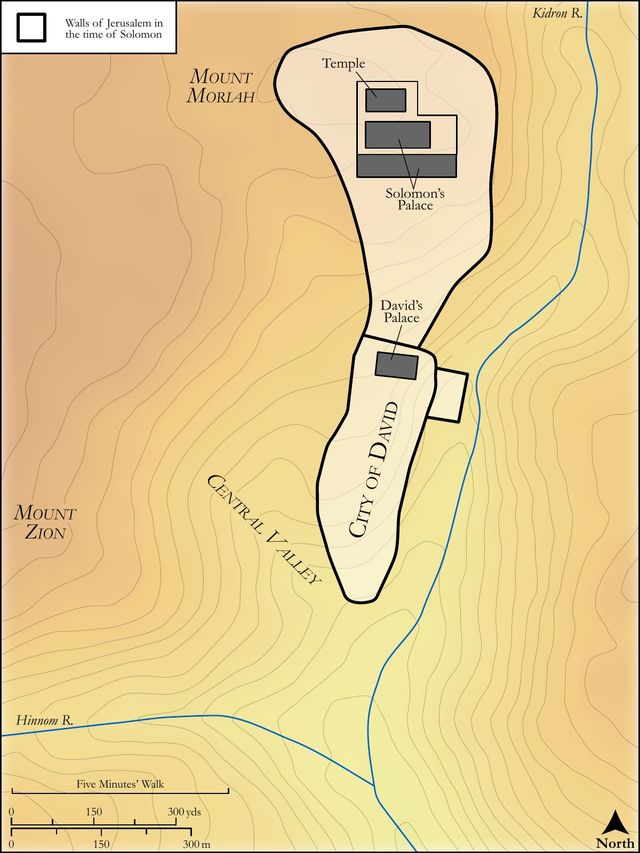
This adjective denotes elevation, superiority, or preeminence. It describes the Temple's prominent physical location on Mount Moriah, but also its exalted status as the spiritual and architectural pinnacle of the nation. The emphasis on its "high" position intensifies the shock and tragedy of its predicted downfall, signifying a dramatic reversal from glory to shame, from a place of honor to an object of derision.
A primitive root meaning "to stun" or "grow numb," this verb conveys a profound sense of desolation, appallment, or being utterly stupefied. It describes a state of deep shock and horror at the extent of destruction or ruin. The use of shâmêm here suggests that the sight of the ruined Temple and desolate land would evoke not just surprise, but a deep, unsettling sense of dread and bewilderment, indicating an unprecedented catastrophe that defies normal understanding.
A primitive root meaning "to be shrill," this verb describes the act of whistling or hissing, often used as a sound of scorn, derision, or contempt. It suggests that observers would not only be shocked by the desolation but would also express mockery or disdain for the fallen glory of Israel and its Temple. This imagery is often used in prophetic literature to describe the public humiliation and reproach that would befall a disobedient nation, as seen in Jeremiah 19:8. It underscores the complete reversal of Israel's status from a blessed nation to an object of international ridicule.
Verse Breakdown
ShowHide"And at this house, [which] is high"
This phrase directly refers to the magnificent Temple in Jerusalem, which Solomon had just completed. The descriptor "high" emphasizes its physical prominence on Mount Moriah, but also its spiritual and national significance as the center of Israelite worship and the symbol of God's presence. The impending desolation is made all the more poignant by the stark contrast with its current exalted status and the immense effort and resources invested in its construction.
"every one that passeth by it shall be astonished, and shall hiss"
This vivid imagery portrays the reaction of foreign observers to the future ruin of the Temple and the land. "Astonished" (Hebrew shâmêm) conveys profound shock and horror at the extent of the destruction, while "hiss" (Hebrew shâraq) denotes scorn, derision, and contempt. The combination suggests that the desolation would be so complete and devastating that it would elicit both bewildered awe and mocking disdain from those who witnessed it, turning a symbol of glory into a monument of shame.
"and they shall say, Why hath the LORD done thus unto this land, and to this house?"
This rhetorical question indicates that the destruction would be so clearly a divine act of judgment that even foreign observers would attribute it to the Lord. It implies a recognition that such a catastrophic downfall could only be the result of a powerful deity's intervention, prompting an inquiry into the specific reasons for God's wrath against a people and a sanctuary once so favored. This question acknowledges God's sovereignty and justice, even from those outside the covenant community.
Literary Devices
ShowHideThe passage in 1 Kings 9:8 employs several powerful literary devices to convey its solemn message. Foreshadowing is prominent, as this verse explicitly predicts the future destruction of the Temple and the desolation of the land, which historically occurred with the Babylonian exile in 586 BC and again with the Roman destruction in AD 70. This prophetic warning serves as a stark reminder of the consequences of disobedience. There is also a strong element of Irony: the very "house" built to honor God and secure His presence becomes a monument to His judgment due to human sin. The Temple, intended as a source of glory and a sign of God's favor, becomes a source of shame and scorn for the nation. Furthermore, the use of Vivid Imagery in phrases like "astonished, and shall hiss" creates a powerful mental picture of the public humiliation and utter devastation that awaits Israel, engaging the reader's senses and emotions. The question "Why hath the LORD done thus?" employs Rhetorical Question to emphasize the profound and undeniable nature of God's judgment, forcing observers to acknowledge divine agency in the catastrophe and to seek its cause in Israel's covenant infidelity.
Theological and Thematic Connections
ShowHideThe warning in 1 Kings 9:8 is deeply rooted in the Deuteronomic theology of blessings and curses, where obedience to God's covenant leads to prosperity and life, while disobedience results in judgment and desolation. This verse underscores the absolute sovereignty of God, who is faithful not only to His promises of blessing but also to His warnings of judgment. It reveals that God's presence, even in a magnificent Temple, is not a guarantee of perpetual favor if His people abandon their covenant obligations. The question "Why hath the LORD done thus?" highlights God's justice and His commitment to upholding His moral order, even if it means bringing judgment upon His own chosen people. This passage serves as a timeless reminder that true security and blessing come not from physical structures or past achievements, but from an ongoing, obedient relationship with the living God. It demonstrates that God's holiness demands a response of faithfulness from His people.
Reflection and Application
ShowHideThe solemn warning in 1 Kings 9:8 carries profound and enduring implications for believers today. It serves as a potent reminder that our relationship with God, while grounded in His grace, involves a call to obedience and faithfulness. Just as God's covenant with Israel had conditions, so too does our walk with Him require a commitment to His Word and His ways. This verse challenges us to examine the "temples" in our own lives—our hearts, our families, our churches, and our communities. Are they built on the solid foundation of Christ and His commands, or are there areas of compromise, idolatry, or neglect that could lead to spiritual desolation or a tarnished witness? The astonishment and scorn predicted for the physical Temple should prompt us to consider the impact of our collective and individual faithfulness on the world's perception of God. Our actions, both public and private, reflect on the God we claim to serve, and a lack of integrity or devotion can cause the world to question the very power and goodness of the Lord.
Questions for Reflection
ShowHideFAQ
ShowHideDid God truly destroy His own Temple?
ShowHideYes, in a sense. While God did not physically demolish the Temple with His own hands, He allowed its destruction as a direct consequence of Israel's persistent disobedience and idolatry, as prophesied in 1 Kings 9:8 and elsewhere. The first Temple was destroyed by the Babylonians in 586 BC (2 Kings 25:8-9), and the second Temple by the Romans in AD 70. These events were understood by the prophets and later by New Testament writers as divine judgment, demonstrating that God's presence is not bound to a physical structure if His people abandon their covenant with Him. His holiness demands that sin be addressed, even among His chosen people, to uphold His righteous character.
Christ-Centered Fulfillment
ShowHideThe solemn warning concerning the physical Temple in 1 Kings 9:8 finds its ultimate Christ-centered fulfillment in the person and work of Jesus Christ. The earthly Temple, though glorious, was always a temporary shadow pointing to a greater reality. Jesus Himself declared, "Destroy this temple, and in three days I will raise it up," referring to the temple of His body (John 2:19-21). The physical Temple's destruction, prophesied here and later fulfilled, underscored its inadequacy as a permanent dwelling for God and a perfect means of atonement. Christ, through His sacrificial death and resurrection, became the ultimate and eternal Temple, the true dwelling place of God, where humanity can perfectly encounter the divine (Hebrews 9:11-14). Furthermore, in the New Covenant, believers themselves, individually and corporately, are declared to be the temple of the Holy Spirit (1 Corinthians 6:19; Ephesians 2:19-22). Thus, the warning of desolation for the physical structure transforms into a spiritual imperative for the Church, the body of Christ, to live in faithfulness and purity, lest its witness become compromised and bring reproach upon the name of the Lord, who now dwells not in a house made with hands, but powerfully within His redeemed people (Acts 7:48).