


1 Kings 8:23
Bible text: King James Version (1769 Blayney text) · Public domain
Bible text: King James Version with Strong's numbers · Public domain
Bible text: Berean Standard Bible · Public domain
Bible text: American Standard Version (1901) · Public domain
Bible text: World English Bible, Messianic edition · Public domain
Bible text: Geneva Bible (1599) · Public domain
Bible text: Young's Literal Translation · Public domain
- וַיֹּאמַרvai·yo·Marand he saidH559Conj-w ¦ V-Qal-ConsecImperf-3msVerb Qal Consecutive Imperfect 3rd Singular Masculineוַandיֹּאמַרhe said
- יְהוָהYah·wehO YahwehH3068N-properNoun Proper Title
- אֱלֹהֵי'e·lo·Hei[the] God ofH430N-mpcNoun Plural Masculine Construct
- יִשְׂרָאֵלYis·ra·'ElIsraelH3478N-properNoun Proper Location
- אֵין'einthere notH369N-mscNoun Singular Masculine Construct
- כָּמוֹךָka·Mo·khalike youH3644Prep ¦ 2msPrepositionכָּמוֹlikeךָyou
- אֱלֹהִים'E·lo·Him[is] a GodH430N-mpNoun Plural Masculine Absolute
- בַּשָּׁמַיִםba·sha·Ma·yimin the heavensH8064Prep-b ¦ N-mpNoun Plural Masculine Absoluteבַּin theשָּׁמַיִםheavens
- מִמַּעַלmi·Ma·'al<from> aboveH4605Prep-m ¦ Adj-csAdjective Numerical Singular common gender Absoluteמִ<from>מַּעַלabove
- וְעַלve·'aland onH5921Conj-w ¦ PrepPrepositionוְandעַלon
- הָאָרֶץha·'A·retzthe earthH776Art ¦ N-fsNoun Singular Feminine Absoluteהָtheאָרֶץearth
- מִתָּחַתmi·Ta·chat<from> beneathH8478Prep-m ¦ N-msNoun Singular Masculine Absoluteמִ<from>תָּחַתbeneath
- שֹׁמֵרsho·Mer[who] keepsH8104V-Qal-Prtcpl-msVerb Qal Participle Singular Masculine Absolute
- הַבְּרִיתha·be·Ritthe covenantH1285Art ¦ N-fsNoun Singular Feminine Absoluteהַtheבְּרִיתcovenant
- וְהַחֶסֶדve·ha·Che·sedand <the> covenant loyaltyH2617Conj-w ¦ Art ¦ N-msNoun Singular Masculine Absoluteוְandהַ<the>חֶסֶדcovenant loyalty
- לַעֲבָדֶיךָla·'a·va·Dei·khato your servantsH5650Prep-l ¦ N-mpc ¦ 2msNoun Plural Masculine Constructלַtoעֲבָדֶיservantsךָyour
- הַהֹלְכִיםha·ho·le·Khimwho walkH1980Art ¦ V-Qal-Prtcpl-mpVerb Qal Participle Plural Masculine Absoluteהַwhoהֹלְכִיםwalk
- לְפָנֶיךָle·fa·Nei·kha<to> before youH6440Prep-l ¦ N-mpc ¦ 2msNoun Plural Masculine Constructלְ<to>פָנֶיbeforeךָyou
- בְּכָלbe·kholwith allH3605Prep-b ¦ N-mscNoun Singular Masculine Constructבְּwithכָלall
- לִבָּםli·Bamtheir heartH3820N-msc ¦ 3mpNoun Singular Masculine Constructלִבָּheartםtheir
English is a literal word-by-word gloss of the Hebrew, not the KJV's wording. Why?
This is the original text the KJV's translators worked from — each Hebrew word with its own literal English meaning in this verse, prepared by scholars at Tyndale House, Cambridge. The KJV translates whole sentences, not word by word, so its wording differs: one Hebrew word can become several English words, and the KJV may choose “the LORD” where the gloss reads “Yahweh”. Both are faithful — they answer different questions. For the KJV's own rendering, switch to the KJV text.
Details
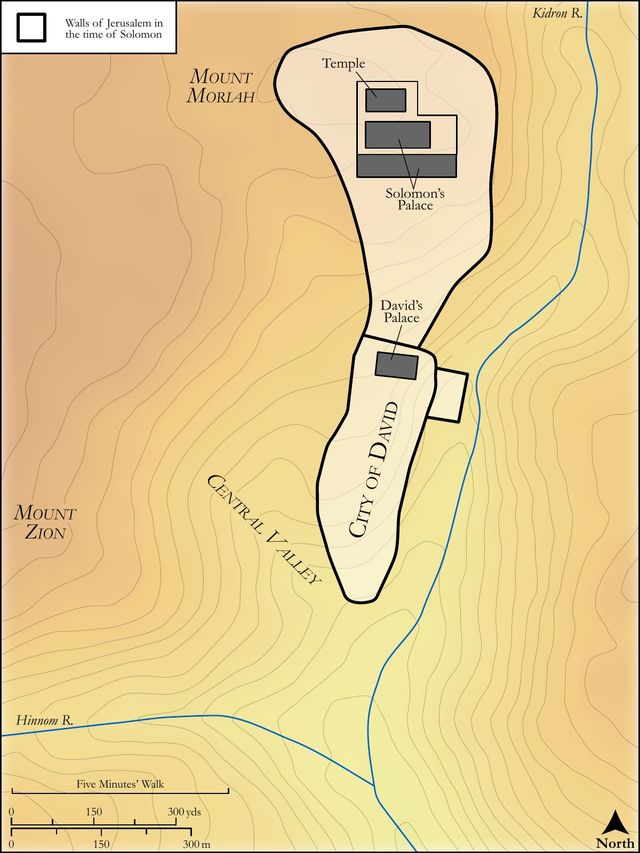
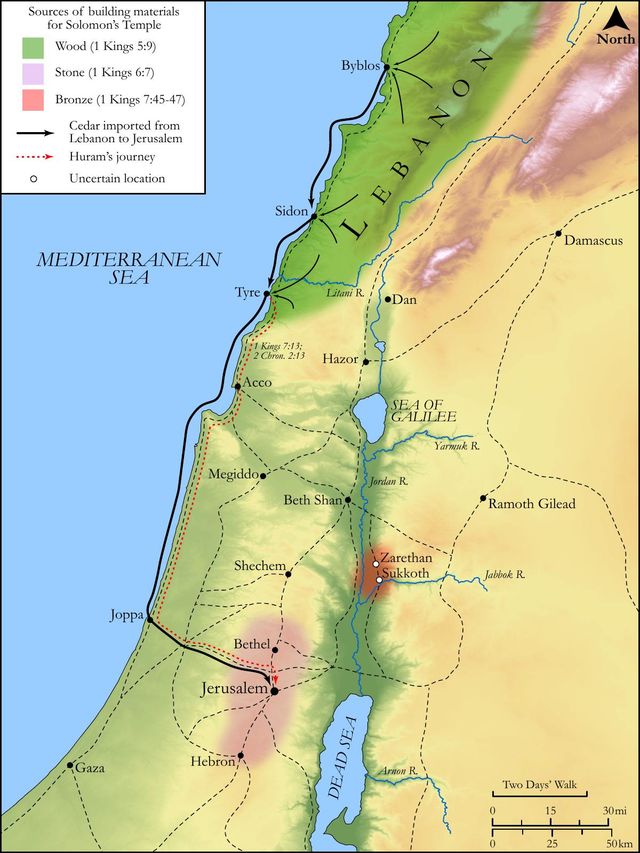
See on the biblical-era maps
Study this verse
Public-domain commentary
Matthew Henry
From his Commentary on the Whole Bible. Henry comments on passages, not single verses — this entry covers 1 Kings 8:22–53. His four-level outline is real structure in the source text, so it is rendered as structure.
Solomon having made a general surrender of this house to God, which God had signified his acceptance of by taking possession, next follows Solomon's prayer, in which he makes a more particular declaration of the uses of that surrender, with all humility and reverence, desiring that God would agree thereto. In short, it is his request that this temple may be deemed and taken, not only for a house of sacrifice (no mention is made of that in all this prayer, that was taken for granted), but a house of prayer for all people; and herein it was a type of the gospel church; see Isa 56:7, compared with Mat 21:13. Therefore Solomon opened this house, not only with an extraordinary sacrifice, but with an extraordinary prayer.
I.The person that prayed this prayer was great.
Solomon did not appoint one of the priests to do it, nor one of the prophets, but did it himself, in the presence of all the congregation of Israel, Kg1 8:22.
1.It was well that he was able to do it, a sign that he had made a good improvement of the pious education which his parents gave him. With all his learning, it seems, he learnt to pray well, and knew how to express himself to God in a suitable manner, pro re nata - on the spur of the occasion, without a prescribed form. In the crowd of his philosophical transactions, his proverbs, and songs, he did not forget his devotions. He was a gainer by prayer (Kg1 3:11, etc.), and, we may suppose, gave himself much to it, so that he excelled, as we find here, in praying gifts.
2.It was well that he was willing to do it, and not shy of performing divine service before so great a congregation. He was far from thinking it any disparagement to him to be his own chaplain and the mouth of the assembly to God; and shall any think themselves too great to do this office for their own families? Solomon, in all his other glory, even on his ivory throne, looked not so great as he did now. Great men should thus support the reputation of religious exercises and so honour God with their greatness. Solomon was herein a type of Christ, the great intercessor for all over whom he rules.
II.The posture in which he prayed was very reverent, and expressive of humility, seriousness, and fervency in prayer.
He stood before the altar of the Lord, intimating that he expected the success of his prayer in virtue of that sacrifice which should be offered up in the fulness of time, typified by the sacrifices offered at that altar. But when he addressed himself to prayer, 1. He kneeled down, as appears, Kg1 8:54, where he is said to rise from his knees; compare Ch2 6:13. Kneeling is the most proper posture for prayer, Eph 3:14. The greatest of men must not think it below them to kneel before the Lord their Maker. Mr. Herbert says, "Kneeling never spoiled silk stocking." 2. He spread forth his hands towards heaven, and (as it should seem by Kg1 8:54) continued so to the end of the prayer, hereby expressing his desire towards, and expectations from, God, as a Father in heaven. He spread forth his hands, as it were to offer up the prayer from an open enlarged heart and to present it to heaven, and also to receive thence, with both arms, the mercy which he prayed for. Such outward expressions of the fixedness and fervour of devotion ought not to be despised or ridiculed.
III.The prayer itself was very long, and perhaps much longer than is here recorded.
At the throne of grace we have liberty of speech, and should use our liberty. It is not making long prayers, but making them for a pretence, that Christ condemns. In this excellent prayer Solomon does, as we should in every prayer,
1.Give glory to God. This he begins with, as the most proper act of adoration. He addresses himself to God as the Lord God of Israel, a God in covenant with them And, (1.) He gives him the praise of what he is, in general, the best of beings in himself ("There is no God like thee, none of the powers in heaven or earth to be compared with thee"), and the best of masters to his people: "Who keepest covenant and mercy with thy servants; not only as good as thy word in keeping covenant, but better than thy word in keeping mercy, doing that for them of which thou hast not given them an express promise, provided they walk before thee with all their heart, are zealous for thee, with an eye to thee." (2.) He gives him thanks for what he had done, in particular, for his family (Kg1 8:24): "Thou hast kept with thy servant David, as with thy other servants, that which thou promisedst him." The promise was a great favour to him, his support and joy, and now performance is the crown of it: Thou hast fulfilled it, as it is this day. Fresh experiences of the truth of God's promises call for enlarged praises.
2.He sues for grace and favour from God.
(1.)That God would perform to him and his the mercy which he had promised, Kg1 8:25, Kg1 8:26. Observe how this comes in. He thankfully acknowledges the performance of the promise in part; hitherto God had been faithful to his word: "Thou hast kept with thy servant David that which thou promisedst him, so far that his son fills his throne and has built the intended temple; therefore now keep with thy servant David that which thou hast further promised him, and which yet remains to be fulfilled in its season." Note, The experiences we have had of God's performing his promises should encourage us to depend upon them and plead them with God: and those who expect further mercies must be thankful for former mercies. Hitherto God has helped, Co2 1:10. Solomon repeats the promise (Kg1 8:25): There shall not fail thee a man to sit on the throne, not omitting the condition, so that thy children take heed to their way; for we cannot expect God's performance of the promise but upon our performance of the condition. And then he humbly begs this entail (Kg1 8:26): Now, O God of Israel! let thy word be verified. God's promises (as we have often observed) must be both the guide of our desires and the ground of our hopes and expectations in prayer. David had prayed (Sa2 7:25): Lord, do as thou hast said. Note, Children should learn of their godly parents how to pray, and plead in prayer.
(2.)That God would have respect to this temple which he had now taken possession of, and that his eyes might be continually open towards it (Kg1 8:29), that he would graciously own it, and so put an honour upon it. To this purpose,
[1.]He premises, First, A humble admiration of God's gracious condescension (Kg1 8:27): "But will God indeed dwell on the earth? Can we imagine that a Being infinitely high, and holy, and happy, will stoop so low as to let it be said of him that he dwells upon the earth and blesses the worms of the earth with his presence - the earth, that is corrupt, and overspread with sin - cursed, and reserved to fire? Lord, how is it?" Secondly, A humble acknowledgment of the incapacity of the house he had built, though very capacious, to contain God: "The heaven of heavens cannot contain thee, for no place can include him who is present in all places; even this house is too little, too mean to be the residence of him that is infinite in being and glory." Note, When we have done the most we can for God we must acknowledge the infinite distance and disproportion between us and him, between our services and his perfections.
[2.]This premised, he prays in general, First, That God would graciously hear and answer the prayer he was now praying, Kg1 8:28. It was a humble prayer (the prayer of thy servant), an earnest prayer (such a prayer as is a cry), a prayer made in faith (before thee, as the Lord, and my God): "Lord, hearken to it, have respect to it, not as the prayer of Israel's king (no man's dignity in the world, or titles of honour, will recommend him to God), but as the prayer of thy servant." Secondly, That God would in like manner hear and answer all the prayers that should, at any time hereafter, be made in or towards this house which he had now built, and of which God had said, My name shall be there (Kg1 8:29), his own prayers (Hearken to the prayers which thy servant shall make), and the prayers of all Israel, and of every particular Israelite (Kg1 8:30): "Hear it in heaven, that is indeed thy dwelling-place, of which this is but a figure; and, when thou hearest, forgive the sin that separates between them and God, even the iniquity of their holy things." a. He supposes that God's people will ever be a prayer people; he resolves to adhere to that duty himself. b. He directs them to have an eye, in their prayers, to that place where God was pleased to manifest his glory as he did not any where else on earth. None but priests might come into that place; but, when they worshipped in the courts of the temple, it must be with an eye towards it, not as the object of their worship (that were idolatry), but as an instituted medium of their worship, helping the weakness of their faith, and typifying the mediation of Jesus Christ, who is the true temple, to whom we must have an eye in every thing wherein we have to do with God. Those that were at a distance looked towards Jerusalem, for the sake of the temple, even when it was in ruins, Dan 6:10. c. He begs that God will hear the prayers, and forgive the sins, of all that look this way in their prayers. Not as if he thought all the devout prayers offered up to God by those who had no knowledge of this house, or regard to it, were therefore rejected; but he desired that the sensible tokens of the divine presence with which this house was blessed might always give sensible encouragement and comfort to believing petitioners.
[3.]More particularly, he here puts divers cases in which he supposed application would be made to God by prayer in or towards this house of prayer.
First, If God were appealed to by an oath for the determining of any controverted right between man and man, and the oath were taken before this altar, he prayed that God would, in some way or other, discover the truth, and judge between the contending parties, Kg1 8:31, Kg1 8:32. He prayed that, in difficult matters, this throne of grace might be a throne of judgment, from which God would right the injured that believingly appealed to it, and punish the injurious that presumptuously appealed to it. It was usual to swear by the temple and altar (Mat 23:16, Mat 23:18), which corruption perhaps took its rise from this supposition of an oath taken, not by the temple or altar, but at or near them, for the greater solemnity.
Secondly, If the people of Israel were groaning under any national calamity, or any particular Israelite under any personal calamity, he desired that the prayers they should make in or towards this house might be heard and answered.
a.In case of public judgments, war (Kg1 8:33), want of rain (Kg1 8:35), famine, or pestilence (Kg1 8:37), and he ends with an et cetera - any plague or sickness; for no calamity befals other people which may not befal God's Israel. Now he supposes, (a.) That the cause of the judgment would be sin, and nothing else. "If they be smitten before the enemy, if there be no rain, it is because they have sinned against thee." It is sin that makes all the mischief. (b.) That the consequence of the judgment would be that they would cry to God, and make supplication to him in or towards that house. Those that slighted him before would solicit him then. Lord, in trouble have they visited thee. In their afflictions they will seek me early and earnestly. (c.) That the condition of the removal of the judgment was something more than barely praying for it. He could not, he would not, ask that their prayer might be answered unless they did also turn from their sin (Kg1 8:35) and turn again to God (Kg1 8:33), that is, unless they did truly repent and reform. On no other terms may we look for salvation in this world or the other. But, if they did thus qualify themselves for mercy, he prays, [a.] That God would hear from heaven, his holy temple above, to which they must look, through this temple. [b.] That he would forgive their sin; for then only are judgments removed in mercy when sin is pardoned. [c.] That he would teach them the good way wherein they should walk, by his Spirit, with his word and prophets; and thus they might be both profited by their trouble (for blessed is the man whom God chastens and teaches), and prepared for deliverance, which then comes in love when it finds us brought back to the good way of God and duty. [d.] That he would then remove the judgment, and redress the grievance, whatever it might be - not only accept the prayer, but give in the mercy prayed for.
b.In case of personal afflictions, Kg1 8:38-40. "If any man of Israel has an errand to thee, here let him find thee, here let him find favour with thee." He does not mention particulars, so numerous, so various, are the grievances of the children of men. (a.) He supposes that the complainants themselves would very sensibly feel their own burden, and would open that case to God which otherwise they kept to themselves and did not make any man acquainted with: They shall know every man the plague of his own heart, what it is that pains him, and (as we say) where the shoe pinches, and shall spread their hands, that is, spread their case, as Hezekiah spread the letter, in prayer, towards this house; whether the trouble be of body or mind, they shall represent it before God. Inward burdens seem especially meant. Sin is the plague of our own heart; our indwelling corruptions are our spiritual diseases. Every Israelite indeed endeavours to know these, that he may mortify them and watch against the risings of them. These he complains of. This is the burden he groans under: O wretched man that I am! These drive him to his knees, drive him to the sanctuary. Lamenting these, he spreads forth his hands in prayer. (b.) He refers all cases of this kind, that should be brought hither, to God. [a.] To his omniscience: "Thou, even thou only, knowest the hearts of all the children of men, not only the plagues of their hearts, their several wants and burdens" (these he knows, but he will know them from us), "but the desire and intent of the heart, the sincerity or hypocrisy of it. Thou knowest which prayer comes from the heart, and which from the lips only." The hearts of kings are not unsearchable to God. [b.] To his justice: Give to every man according to his ways; and he will not fail to do so, by the rules of grace, not the law, for then we should all be undone. [c.] To his mercy: Hear, and forgive, and do (Kg1 8:39), that they may fear thee all their days, Kg1 8:40. This use we should make of the mercy of God to us in hearing our prayers and forgiving our sins, we should thereby he engaged to fear him while we live. Fear the Lord and his goodness. There is forgiveness with him, that he may be feared.
c.The case of the stranger that is not an Israelite is next mentioned, a proselyte that comes to the temple to pray to the God of Israel, being convinced of the folly and wickedness of worshipping the gods of his country. (a.) He supposed that there would be many such (Kg1 8:41, Kg1 8:42), that the fame of God's great works which he had wrought for Israel, by which he proved himself to be above all gods, nay, to be God alone, would reach to distant countries: "Those that live remote shall hear of thy strong hand, and thy stretched-out arm; and this will bring all thinking considerate people to pray towards this house, that they may obtain the favour of a God that is able to do them a real kindness." (b.) He begged that God would accept and answer the proselyte's prayer (Kg1 8:43): Do according to all that the stranger calleth to thee for. Thus early, thus ancient, were the indications of favour towards the sinners of the Gentiles: as there was then one law for the native and for the stranger (Exo 12:49), so there was one gospel for both. (c.) Herein he aimed at the glory of God and the propagating of the knowledge of him: "O let the stranger, in a special manner, speed well in his addresses, that he may carry away with him to his own country a good report of the God of Israel, that all people may know thee and fear thee (and, if they know thee aright, they will fear thee) as do thy people Israel." So far was Solomon from monopolizing the knowledge and service of God, and wishing to have them confined to Israel only (which was the envious desire of the Jews in the days of Christ and his apostles), that he prayed that all people might fear God as Israel did. Would to God that all the children of men might receive the adoption, and be made God's children! Father, thus glorify thy name.
d.The case of an army going forth to battle is next recommended by Solomon to the divine favour. It is supposed that the army is encamped at a distance, somewhere a great way off, sent by divine order against the enemy, Kg1 8:44. "When they are ready to engage, and consider the perils and doubtful issues of battle, and put up a prayer to God for protection and success, with their eye towards this city and temple, then hear their prayer, encourage their hearts, strengthen their hands, cover their heads, and so maintain their cause and give them victory." Soldiers in the field must not think it enough that those who tarry at home pray for them, but must pray for themselves, and they are here encouraged to hope fore a gracious answer. Praying should always go along with fighting.
e.The case of poor captives is the last that is here mentioned as a proper object of divine compassion. (a.) He supposes that Israel will sin. He knew them, and himself, and the nature of man, too well to think this a foreign supposition; for there is no man that sinneth not, that does not enough to justify God in the severest rebukes of his providence, no man but what is in danger of falling into gross sin, and will if God leave him to himself. (b.) He supposes, what may well be expected, that, if Israel revolt from God, God will be angry with them, and deliver them into the hand of their enemies, to be carried captive into a strange country, Kg1 8:46. (c.) He then supposes that they will bethink themselves, will consider their ways (for afflictions put men upon consideration), and, when once they are brought to consider, they will repent and pray, will confess their sins, and humble themselves, saying, We have sinned and have done perversely (Kg1 8:47), and in the land of their enemies will return to God, whom they had forsaken in their own land. (d.) He supposes that in their prayers they will look towards their own land, the holy land, Jerusalem, the holy city, and the temple, the holy house, and directs them so to do (Kg1 8:48), for his sake who gave them that land, chose that city, and to whose honour that house was built. (e.) He prays that then God would hear their prayers, forgive their sins, plead their cause, and incline their enemies to have compassion on them, Kg1 8:49. 50. God has all hearts in his hand, and can, when he pleases, turn the strongest stream the contrary way, and make those to pity his people who have been their most cruel persecutors. See this prayer answered, Psa 106:46. He made them to be pitied of those that carried them captive, which, if it did not release them, yet eased their captivity. (f.) He pleads their relation to God, and his interest in them: "They are thy people, whom thou hast taken into thy covenant and under thy care and conduct, thy inheritance, from which, more than from any other nation, thy rent and tribute of glory issue and arise (Kg1 8:51), separated from among all people to be so and by distinguishing favours appropriated to thee," Kg1 8:53.
Lastly, After all these particulars, he concludes with this general request, that God would hearken to all his praying people in all that they call unto him for, Kg1 8:52. No place now, under the gospel, can be imagined to add any acceptableness to the prayers made in or towards it, as the temple then did. That was a shadow: the substance is Christ; whatever we ask in his name, it shall be given us.
Historical interpretation
Historical reception
1 surviving comment on this verse from the historical church.
Now notice that Solomon did not only pray for his people but also for the foreigners and the strangers who distrusted the nation of Israel and were often hostile to it, so that the son of David might show the God of David to everyone in general, by praying for his enemies and by speaking ahead of time for us those future words: “But I say to you, Love your enemies and pray for those who persecute you.”
Continue studying 1 Kings 8:23 across the web’s major study libraries — every link below opens this exact verse, chapter, or book on the destination site.
Read & Compare
 BibleGatewayThis verse in more than 200 translations and 70 languages.
 Bible.comThe YouVersion reader — hundreds of translations, reading plans, and highlights.
 ESV.orgCrossway's official English Standard Version reader.
 NET BibleThe NET translation with 60,000+ translators' notes on every rendering decision.
 STEP BibleTyndale House's free study tool — original text, vocabulary, and scholarly resources.
 BibliaLogos Bible Software's free web reader.
 USCCBThe New American Bible (Revised Edition) with the U.S. bishops' study notes.
Commentaries
 BibleHub CommentariesDozens of classic commentaries on this verse, gathered on one page.
 StudyLightMore than 100 commentary sets — the largest collection on the web.
 BibleRefPlain-English commentary on what this verse means, verse by verse.
 Enduring WordDavid Guzik's free commentary on this chapter, widely used by Bible teachers.
 Bible Study ToolsVerse commentary alongside Greek and Hebrew study aids.
Original Language & Research
- BibleHub InterlinearThe verse word by word — original language, transliteration, and English.
- BibleHub LexiconEvery word's original-language definition and Strong's entry.
 Blue Letter BibleDeep-study tools — Strong's numbers, concordance, and word studies.
 SefariaThe Hebrew text with Rashi and centuries of Jewish commentary.
Sermons, Hymns & Audio


TrulyRandomVerse is not affiliated with these sites and doesn’t control their content. They’re linked because they’re genuinely useful.
Summary
King Solomon's profound declaration, offered during the dedication of the Temple in Jerusalem, serves as a magnificent opening to his intercessory prayer. It powerfully articulates the singular supremacy of the LORD God of Israel, affirming that no deity in heaven or on earth can compare to Him. This foundational statement underscores God's unique nature as the One who faithfully upholds His covenant promises and extends steadfast mercy to His servants, specifically those who demonstrate genuine, undivided devotion by walking before Him with all their heart.
Context
ShowHideLiterary Context
This declaration is embedded within King Solomon's lengthy and pivotal dedicatory prayer for the newly constructed Temple, recorded comprehensively in 1 Kings 8. Preceding this verse, the Ark of the Covenant has been solemnly placed in the Most Holy Place, and the glory of the LORD has filled the Temple, preventing the priests from ministering due to the overwhelming divine presence. Solomon then stands before the altar, facing the assembly of Israel, and begins his prayer with a posture of humility, as described in 1 Kings 8:22. Verse 23 initiates the substantive content of his prayer, commencing with an emphatic affirmation of God's incomparable nature and His covenant faithfulness. This sets the theological tone for the petitions and confessions that follow, serving as a foundational statement of praise that acknowledges the character of the God to whom the Temple is dedicated and upon whom Israel's future depends.
Historical & Cultural Context
The dedication of the First Temple in Jerusalem, occurring around the 10th century BCE, was a monumental event in Israelite history, symbolizing the culmination of David's vision and Solomon's extensive building project. This period marked a peak of Israelite power and prosperity, establishing Jerusalem as the spiritual and political center. Culturally, the surrounding nations were overwhelmingly polytheistic, worshipping numerous gods associated with natural phenomena or specific domains (e.g., Baal, Asherah, Dagon). Solomon's declaration of "no God like thee" was a radical assertion of monotheism in a polytheistic world, distinguishing Yahweh from all other deities and reinforcing Israel's unique identity. The concept of "covenant" was also familiar in Israel from the covenants between men, as between Abraham and Abimelech or between Jonathan and David. However, God's covenant with Israel was unique, initiated by Him and characterized by His unwavering ḥesed (steadfast love/mercy), a faithfulness far surpassing human agreements. The Temple itself, though a physical structure, was understood not as containing God but as a designated place for His presence among His people and a focal point for their worship and prayer, a place where His name would dwell (1 Kings 8:29).
Key Themes
ShowHideSolomon's prayer, and specifically this verse, powerfully articulates several key themes central to the book of 1 Kings and broader biblical theology. Firstly, it emphasizes God's Incomparable Supremacy and Uniqueness, asserting that the LORD is utterly distinct from and superior to all other gods, both "in heaven above, or on earth beneath." This reinforces the foundational monotheistic truth found throughout Israel's history, as seen in Deuteronomy 4:35. Secondly, the verse highlights God's Unwavering Covenant Faithfulness and Steadfast Love. By stating that God "keepest covenant and mercy," Solomon acknowledges God's enduring commitment to His promises made to Abraham, Moses, and David, demonstrating His ḥesed even when Israel falters, as detailed in Deuteronomy 7:9. Lastly, it underscores the Imperative of Wholehearted Devotion and Obedience. God's faithfulness is specifically extended to "thy servants that walk before thee with all their heart," emphasizing that a genuine, undivided loyalty and sincere obedience are the expected responses to God's covenant grace, echoing the call to love God with all one's heart, soul, and might, as commanded in Deuteronomy 6:5.
Exposition and Analysis
ShowHideKey Word Analysis
ShowHideThis term signifies a solemn, binding agreement or compact, often established by an oath and involving mutual obligations, though in the biblical context, God's covenants are primarily unilateral, initiated by Him and based on His grace. In 1 Kings 8:23, it refers to God's established relationship with Israel through Abraham, Moses, and David, promising land, descendants, blessing, and a kingly line. God "keeping" this covenant means He actively remembers and fulfills His promises, demonstrating His reliability and unchanging character.
This rich Hebrew word is often translated as "steadfast love," "unfailing kindness," or "covenant loyalty." It describes a deep, enduring love that is faithful to a relationship, especially within the context of a covenant. It's not merely pity or compassion, but an active, committed goodness that persists despite challenges or unworthiness. Here, it emphasizes God's persistent goodness and loyalty to His people, flowing from His covenant promises and demonstrating His unwavering commitment to their well-being.
This primitive root signifies movement, "to walk" in a great variety of applications, both literally and figuratively. In the context of 1 Kings 8:23, when coupled with "before thee with all their heart," it figuratively describes a manner of life characterized by integrity, sincerity, and complete devotion. It implies a continuous pattern of behavior, a way of life lived in conscious awareness of God's presence and in alignment with His will.
Verse Breakdown
ShowHide"And he said, LORD God of Israel"
This opening phrase identifies the speaker as King Solomon and the recipient as Yahweh, the covenant God of Israel. The invocation "LORD God of Israel" (Hebrew: Yᵉhôvâh ʼĕlôhîym Yisrâʼêl) is a powerful declaration, acknowledging God's personal, covenantal name (Yahweh) and His unique, chosen relationship with the nation of Israel. It sets the stage for a prayer rooted in their shared history and divine promises, immediately establishing the authority and identity of the One being addressed.
"[there is] no God like thee, in heaven above, or on earth beneath"
This is a profound declaration of God's absolute incomparability and supremacy. It asserts a radical monotheism, distinguishing the God of Israel from all other deities worshipped by surrounding nations. The merism "heaven above, or on earth beneath" emphasizes God's universal dominion and unique existence, indicating that His power, character, and nature are unmatched in all creation, from the highest heavens to the deepest parts of the earth. It is an exclusive claim to divine uniqueness.
"who keepest covenant and mercy with thy servants"
This clause highlights two fundamental and inseparable aspects of God's character: His faithfulness and His steadfast love. "Keepest covenant" (Hebrew: shâmar bᵉrîyth) underscores God's unwavering commitment to His solemn promises made to His people throughout their history, demonstrating His reliability and consistency. "And mercy" (Hebrew: chêçêd) speaks of His loyal, unfailing love that endures within the covenant relationship, providing grace, forgiveness, and persistent goodness to His people, even in the face of their shortcomings.
"that walk before thee with all their heart"
This final phrase specifies the recipients of God's covenant faithfulness and mercy: those who respond to Him with genuine, undivided devotion. To "walk before thee" (Hebrew: hâlak pânîym) implies living a life of obedience, integrity, and accountability in God's conscious presence, acknowledging His oversight and authority. "With all their heart" (Hebrew: bĕkol lêbābām) signifies a complete, sincere, and unreserved commitment of one's inner being, motives, and affections to God, without reservation, hypocrisy, or competing loyalties. It points to the reciprocal nature of the covenant relationship, where God's faithfulness is met by human sincerity and wholeheartedness.
Literary Devices
ShowHideSolomon's prayer in 1 Kings 8:23 employs several literary devices to enhance its impact and theological depth. The most prominent is Apostrophe, as Solomon directly addresses God ("LORD God of Israel"), creating a sense of intimacy and direct communication in his prayer. The phrase "in heaven above, or on earth beneath" functions as a Merism, a rhetorical device where two contrasting parts represent a complete whole, emphasizing the totality of God's incomparable dominion and unique existence across all creation. This also implies a subtle Antithesis against the polytheistic beliefs of the surrounding nations, implicitly contrasting the one true God with all false deities. The expression "walk before thee" is an Idiom or Metaphor for living in God's conscious presence, obeying His commands, and conducting one's life in a manner pleasing to Him. The entire verse, with its declarative praise, functions as a powerful Affirmation of God's character, setting a tone of reverence, trust, and theological grounding for the remainder of Solomon's lengthy dedicatory prayer.
Theological and Thematic Connections
ShowHideThis verse serves as a profound theological anchor, articulating core truths about God's nature and His relationship with humanity. It establishes God's absolute uniqueness and supremacy, a foundational tenet of biblical monotheism that distinguishes Him from all created beings and false gods. This incomparability is not merely a statement of power, but of character: He is the only One who consistently "keeps covenant and mercy." This highlights His unwavering faithfulness (ʾĕmet) and steadfast love (ḥesed), attributes that define His interaction with His people throughout salvation history. The reciprocal element—that God's faithfulness is directed towards those who "walk before Him with all their heart"—underscores the biblical emphasis on genuine, internal devotion rather than mere external ritual. It connects God's sovereign grace with the human responsibility to respond with integrity and undivided loyalty, a theme echoed from the Torah through the Prophets and into the New Testament.
Reflection and Application
ShowHideSolomon's declaration in 1 Kings 8:23 invites believers today to gaze upon the incomparable majesty and steadfast faithfulness of God. In a world saturated with competing loyalties, fleeting promises, and self-proclaimed deities, this verse reassures us that the God of the Bible is utterly unique, unchanging, and utterly reliable. His commitment to His covenant, expressed through His enduring mercy, provides an unshakeable foundation for our faith and hope. This truth should inspire profound worship and deep trust, knowing that our God is not like the fickle deities of human invention, but is faithful to a thousand generations. Furthermore, the condition "who keepest covenant and mercy with thy servants that walk before thee with all their heart" serves as a powerful call to introspection and genuine devotion. It challenges us to examine the sincerity and totality of our own commitment to God, prompting us to ask if our "heart" – our inner being, motives, and affections – is truly undivided in its pursuit of Him. This verse encourages us to live lives of integrity, where our outward actions align with an inward, wholehearted love for God, confident that His faithfulness will meet our sincere devotion.
Questions for Reflection
ShowHideFAQ
ShowHideWhat is the significance of Solomon's declaration that "there is no God like thee"?
ShowHideThis declaration is profoundly significant as it asserts the absolute uniqueness and supremacy of the LORD God of Israel. Among surrounding nations that worshipped many gods, it was a radical statement of monotheism, distinguishing Yahweh from all other gods. It emphasizes that God is incomparable in His power, character, and attributes, transcending all creation. This truth forms the bedrock of Israelite faith and is reiterated throughout Scripture, for example, in Isaiah 45:5. It means there is no rival to His sovereignty, no equal to His wisdom, and no limit to His love and power.
How does God "keep covenant and mercy"?
ShowHideGod "keeps covenant" by faithfully remembering and fulfilling the promises He has made to His people throughout history, such as the Abrahamic, Mosaic, and Davidic covenants. This demonstrates His unwavering reliability and unchanging character. He "keeps mercy" (Hebrew ḥesed) by continually extending His steadfast, loyal love and unfailing kindness to those in covenant relationship with Him. This mercy is not merely passive pity but an active, committed goodness that endures despite human failings. It's a consistent demonstration of His character, as seen in Numbers 23:19.
What does "walk before thee with all their heart" imply for believers today?
ShowHideThis phrase implies a life of sincere, undivided, and complete devotion to God. To "walk before God" means to live consciously in His presence, acknowledging His authority, and striving to obey His commands. "With all their heart" emphasizes that this devotion must be internal and genuine, encompassing one's deepest affections, intentions, and motives, not just outward religious acts. For believers today, it means pursuing God with integrity, without hypocrisy or competing loyalties, seeking to please Him in every aspect of life. It echoes the greatest commandment to love God wholeheartedly, as taught by Jesus in Matthew 22:37.
Christ-Centered Fulfillment
ShowHideSolomon's prayer in 1 Kings 8:23, with its declaration of God's incomparable nature and His covenant faithfulness to those who walk before Him wholeheartedly, finds its ultimate and most profound fulfillment in Jesus Christ. Jesus is the very embodiment of the "God like thee," for He is God incarnate, the visible image of the invisible God, through whom the fullness of the Godhead dwells bodily (Colossians 1:15 and Colossians 2:9). He perfectly demonstrates God's incomparable ḥesed (mercy/steadfast love) through His life, death, and resurrection, establishing the new covenant in His blood, as prophesied and inaugurated by Him (Luke 22:20). Furthermore, Jesus is the only one who truly "walked before God with all their heart" in perfect, unblemished obedience, fulfilling all righteousness and setting the standard for genuine devotion (Hebrews 4:15). Through His atoning sacrifice, believers are reconciled to God, and by the power of the Holy Spirit, are now enabled to "walk before Him" with new hearts, empowered to love Him wholeheartedly, something impossible in our own strength (Ezekiel 36:26-27). Thus, the Temple, dedicated to the God of covenant and mercy, foreshadows Christ, the "greater Temple," in whom God's presence truly dwells among His people (John 2:19-21).