


1 Kings 8:20
- וַיָּקֶםvai·Ya·kemand he has establishedH6965Conj-w ¦ V-Hiphil-ConsecImperf-3msVerb Hiphil Consecutive Imperfect 3rd Singular Masculineוַandיָּקֶםhe has established
- יְהוָהYah·wehYahwehH3068N-properNoun Proper Title
- אֶת'et<obj.>H853DirObjMParticle Object Indicator
- דְּבָרוֹde·va·Rohis wordH1697N-msc ¦ 3msNoun Singular Masculine Constructדְּבָרwordוֹhis
- אֲשֶׁר'a·SherwhichH834RelParticle Relative
- דִּבֵּרdi·Berhe spokeH1696V-Piel-Perf-3msVerb Piel Perfect 3rd Singular Masculine
- וָאָקֻםva·'a·Kumand I have arisenH6965Conj-w ¦ V-Qal-ConsecImperf-1csVerb Qal Consecutive Imperfect 1st Singular common genderוָandאָקֻםI have arisen
- תַּחַתta·Chatin place ofH8478N-mscNoun Singular Masculine Construct
- דָּוִדda·VidDavidH1732N-proper-mNoun Proper Masculine
- אָבִי'a·Vimy fatherH1N-msc ¦ 1csNoun Singular Masculine Constructאָבִfatherיmy
- וָאֵשֵׁבva·'e·Shevand I have satH3427Conj-w ¦ V-Qal-ConsecImperf-1csVerb Qal Consecutive Imperfect 1st Singular common genderוָandאֵשֵׁבI have sat
- עַל'alonH5921PrepPreposition
- כִּסֵּאki·Se'[the] throne ofH3678N-mscNoun Singular Masculine Construct
- יִשְׂרָאֵלYis·ra·'ElIsraelH3478N-properNoun Proper Location
- כַּאֲשֶׁרka·'a·Sherjust asH834Prep-k ¦ RelParticle Relativeכַּjustאֲשֶׁרas
- דִּבֶּרdi·Berhe spokeH1696V-Piel-Perf-3msVerb Piel Perfect 3rd Singular Masculine
- יְהוָהYah·wehYahwehH3068N-properNoun Proper Title
- וָאֶבְנֶהva·'ev·Nehand I have builtH1129Conj-w ¦ V-Qal-ConsecImperf-1csVerb Qal Consecutive Imperfect 1st Singular common genderוָandאֶבְנֶהI have built
- הַבַּיִתha·Ba·yitthe houseH1004Art ¦ N-msNoun Singular Masculine Absoluteהַtheבַּיִתhouse
- לְשֵׁםle·Shemfor [the] name ofH8034Prep-l ¦ N-mscNoun Singular Masculine Constructלְforשֵׁם[the] name of
- יְהוָהYah·wehYahwehH3068N-properNoun Proper Title
- אֱלֹהֵי'e·lo·Hei[the] God ofH430N-mpcNoun Plural Masculine Construct
- יִשְׂרָאֵלYis·ra·'ElIsraelH3478N-properNoun Proper Location
English is a literal word-by-word gloss of the Hebrew, not the KJV's wording. Why?
This is the original text the KJV's translators worked from — each Hebrew word with its own literal English meaning in this verse, prepared by scholars at Tyndale House, Cambridge. The KJV translates whole sentences, not word by word, so its wording differs: one Hebrew word can become several English words, and the KJV may choose “the LORD” where the gloss reads “Yahweh”. Both are faithful — they answer different questions. For the KJV's own rendering, switch to the KJV text.
Details
See on the biblical-era map
Study this verse
Public-domain commentary
Matthew Henry
From his Commentary on the Whole Bible. Henry comments on passages, not single verses — this entry covers 1 Kings 8:12–21. His four-level outline is real structure in the source text, so it is rendered as structure.
Here, I. Solomon encourages the priests, who came out of the temple from their ministration, much astonished at the dark cloud that overshadowed them. The disciples of Christ feared when they entered into the cloud, though it was a bright cloud (Luk 9:34), so did the priests when they found themselves wrapped in a thick cloud. To silence their fears, 1. He reminds them of that which they could not but know, that this was a token of God's presence (Kg1 8:12): The Lord said he would dwell in the thick darkness. It is so far from being a token of his displeasure that it is an indication of his favour; for he had said, I will appear in a cloud, Lev 16:2. Note, Nothing is more effectual to reconcile us to dark dispensations than to consider what God hath said, and to compare his word and works together; as Lev 10:3, This is that which the Lord hath said. God is light (Jo1 1:5), and he dwells in light (Ti1 6:16), but he dwells with men in the thick darkness, makes that his pavilion, because they could not bear the dazzling brightness of his glory. Verily thou art a God that hidest thyself. Thus our holy faith is exercised and our holy fear is increased. Where God dwells in light faith is swallowed up in vision and fear in love. 2. He himself bids it welcome, as worthy of all acceptation; and since God, by this cloud, came down to take possession, he does, in a few words, solemnly give him possession (Kg1 8:13): "Surely I come," says God. "Amen," says Solomon, "Even so, come, Lord,. The house is thy own, entirely thy own, I have surely built it for thee, and furnished it for thee; it is for ever thy own, a settled place for thee to abide in for ever; it shall never be alienated nor converted to any other use; the ark shall never be removed from it, never unsettled again." It is Solomon's joy that God has taken possession; and it is his desire that he would keep possession. Let not the priests therefore dread that in which Solomon so much triumphs.
II.He instructs the people, and gives them a plain account concerning this house, which they now saw God take possession of.
He spoke briefly to the priests, to satisfy them (a word to the wise), but turned his face about (Kg1 8:14) from them to the congregation that stood in the outer court, and addressed himself to them largely.
1.He blessed them. When they saw the dark cloud enter the temple they blessed themselves, being astonished at it and afraid lest the thick darkness should be utter darkness to them. The amazing sight, such as they had never seen in their days, we may suppose, drove every man to his prayers, and the vainest minds were made serious by it. Solomon therefore set in with their prayers, and blessed them all, as one having authority (for the less is blessed of the better); in God's name, he spoke peace to them, and a blessing, like that with which the angel blessed Gideon when he was in a fright, upon a similar occasion. Jdg 6:22, Jdg 6:23, Peace be unto thee. Fear not; thou shalt not die. Solomon blessed them, that is, he pacified them, and freed them from the consternation they were in. To receive this blessing, they all stood up, in token of reverence and readiness to hear and accept it. It is a proper posture to be in when the blessing is pronounced.
2.He informed them concerning this house which he had built and was now dedicating.
(1.)He began his account with a thankful acknowledgment of the good hand of his God upon him hitherto: Blessed be the Lord God of Israel, Kg1 8:15. What we have the pleasure of God must have the praise of. He thus engaged the congregation to lift up their hearts in thanksgivings to God, which would help to still the tumult of spirit which, probably, they were in. "Come," says he, "let God's awful appearances not drive us from him, but draw us to him; let us bless the Lord God of Israel." Thus Job, under a dark scene, blessed the name of the Lord. Solomon here blessed God,
[1.]For his promise which he spoke with his mouth to David.
[2.]For the performance, that he had now fulfilled it with his hand. We have then the best sense of God's mercies, and most grateful both to ourselves and to our God, when we run up those streams to the fountain of the covenant, and compare what God does with what he has said.
(2.)Solomon is now making a solemn surrender or dedication of this house unto God, delivering it to God by his own act and deed. Grants and conveyances commonly begin with recitals of what has been before done, leading to what is now done: accordingly, here is a recital of the special causes and considerations moving Solomon to build this house.
[1.]He recites the want of such a place. It was necessary that this should be premised; for, according to the dispensation they were under, there must be but one place in which they must expect God to record his name. If, therefore, there were any other chosen, this would be a usurpation. But he shows, from what God himself had said, that there was no other (Kg1 8:16): I chose no city to build a house in for my name; therefore there is occasion for the building of this.
[2.]He recites David's purpose to build such a place. God chose the person first that should rule his people (I chose David, Kg1 8:16) and then put it into his heart to build a house for God's name, Kg1 8:17. It was not a project of his own, for the magnifying of himself; but his good father, of blessed memory, laid the first design of it, though he lived not to lay the first stone.
[3.]He recites God's promise concerning himself. God approved his father's purpose (Kg1 8:18): Thou didst well, that it was in thy heart. Note, Sincere intentions to do good shall be graciously approved and accepted of God, though Providence prevent our putting them in execution. The desire of a man is his kindness. See Co2 8:12. God accepted David's good will, yet would not permit him to do the good work, but reserved the honour of it for his son (Kg1 8:19): He shall build the house to my name; so that what he had done was not of his own head, nor for his own glory, but the work itself was according to his father's design and his doing it was according to God's designation.
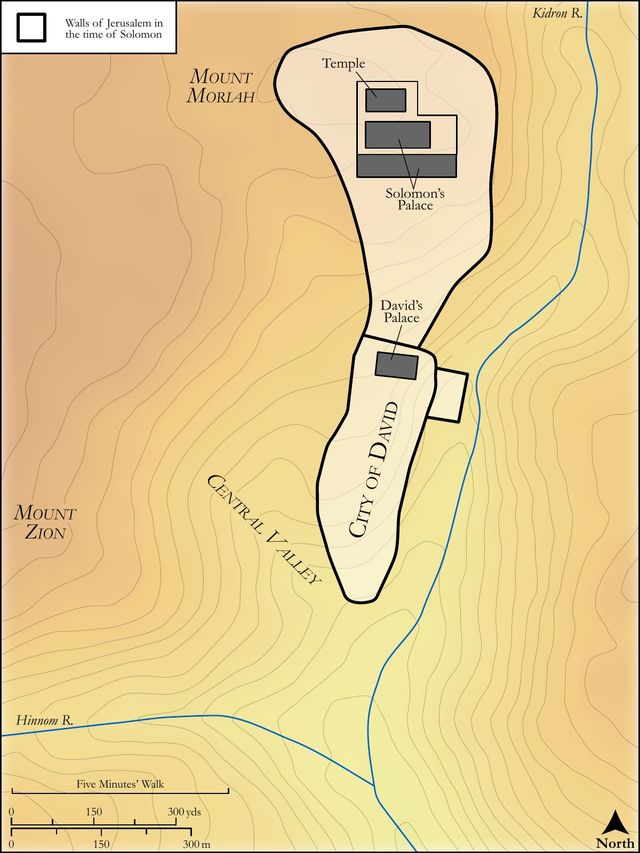
[4.]He recites what he himself had done, and with what intention: I have built a house, not for my own name, but for the name of the Lord God of Israel (Kg1 8:20), and set there a place for the ark, Kg1 8:21. Thus all the right, title, interest, claim, and demand, whatsoever, which he or his had or might have in or to this house, or any of its appurtenances, he resigns, surrenders, and gives up, to God for ever. It is for his name, and his ark. In this, says he, the Lord hath performed his word that he spoke. Note, Whatever good we do, we must look upon it as the performance of God's promise to us, rather than the performance of our promises to him. The more we do for God the more we are indebted to him; for our sufficiency is of him, and not of ourselves.
Continue studying 1 Kings 8:20 across the web’s major study libraries — every link below opens this exact verse, chapter, or book on the destination site.
Read & Compare
 BibleGatewayThis verse in more than 200 translations and 70 languages.
 Bible.comThe YouVersion reader — hundreds of translations, reading plans, and highlights.
 ESV.orgCrossway's official English Standard Version reader.
 NET BibleThe NET translation with 60,000+ translators' notes on every rendering decision.
 STEP BibleTyndale House's free study tool — original text, vocabulary, and scholarly resources.
 BibliaLogos Bible Software's free web reader.
 USCCBThe New American Bible (Revised Edition) with the U.S. bishops' study notes.
Commentaries
 BibleHub CommentariesDozens of classic commentaries on this verse, gathered on one page.
 StudyLightMore than 100 commentary sets — the largest collection on the web.
 BibleRefPlain-English commentary on what this verse means, verse by verse.
 Enduring WordDavid Guzik's free commentary on this chapter, widely used by Bible teachers.
 Bible Study ToolsVerse commentary alongside Greek and Hebrew study aids.
Original Language & Research
- BibleHub InterlinearThe verse word by word — original language, transliteration, and English.
- BibleHub LexiconEvery word's original-language definition and Strong's entry.
 Blue Letter BibleDeep-study tools — Strong's numbers, concordance, and word studies.
 SefariaThe Hebrew text with Rashi and centuries of Jewish commentary.
Sermons, Hymns & Audio


TrulyRandomVerse is not affiliated with these sites and doesn’t control their content. They’re linked because they’re genuinely useful.
Summary
In 1 Kings 8:20, during the solemn dedication of the Temple, King Solomon articulates a profound declaration of God's unwavering faithfulness. He asserts that the Lord has meticulously fulfilled His spoken promises, specifically regarding Solomon's ascension to the throne of Israel as successor to his father David, and the successful completion of the magnificent Temple in Jerusalem. This verse serves as a powerful testament to God's active sovereignty in the history of His people, demonstrating His commitment to bringing His covenantal declarations to tangible fruition through human instruments.
Context
ShowHideLiterary Context
This verse is situated at a climactic point within Solomon's dedicatory address and prayer, immediately following the installation of the Ark of the Covenant into the Most Holy Place of the newly completed Temple (1 Kings 8:6-9). The entire chapter of 1 Kings 8 chronicles this momentous event, which represents the culmination of decades of preparation initiated by King David. Solomon delivers his speech from a bronze platform, publicly affirming God's sovereign hand in establishing his reign and enabling the construction of the Temple, a project deeply rooted in the Davidic Covenant. This declaration sets the stage for Solomon's extensive prayer, where he further petitions God for His enduring presence and blessing upon the Temple and the nation.
Historical & Cultural Context
The construction of the First Temple in Jerusalem, around the 10th century BCE, was the most significant religious and architectural undertaking in ancient Israel. It served as the central hub for national worship and symbolized God's unique presence among His people, solidifying Israel's identity as a covenant nation. Solomon's reign, often considered Israel's "Golden Age," was characterized by unprecedented peace, prosperity, and international influence, providing the stability and resources necessary for such a monumental project. Culturally, the dedication of a major sanctuary in the ancient Near East involved elaborate ceremonies, sacrifices, and public pronouncements, all designed to emphasize the covenant relationship between the deity, the king, and the people. Solomon's public acknowledgment in this verse reflects the ancient understanding of kingship as divinely ordained, with the monarch serving as God's chosen representative.
Key Themes
ShowHide1 Kings 8:20 encapsulates several foundational themes crucial to the book of Kings and the broader biblical narrative. Foremost is God's Unwavering Faithfulness, explicitly stated by Solomon: "the LORD hath performed his word that he spake." This highlights God's reliability, His active involvement in human history, and His capacity to bring His declared will to fruition, demonstrating that His promises are efficacious and dependable. Secondly, it underscores the Fulfillment of Prophecy and Covenant, particularly the Davidic Covenant, where God promised David that his son would succeed him and build a "house for my name." Solomon's reign and the Temple's completion are tangible proofs of these divine commitments. Thirdly, the verse affirms Solomon's Legitimate Succession and Divine Appointment, as he acknowledges that his position "on the throne of Israel" is not by human design but "as the LORD promised," thereby legitimizing his rule and emphasizing the divine sanction of kingship within God's chosen nation. Finally, the phrase "have built an house for the name of the LORD God of Israel" highlights the Temple's Significance as the consecrated space where God's presence, character, and authority would be uniquely manifested and worshipped, serving as the focal point for Israel's covenant relationship with God (Deuteronomy 12:5).
Exposition and Analysis
ShowHideKey Word Analysis
ShowHideThe Hebrew verb קוּם (H6965, qûwm), here in the Hiphil perfect tense, carries the meaning "to raise up, establish, confirm, fulfill, or bring to pass." When Solomon declares "the LORD hath performed his word," he is asserting that God has actively and effectively established, confirmed, and brought to fruition what He had previously spoken. This signifies divine efficacy, demonstrating God's powerful execution of His declared will and His ability to transform promise into concrete reality.
The Hebrew noun דָבָר (H1697, dâbâr), derived from the verb dâbar (H1696, "to speak"), encompasses a wide semantic range, including "a word, a matter, a thing, a cause, or an affair." In this context, it refers to God's spoken promises and decrees, particularly those made to David concerning his dynasty and the Temple. Solomon's use of "his word" emphasizes the authoritative, binding, and active nature of God's pronouncements, which are not merely utterances but powerful declarations that bring about what they declare.
The phrase בַּיִת לְשֵׁם יְהוָה (H1004, bayith, "house"; H8034, shêm, "name"; H3068, Yᵉhôvâh, "LORD") is a crucial theological concept. It does not imply that God, who is infinite and omnipresent, can be contained within a physical structure, a point Solomon himself acknowledges later (1 Kings 8:27). Rather, "for the name of the LORD" signifies that the Temple is dedicated to God's honor, glory, and reputation. It is the designated place where His unique identity, character, and authority are invoked, remembered, and encountered by His people. It serves as the locus for His manifest presence and worship, where His "name" (representing His revealed being and character) resides.
Verse Breakdown
ShowHide"And the LORD hath performed his word that he spake,"
This opening clause lays the theological foundation of the verse, asserting God's absolute faithfulness. Solomon emphatically declares that the Lord has actively and successfully brought to completion the promises He previously uttered. This refers primarily to the covenant promises made to King David regarding his dynastic succession and the building of a permanent dwelling for God, as recorded in 2 Samuel 7. It highlights God's initiative, power, and unwavering commitment to His declared will.
"and I am risen up in the room of David my father, and sit on the throne of Israel, as the LORD promised,"
Here, Solomon directly connects God's faithfulness to his personal circumstances and the political reality of his reign. His ascension to the throne is presented not as a result of human ambition or maneuvering, but as a direct, divinely orchestrated fulfillment of God's word. The phrase "risen up in the room of David my father" emphasizes the continuity of the Davidic dynasty, while "sit on the throne of Israel" affirms his legitimate and divinely sanctioned rule over the united kingdom. The repeated phrase "as the LORD promised" powerfully reinforces the divine origin and legitimacy of his kingship.
"and have built an house for the name of the LORD God of Israel."
This final clause highlights the second major fulfillment of God's promise: the completion of the Temple. Solomon, as the divinely appointed successor, has been the chosen instrument through whom God's promise to David—that his son would build a house for God's name—has been realized. The Temple is not merely a physical edifice; it is a sacred space consecrated to the "name" (character, presence, glory) of the "LORD God of Israel," signifying its unique purpose as the central place of Israelite worship and the dwelling place of God's manifest presence among His chosen people.
Literary Devices
ShowHideThe verse employs several potent literary devices to convey its profound theological message. Declaration and Proclamation are central, as Solomon publicly announces the fulfillment of God's word, lending immense authority and solemnity to the occasion. The use of Repetition ("the LORD hath performed his word that he spake" and "as the LORD promised") serves to underscore the absolute certainty, reliability, and immutability of God's promises, powerfully reinforcing the overarching theme of divine faithfulness. There is also a clear Cause and Effect relationship established: because the LORD performed His word, Solomon is on the throne, and the Temple has been built. The Temple itself functions as powerful Symbolism, representing God's presence, the enduring covenant relationship with Israel, and the stability of the Davidic dynasty. Solomon's speech is a masterclass in Attribution, humbly and clearly giving all credit for his position and the Temple's completion to God's sovereign hand, rather than to human effort, wisdom, or might.
Theological and Thematic Connections
ShowHide1 Kings 8:20 stands as a monumental declaration of God's absolute faithfulness, a cornerstone theme woven throughout biblical theology. It powerfully illustrates that God is not merely a speaker of words but a performer of promises, actively intervening in human history to bring His declared will to pass. This verse links the specific promises made to David concerning his lineage and the Temple to their tangible fulfillment in Solomon's reign, demonstrating the reliability of God's covenant commitments across generations. It teaches that divine sovereignty is not an abstract concept but a concrete reality, manifesting in the establishment of kings and the construction of sacred spaces. For Israel, this moment affirmed their unique relationship with Yahweh and provided a foundational assurance of trust for future generations, demonstrating that the God who had acted decisively in the past would continue to act on their behalf.
Reflection and Application
ShowHideSolomon's declaration in 1 Kings 8:20 offers profound encouragement for believers today, reminding us that the God who was faithful to His promises in ancient Israel remains faithful in every generation. Just as He sovereignly orchestrated the succession of kings and the building of a magnificent Temple, He is actively at work in our lives, bringing His purposes to fruition. This verse calls us to cultivate a deep, unwavering trust in God's word, recognizing that His character is intrinsically defined by His reliability. When we face uncertainties, delays, or seemingly insurmountable obstacles, we can look back at the countless instances of His faithfulness throughout biblical history and in our own personal journeys, finding profound assurance that He will perform what He has promised. It also challenges us to humble acknowledgment: like Solomon, we are called to attribute our successes, our positions, and the fulfillment of our hopes not to our own strength, wisdom, or ingenuity, but to God's sovereign hand. Living in light of His faithfulness transforms our perspective, fostering a spirit of profound gratitude and empowering us to walk confidently in His divine plan, knowing that His past performance is a powerful guarantee of His future provision and abiding presence.
Questions for Reflection
ShowHideFAQ
ShowHideWhat is the significance of Solomon saying "the LORD hath performed his word"?
ShowHideThis statement is profoundly significant because it highlights God's active, reliable, and trustworthy nature. It's not merely that God spoke a word, but that He performed it, meaning He brought it to completion and fruition with divine power and integrity. This emphasizes God's unwavering faithfulness to His covenant promises. Specifically, it refers to the promises made to King David in 2 Samuel 7:12-13—that David's son would succeed him on the throne and build a house for God's name. Solomon's declaration confirms that these divine prophecies have now demonstrably come to pass, solidifying the legitimacy of his reign and the sanctity of the Temple. It serves as a public, authoritative testimony to God's trustworthiness before all Israel, reinforcing the foundation of their covenant relationship.
Why is the Temple referred to as "an house for the name of the LORD"? Does this mean God lives in the Temple?
ShowHideThe phrase "an house for the name of the LORD" is a crucial theological distinction that clarifies the Temple's purpose without limiting God's omnipresence. It does not imply that the infinite and omnipresent God could be physically contained within a building. Solomon himself clarifies this later in his prayer, stating, "But will God indeed dwell on the earth? behold, the heaven and heaven of heavens cannot contain thee; how much less this house that I have builded?" (1 Kings 8:27). Instead, "for the name of the LORD" signifies that the Temple is the designated place where God's character, authority, and presence are uniquely invoked, remembered, and manifested. It is where His "name"—representing His revealed being, reputation, and attributes—resides, where His glory is displayed, and where His people can approach Him in worship, offer sacrifices, and receive His blessings. It serves as the focal point for Israel's covenant relationship with God, a sacred space dedicated to His honor and where His unique identity is encountered.
Christ-Centered Fulfillment
ShowHide1 Kings 8:20, with its powerful declaration of God's faithfulness in fulfilling His promises concerning the Davidic King and the Temple, finds its ultimate and most profound fulfillment in the person and work of Jesus Christ. Solomon, as the son of David who built the physical Temple and sat on the throne, serves as a significant type of the Messiah. The promises made to David in 2 Samuel 7:12-16 speak of an eternal dynasty and an enduring kingdom, which Solomon's reign only partially and temporarily fulfilled. It is Jesus, the true "son of David" (Matthew 1:1), whose kingdom is truly eternal and whose throne is everlasting (Luke 1:32-33). Furthermore, while Solomon built a house for God's name, Jesus himself is the ultimate "Temple" where God's presence truly dwells among humanity. He boldly declared, "Destroy this temple, and in three days I will raise it up," speaking not of the physical edifice but of the temple of his body (John 2:19-21). Through Christ, believers are incorporated as living stones into a spiritual temple (1 Peter 2:5), and the Holy Spirit indwells them, making them the new dwelling place of God (1 Corinthians 6:19). Thus, the promises of God performed in Solomon's day foreshadowed the greater reality of God's ultimate performance of His word in Jesus, who is both the promised eternal King and the true, living Temple, through whom we have eternal access to God's presence. Indeed, in the New Jerusalem, there will be no need for a temple, "for the Lord God Almighty and the Lamb are its temple" (Revelation 21:22).