


1 Kings 8:19
Bible text: King James Version (1769 Blayney text) · Public domain
Bible text: Berean Standard Bible · Public domain
Bible text: American Standard Version (1901) · Public domain
Bible text: World English Bible, Messianic edition · Public domain
Bible text: Geneva Bible (1599) · Public domain
Bible text: Young's Literal Translation · Public domain
- רַקrakonlyH7535AdvAdverb
- אַתָּה'a·TahyouH859Pro-2msPronoun Personal 2nd Singular Masculine
- לֹאlo'notH3808NegParticle Negative
- תִבְנֶהtiv·Nehyou will buildH1129V-Qal-Imperf-2msVerb Qal Imperfect 2nd Singular Masculine
- הַבָּיִתha·Ba·yitthe houseH1004Art ¦ N-msNoun Singular Masculine Absoluteהַtheבָּיִתhouse
- כִּיkithatH3588PrtParticle Conditional
- אִם'imexceptH518PrtParticle Conditional
- בִּנְךָbin·Khayour sonH1121N-msc ¦ 2msNoun Singular Masculine Constructבִּנְsonךָyour
- הַיֹּצֵאhai·yo·Tze'who comes outH3318Art ¦ V-Qal-Prtcpl-msVerb Qal Participle Singular Masculine Absoluteהַwhoיֹּצֵאcomes out
- מֵחֲלָצֶיךָme·cha·la·Tzei·khafrom your loinsH2504Prep-m ¦ N-fdc ¦ 2msNoun Dual Feminine Constructמֵfromחֲלָצֶיloinsךָyour
- הוּאhu'heH1931Pro-3msPronoun Personal 3rd Singular Masculine
- יִבְנֶהyiv·Nehhe will buildH1129V-Qal-Imperf-3msVerb Qal Imperfect 3rd Singular Masculine
- הַבַּיִתha·Ba·yitthe houseH1004Art ¦ N-msNoun Singular Masculine Absoluteהַtheבַּיִתhouse
- לִשְׁמִיlish·Mifor my nameH8034Prep-l ¦ N-msc ¦ 1csNoun Singular Masculine Constructלִforשְׁמִnameיmy
English is a literal word-by-word gloss of the Hebrew, not the KJV's wording. Why?
This is the original text the KJV's translators worked from — each Hebrew word with its own literal English meaning in this verse, prepared by scholars at Tyndale House, Cambridge. The KJV translates whole sentences, not word by word, so its wording differs: one Hebrew word can become several English words, and the KJV may choose “the LORD” where the gloss reads “Yahweh”. Both are faithful — they answer different questions. For the KJV's own rendering, switch to the KJV text.
Details
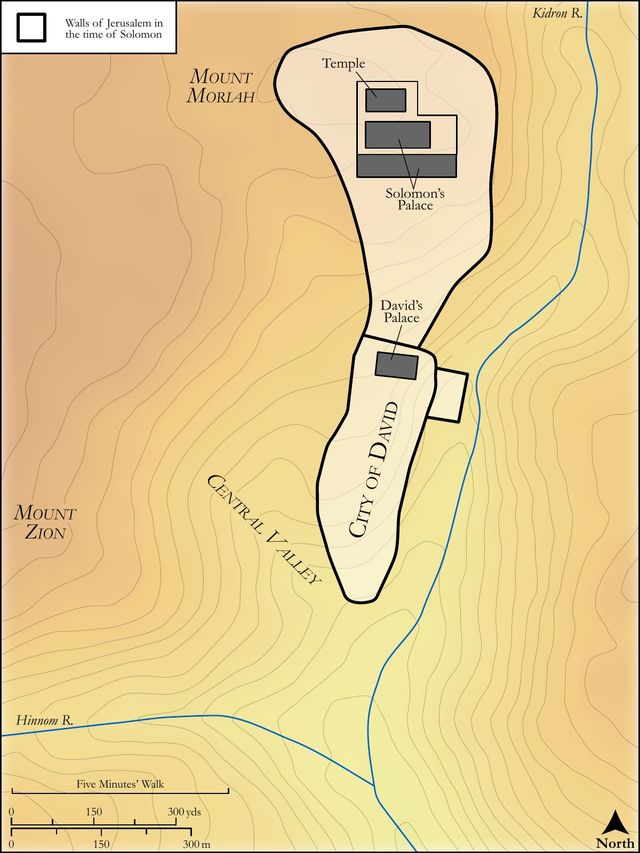
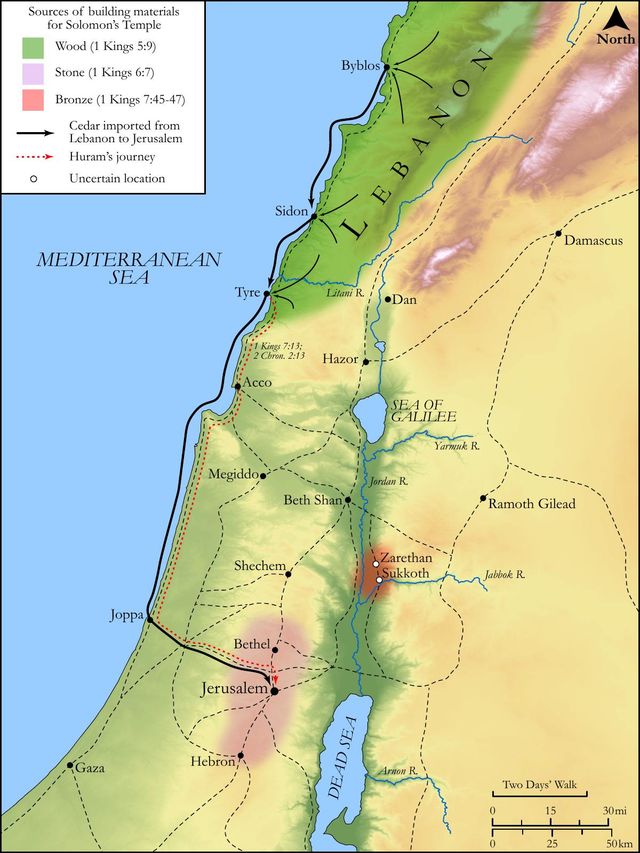
See on the biblical-era maps
Study this verse
Public-domain commentary
Matthew Henry
From his Commentary on the Whole Bible. Henry comments on passages, not single verses — this entry covers 1 Kings 8:12–21. His four-level outline is real structure in the source text, so it is rendered as structure.
Here, I. Solomon encourages the priests, who came out of the temple from their ministration, much astonished at the dark cloud that overshadowed them. The disciples of Christ feared when they entered into the cloud, though it was a bright cloud (Luk 9:34), so did the priests when they found themselves wrapped in a thick cloud. To silence their fears, 1. He reminds them of that which they could not but know, that this was a token of God's presence (Kg1 8:12): The Lord said he would dwell in the thick darkness. It is so far from being a token of his displeasure that it is an indication of his favour; for he had said, I will appear in a cloud, Lev 16:2. Note, Nothing is more effectual to reconcile us to dark dispensations than to consider what God hath said, and to compare his word and works together; as Lev 10:3, This is that which the Lord hath said. God is light (Jo1 1:5), and he dwells in light (Ti1 6:16), but he dwells with men in the thick darkness, makes that his pavilion, because they could not bear the dazzling brightness of his glory. Verily thou art a God that hidest thyself. Thus our holy faith is exercised and our holy fear is increased. Where God dwells in light faith is swallowed up in vision and fear in love. 2. He himself bids it welcome, as worthy of all acceptation; and since God, by this cloud, came down to take possession, he does, in a few words, solemnly give him possession (Kg1 8:13): "Surely I come," says God. "Amen," says Solomon, "Even so, come, Lord,. The house is thy own, entirely thy own, I have surely built it for thee, and furnished it for thee; it is for ever thy own, a settled place for thee to abide in for ever; it shall never be alienated nor converted to any other use; the ark shall never be removed from it, never unsettled again." It is Solomon's joy that God has taken possession; and it is his desire that he would keep possession. Let not the priests therefore dread that in which Solomon so much triumphs.
II.He instructs the people, and gives them a plain account concerning this house, which they now saw God take possession of.
He spoke briefly to the priests, to satisfy them (a word to the wise), but turned his face about (Kg1 8:14) from them to the congregation that stood in the outer court, and addressed himself to them largely.
1.He blessed them. When they saw the dark cloud enter the temple they blessed themselves, being astonished at it and afraid lest the thick darkness should be utter darkness to them. The amazing sight, such as they had never seen in their days, we may suppose, drove every man to his prayers, and the vainest minds were made serious by it. Solomon therefore set in with their prayers, and blessed them all, as one having authority (for the less is blessed of the better); in God's name, he spoke peace to them, and a blessing, like that with which the angel blessed Gideon when he was in a fright, upon a similar occasion. Jdg 6:22, Jdg 6:23, Peace be unto thee. Fear not; thou shalt not die. Solomon blessed them, that is, he pacified them, and freed them from the consternation they were in. To receive this blessing, they all stood up, in token of reverence and readiness to hear and accept it. It is a proper posture to be in when the blessing is pronounced.
2.He informed them concerning this house which he had built and was now dedicating.
(1.)He began his account with a thankful acknowledgment of the good hand of his God upon him hitherto: Blessed be the Lord God of Israel, Kg1 8:15. What we have the pleasure of God must have the praise of. He thus engaged the congregation to lift up their hearts in thanksgivings to God, which would help to still the tumult of spirit which, probably, they were in. "Come," says he, "let God's awful appearances not drive us from him, but draw us to him; let us bless the Lord God of Israel." Thus Job, under a dark scene, blessed the name of the Lord. Solomon here blessed God,
[1.]For his promise which he spoke with his mouth to David.
[2.]For the performance, that he had now fulfilled it with his hand. We have then the best sense of God's mercies, and most grateful both to ourselves and to our God, when we run up those streams to the fountain of the covenant, and compare what God does with what he has said.
(2.)Solomon is now making a solemn surrender or dedication of this house unto God, delivering it to God by his own act and deed. Grants and conveyances commonly begin with recitals of what has been before done, leading to what is now done: accordingly, here is a recital of the special causes and considerations moving Solomon to build this house.
[1.]He recites the want of such a place. It was necessary that this should be premised; for, according to the dispensation they were under, there must be but one place in which they must expect God to record his name. If, therefore, there were any other chosen, this would be a usurpation. But he shows, from what God himself had said, that there was no other (Kg1 8:16): I chose no city to build a house in for my name; therefore there is occasion for the building of this.
[2.]He recites David's purpose to build such a place. God chose the person first that should rule his people (I chose David, Kg1 8:16) and then put it into his heart to build a house for God's name, Kg1 8:17. It was not a project of his own, for the magnifying of himself; but his good father, of blessed memory, laid the first design of it, though he lived not to lay the first stone.
[3.]He recites God's promise concerning himself. God approved his father's purpose (Kg1 8:18): Thou didst well, that it was in thy heart. Note, Sincere intentions to do good shall be graciously approved and accepted of God, though Providence prevent our putting them in execution. The desire of a man is his kindness. See Co2 8:12. God accepted David's good will, yet would not permit him to do the good work, but reserved the honour of it for his son (Kg1 8:19): He shall build the house to my name; so that what he had done was not of his own head, nor for his own glory, but the work itself was according to his father's design and his doing it was according to God's designation.
[4.]He recites what he himself had done, and with what intention: I have built a house, not for my own name, but for the name of the Lord God of Israel (Kg1 8:20), and set there a place for the ark, Kg1 8:21. Thus all the right, title, interest, claim, and demand, whatsoever, which he or his had or might have in or to this house, or any of its appurtenances, he resigns, surrenders, and gives up, to God for ever. It is for his name, and his ark. In this, says he, the Lord hath performed his word that he spoke. Note, Whatever good we do, we must look upon it as the performance of God's promise to us, rather than the performance of our promises to him. The more we do for God the more we are indebted to him; for our sufficiency is of him, and not of ourselves.
Continue studying 1 Kings 8:19 across the web’s major study libraries — every link below opens this exact verse, chapter, or book on the destination site.
Read & Compare
 BibleGatewayThis verse in more than 200 translations and 70 languages.
 Bible.comThe YouVersion reader — hundreds of translations, reading plans, and highlights.
 ESV.orgCrossway's official English Standard Version reader.
 NET BibleThe NET translation with 60,000+ translators' notes on every rendering decision.
 STEP BibleTyndale House's free study tool — original text, vocabulary, and scholarly resources.
 BibliaLogos Bible Software's free web reader.
 USCCBThe New American Bible (Revised Edition) with the U.S. bishops' study notes.
Commentaries
 BibleHub CommentariesDozens of classic commentaries on this verse, gathered on one page.
 StudyLightMore than 100 commentary sets — the largest collection on the web.
 BibleRefPlain-English commentary on what this verse means, verse by verse.
 Enduring WordDavid Guzik's free commentary on this chapter, widely used by Bible teachers.
 Bible Study ToolsVerse commentary alongside Greek and Hebrew study aids.
Original Language & Research
- BibleHub InterlinearThe verse word by word — original language, transliteration, and English.
- BibleHub LexiconEvery word's original-language definition and Strong's entry.
 Blue Letter BibleDeep-study tools — Strong's numbers, concordance, and word studies.
 SefariaThe Hebrew text with Rashi and centuries of Jewish commentary.
Sermons, Hymns & Audio


TrulyRandomVerse is not affiliated with these sites and doesn’t control their content. They’re linked because they’re genuinely useful.
Summary
1 Kings 8:19 captures a pivotal moment in King Solomon's Temple dedication prayer, as he solemnly recounts God's specific directive to his father, David. This verse articulates the divine prohibition against David constructing the Temple, attributing it to his identity as a man of war, while simultaneously affirming God's unwavering promise that David's direct biological son would undertake this sacred task. It profoundly illustrates God's meticulous sovereignty over His redemptive plans, the precise fulfillment of covenant promises through chosen individuals, and the unfolding of His divine purposes across generations.
Context
ShowHideLiterary Context
This verse is deeply embedded within King Solomon's magnificent and lengthy prayer of dedication for the newly completed Temple in Jerusalem, as meticulously recorded in 1 Kings 8. Solomon is actively recounting the historical progression of the Temple's conception and construction, meticulously emphasizing God's unwavering faithfulness to His covenant promises. The "thou" in the verse unequivocally refers to King David, who, driven by fervent devotion, had initially expressed a profound desire to construct a permanent dwelling for the Ark of the Covenant and, more significantly, for God's very name, as vividly narrated in 2 Samuel 7:2. However, God, through the prophet Nathan, divinely intervened, revealing that David, being a man of war, was not the chosen instrument for this sacred architectural endeavor. Instead, that monumental task was specifically designated for his son, Solomon, a king renowned for peace. Solomon's powerful reiteration of this divine decree within his dedicatory prayer serves a crucial purpose: it unequivocally affirms that the Temple's construction was not merely a product of human initiative or ambition, but rather the direct outcome of God's express will, perfect timing, and specific divine appointment, thereby imbuing the edifice with profound theological legitimacy.
Historical & Cultural Context
The backdrop for this verse is the momentous dedication of the First Temple, an unparalleled event in Israelite history that marked a significant turning point for the nation. Prior to this grand undertaking, the Ark of the Covenant, the tangible symbol of God's immediate presence among His people, had resided in a portable tabernacle, a temporary and movable structure reflecting Israel's nomadic past. David's profound desire to build a permanent "house" for God was not only an expression of a desire to give the LORD's dwelling place among His people a fixed home but also a deep spiritual longing for a fixed, central hub of worship for the burgeoning nation. However, God's refusal of David's offer, a decision detailed with theological precision in 1 Chronicles 22:8, underscored a crucial theological distinction: God is transcendent and cannot be contained or limited by any man-made structure, yet He graciously chooses to place His "name" there, signifying His revealed presence and authority. The strategic transition of leadership from David, the formidable warrior-king who unified and established the kingdom, to Solomon, the wise king of peace, was divinely orchestrated and profoundly significant. The Temple's construction under Solomon's reign symbolized an era of unprecedented stability, national consolidation, and spiritual flourishing, fulfilling a long-held aspiration for a central, magnificent sanctuary.
Key Themes
ShowHideThis verse powerfully contributes to several overarching and interconnected themes prevalent throughout 1 Kings and the broader biblical narrative. Firstly, it unmistakably underscores Divine Sovereignty and Plan, demonstrating with absolute clarity that God's purposes, timing, and chosen methods are supreme, overriding even the noblest and most fervent human intentions. Despite David's zealous devotion, God had a specific individual, Solomon, meticulously chosen for the task, illustrating that God's work is accomplished precisely according to His perfect will, not solely through human initiative or preference. Secondly, it highlights Covenant Promises and Faithfulness, as this precise instruction to David concerning his son building the house is a direct and tangible fulfillment of God's solemn covenant promise to establish David's kingdom and dynasty forever through his offspring, a promise eloquently articulated in 2 Samuel 7:12-13. This demonstrates God's unwavering and immutable faithfulness to His spoken word. Thirdly, it emphasizes Succession and Generational Blessing, as the immense responsibility and sacred privilege of building the Temple were divinely passed from father to son, showcasing the profound importance of continuity, collaboration, and stewardship across generations in God's redemptive plan. David meticulously prepared the materials and laid the groundwork, but Solomon faithfully executed the building, demonstrating a divinely guided and harmonious generational partnership. Finally, the profound phrase "the house unto my name" signifies The Temple as God's Dwelling and Place of His Name, serving as the designated, consecrated place for God's glory and tangible presence to dwell uniquely among His people, functioning as the central hub for Israelite worship, and standing as a powerful, tangible symbol of God's exclusive covenant relationship with them.
Exposition and Analysis
ShowHideKey Word Analysis
ShowHideIn this specific context, "house" primarily refers to the magnificent physical Temple structure. However, the Hebrew word bayith possesses a rich semantic range, also profoundly signifying a "household," "family," or "dynasty." This inherent double entendre is absolutely crucial for a comprehensive understanding of the Davidic Covenant in 2 Samuel 7, where God promises David both a physical "house" (the Temple, to be built by his son) and an enduring "house" (his royal lineage, an eternal dynasty). In 1 Kings 8:19, while the immediate focus is on the tangible edifice, it carries the profound theological weight of being the concrete, visible expression of God's covenant with David's enduring "house" or lineage.
This idiomatic expression in biblical Hebrew, always used in the dual form, literally refers to the reproductive organs, symbolizing direct biological descent, offspring, or progeny. Its precise use here emphatically underscores that the son who would be divinely appointed to build the Temple would be David's literal, physical, and direct descendant. This ensures that the covenant promise was fulfilled through his undeniable, immediate lineage. This phrase powerfully stresses the physical and genealogical link between David and Solomon, rendering the fulfillment of the prophecy indisputable and firmly rooted in the continuity of David's family line, emphasizing the vigor and potential for offspring.
This phrase transcends a mere label; it is profoundly significant in biblical theology. In Hebrew thought, "name" (שֵׁם, shem) represents the very character, reputation, authority, essence, and manifest presence of an individual. For God, "my name" signifies His revealed essence, His inherent holiness, His omnipotent power, and His unwavering covenant faithfulness. To build a house "unto my name" therefore means to construct a sacred place specifically consecrated to the worship, honor, and unique manifestation of God's true nature, where His presence would be uniquely acknowledged, invoked, and experienced by His people. It implies a place where His divine character is proclaimed, His authority is recognized, and His glory is revealed.
Verse Breakdown
ShowHide"Nevertheless thou shalt not build the house;"
This initial clause unequivocally states God's direct prohibition to King David. Despite David's fervent desire, noble intentions, and meticulous preparations to construct a permanent dwelling for God, the divine decree was clear and unalterable: David was not the chosen instrument for this specific, sacred task. The underlying reason, elaborated elsewhere in Scripture (e.g., 1 Chronicles 22:8), was that David had shed much blood as a warrior, and the Temple was destined to be a house of peace, purity, and worship. This highlights God's absolute sovereign prerogative to choose His instruments, His methods, and His timing, even when human intentions are pure and commendable.
"but thy son that shall come forth out of thy loins, he shall build the house"
This pivotal part of the verse reveals God's divinely ordained alternative plan and the specific instrument He meticulously chose: David's direct biological offspring. The emphatic phrase "out of thy loins" powerfully underscores the genealogical precision of God's covenant promises, ensuring that the builder would be a legitimate, physical heir to David's throne and enduring legacy. This divine appointment of Solomon, a king whose reign was marked by peace and wisdom, to construct the Temple was a foundational element of the Davidic Covenant, demonstrating God's meticulous planning, unwavering faithfulness, and precise fulfillment of His word.
"unto my name."
This concluding phrase articulates the ultimate purpose, dedication, and theological significance of the Temple. It was not merely a grand architectural structure designed for human admiration or national pride, but a sacred space consecrated entirely to the manifestation, honor, and perpetuation of God's character and presence. Building "unto my name" meant establishing a physical locus where God's unique identity, His transcendent holiness, His sovereign authority, and His covenant relationship with Israel would be perpetually acknowledged, reverently worshipped, and uniquely experienced. It signified that the Temple's existence was not for human glory or convenience, but solely for the glory, purposes, and revealed presence of the Almighty God.
Literary Devices
ShowHideThe passage in 1 Kings 8, and particularly verse 19, masterfully employs several significant literary devices that enrich its theological depth and narrative impact. Foreshadowing is prominently featured, as Solomon's words serve as a powerful recollection and affirmation of God's earlier, foundational promise to David (as detailed in 2 Samuel 7), a promise that is now being visibly and tangibly fulfilled. This creates a profound sense of divine intentionality, demonstrating the unfolding of a meticulously preordained plan across generations. There is also a strong element of Repetition or Echo, as Solomon's prayer directly quotes or closely paraphrases the precise divine decree originally given to David. This repetition powerfully reinforces the authority, immutability, and certainty of God's word, serving to validate Solomon's actions as divinely sanctioned and perfectly aligned with God's will. Furthermore, the verse is saturated with Covenant Language, particularly through phrases like "out of thy loins" and "build the house unto my name," which are deeply embedded in the theological framework and specific vocabulary of the Davidic Covenant. This precise vocabulary seamlessly connects the immediate narrative of the Temple's dedication to the broader, foundational, and enduring promises of God to David, emphasizing the continuity and faithfulness of God's redemptive plan. Finally, the clear distinction and contrast between David, who "shalt not build," and his son, who "shall build," effectively employs a subtle yet powerful form of Antithesis, highlighting the distinct, divinely appointed roles and purposes for each king within God's overarching design.
Theological and Thematic Connections
ShowHide1 Kings 8:19 stands as a profound theological statement, encapsulating God's absolute sovereignty and His unwavering, immutable faithfulness to His covenant promises. It powerfully demonstrates that God's meticulously laid plans are not contingent upon human ambition, personal desires, or even the most well-intentioned human initiatives, but rather unfold precisely according to His perfect timing and through His divinely chosen instruments. David, despite his righteous zeal and deep devotion, was not the one appointed to build the Temple; this sacred and monumental task was reserved for his son, Solomon, emphasizing the profound biblical principle of divine election and generational stewardship. This verse unequivocally underscores that the ultimate purpose of the Temple was not to "house" God, who is transcendent and cannot be contained by any man-made structure, but rather to be a consecrated place where His "name"—His revealed character, His manifest presence, and His sovereign authority—would uniquely dwell among His people. It serves as a powerful testament to God's meticulous care and precision in fulfilling His word, ensuring that His foundational promises to David regarding an enduring dynasty and a permanent dwelling for His name would be precisely realized through the designated heir.
Reflection and Application
ShowHide1 Kings 8:19 offers timeless and profound insights for believers today, primarily challenging us to align our deepest desires, fervent aspirations, and diligent efforts with God's sovereign will and perfect timing. Like King David, we may harbor noble intentions and passionate desires to serve God in specific ways, but this verse serves as a powerful reminder that God's specific methods, chosen instruments, and divine timing are always supreme and beyond our full comprehension. It calls us to cultivate a profound spirit of humility, submission, and patient trust, believing that God's plans are always ultimately for our good and His greater glory, even when they diverge significantly from our personal expectations or preferred paths. Furthermore, David's diligent and extensive preparation for the Temple's construction—meticulously gathering vast quantities of materials and developing detailed plans, despite knowing he would not be the one to build it—provides an extraordinary model for generational stewardship. We are profoundly called to "prepare the way" for those who will follow us, investing wisely in the spiritual, relational, and practical foundations that will enable future generations to effectively carry on God's work. This verse also beautifully highlights the inherent beauty and necessity of diverse gifts and distinct roles within the body of Christ; David, the mighty warrior and kingdom-establisher, and Solomon, the wise builder and king of peace, both served God's ultimate purpose in their unique capacities. We are therefore encouraged to recognize, value, and celebrate the distinct roles and gifts God appoints to each individual, understanding that every contribution, whether in diligent preparation or faithful execution, is vital and indispensable to the unfolding of His eternal kingdom. Ultimately, it powerfully reinforces God's unwavering faithfulness: He always fulfills His promises, even if the specific path to fulfillment differs from our initial understanding or human expectations.
Questions for Reflection
ShowHideFAQ
ShowHideWhy was David not allowed to build the Temple?
ShowHideWhile King David harbored a fervent and noble desire to build a permanent dwelling for God, as initially recorded in 2 Samuel 7, God revealed through the prophet Nathan that this monumental task was not for him. The primary reason explicitly given in 1 Chronicles 22:8 is that David was "a man of war and had shed much blood." The Temple, divinely conceived, was to be a sacred house of peace, a sanctuary dedicated to worship, reconciliation, and the manifestation of God's holy presence, rather than a monument built by a conqueror. God's deliberate choice of Solomon, whose very name (from shalom) means "peace," underscored the peaceful nature of the Temple's purpose and the era of national tranquility in which it was constructed.
What is the significance of "out of thy loins"?
ShowHideThe phrase "out of thy loins" is a common and highly significant biblical idiom that unequivocally signifies direct biological descent, offspring, or progeny. Its precise use in 1 Kings 8:19 is absolutely crucial because it emphatically underscores that the son who would be divinely appointed to build the Temple would be David's literal, physical, and direct descendant. This genealogical precision ensures the undeniable fulfillment of the Davidic covenant through his immediate lineage, making the prophecy's realization indisputable and highlighting the meticulous accuracy of God's promises. It powerfully emphasizes the continuity of God's plan through successive generations of David's family, securing the dynastic promise.
How does this verse relate to the "Davidic Covenant"?
ShowHide1 Kings 8:19 is a direct reiteration, affirmation, and partial fulfillment of the foundational Davidic Covenant, which was first articulated by God through the prophet Nathan to King David in 2 Samuel 7. In that pivotal covenant, God made a solemn and enduring promise to David regarding an eternal dynasty ("your house and your kingdom shall endure forever before me; your throne shall be established forever" - 2 Samuel 7:16). A key and specific component of this comprehensive promise was that David's son would build a "house" (referring to the Temple) for God's name (2 Samuel 7:13). Thus, 1 Kings 8:19 serves as a powerful confirmation that this specific promise regarding the Temple's construction by Solomon was faithfully realized, thereby validating God's unwavering and immutable faithfulness to His covenant with David.
Christ-Centered Fulfillment
ShowHide1 Kings 8:19, with its profound focus on the building of a physical house for God's name by David's son, finds its ultimate, most glorious, and eternal fulfillment in the person and work of Jesus Christ. Solomon, the son of David who successfully constructed the magnificent Temple, serves as a significant biblical type of the greater Son of David, Jesus, who builds a far more glorious, eternal, and spiritual house. While Solomon constructed a dwelling of stone and wood, limited by space and time, Jesus Himself declares, "Destroy this temple, and in three days I will raise it up," speaking not of a physical edifice but prophetically of the temple of His own body (John 2:19-21). He is the true and ultimate Temple, the very embodiment of God's divine presence dwelling perfectly among humanity, full of grace and truth (John 1:14). Furthermore, as the greater Son of David, the rightful and eternal heir to David's throne (Luke 1:32-33), Jesus is the divine architect and builder of God's spiritual house, which is the Church. Believers, through faith in Him, are now living stones, being actively built into a spiritual house for a holy priesthood, offering spiritual sacrifices acceptable to God (1 Peter 2:5), with Christ Himself as the foundational cornerstone upon which the entire structure rests (Ephesians 2:19-22). The Temple in Jerusalem was the designated place where God's name was placed, signifying His unique presence, authority, and character. In Christ, God's name, character, glory, and very essence are fully and perfectly revealed, for He is the radiance of God's glory and the exact imprint of His nature (Hebrews 1:3-4). The animal sacrifices offered in the earthly Temple pointed forward to Christ's ultimate, perfect, and once-for-all sacrifice, which forever atoned for sin, thereby making direct and unhindered access to God possible for all who believe (Hebrews 9:11-14). Thus, 1 Kings 8:19 powerfully foreshadows the coming of Christ, who, as the divine Son of David, would not merely build a house of stone, but would establish the true and eternal dwelling for God's name, inaugurating a spiritual kingdom where God's presence is not confined to a physical building but intimately indwells His people through the Holy Spirit.