


2 Samuel 7:5
Bible text: King James Version (1769 Blayney text) · Public domain
Bible text: Berean Standard Bible · Public domain
Bible text: American Standard Version (1901) · Public domain
Bible text: World English Bible, Messianic edition · Public domain
Bible text: Geneva Bible (1599) · Public domain
Bible text: Young's Literal Translation · Public domain
- לֵךְlekhgoH1980V-Qal-Imp-2msVerb Qal Imperative 2nd Singular Masculine
- וְאָמַרְתָּve·'a·mar·Taand you will sayH559Conj-w ¦ V-Qal-ConsecPerf-2msVerb Qal Consecutive Perfect 2nd Singular Masculineוְandאָמַרְתָּyou will say
- אֶל'eltoH413PrepPreposition
- עַבְדִּי'av·Dimy servantH5650N-msc ¦ 1csNoun Singular Masculine Constructעַבְדִּservantיmy
- אֶל'eltoH413PrepPreposition
- דָּוִדda·VidDavidH1732N-proper-mNoun Proper Masculine
- כֹּהkohthusH3541AdvAdverb
- אָמַר'a·Marhe saysH559V-Qal-Perf-3msVerb Qal Perfect 3rd Singular Masculine
- יְהוָהYah·wehYahwehH3068N-properNoun Proper Title
- הַאַתָּהha·'a·Tah¿ youH859Interrog ¦ Pro-2msPronoun Personal 2nd Singular Masculineהַ¿אַתָּהyou
- תִּבְנֶהtiv·nehwill you buildH1129V-Qal-Imperf-2msVerb Qal Imperfect 2nd Singular Masculine
- לִּיlifor <the> mePrep-l ¦ 1csSuffix Personal 1st Singular common genderלִּfor <the>יme
- בַיִתVa·yita houseH1004N-msNoun Singular Masculine Absolute
- לְשִׁבְתִּיle·shiv·Tito I dwell inH3427Prep-l ¦ V-Qal-Inf ¦ 1csVerb Qal Infinitive Constructלְtoשִׁבְתִּdwell inיI
English is a literal word-by-word gloss of the Hebrew, not the KJV's wording. Why?
This is the original text the KJV's translators worked from — each Hebrew word with its own literal English meaning in this verse, prepared by scholars at Tyndale House, Cambridge. The KJV translates whole sentences, not word by word, so its wording differs: one Hebrew word can become several English words, and the KJV may choose “the LORD” where the gloss reads “Yahweh”. Both are faithful — they answer different questions. For the KJV's own rendering, switch to the KJV text.
Details
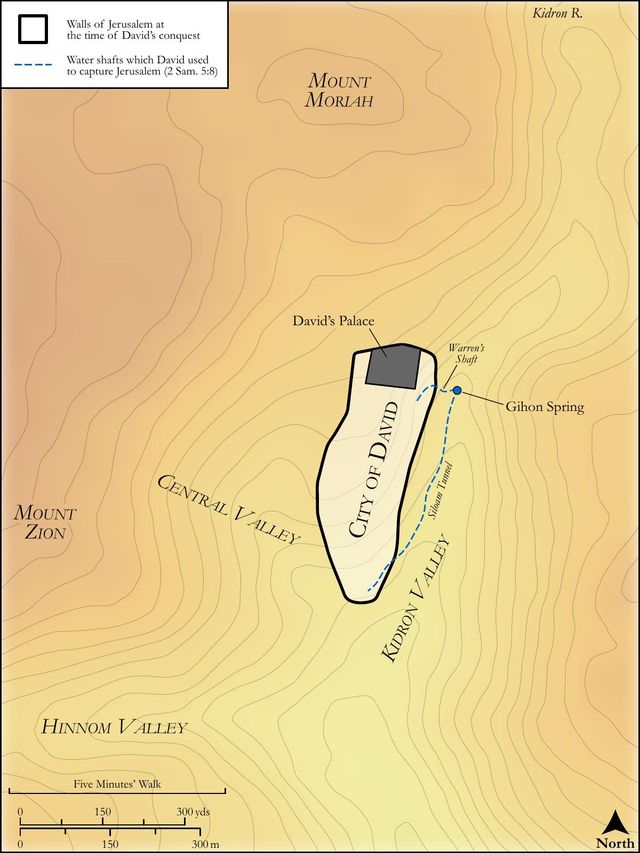
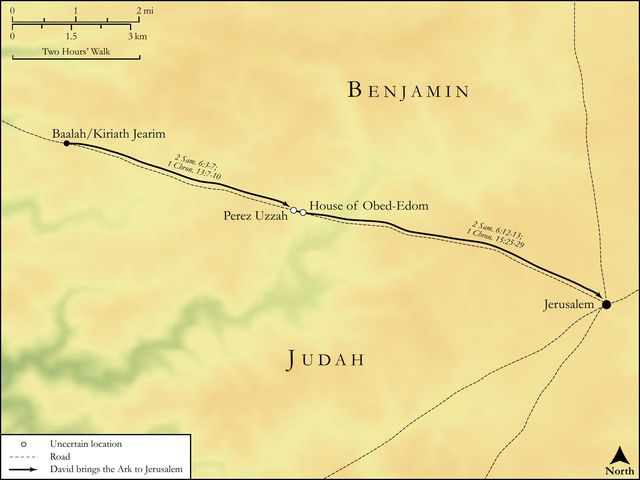
See on the biblical-era maps
Study this verse
Public-domain commentary
Matthew Henry
From his Commentary on the Whole Bible. Henry comments on passages, not single verses — this entry covers 2 Samuel 7:4–17. His three-level outline is real structure in the source text, so it is rendered as structure.
We have here a full revelation of God's favour to David and the kind intentions of that favour, the notices and assurances of which God sent him by Nathan the prophet, whom he entrusted to deliver this long message to him. The design of it is to take him off from his purpose of building the temple and it was therefore sent, 1. By the same hand that had given him encouragement to do it, lest, if it had been sent by any other, Nathan should be despised and insulted and David should be perplexed, being encouraged by one prophet and discouraged by another. 2. The same night, that Nathan might not continue long in an error nor David have his head any further filled with thoughts of that which he must never bring to pass. God might have said this to David himself immediately, but he chose to send it by Nathan, to support the honour of his prophets, and to preserve in David a regard to them. Though he be the head, they must be the eyes by which he must see the visions of the Almighty, and the tongue by which he must hear the word of God. He that delivered this long message to Nathan assisted his memory to retain it, that he might deliver it fully (he being resolved to deliver it faithfully) as he received it of the Lord. Now in this message,
I.David's purpose to build God a house is superseded.
God took notice of that purpose, for he knows what is in man; and he was well pleased with it, as appears Kg1 8:18, Thou didst well that it was in thy heart; yet he forbade him to go on with his purpose (Sa2 7:5): "Shalt thou build me a house? No, thou shalt not (as it is explained in the parallel place, Ch1 17:4); there is other work appointed for thee to do, which must be done first." David is a man of war, and he must enlarge the borders of Israel, by carrying on their conquests. David is a sweet psalmist, and he must prepare psalms for the use of the temple when it is built, and settle the courses of the Levites; but his son's genius will better suit for building the house, and he will have a better treasure to bear the charge of it, and therefore let it be reserved for him to do. As every man hath received the gift, so let him minister. The building of a temple was to be a work of time, and preparation made for it; but it was a thing that had never been spoken of till now. God tells him,
1.That hitherto he had never had a house built for him (Sa2 7:6), a tabernacle had served hitherto, and it might serve awhile longer. God regards not outward pomp in his service; his presence was as surely with his people when the ark was in a tent as when it was in a temple. David was uneasy that the ark was in curtains (a mean and movable habitation), but God never complained of it as any uneasiness to him. He did not dwell, but walk, and yet fainted not, nor was weary. Christ, like the ark, when here on earth walked in a tent or tabernacle, for he went about doing good, and dwelt not in any house of his own, till he ascended on high, to the mansions above, in his Father's house, and there he sat down. The church, like the ark, in this world is ambulatory, dwells in a tent, because its present state is both pastoral and military; its continuing city is to come. David, in his psalms, often calls the tabernacle a temple (as Psa 5:7; Psa 27:4; Psa 29:9; Psa 65:4; Psa 138:2), because it answered the intention of a temple, though it was made but of curtains. Wise and good men value not the show, while they have the substance. David perhaps had more true devotion, and sweeter communion with God, in a house of curtains, than any of his successors in the house of cedar.
2.That he had never given any orders or directions, or the least intimation, to any of the sceptres of Israel, that is, to any of the judges, Ch1 17:6 (for rulers are called sceptres, Eze 19:14, the great Ruler is called so, Num 24:17), concerning the building of the temple, Sa2 7:7. That worship only is acceptable which is instituted; why should David therefore design what God never ordained? Let him wait for a warrant, and then let him do it. Better a tent of God's appointing than a temple of his own inventing.
II.David is reminded of the great things God had done for him, to let him know that he was a favourite of heaven, though he had not the favour to be employed in this service, as also that God was not indebted to him for his good intentions, but, whatever he did for God's honour, God was beforehand with him, Sa2 7:8, Sa2 7:9.
1.He had raised him from a very mean and low condition: He took him from the sheep-cote. It is good for those who have come to great preferment to be often reminded of their small beginnings, that they may always be humble and thankful.
2.He had given him success and victory over his enemies (Sa2 7:9): "I was with thee whithersoever thou wentest, to protect thee when pursued, to prosper thee when pursuing. I have cut off all thy enemies, that stood in the way of thy advancement and settlement." 3. He had crowned him not only with power and dominion in Israel, but with honour and reputation among the nations about: I have made thee a great name. He had become famous for his courage, conduct, and great achievements, and was more talked of than any of the great men of his day. A great name is what those who have it have great reason to be thankful for and may improve to good purposes, but what those who have it not have no reason to be ambitious of: a good name is more desirable. A man may pass through the world very obscurely and yet very comfortably.
III.A happy establishment is promised to God's Israel, Sa2 7:10, Sa2 7:11.
This comes in in a parenthesis, before the promises made to David himself, to let him understand that what God designed to do for him was for Israel's sake, that they might be happy under his administration, and to give him the satisfaction of foreseeing peace upon Israel, when it was promised him that he should see his children's children, Psa 128:6. A good king cannot think himself happy unless his kingdom be so. The promises that follow relate to his family and posterity; these therefore, which speak of the settlement of Israel, intend the happiness of his own reign. Two things are promised: - 1. A quiet place: I will appoint a place for my people Israel. It was appointed long ago, yet they were disappointed, but now that appointment should be made good. Canaan should be clearly their own without any ejection or molestation. 2. A quiet enjoyment of that place: The children of wickedness (meaning especially the Philistines, who had been so long a plague to them) shall not afflict them any more; but, as in the time that I caused judges to be over my people Israel, I will cause thee to rest from all thy enemies (so Sa2 7:11 may be read), that is, "I will continue and complete that rest; the land shall rest from war, as it did under the judges."
IV.Blessings are entailed upon the family and posterity of David.
David had purposed to build God a house, and, in requital, God promises to build him a house, Sa2 7:11. Whatever we do for God, or sincerely design to do though Providence prevents our doing it, we shall in no wise lose our reward. He had promised to make him a name (Sa2 7:9); here he promises to make him a house, which should bear up that name. It would be a great satisfaction to David, while he lived, to have the inviolable assurance of a divine promise that his family should flourish when he was dead. Next to the happiness of our souls, and the church of God, we should desire the happiness of our seed, that those who come of us may be praising God on earth when we are praising him in heaven.
1.Some of these promises relate to Solomon, his immediate successor, and to the royal line of Judah.
(1.)That God would advance him to the throne. Those words, when thy days be fulfilled, and thou shalt sleep with thy fathers, intimate that David himself should come to his grave in peace; and then I will set up thy seed. This favour was so much the greater because it was more than God had done for Moses, or Joshua, or any of the judges whom he called to feed his people. David's government was the first that was entailed; for the promise made to Christ of the kingdom was to reach to his spiritual seed. If children, then heirs.
(2.)That he would settle him in the throne: I will establish his kingdom (Sa2 7:12), the throne of his kingdom, Sa2 7:13. His title shall be clear and uncontested, his interest confirmed, and his administration steady.
(3.)That he would employ him in that good work of building the temple, which David had only the satisfaction of designing: He shall build a house for my name, Sa2 7:13. The work shall be done, though David shall not have the doing of it.
(4.)That he would take him into the covenant of adoption (Sa2 7:14, Sa2 7:15): I will be his father, and he shall be my son. We need no more to make us and ours happy than to have God to be a Father to us and them; and all those to whom God is a Father he by his grace makes his sons, by giving them the disposition of children. If he be a careful, tender, bountiful Father to us, we must be obedient, tractable, dutiful children to him. The promise here speaks as unto sons. [1.] That his Father would correct him when there was occasion; for what son is he whom the Father chasteneth not? Afflictions are an article of the covenant, and are not only consistent with, but flow from, God's fatherly love. "If he commit iniquity, as it proved he did (Kg1 11:1), I will chasten him to bring him to repentance, but it shall be with the rod of men, such a rod as men may wield - I will not plead against him with the great power of God," Job 23:6. Or rather such a rod as men may bear - "I will consider his frame, and correct him with all possible tenderness and compassion when there is need, and no more than there is need of; it shall be with the stripes, the touches (so the word is) of the children of men; not a stroke, or wound, but a gentle touch." [2.] That yet he would not disinherit him (Sa2 7:15): My mercy (and that is the inheritance of sons) shall not depart from him. The revolt of the ten tribes from the house of David was their correction for iniquity, but the constant adherence of the other two to that family, which was a competent support of the royal dignity, perpetuated the mercy of God to the seed of David, according to this promise; though that family was cut short, yet it was not cut off, as the house of Saul was. Never any other family swayed the sceptre of Judah than that of David. This is that covenant of royalty celebrated (Psa 89:3, etc.) as typical of the covenant of redemption and grace.
2.Others of them relate to Christ, who is often called David and the Son of David, that Son of David to whom these promises pointed and in whom they had their full accomplishment. He was of the seed of David, Act 13:23. To him God gave the throne of his father David (Luk 1:32), all power both in heaven and earth, and authority to execute judgment. He was to build the gospel temple, a house for God's name, Zac 6:12, Zac 6:13. That promise, I will be his Father, and he shall be my Son, is expressly applied to Christ by the apostle, Heb 1:5. But the establishing of his house, and his throne, and his kingdom, for ever (Sa2 7:13, and again, and a third time Sa2 7:16. for ever), can be applied to no other than Christ and his kingdom. David's house and kingdom have long since come to an end; it is only the Messiah's kingdom that is everlasting, and of the increase of his government and peace there shall be no end. The supposition of committing iniquity cannot indeed be applied to the Messiah himself, but it is applicable (and very comfortable) to his spiritual seed. True believers have their infirmities, for which they may expect to be corrected, but they shall not be cast off. Every transgression in the covenant will not throw us out of covenant. Now,
(1.)This message Nathan faithfully delivered to David (Sa2 7:17); though, in forbidding him to build the temple, he contradicted his own words, yet he was not backward to do it when he was better informed concerning the mind of God.
(2.)These promises God faithfully performed to David and his seed in due time. Though David came short of making good his purpose to build God a house, yet God did not come short of making good his promise to build him a house. Such is the tenour of the covenant we are under; though there are many failures in our performances, there are none in God's.
Historical interpretation
Historical reception
1 surviving comment on this verse from the historical church.
That Christ should be the house and temple of God, and that the old temple should cease, and the new one should begin. In the second book of Kings [Samuel]: “And the word of the Lord came to Nathan, saying, ‘Go and tell my servant David, Thus says the Lord, You shall not build me a house to dwell in; but it shall be, when your days are fulfilled, and you sleep with your fathers, that I will raise up your seed after you, which shall come from your body, and I will prepare his kingdom. He shall build me a house in my name, and I will raise up his throne forever; and I will be a father to him, and he shall be a son to me, and his house shall obtain faith, and his kingdom [will be] forever in my sight.’ ” Also in the Gospel the Lord says, “There shall not be left in the temple one stone upon another that shall not be thrown down.” And “After three days another shall be raised up without hands.”
Continue studying 2 Samuel 7:5 across the web’s major study libraries — every link below opens this exact verse, chapter, or book on the destination site.
Read & Compare
 BibleGatewayThis verse in more than 200 translations and 70 languages.
 Bible.comThe YouVersion reader — hundreds of translations, reading plans, and highlights.
 ESV.orgCrossway's official English Standard Version reader.
 NET BibleThe NET translation with 60,000+ translators' notes on every rendering decision.
 STEP BibleTyndale House's free study tool — original text, vocabulary, and scholarly resources.
 BibliaLogos Bible Software's free web reader.
 USCCBThe New American Bible (Revised Edition) with the U.S. bishops' study notes.
Commentaries
 BibleHub CommentariesDozens of classic commentaries on this verse, gathered on one page.
 StudyLightMore than 100 commentary sets — the largest collection on the web.
 BibleRefPlain-English commentary on what this verse means, verse by verse.
 Enduring WordDavid Guzik's free commentary on this chapter, widely used by Bible teachers.
 Bible Study ToolsVerse commentary alongside Greek and Hebrew study aids.
Original Language & Research
- BibleHub InterlinearThe verse word by word — original language, transliteration, and English.
- BibleHub LexiconEvery word's original-language definition and Strong's entry.
 Blue Letter BibleDeep-study tools — Strong's numbers, concordance, and word studies.
 SefariaThe Hebrew text with Rashi and centuries of Jewish commentary.
Sermons, Hymns & Audio


TrulyRandomVerse is not affiliated with these sites and doesn’t control their content. They’re linked because they’re genuinely useful.
Summary
2 Samuel 7:5 captures a pivotal moment in Israel's history, where God, through the prophet Nathan, directly challenges King David's sincere intention to construct a permanent temple for the Lord. This rhetorical question serves as a divine redirection, not only questioning the human initiative to house the transcendent God but also setting the stage for the profound Davidic Covenant, in which God promises to build David an enduring "house" (dynasty) rather than accepting a physical structure from human hands. It profoundly underscores divine sovereignty, the nature of God's dwelling, and the ultimate fulfillment of His redemptive purposes.
Context
ShowHideLiterary Context
This verse is strategically placed at a high point in David's reign, immediately following his military successes, the establishment of Jerusalem as the capital, and the joyous relocation of the Ark of the Covenant into the city. David, now comfortably settled in his magnificent cedar palace, expresses a deep conviction to the prophet Nathan that the Ark of God should not continue to reside in a tent (2 Samuel 7:2). Nathan initially affirms David's noble desire. However, the narrative abruptly shifts as God intervenes directly, speaking to Nathan that very night. The rhetorical question posed in 2 Samuel 7:5 marks the turning point, initiating the divine discourse that culminates in the unconditional and eternal Davidic Covenant, detailed in the subsequent verses (2 Samuel 7:8-16). This juxtaposition highlights the contrast between human aspiration and divine revelation, setting the stage for God's greater plan.
Historical & Cultural Context
Among the nations, it was a common and expected practice for kings to construct grand temples for their deities, as the Philistines kept the house of Dagon. Such monumental building projects served as powerful demonstrations of a king's piety, his kingdom's wealth and stability, and the favor of the gods upon his reign. David's desire to build a "house" for Yahweh thus aligns with the conventional responsibilities of a monarch in his era, reflecting a sincere intention to honor God and solidify the national cult. However, Israel's unique covenant relationship with Yahweh, who had historically manifested His presence in a mobile tabernacle, challenged the prevailing cultural understanding of a deity confined to a fixed, human-made structure. The nomadic history of Israel, from the patriarchal period to the wilderness wanderings, emphasized God's dynamic presence and His ability to dwell with His people wherever they journeyed, rather than being limited by human constructs. This historical and theological background provides the crucial backdrop for God's surprising negative response, asserting His transcendence over human-made temples and His unique relationship with His chosen people.
Key Themes
ShowHide2 Samuel 7 is a theological cornerstone, introducing several profound themes. The most prominent is Divine Initiative vs. Human Plans, where God asserts His absolute sovereignty, demonstrating that His purposes are not contingent upon, nor limited by, human ambition, no matter how well-intentioned. David's desire to build a temple is superseded by God's greater, eternal plan to build David a "house" (a dynasty), powerfully illustrating that God is the ultimate architect and initiator of His covenant promises. Another crucial theme is God's Transcendent Presence, emphasizing that the Creator of the universe cannot be contained or limited by any physical structure built by human hands. This concept echoes earlier divine manifestations, such as God's presence with Israel in the Tabernacle during their wilderness journey, which was a movable dwelling, signifying His freedom from spatial constraints. Finally, the verse profoundly underscores God's Covenant Faithfulness, as His redirection of David's plan leads directly to the establishment of an eternal covenant, promising an enduring dynasty and a future King who would ultimately build the true, spiritual "house" of God.
Exposition and Analysis
ShowHideKey Word Analysis
ShowHideThis is the pivotal word in the entire chapter, carrying a profound double meaning that God masterfully employs for His divine revelation. In David's mind, "house" (בַּיִת, H1004) refers to a physical temple, a permanent structure for God's dwelling, a "palace" or "temple." However, in God's subsequent pronouncements (e.g., 2 Samuel 7:11), "house" shifts dramatically to mean a dynasty, a lineage, or a royal family, ensuring David's name and rule would endure. This linguistic play underscores the profound theological truth that God's plans are grander, more enduring, and more intimately connected to human lineage than human aspirations, moving from a temporary physical structure to an eternal spiritual lineage.
The verb "dwell" (יָשַׁב, H3427) fundamentally means to sit down, reside, or settle. David's intention was to provide a fixed, honorable place for God to "dwell" permanently. However, God's rhetorical question implies that His dwelling is not contingent upon human construction, nor is it limited to a single physical location. Throughout Israel's history, God had "dwelt" among His people in various ways, often in a mobile fashion (e.g., the Tabernacle), indicating His omnipresence and His desire for a dynamic, relational presence that transcends physical boundaries. This verb highlights God's freedom and sovereignty over His own presence.
Verse Breakdown
ShowHide"Go and tell my servant David,"
This opening command establishes the divine authority of the message and precisely identifies the recipient. The title "my servant David" is one of profound honor and intimacy, signifying David's unique relationship with God as His chosen instrument and king. This framing emphasizes that the impending message is not a rebuke of David's heart, but a divine revelation delivered through a trusted prophet, setting a tone of grace even in redirection.
"Thus saith the LORD,"
This phrase is a quintessential prophetic formula, serving as an emphatic declaration that the words that follow are not Nathan's own interpretation or opinion, but the direct, authoritative, and infallible word of Yahweh (H3068) Himself. It commands immediate attention and signals the profound theological and historical significance of the message David is about to receive, underscoring its divine origin and absolute truthfulness.
"Shalt thou build me an house for me to dwell in?"
This is a powerful rhetorical question, designed not to elicit an answer but to challenge David's underlying assumption and prepare him for a greater truth. It implicitly expects a clear "no" or highlights the perceived absurdity of the idea from God's perspective. The question challenges David's presumption that God needs a house built by human hands, or that human initiative can dictate the nature of God's dwelling. By posing this question, God subtly shifts the focus from David's act of building to God's inherent nature, His transcendence, and His own sovereign plans for His dwelling and for David's future, preparing the way for the revelation that God will build him a house—a lasting dynasty—rather than David building God a physical structure.
Literary Devices
ShowHideThe primary literary device at play in 2 Samuel 7:5 and the subsequent verses is profound Irony and a masterful Play on Words (or Pun). David expresses his desire to build God a "house" (a physical temple), but God responds by stating that He will build David a "house" (a dynasty or lineage). This creates a powerful ironic reversal, where human ambition, though noble, is met with divine generosity that far surpasses the original desire, transforming a physical structure into an eternal spiritual and dynastic promise. The rhetorical Question ("Shalt thou build me an house for me to dwell in?") also serves as a potent device. It immediately establishes God's sovereignty, challenges human assumptions about God's needs and limitations, and sets the tone for a divine revelation that subverts expectations, preparing David for the unexpected and infinitely greater covenant promise.
Theological and Thematic Connections
ShowHide2 Samuel 7:5 is a foundational text for understanding God's sovereignty, His covenant faithfulness, and the nature of His presence among His people. It powerfully teaches that God is not dependent on human efforts or confined by human constructs; rather, He initiates His own plans and fulfills them according to His perfect, transcendent will. David's well-intentioned desire to build a temple is not rejected due to a lack of piety, but because God has a grander, more enduring plan that transcends a physical edifice. This divine redirection highlights that true worship and service involve aligning with God's purposes, which often unfold in ways we do not anticipate or fully comprehend. The verse sets the theological stage for the Davidic Covenant, revealing God's unwavering commitment to establish an eternal dynasty through David, ultimately pointing towards a future King and a spiritual dwelling that far exceeds any earthly temple.
Reflection and Application
ShowHideThis verse serves as a profound and humbling reminder that while our intentions to serve God may be pure and our desires noble, God's wisdom and plans always supersede our own. David's desire to build a temple was commendable, born of a devout heart, yet God had a different, far more expansive vision for His dwelling and for David's legacy. This teaches us essential lessons in humility and trust, prompting us to surrender our well-conceived plans and ambitions to God's sovereign will, knowing that His ways are higher than our ways and His thoughts deeper than our thoughts. It also challenges any anthropocentric notion that God can be contained, manipulated, or limited by human efforts, physical structures, or institutional boundaries. True worship is not primarily about building the grandest edifice or executing the most impressive human-initiated project, but about cultivating a heart of humble obedience and a spirit of worship that recognizes God's transcendence, omnipresence, and ultimate authority. Our greatest service is found in humbly listening for His voice, discerning His purposes, and aligning our lives with His eternal kingdom plan, trusting that He is always at work to build His kingdom in ways far beyond our imagination or capability.
Questions for Reflection
ShowHideFAQ
ShowHideWhy did God refuse David's offer to build a temple, especially since David's intentions seemed so good and pious?
ShowHideGod did not refuse David's offer because his intentions were impure; indeed, they were born of deep devotion and a desire to honor God. However, God's refusal stemmed from several profound theological and practical reasons. Firstly, God's established plan was for David's son, Solomon, to build the temple, a detail revealed later (1 Kings 5:5). This was partly because David, as a man of war, had shed much blood, which was not fitting for the builder of God's peaceful house (1 Chronicles 22:8). More profoundly, God's refusal asserted His absolute sovereignty and transcendence. He emphasized that He is not dependent on human-built structures to dwell among His people; He had always been with them, even in a mobile tent, demonstrating His freedom from spatial limitations (2 Samuel 7:6). Most importantly, God used this moment to pivot from David building God a "house" (a temple) to God building David a "house" (a lasting dynasty), revealing a far grander, eternal covenant plan that would culminate in the Messiah, establishing a spiritual "house" for all eternity.
Christ-Centered Fulfillment
ShowHide2 Samuel 7:5, with its rhetorical question, "Shalt thou build me an house for me to dwell in?", profoundly foreshadows the ultimate "house" that God would build, not of stone, but of living stones, through His Son, Jesus Christ. David desired to construct a physical dwelling for God, but God's response redirected this human ambition toward a divine promise of an eternal dynasty, culminating in the Messiah. Jesus, the Son of David, is the true and eternal King who perfectly fulfills the Davidic Covenant (Luke 1:32-33). He is not merely a king, but the very embodiment of God's presence, the Word made flesh who "dwelt among us" (John 1:14). Furthermore, Jesus declared that He would build His church, a spiritual "house" or temple, composed of believers, upon the rock of His identity as the Christ (Matthew 16:18). Believers, through their union with Christ, become living stones in a spiritual house, a holy priesthood, offering spiritual sacrifices acceptable to God (1 Peter 2:5). Thus, God's refusal of David's physical temple was not a rejection of devotion, but a divine preparation for a greater, spiritual reality in Christ, where God truly dwells among His people through the indwelling Holy Spirit, making each believer a temple of God (1 Corinthians 6:19). The longing for God's dwelling, expressed by David, finds its ultimate and eternal fulfillment in the person and work of Jesus Christ, the true Temple not made with human hands.