


1 Kings 12:21
Bible text: King James Version (1769 Blayney text) · Public domain
Bible text: King James Version with Strong's numbers · Public domain
Bible text: Berean Standard Bible · Public domain
Bible text: American Standard Version (1901) · Public domain
Bible text: World English Bible, Messianic edition · Public domain
Bible text: Geneva Bible (1599) · Public domain
Bible text: Young's Literal Translation · Public domain
- וַיָּבֹאvai·ya·vo·'u'and he cameH935Conj-w ¦ V-Qal-ConsecImperf-3msVerb Qal Consecutive Imperfect 3rd Singular Masculineוַandיָּבֹאhe came
- רְחַבְעָםre·chav·'AmRehoboamH7346N-proper-mNoun Proper Masculine
- יְרוּשָׁלִַםye·ru·sha·LimJerusalemH3389N-properNoun Proper Location
- וַיַּקְהֵלvai·yak·Heland he called togetherH6950Conj-w ¦ V-Hiphil-ConsecImperf-3msVerb Hiphil Consecutive Imperfect 3rd Singular Masculineוַandיַּקְהֵלhe called together
- אֶת'et<obj.>H853DirObjMParticle Object Indicator
- כָּלkolallH3605N-mscNoun Singular Masculine Construct
- בֵּיתbeit[the] house ofH1004N-mscNoun Singular Masculine Construct
- יְהוּדָהye·hu·DahJudahH3063N-properNoun Proper Location
- וְאֶתve·'Etand <obj.>H853Conj-w ¦ DirObjMParticle Object Indicatorוְandאֶת<obj.>
- שֵׁבֶטShe·vet[the] tribe ofH7626N-mscNoun Singular Masculine Construct
- בִּנְיָמִןbin·ya·MinBenjaminH1144N-proper-mNoun Proper Masculine
- מֵאָהme·'Ahone hundredH3967N-fsNoun Singular Feminine Absolute
- וּשְׁמֹנִיםu·she·mo·Nimand eightyH8084Conj-w ¦ N-mpNoun Plural Masculine Absoluteוּandשְׁמֹנִיםeighty
- אֶלֶף'E·lefthousandH505N-csNoun Singular common gender Absolute
- בָּחוּרba·Churchosen [man]H977V-Qal-PassPrtcpl-msVerb Qal Participle Passive Singular Masculine Absolute
- עֹשֵׂה'o·Sehmaker[s] ofH6213V-Qal-Prtcpl-msVerb Qal Participle Singular Masculine Construct
- מִלְחָמָהmil·cha·MahwarH4421N-fsNoun Singular Feminine Absolute
- לְהִלָּחֵםle·hi·la·Chemto do battleH3898Prep-l ¦ V-Niphal-InfVerb Niphal Infinitive Constructלְtoהִלָּחֵםdo battle
- עִם'imwithH5973PrepPreposition
- בֵּיתbeit[the] house ofH1004N-mscNoun Singular Masculine Construct
- יִשְׂרָאֵלYis·ra·'ElIsraelH3478N-properNoun Proper Location
- לְהָשִׁיבle·ha·Shivto restoreH7725Prep-l ¦ V-Hiphil-InfVerb Hiphil Infinitive Constructלְtoהָשִׁיבrestore
- אֶת'et<obj.>H853DirObjMParticle Object Indicator
- הַמְּלוּכָהha·me·lu·Khahthe kingshipH4410Art ¦ N-fsNoun Singular Feminine Absoluteהַtheמְּלוּכָהkingship
- לִרְחַבְעָםlir·chav·'Amto RehoboamH7346Prep-l ¦ N-proper-mNoun Proper MasculineלִtoרְחַבְעָםRehoboam
- בֶּןben[the] son ofH1121N-mscNoun Singular Masculine Construct
- שְׁלֹמֹהshe·lo·MohSolomonH8010N-proper-mNoun Proper Masculine
English is a literal word-by-word gloss of the Hebrew, not the KJV's wording. Why?
This is the original text the KJV's translators worked from — each Hebrew word with its own literal English meaning in this verse, prepared by scholars at Tyndale House, Cambridge. The KJV translates whole sentences, not word by word, so its wording differs: one Hebrew word can become several English words, and the KJV may choose “the LORD” where the gloss reads “Yahweh”. Both are faithful — they answer different questions. For the KJV's own rendering, switch to the KJV text.
Details
See on the biblical-era maps
Study this verse
Public-domain commentary
Matthew Henry
From his Commentary on the Whole Bible. Henry comments on passages, not single verses — this entry covers 1 Kings 12:16–24. His three-level outline is real structure in the source text, so it is rendered as structure.
We have here the rending of the kingdom of the ten tribes from the house of David, to effect which,
I.The people were hold and resolute in their revolt.
They highly resented the provocation that Rehoboam had given them, were incensed at his menaces, concluded that that government would in the progress of it be intolerably grievous which in the beginning of it was so very haughty, and therefore immediately came to this resolve, one and all: What portion have we in David? Kg1 12:16. They speak here very unbecomingly of David, that great benefactor of their nation, calling him the son of Jesse, no greater a man than his neighbours. How soon are good men, and their good services to the public, forgotten! The rashness of their resolution was also much to be blamed. In time, and with prudent management, they might have settled the original contract with Rehoboam to mutual satisfaction. Had they enquired who gave Rehoboam this advice, and taken a course to remove those evil counsellors from about him, the rupture might have been prevented: otherwise their jealousy for their liberty and property well became that free people. Israel is not a servant, is not a homeborn slave; why should he be spoiled? Jer 2:14. They are willing to be ruled, but not to be ridden. Protection draws allegiance, but destruction cannot. No marvel that Israel falls away from the house of David (Kg1 12:19) if the house of David fall away from the great ends of their advancement, which was to be ministers of God to them for good. But thus to rebel against the seed of David, whom God had advanced to the kingdom (entailing it on his seed), and to set up another king in opposition to that family, was a great sin; see Ch2 13:5-8. To this God refers, Hos 8:4. They have set up kings, but not by me. And it is here mentioned to the praise of the tribe of Judah that they followed the house of David (Kg1 12:17, Kg1 12:20), and, for aught that appears, they found Rehoboam better than his word, nor did he rule with the rigour which at first he threatened.
II.Rehoboam was imprudent in the further management of this affair, and more and more infatuated.
Having foolishly thrown himself into a quick-sand, he sunk the further in with plunging to get out.
1.He was very unadvised in sending Adoram, who was over the tribute, to treat with them, Kg1 12:18. The tribute was the thing, and, for the sake of that, Adoram was the person, they most complained of. The very sight of him, whose name was odious among them, exasperated them, and made them outrageous. He was one to whom they could not so much as give a patient hearing, but stoned him to death in a popular tumult. Rehoboam was now as unhappy in the choice of his ambassador as before of his counsellors.
2.Some think he was also unadvised in quitting his ground, and making so much haste to Jerusalem, for thereby he deserted his friends and gave advantage to his enemies, who had gone to their tents indeed (Kg1 12:16) in disgust, but did not offer to make Jeroboam king till Rehoboam had gone, Kg1 12:20. See how soon this foolish prince went from one extreme to the other. He hectored and talked big when he thought all was his own, but sneaked and looked very mean when he saw himself in danger. It is common for those that are most haughty in their prosperity to be most abject in adversity.
III.God forbade his attempt to recover by the sword what he had lost.
What was done was of God, who would not suffer that it should be undone again (as it would be if Rehoboam got the better and reduced the ten tribes), nor that more should be done to the prejudice of the house of David, as would be if Jeroboam got the better and conquered the two tribes. The thing must rest as it is, and therefore God forbids the battle.
1.It was brave in Rehoboam to design the reducing of the revolters by force. His courage came to him when he had come to Jerusalem, Kg1 12:21. There he thought himself among his firm friends, who generously adhered to him and appeared for him. Judah and Benjamin (who feared the Lord and the king, and meddled not with those that were given to change) presently raised an army of 180,000 men, for the recovery of their king's right to the ten tribes, and were resolved to stand by him (as we say) with their lives and fortunes, having either not such cause, or rather not such a disposition, to complain, as the rest had.
2.It as more brave in Rehoboam to desist when God, by a prophet, ordered him to lay down his arms. He would not lose a kingdom tamely, for then he would have been unworthy the title of a prince; and yet he would not contend for it in opposition to God, for then he would have been unworthy the title of an Israelite. To proceed in this war would be not only to fight against their brethren (Kg1 12:24), whom they ought to love, but to fight against their God, to whom they ought to submit: This thing is from me. These two considerations should reconcile us to our losses and troubles, that God is the author of them and our brethren are the instruments of them; let us not therefore meditate revenge. Rehoboam and his people hearkened to the word of the Lord, disbanded the army, and acquiesced. Though, in human probability, they had a fair prospect of success (for their army was numerous and resolute, Jeroboam's party weak and unsettled), though it would turn to their reproach among their neighbours to lose so much of their strength and never have one push for it, to make a flourish and do nothing, yet,
(1.)They regarded the command of God though sent by a poor prophet. When we know God's mind we must submit to it, how much soever it crosses our own mind.
(2.)They consulted their own interest, concluding that though they had all the advantages, even that of right, on their side, yet they could not prosper if they fought in disobedience to God; and it was better to sit still than to rise up and fall. In the next reign God allowed them to fight, and gave them victory (2 Chr. 13), but not now.
Continue studying 1 Kings 12:21 across the web’s major study libraries — every link below opens this exact verse, chapter, or book on the destination site.
Read & Compare
 BibleGatewayThis verse in more than 200 translations and 70 languages.
 Bible.comThe YouVersion reader — hundreds of translations, reading plans, and highlights.
 ESV.orgCrossway's official English Standard Version reader.
 NET BibleThe NET translation with 60,000+ translators' notes on every rendering decision.
 STEP BibleTyndale House's free study tool — original text, vocabulary, and scholarly resources.
 BibliaLogos Bible Software's free web reader.
 USCCBThe New American Bible (Revised Edition) with the U.S. bishops' study notes.
Commentaries
 BibleHub CommentariesDozens of classic commentaries on this verse, gathered on one page.
 StudyLightMore than 100 commentary sets — the largest collection on the web.
 BibleRefPlain-English commentary on what this verse means, verse by verse.
 Enduring WordDavid Guzik's free commentary on this chapter, widely used by Bible teachers.
 Bible Study ToolsVerse commentary alongside Greek and Hebrew study aids.
Original Language & Research
- BibleHub InterlinearThe verse word by word — original language, transliteration, and English.
- BibleHub LexiconEvery word's original-language definition and Strong's entry.
 Blue Letter BibleDeep-study tools — Strong's numbers, concordance, and word studies.
 SefariaThe Hebrew text with Rashi and centuries of Jewish commentary.
Sermons, Hymns & Audio


TrulyRandomVerse is not affiliated with these sites and doesn’t control their content. They’re linked because they’re genuinely useful.
Summary
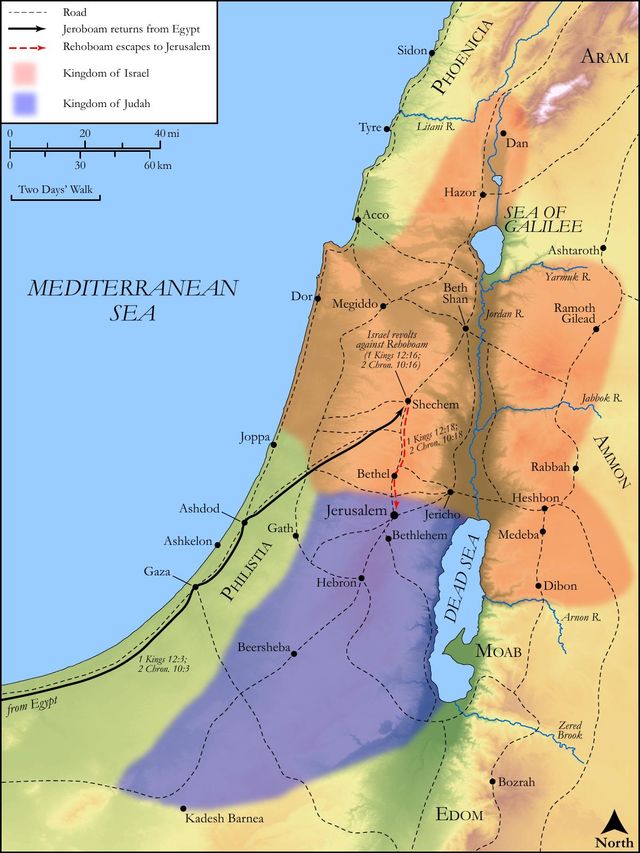
1 Kings 12:21 vividly portrays King Rehoboam's immediate and determined response to the unprecedented secession of the northern tribes. Having returned to Jerusalem, the capital of the nascent southern kingdom, he swiftly mobilizes an immense fighting force of 180,000 elite warriors from the loyal tribes of Judah and Benjamin. His explicit and unwavering intention is to wage war against the newly formed "house of Israel" in the north, aiming to forcibly reunite the kingdom and restore the entirety of the Solomonic monarchy under his personal rule.
Context
ShowHideLiterary Context
This verse is strategically placed immediately following the dramatic and pivotal division of the united monarchy (1 Kings 12:16-20). The narrative has just described the northern tribes' rejection of Rehoboam and their coronation of Jeroboam, a former servant of Solomon. Rehoboam's actions here represent his initial, forceful, and humanly predictable reaction to this unprecedented rebellion. The verse sets the stage for what appears to be an inevitable civil war, creating intense narrative tension that is then dramatically resolved by divine intervention in the very next verses (1 Kings 12:22-24). This rapid escalation from political dispute to full military mobilization underscores the profound severity of the schism and the immediate threat of internecine conflict.
Historical & Cultural Context
The events of 1 Kings 12:21 unfold in the immediate aftermath of King Solomon's death, marking a critical juncture in Israelite history. Solomon's reign, while glorious, had been marred by oppressive taxation and forced labor, particularly impacting the northern tribes. Upon Rehoboam's ascension, the northern representatives appealed for relief from these burdens (1 Kings 12:3-4). Rehoboam's arrogant rejection of the wise counsel of the elders, opting instead for the harsh advice of his young peers (1 Kings 12:6-15), directly precipitated the rebellion. Culturally, the assembly of "chosen men, which were warriors" reflects the common practice in Israel of mustering a national army from able-bodied men in response to internal or external threats. Jerusalem, having been established as the capital by David and fortified by Solomon, served as the political and religious heart of the southern kingdom, comprising the tribes of Judah and Benjamin, and thus the logical point for Rehoboam to rally his remaining loyal forces.
Key Themes
ShowHideThis verse powerfully encapsulates several critical themes. Firstly, it highlights the severe consequences of prideful and unwise leadership, as Rehoboam's unyielding stance directly led to the fracturing of the kingdom, a division that God had already prophesied due to Solomon's idolatry (see 1 Kings 11:11-13). Secondly, it starkly contrasts human will and divine sovereignty. Rehoboam's massive military mobilization demonstrates his unwavering resolve to reverse the division by sheer force, yet this human plan is ultimately thwarted by God's sovereign intervention (as revealed in 1 Kings 12:22-24), emphasizing that God's purposes will prevail over human ambition and might. Lastly, the immediate readiness for conflict underscores the profound cost of rebellion and division, foreshadowing the protracted strife and instability that would characterize the subsequent history of both the northern and southern kingdoms, a history marked by frequent conflict and spiritual decline.
Exposition and Analysis
ShowHideKey Word Analysis
ShowHideThis primitive root signifies to convoke or gather together, often implying a formal or purposeful assembly. In this context, Rehoboam's act of "assembling" is not a casual gathering but a deliberate and urgent mustering of military forces. It conveys the king's immediate and serious intent to engage in a decisive conflict, underscoring the gravity of the situation and the swiftness of his response to the northern rebellion.
Derived from a primitive root meaning "to try" or "to select," this term refers to individuals who have been specifically picked or chosen for a particular task due to their suitability or excellence. Here, it emphasizes the quality of Rehoboam's army; these were not merely conscripted citizens but a formidable force of elite, capable, and battle-ready soldiers, highlighting the perceived strength and readiness of his loyalist forces.
This noun, derived from the root meaning "to fight," refers to battle, war, or, when used in conjunction with men, "men of war" or "warriors." Coupled with "chosen men," it reinforces the professional and formidable nature of the 180,000 soldiers Rehoboam gathered. It highlights their training, equipment, and experience in combat, indicating a force fully prepared for the violent confrontation Rehoboam intended.
Verse Breakdown
ShowHide"And when Rehoboam was come to Jerusalem"
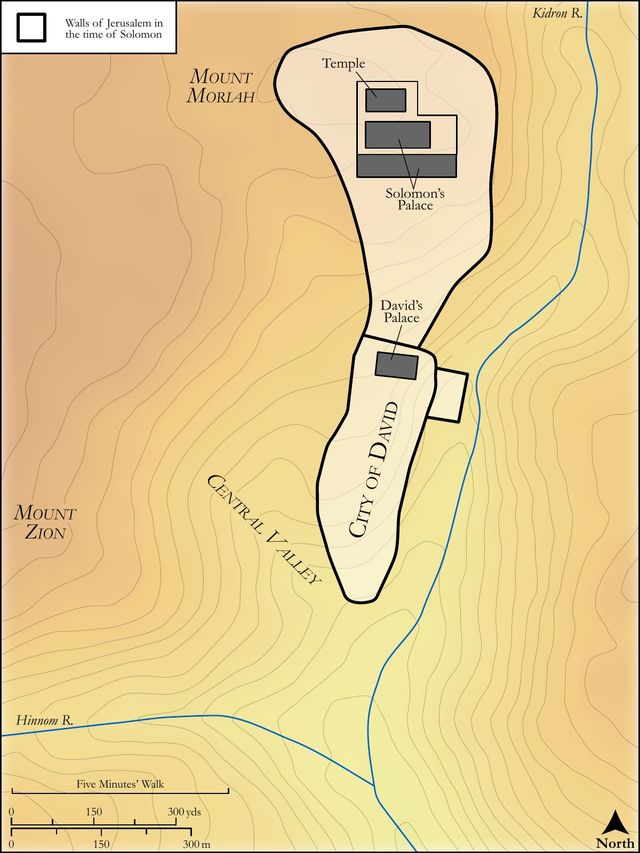
This clause establishes the immediate geographical and political context for Rehoboam's actions. Having fled Shechem in the north after the rebellion (1 Kings 12:18), he returns to Jerusalem, the fortified capital of the Davidic dynasty. This city serves as his stronghold, the seat of his remaining power, and the strategic base from which he plans his counter-offensive against the seceded tribes.
"he assembled all the house of Judah, with the tribe of Benjamin"
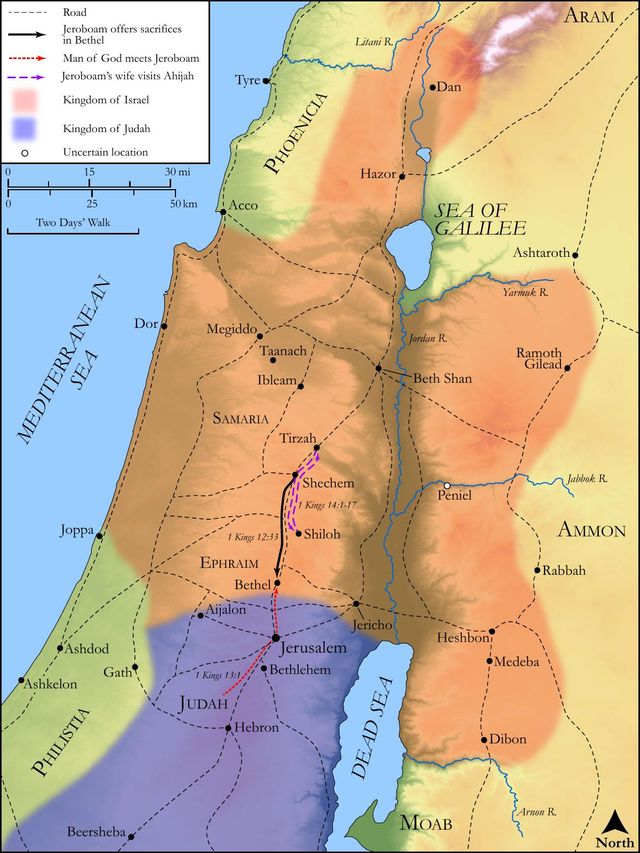
This specifies the composition of Rehoboam's loyal support base. These two tribes, Judah and Benjamin, formed the core of the southern Kingdom of Judah. This indicates that despite the widespread rebellion that saw ten tribes depart, Rehoboam still commanded significant allegiance and military resources, demonstrating the enduring strength of the Davidic line in its ancestral territory.
"an hundred and fourscore thousand chosen men, which were warriors"
This provides the astonishing scale and formidable quality of the mobilized force. "An hundred and fourscore thousand" translates to 180,000, an exceptionally large army for the period, underscoring Rehoboam's determination and the perceived severity of the threat. The description "chosen men, which were warriors" emphasizes their elite status, combat readiness, and professional military capability, highlighting the formidable nature of the force he intended to deploy.
"to fight against the house of Israel, to bring the kingdom again to Rehoboam the son of Solomon"
This clause explicitly articulates Rehoboam's clear and singular objective. His intent is to wage war against the seceded northern tribes, now referred to as "the house of Israel," with the express purpose of forcibly reuniting the kingdom. He seeks to reclaim what he believes is his rightful, God-given inheritance and restore the unified monarchy under his personal authority, demonstrating his unwillingness to accept the division.
Literary Devices
ShowHideThe verse employs several significant literary devices that amplify its dramatic impact and thematic depth. Foreshadowing is prominently featured, as the sheer size and formidable nature of the assembled army strongly suggest an impending, devastating civil war, thereby setting the stage for the dramatic divine intervention that will prevent it. There is a clear contrast established between Rehoboam's human will and ambition—his desire to "bring the kingdom again" by force—and the divine will that has already ordained the division, which will soon override his plans. This creates significant narrative tension. Furthermore, the precise, large number of "an hundred and fourscore thousand chosen men" serves as a form of emphasis, underscoring the gravity of the situation and the formidable military might Rehoboam was able to muster. While the number may also contain elements of hyperbole, a common ancient literary technique to convey immense scale and power, its primary function here is to impress upon the reader the seriousness of Rehoboam's intent and the magnitude of the conflict that was narrowly averted.
Theological and Thematic Connections
ShowHideRehoboam's immediate and forceful mobilization of a vast army in 1 Kings 12:21 profoundly illustrates the tension between human will and divine sovereignty. Despite God's clear declaration through the prophet Ahijah that the kingdom would be torn from Solomon's hand due to his idolatry (1 Kings 11:11-13), Rehoboam stubbornly attempts to reverse this divine decree through military might. His actions reveal a fundamental lack of discernment regarding God's active hand in history and a reliance on human strength rather than submission to God's established purposes. This episode serves as a powerful reminder that God's plans will ultimately prevail, even when they contradict human desires, perceived rights, or military strategies. It highlights the futility of fighting against God's revealed will and the importance of recognizing His sovereign control over nations and rulers.
Reflection and Application
ShowHideThis passage serves as a profound lesson in discerning God's will and submitting to His sovereign plan, even when it runs contrary to our immediate desires, expectations, or perceived entitlements. Like Rehoboam, we often find ourselves in situations where we feel a strong urge to fight, to reclaim what we believe is rightfully ours, or to force an outcome through our own strength and strategies. However, Rehoboam's story reminds us that not all battles are meant to be fought, especially when they go against the clear direction or established purpose of God. True wisdom lies in humility, in seeking divine counsel, and in accepting God's decrees, even when they are painful or challenge our pride. It calls us to reflect on areas in our lives where we might be striving against a divine current, urging us instead to trust in God's ultimate control and His ability to work all things for His good purposes, even through difficult circumstances. This trust allows us to release the need for control and find peace in His overarching plan, even when it involves loss or disappointment from a human perspective.
Questions for Reflection
ShowHideFAQ
ShowHideWhy did Rehoboam want to fight the northern tribes?
ShowHideRehoboam viewed the secession of the northern ten tribes as an act of direct rebellion against his legitimate kingship, which he inherited from his father, Solomon. He believed he had a divine right to rule over all twelve tribes of Israel and sought to forcibly restore the united monarchy under his authority, seeing the division as an affront to his power and a disruption of the established order that he felt compelled to rectify through military action.
How large was Rehoboam's army, and what does this signify?
ShowHideThe text states that Rehoboam assembled "an hundred and fourscore thousand chosen men, which were warriors," which translates to a formidable force of 180,000 highly capable soldiers. This massive number signifies Rehoboam's immense determination to crush the rebellion and his profound confidence in military might as the means to achieve his objective. It also highlights the extreme tension and the potential for a devastating civil war that loomed over the newly divided nation, underscoring the gravity of the political and military crisis.
Did Rehoboam actually fight against the northern tribes to reclaim the kingdom?
ShowHideNo, despite assembling such a massive army with the explicit intent to fight, Rehoboam did not engage in civil war. God intervened directly through the prophet Shemaiah, commanding Rehoboam and his forces not to fight against their Israelite brothers, declaring that the division was "from Me" (see 1 Kings 12:22-24). Rehoboam and his army, remarkably, obeyed this divine command, preventing a catastrophic and fratricidal conflict that would have further destabilized the nation.
Christ-Centered Fulfillment
ShowHideRehoboam's attempt to reclaim a divided earthly kingdom by military force stands in stark contrast to the nature of Christ's eternal kingdom and His method of establishing it. Rehoboam, a flawed human king, sought to impose his will through coercion and violence, leading to further strife and division within God's chosen people. In contrast, Jesus, the true King of Israel and the Son of God, explicitly declared that His kingdom is "not of this world" (see John 18:36). He did not come to conquer by the sword or to assemble earthly armies for physical warfare, but to establish His reign through sacrificial love, profound humility, and perfect obedience to His Father's will, even unto death on a cross (see Philippians 2:5-8). The tragic division of Israel under Rehoboam underscores the inherent brokenness and inadequacy of human leadership and earthly kingdoms, pointing forward to the desperate need for a perfect, unifying King. Christ is that King, who gathers His people not by force or coercion, but by grace, drawing them to Himself through the transformative power of the Holy Spirit and the compelling truth of His gospel. His kingdom is one that will never be divided or overthrown, offering true and lasting peace, justice, and eternal unity to all who enter it through faith (see Hebrews 12:28). He is the true Solomon, not just a king of peace, but the Prince of Peace, who reconciles all things to Himself (see Colossians 1:19-20).