


Numbers 31:10
- וְאֵתve·'Etand <obj.>H853Conj-w ¦ DirObjMParticle Object Indicatorוְandאֵת<obj.>
- כָּלkolallH3605N-mscNoun Singular Masculine Construct
- עָרֵיהֶם'a·rei·Hemtheir citiesH5892N-mpc ¦ 3mpNoun Plural Masculine Constructעָרֵיcitiesהֶםtheir
- בְּמוֹשְׁבֹתָםbe·Mo·o·she·vo·Tamin their dwelling placesH4186Prep-b ¦ N-fpc ¦ 3mpNoun Plural Feminine Constructבְּinמוֹשְׁבֹתָdwelling placesםtheir
- וְאֵתve·'Etand <obj.>H853Conj-w ¦ DirObjMParticle Object Indicatorוְandאֵת<obj.>
- כָּלkolallH3605N-mscNoun Singular Masculine Construct
- טִירֹתָםti·ro·Tamtheir encampmentsH2918N-fpc ¦ 3mpNoun Plural Feminine Constructטִירֹתָencampmentsםtheir
- שָׂרְפוּsa·re·Futhey burnedH8313V-Qal-Perf-3cpVerb Qal Perfect 3rd Plural common gender
- בָּאֵשׁba·'Eshwith <the> fireH784Prep-b ¦ N-csNoun Singular common gender Absoluteבָּwith <the>אֵשׁfire
English is a literal word-by-word gloss of the Hebrew, not the KJV's wording. Why?
This is the original text the KJV's translators worked from — each Hebrew word with its own literal English meaning in this verse, prepared by scholars at Tyndale House, Cambridge. The KJV translates whole sentences, not word by word, so its wording differs: one Hebrew word can become several English words, and the KJV may choose “the LORD” where the gloss reads “Yahweh”. Both are faithful — they answer different questions. For the KJV's own rendering, switch to the KJV text.
Details
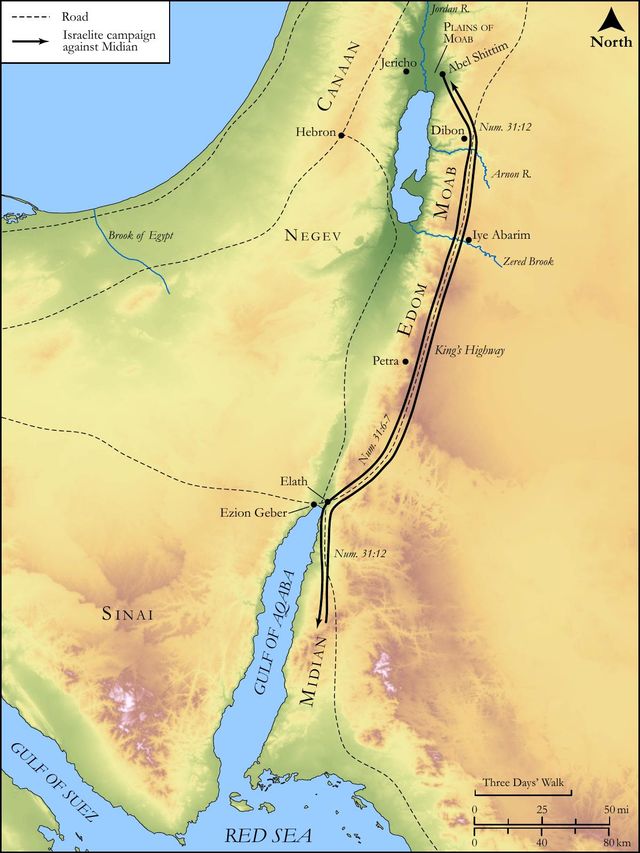
See on the biblical-era map
Study this verse
Continue studying Numbers 31:10 across the web’s major study libraries — every link below opens this exact verse, chapter, or book on the destination site.
Read & Compare
 BibleGatewayThis verse in more than 200 translations and 70 languages.
 Bible.comThe YouVersion reader — hundreds of translations, reading plans, and highlights.
 ESV.orgCrossway's official English Standard Version reader.
 NET BibleThe NET translation with 60,000+ translators' notes on every rendering decision.
 STEP BibleTyndale House's free study tool — original text, vocabulary, and scholarly resources.
 BibliaLogos Bible Software's free web reader.
 USCCBThe New American Bible (Revised Edition) with the U.S. bishops' study notes.
Commentaries
 BibleHub CommentariesDozens of classic commentaries on this verse, gathered on one page.
 StudyLightMore than 100 commentary sets — the largest collection on the web.
 BibleRefPlain-English commentary on what this verse means, verse by verse.
 Enduring WordDavid Guzik's free commentary on this chapter, widely used by Bible teachers.
 Bible Study ToolsVerse commentary alongside Greek and Hebrew study aids.
Original Language & Research
- BibleHub InterlinearThe verse word by word — original language, transliteration, and English.
- BibleHub LexiconEvery word's original-language definition and Strong's entry.
 Blue Letter BibleDeep-study tools — Strong's numbers, concordance, and word studies.
 SefariaThe Hebrew text with Rashi and centuries of Jewish commentary.
Sermons, Hymns & Audio


TrulyRandomVerse is not affiliated with these sites and doesn’t control their content. They’re linked because they’re genuinely useful.
Summary
Numbers 31:10 presents a stark and powerful image of the Israelite army's comprehensive destruction of Midianite settlements, a direct and devastating manifestation of God's righteous judgment. This act transcended mere military conquest, serving as a divinely mandated purification, meticulously eradicating the physical strongholds of a people who had deliberately led Israel into profound idolatry and moral corruption. The thoroughness of this destruction underscores the severity of divine wrath against sin and its pervasive, corrupting influence, leaving no vestige of their power or presence.
Context
ShowHideLiterary Context
This verse is deeply embedded within the narrative of Israel's divinely commanded war against Midian, initiated by the Lord through Moses in Numbers 31:1-2. The immediate and severe catalyst for this military campaign was the Midianites' insidious involvement in enticing Israel into sexual immorality and idolatry at Baal-Peor, an incident vividly detailed in Numbers 25:1-9, which resulted in a devastating plague claiming 24,000 Israelite lives. Following the decisive defeat of Midianite kings and warriors in the preceding verses of Numbers 31, the burning of "all their cities wherein they dwelt, and all their goodly castles" in verse 10 marks a critical and final phase in the complete eradication of Midianite power and influence. This act was absolutely essential to ensure that their corrupting presence was thoroughly removed from the land, preventing any future spiritual contamination of Israel.
Historical & Cultural Context
The Midianites were a complex people, often depicted as nomadic or semi-nomadic, inhabiting the desert regions to the east and south of Canaan. Their strategic proximity and cultural interactions with Israel, as seen at Baal-Peor, proved profoundly detrimental. In the ancient Near East, warfare frequently involved the complete destruction of conquered cities, particularly when dealing with enemies deemed a persistent threat or those against whom divine judgment had been pronounced. The burning of cities served multiple, interconnected purposes: it eliminated enemy strongholds, prevented future habitation by the defeated populace, and often functioned as a potent symbolic act of purification or an undeniable demonstration of absolute victory. The mention of "goodly castles" (Hebrew: ṭîrōtām) suggests more permanent or fortified settlements, indicating that despite their nomadic tendencies, the Midianites also possessed established centers of power and residence, which were now utterly and irrevocably destroyed.
Key Themes
ShowHideThe comprehensive destruction described in Numbers 31:10 significantly contributes to several major theological and narrative themes within the book of Numbers and the broader Pentateuch. Foremost among these is the theme of Divine Judgment and Vengeance, powerfully underscoring God's absolute holiness and His uncompromising stance against sin, especially when it actively leads His covenant people astray. This act demonstrates the profound seriousness with which God views rebellion against Him and the deliberate corruption of His chosen nation, echoing principles found in passages like Deuteronomy 9:5. Another prominent theme is Total Eradication and Purification, where the burning of "all their cities" and "goodly castles" signifies a complete and utter destruction, leaving nothing behind that could serve as a stronghold or a reminder of their pagan practices. This resonates with a broader Old Testament principle concerning the destruction of idolatrous nations to prevent the spiritual contamination of God's people, as commanded in Deuteronomy 7:1-5. Finally, the passage starkly illustrates the Consequences of Sin, serving as a potent reminder that deliberate rebellion against God and the leading of others into sin incur severe divine retribution. Midian's physical destruction mirrored the spiritual destruction they had attempted to inflict upon Israel through their corrupting influence, as seen in Numbers 25:1-3.
Exposition and Analysis
ShowHideKey Word Analysis
ShowHideThe verb שָׂרַף (H8313, sâraph) signifies a complete and destructive consumption by fire, often implying a thorough burning that leaves nothing but ashes. In biblical contexts, sâraph is frequently employed in connection with divine judgment, purification rituals (e.g., the burning of sin offerings), or acts of utter destruction. Its use here emphasizes the totality and finality of the destruction wrought upon the Midianite settlements, leaving no possibility of their immediate re-establishment or continued influence. It powerfully conveys a sense of divine wrath being executed through human agents.
The noun עִיר (H5892, ʻîyr) refers broadly to a city, town, or even a guarded encampment. It denotes a settled place, often fortified or protected. The destruction of "all their cities" indicates that the Israelite campaign targeted the very centers of Midianite life and organization, dismantling their societal infrastructure and eliminating their residential bases. This was not a mere skirmish but a systematic dismantling of their civilization.
The noun טִירָה (H2918, ṭîyrâh), here in the plural ṭîyrōtām, refers to a wall, and by extension, a fortress, a hamlet, or a fortified encampment. The KJV translation "goodly castles" aptly conveys the sense of substantial, well-built, and perhaps even impressive structures of power and defense, rather than simple temporary dwellings. The destruction of these strongholds underscores the thoroughness of the Israelite victory and the complete dismantling of Midianite military and residential infrastructure, removing any potential future bases for their corrupting influence or resurgence.
Verse Breakdown
ShowHide"And they burnt"
This opening phrase immediately identifies the Israelite army as the active agents of this destruction, acting decisively and without hesitation under divine command. It signifies the execution of God's judgment through His chosen people.
"all their cities wherein they dwelt"
This clause specifies the primary targets of the burning: the settled, populated areas where the Midianites lived. The crucial inclusion of "all" (Hebrew: kol) underscores the comprehensive and exhaustive nature of the destruction, ensuring that no settlement was left untouched. This was a total eradication of their residential infrastructure.
"and all their goodly castles"
This phrase adds another layer to the thoroughness, specifically targeting their fortified places, strongholds, or significant permanent structures. Even their most impressive or strategically important defensive points were not spared, signifying the complete dismantling of their power and defense capabilities.
"with fire"
This concluding phrase explicitly states the method of destruction, powerfully reinforcing the imagery of complete consumption, purification, and finality. Fire in biblical narrative is frequently associated with divine judgment, holiness, and purification, emphasizing that this act was not merely an act of war but a divinely sanctioned execution of justice and removal of impurity.
Literary Devices
ShowHideNumbers 31:10 employs several potent Literary Devices to convey the magnitude and significance of the event. Hyperbole is powerfully evident in the repeated use of the quantifying adjective "all" ("all their cities," "and all their goodly castles"), emphasizing the totality and comprehensiveness of the destruction. While the account may be a literal reporting, the repetition serves to underscore the absolute nature of the judgment, leaving no doubt about the completeness of the Midianites' undoing and the thoroughness of God's wrath. This thoroughness also functions as profound Symbolism, representing the purification of the land from the Midianites' corrupting idolatrous influence and the finality of God's judgment against their pervasive sin. The very act of burning itself is deeply symbolic in biblical literature, frequently associated with divine wrath, judgment, and purification, transforming what is unclean or condemned into ashes. Furthermore, the stark, declarative statement of the action ("And they burnt...") contributes to the Conciseness and Directness of the narrative, presenting the event as a decisive, irreversible outcome of the preceding divine command and military victory, devoid of extraneous detail.
Theological and Thematic Connections
ShowHideNumbers 31:10 stands as a stark testament to God's uncompromising holiness and justice. It unequivocally reveals that God does not tolerate sin, particularly that which actively seeks to corrupt His people and undermine their sacred covenant relationship with Him. The complete destruction of the Midianite cities and strongholds underscores the severity of divine judgment against those who deliberately lead others astray and engage in idolatry and immorality. This act was not merely punitive but profoundly purificatory, meticulously removing a dangerous source of spiritual contamination from Israel's midst and demonstrating God's unwavering commitment to preserving the purity and distinctiveness of His chosen nation. It serves as a powerful reminder that while God is merciful and long-suffering, His justice is equally profound, demanding accountability for rebellion and sin.
Reflection and Application
ShowHideWhile the literal context of ancient holy war is distinct from modern Christian life, Numbers 31:10 offers profound and enduring spiritual lessons for believers today. It underscores God's absolute holiness and His uncompromising stance against sin, particularly idolatry and immorality in all their forms. For believers, this passage can be powerfully understood metaphorically as the urgent necessity to utterly destroy the "strongholds" of sin, harmful habits, and ungodly influences in our own lives. Just as the Midianite cities were a source of temptation and corruption for Israel, we are called to ruthlessly identify and eliminate anything that leads us away from God, striving for spiritual purity and undivided devotion to Him. This involves a radical commitment to repentance, actively discerning and dismantling patterns of thought and behavior that contradict God's will, and diligently pursuing righteousness. It is a vital call to spiritual vigilance, recognizing that compromise with sin, even seemingly small compromises, can lead to devastating spiritual consequences and hinder our walk with Christ.
Questions for Reflection
ShowHideFAQ
ShowHideWhy was such extreme destruction necessary against the Midianites?
ShowHideThe extreme destruction, including the burning of their cities and castles, was a direct and severe consequence of God's righteous judgment against the Midianites for their profound role in corrupting Israel. As meticulously detailed in Numbers 25, the Midianites enticed the Israelites into widespread idolatry and sexual immorality through the Baal-Peor incident, which tragically resulted in a devastating plague that killed 24,000 Israelites. This act was perceived by God as a profound betrayal and a deliberate attempt to undermine Israel's sacred covenant relationship with Him. The thorough destruction was therefore a divinely commanded act of "vengeance" (Numbers 31:2) designed to purify the land, meticulously remove a dangerous source of spiritual contamination, and prevent future temptations for Israel to stray from the Lord. It served as an undeniable demonstration of the seriousness with which God views sin and rebellion against His holiness.
Does this passage advocate for violence or destruction in modern Christian life?
ShowHideNo, this passage does not advocate for literal violence or physical destruction in modern Christian life. The context of Numbers 31 is that of a specific, divinely commanded holy war in the Old Testament, unique to Israel's role as God's covenant people in a particular historical period. Christians are unequivocally called to live by the teachings of Christ, which emphasize radical love, forgiveness, and the pursuit of peace (Matthew 5:44; Romans 12:18). However, the profound spiritual principle of utterly destroying sin and its strongholds in our lives remains profoundly relevant for believers today. We are indeed called to wage war, not against flesh and blood, but against spiritual forces of evil and personal sin (Ephesians 6:12; 2 Corinthians 10:4-5), metaphorically "burning" away anything that separates us from God and hinders our spiritual growth and obedience.
Christ-Centered Fulfillment
ShowHideWhile Numbers 31:10 vividly portrays a literal act of judgment and comprehensive destruction, its profound Christ-centered fulfillment lies in the ultimate, decisive victory of Jesus Christ over sin, death, and all spiritual enemies. Just as the Midianite cities represented impregnable strongholds of corruption that needed to be utterly destroyed to protect God's people, Christ's redemptive work on the cross represents the decisive and complete dismantling of the spiritual strongholds that held all humanity captive. Through His sacrificial death and glorious resurrection, Jesus "disarmed the powers and authorities, he made a public spectacle of them, triumphing over them by the cross" (Colossians 2:15), thereby utterly destroying the power of sin and death that once reigned over us (Hebrews 2:14). The burning of Midianite cities foreshadows the profound purification that Christ brings, not through physical fire, but through His atoning sacrifice, which perfectly purifies us from all unrighteousness and makes us holy before God (1 John 1:7). Ultimately, the final judgment and complete eradication of evil, as dramatically depicted in Revelation, where "the devil who had deceived them was thrown into the lake of fire and sulfur" (Revelation 20:10), finds its ultimate and glorious fulfillment in Christ's sovereign reign, ensuring the establishment of a purified new heavens and new earth where righteousness dwells eternally (2 Peter 3:13).