


Numbers 13:30
Bible text: King James Version (1769 Blayney text) · Public domain
Bible text: Berean Standard Bible · Public domain
Bible text: American Standard Version (1901) · Public domain
Bible text: World English Bible, Messianic edition · Public domain
Bible text: Geneva Bible (1599) · Public domain
Bible text: Young's Literal Translation · Public domain
- וַיַּהַסvai·Ya·hasand he silencedH2013Conj-w ¦ V-Hiphil-ConsecImperf-3msVerb Hiphil Consecutive Imperfect 3rd Singular Masculineוַandיַּהַסhe silenced
- כָּלֵבka·LevCalebH3612N-proper-mNoun Proper Masculine
- אֶת'et<obj.>H853DirObjMParticle Object Indicator
- הָעָםha·'Amthe peopleH5971Art ¦ N-msNoun Singular Masculine Absoluteהָtheעָםpeople
- אֶל'eltoH413PrepPreposition
- מֹשֶׁהmo·ShehMosesH4872N-proper-mNoun Proper Masculine
- וַיֹּאמֶרvai·Yo·merand he saidH559Conj-w ¦ V-Qal-ConsecImperf-3msVerb Qal Consecutive Imperfect 3rd Singular Masculineוַandיֹּאמֶרhe said
- עָלֹה'a·Lohcertainly <to go up>H5927V-Qal-InfAbsVerb Qal Infinitive Absolute
- נַעֲלֶהna·'a·Lehwe will go upH5927V-Qal-Imperf-1cpVerb Qal Imperfect 1st Plural common gender
- וְיָרַשְׁנוּve·ya·Rash·nuand we will take possession ofH3423Conj-w ¦ V-Qal-ConsecPerf-1cpVerb Qal Consecutive Perfect 1st Plural common genderוְandיָרַשְׁנוּwe will take possession of
- אֹתָהּ'o·Tah<obj.> itH853DirObjM ¦ 3fsParticle Object Indicatorאֹתָ<obj.>הּit
- כִּיkiforH3588PrtParticle Conditional
- יָכוֹלya·Kholcertainly <to prevail>H3201V-Qal-InfAbsVerb Qal Infinitive Absolute
- נוּכַלnu·Khalwe will prevailH3201V-Qal-Imperf-1cpVerb Qal Imperfect 1st Plural common gender
- לָהּLahto <the> itPrep-l ¦ 3fsSuffix Personal 3rd Singular Feminineלָto <the>הּit
English is a literal word-by-word gloss of the Hebrew, not the KJV's wording. Why?
This is the original text the KJV's translators worked from — each Hebrew word with its own literal English meaning in this verse, prepared by scholars at Tyndale House, Cambridge. The KJV translates whole sentences, not word by word, so its wording differs: one Hebrew word can become several English words, and the KJV may choose “the LORD” where the gloss reads “Yahweh”. Both are faithful — they answer different questions. For the KJV's own rendering, switch to the KJV text.
Details
See on the biblical-era maps
Study this verse
Public-domain commentary
Matthew Henry
From his Commentary on the Whole Bible. Henry comments on passages, not single verses — this entry covers Numbers 13:26–33. His three-level outline is real structure in the source text, so it is rendered as structure.
It is a wonder how the people of Israel had patience to stay forty days for the return of their spies, when they were just ready to enter Canaan, under all the assurances of success they could have from the divine power, and a constant series of miracles that had hitherto attended them; but they distrusted God's power and promise, and were willing to be held in suspense by their own counsels, rather than be brought to a certainty by God's covenant. How much do we stand in our own light by our unbelief! Well, at length the messengers return, but they agree not in their report.
I.The major part discourage the people from going forward to Canaan; and justly are the Israelites left to this temptation, for putting so much confidence in the judgment of men, when they had the word of God to trust to. It is a righteous thing with God to give those up to strong delusions who will not receive his truth in the love of it.
1.Observe their report.
(1.)They could not deny but that the land of Canaan was a very fruitful land; the bunch of grapes they brought with them was an ocular demonstration of it, Num 13:27. God had promised them a land flowing with milk and honey, and the evil spies themselves own that it is such a land. Thus even out of the mouth of adversaries will God be glorified and the truth of his promise attested. And yet afterwards they contradict themselves, when they say (Num 13:32), It is a land that eateth up the inhabitants thereof; as if, though it had milk, and honey, and grapes, yet it wanted other necessary provision; some think that there was a great plague in the country at the time they surveyed it, which they ought to have imputed to the wisdom of the divine Providence, which thus lessened the numbers of their enemies, to facilitate their conquests; but they invidiously imputed it to the unwholesomeness of the air, and thence took occasion to disparage the country. For this unreasonable fear of a plague in Canaan, they were justly cut off immediately by a plague in the wilderness, Num 14:37. But,
(2.)They represented the conquest of it as altogether impracticable, and that it was to no purpose to attempt it. The people are strong (Num 13:28), men of a great stature (Num 13:32), stronger than we, Num 13:31. The cities are represented as impregnable fortresses: they are walled and very great, Num 13:28. But nothing served their ill purpose more than a description of the giants, on whom they lay a great stress: We saw the children of Anak there (Num 13:28), and again, we saw the giants, those men of a prodigious size, the sons of Anak, who come of the giants, Num 13:33. They spoke as if they were ready to tremble at the mention of them, as they had done at the sight of them. "O these tremendous giants! when we were near them, we were in our own sight as grasshoppers, not only little and weak, but trembling and daunted." Compare Job 39:20, Canst thou make him afraid as a grasshopper? "Nay, and so we were in their sight; they looked upon us with as much scorn and disdain as we did upon them with fear and trembling." So that upon the whole matter they gave it in as their judgment, We are not able to go up against them (Num 13:31), and therefore must think of taking some other course.
2.Now, even if they had been to judge only by human probabilities, they could not have been excused from the imputation of cowardice. Were not the hosts of Israel very numerous? 600,000 effective men, well marshalled and modelled, closely embodied, and entirely united in interest and affection, constituted as formidable an army as perhaps was ever brought into the field; many a less has done more than perhaps the conquering of Canaan was, witness Alexander's army. Moses, their commander-in-chief, was wise and brave; and if the people had put on resolution, and behaved themselves valiantly, what could have stood before them? It is true the Canaanites were strong, but they were dispersed (Num 13:29): Some dwell in the south and others in the mountains; so that by reason of their distance they could not soon get together, and by reason of their divided interests they could not long keep together, to oppose Israel. The country being plentiful would subsist an army, and, though the cities were walled, if they could beat them in the field the strong-holds would fall of course into their hands. And, lastly, as for the giants, their overgrown stature would but make them the better mark, and the bulkiest men have not always the best mettle.
3.But, though they deserved to be posted for cowards, this was not the worst, the scripture brands them for unbelievers. It was not any human probabilities they were required to depend upon, but,
(1.)They had the manifest and sensible tokens of God's presence with them, and the engagement of his power for them. The Canaanites were stronger than Israel; suppose they were, but were they stronger than the God of Israel? We are not able to deal with them, but is not God Almighty able? Have we not him in the midst of us? Does not he go before us? And is any thing too hard for him? Were we as grasshoppers before the giants, and are not they less than grasshoppers before God? Their cities are walled against us, but can they be walled against heaven? Besides this,
(2.)They had had very great experience of the length and strength of God's arm, lifted up and made bare on their behalf. Were not the Egyptians as much stronger than they as the Canaanites were? And yet, without a sword drawn by Israel or a stroke struck, the chariots and horsemen of Egypt were quite routed and ruined; the Amalekites took them at great disadvantages, and yet they were discomfited. Miracles were at this time their daily bread; were there nothing else, an army so well victualled as theirs was, so constantly, so plentifully, and all on free cost, would have a might advantage against any other force. Nay,
(3.)They had particular promises made them of victory and success in their wars against the Canaanites. God had given Abraham all possible assurances that he would put his seed into possession of that land, Gen 15:18; Gen 17:8. He had expressly promised them by Moses that he would drive out the Canaanites from before them (Exo 33:2), and that he would do it by little and little, Exo 23:30. And, after all this, for them to say, We are not able to go up against them, was in effect to say, "God himself is not able to make his words good." It was in effect to give him the lie, and to tell him he had undertaken more than he could perform. We have a short account of their sin, with which they infected the whole congregation, Psa 106:24. They despised the land, they believed not his word. Though, upon search, they had found it as good as he had said, a land flowing with milk and honey, yet they would not believe it as sure as he had said, but despaired of having it, though eternal truth itself had engaged it to them. And now this is the representation of the evil spies.
II.Caleb encouraged them to go forward, though he was seconded by Joshua only (Num 13:30):
Caleb stilled the people, whom he saw already put into a ferment even before Moses himself, whose shining face could not daunt them, when they began to grow unruly. Caleb signifies all heart, and he answered his name, was hearty himself, and would have made the people so if they would have hearkened to him. If Joshua had begun to stem the tide, he would have been suspected of partiality to Moses, whose minister he was; and therefore he prudently left it to Caleb's management at first, who was of the tribe of Judah, the leading tribe, and therefore the fittest to be heard. Caleb had seen and observed the strength of the inhabitants as much as his fellows, and upon the whole matter,
1.He speaks very confidently of success: We are well able to overcome them, as strong as they are.
2.He animates the people to go on, and, his lot lying in the van, he speaks as one resolved to lead them on with bravery: "Let us go up at once, one bold step, one bold stroke more, will do our business; it is all our own if we have but courage to make it so: Let us go up and possess it." He does not say, "Let us go up and conquer it;" he looks upon that to be as good as done already; but, "Let us go up and possess it; there is nothing to be done but to enter, and take the possession which God our great Lord is ready to give us." Note, The righteous are bold as a lion. Difficulties that lie in the way of salvation dwindle and vanish before a lively active faith in the power and promise of God. All things are possible, if they be but promised, to him that believes.
Continue studying Numbers 13:30 across the web’s major study libraries — every link below opens this exact verse, chapter, or book on the destination site.
Read & Compare
 BibleGatewayThis verse in more than 200 translations and 70 languages.
 Bible.comThe YouVersion reader — hundreds of translations, reading plans, and highlights.
 ESV.orgCrossway's official English Standard Version reader.
 NET BibleThe NET translation with 60,000+ translators' notes on every rendering decision.
 STEP BibleTyndale House's free study tool — original text, vocabulary, and scholarly resources.
 BibliaLogos Bible Software's free web reader.
 USCCBThe New American Bible (Revised Edition) with the U.S. bishops' study notes.
Commentaries
 BibleHub CommentariesDozens of classic commentaries on this verse, gathered on one page.
 StudyLightMore than 100 commentary sets — the largest collection on the web.
 BibleRefPlain-English commentary on what this verse means, verse by verse.
 Enduring WordDavid Guzik's free commentary on this chapter, widely used by Bible teachers.
 Bible Study ToolsVerse commentary alongside Greek and Hebrew study aids.
Original Language & Research
- BibleHub InterlinearThe verse word by word — original language, transliteration, and English.
- BibleHub LexiconEvery word's original-language definition and Strong's entry.
 Blue Letter BibleDeep-study tools — Strong's numbers, concordance, and word studies.
 SefariaThe Hebrew text with Rashi and centuries of Jewish commentary.
Sermons, Hymns & Audio


TrulyRandomVerse is not affiliated with these sites and doesn’t control their content. They’re linked because they’re genuinely useful.
Summary
Numbers 13:30 captures Caleb's audacious act of faith and leadership amidst the widespread fear and unbelief of the Israelite congregation. Following the disheartening report of ten of the twelve spies sent to scout Canaan, Caleb boldly intervened, silencing the agitated people before Moses. He declared with unwavering conviction that despite the formidable challenges, Israel was fully capable of immediately entering and possessing the Promised Land, grounding his confidence not in human strength but in the faithfulness and power of God. This pivotal moment starkly contrasts faith with fear, setting the stage for the subsequent rebellion and divine judgment that would define a generation.
Context
ShowHideLiterary Context
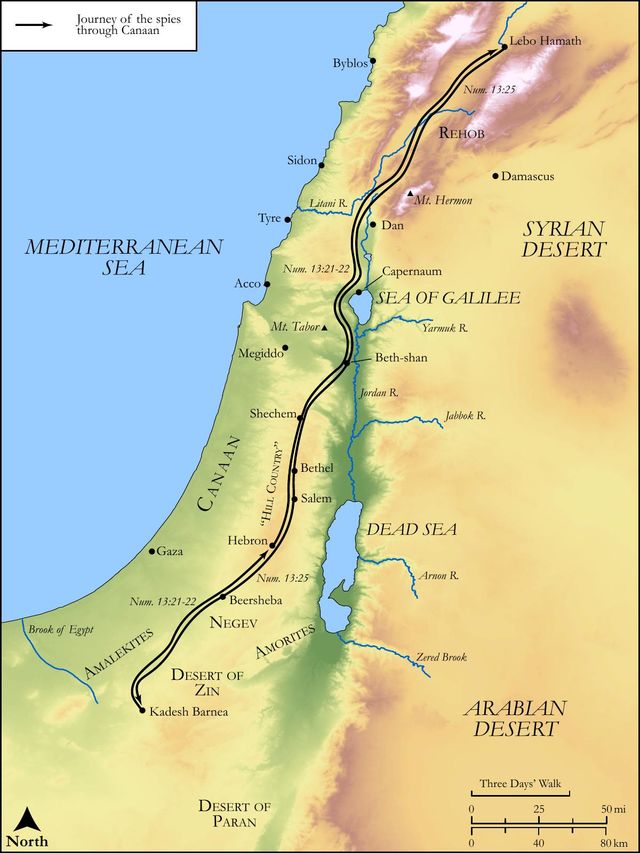
Numbers 13:30 is a critical turning point within the broader narrative of Israel's wilderness journey, marking the climax of the reconnaissance mission into Canaan. Immediately preceding this verse, Moses had dispatched twelve tribal leaders to explore the land of Canaan, a land promised by God to Abraham's descendants centuries earlier, as recorded in Genesis 12:7. Upon their return, ten of the spies delivered a terrifying report, emphasizing the strength of the inhabitants—describing them as giants and their cities as heavily fortified, as detailed in Numbers 13:28—and concluding that Israel was utterly incapable of conquering them, a declaration found in Numbers 13:31. This overwhelmingly negative report plunged the entire congregation into despair, leading to weeping, murmuring against Moses and Aaron, and even a desire to appoint a new leader and return to Egypt, as narrated in Numbers 14:1-4. Caleb's intervention in verse 30 stands as a singular, courageous voice of faith against this rising tide of panic and unbelief, directly challenging the prevailing narrative of fear and doubt and attempting to redirect the people towards God's promised victory.
Historical & Cultural Context
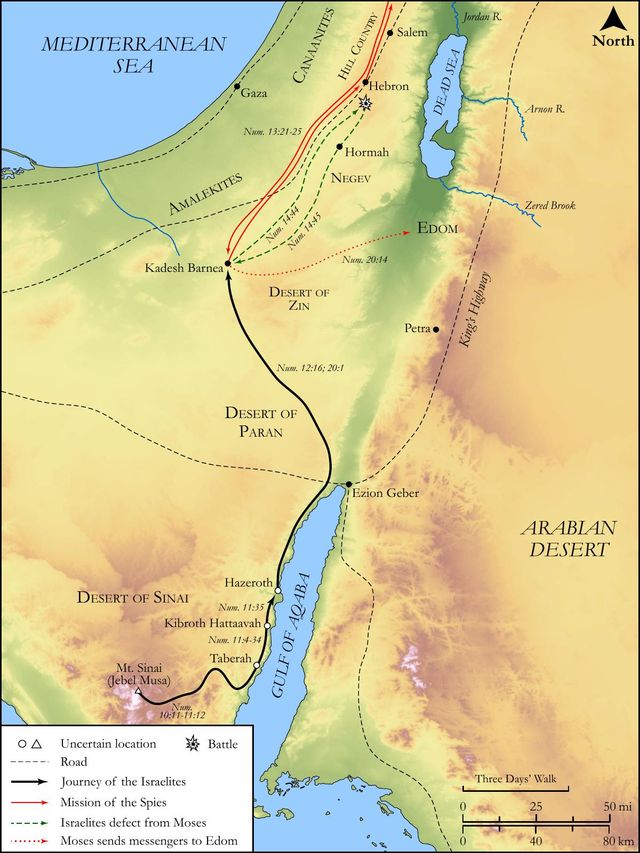
The Israelites were encamped at Kadesh-barnea, strategically positioned on the southern border of Canaan, poised to enter the Promised Land. This was a moment of immense historical significance, representing the culmination of their Exodus from Egypt and their journey through the wilderness. Culturally, the act of sending spies was a common military reconnaissance practice among the nations, intended to gather intelligence on terrain, resources, and enemy strength. However, in this divine context, the purpose of the reconnaissance was not to determine if God's promise could be fulfilled, but rather how Israel should proceed in taking possession of what God had already guaranteed. The fear of powerful, established peoples and heavily fortified cities was a rational human response, yet it directly conflicted with the supernatural assurances God had repeatedly given them. The people's immediate descent into fear and murmuring also reflects a recurring pattern of distrust and rebellion against divine leadership that had characterized their journey since leaving Egypt, evident in episodes such as their murmuring for food in the wilderness (Exodus 16:2) and for water at Rephidim (Exodus 17:3).
Key Themes
ShowHideNumbers 13:30 powerfully encapsulates several foundational themes central to the book of Numbers and the broader Pentateuch. The most prominent is the stark contrast between faith and fear. While the ten spies focused on human limitations and formidable obstacles, Caleb's perspective was rooted in God's omnipotence and faithfulness to His covenant promises. This verse also highlights the theme of courage and singular conviction, as Caleb bravely stands against the overwhelming majority and the agitated crowd, demonstrating unwavering loyalty to God's word. His declaration, "we are well able to overcome it," underscores the theme of trust in God's promise and power, emphasizing that true strength comes not from human might but from divine enablement. Finally, the call to "go up at once, and possess it" reinforces the divine mandate for Israel to inherit the land and the necessity of obedient, decisive action to step into God's blessings, a theme that reverberates throughout the conquest narratives in the Book of Joshua.
Exposition and Analysis
ShowHideKey Word Analysis
ShowHideThis verb (H2013) means "to hush," "to hold peace," "to be silent," or "to still." It implies a forceful and authoritative act, not merely a gentle request. Caleb didn't just ask for quiet; he actively commanded and imposed silence upon the agitated and murmuring crowd. This demonstrates his remarkable leadership, courage, and the respect he commanded, allowing a voice of faith to be heard amidst the clamor of fear.
This primitive root (H3423) means "to occupy (by driving out previous tenants, and possessing in their place)," "to seize," or "to inherit." Caleb's use of this word is not merely about entering the land but about actively taking ownership and displacing its current inhabitants, aligning with God's promise that Israel would inherit the land from the Canaanites. It signifies a decisive and complete taking of what is rightfully given by God.
The phrase "well able" translates the Hebrew verb (H3201), meaning "to be able," "to prevail," or "to overcome." The repetition of the verb in Hebrew (יָכֹל נִיכֹל, yakol nikol) creates an emphatic construction, signifying "certainly able," "quite able," or "we are indeed able." This linguistic intensity underscores Caleb's absolute conviction and unwavering confidence, which was rooted not in Israel's military might but in the assured power and presence of God.
Verse Breakdown
ShowHide"And Caleb stilled the people before Moses"
This opening clause immediately establishes Caleb's decisive action and his position of leadership and respect. The people were in a state of agitation and fear, likely expressing their dismay loudly through murmuring and weeping. Caleb, with authority and courage, intervened to quiet them, creating a crucial space for a different, faith-filled perspective to be presented. His action "before Moses" also highlights his respect for Moses' leadership and the established order, presenting his counter-report within the proper channels rather than inciting a separate rebellion.
"and said, Let us go up at once, and possess it"
This is Caleb's bold command and call to action, directly contrasting the ten spies' counsel of retreat and fear. "Let us go up" is an immediate imperative, urging forward movement into the land. "At once" emphasizes the urgency and decisiveness required, directly countering the hesitation and fear instilled by the other spies. The objective, "and possess it," reaffirms the divine mandate and the ultimate purpose of their journey—to take hold of the land God had promised them, signifying a complete and decisive conquest. This statement is a direct challenge to the ten spies' report of inability and a summons to obedient faith.
"for we are well able to overcome it."
This final clause provides the foundation for Caleb's audacious confidence. His conviction that "we are well able" is not based on a naive assessment of Israel's military strength against the formidable Canaanites, nor does it dismiss the reality of the obstacles. Instead, it is a profound declaration of faith in God's power and faithfulness. Having witnessed God's miraculous deliverance from Egypt, His provision in the wilderness, and His covenant promises, Caleb understood that Israel's ability to overcome was entirely dependent on God's enabling presence and power, not their own limited human capacity.
Literary Devices
ShowHideNumbers 13:30 is rich in literary devices that amplify its significance. The most striking is Contrast, as Caleb's faith-filled declaration stands in stark opposition to the fear-mongering report of the ten spies. This creates a dramatic tension that drives the narrative forward, highlighting the profound difference between human perspective and divine perspective. There is also an implied Rhetorical Question in Caleb's statement, challenging the logic of fear: "Why should we doubt God's ability when He has proven Himself so mighty?" The verse also employs Foreshadowing, as Caleb's unwavering faith here anticipates his later reward of inheriting Hebron, as recorded in Joshua 14:6-15, setting him and Joshua apart as the only adults of that generation (besides Moses and Aaron) who would enter the Promised Land. Furthermore, the land itself functions as Symbolism, representing God's promised inheritance and the blessings that come through obedience and faith. Caleb's call to "possess it" is a symbolic call to embrace God's full provision and the spiritual blessings that accompany trusting Him.
Theological and Thematic Connections
ShowHideNumbers 13:30 is a profound theological statement on the nature of faith, obedience, and divine sovereignty. It teaches that true faith does not deny the existence of obstacles but rather views them through the lens of God's limitless power and unwavering promises. Caleb's declaration is a testament to the principle that God's people are "well able" to accomplish His will when they rely on His strength rather than their own. This moment highlights the critical choice humanity faces when confronted with divine commands and daunting circumstances: to succumb to fear and human limitations, or to step forward in courageous trust, believing that God will enable what He commands. The tragic outcome for the generation that chose fear underscores the severe consequences of unbelief and disobedience, serving as a timeless warning against doubting God's faithfulness and neglecting the divine call to advance.
Reflection and Application
ShowHideNumbers 13:30 serves as a timeless paradigm for how believers should approach the "giants" and "fortified cities" in their own lives. We are constantly faced with circumstances that seem overwhelming—financial crises, health challenges, relational conflicts, or spiritual battles. Like the Israelites, it is easy to succumb to the "report" of fear and doubt, to focus on the magnitude of the problem rather than the omnipotence of our God. Caleb's example calls us to actively "still the people" within ourselves—to quiet the voices of anxiety, skepticism, and human reasoning that whisper "we are not able." It challenges us to replace a focus on our limitations with an unwavering gaze upon God's promises and His proven track record of faithfulness. His declaration, "Let us go up at once, and possess it; for we are well able to overcome it," is a powerful summons to decisive, faith-filled action, reminding us that with God, no obstacle is insurmountable and every divine promise is attainable. It encourages us to step into the spiritual inheritance and blessings God has prepared, confident in His enabling power, knowing that our ability is derived from His limitless strength.
Questions for Reflection
ShowHideFAQ
ShowHideWhat was the primary difference between Caleb's report and that of the other ten spies?
ShowHideThe primary difference lay not in their observation of the land, which was consistent, but in their interpretation of what they saw and their perspective on God's power. The ten spies focused on the formidable strength of the inhabitants and the fortified cities, concluding, "We be not able to go up against the people; for they are stronger than we" (Numbers 13:31). Their report was rooted in human fear and a profound lack of faith in God's ability to deliver on His promise. Caleb, however, saw the same challenges but viewed them through the lens of God's omnipotence and faithfulness. His declaration, "Let us go up at once, and possess it; for we are well able to overcome it" (Numbers 13:30), was a bold affirmation that with God on their side, no obstacle was too great. His confidence was entirely in God's power and covenant faithfulness, not in Israel's limited human strength or military might.
Christ-Centered Fulfillment
ShowHideNumbers 13:30, with Caleb's resolute faith in the face of overwhelming odds, powerfully foreshadows the ultimate victory and inheritance secured through Jesus Christ. Just as Caleb urged Israel to "go up at once, and possess" the physical land, Christ calls His followers to "possess" a spiritual inheritance that is far greater and eternal. The "giants" and "fortified cities" that terrified the Israelites find their spiritual parallel in the powers of sin, death, and the devil that hold humanity captive. Where Israel's ability to overcome was contingent on God's presence, our ability to overcome spiritual enemies is entirely dependent on the finished work of Christ. He is the true and faithful leader who has already "overcome the world" (John 16:33) and disarmed the spiritual rulers and authorities, triumphing over them by the cross (Colossians 2:15). Through His sacrifice and resurrection, Christ has opened the way for us to enter into and possess the "heavenly places" (Ephesians 2:6) and claim victory over every spiritual stronghold. Caleb's "we are well able to overcome it" becomes a triumphant declaration for believers in Christ: "I can do all things through Christ who strengthens me" (Philippians 4:13). He is our ultimate Caleb, leading us into the true promised rest and inheritance, not by our might, but by His perfect work and empowering Spirit, ensuring our complete spiritual possession.