


Matthew 18:8
- εἰeiIfG1487CONDConjunction
- δὲdenowG1161CONJConjunction
- ἡhētheG3588T-NSFDefinite article Nominative Singular Feminine
- χείρcheirhandG5495N-NSFNoun Nominative Singular Feminine
- σουsouof youG4771P-2GSPersonal pronoun Genitive 2nd Singular
- ἢēorG2228CONJConjunction
- ὁhotheG3588T-NSMDefinite article Nominative Singular Masculine
- πούςpousfootG4228N-NSMNoun Nominative Singular Masculine
- σουsouof youG4771P-2GSPersonal pronoun Genitive 2nd Singular
- σκανδαλίζειskandalizeicauses to sinG4624V-PAI-3SVerb Present Active Indicative 3rd Singular
- σεseyouG4771P-2ASPersonal pronoun Accusative 2nd Singular
- ἔκκοψονekkopsondo cut offG1581V-AAM-2SVerb Aorist Active Imperative 2nd Singular
- αὐτὸνautonitG846P-ASMPersonal pronoun Accusative Singular Masculine
- καὶkaiandG2532CONJConjunction
- βάλεbaledo cast [it]G906V-2AAM-2SVerb 2nd Aorist Active Imperative 2nd Singular
- ἀπὸapofromG575PREPPreposition
- σοῦ·souyouG4771P-2GSPersonal pronoun Genitive 2nd Singular
- καλόνkalonbetterG2570A-NSNAdjective Nominative Singular Neuter
- σοίsoifor youG4771P-2DSPersonal pronoun Dative 2nd Singular
- ἐστινestinit isG1510V-PAI-3SVerb Present Active Indicative 3rd Singular
- εἰσελθεῖνeiseltheinto enterG1525V-2AANVerb 2nd Aorist Active Infinitive
- εἰςeisintoG1519PREPPreposition
- τὴνtēn<the>G3588T-ASFDefinite article Accusative Singular Feminine
- ζωὴνzōēnlifeG2222N-ASFNoun Accusative Singular Feminine
- κυλλὸνkulloncrippledG2948A-ASMAdjective Accusative Singular Masculine
- ἢēorG2228CONJConjunction
- χωλὸνchōlonlameG5560A-ASMAdjective Accusative Singular Masculine
- ἢēthanG2228CONJConjunction
- δύοduotwoG1417A-NUIAdjective
- χεῖραςcheirashandsG5495N-APFNoun Accusative Plural Feminine
- ἢēorG2228CONJConjunction
- δύοduotwoG1417A-NUIAdjective
- πόδαςpodasfeetG4228N-APMNoun Accusative Plural Masculine
- ἔχονταechontahavingG2192V-PAP-ASMVerb Present Active Participle Accusative Singular Masculine
- βληθῆναιblēthēnaito be castG906V-APNVerb Aorist Passive Infinitive
- εἰςeisintoG1519PREPPreposition
- τὸtotheG3588T-ASNDefinite article Accusative Singular Neuter
- πῦρpurfireG4442N-ASNNoun Accusative Singular Neuter
- τὸto<the>G3588T-ASNDefinite article Accusative Singular Neuter
- αἰώνιονaiōnioneternalG166A-ASNAdjective Accusative Singular Neuter
English is a literal word-by-word gloss of the Greek, not the KJV's wording. Why?
This is the original text the KJV's translators worked from — each Greek word with its own literal English meaning in this verse, prepared by scholars at Tyndale House, Cambridge. The KJV translates whole sentences, not word by word, so its wording differs: one Greek word can become several English words, and the KJV may choose “charity” where the gloss reads “love”. Both are faithful — they answer different questions. For the KJV's own rendering, switch to the KJV text.
Details
See on the biblical-era map
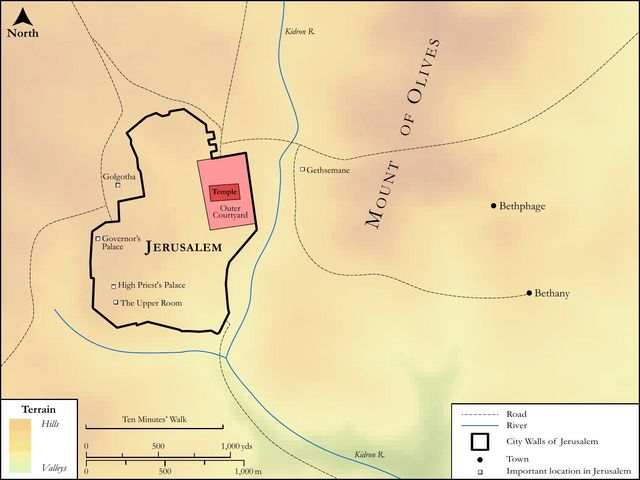
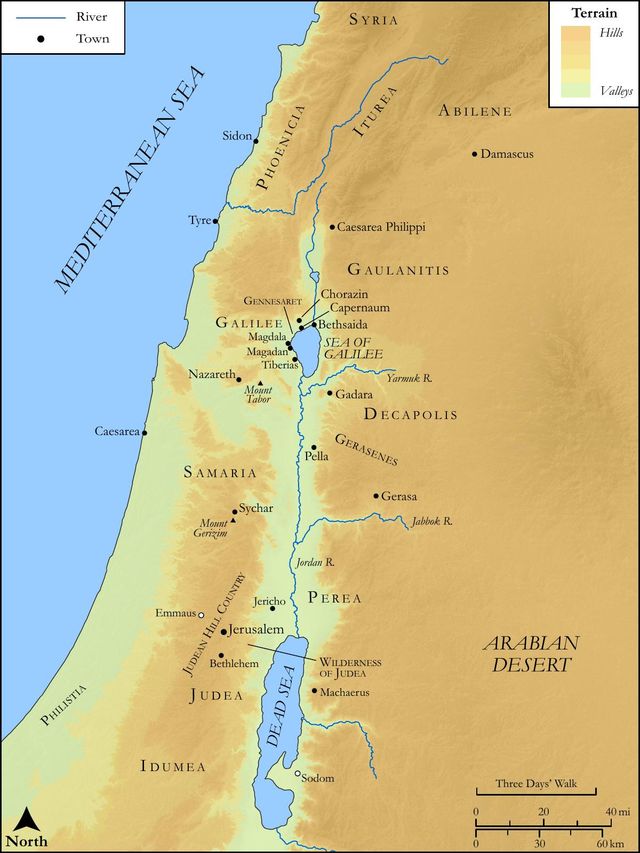
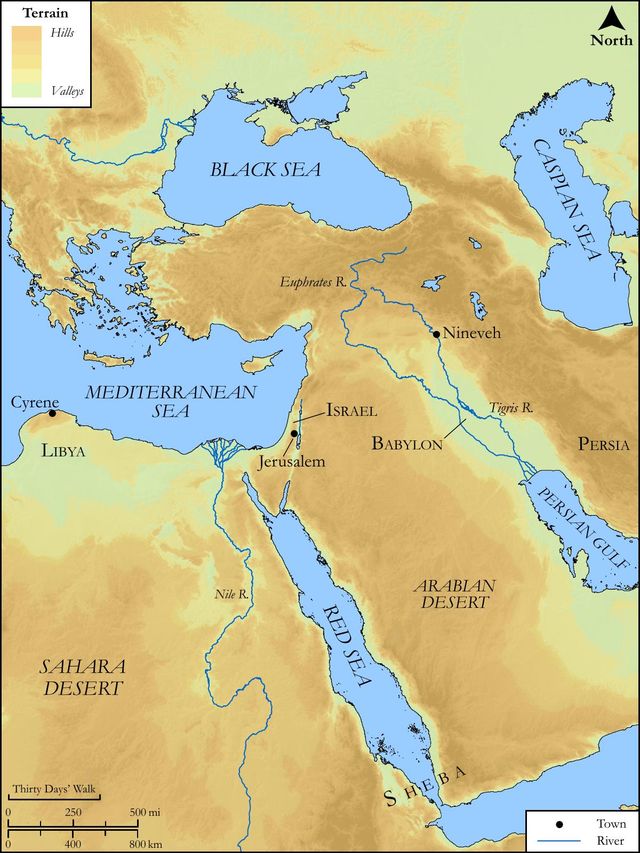
Study this verse
Public-domain commentary
Matthew Henry
From his Commentary on the Whole Bible. Henry comments on passages, not single verses — this entry covers Matthew 18:1–35. His four-level outline is real structure in the source text, so it is rendered as structure.
As there never was a greater pattern of humility, so there never was a greater preacher of it, than Christ; he took all occasions to command it, to commend it, to his disciples and followers.
I.The occasion of this discourse concerning humility was an unbecoming contest among the disciples for precedency; they came to him, saying, among themselves (for they were ashamed to ask him, Mar 9:34), Who is the greatest in the kingdom of heaven? They mean not, who by character (then the question had been good, that they might know what graces and duties to excel in), but who by name. They had heard much, and preached much, of the kingdom of heaven, the kingdom of the Messiah, his church in this world; but ass yet they were so far from having any clear notion of it, that they dreamt of a temporal kingdom, and the external pomp and power of it. Christ had lately foretold his sufferings, and the glory that should follow, that he should rise again, from whence they expected his kingdom would commence; and now they thought it was time to put in for their places in it; it is good, in such cases, to speak early. Upon other discourses of Christ to that purport, debates of this kind arose (Mat 20:19, Mat 20:20; Luk 22:22, Luk 22:24); he spoke many words of his sufferings, but only one of his glory; yet they fasten upon that, and overlook the other; and, instead of asking how they might have strength and grace to suffer with him, they ask him, "Who shall be highest in reigning with him." Note, Many love to hear and speak of privileges and glory, who are willing to pass by the thoughts of work and trouble. They look so much at the crown, that they forget the yoke and the cross. So the disciples here did, when they asked, Who is the greatest in the kingdom of heaven?
1.They suppose that all who have a place in that kingdom are great, for it is a kingdom of priests. Note, Those are truly great who are truly good; and they will appear so at last, when Christ shall own them as his, though ever so mean and poor in the world.
2.They suppose that there are degrees in this greatness. All the saints are honourable, but not all alike so; one star differs from another star in glory. All David's officers were not worthies, nor all his worthies of the first three.
3.They suppose it must be some of them, that must be prime ministers of state. To whom should King Jesus delight to do honour, but to them who had left all for him, and were now his companions in patience and tribulation?
4.They strive who it should be, each having some pretence or other to it. Peter was always the chief speaker, and already had the keys given him; he expects to be lord-chancellor, or lord-chamberlain of the household, and so to be the greatest. Judas had the bag, and therefore he expects to be lord-treasurer, which, though now he come last, he hopes, will then denominate him the greatest. Simon and Jude are nearly related to Christ, and they hope to take place of all the great officers of state, as princes of the blood. John is the beloved disciple, the favourite of the Prince, and therefore hopes to be the greatest. Andrew was first called, and why should not he be first preferred? Note, We are very apt to amuse and humour ourselves with foolish fancies of things that will never be.
II.The discourse itself, which is a just rebuke to the question, Who shall be greatest? We have abundant reason to think, that if Christ ever intended that Peter and his successors at Rome should be heads of the church, and his chief vicars on earth, having so fair an occasion given him, he would now have let his disciples know it; but so far is he from this, that his answer disallows and condemns the thing itself. Christ will not lodge such an authority or supremacy any where in his church; whoever pretend to it are usurpers; instead of settling any of the disciples in this dignity, he warns them all not to put in for it.
Christ here teacheth them to be humble,
1.By a sign (Mat 18:2); He called a little child to him, and set him in the midst of them. Christ often taught by signs or sensible representations (comparisons to the eye), as the prophets of old. Note, Humility is a lesson so hardly learned, that we have need by all ways and means to be taught it. When we look upon a little child, we should be put in mind of the use Christ made of this child. Sensible things must be improved to spiritual purposes. He set him in the midst of them; not that they might play with him, but that they might learn by him. Grown men, and great men, should not disdain the company of little children, or think it below them to take notice of them. They may either speak to them, and give instruction to them; or look upon them, and receive instruction from them. Christ himself, when a child, was in the midst of the doctors, Luk 2:46.
2.By as sermon upon this sign; in which he shows them and us,
(1.)The necessity of humility, Mat 18:3. His preface is solemn, and commands both attention and assent; Verily I say unto you, I, the Amen, the faithful Witness, say it, Except ye be converted, and become as little children, ye shall not enter into the kingdom of heaven. Here observe,
[1.]What it is that he requires and insists upon.
First, "You must be converted, you must be of another mind, and in another frame and temper, must have other thoughts, both of yourselves and of the kingdom of heaven, before you be fit for a place in it. The pride, ambition, and affectation of honour and dominion, which appear in you, must be repented of, mortified, and reformed, and you must come to yourselves." Note, Besides the first conversion of a soul from a state of nature to a state of grace, there are after-conversions from particular paths of backsliding, which are equally necessary to salvation. Every step out of the way by sin, must be a step into it again by repentance. When Peter repented of his denying his Master, he was converted. Secondly, You must become as little children. Note, Converting grace makes us like little children, not foolish as children (Co1 14:20), nor fickle (Eph 4:14), nor playful (Mat 11:16); but, as children, we must desire the sincere milk of the word (Pe1 2:2); as children, we must be careful for nothing, but leave it to our heavenly Father to care for us (Mat 6:31); we must, as children, be harmless and inoffensive, and void of malice (Co1 14:20), governable, and under command (Gal 4:2); and (which is here chiefly intended) we must be humble as little children, who do not take state upon them, nor stand upon the punctilios of honour; the child of a gentleman will play with the child of a beggar (Rom 12:16), the child in rags, if it have the breast, is well enough pleased, and envies not the gaiety of the child in silk; little children have no great aims at great places, or projects to raise themselves in the world; they exercise not themselves in things too high for them; and we should in like manner behave, and quiet ourselves, Psa 131:1, Psa 131:2. As children are little in body and low in stature, so we must be little and low in spirit, and in our thoughts of ourselves. This is a temper which leads to other good dispositions; the age of childhood is the learning age.
[2.]What stress he lays upon this; Without this, you shall not enter into the kingdom of heaven. Note, Disciples of Christ have need to be kept in awe by threatenings, that they may fear lest they seem to come short, Heb 4:1. The disciples, when they put that question (Mat 18:1), thought themselves sure of the kingdom of heaven; but Christ awakens them to be jealous of themselves. They were ambitious of being greatest in the kingdom of heaven; Christ tells them, that, except they came to a better temper, they should never come thither. Note, many that set up for great ones in the church, prove not only little, but nothing, and are found to have no part or lot in the matter. Our Lord designs here to show the great danger of pride and ambition; whatever profession men make, if they allow themselves in this sin, they will be rejected both from God's tabernacle and from his holy hill. Pride threw the angels that sinned out of heaven, and will keep us out, if we be not converted from it. They that are lifted up with pride, fall into the condemnation of the devil; to prevent this, we must become as little children, and, in order to do that, must be born again, must put on the new man, must be like the holy child Jesus; so he is called, even after his ascension, Act 4:27.
(2.)He shows the honour and advancement that attend humility (Mat 18:4), thus furnishing a direct but surprising answer to their question. He that humbles himself as a little child, though he may fear that hereby he will render himself contemptible, as men of timid minds, who thereby throw themselves out of the way of preferment, yet the same is greatest in the kingdom of heaven. Note, The humblest Christians are the best Christians, and most like to Christ, and highest in his favour; are best disposed for the communications of divine grace, and fittest to serve God in this world, and enjoy him in another. They are great, for God overlooks heaven and earth, to look on such; and certainly those are to be most respected and honoured in the church that are most humble and self-denying; for, though they least seek it, they best deserve it.
(3.)The special care Christ takes for those that are humble; he espouses their cause, protects them, interests himself in their concerns, and will see that they are not wronged, without being righted.
Those that thus humble themselves will be afraid,
[1.]That nobody will receive them; but (Mat 18:5), Whoso shall receive one such little child in my name, receiveth me. Whatever kindnesses are done to such, Christ takes as done to himself. Whoso entertains a meek and humble Christian, keeps him in countenance, will not let him lose by his modesty, takes him into his love and friendship, and society and care, and studies to do him a kindness; and doth this in Christ's name, for his sake, because he bears the image of Christ, serves Christ, and because Christ has received him; this shall be accepted and recompensed as an acceptable piece of respect to Christ. Observe, Though it be but one such little child that is received in Christ's name, it shall be accepted. Note, The tender regard Christ has to his church extends itself to every particular member, even the meanest; not only to the whole family, but to every child of the family; the less they are in themselves, to whom we show kindness, the more there is of good will in it to Christ; the less it is for their sakes, the more it is for his; and he takes it accordingly. If Christ were personally among us, we think we should never do enough to welcome him; the poor, the poor in spirit, we have always with us, and they are his receivers. See Mat 25:35-40.
[2.]They will be afraid that every body will abuse them; the basest men delight to trample upon the humble; Vexat censura columbas - Censure pounces on doves. This objection he obviates (Mat 18:6), where he warns all people, as they will answer it at their utmost peril, not to offer any injury to one of Christ's little ones. This word makes a wall of fire about them; he that touches them, touches the apple of God's eye.
Observe, First, The crime supposed; offending one of these little ones that believe in Christ. Their believing in Christ, though they be little ones, unites them to him, and interests him in their cause, so that, as they partake of the benefit of his sufferings, he also partakes in the wrong of theirs. Even the little ones that believe have the same privileges with the great ones, for they have all obtained like precious faith. There are those that offend these little ones, by drawing them to sin (Co1 8:10, Co1 8:11), grieving and vexing their righteous souls, discouraging them, taking occasion from their mildness to make a prey of them in their persons, families, goods, or good name. Thus the best men have often met with the worst treatment in this world.
Secondly, The punishment of this crime; intimated in that word, Better for him that he were drowned in the depth of the sea. The sin is so heinous, and the ruin proportionably so great, that he had better undergo the sorest punishments inflicted on the worst of malefactors, which can only kill the body. Note, 1. Hell is worse than the depth of the sea; for it is a bottomless pit, and it is a burning lake. The depth of the sea is only killing, but hell is tormenting. We meet with one that had comfort in the depth of the sea, it was Jonah (Jon 2:2, Jon 2:4, Jon 2:9); but never any had the least grain or glimpse of comfort in hell, nor will have to eternity. 2. The irresistible irrevocable doom of the great Judge will sink sooner and surer, and bind faster, than a mill-stone hanged about the neck. It fixes a great gulf, which can never be broken through, Luk 16:26. Offending Christ's little ones, though by omission, is assigned as the reason of that dreadful sentence, Go ye cursed, which will at last be the doom of proud persecutors.
Historical interpretation
Eleven Centuries of Reception
11 surviving comments on this verse. Each one is dated, so this reads as a timeline rather than a list.
Select a marker to jump to its quote. Markers stagger vertically where authors wrote within a few decades of each other.
Oh wickedness! Once did the Jews lay brands on Christ; these mangle His body daily. Oh hands to be cut off! Now let the saying, "If thy hand make thee do evil, amputate it," see to it whether it were uttered by way of similitude merely.
Or, The priests may with good reason be called the eyes of the Church, since they are considered her watchmen, but the deacons and the rest her hands, for by them spiritual deeds are wrought; the people are the feet of the body, the Church; and all these it behoves not to spare, if they become an offence to the Church. Or, by the offending hand is understood an act of the mind; a motion of the mind is the offending foot, and a vision of the mind is the sinning eye, which we ought to cut off if they give offence, for thus the acts of the limbs are often put in Scripture for the limbs themselves.
Or; The lowliness of His passion is the scandal of the world, which refused to receive the Lord of eternal glory under the disgrace of the Cross. And what more dangerous for the world than to have rejected Christ? And He says that offences must needs come, forasmuch as in the sacrament of restoring to us eternal life, all lowliness of suffering was to be fulfilled in Him.
Or; By the man is denoted the Jewish people, as the introducers of all this offence that is about Christ's passion; for they brought upon the world all the danger of denying Christ in His passion, of whom the Law and the Prophets had preached that He should suffer.
"And if 'it must needs be that offenses come,'" (some one of our adversaries may perchance say), "why doth He lament over the world, when He ought rather to afford succor, and to stretch forth His hand in its behalf? For this were the part of a physician, and a protector, whereas the other might be looked for even from any ordinary person."
What then could we possibly say, in answer to so shameless a tongue? nay what dost thou seek for equal to this healing care of His? For indeed being God He became man for thee, and took the form of a slave, and underwent all extremities, and left undone none of those things which it concerned Him to do. But inasmuch as unthankful men were nothing the better for this, He laments over them, for that after so much fostering care they continued in their unsoundness.
It was like as if over the sick man, that had had the advantage of much attendance, and who had not been willing to obey the rules of the physician, any one were to lament and say, "Woe to such a man from his infirmity, which he has increased by his own remissness." But in that case indeed there is no advantage from the bewailing, but here this too is a kind of healing treatment to foretell what would be, and to lament it. For many oftentimes, though, when advised, they were nothing profited, yet, when mourned for, they amended.
For which reason most of all He used the word "Woe," thoroughly to rouse them, and to make them in earnest, and to work upon them to be wakeful. And at the same time He shows forth the good will He had towards those very men and His own mildness, that He mourns for them even when gainsaying, not taking mere disgust at it, but correcting them, both with the mourning, and with the prediction, so as to win them over.
But how is this possible? he may say. For if "it must needs be that offenses come," how is it possible to escape these? Because that the offenses come indeed must needs be, but that men should perish is not altogether of necessity. Like as though a physician should say (for nothing hinders our using the same illustration again), it must needs be that this disease should come on, but it is not a necessary consequence that he who gives heed should be of course destroyed by the disease. And this He said, as I mentioned, to awaken together with the others His disciples. For that they may not slumber, as sent unto peace and unto untroubled life, He shows many wars close upon them, from without, from within. Declaring this, Paul said, "Without were fightings, within were fears;" and, "In perils among false brethren;" and in his discourse to the Milesians too He said, "Also of you shall some arise speaking perverse things;" and He Himself too said, "The man's foes shall be they of his own household." But when He said, "It must needs be," it is not as taking away the power of choosing for themselves, nor the freedom of the moral principle, nor as placing man's life under any absolute constraint of circumstances, that He saith these things, but He foretells what would surely be; and this Luke hath set forth in another form of expression, "It is impossible but that offenses should come."
But what are the offenses? The hindrances on the right way. Thus also do those on the stage call them that are skilled in those matters, them that distort their bodies.
It is not then His prediction that brings the offenses; far from it; neither because He foretold it, therefore doth it take place; but because it surely was to be, therefore He foretold it; since if those who bring in the offenses had not been minded to do wickedly, neither would the offenses have come; and if they had not been to come, neither would they have been foretold. But because those men did evil, and were incurably diseased, the offenses came, and He foretells that which is to be.
But if these men had been kept right, it may be said, and there had been no one to bring in an offense, would not this saying have been convicted of falsehood? By no means, for neither would it have been spoken. For if all were to have been kept right, He would not have said, "it must needs be that they come," but because He foreknew they would be of themselves incorrigible, therefore He said, the offenses will surely come.
And wherefore did He not take them out of the way? it may be said. Why, wherefore should they have been taken out of the way? For the sake of them that are hurt? But not thence is the ruin of them that are hurt, but from their own remissness. And the virtuous prove it, who, so far from being injured thereby, are even in the greatest degree profited, such as was Job, such as was Joseph, such as were all the righteous, and the apostles. But if many perish, it is from their own slumbering. But if it were not so, but the ruin was the effect of the offenses, all must have perished. And if there are those who escape, let him who doth not escape impute it to himself. For the offenses, as I have said, awaken, and render more quick-sighted, and sharper, not only him that is preserved; but even him that hath fallen into them, if he rise up again quickly, for they render him more safe, and make him more difficult to overcome; so that if we be watchful, no small profit do we reap from hence, even to be continually awake. For if when we have enemies, and when so many dangers are pressing upon us, we sleep, what should we be if living in security. Nay, if thou wilt, look at the first man. For if having lived in paradise a short time, perchance not so much as a whole day, and having enjoyed delights, he drove on to such a pitch of wickedness, as even to imagine an equality with God, and to account the deceiver a benefactor, and not to keep to one commandment; if he had lived the rest of his life also without affliction, what would he not have done?
But let us tear these in pieces not by our words only, but by our deeds too. For neither are these things of necessity. For if they were of necessity, He would not have said, "Woe to the man, by whom the offense cometh." For those only doth he bewail, who are wicked by their choice.
And if He saith "by whom," marvel not. For not as though another were bringing in it by him, doth He say this, but viewing him as himself causing the whole. For the Scripture is wont to say, "by whom," for "of whom;" as when it saith, "I have gotten a man by God," putting not the second cause, but the first; and again, "Is not the interpretation of them by God," and, "God is faithful, by whom ye are called unto the fellowship of His Son."
And that thou mayest learn that it is not of necessity, hear also what follows. For after bewailing them, He saith, "If thy hand, or thy foot offend thee, cut them off, and cast them from thee: for it is better for thee to enter into life halt or maimed, rather than having two hands or feet to be cast into the fire. And if thy right eye offend thee, pluck it out; it is better for thee to enter into life with one eye, than having two eyes to be cast into the furnace of fire;" not saying these things of limbs; far from it; but of friends, of relations, whom we regard in the rank of necessary members. This He had both said further back, and now He saith it. For nothing is so hurtful as bad company. Wherefore with much earnestness He commands us to cut off them that hurt us, intimating these that bring the offenses.
Seest thou how He hath put away the mischief that would result from the offenses? By foretelling that there surely will be offenses, so that they might find no one in a state of carelessness, but that looking for them men might be watchful. By showing the evils to be great (for He would not have said without purpose, "Woe to the world because of the offenses," but to show that great is the mischief therefrom), by lamenting again in stronger terms over him that brings them in. For the saying, "But woe to that man," was that of one showing that great was the punishment, but not this only, but also by the comparison which He added He increased the fear.
Then He is not satisfied with these things, but He showeth also the way, by which one may avoid the offenses.
But what is this? The wicked, saith He, though they be exceeding dear friends to thee, cut off from thy friendship.
And He giveth a reason that cannot be gainsaid. For if they continue friends, thou wilt not gain them, but thou wilt lose thyself besides; but if thou shouldest cut them off, thine own salvation at least thou wilt gain. So that if any one's friendship harms thee, cut it off from thee. For if of our own members we often cut off many, when they are both in an incurable state, and are ruining the rest, much more ought one to do this in the case of friends.
But if evils were by nature, superfluous were all this admonition and advice, superfluous the precaution by the means that have been mentioned. But if it be not superfluous, as surely it is not superfluous, it is quite clear that wickedness is of the will.
(Hom. lix.) This does not subvert the liberty of the will, or impose a necessity of any act, but foreshews what must come to pass. Offences are hindrances in the right way. But Christ's prophecy does not bring in the offences, for it is not done because He foretold it, but He foretold it because it was certainly to come to pass. But some one will say, If all men are recovered, and if there be none to bring the offences, will not His speech be convicted of falsehood? By no means; for seeing that men were incurable, He therefore said, It must needs he that offences come; that is, they surely will come; which He never would have said, if all men might be amended.
For offences rouse men, and make them more attentive; and he who falls by them speedily rises again, and is more careful.
But that you may learn that there is no absolute necessity for offences, hear what follows, If thy hand or thy foot offend thee, & c. This is not said of the limbs of the body, but of friends whom we esteem as limbs necessary to us; for nothing is so hurtful as evil communications.
As much as to say, Woe to that man through whose fault it comes to pass, that offences must needs be in the world. And under this general declaration, Judas is particularly condemned, who had made ready his soul for the act of betrayal.
So all affection, our whole kindred, are severed from us; lest under cover of duty any believer should be exposed to offence. If, He says, he be united to thee as close as is thy hand, or foot, or eye, and is useful to thee, anxious and quick to discern, and yet causes thee offence, and is by the unmeetness of his behaviour drawing thee into hell; it is better for thee that thou lack his kindred, and his profitableness to thee, than that whilst thou seekest to gain thy kindred or friends, thou shouldest have cause of fallings. For every believer knows what is doing him harm, what troubles and tempts him, for it is better to lead a solitary life, than to lose eternal life, in order to have the things necessary for this present life.
(Verse 8, 9) But if your hand or your foot causes you to stumble, cut it off and throw it away. It is better for you to enter life maimed or crippled than to have two hands or two feet and be thrown into the eternal fire. And if your eye causes you to stumble, gouge it out and throw it away. It is better for you to enter life with one eye than to have two eyes and be thrown into the fire of hell. Indeed, it is necessary for scandals to come, but woe to the person through whom the scandal comes! Therefore, every affection is cut off and every proximity is amputated, so that no one of the believers may be exposed to scandals through the opportunity of piety. If, he says, someone is so connected to you like a hand, foot, eye, and is useful and caring, and sharp in discerning: but he causes scandal to you, and he drags you into hell because of the disparity of his behavior: it is better that you both avoid his proximity and carnal benefits, so that while you want to profit your relatives and necessary ones, you don't end up causing ruins. Therefore, neither brother, nor wife, nor children, nor friends, nor any affection that can exclude us from the kingdom of heaven, should be preferred to the love of the Lord. Each believer knows what harms themselves, what troubles their soul, and is often tested. It is better to lead a solitary life than to lose eternal life for the needs of this present life.
A brother asked Poemen, ‘What is the meaning of the text, “Whoever is angry with his brother without a cause” (Matt. 5:22)?’ He answered, ‘If you are angry with your brother for any kind of trouble that he gives you, that is anger without a cause, and it is better to pluck out your right eye and cast it from you. But if anyone wants to separate you from God, then you must be angry with him.’
Scandal (offence) is a Greek word, which we may call a stumbling-block, or a fall, or hitting of the foot. He then scandalizes his brother, who by word or deed amiss gives him occasion of falling.
(non occ.) The Lord had said, that it is better for him who gives offence, that a mill-stone be hanged about his neck, of which He now subjoins the reason, Woe unto the world from offences! i. e. because of offences.
(interlin. 1 Cor. 11:19.) Or they must needs come because they are necessary, that is, useful, that by this mean they that are approved may be made manifest.
Continue studying Matthew 18:8 across the web’s major study libraries — every link below opens this exact verse, chapter, or book on the destination site.
Read & Compare
 BibleGatewayThis verse in more than 200 translations and 70 languages.
 Bible.comThe YouVersion reader — hundreds of translations, reading plans, and highlights.
 ESV.orgCrossway's official English Standard Version reader.
 NET BibleThe NET translation with 60,000+ translators' notes on every rendering decision.
 STEP BibleTyndale House's free study tool — original text, vocabulary, and scholarly resources.
 BibliaLogos Bible Software's free web reader.
 USCCBThe New American Bible (Revised Edition) with the U.S. bishops' study notes.
Commentaries
 BibleHub CommentariesDozens of classic commentaries on this verse, gathered on one page.
 StudyLightMore than 100 commentary sets — the largest collection on the web.
 BibleRefPlain-English commentary on what this verse means, verse by verse.
 Enduring WordDavid Guzik's free commentary on this chapter, widely used by Bible teachers.
 Bible Study ToolsVerse commentary alongside Greek and Hebrew study aids.
Original Language & Research
- BibleHub InterlinearThe verse word by word — original language, transliteration, and English.
- BibleHub LexiconEvery word's original-language definition and Strong's entry.
 Blue Letter BibleDeep-study tools — Strong's numbers, concordance, and word studies.
 CNTR CollationThe earliest Greek manuscripts of this verse, collated letter by letter.
Sermons, Hymns & Audio


TrulyRandomVerse is not affiliated with these sites and doesn’t control their content. They’re linked because they’re genuinely useful.
Summary
Matthew 18:8 delivers a powerful, hyperbolic warning from Jesus regarding the radical measures necessary to avoid sin and its eternal consequences. Employing vivid imagery of self-mutilation, Jesus emphasizes that no earthly attachment, comfort, or physical integrity is worth sacrificing one's eternal salvation. The passage underscores the immense value of spiritual purity and eternal life, urging believers to decisively eliminate any source of temptation or sin that threatens their spiritual well-being, rather than face the dire judgment of "everlasting fire."
Context
ShowHideLiterary Context
This verse is an integral part of Jesus' discourse on humility and the nature of the kingdom of heaven, specifically following His warning against causing "little ones" to stumble in Matthew 18:6. While Matthew 18:6-7 focuses on the responsibility of not leading others into sin, Matthew 18:8-9 shifts the focus to individual accountability and the severity of personal sin. This passage echoes similar teachings found in the Sermon on the Mount (Matthew 5:29-30) and Mark 9:43-48, indicating its importance in Jesus' ethical instruction. The immediate context of chapter 18 emphasizes the care for the vulnerable, the seriousness of sin, and the importance of forgiveness within the community of believers.
Historical & Cultural Context
Jesus' audience, primarily Jewish, would have been familiar with strong, vivid imagery and hyperbolic language common in rabbinic teaching and prophetic literature. The concept of "Gehenna" (often translated as "hell" or "everlasting fire" in the New Testament) was a well-understood term referring to the valley of Hinnom outside Jerusalem, where child sacrifices were once offered and later became a place for burning refuse, symbolizing a place of utter destruction and divine judgment. While physical mutilation was not advocated by Jewish law, the emphasis on radical obedience and the seriousness of sin leading to divine judgment was deeply ingrained. The "hand" and "foot" would have been understood as symbols of action and direction, respectively, making the metaphor powerfully relatable to everyday life and conduct.
Key Themes
ShowHideThis verse contributes significantly to several key themes within Matthew's Gospel and broader biblical theology. Firstly, it highlights the theme of radical discipleship, demanding absolute commitment and willingness to sacrifice anything that hinders one's pursuit of God's kingdom, as also seen in Jesus' call to take up one's cross. Secondly, it underscores the immense value of eternal life and the dire consequences of unchecked sin, contrasting temporary earthly attachments with eternal destiny, a theme prevalent throughout Jesus' teachings on the kingdom of God and final judgment (Matthew 25:41). Finally, it emphasizes the personal responsibility to identify and decisively deal with "stumbling blocks" in one's own life, whether they are actions, relationships, or desires that lead away from God.
Exposition and Analysis
ShowHideKey Word Analysis
ShowHideThis word literally means "to cause to stumble," "to entice to sin," or "to be a snare." In this context, it does not mean merely to annoy or displease, but to act as a spiritual trap or a source of temptation that leads one into sin, apostasy, or spiritual ruin. It implies a profound moral or spiritual falling away.
This verb means "to exscind," "to cut down," "to cut off," or "to hew down." Figuratively, it means "to frustrate" or "to hinder." Here, it conveys the necessity of a decisive, radical, and immediate severance from anything that causes one to stumble, emphasizing the urgency and severity of the action required.
Derived from "aion" (age), this adjective denotes "perpetual," "eternal," or "for ever." When used in conjunction with "fire," it describes a state of punishment that is unending and permanent, highlighting the definitive and irreversible nature of the judgment for those who reject God's way.
Verse Breakdown
ShowHide"Wherefore if thy hand or thy foot offend thee"
This clause introduces the premise for Jesus' radical instruction. The "hand" symbolizes actions, work, or what one does, while the "foot" represents one's path, direction, or where one goes. The phrase "offend thee" (G4624, skandalízō) means if these aspects of one's life cause oneself to stumble into sin or lead to spiritual ruin. Jesus is pointing to the internal sources of temptation or the external activities that become a snare.
"cut them off, and cast [them] from thee"
This is the hyperbolic command. "Cut them off" (G1581, ekkóptō) and "cast them from thee" (G906, bállō + G575, apó) signify a radical, decisive, and complete separation from anything that serves as a spiritual stumbling block. It's a call for extreme measures to eradicate sin's influence, not literal self-mutilation.
"it is better for thee to enter into life halt or maimed"
This clause presents the first part of the stark contrast. "Life" (G2222, zōḗ) refers to eternal life, entrance into God's kingdom. "Halt" (G5560, chōlós) and "maimed" (G2948, kyllós) refer to being crippled or disabled. The meaning is that even with extreme personal sacrifice—symbolically losing what is valuable or functional—it is infinitely preferable to achieve eternal salvation.
"rather than having two hands or two feet to be cast into everlasting fire"
This is the second part of the contrast, emphasizing the dire alternative. "Having two hands or two feet" represents retaining all earthly comforts, abilities, or sinful attachments. "To be cast into" (G906, bállō + G1519, eis) signifies a definitive judgment. "Everlasting fire" (G166, aiṓnios + G4442, pŷr) refers to eternal punishment or judgment, often associated with Gehenna, a place of ultimate destruction and separation from God. The choice is between radical self-denial for eternal life or retaining sin and facing eternal condemnation.
Literary Devices
ShowHideMatthew 18:8 is rich in literary devices, primarily employing Hyperbole to convey its profound message. Jesus uses extreme, exaggerated imagery—cutting off a hand or foot—not to be taken literally, but to shock His audience into recognizing the absolute seriousness of dealing with sin. This overstatement serves to emphasize the radical commitment required for spiritual purity. Closely related is Metaphor, where the "hand" and "foot" serve as symbolic representations of actions, behaviors, or influences that lead one into sin. They are not literal body parts to be removed, but aspects of one's life that must be decisively severed if they cause spiritual harm. Finally, the verse employs stark Contrast between two outcomes: entering into eternal "life" (even in a state of symbolic "maiming") versus being "cast into everlasting fire" while retaining all earthly attachments. This contrast highlights the immense value of eternal salvation over any temporary earthly comfort or sinful pleasure, underscoring the critical choice presented to the listener.
Theological and Thematic Connections
ShowHideThis passage powerfully articulates the biblical truth that the pursuit of holiness and eternal life demands radical commitment and decisive action against sin. It underscores the infinite value of the soul over any temporal gain or comfort, aligning with the broader biblical teaching that the cost of discipleship is high, but the reward is immeasurable. The severity of the imagery reflects the seriousness with which God views sin and its eternal consequences, emphasizing that compromise with sin can lead to spiritual ruin. It calls believers to a deep self-examination, identifying and surgically removing anything that hinders their walk with God, prioritizing spiritual integrity above all else.
Reflection and Application
ShowHideJesus' words in Matthew 18:8 are a profound call to spiritual integrity and radical self-discipline. They challenge us to honestly assess our lives and identify any "hands" or "feet"—any habits, relationships, desires, or activities—that consistently lead us into sin or draw us away from God. This is not a call to self-mutilation, but to spiritual surgery, demanding a willingness to make painful but necessary cuts for the sake of our eternal well-being. It requires a sober recognition that the temporary pleasure or comfort offered by sin is infinitely less valuable than the eternal life offered by God. True discipleship involves a ruthless commitment to holiness, where nothing, no matter how cherished or seemingly indispensable, is allowed to jeopardize our relationship with Christ and our eternal destiny. This means setting firm boundaries, ending harmful associations, or even giving up legitimate activities if they prove to be consistent stumbling blocks.
Questions for Reflection
ShowHideFAQ
ShowHideIs Jesus literally advocating for self-mutilation in this verse?
ShowHideNo, Jesus is not advocating for literal self-mutilation. The language used in Matthew 18:8 is a powerful example of hyperbole, a literary device involving extreme exaggeration for emphasis. Just as He did not literally mean for someone to pluck out an eye in Matthew 5:29, here He uses the shocking imagery of cutting off a hand or foot to underscore the absolute seriousness and radical measures required to deal with sin. The core message is about the spiritual surgery necessary to remove anything that causes one to stumble into sin and jeopardize their eternal salvation.
What does "offend thee" mean in this context?
ShowHideThe King James Version's "offend thee" (from the Greek skandalízō) does not mean merely to annoy or displease someone. In this biblical context, it carries a much stronger meaning: "to cause to stumble," "to entice to sin," or "to be a snare." It refers to anything—an action, a relationship, a habit, or even a thought—that acts as a spiritual trap, leading a person into sin, apostasy, or spiritual ruin. Jesus is urging His followers to identify and eliminate any such "stumbling block" in their own lives.
What is "everlasting fire" and why is it mentioned?
ShowHide"Everlasting fire" (Greek: aiṓnios pŷr) refers to eternal punishment or judgment. This phrase is often associated with "Gehenna," the valley of Hinnom, which became a symbol of divine judgment and destruction. It is mentioned to highlight the ultimate and permanent consequence of unrepentant sin and rejection of God's way. Jesus uses this stark imagery to emphasize the immense value of eternal life in God's presence and the dire, irreversible alternative of eternal separation and judgment, serving as a powerful deterrent and a call to radical repentance and holiness.
Christ-Centered Fulfillment
ShowHideMatthew 18:8, with its stark warning against personal sin and its eternal consequences, finds its ultimate fulfillment and resolution in the person and work of Jesus Christ. While the verse commands radical self-severance from sin, it is Christ who provides the power and means to achieve this. He did not merely teach about the cost of sin; He bore that cost Himself on the cross, becoming the ultimate sacrifice for sin, as declared by John the Baptist: "Behold the Lamb of God, which taketh away the sin of the world!" Through His atoning death, Christ provides forgiveness for past sins and, crucially, the indwelling Holy Spirit, who empowers believers to "cut off" the sources of sin in their lives. The "life" that Jesus refers to as being better to enter, even "halt or maimed," is the eternal life found only in Him, for He is "the way, the truth, and the life". His resurrection from the dead demonstrates His victory over sin and death, offering a new life of holiness and freedom from sin's dominion to all who believe. Therefore, the radical call to deal with sin is not a legalistic burden but an invitation to participate in the transformative power of Christ, who enables us to live a life pleasing to God and inherit the glorious "eternal life" He secured.