


Genesis 26:27
- וַיֹּאמֶרvai·Yo·merand he saidH559Conj-w ¦ V-Qal-ConsecImperf-3msVerb Qal Consecutive Imperfect 3rd Singular Masculineוַandיֹּאמֶרhe said
- אֲלֵהֶם'a·le·Hemto themH413Prep ¦ 3mpPreposition Definiteאֲלֵtoהֶםthem
- יִצְחָקyitz·ChakIsaacH3327N-proper-mNoun Proper Masculine
- מַדּוּעַma·Du·a'why?H4069InterrogParticle Interrogative
- בָּאתֶםba·Temhave you comeH935V-Qal-Perf-2mpVerb Qal Perfect 2nd Plural Masculine
- אֵלָי'e·Laito meH413Prep ¦ 1csPreposition Definiteאֵלָtoיme
- וְאַתֶּםve·'a·Temand youH859Conj-w ¦ Pro-2mpPronoun Personal 2nd Plural Masculineוְandאַתֶּםyou
- שְׂנֵאתֶםse·ne·Temyou hateH8130V-Qal-Perf-2mpVerb Qal Perfect 2nd Plural Masculine
- אֹתִי'o·Ti<obj.> meH853DirObjM ¦ 1csParticle Object Indicatorאֹתִ<obj.>יme
- וַתְּשַׁלְּחוּנִיva·te·sha·le·Chu·niand you sent away meH7971Conj-w ¦ V-Piel-ConsecImperf-2mp ¦ 1csVerb Piel Consecutive Imperfect 2nd Plural Masculineוַandתְּשַׁלְּחוּyou sent awayנִיme
- מֵאִתְּכֶםme·'i·te·Khemfrom with <the> youH854Prep-m ¦ Prep ¦ 2mpPreposition Definiteמֵfromאִתְּwith <the>כֶםyou
English is a literal word-by-word gloss of the Hebrew, not the KJV's wording. Why?
This is the original text the KJV's translators worked from — each Hebrew word with its own literal English meaning in this verse, prepared by scholars at Tyndale House, Cambridge. The KJV translates whole sentences, not word by word, so its wording differs: one Hebrew word can become several English words, and the KJV may choose “the LORD” where the gloss reads “Yahweh”. Both are faithful — they answer different questions. For the KJV's own rendering, switch to the KJV text.
Details
See on the biblical-era maps


Study this verse
Public-domain commentary
Matthew Henry
From his Commentary on the Whole Bible. Henry comments on passages, not single verses — this entry covers Genesis 26:26–33. His two-level outline is real structure in the source text, so it is rendered as structure.
We have here the contests that had been between Isaac and the Philistines issuing in a happy peace and reconciliation.
I.Abimelech pays a friendly visit to Isaac, in token of the respect he had for him, Gen 26:26.
Note, When a man's ways please the Lord he makes even his enemies to be at peace with him, Pro 16:7. King's hearts are in his hands, and when he pleases he can turn them to favour his people.
II.Isaac prudently and cautiously questions his sincerity in this visit, Gen 26:27.
Note, In settling friendships and correspondences, there is need of the wisdom of the serpent, as well as the innocence of the dove; nor is it any transgression of the law of meekness and love plainly to signify our strong perception of injuries received, and to stand upon our guard in dealing with those that have acted unfairly.
III.Abimelech professes his sincerity, in this address to Isaac, and earnestly courts his friendship, Gen 26:28, Gen 26:29.
Some suggest that Abimelech pressed for this league with him because he feared lest Isaac, growing rich, should, some time or other, avenge himself upon them for the injuries he had received. However, he professes to do it rather from a principle of love.
1.He makes the best of their behaviour towards him. Isaac complained they had hated him, and sent him away. No, said Abimelech, we sent thee away in peace. They turned him off from the land he held of them; but they suffered him to take away his stock, and all his effects, with him. Note, The lessening of injuries is necessary to the preserving of friendship; for the aggravating of them exasperates and widens breaches. The unkindness done to us might have been worse.
2.He acknowledges the token of God's favour to him, and makes this the ground of their desire to be in league with him: The Lord is with thee, and thou art the blessed of the Lord. As if he had said, "Be persuaded to overlook and pass by the injuries offered thee; for God had abundantly made up to thee the damage thou receivedst." Note, Those whom God blesses and favours have reason enough to forgive those who hate them, since the worst enemy they have cannot do them any real hurt. Or, "For this reason we desire thy friendship, because God is with thee." Note, It is good to be in covenant and communion with those who are in covenant and communion with God, Jo1 1:3; present address to him was the result of mature deliberation: We said, Let there be an oath between us. Whatever some of his peevish envious subjects might mean otherwise, he and his prime-ministers of state, whom he had now brought with him, designed no other than a cordial friendship. Perhaps Abimelech had received, by tradition, the warning God gave to his predecessor not to hurt Abraham (Gen 20:7), and this made him stand in such awe of Isaac, who appeared to be as much the favourite of Heaven as Abraham was.
IV.Isaac entertains him and his company, and enters into a league of friendship with him, Gen 26:30, Gen 26:31.
Here see how generous the good man was, 1. In giving: He made them a feast, and bade them welcome. (2.) In forgiving. He did not insist upon the unkindnesses they had done him, but freely entered into a covenant of friendship with them, and bound himself never to do them any injury. Note, Religion teaches us to be neighbourly, and, as much as in us lies, to live peaceably with all men.
V.Providence smiled upon what Isaac did; for the same day that he made this covenant with Abimelech his servants brought him the tidings of a well of water they had found, Gen 26:32, Gen 26:33. He did not insist upon the restitution of the wells which the Philistines had unjustly taken from him, lest this should break off the treaty, but sat down silent under the injury; and, to recompense him for this, immediately he is enriched with a new well, which, because it suited so well to the occurrence of the day, he called by an old name, Beer-sheba, The well of the oath.
Continue studying Genesis 26:27 across the web’s major study libraries — every link below opens this exact verse, chapter, or book on the destination site.
Read & Compare
 BibleGatewayThis verse in more than 200 translations and 70 languages.
 Bible.comThe YouVersion reader — hundreds of translations, reading plans, and highlights.
 ESV.orgCrossway's official English Standard Version reader.
 NET BibleThe NET translation with 60,000+ translators' notes on every rendering decision.
 STEP BibleTyndale House's free study tool — original text, vocabulary, and scholarly resources.
 BibliaLogos Bible Software's free web reader.
 USCCBThe New American Bible (Revised Edition) with the U.S. bishops' study notes.
Commentaries
 BibleHub CommentariesDozens of classic commentaries on this verse, gathered on one page.
 StudyLightMore than 100 commentary sets — the largest collection on the web.
 BibleRefPlain-English commentary on what this verse means, verse by verse.
 Enduring WordDavid Guzik's free commentary on this chapter, widely used by Bible teachers.
 Bible Study ToolsVerse commentary alongside Greek and Hebrew study aids.
Original Language & Research
- BibleHub InterlinearThe verse word by word — original language, transliteration, and English.
- BibleHub LexiconEvery word's original-language definition and Strong's entry.
 Blue Letter BibleDeep-study tools — Strong's numbers, concordance, and word studies.
 SefariaThe Hebrew text with Rashi and centuries of Jewish commentary.
Sermons, Hymns & Audio


TrulyRandomVerse is not affiliated with these sites and doesn’t control their content. They’re linked because they’re genuinely useful.
Summary
Genesis 26:27 captures Isaac's direct and discerning challenge to King Abimelech and his officials, questioning their sudden visit after they had previously expelled him from Gerar. This poignant inquiry exposes the Philistines' hypocrisy and highlights Isaac's astute awareness of their past hostility, implicitly underscoring God's vindication and evident blessing upon His servant despite their earlier enmity and envy.
Context
ShowHideLiterary Context
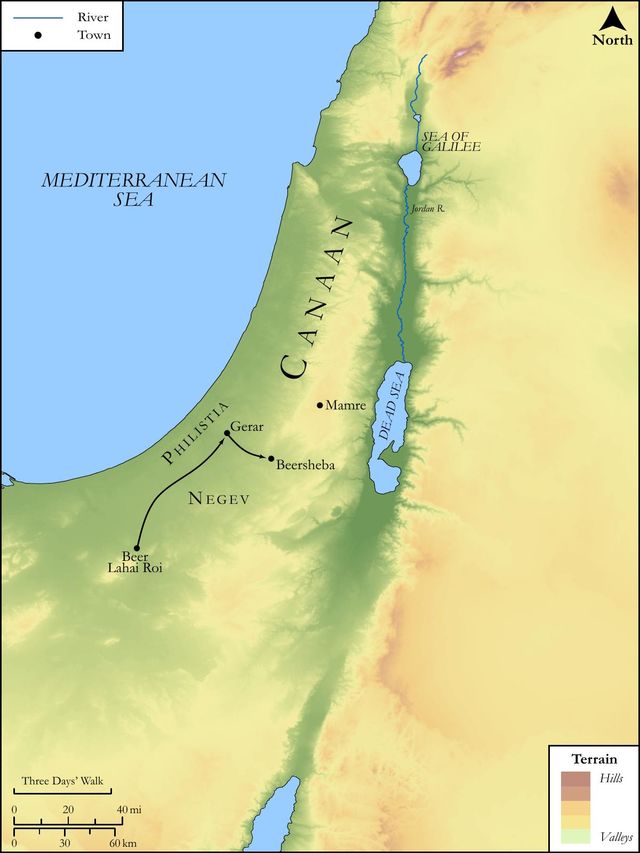
This verse is situated within a significant narrative arc detailing Isaac's experiences during a famine and his interactions with the Philistines. Following God's instruction to remain in Gerar rather than go to Egypt, Isaac sows crops and reaps a hundredfold, leading to immense wealth and a large retinue, as described in Genesis 26:12-14. This prosperity, however, provokes intense envy among the Philistines, culminating in King Abimelech's command for Isaac to depart, stating, "Go from us; for thou art much mightier than we" (Genesis/26-16). Isaac complies, moving from place to place, re-digging wells that his father Abraham had dug, and enduring further contention over water rights. He eventually settles in Beer-sheba, where the Lord graciously appears to him, reaffirming His covenant promises and assuring His presence and blessing (Genesis/26-24). It is after Isaac has established himself in Beer-sheba, a place of divine reassurance and peace, that Abimelech, Phichol (his chief captain), and Ahuzzath (his friend) unexpectedly seek him out, prompting Isaac's pointed question in this verse.
Historical & Cultural Context
In the ancient Near East, water was an indispensable resource, particularly in semi-arid regions like Canaan. Control over wells and springs was crucial for survival, livestock, and agricultural prosperity, often leading to disputes and conflicts, as seen in the repeated contentions over wells in Genesis 26. The Philistines were a settled people with established cities, while Isaac represented a powerful, divinely blessed nomadic group. The concept of a peace treaty or covenant (Hebrew: berith) was common among ancient peoples to secure alliances, resolve disputes, or acknowledge a superior power. Abimelech's visit, accompanied by his chief military commander and a trusted advisor, signifies a formal diplomatic overture, indicating the gravity of their purpose. Their earlier expulsion of Isaac was likely driven by a combination of fear regarding his growing power and envy of his prosperity, reflecting the volatile nature of inter-group relations in that era.
Key Themes
ShowHideThis verse contributes to several overarching themes within Genesis and the broader biblical narrative. It powerfully illustrates the theme of Divine Blessing and Prosperity, showing how God's favor can lead to extraordinary fruitfulness even in challenging circumstances, as seen in Isaac's hundredfold harvest (Genesis/26-12). It also highlights Human Envy and Hostility, as the Philistines' reaction to Isaac's success demonstrates the destructive nature of jealousy. Conversely, the narrative underscores God's Faithfulness and Protection of His covenant people, as He guides Isaac, provides for him, and reaffirms His promises even when Isaac is driven from place to place (Genesis/26-24). Finally, the confrontation reveals the Importance of Discernment and Truthful Confrontation in relationships, as Isaac directly addresses the Philistines' inconsistent behavior.
Exposition and Analysis
ShowHideKey Word Analysis
ShowHideThis interrogative adverb, derived from "what is known," functions here as "why" or "for what reason." Isaac's use of "wherefore" is not a simple request for information but a pointed challenge to their motives, demanding an explanation for their contradictory actions. It highlights the perceived absurdity of their visit given their prior hostility.
This primitive root signifies a deep-seated animosity, aversion, or enmity, not merely a casual dislike. Isaac's choice of this strong verb indicates his understanding that the Philistines' actions—their envy, their disputes over wells, and their ultimate expulsion order—stemmed from a profound ill will rather than just a pragmatic concern about his power. It conveys the severity of their past treatment.
This primitive root means "to send away, for, or out." In this context, it refers to Abimelech's direct command for Isaac to depart from Gerar (Genesis/26-16). Isaac's precise recollection of this active expulsion underscores the Philistines' responsibility for his forced departure and contrasts sharply with their current approach.
Verse Breakdown
ShowHide"And Isaac said unto them"
This phrase establishes Isaac's direct and authoritative stance. He does not send a messenger or delegate, but personally confronts the delegation, signaling the gravity of the encounter and his intent to address their past behavior head-on.
"Wherefore come ye to me"
Isaac's initial question immediately challenges the very premise of their visit. He is not welcoming them but demanding an explanation for their presence, given their previous actions. This rhetorical question sets the stage for exposing their hypocrisy.
"seeing ye hate me"
This clause directly accuses the Philistines of animosity. Isaac articulates his perception of their underlying disposition towards him, rooted in their envy and the subsequent conflicts over resources. He is not afraid to name their past ill will.
"and have sent me away from you?"
This final clause specifies the concrete action that demonstrated their "hate." Isaac reminds them of their explicit command to expel him, highlighting the blatant inconsistency between their past rejection and their present desire to engage with him.
Literary Devices
ShowHideIsaac's confrontation in this verse employs several powerful Literary Devices. The most prominent is the Rhetorical Question, "Wherefore come ye to me, seeing ye hate me, and have sent me away from you?" Isaac is not genuinely seeking information but rather making a forceful point, exposing the blatant Juxtaposition between their past hostility and their present overture of peace. This creates a strong sense of Irony, as the very people who expelled Isaac due to fear of his power are now compelled to seek him out because of that same power, which they now recognize as divinely ordained. Isaac's Direct Address to Abimelech and his retinue, rather than sending a subordinate, underscores the personal nature of the grievance and his courage in rebuking the powerful. The verse also implicitly uses Contrast, highlighting the difference between the Philistines' fickle, self-serving motives and Isaac's consistent walk with God, which resulted in his undeniable prosperity.
Theological and Thematic Connections
ShowHideThis verse powerfully illustrates God's sovereign hand in vindicating His people and turning the tables on their adversaries. Isaac's question forces Abimelech and his company to confront their own hypocrisy and acknowledge the undeniable evidence of God's blessing upon Isaac, even after they sought to diminish him. This scenario demonstrates that God's faithfulness to His covenant promises ensures the prosperity and protection of His chosen ones, compelling even their enemies to recognize His presence among them.
Reflection and Application
ShowHideGenesis 26:27 offers profound insights for believers today, particularly concerning discernment, trust in divine vindication, and the courage to speak truth. Isaac's direct and discerning question to Abimelech reminds us that while forgiveness is a cornerstone of Christian faith, it does not necessitate naiveté. We are called to exercise wisdom in our relationships, especially when those who have previously shown animosity or caused harm suddenly seek reconciliation. It is prudent to discern their true motives and acknowledge past wrongs, not to harbor bitterness, but to ensure that any reconciliation is built on genuine repentance and understanding rather than self-serving convenience. Furthermore, Isaac's story powerfully reassures us that God protects and prospers His people, even in the face of opposition, envy, and unfair treatment. Our ultimate security and vindication rest in His unwavering faithfulness, not in human approval or the absence of conflict. Finally, Isaac's candid confrontation exemplifies the importance of speaking truth with courage and clarity. There are moments when directly addressing past grievances is necessary for authentic healing and understanding, paving the way for true restoration rather than superficial peace.
Questions for Reflection
ShowHideFAQ
ShowHideWhy did Abimelech and his company come to Isaac after sending him away?
ShowHideAbimelech and his company came to Isaac because they had observed God's evident blessing and presence with him. Despite having expelled Isaac due to envy and fear of his growing power, they recognized that God was undeniably with him, stating, "We saw certainly that the Lord was with thee" (Genesis/26-28). Their visit was likely motivated by a desire to secure a peace treaty, fearing Isaac's continued prosperity and God's favor might eventually turn against them, or perhaps hoping to benefit from his presence or prevent future conflict. They sought to formalize a non-aggression pact, acknowledging Isaac's divine backing.
Christ-Centered Fulfillment
ShowHideIsaac's experience in Genesis 26:27 profoundly foreshadows the person and work of Jesus Christ. Just as Isaac, a son of promise and heir to the covenant, was rejected and driven out by those who envied his prosperity and God's evident blessing upon him, so too was Jesus, the ultimate Son of God and the embodiment of God's covenant, rejected and cast out by His own people. The religious leaders of His day, driven by envy and fear of His growing influence and divine authority, conspired to have Him crucified, effectively "sending Him away" from their midst (John/11-47-48). Yet, ultimately, just as Abimelech's company was compelled to acknowledge God's presence with Isaac and seek peace, so too will every knee bow and every tongue confess that Jesus Christ is Lord (Philippians/2-10-11), acknowledging His divine authority and the ultimate triumph of God's plan through Him. Christ's rejection led to His crucifixion, but also to His glorious resurrection and exaltation, making Him the source of true peace and reconciliation for all who come to Him, even those who were once His enemies. He is the rejected cornerstone who became the capstone (1 Peter/2-7), establishing a kingdom that cannot be shaken, a peace far surpassing any earthly treaty.