


Genesis 24:4
- כִּיkiforH3588PrtParticle Conditional
- אֶל'eltoH413PrepPreposition
- אַרְצִי'ar·Tzimy landH776N-csc ¦ 1fsNoun Singular common gender Constructאַרְצִlandיmy
- וְאֶלve·'eland toH413Conj-w ¦ PrepPrepositionוְandאֶלto
- מוֹלַדְתִּיmo·lad·Timy kindredH4138N-fsc ¦ 1csNoun Singular Feminine Constructמוֹלַדְתִּkindredיmy
- תֵּלֵךְte·Lekhyou will goH1980V-Qal-Imperf-2msVerb Qal Imperfect 2nd Singular Masculine
- וְלָקַחְתָּve·la·kach·Taand you will takeH3947Conj-w ¦ V-Qal-ConsecPerf-2msVerb Qal Consecutive Perfect 2nd Singular Masculineוְandלָקַחְתָּyou will take
- אִשָּׁה'i·Shaha wifeH802N-fsNoun Singular Feminine Absolute
- לִבְנִיliv·Nifor my sonH1121Prep-l ¦ N-msc ¦ 1csNoun Singular Masculine Constructלִforבְנִsonיmy
- לְיִצְחָקle·yitz·Chakfor IsaacH3327Prep-l ¦ N-proper-mNoun Proper MasculineלְforיִצְחָקIsaac
English is a literal word-by-word gloss of the Hebrew, not the KJV's wording. Why?
This is the original text the KJV's translators worked from — each Hebrew word with its own literal English meaning in this verse, prepared by scholars at Tyndale House, Cambridge. The KJV translates whole sentences, not word by word, so its wording differs: one Hebrew word can become several English words, and the KJV may choose “the LORD” where the gloss reads “Yahweh”. Both are faithful — they answer different questions. For the KJV's own rendering, switch to the KJV text.
Details
See on the biblical-era maps


Study this verse
Public-domain commentary
Matthew Henry
From his Commentary on the Whole Bible. Henry comments on passages, not single verses — this entry covers Genesis 24:1–9. His two-level outline is real structure in the source text, so it is rendered as structure.
Three things we may observe here concerning Abraham: -
I.The care he took of a good son, to get him married, well married.
It was high time to think of it now, for Isaac was about forty years old, and it had been customary with his ancestors to marry at thirty, or sooner, Gen 11:14, Gen 11:18, Gen 11:22, Gen 11:24. Abraham believed the promise of the building up of his family, and therefore did not make haste; not more haste than good speed. Two considerations moved him to think of it now (Gen 24:1): - 1. That he himself was likely to leave the world quickly, for he was old, and well-stricken in age, and it would be a satisfaction to him to see his son settled before he died; and, 2. That he had a good estate to leave behind him, for the Lord had blessed him in all things; and the blessing of the Lord makes rich. See how much religion and piety befriend outward prosperity. Now Abraham's pious care concerning his son was, (1.) That he should not marry a daughter of Canaan, but one of his kindred. He saw that the Canaanites were degenerating into great wickedness, and knew by revelation that they were designed for ruin, and therefore he would not marry his son among them, lest they should be either a snare to his soul, or at least a blot to his name. (2.) That yet he should not leave the land of Canaan, to go himself among his kindred, not even for the purpose of choosing a wife, lest he should be tempted to settle there. This caution is given Gen 24:6, and repeated, Gen 24:8. "Bring not my son thither again, whatever comes of it. Let him rather want a wife than expose himself to that temptation." Note, Parents in disposing of their children, should carefully consult the welfare of their souls, and their furtherance in the way to heaven. Those who through grace have escaped the corruption that is in the world through lust, and have brought up their children accordingly, should take heed of doing any thing by which they may be again entangled therein and overcome, Pe2 2:20. Beware that you bring them not thither again, Heb 11:15.
II.The charge he gave to a good servant, probably Eliezer of Damascus, one of whose conduct, fidelity, and affection to him and his family, he had had long experience. He trusted him with this great affair, and not Isaac himself, because he would not have Isaac go at all into that country, but marry there by proxy; and no proxy so fit as this steward of his house. This matter is settled between the master and the servant with a great deal of care and solemnity.
1.The servant must be bound by an oath to do his utmost to get a wife for Isaac from among his relations, Gen 24:2-4. Abraham swears him to it, both for his own satisfaction and for the engagement of his servant to all possible care and diligence in this matter. Thus God swears his servants to their work, that, having sworn, they may perform it. Honour is here done to the eternal God; for he it is that is sworn by, to whom alone these appeals ought to be made. And some think honour is done to the covenant of circumcision by the ceremony here used of putting his hand under his thigh. Note, Swearing being an ordinance not peculiar to the church, but common to mankind, is to be performed by such signs as are the appointments and common usages of our country, for binding the person sworn.
2.He must be clear of this oath if, when he had done his utmost, he could not prevail. This proviso the servant prudently inserted (Gen 24:5), putting the case that the woman would not follow him; and Abraham allowed the exception, Gen 24:8. Note, Oaths are to be taken with great caution, and the matter sworn to should be rightly understood and limited, because it is a snare to devour that which is holy, and, after vows, to make the enquiry which should have been made before.
III.The confidence he put in a good God, who, he doubts not, will give his servant success in this undertaking, Gen 24:7.
He remembers that God had wonderfully brought him out of the land of his nativity, by the effectual call of his grace; and therefore doubts not but he will succeed him in his care not to bring his son thither again. He remembers also the promise God had made and confirmed to him that he would give Canaan to his seed, and thence infers that God would own him in his endeavours to match his son, not among those devoted nations, but to one that was fit to be the mother of such a seed. "Fear not therefore; he shall send his angel before thee to make thy way prosperous." Note,
1.Those that carefully keep in the way of duty, and govern themselves by the principles of their religion in their designs and undertakings, have good reason to expect prosperity and success in them. God will cause that to issue in our comfort in which we sincerely aim at his glory.
2.God's promises, and our own experiences, are sufficient to encourage our dependence upon God, and our expectations from him, in all the affairs of this life.
3.God's angels are ministering spirits, sent forth, not only for the protection, but for the guidance, of the heirs of promise, Heb 1:14. "He shall send his angel before thee, and then thou wilt speed well."
Historical interpretation
Historical reception
1 surviving comment on this verse from the historical church.
Do you note the patriarch’s command given to the servant? I mean, don’t pass idly by these words; instead, consider the good man’s purpose, and study how in ancient times their concern was not to look for abundance of possessions, not for great wealth, slaves, so many acres of land, not charm of external beauty—rather, they looked for beauty of soul and nobility of manners.You see, since he saw the wickedness of the inhabitants of Canaan and realized how great a good it is to have a partner of similar manners, he directed his servant and put him under oath to procure a wife for Isaac from his relatives. Neither the distance between the places nor the other difficulties caused him to delay the task. Rather, in the realization of the necessity of the business, he showed all haste in dispatching the servant. For his part, the patriarch acted in this from concern for the soul’s virtue and abhorrence of the wickedness of the [land’s] inhabitants.
Continue studying Genesis 24:4 across the web’s major study libraries — every link below opens this exact verse, chapter, or book on the destination site.
Read & Compare
 BibleGatewayThis verse in more than 200 translations and 70 languages.
 Bible.comThe YouVersion reader — hundreds of translations, reading plans, and highlights.
 ESV.orgCrossway's official English Standard Version reader.
 NET BibleThe NET translation with 60,000+ translators' notes on every rendering decision.
 STEP BibleTyndale House's free study tool — original text, vocabulary, and scholarly resources.
 BibliaLogos Bible Software's free web reader.
 USCCBThe New American Bible (Revised Edition) with the U.S. bishops' study notes.
Commentaries
 BibleHub CommentariesDozens of classic commentaries on this verse, gathered on one page.
 StudyLightMore than 100 commentary sets — the largest collection on the web.
 BibleRefPlain-English commentary on what this verse means, verse by verse.
 Enduring WordDavid Guzik's free commentary on this chapter, widely used by Bible teachers.
 Bible Study ToolsVerse commentary alongside Greek and Hebrew study aids.
Original Language & Research
- BibleHub InterlinearThe verse word by word — original language, transliteration, and English.
- BibleHub LexiconEvery word's original-language definition and Strong's entry.
 Blue Letter BibleDeep-study tools — Strong's numbers, concordance, and word studies.
 SefariaThe Hebrew text with Rashi and centuries of Jewish commentary.
Sermons, Hymns & Audio


TrulyRandomVerse is not affiliated with these sites and doesn’t control their content. They’re linked because they’re genuinely useful.
Summary
Genesis 24:4 records Abraham's pivotal directive to his most trusted servant: to journey to his ancestral homeland and extended family to secure a wife for his son, Isaac. This instruction is not merely a practical arrangement but a profound act of covenantal stewardship, demonstrating Abraham's unwavering commitment to preserving the spiritual purity and integrity of his lineage, thereby ensuring the faithful continuation of God's divine promises through Isaac, the son of promise, distinct from the idolatrous influences of Canaan.
Context
ShowHideLiterary Context
Genesis 24:4 is nestled within a chapter entirely devoted to the crucial mission of finding a wife for Isaac. This narrative follows Abraham's advanced age and his desire to see the covenantal promises secured through his son before his own death, as highlighted in Genesis 24:1. The immediate preceding verses establish Abraham's solemn oath to his chief servant, binding him not to take a wife for Isaac from the daughters of the Canaanites among whom they dwelt (Genesis 24:2-3). Verse 4 then provides the positive command, specifying the desired origin of Isaac's bride: Abraham's own country and kindred. This command sets the stage for the servant's arduous journey and the unfolding of God's providential guidance in the selection of Rebekah, emphasizing the meticulous care taken to ensure the purity and continuity of the promised lineage.
Historical & Cultural Context
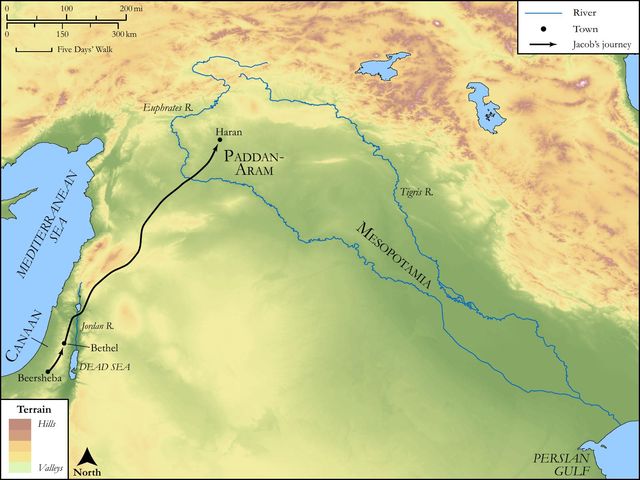
In the ancient Near East, marriage was rarely a matter of individual romantic choice but a strategic alliance, particularly for prominent families. Lineage, family honor, and the continuation of the family name were paramount. Abraham's directive reflects these cultural norms, but with a unique spiritual dimension. Intermarriage with foreign peoples, especially those with different religious practices, was widely understood to pose a threat to cultural and religious identity. The Canaanites, known for their polytheism and morally corrupt practices (e.g., child sacrifice, cultic prostitution), represented a significant spiritual danger to the fledgling covenant community. Abraham's insistence on a bride from his own "country" and "kindred" (Mesopotamia, specifically Haran, where his family had settled after leaving Ur) was a deliberate act to protect Isaac and the future covenant line from the spiritual contamination prevalent in Canaan, ensuring a shared heritage and, implicitly, a shared commitment to the God of Abraham.
Key Themes
ShowHideGenesis 24:4 contributes significantly to several overarching themes within Genesis and the broader biblical narrative. Foremost is the theme of Covenant Fidelity and Preservation, as Abraham acts diligently to ensure the divine promises made to him in Genesis 12:1-3 will continue through Isaac without compromise. This verse also highlights Divine Providence, as Abraham's faith in God's guidance undergirds his specific instructions, foreshadowing the miraculous leading of the servant to Rebekah (e.g., Genesis 24:12-14). The principle of Spiritual Separation is powerfully underscored, emphasizing the importance of remaining distinct from the idolatrous practices of surrounding cultures, a theme that recurs throughout Israel's history (e.g., Deuteronomy 7:3-4). Finally, the verse reinforces the Significance of Lineage and Heritage in God's redemptive plan, demonstrating how personal choices, particularly in marriage, have profound implications for the unfolding of God's purposes for generations to come.
Exposition and Analysis
ShowHideGenesis 24:4 encapsulates Abraham's strategic and spiritual foresight, laying the groundwork for the most detailed marriage narrative in the Old Testament. His precise instructions reveal a deep commitment to the covenant and the future of his promised seed.
Key Word Analysis
ShowHideThis primitive root (H3212) signifies "to walk" or "to go" in a literal or figurative sense. Here, it denotes a purposeful journey, a deliberate undertaking of a significant mission. Abraham's command is not passive; it requires active movement and diligent pursuit, emphasizing the servant's responsibility to embark on a long and challenging expedition.
Derived from the root meaning "to be born," this term (H4138) refers to "nativity," "birth-place," "lineage," or "family." It encompasses both geographical origin and familial ties. Abraham's use of this word underscores his desire for a bride who shares not only a common geographical background but, more importantly, a deep cultural, familial, and spiritual heritage, ensuring continuity of identity and values.
This primitive root (H3947) is broad in its application, meaning "to take," "to accept," "to fetch," or "to acquire." In this context, it refers to the act of securing a wife, implying a formal process of negotiation and arrangement. The servant is commissioned not merely to find, but to "take" or "bring" the chosen woman back, signifying the successful completion of the mission and the formal establishment of the marriage.
Verse Breakdown
ShowHide"But thou shalt go unto my country"
This clause initiates the positive command, contrasting with the preceding negative prohibition against a Canaanite wife. "My country" refers to Mesopotamia, specifically Haran, where Abraham's extended family had settled. This directive emphasizes a return to Abraham's geographical roots, signifying a search within a familiar cultural and potentially spiritual environment, distinct from the land of Canaan.
"and to my kindred"
This phrase further refines the destination, specifying the familial connection. It highlights Abraham's desire for a bride from his own bloodline, ensuring shared heritage, customs, and, crucially, a common understanding of the God of Abraham, thereby safeguarding the spiritual integrity of the covenant line.
"and take a wife unto my son Isaac"
This final clause states the ultimate purpose of the mission. The servant's task is to "take" or acquire a wife, implying a formal arrangement rather than a chance encounter. The recipient, "my son Isaac," underscores the importance of this mission for the continuation of Abraham's lineage and, by extension, the fulfillment of God's promises through the son of promise.
Literary Devices
ShowHideThe verse employs several significant literary devices. The Command/Directive structure is central, as Abraham issues a clear, unambiguous instruction to his servant, highlighting his authority and the critical nature of the mission. There is also an element of Contrast implicit in the verse, as it provides the positive command (go to my country/kindred) immediately after the negative prohibition (do not take from Canaanites), emphasizing the distinct and preferred course of action. Emphasis is achieved through the dual specification of "country" and "kindred," underscoring the comprehensive nature of Abraham's requirements for Isaac's bride. Finally, the narrative employs Foreshadowing, as Abraham's confidence in God's guidance, despite the daunting task, subtly hints at the divine providence that will miraculously lead the servant to Rebekah, demonstrating God's active involvement in the details of His redemptive plan.
Theological and Thematic Connections
ShowHideGenesis 24:4 stands as a testament to Abraham's profound commitment to God's covenant, illustrating how personal decisions, particularly in marriage, are deeply intertwined with divine purposes. Abraham's insistence on a bride from his own kindred, distinct from the Canaanites, establishes a foundational principle of spiritual separation and the importance of preserving the purity of the covenant community. This act reflects a deep understanding that the lineage through which God's promises would be fulfilled must remain untainted by the idolatry and moral corruption of the surrounding cultures. It underscores the belief that God's plan unfolds not just through miraculous intervention but also through the faithful and discerning choices of His people, guided by His revealed will.
Reflection and Application
ShowHideGenesis 24:4 offers timeless wisdom for believers navigating significant life decisions, especially marriage. Abraham's meticulous care in seeking a spouse for Isaac from his own "kindred" underscores the enduring importance of shared faith, values, and spiritual heritage in a life partner. For Christians today, this translates into the imperative to seek a spouse who is a fellow believer, committed to Christ, and aligned with biblical principles, as exhorted in 1 Corinthians 7:39. This ensures a foundation for a unified spiritual journey, where both partners are equally yoked in their pursuit of God. Furthermore, Abraham's proactive involvement in his son's marriage highlights a biblical model of parental guidance and wisdom in crucial life choices, encouraging open communication and seeking counsel from godly mentors. Ultimately, the narrative reminds us to trust in God's sovereign providence, just as Abraham and his servant did, believing that He actively guides those who seek His will, even in the most personal and intricate details of life.
Questions for Reflection
ShowHideFAQ
ShowHideWhy was Abraham so insistent on a wife from his own family and not the Canaanites?
ShowHideAbraham's insistence stemmed from his deep commitment to God's covenant promises and his understanding of the spiritual dangers posed by the Canaanites. The lineage through which the Messiah would ultimately come needed to remain spiritually pure and distinct from the idolatrous and morally corrupt practices of the surrounding cultures. Marrying within his own kindred ensured a shared heritage, a common understanding of the God of Abraham, and a commitment to His covenant, thereby preserving the integrity and spiritual identity of the chosen line. This was a crucial step in safeguarding the unfolding of God's redemptive plan, as explicitly stated in Genesis 24:3 where Abraham forbids a Canaanite wife.
Does Genesis 24:4 suggest that arranged marriages are the only biblical model for marriage?
ShowHideWhile Genesis 24:4 describes an arranged marriage, it does not prescribe it as the only biblical model for all times and cultures. The primary theological lesson of this passage is Abraham's profound concern for a spouse who shared Isaac's spiritual and cultural heritage, ensuring the continuation of the covenant in purity. The emphasis is on the qualities of the partner and the purpose of the marriage within God's plan, rather than the specific method of selection. The passage highlights the importance of parental guidance, seeking God's will, and choosing a partner who shares one's faith and core values, aligning with later biblical principles for believers to marry "only in the Lord" as seen in 1 Corinthians 7:39.
Christ-Centered Fulfillment
ShowHideGenesis 24:4, with its meticulous focus on securing a pure lineage for Isaac, the son of promise, profoundly foreshadows the ultimate Son of Promise, Jesus Christ. Abraham's diligent efforts to ensure a suitable bride for Isaac, thereby preserving the covenant line, underscore God's sovereign and meticulous providence throughout history in preparing the way for the Messiah. Just as God guided Abraham's servant to Rebekah to guarantee the continuation of Abraham's seed, so too did God sovereignly orchestrate every detail of human history, culminating in the birth of Christ, the ultimate heir of the Abrahamic covenant (Galatians 3:16). The purity of the lineage sought here anticipates the sinless nature of Christ, who alone could perfectly fulfill the covenant, offering Himself as the Lamb of God to take away the sin of the world (John 1:29), and through whom all the nations of the earth are blessed and reconciled to God (Ephesians 1:3-10).