


Exodus 2:21
- וַיּוֹאֶלvai·Yo·'eland he was willingH2974Conj-w ¦ V-Hiphil-ConsecImperf-3msVerb Hiphil Consecutive Imperfect 3rd Singular Masculineוַandיּוֹאֶלhe was willing
- מֹשֶׁהmo·ShehMosesH4872N-proper-mNoun Proper Masculine
- לָשֶׁבֶתla·She·vetto dwellH3427Prep-l ¦ V-Qal-InfVerb Qal Infinitive Constructלָtoשֶׁבֶתdwell
- אֶת'etwithH854PrepPreposition
- הָאִישׁha·'Ishthe manH376Art ¦ N-msNoun Singular Masculine Absoluteהָtheאִישׁman
- וַיִּתֵּןvai·yi·Tenand he gaveH5414Conj-w ¦ V-Qal-ConsecImperf-3msVerb Qal Consecutive Imperfect 3rd Singular Masculineוַandיִּתֵּןhe gave
- אֶת'et<obj.>H853DirObjMParticle Object Indicator
- צִפֹּרָהtzi·po·RahZipporahH6855N-proper-fNoun Proper Feminine
- בִתּוֹvi·Tohis daughterH1323N-fsc ¦ 3msNoun Singular Feminine Constructבִתּdaughterוֹhis
- לְמֹשֶׁהle·mo·Shehto MosesH4872Prep-l ¦ N-proper-mNoun Proper MasculineלְtoמֹשֶׁהMoses
English is a literal word-by-word gloss of the Hebrew, not the KJV's wording. Why?
This is the original text the KJV's translators worked from — each Hebrew word with its own literal English meaning in this verse, prepared by scholars at Tyndale House, Cambridge. The KJV translates whole sentences, not word by word, so its wording differs: one Hebrew word can become several English words, and the KJV may choose “the LORD” where the gloss reads “Yahweh”. Both are faithful — they answer different questions. For the KJV's own rendering, switch to the KJV text.
Details
See on the biblical-era maps

Study this verse
Public-domain commentary
Matthew Henry
From his Commentary on the Whole Bible. Henry comments on passages, not single verses — this entry covers Exodus 2:16–22. His four-level outline is real structure in the source text, so it is rendered as structure.
Moses here gains a settlement in Midian, just as his father Jacob had gained one in Syria, Gen 29:2, etc. And both these instances should encourage us to trust Providence, and to follow it. Events that seem inconsiderable, and purely accidental, afterwards appear to have been designed by the wisdom of God for very good purposes, and of great consequence to his people. A casual transient occurrence has sometimes occasioned the greatest and happiest turns of a man's life. Observe,
I.Concerning the seven daughters of Reuel the priest or prince of Midian.
1.They were humble, and very industrious, according as the employment of the country was: they drew water for their father's flock, Exo 2:16. If their father was a prince, it teaches us that even those who are honourably born, and are of quality and distinction in their country, should yet apply themselves to some useful business, and what their hand finds to do do it with all their might. Idleness can be no one's honour. If their father was a priest, it teaches us that ministers' children should, in a special manner, be examples of humility and industry.
2.They were modest, and would not ask this strange Egyptian to come home with them (though handsome and a great courtier), till their father sent for him. Modesty is the ornament of woman.
II.Concerning Moses.
He was taken for an Egyptian (Exo 2:19); and strangers must be content to be the subjects of mistake; but it is observable,
1.How ready he was to help Reuel's daughters to water their flocks. Though bred in learning and at court, yet he knew how to turn his hand to such an office as this when there was occasion; nor had he learned of the Egyptians to despise shepherds. Note, Those that have had a liberal education yet should not be strangers to servile work, because they know not what necessity Providence may put them in of working for themselves, or what opportunity Providence may give them of being serviceable to others. These young women, it seems, met with some opposition in their employment, more than they and their servants could conquer; the shepherds of some neighbouring prince, as some think, or some idle fellows that called themselves shepherds, drove away their flocks; but Moses, though melancholy and in distress, stood up and helped them, not only to get clear of the shepherds, but, when that was done, to water the flocks. This he did, not only in complaisance to the daughters of Reuel (though that also did very well become him), but because, wherever he was, as occasion offered itself,
(1.)He loved to be doing justice, and appearing in the defence of such as he saw injured, which every man ought to do as far as it is in the power of his hand to do it.
(2.)He loved to be doing good. Wherever the Providence of God casts us we should desire and endeavour to be useful; and, when we cannot do the good we would, we must be ready to do the good we can. And he that is faithful in a little shall be entrusted with more.
2.How well he was paid for his serviceableness. When the young women acquainted their father with the kindnesses they had received from this stranger, he sent to invite him to his house, and made much of him, Exo 2:20. Thus God will recompense the kindnesses which are at any time shown to his children; they shall in no wise lose their reward. Moses soon recommended himself to the esteem and good affection of this prince of Midian, who took him into his house, and, in process of time, married one of his daughters to him (Exo 2:21), by whom he had a son, whom he called Gershom, a stranger there (Exo 2:22), that if ever God should give him a home of his own he might keep in remembrance the land in which he had been a stranger. Now this settlement of Moses in Midian was designed by Providence,
(1.)To shelter him for the present. God will find hiding-places for his people in the day of their distress; nay, he will himself be to them a little sanctuary, and will secure them, either under heaven or in heaven. But,
(2.)It was also designed to prepare him for the great services he was further designed for. His manner of life in Midian, where he kept the flock of his father-in-law (having none of his own to keep), would be of use to him,
[1.]To inure him to hardship and poverty, that he might learn how to want as well as how to abound. Those whom God intends to exalt he first humbles.
[2.]To inure him to contemplation and devotion. Egypt accomplished him as a scholar, a gentleman, a statesman, a soldier, all which accomplishments would be afterwards of use to him; but yet he lacked one thing, in which the court of Egypt could not befriend him. He that was to do all by divine revelation must know, by a long experience, what it was to live a life of communion with God; and in this he would be greatly furthered by the solitude and retirement of a shepherd's life in Midian. By the former he was prepared to rule in Jeshurun, but by the latter he was prepared to converse with God in Mount Horeb, near which mount he had spent much of his time. Those that know what it is to be alone with God in holy exercises are acquainted with better delights than ever Moses tasted in the court of Pharaoh.
Continue studying Exodus 2:21 across the web’s major study libraries — every link below opens this exact verse, chapter, or book on the destination site.
Read & Compare
 BibleGatewayThis verse in more than 200 translations and 70 languages.
 Bible.comThe YouVersion reader — hundreds of translations, reading plans, and highlights.
 ESV.orgCrossway's official English Standard Version reader.
 NET BibleThe NET translation with 60,000+ translators' notes on every rendering decision.
 STEP BibleTyndale House's free study tool — original text, vocabulary, and scholarly resources.
 BibliaLogos Bible Software's free web reader.
 USCCBThe New American Bible (Revised Edition) with the U.S. bishops' study notes.
Commentaries
 BibleHub CommentariesDozens of classic commentaries on this verse, gathered on one page.
 StudyLightMore than 100 commentary sets — the largest collection on the web.
 BibleRefPlain-English commentary on what this verse means, verse by verse.
 Enduring WordDavid Guzik's free commentary on this chapter, widely used by Bible teachers.
 Bible Study ToolsVerse commentary alongside Greek and Hebrew study aids.
Original Language & Research
- BibleHub InterlinearThe verse word by word — original language, transliteration, and English.
- BibleHub LexiconEvery word's original-language definition and Strong's entry.
 Blue Letter BibleDeep-study tools — Strong's numbers, concordance, and word studies.
 SefariaThe Hebrew text with Rashi and centuries of Jewish commentary.
Sermons, Hymns & Audio


TrulyRandomVerse is not affiliated with these sites and doesn’t control their content. They’re linked because they’re genuinely useful.
Summary
Exodus 2:21 marks a pivotal moment in Moses' life, detailing his decision to settle in Midian and the establishment of his new family. After fleeing Egypt, Moses finds refuge and purpose in the household of Reuel, the priest of Midian, where he willingly agrees to dwell. This contentment leads to Reuel giving his daughter, Zipporah, to Moses in marriage, cementing his place within the Midianite community and initiating a crucial period of preparation for his divine calling.
Context
ShowHideLiterary Context
Exodus 2:21 follows immediately after Moses' dramatic flight from Egypt, precipitated by his killing of an Egyptian and the subsequent discovery of this act by Pharaoh. Verses 15-20 describe Moses' arrival in Midian, his encounter with Reuel's seven daughters at a well, and his courageous intervention to protect them from hostile shepherds. His kindness and strength impressed Reuel, who, upon hearing of Moses' actions, invited him into his home. This verse, therefore, signifies the culmination of this initial interaction, transitioning Moses from a fugitive seeking temporary refuge to a settled member of a new household and community. It sets the stage for the next forty years of Moses' life, a period of quiet preparation before his encounter with God at the burning bush in Exodus 3.
Historical & Cultural Context
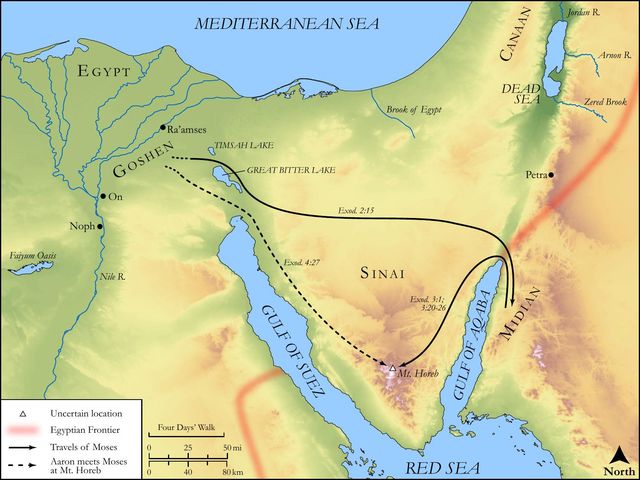
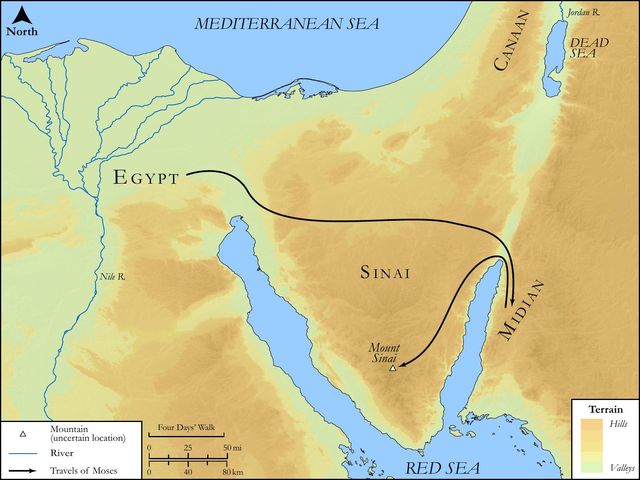
Midian was a region east of the Gulf of Aqaba, inhabited by nomadic or semi-nomadic tribes, possibly related to Abraham through Keturah (Genesis 25:1-2). The practice of a man being welcomed into a family and marrying a daughter as a sign of acceptance and integration was common in ancient Near Eastern cultures. Reuel, identified as a "priest of Midian," suggests a respected tribal leader who also held religious authority, indicating the spiritual and social standing of the family Moses was joining. Moses' transition from the sophisticated, polytheistic court of Egypt to the simpler, possibly monotheistic or henotheistic, pastoral life in Midian would have been a profound cultural shift, shaping his understanding of God and leadership.
Key Themes
ShowHideThis verse contributes significantly to several overarching themes in Exodus. It highlights Divine Providence, demonstrating God's unseen hand guiding Moses to a safe haven and providing for his needs, even in exile, preparing him for his future role as Israel's deliverer. The theme of Preparation and Formation is central, as Moses' forty years in Midian as a shepherd, a seemingly ordinary existence, would hone the patience, humility, and leadership skills necessary to shepherd a rebellious nation through the wilderness. Furthermore, it introduces the theme of New Beginnings for Moses, signifying a fresh start after a traumatic past, and foreshadows God's faithfulness in establishing new covenants and relationships, as seen later with Israel at Sinai Exodus 19.
Exposition and Analysis
ShowHideKey Word Analysis
ShowHideThis word signifies more than passive acceptance; it denotes a willingness, a positive assent, or even an undertaking as an act of volition. Moses was not merely resigned but actively pleased or willing to settle. This suggests a deep sense of peace and acceptance of his new circumstances, a stark contrast to his tumultuous past and flight from Egypt. It implies a conscious decision to embrace the stability offered by Reuel's household.
This root means "to sit down," "to remain," or "to inhabit." In this context, it implies settling permanently, establishing a home, and becoming a resident. Coupled with "content," it indicates a profound sense of belonging and the formation of roots in Midian, signifying a long-term commitment rather than a temporary stay. It also carries the nuance of "marrying," which is fulfilled in the latter part of the verse.
This is a very broad verb meaning "to give," "to put," or "to place." Here, it specifically refers to the act of giving a daughter in marriage, a formal and binding arrangement in ancient Near Eastern culture. This act by Reuel signifies the complete acceptance of Moses into his family and the establishment of a formal covenant relationship through marriage.
Verse Breakdown
ShowHide"And Moses was content to dwell with the man"
This clause reveals Moses' emotional and practical state. After his dramatic flight from Egypt and the uncertainty of his future, Moses finds a measure of peace, security, and belonging in Reuel's household. The term "content" (Hebrew, yâʼal') implies a willing and agreeable disposition, suggesting that Moses actively chose to embrace this new life. His decision to "dwell" (Hebrew, yâshab') signifies a commitment to settle down and establish roots, moving beyond his status as a mere refugee. "The man" refers to Reuel, the priest of Midian, who had welcomed Moses into his home after the incident at the well.
"and he gave Moses Zipporah his daughter"
This second clause describes the formalization of Moses' integration into Reuel's family through marriage. Reuel, in an act of hospitality and perhaps recognition of Moses' character and assistance, bestowed his daughter Zipporah upon Moses. This act of "giving" (Hebrew, nâthan') signifies a binding marital covenant, solidifying Moses' new identity and place within the Midianite community. This union with Zipporah would become foundational for Moses' personal life and would later play a significant role in his return to Egypt (Exodus 4:24-26).
Literary Devices
ShowHideThe verse employs Narrative Progression to mark a significant turning point in Moses' life, moving him from a state of flight and uncertainty to one of stability and integration. The use of Contrast is implicit, juxtaposing Moses' former life as an Egyptian prince and his recent traumatic escape with the newfound peace and domesticity in Midian. This shift highlights God's Providence, subtly indicating His unseen hand guiding Moses to this specific place and family for future purposes. The naming of Zipporah introduces a new character who will play a role in the unfolding narrative, contributing to the development of Moses' personal story.
Theological and Thematic Connections
ShowHideExodus 2:21 powerfully illustrates God's sovereign care and meticulous preparation of His chosen instruments. Even in what appears to be a period of exile and obscurity, God is actively at work, shaping Moses' character, providing for his needs, and establishing the foundational relationships necessary for his future leadership. Moses' contentment in Midian demonstrates the spiritual principle of finding peace and purpose in God's present provision, even when it deviates from human expectations or previous life experiences. This period of quiet, domestic life, far from the grandeur of Pharaoh's court, served as a crucial training ground, teaching Moses humility, patience, and the practical skills of shepherding, which would prove invaluable in leading the Israelites through the wilderness.
Reflection and Application
ShowHideExodus 2:21 offers profound lessons for believers navigating seasons of transition, waiting, or apparent insignificance. Moses' journey reminds us that God's preparation often occurs in unexpected places and through seemingly ordinary circumstances. We are encouraged to cultivate a spirit of contentment and trust in God's sovereign plan, even when our lives take unforeseen turns or when our current circumstances seem far removed from our aspirations. This verse challenges us to embrace the present moment, recognizing that God is always at work, shaping our character and preparing us for His purposes, even in periods of quiet obscurity. It also underscores the divine provision of community and relationships, reminding us to cherish those God brings into our lives as sources of support, growth, and stability.
Questions for Reflection
ShowHideFAQ
ShowHideWho was "the man" Moses was content to dwell with?
ShowHide"The man" refers to Reuel, also known as Jethro, the priest of Midian and father of Zipporah. He is first identified as Reuel in Exodus 2:18, and later, he is predominantly referred to as Jethro, particularly when he advises Moses on judicial matters in Exodus 18.
Why was Moses "content" to dwell in Midian after being a prince in Egypt?
ShowHideMoses' contentment (Hebrew, yâʼal') was a profound shift from his previous life. After fleeing Egypt as a fugitive, fearing for his life following his act of defending an Israelite (Exodus 2:11-15), finding a safe haven, a welcoming family, and a sense of belonging in Reuel's household offered immense peace and stability. This new, simpler existence provided a much-needed respite and a foundation for a new chapter, allowing him to willingly embrace his new circumstances, far from the dangers and pressures of Pharaoh's court.
What is the significance of Moses marrying Zipporah?
ShowHideThe marriage to Zipporah was profoundly significant. It formally integrated Moses into the Midianite community, providing him with a family and a home for the next forty years. This union was not merely a social arrangement but part of God's sovereign plan, establishing a domestic foundation for Moses and preparing him through the quiet, humble work of shepherding for his future role as the leader of Israel. Zipporah herself would later play a crucial, life-saving role during Moses' return to Egypt (Exodus 4:24-26).
Christ-Centered Fulfillment
ShowHideMoses' journey in Exodus 2:21, marked by a period of exile, humble service, and the establishment of a new family in a foreign land, profoundly foreshadows aspects of Christ's life and redemptive work. Just as Moses, a deliverer, was rejected by his own people and found refuge outside the familiar, so too Christ "came to His own, and His own did not receive Him" (John 1:11). Yet, in His "hidden years" and humble beginnings in Nazareth, Jesus was being prepared for His ultimate mission, much like Moses' forty years in Midian honed him for leadership. Furthermore, Moses' new family with Zipporah in Midian can be seen as a beautiful type of the new spiritual family, the Church, that Christ establishes through His redemptive work. Through faith in Him, believers from every tribe and nation are brought into a new covenant relationship with God, transcending earthly distinctions (Galatians 3:28). In Christ, we find true contentment, not in earthly circumstances, but in our secure identity as children of God, members of His eternal household, and co-heirs with Him (Romans 8:17).