


2 Kings 16:11
- וַיִּבֶןvai·Yi·venand he builtH1129Conj-w ¦ V-Qal-ConsecImperf-3msVerb Qal Consecutive Imperfect 3rd Singular Masculineוַandיִּבֶןhe built
- אוּרִיָּה'u·ri·YahUriahH223N-proper-mNoun Proper Masculine
- הַכֹּהֵןha·ko·Henthe priestH3548Art ¦ N-msNoun Singular Masculine Absoluteהַtheכֹּהֵןpriest
- אֶת'et<obj.>H853DirObjMParticle Object Indicator
- הַמִּזְבֵּחַha·miz·Be·achthe altarH4196Art ¦ N-msNoun Singular Masculine Absoluteהַtheמִּזְבֵּחַaltar
- כְּכֹלke·Kholaccording to allH3605Prep-k ¦ N-msNoun Singular Masculine Absoluteכְּaccording toכֹלall
- אֲשֶׁר'a·SherthatH834RelParticle Relative
- שָׁלַחsha·Lachhe had sentH7971V-Qal-Perf-3msVerb Qal Perfect 3rd Singular Masculine
- הַמֶּלֶךְha·Me·lekhthe kingH4428Art ¦ N-msNoun Singular Masculine Absoluteהַtheמֶּלֶךְking
- אָחָז'a·ChazAhazH271N-proper-mNoun Proper Masculine
- מִדַּמֶּשֶׂקmi·da·Me·sekfrom DamascusH1834Prep-m ¦ N-properNoun Proper LocationמִfromדַּמֶּשֶׂקDamascus
- כֵּןkensoH3651AdvAdverb
- עָשָׂה'a·Sahhe didH6213V-Qal-Perf-3msVerb Qal Perfect 3rd Singular Masculine
- אוּרִיָּה'u·ri·YahUriahH223N-proper-mNoun Proper Masculine
- הַכֹּהֵןha·ko·Henthe priestH3548Art ¦ N-msNoun Singular Masculine Absoluteהַtheכֹּהֵןpriest
- עַד'aduntilH5704PrepPreposition
- בּוֹאBo'cameH935V-Qal-InfVerb Qal Infinitive Construct
- הַמֶּלֶךְha·Me·lekhthe kingH4428Art ¦ N-msNoun Singular Masculine Absoluteהַtheמֶּלֶךְking
- אָחָז'a·ChazAhazH271N-proper-mNoun Proper Masculine
- מִדַּמָּשֶׂקmi·da·Ma·sekfrom DamascusH1834Prep-m ¦ N-properNoun Proper LocationמִfromדַּמָּשֶׂקDamascus
English is a literal word-by-word gloss of the Hebrew, not the KJV's wording. Why?
This is the original text the KJV's translators worked from — each Hebrew word with its own literal English meaning in this verse, prepared by scholars at Tyndale House, Cambridge. The KJV translates whole sentences, not word by word, so its wording differs: one Hebrew word can become several English words, and the KJV may choose “the LORD” where the gloss reads “Yahweh”. Both are faithful — they answer different questions. For the KJV's own rendering, switch to the KJV text.
Details
See on the biblical-era map
Study this verse
Public-domain commentary
Matthew Henry
From his Commentary on the Whole Bible. Henry comments on passages, not single verses — this entry covers 2 Kings 16:10–16. His two-level outline is real structure in the source text, so it is rendered as structure.
Though Ahaz had himself sacrificed in high places, on hills, and under every green tree (Kg2 16:4), yet God's altar had hitherto continued in its place and in use, and the king's burnt-offering and his meat-offering (Kg2 16:15) had been offered upon it by the priests that attended it; but here we have it taken away by wicked Ahaz, and another altar, an idolatrous one, put in the room of it - a bolder stroke than the worst of the kings had yet given to religion. We have here,
I.The model of this new altar, taken from one at Damascus, by the king himself, Kg2 16:10.
The king of Assyria having taken Damascus, thither Ahaz went, to congratulate him on his success, to return him thanks for the kindness he had done him by this expedition, and, as his servant and son, to receive his commands. Had he been faithful to his God, he would not have needed to crouch thus meanly to a foreign power. At Damascus, either while viewing the rarities of the place, or rather while joining with them in their devotions (for, when he was there, he thought it no harm to do as they did), he saw an altar that pleased his fancy extremely, not such a plain old-fashioned one as that which he had been trained up in attendance upon at Jerusalem, but curiously carved, it is likely, and adorned with image-work; there were many pretty things about it which he thought significant, surprising, very charming, and calculated to excite his devotion. Solomon had but a dull fancy, he thought, compared with the ingenious artist that made this altar. Nothing will serve him but he must have an altar just like this: a pattern of it must be taken immediately; he cannot stay till he returns himself, but sends it before him in all haste, with orders to Urijah the priest to get one made exactly according to this model and have it ready against he came home. The pattern God showed to Moses in the mount or to David by the Spirit was not comparable to this pattern sent from Damascus. The hearts of idolaters walked after their eyes, which are therefore said to go a whoring after their idols; but the true worshippers worship the true God by faith.
II.The making of it by Urijah the priests, Kg2 16:11.
This Urijah, it is likely, was the chief priest who at this time presided in the temple-service. To him Ahaz sent an intimation of his mind (for we read not of any express orders he gave him), to get an altar made by this pattern. And, without any dispute or objection, he put it in hand immediately, being perhaps as fond of it as the king was, at least being very willing to humour the king and desirous to curry favour with him. Perhaps he might have this excuse for gratifying the king herein, that, by this means, he might keep him to the temple at Jerusalem and prevent his totally deserting it for the high places and the groves. "Let us oblige him in this," thinks Urijah, "and then he will bring all his sacrifices to us; for by this craft we get our living." But, whatever pretence he had, it was a most base wicked thing for him that was a priest, a chief priest, to make this altar, in compliance with an idolatrous prince, for hereby,
1.He prostituted his authority and profaned the crown of his priesthood, making himself a servant to the lusts of men. There is not a greater disgrace to the ministry than obsequiousness to such wicked commands as this was.
2.He betrayed his trust. As priest, he was bound to maintain and defend God's institutions, and to oppose and witness against all innovations; and, for him to assist and serve the king in setting up an altar to confront the altar which by divine appointment he was consecrated to minister at, was such a piece of treachery and perfidiousness as may justly render him infamous to all posterity. Had he only connived at the doing of it, - had he been frightened into it by menaces, - had he endeavoured to dissuade the king from it, or but delayed the doing of it till he came home, that he might first talk with him about it, - it would not have been so bad; but so willingly to walk after his commandment, as if he were glad of the opportunity to oblige him, was such an affront to the God he served as was utterly inexcusable.
III.The dedicating of it.
Urijah, perceiving that the king's heart was much upon it, took care to have it ready against he came down, and set it near the brazen altar, but somewhat lower and further from the door of the temple. The king was exceedingly pleased with it, approached it with all possible veneration, and offered thereon his burnt-offering, etc., Kg2 16:12, Kg2 16:13. His sacrifices were not offered to the God of Israel, but to the gods of Damascus (as we find Ch2 28:23), and, when he borrowed the Syrians' altar, no marvel that he borrowed their gods. Naaman, the Syrian, embraced the God of Israel when he got earth from the land of Israel to make an altar of.
IV.The removal of God's altar, to make room for it.
Urijah was so modest that he put this altar at the lower end of the court, and left God's altar in its place, between this and the house of the Lord, Kg2 16:14. But that would not satisfy Ahaz; he removed God's altar to an obscure corner in the north side of the court, and put his own before the sanctuary, in the place of it. He thinks his new altar is much more stately, and much more sightly, and disgraces that; and therefore "let that be laid aside as a vessel in which there is no pleasure." His superstitious invention, at first, jostled with God's sacred institution, but at length jostled it out. Note, Those will soon come to make nothing of God that will not be content to make him their all. Ahaz durst not (perhaps for fear of the people) quite demolish the brazen altar and knock it to pieces; but, while he ordered all the sacrifices to be offered upon this new altar (Kg2 16:15), The brazen altar (says he) shall be for me to enquire by. Having thrust it out from the use for which it was instituted, which was to sanctify the gifts offered upon it, he pretends to advance it above its institution, which it is common for superstitious people to do. The altar was never designed for an oracle, yet Ahaz will have it for that use. The Romish church seemingly magnifies Christ's sacraments, yet wretchedly corrupts them. But some give another sense of Ahaz's purpose: "As for the brazen altar, I will consider what to do with it, and give order about it." The Jews say that, afterwards, of the brass of it he made that famous dial which was called the dial of Ahaz, Kg2 20:11. The base compliance of the poor-spirited priest with the presumptuous usurpations of an ill-spirited king is again taken notice of (Kg2 16:16): Urijah the priest did according to all that king Ahaz commanded. Miserable is the case of great men when those that should reprove them for their sins strengthen and serve them in their sins.
Historical interpretation
Historical reception
1 surviving comment on this verse from the historical church.
“And when you say, ‘Why did the Lord God do all of these bad things to us?’ And you will say to them, ‘As you have forsaken me and served other gods in your land, so you shall serve in a land not your own.’ ” Let one consider the literal sense, and it will suffice at the present to refresh the memory from the literal sense for those who can understand. Surely then, the people of Israel possessed the holy land, the temple, the house of prayer. They ought to have served God, but when they transgressed the divine commandments they served idols, both the idols acquired from Damascus, as it is written in Kings, and the other idols brought from other pagan nations into the holy land. Due to the fact that they received these pagan idols, they made themselves worthy to be rejected to the land of the idols, to dwell there where they worship the idols.
Continue studying 2 Kings 16:11 across the web’s major study libraries — every link below opens this exact verse, chapter, or book on the destination site.
Read & Compare
 BibleGatewayThis verse in more than 200 translations and 70 languages.
 Bible.comThe YouVersion reader — hundreds of translations, reading plans, and highlights.
 ESV.orgCrossway's official English Standard Version reader.
 NET BibleThe NET translation with 60,000+ translators' notes on every rendering decision.
 STEP BibleTyndale House's free study tool — original text, vocabulary, and scholarly resources.
 BibliaLogos Bible Software's free web reader.
 USCCBThe New American Bible (Revised Edition) with the U.S. bishops' study notes.
Commentaries
 BibleHub CommentariesDozens of classic commentaries on this verse, gathered on one page.
 StudyLightMore than 100 commentary sets — the largest collection on the web.
 BibleRefPlain-English commentary on what this verse means, verse by verse.
 Enduring WordDavid Guzik's free commentary on this chapter, widely used by Bible teachers.
 Bible Study ToolsVerse commentary alongside Greek and Hebrew study aids.
Original Language & Research
- BibleHub InterlinearThe verse word by word — original language, transliteration, and English.
- BibleHub LexiconEvery word's original-language definition and Strong's entry.
 Blue Letter BibleDeep-study tools — Strong's numbers, concordance, and word studies.
 SefariaThe Hebrew text with Rashi and centuries of Jewish commentary.
Sermons, Hymns & Audio


TrulyRandomVerse is not affiliated with these sites and doesn’t control their content. They’re linked because they’re genuinely useful.
Summary
2 Kings 16:11 meticulously records a pivotal act of profound religious apostasy and priestly compromise during the tumultuous reign of King Ahaz of Judah. This verse details the swift, unquestioning obedience of Urijah the priest to King Ahaz's impious command: to construct an exact replica of a pagan altar encountered in Damascus, integrating this foreign structure into the sacred precinct of the Jerusalem Temple before the king's return. This act represents a deliberate defilement of Yahweh's prescribed worship, a shocking failure of spiritual leadership, and a dangerous precedent that accelerated Judah's spiritual decline into syncretism and idolatry.
CONTEXT
ShowHideLiterary Context: This verse is deeply embedded within the narrative of King Ahaz's reign (2 Kings 16), a period characterized by unprecedented spiritual decline and desperate political maneuvering in Judah. Immediately preceding this verse, 2 Kings 16:10 recounts King Ahaz's visit to Damascus, likely to pay homage to Tiglath-Pileser III of Assyria after the Assyrian conquest of the city. While there, Ahaz was captivated by the design of a foreign altar and, in an astonishing act of religious betrayal, sent its precise dimensions and specifications back to Jerusalem, ordering Urijah the priest to build an exact replica. Verse 11 then records Urijah's immediate and complete compliance, constructing the altar even before Ahaz's return. The subsequent verses, 2 Kings 16:12-16, detail Ahaz's further desecration of the Temple upon his return, offering sacrifices on the new, foreign altar and reconfiguring the Temple's sacred vessels and structures to accommodate his syncretistic worship, thereby displacing the divinely ordained bronze altar. This sequence highlights Ahaz's deliberate rejection of Yahweh's exclusive worship and Urijah's complicity in this profound apostasy, setting the stage for Judah's spiritual decay.
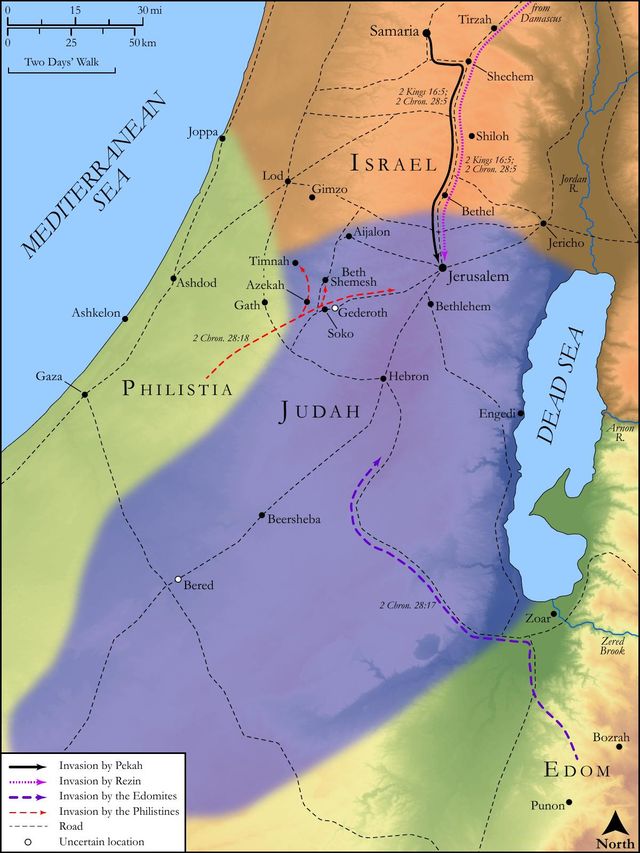
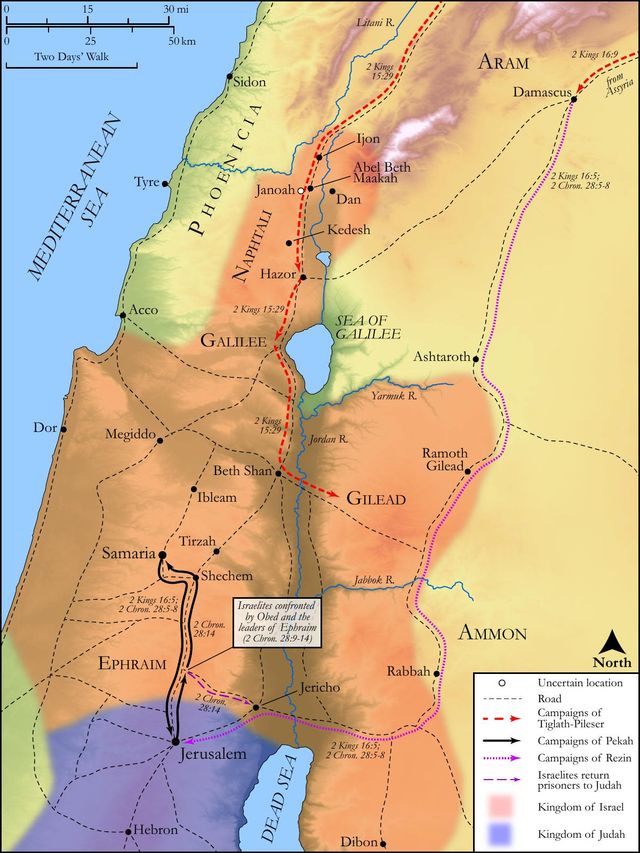
Historical & Cultural Context: King Ahaz reigned over Judah from approximately 735-715 BC, a tumultuous era dominated by the burgeoning power of the Neo-Assyrian Empire. Faced with the Syro-Ephraimite coalition (Rezin of Aram-Damascus and Pekah of Israel) threatening Jerusalem, Ahaz, contrary to the prophet Isaiah's counsel to trust solely in the Lord (Isaiah 7:1-9), instead sought a strategic alliance with Tiglath-Pileser III of Assyria (as seen in 2 Kings 16:7-9). His journey to Damascus, a major cultic center for the Arameans, was likely a vassal's homage to the Assyrian king following the city's fall. In this geopolitical context, Ahaz's fascination with a pagan altar and his command to replicate it in Jerusalem was far more than an aesthetic preference; it was a profound act of political and religious syncretism. It symbolized Judah's submission to Assyrian dominance, extending even to the adoption of their deities or worship styles, a common practice in the ancient Near East where a nation's gods were seen as intrinsically linked to its political power and success. This act directly violated the Mosaic Law's explicit prohibitions against idolatry and the introduction of foreign altars or worship practices (Exodus 20:4-5; Deuteronomy 12:2-4).
Key Themes:
Exposition and Analysis
ShowHideKey Word Analysis
ShowHideA primitive root meaning "to build (literally and figuratively); (begin to) build(-er), obtain children, make, repair, set (up), [idiom] surely." Here, it describes Urijah's physical act of constructing the altar. However, in this context, bânâh carries a negative theological weight, as Urijah is building something anathema to Yahweh's worship, effectively establishing a monument to foreign influence and idolatry within the sacred space. It is an act of construction that paradoxically leads to spiritual deconstruction and the dismantling of pure worship.
Derived from the verb "to sacrifice" (זָבַח, zabach), an altar is fundamentally a place of sacrifice and worship. In Israelite worship, the altar was central to atonement and communion with God, representing the divinely appointed means of drawing near to Him. However, the altar Urijah built was not for Yahweh's prescribed worship but was a copy of a pagan design, intended for syncretistic practices. Thus, mizbêach here signifies a profound perversion of its true purpose, transforming a sacred instrument into a symbol of apostasy and rebellion against the one true God.
A primitive root meaning "to do or make, in the broadest sense and widest application." In this context, ʻâsâh refers to Urijah's active and complete execution of Ahaz's command. The repetition of Urijah's action ("built" and "made") emphasizes his full and deliberate compliance. The speed with which he "made it against king Ahaz came" (i.e., before Ahaz returned) underscores his eagerness and lack of resistance, implying a desire to please the king rather than honor God, thereby making him an active participant in the king's sin.
Verse Breakdown
ShowHide"And Urijah the priest built an altar"
This initial clause immediately identifies the central agent of the action: Urijah, explicitly named "the priest." This designation is crucial, as it highlights his divinely appointed role as guardian of the Temple and its sacred worship. His act of building this specific altar is a profound betrayal of that sacred trust, transforming him from a spiritual leader into an instrument of royal apostasy and defilement.
"according to all that king Ahaz had sent from Damascus"
This phrase emphasizes the meticulous nature of Ahaz's command and Urijah's precise obedience. Ahaz had sent detailed specifications, indicating his deliberate intent to replicate the foreign altar exactly. Urijah's adherence to "all that" Ahaz sent highlights his complete and unreserved submission to the king's unholy will, leaving no room for theological discernment, prophetic resistance, or adherence to divine law.
"so Urijah the priest made [it] against king Ahaz came from Damascus"
This concluding clause reinforces Urijah's swiftness and eagerness in fulfilling the king's impious decree. The phrase "against king Ahaz came" (meaning "before King Ahaz came") indicates that the altar was completed prior to the king's return. This remarkable speed suggests a desire to please the king, perhaps out of fear, ambition, or a profound spiritual apathy, rather than a sense of duty to God. It portrays a priesthood that has tragically lost its prophetic voice and its foundational commitment to Yahweh's exclusive worship.
Literary Devices
ShowHideThe passage employs several potent literary devices to underscore its theological critique. Irony is profoundly prominent, as Urijah, "the priest"—one whose very office should embody faithfulness to Yahweh and the purity of the Temple—becomes the primary instrument of its defilement. His name, "Urijah," meaning "Yahweh is my light," stands in stark contrast to his actions, which plunge the nation further into spiritual darkness and compromise. The foreign altar itself functions as powerful symbolism, representing not only Ahaz's personal apostasy and his embrace of paganism but also Judah's political subservience to Assyria and its spiritual capitulation to foreign influences. The swiftness of Urijah's obedience, emphasized by the phrase "against king Ahaz came from Damascus," creates a palpable sense of urgency and highlights the complete absence of any moral, spiritual, or prophetic resistance, tragically underscoring the depth of the spiritual decay within the religious establishment.
Theological and Thematic Connections
ShowHideThe narrative of 2 Kings 16:11 serves as a stark theological warning against the insidious dangers of syncretism and the devastating consequences of compromising divine truth for political expediency or human approval. It underscores the critical importance of pure worship, which must be defined exclusively by God's commands rather than human preferences, cultural trends, or foreign influences. The abject failure of Urijah the priest illustrates the devastating consequences when spiritual leaders abandon their prophetic responsibility to uphold God's word, instead becoming subservient to worldly powers and human agendas. This passage highlights the constant tension between unwavering loyalty to God's covenant and the pervasive temptation to conform to the surrounding culture, a tension that permeates much of Israel's history and remains profoundly relevant for believers today, calling for vigilance against spiritual dilution.
Reflection and Application
ShowHideThe account of Urijah's compliance in 2 Kings 16:11 offers profound and sobering lessons for contemporary believers and leaders. It challenges us to critically examine the sources of our spiritual authority and the purity of our worship. Are we, like Urijah, susceptible to compromising our faith and convictions for the sake of popularity, personal gain, political expediency, or simply to avoid conflict? This passage calls for radical integrity in leadership, reminding us that true spiritual authority is derived from unwavering obedience to God and His revealed Word, not from human approval, worldly power structures, or cultural acceptance. It also serves as a potent reminder that the church, as the body of Christ, must vigilantly guard against the subtle creep of worldly influences into its theology, practices, and worship. Our worship must always be defined by God's revealed truth and His explicit commands, not by cultural trends, personal preferences, or the desire to be "relevant" at the expense of biblical faithfulness. We are called to be distinct, set apart for God's holy purposes, and to courageously resist any pressure to dilute the gospel or defile the purity of our devotion to Christ.
Questions for Reflection
ShowHideFAQ
ShowHideWhy was Ahaz's new altar problematic if it was still in the Temple?
ShowHideAhaz's new altar was problematic for several profound reasons, even though it was placed within the Temple precinct. First and foremost, it directly violated God's explicit commands regarding the design and construction of altars for Yahweh's worship. The Mosaic Law provided specific, divinely revealed instructions for the bronze altar in the tabernacle and later the Temple (e.g., Exodus 27:1-8; Exodus 38:1-7), emphasizing that it was to be built according to a divine pattern and for specific purposes of atonement and communion with Yahweh. Ahaz's altar, however, was a replica of a pagan altar from Damascus, a symbol of foreign deities and their associated worship practices. Its introduction into the Temple represented a blatant act of syncretism, attempting to blend the pure worship of Yahweh with pagan rituals and beliefs. This was a direct affront to God's holiness and His demand for exclusive worship, as articulated in the Shema (Deuteronomy 6:4-5). Furthermore, it displaced the divinely ordained bronze altar, relegating it to a secondary, less significant position and effectively corrupting the entire sacrificial system, which was meant to point to God's provision for sin. Thus, the foreign altar symbolized Judah's spiritual rebellion and its submission to foreign gods and powers, profoundly defiling the sacred space meant exclusively for the pure worship of the one true God.
Christ-Centered Fulfillment
ShowHideThe tragic account of Ahaz's apostasy and Urijah's profound compromise in 2 Kings 16:11 finds its ultimate resolution and fulfillment in the person and work of Jesus Christ. The defiled altar in Jerusalem, a stark symbol of humanity's inherent inability to maintain pure worship and the catastrophic failure of earthly priests, highlights the desperate need for a perfect High Priest and a perfect, once-for-all sacrifice. The Old Testament sacrificial system, though divinely ordained, was ultimately insufficient to truly cleanse sin or bridge the infinite gap between a holy God and sinful humanity; it merely served as a shadow, pointing forward to a greater reality. Jesus Christ, as the Lamb of God who takes away the sin of the world, offered Himself as the once-for-all sacrifice, rendering all other altars and sacrifices obsolete and establishing a new and living way to God. Furthermore, unlike Urijah, who tragically compromised his sacred priestly office, Jesus serves as our faithful and merciful High Priest, who entered the true tabernacle in heaven, not a man-made structure, and now intercedes for us eternally. Through His finished work on the cross, Christ has established a new covenant, enabling all believers to worship God in spirit and truth, no longer bound by physical altars or compromised rituals, but by direct access to God through Him alone. He is the ultimate fulfillment of pure worship, the one who perfectly honors God and enables us to draw near with confidence to the throne of grace (Hebrews 4:16).