


2 Chronicles 1:15
Bible text: King James Version (1769 Blayney text) · Public domain
Bible text: King James Version with Strong's numbers · Public domain
Bible text: Berean Standard Bible · Public domain
Bible text: American Standard Version (1901) · Public domain
Bible text: World English Bible, Messianic edition · Public domain
Bible text: Geneva Bible (1599) · Public domain
Bible text: Young's Literal Translation · Public domain
- וַיִּתֵּןvai·yi·Tenand he madeH5414Conj-w ¦ V-Qal-ConsecImperf-3msVerb Qal Consecutive Imperfect 3rd Singular Masculineוַandיִּתֵּןhe made
- הַמֶּלֶךְha·Me·lekhthe kingH4428Art ¦ N-msNoun Singular Masculine Absoluteהַtheמֶּלֶךְking
- אֶת'et<obj.>H853DirObjMParticle Object Indicator
- הַכֶּסֶףha·Ke·sef<the> silverH3701Art ¦ N-msNoun Singular Masculine Absoluteהַ<the>כֶּסֶףsilver
- וְאֶתve·'Etand <obj.>H853Conj-w ¦ DirObjMParticle Object Indicatorוְandאֶת<obj.>
- הַזָּהָבha·za·Hav<the> goldH2091Art ¦ N-msNoun Singular Masculine Absoluteהַ<the>זָּהָבgold
- בִּירוּשָׁלִַםbi·ru·sha·Limin JerusalemH3389Prep-b ¦ N-properNoun Proper LocationבִּinירוּשָׁלִַםJerusalem
- כָּאֲבָנִיםka·'a·va·Nimlike <the> stonesH68Prep-k ¦ N-fpNoun Plural Feminine Absoluteכָּlike <the>אֲבָנִיםstones
- וְאֵתve·'Etand <obj.>H853Conj-w ¦ DirObjMParticle Object Indicatorוְandאֵת<obj.>
- הָאֲרָזִיםha·'a·ra·Zim<the> cedarsH730Art ¦ N-mpNoun Plural Masculine Absoluteהָ<the>אֲרָזִיםcedars
- נָתַןna·Tanhe madeH5414V-Qal-Perf-3msVerb Qal Perfect 3rd Singular Masculine
- כַּשִּׁקְמִיםka·shik·Mimlike the sycamoresH8256Prep-k ¦ N-mpNoun Plural Masculine Absoluteכַּlike theשִּׁקְמִיםsycamores
- אֲשֶׁר'a·SherwhichH834RelParticle Relative
- בַּשְּׁפֵלָהba·she·fe·Lah[are] in the ShephelahH8219Prep-b ¦ N-fsNoun Singular Feminine Absoluteבַּ[are] in theשְּׁפֵלָהShephelah
- לָרֹבla·Rofor abundanceH7230Prep-l ¦ N-msNoun Singular Masculine Absoluteלָforרֹבabundance
English is a literal word-by-word gloss of the Hebrew, not the KJV's wording. Why?
This is the original text the KJV's translators worked from — each Hebrew word with its own literal English meaning in this verse, prepared by scholars at Tyndale House, Cambridge. The KJV translates whole sentences, not word by word, so its wording differs: one Hebrew word can become several English words, and the KJV may choose “the LORD” where the gloss reads “Yahweh”. Both are faithful — they answer different questions. For the KJV's own rendering, switch to the KJV text.
Details
See on the biblical-era map
Study this verse
Public-domain commentary
Matthew Henry
From his Commentary on the Whole Bible. Henry comments on passages, not single verses — this entry covers 2 Chronicles 1:13–17.
Here is, 1. Solomon's entrance upon the government (Ch2 1:13): He came from before the tabernacle, and reigned over Israel. He would not do any acts of government till he had done his acts of devotion, would not take honour to himself till he had given honour to God - first the tabernacle, and then the throne. But, when he had obtained wisdom from God, he did not bury his talent, but as he received the gift ministered the same, did not give up himself to ease and pleasure, but minded business: he reigned over Israel. 2. The magnificence of his court (Ch2 1:14): He gathered chariots and horsemen. Shall we praise him for this? We praise him not; for the king was forbidden to multiply horses, Deu 17:16. I do not remember that ever we find his good father in a chariot or on horseback; a mule was the highest he mounted. We should endeavor to excel those that went before us in goodness rather than in grandeur. 3. The wealth and trade of his kingdom. He made silver and gold very cheap and common, Ch2 1:15. The increase of gold lowers the value of it; but the increase of grace advances its price; the more men have of that the more they value it. How much better therefore is it to get wisdom than gold! He opened also a trade with Egypt, whence he imported horses and linen-yarn, which he exported again to the kings of Syria, with great advantage no doubt, Ch2 1:16, Ch2 1:17. This we had before, Kg1 10:28, Kg1 10:29. It is the wisdom of princes to promote industry and encourage trade in their dominions. Perhaps Solomon took the hint of setting up the linen-manufacture, bringing linen-yarn out of Egypt, working it into cloth, and then sending that to other nations, from what his mother taught when she specified this as one of the characteristics of the virtuous woman, She maketh fine linen, and selleth it, and delivereth girdles of it to the merchant, Pro 31:24. In all labour there is profit.
Continue studying 2 Chronicles 1:15 across the web’s major study libraries — every link below opens this exact verse, chapter, or book on the destination site.
Read & Compare
 BibleGatewayThis verse in more than 200 translations and 70 languages.
 Bible.comThe YouVersion reader — hundreds of translations, reading plans, and highlights.
 ESV.orgCrossway's official English Standard Version reader.
 NET BibleThe NET translation with 60,000+ translators' notes on every rendering decision.
 STEP BibleTyndale House's free study tool — original text, vocabulary, and scholarly resources.
 BibliaLogos Bible Software's free web reader.
 USCCBThe New American Bible (Revised Edition) with the U.S. bishops' study notes.
Commentaries
 BibleHub CommentariesDozens of classic commentaries on this verse, gathered on one page.
 StudyLightMore than 100 commentary sets — the largest collection on the web.
 BibleRefPlain-English commentary on what this verse means, verse by verse.
 Enduring WordDavid Guzik's free commentary on this chapter, widely used by Bible teachers.
 Bible Study ToolsVerse commentary alongside Greek and Hebrew study aids.
Original Language & Research
- BibleHub InterlinearThe verse word by word — original language, transliteration, and English.
- BibleHub LexiconEvery word's original-language definition and Strong's entry.
 Blue Letter BibleDeep-study tools — Strong's numbers, concordance, and word studies.
 SefariaThe Hebrew text with Rashi and centuries of Jewish commentary.
Sermons, Hymns & Audio


TrulyRandomVerse is not affiliated with these sites and doesn’t control their content. They’re linked because they’re genuinely useful.
Summary
2 Chronicles 1:15 offers a vivid portrayal of the unparalleled material prosperity and abundant resources that characterized King Solomon's reign in Jerusalem. This verse serves as a powerful testament to the immediate and lavish fulfillment of God's promise to Solomon, made after the king humbly requested wisdom to govern God's people rather than personal riches or long life. It highlights an era of national wealth and resource availability so extraordinary that precious metals and valuable timber became as commonplace as the most ordinary elements of the land, signifying a golden age for the united kingdom of Israel.
Context
ShowHideLiterary Context
This verse is strategically positioned within the Chronicler's narrative, immediately following the pivotal account of God's appearance to Solomon at Gibeon. In this divine encounter, Solomon chose wisdom over wealth, power, or a long life, demonstrating a heart aligned with God's purposes for His people, as detailed in 2 Chronicles 1:7-10. As a direct consequence of this selfless request, God not only granted him the wisdom he sought but also promised him unprecedented riches, wealth, and honor, such as no king before or after him would possess, a promise clearly articulated in 2 Chronicles 1:11-12. Verse 15, along with the verses that follow, such as 2 Chronicles 1:16-17, provides tangible evidence of this divine promise's rapid and comprehensive fulfillment. This material abundance sets the stage for Solomon's magnificent building projects, most notably the construction of the Temple in Jerusalem, which begins in 2 Chronicles 3:1. The placement of this verse underscores the Chronicler's theological emphasis on divine blessing as a direct result of obedience and prioritizing God's kingdom.
Historical & Cultural Context
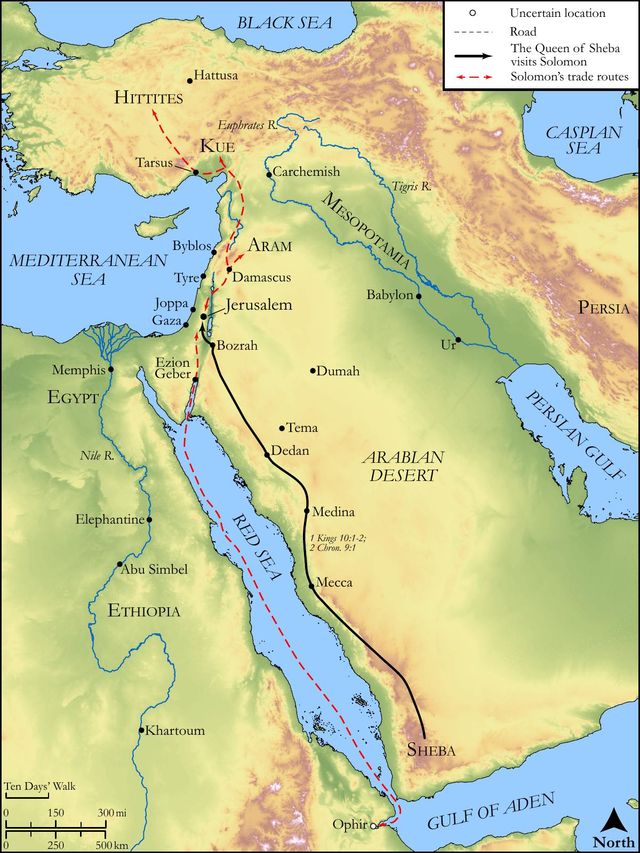
Solomon's reign (c. 970-931 BC) marked the zenith of Israel's power and influence among the nations. Jerusalem, as the capital, became a hub of immense wealth, largely due to Solomon's strategic alliances, extensive trade networks, and administrative acumen. He controlled vital trade routes, particularly those connecting Egypt with Mesopotamia and Arabia, facilitating the import and export of valuable goods. The comparison of "silver and gold" to "stones" and "cedar trees" to "sycomore trees" is a hyperbole that would have been profoundly understood by the original audience. Silver and gold were the primary mediums of exchange and symbols of wealth, while cedar from Lebanon was a highly prized, expensive, and durable timber, used for royal and sacred construction. Sycomore trees (Ficus sycomorus), in contrast, were common, fast-growing, and provided a softer, less valuable wood, often found in the lowlands or "vale" (Shephelah). This imagery vividly communicates that even the most precious resources were so abundant in Jerusalem that they seemed to have lost their rarity, a stark contrast to the typical scarcity of such materials in that age.
Key Themes
ShowHideThe abundance described in 2 Chronicles 1:15 contributes to several overarching themes in the book of Chronicles. Firstly, it powerfully illustrates Divine Blessing and Fulfillment, showcasing God's faithfulness to His covenant promises when His chosen leader seeks His wisdom above all else. This prosperity is not merely a result of Solomon's ingenuity but a direct manifestation of divine favor, as promised in 2 Chronicles 1:12. Secondly, it highlights the Unprecedented Abundance and Glory of Solomon's Kingdom, portraying an era of unparalleled national wealth and stability. This material prosperity was intended to facilitate the grand national project of building and furnishing the Temple, reflecting God's glory and establishing Jerusalem as a spiritual and economic center, a theme central to the Chronicler's purpose in detailing Solomon's reign, particularly in chapters like 2 Chronicles 3. Lastly, while celebrating this peak of Israelite prosperity, the Chronicler subtly introduces the Stewardship of God's Resources, implying that such immense wealth carried a responsibility to be used for God's purposes and the welfare of His people, a theme that would later be tested in Solomon's reign as seen in 1 Kings 11.
Exposition and Analysis
ShowHideKey Word Analysis
ShowHideMeaning "a stone," often referring to common pebbles or rocks. The comparison of silver and gold to "stones" is a powerful hyperbole. In a world where precious metals were scarce and highly valued, this imagery conveys an almost unbelievable abundance. It suggests that gold and silver were so plentiful in Jerusalem that they were treated with the same casual regard as the most ubiquitous elements of the landscape, effectively devaluing them through sheer quantity. This emphasizes the extraordinary nature of Solomon's wealth, far surpassing typical human accumulation.
Referring to the sycamore (usually the tree). These trees were common in the lowlands of Judah (the "vale" or Shephelah), known for their soft, fast-growing wood, which was suitable for common construction but not for high-quality building or ornamentation. By comparing valuable "cedar trees" (imported from Lebanon, highly prized for their durability, fragrance, and beauty) to the common sycomore, the verse again employs hyperbole. It signifies that even the most expensive and rare building materials were so readily available in Jerusalem during Solomon's reign that they were as accessible and plentiful as the most ordinary local timber.
Verse Breakdown
ShowHide"And the king made silver and gold at Jerusalem [as plenteous] as stones,"
This initial clause immediately establishes the central theme of unparalleled material wealth. The verb "made" (H5414, nâthan) here carries the sense of "caused to be" or "provided," indicating that Solomon's administration, through strategic trade, tribute from the kings of Arabia and the governors of the country, and perhaps mining operations, amassed such vast quantities of these precious metals that their value, relative to their abundance, diminished within Jerusalem. This was not merely a private fortune but a national treasury, indicative of the kingdom's overall economic might and the direct fulfillment of God's promise to Solomon.
"and cedar trees made he as the sycomore trees that [are] in the vale for abundance."
This second clause extends the hyperbolic description of abundance to building materials. Cedar (H730, ʼerez), a highly prized and expensive timber typically imported from Lebanon, was essential for grand construction projects like the Temple and Solomon's palace. By making it as common as the indigenous, less valuable sycomore (H8256, shiqmâh), the verse underscores the limitless resources at Solomon's disposal, specifically for his monumental architectural endeavors. The mention of "the vale" (H8219, shᵉphêlâh), referring to the lowlands, further highlights the contrast, as sycamores were abundant in that region, making the comparison even more striking and emphasizing the sheer "abundance" (H7230, rôb) of these valuable cedars.
Literary Devices
ShowHideThe primary literary devices employed in 2 Chronicles 1:15 are Hyperbole and Simile. The verse uses Hyperbole by exaggerating the abundance of silver, gold, and cedar trees to an almost unimaginable degree, comparing them to common "stones" and "sycomore trees." This deliberate overstatement is not meant to be taken literally but serves to impress upon the reader the extraordinary, unprecedented scale of wealth and resources available to Solomon. The comparisons themselves are Similes, using the implicit "as" (indicated by the KJV bracketed "[as plenteous]" and "[are]") to draw a direct parallel between the precious and the common, emphasizing the sheer quantity. Furthermore, an implicit Contrast is at play: the inherent value and rarity of silver, gold, and cedar are contrasted with the commonness and low value of stones and sycomore, making the abundance even more remarkable. These devices collectively create a vivid and memorable image of unparalleled prosperity, underscoring the divine blessing upon Solomon's reign.
Theological and Thematic Connections
ShowHideThis verse stands as a powerful theological statement about God's faithfulness and His ability to bless beyond measure when His people, especially their leaders, prioritize His wisdom and kingdom. Solomon's unprecedented wealth was not merely a personal fortune but a national endowment, directly linked to his humble request for wisdom to govern God's people. This highlights a key biblical principle: seeking God's kingdom and righteousness first can lead to unexpected and extraordinary provision, not necessarily always in material terms, but certainly in what is needed to fulfill God's purposes. The abundance described here was primarily directed towards the construction and adornment of the Temple, signifying that divine provision is often for divine purposes, enabling the expansion of God's glory and the establishment of His dwelling place among His people. It reminds us that all earthly resources ultimately belong to God and are entrusted to us for faithful stewardship.
Reflection and Application
ShowHide2 Chronicles 1:15 offers a profound glimpse into a period of unparalleled blessing and abundance under King Solomon, serving as a historical testament to God's capacity to provide lavishly. While this verse describes a unique historical context and a specific promise to a king, its underlying principles resonate deeply with believers today. It challenges us to examine our own priorities: Do we, like Solomon, seek wisdom and a heart to serve God's purposes above personal gain or fleeting desires? The abundance described here was not an end in itself but enabled the building of the Temple, God's dwelling place. This prompts us to consider how the "abundance" God provides in our lives—whether spiritual gifts, material resources, time, or talents—is intended to be stewarded for His glory and the advancement of His kingdom. It encourages us to trust in God's provision, knowing that when we prioritize His will, He is faithful to equip us for the calling He has placed upon our lives, often in ways that exceed our expectations. This verse ultimately invites us to reflect on the source of all true prosperity and the purpose for which we are blessed.
Questions for Reflection
ShowHideFAQ
ShowHideDoes this verse promise material wealth to all believers today?
ShowHideNo, 2 Chronicles 1:15 does not promise material wealth to all believers in a direct, prescriptive sense. This verse describes a specific historical fulfillment of a unique covenant promise made to King Solomon, who was chosen by God for a particular role in building the Temple and leading Israel. Solomon's wealth was directly tied to his wise request for governing ability and God's specific intention to establish a glorious kingdom through him. While it illustrates God's capacity to bless abundantly and the principle that prioritizing God's wisdom can lead to provision, it is not a universal guarantee of material riches for every individual believer. The New Testament emphasizes spiritual riches in Christ, as seen in Ephesians 1:3, and warns against the dangers of seeking earthly wealth, as Jesus teaches in Matthew 6:19-21. However, the principle that God provides for those who seek Him and His kingdom remains true, though the nature of that provision may vary according to His sovereign will and our specific calling.
Christ-Centered Fulfillment
ShowHideWhile 2 Chronicles 1:15 describes the zenith of earthly prosperity under King Solomon, its ultimate fulfillment and true abundance are found in Jesus Christ. Solomon's kingdom, with its unparalleled wisdom and wealth, served as a foreshadowing of the far greater spiritual kingdom established by Christ. Solomon's wisdom, though divinely granted, was finite and eventually faltered, but in Christ "are hidden all the treasures of wisdom and knowledge," as affirmed in Colossians 2:3. The material abundance of Solomon's reign, where silver and gold were as common as stones, points to the immeasurable spiritual riches available to believers in Christ. Through His sacrifice, Christ, "though he was rich, yet for your sake he became poor, so that you through his poverty might become rich," a profound truth articulated in 2 Corinthians 8:9. The true "abundance" that Jesus offers is not perishable gold or cedar, but "life, and have it more abundantly," as He declares in John 10:10—eternal life, spiritual blessings, and an inheritance that is imperishable, undefiled, and unfading, as described in 1 Peter 1:4. Solomon's glorious reign eventually faded, but Christ's kingdom is eternal, and the spiritual wealth He bestows upon His followers is everlasting and infinitely more valuable than any earthly treasure.