


Numbers 32:19
Bible text: King James Version (1769 Blayney text) · Public domain
Bible text: Berean Standard Bible · Public domain
Bible text: American Standard Version (1901) · Public domain
Bible text: World English Bible, Messianic edition · Public domain
Bible text: Geneva Bible (1599) · Public domain
Bible text: Young's Literal Translation · Public domain
- כִּיkiforH3588PrtParticle Conditional
- לֹאlo'notH3808NegParticle Negative
- נִנְחַלnin·Chalwe will inheritH5157V-Qal-Imperf-1cpVerb Qal Imperfect 1st Plural common gender
- אִתָּם'i·Tamwith themH854Prep ¦ 3mpPreposition Definiteאִתָּwithםthem
- מֵעֵבֶרme·'E·verfrom [the] other sideH5676Prep-m ¦ N-mscNoun Singular Masculine Constructמֵfromעֵבֶר[the] other side
- לַיַּרְדֵּןlai·yar·Denof the JordanH3383Prep-l ¦ N-properNoun Proper Locationלַof theיַּרְדֵּןJordan
- וָהָלְאָהva·Hal·'ahand beyondH1973Conj-w ¦ AdvAdverbוָandהָלְאָהbeyond
- כִּיkiforH3588PrtParticle Conditional
- בָאָהVa·'ahit has comeH935V-Qal-Perf-3fsVerb Qal Perfect 3rd Singular Feminine
- נַחֲלָתֵנוּna·cha·la·Te·nuour inheritanceH5159N-fsc ¦ 1cpNoun Singular Feminine Constructנַחֲלָתֵinheritanceנוּour
- אֵלֵינוּ'e·Lei·nuto usH413Prep ¦ 1cpPreposition Definiteאֵלֵיtoנוּus
- מֵעֵבֶרme·'E·verfrom [the] other side ofH5676Prep-m ¦ N-mscNoun Singular Masculine Constructמֵfromעֵבֶר[the] other side of
- הַיַּרְדֵּןhai·yar·Denthe JordanH3383Art ¦ N-properNoun Proper LocationהַtheיַּרְדֵּןJordan
- מִזְרָחָהmiz·Ra·chaheast -wardH4217N-ms ¦ SfxNoun Singular Masculine Absoluteמִזְרָחָeastה-ward
English is a literal word-by-word gloss of the Hebrew, not the KJV's wording. Why?
This is the original text the KJV's translators worked from — each Hebrew word with its own literal English meaning in this verse, prepared by scholars at Tyndale House, Cambridge. The KJV translates whole sentences, not word by word, so its wording differs: one Hebrew word can become several English words, and the KJV may choose “the LORD” where the gloss reads “Yahweh”. Both are faithful — they answer different questions. For the KJV's own rendering, switch to the KJV text.
Details
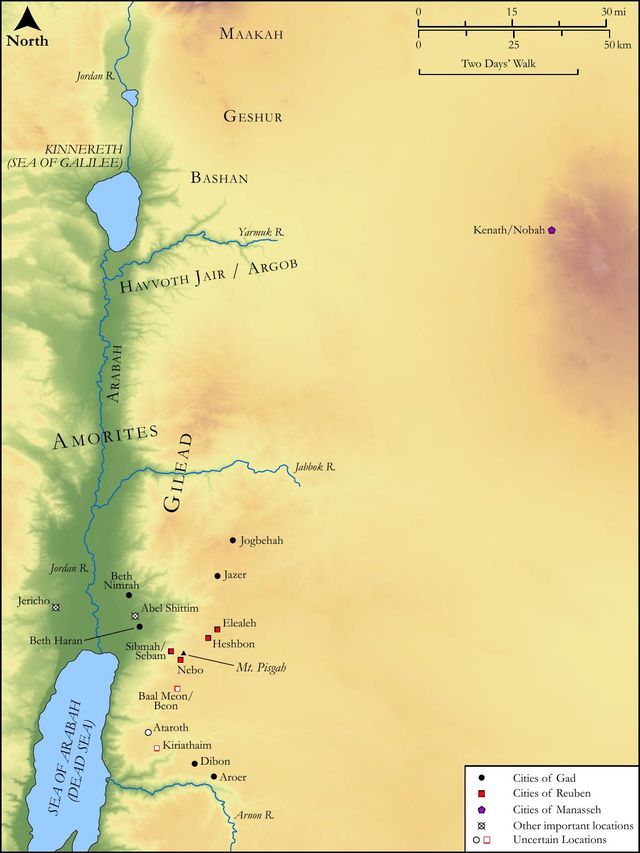
See on the biblical-era map
Study this verse
Continue studying Numbers 32:19 across the web’s major study libraries — every link below opens this exact verse, chapter, or book on the destination site.
Read & Compare
 BibleGatewayThis verse in more than 200 translations and 70 languages.
 Bible.comThe YouVersion reader — hundreds of translations, reading plans, and highlights.
 ESV.orgCrossway's official English Standard Version reader.
 NET BibleThe NET translation with 60,000+ translators' notes on every rendering decision.
 STEP BibleTyndale House's free study tool — original text, vocabulary, and scholarly resources.
 BibliaLogos Bible Software's free web reader.
 USCCBThe New American Bible (Revised Edition) with the U.S. bishops' study notes.
Commentaries
 BibleHub CommentariesDozens of classic commentaries on this verse, gathered on one page.
 StudyLightMore than 100 commentary sets — the largest collection on the web.
 BibleRefPlain-English commentary on what this verse means, verse by verse.
 Enduring WordDavid Guzik's free commentary on this chapter, widely used by Bible teachers.
 Bible Study ToolsVerse commentary alongside Greek and Hebrew study aids.
Original Language & Research
- BibleHub InterlinearThe verse word by word — original language, transliteration, and English.
- BibleHub LexiconEvery word's original-language definition and Strong's entry.
 Blue Letter BibleDeep-study tools — Strong's numbers, concordance, and word studies.
 SefariaThe Hebrew text with Rashi and centuries of Jewish commentary.
Sermons, Hymns & Audio


TrulyRandomVerse is not affiliated with these sites and doesn’t control their content. They’re linked because they’re genuinely useful.
Summary
Numbers 32:19 records the solemn and definitive declaration of the tribes of Reuben and Gad, affirming their absolute commitment to their fellow Israelites by stating they would not seek any inheritance in the land west of the Jordan River. Having received their desired and divinely allotted portion on the eastern side, this pivotal verse underscores their profound contentment with their assigned territory and their unwavering pledge to assist the other tribes in the arduous conquest and settlement of their own inheritance before fully establishing themselves in their homes. It stands as a powerful testament to tribal solidarity, contentment with God's provision, and national unity at a critical juncture in Israel's history.
Context
ShowHideLiterary Context
Numbers 32 opens with the tribes of Reuben and Gad, possessing vast livestock, recognizing the suitability of the recently conquered Transjordanian territory (east of the Jordan) for their herds. They approached Moses, Eleazar the priest, and the tribal leaders with a request to settle there, rather than crossing into Canaan proper. Moses initially reacted with severe rebuke, fearing their request would demoralize the people and lead to a repetition of the wilderness generation's failure to enter the land, as vividly recounted in Numbers 32:6-15. However, the tribes clarified their intentions, pledging to arm their men and fight alongside their brethren until the entire land of Canaan was subdued and each tribe had received its inheritance. Verse 19 serves as their explicit, non-negotiable assurance that once their brethren were settled, they would not seek any additional land for themselves on the western side of the Jordan, having already received their full and satisfying portion. This declaration was essential for solidifying the terms of the agreement, demonstrating their integrity, and ensuring the collective focus on the conquest of the Promised Land.
Historical & Cultural Context
This passage is set at the threshold of Israel's entry into the Promised Land, immediately following decisive military victories over Sihon, king of the Amorites, and Og, king of Bashan (as detailed in Numbers 21:21-35). The land east of the Jordan, particularly Gilead and Bashan, was renowned for its fertile pastures, making it highly desirable for tribes with a pastoral economy like Reuben and Gad. In ancient Israelite society, land inheritance was not merely an economic asset but the tangible fulfillment of God's covenant promises to Abraham and his descendants, signifying identity, security, and a permanent place within the tribal and national structure (e.g., Genesis 12:7). The division of land was a sacred act, often accomplished by casting lots, a practice believed to reveal divine will, as later codified in Joshua 14:2. The tribes' willingness to settle east of the Jordan, outside the traditional boundaries of the land promised to Abraham, was a significant departure, yet their commitment to assist in the conquest of Canaan proper underscored the paramount cultural importance of tribal solidarity and national unity in the face of external threats and the fulfillment of divine mandate.
Key Themes
ShowHideNumbers 32:19 powerfully contributes to several overarching themes within the Pentateuch and the book of Numbers. Firstly, it highlights Covenant Fidelity and Communal Solidarity within the Israelite community. Despite having secured their own desired territory, Reuben and Gad pledged active participation in the arduous conquest of the western side of the Jordan, demonstrating a vital principle of mutual support and preventing tribal division. This commitment is further elaborated in their pledge to build cities for their families and folds for their flocks, then arm themselves for battle (see Numbers 32:16-18). Secondly, the emphatic phrase "our inheritance is fallen to us" underscores Contentment with Divine Provision. It signifies their acceptance and deep satisfaction with the land allotted to them by divine providence, implying they would not covet or seek to expand beyond their divinely appointed boundaries once the western conquest was complete. This theme stands in stark contrast to the pervasive grumbling and discontent often displayed by the previous generation in the wilderness, as described throughout the book of Numbers. Finally, the verse clearly establishes the Geographical Distinction and Boundaries, delineating the specific location of their inheritance ("this side Jordan eastward") from the main Promised Land ("yonder side Jordan, or forward"). This distinction was crucial for future tribal divisions and understanding the unique position of these two and a half tribes (Reuben, Gad, and half of Manasseh) who settled outside the primary land of Canaan.
Exposition and Analysis
ShowHideKey Word Analysis
ShowHideWhile the KJV uses "inherit" as a verb, the underlying Hebrew in "our inheritance is fallen" is primarily the noun nachălâh (H5159), meaning "inheritance," "possession," or "allotment," especially of land. The root verb nâchal (H5157) means "to inherit" or "to occupy." In the Old Testament, "inheritance" is not merely a secular property right but carries profound theological significance, representing God's covenant faithfulness and the fulfillment of His promises to Israel. The land was a divine gift, a permanent possession that secured the family's future and identity within the tribal structure. The tribes' declaration regarding their "inheritance" thus speaks to their understanding of God's provision and their place within the covenant community, a gift to be cherished and not expanded upon.
The verb bôwʼ (H935) literally means "to go or come" or "to enter." In this specific context, particularly with "inheritance," it is an idiom referring to the casting of lots. When lots were cast to divide territory, a portion "fell" or "came" to a particular person or tribe. This emphasizes that their inheritance was not merely a random acquisition or a matter of human choice, but a divinely ordained assignment, reflecting God's sovereign hand in the allocation of the land and the destiny of His people. It implies a sense of finality and divine approval for their portion.
The phrase ʻêber (H5676) means "a region across" or "the opposite side," and Yardên (H3383) is "Jordan," the principal river of Palestine. The precise meaning (east or west of the river) depends on the speaker's perspective. Here, "yonder side Jordan" refers to the land of Canaan proper, west of the river, which the majority of the tribes were yet to conquer. "This side Jordan eastward" clarifies their current location and desired inheritance, distinguishing it from the primary Promised Land. This geographical specificity highlights the unique arrangement made with these tribes and the precise boundaries of their commitment, emphasizing their settled intention not to encroach.
Verse Breakdown
ShowHide"For we will not inherit with them on yonder side Jordan, or forward;"
This clause serves as the solemn and unequivocal pledge of the tribes of Reuben and Gad. "Yonder side Jordan" refers to the land of Canaan, west of the river, which was the primary destination for the Israelite conquest and settlement. The phrase "or forward" emphasizes the entirety and extent of that western territory, leaving no ambiguity. Their declaration means they will not claim any portion of that land for themselves once their brethren have settled there. This is a crucial assurance to Moses and the other tribes, dispelling any fear that they might later seek to expand their territory beyond their initial request, thereby preventing future disputes over land and reinforcing their commitment to the collective good.
"because our inheritance is fallen to us on this side Jordan eastward."
This second clause provides the foundational rationale and justification for their preceding pledge. "Our inheritance is fallen to us" signifies that their portion of land has been divinely allotted to them through the casting of lots, implying a sense of divine providence, finality, and satisfaction. "On this side Jordan eastward" explicitly defines the geographical location of their inheritance—the fertile Transjordanian territory they had requested and received. This statement underscores their contentment and satisfaction with the land God had provided them, reinforcing their commitment not to encroach upon the future inheritance of their fellow Israelites and highlighting their trust in God's provision for them.
Literary Devices
ShowHideNumbers 32:19 employs several effective literary devices to convey its profound message. The phrase "our inheritance is fallen to us" is a clear Idiom, referring to the ancient practice of casting lots for land distribution. This idiom subtly points to the divine hand in the allocation of territory, suggesting that their inheritance was not merely a human acquisition but a divinely ordained assignment. The entire verse functions as a Pledge or Assurance, a solemn and binding declaration of commitment and integrity from the tribes of Reuben and Gad to Moses and the rest of Israel. This rhetorical device serves to alleviate Moses' initial fears and solidify the terms of their agreement, building trust. Furthermore, the precise geographical distinctions ("yonder side Jordan," "this side Jordan eastward") exemplify Geographical Delineation, which is crucial for establishing the specific boundaries of their unique settlement and their commitment to the broader national enterprise. The stark contrast between "not inherit with them" and "our inheritance is fallen to us" also creates a powerful form of Antithesis, emphasizing their clear, unwavering decision and their contentment with their distinct portion.
Theological and Thematic Connections
ShowHideNumbers 32:19 offers significant theological insights, particularly concerning God's faithful provision, the virtue of human contentment, and the indispensable importance of communal solidarity within the covenant people. The concept of "inheritance" (נַחֲלָה) is deeply theological, representing God's unwavering faithfulness in fulfilling His promises to Abraham regarding the land. The fact that the land "fell" to them by lot underscores the belief that God was sovereignly orchestrating the division of the land, providing for each tribe according to His perfect will. The tribes' contentment with their portion, despite it being outside the primary promised land, speaks to a mature faith that trusts in God's allocation rather than coveting what others possess. This contentment, coupled with their unwavering commitment to fight for their brethren until the entire land was secured, exemplifies the ideal of unity and mutual responsibility within the body of Israel, a principle that transcends tribal boundaries and is foundational to the success and flourishing of God's people in fulfilling their divine mandate.
Reflection and Application
ShowHideNumbers 32:19 provides a powerful and enduring model for believers today, emphasizing the vital virtues of commitment, contentment, and communal responsibility. In a world that often encourages endless striving for more, comparing one's lot with others, and pursuing personal gain above all else, the tribes of Reuben and Gad demonstrate a profound satisfaction with what God had provided, even when it differed from the perceived "ideal" inheritance. This challenges us to cultivate a spirit of deep contentment in our own lives, trusting that God's provision for us is sufficient, perfectly timed, and ultimately good, rather than constantly coveting what others have or endlessly pursuing more. Furthermore, their unwavering pledge to fight alongside their brethren, even after securing their own needs, serves as a potent reminder of our call to solidarity within the body of Christ. Our individual blessings, fulfilled needs, or unique callings do not absolve us from participating actively in the collective mission of the church or supporting fellow believers in their struggles, endeavors, and spiritual growth. True faith expresses itself not only in personal satisfaction with God's grace but also in active, self-sacrificial service to the community, ensuring that all members are supported and empowered in their pursuit of God's purposes and the advancement of His kingdom.
Questions for Reflection
ShowHideFAQ
ShowHideWhy was it so important for Reuben and Gad to make this specific declaration, and why did Moses react so strongly?
ShowHideThis declaration was absolutely crucial for several interconnected reasons. First, Moses had initially reacted with strong concern and even anger, fearing that their request to settle east of the Jordan would demoralize the rest of the Israelites and lead to a repeat of the wilderness generation's catastrophic failure to enter the Promised Land (see Numbers 32:6-15). He remembered the spies' negative report and the subsequent rebellion that led to forty years of wandering. The tribes' explicit, solemn promise not to seek an inheritance west of the Jordan, after their brethren had settled, served to alleviate Moses' profound fears and demonstrate their integrity and commitment to the national vision. Second, it solidified their commitment to national unity and prevented potential future disputes. Without this clear statement, there could have been ongoing suspicion, territorial conflicts, or a perception that these tribes were abandoning their brethren. Their pledge to arm themselves and fight alongside the other tribes until the conquest was complete (as detailed in Numbers 32:17) and their assurance of contentment with their eastern inheritance prevented division and ensured a collective, unified effort in fulfilling God's command to possess the entire land.
Christ-Centered Fulfillment
ShowHideWhile Numbers 32:19 speaks to a historical, physical land inheritance, its underlying theological and ethical themes profoundly foreshadow the greater spiritual inheritance found in Christ. The "inheritance" of the land of Canaan, given by lot and through divine providence, points to the ultimate, eternal inheritance believers receive through Christ—an inheritance secured not by human effort, military conquest, or random chance, but by divine grace and sovereign election (as articulated in Ephesians 1:11). Just as Reuben and Gad were content with their earthly portion and pledged their solidarity to their brethren, believers are called to be deeply content in Christ, recognizing Him as our all-sufficient portion, our ultimate inheritance, and the very substance of our hope (as seen in Colossians 3:24 and Hebrews 10:34). Furthermore, their commitment to fight alongside their kinsmen in the conquest of the Promised Land prefigures the New Testament call for believers to stand in solidarity with one another in the ongoing spiritual battle against sin, darkness, and the forces that oppose God's kingdom. We do not fight for a physical land, but for the advancement of God's redemptive purposes and the spiritual well-being of His people, supporting one another as indispensable members of the body of Christ (e.g., Ephesians 6:10-18 and Romans 12:4-5). Christ Himself is the faithful one who fulfills all promises, securing our eternal inheritance, enabling us to live in profound contentment and unity, and empowering us to participate in His ongoing mission until His glorious return (Hebrews 9:15 and 1 Peter 1:3-5).