


Matthew 26:56
Bible text: King James Version (1769 Blayney text) · Public domain
Bible text: Berean Standard Bible · Public domain
Bible text: American Standard Version (1901) · Public domain
Bible text: World English Bible, Messianic edition · Public domain
Bible text: Geneva Bible (1599) · Public domain
Bible text: Young's Literal Translation · Public domain
- τοῦτοtoutoThisG3778D-NSNDemonstrative pronoun Nominative Singular Neuter
- δὲdethenG1161CONJConjunction
- ὅλονholonallG3650A-NSNAdjective Nominative Singular Neuter
- γέγονενgegonenhas come to passG1096V-2RAI-3SVerb 2nd Perfect Active Indicative 3rd Singular
- ἵναinathatG2443CONJConjunction
- πληρωθῶσινplērōthōsinmay be fulfilledG4137V-APS-3PVerb Aorist Passive Subjunctive 3rd Plural
- αἱhaitheG3588T-NPFDefinite article Nominative Plural Feminine
- γραφαὶgraphaiScripturesG1124N-NPFNoun Nominative Plural Feminine
- τῶνtōnof theG3588T-GPMDefinite article Genitive Plural Masculine
- προφητῶνprophētōnprophetsG4396N-GPMNoun Genitive Plural Masculine
- ΤότεToteThenG5119ADVAdverb
- οἱhoitheG3588T-NPMDefinite article Nominative Plural Masculine
- μαθηταὶmathētaidisciplesG3101N-NPMNoun Nominative Plural Masculine
- πάντεςpantesallG3956A-NPMAdjective Nominative Plural Masculine
- ἀφέντεςaphenteshaving forsakenG863V-2AAP-NPMVerb 2nd Aorist Active Participle Nominative Plural Masculine
- αὐτὸνautonHimG846P-ASMPersonal pronoun Accusative Singular Masculine
- ἔφυγονephugonfledG5343V-2AAI-3PVerb 2nd Aorist Active Indicative 3rd Plural
English is a literal word-by-word gloss of the Greek, not the KJV's wording. Why?
This is the original text the KJV's translators worked from — each Greek word with its own literal English meaning in this verse, prepared by scholars at Tyndale House, Cambridge. The KJV translates whole sentences, not word by word, so its wording differs: one Greek word can become several English words, and the KJV may choose “charity” where the gloss reads “love”. Both are faithful — they answer different questions. For the KJV's own rendering, switch to the KJV text.
Details
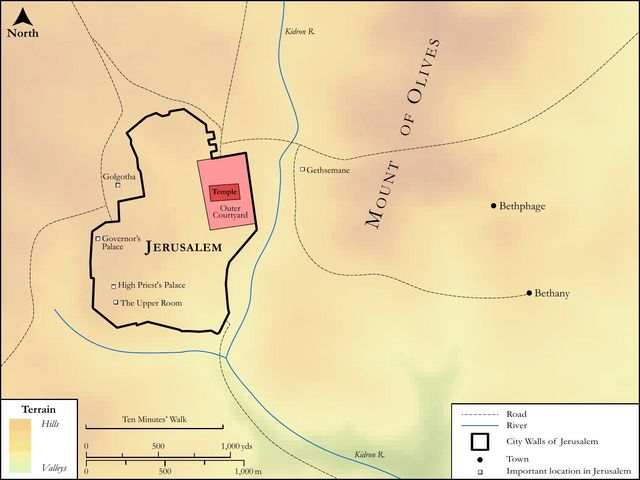
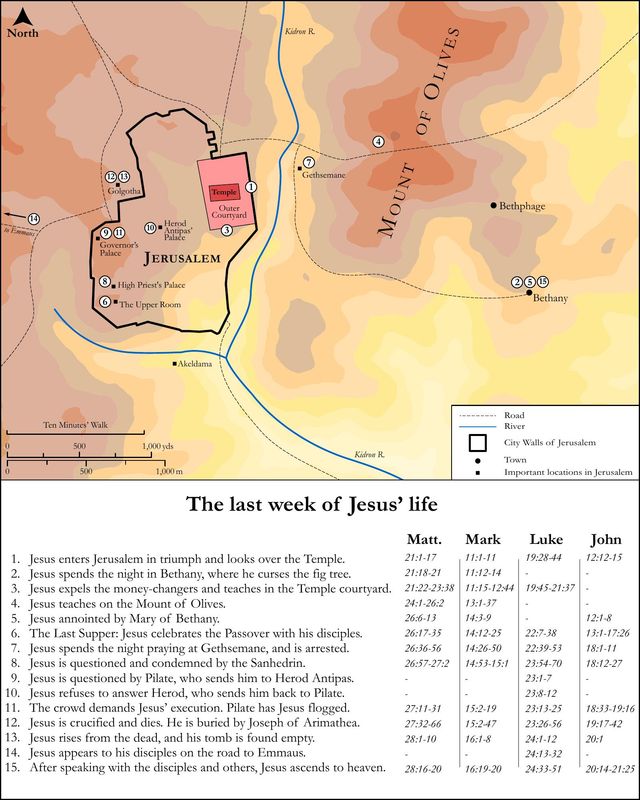
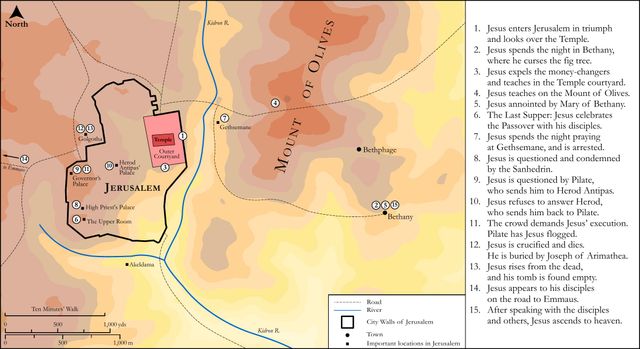
See on the biblical-era maps
Study this verse
Historical interpretation
Nine Centuries of Reception
9 surviving comments on this verse. Each one is dated, so this reads as a timeline rather than a list.
Select a marker to jump to its quote. Markers stagger vertically where authors wrote within a few decades of each other.
On the other hand, Christ, who spoke not guile from His mouth, and who exhibited all righteousness and humility, not only (as we have above recorded it predicted of Him) was not exposed to that kind of death for his own deserts, but (was so exposed) in order that what was predicted by the prophets as destined to come upon Him through your means might be fulfilled; just as, in the Psalms, the Spirit Himself of Christ was already singing, saying, "They were repaying me evil for good; " and, "What I had not seized I was then paying in full; " They exterminated my hands and feet; " and, "They put into my drink gall, and in my thirst they slaked me with vinegar; " "Upon my vesture they did cast (the) lot; " just as the other (outrages) which you were to commit on Him were foretold,-all which He, actually and thoroughly suffering, suffered not for any evil action of His own, but "that the Scriptures from the mouth of the prophets might be fulfilled."
There is now much to choose from the prophets, such as their sayings that were fulfilled when Christ said he had to suffer these things. Moveover, it is customary for scholars to collect prophetic words that were fulfilled. And in the psalm you may find a number of things reflected in those who came with Judas to seize Jesus, even as you may find things said about Judas in that psalm. "Then all the disciples forsook him and fled." Fearing the crowds and Judas at their head, they fled because they did not yet have the Spirit ("since Jesus had not yet been glorified")34 and the "Spirit of power and love." If they had the Spirit, they would not be weak nor would they need anything besides divine love.
They did not lay hands on Him in the temple because they feared the multitude, therefore also the Lord went forth that He might give them place and opportunity to take Him. This then teaches them, that if He had not suffered them of His own free choice, they would never have had strength to take Him. Then the Evangelist assigns the reason why the Lord was willing to be taken, adding, All this was done that the Scriptures of the Prophets might be fulfilled.
The disciples who had remained when the Lord was apprehended, fled when He spoke these things to the multitudes, Then all the disciples forsook him and fled; for they then understood that He could not escape but rather gave Himself up voluntarily.
Great was the zeal of Peter, who fled not when He saw the others fly, but remained, and entered in. For though John also went in, yet he was known to the Chief Priest. He followed afar off, because he was about to deny his Lord.
And to His disciples He saith these things; but to the others, "Are ye come out as against a thief with swords and staves for to take me? I sat daily teaching in the temple, and ye laid no hold on me."
See how many things He doeth that might awaken them. He cast them to the ground, He healed the servant's ear, He threatened them with being slain; "For they shall perish with the sword," He saith, "who take the sword." By the healing of the ear, He gave assurance of these things also; from every quarter, both from the things present, and from the things to come, manifesting His power, and showing that it was not a work of their strength to seize Him. Wherefore He also adds, "I was daily with you, and sat teaching, and ye laid no hold on me;" by this also making it manifest, that the seizure was of His permission. He passed over the miracles, and mentions the teaching, that He might not seem to boast.
When I taught, ye laid no hold on me; when I held my peace, did ye come against me? I was in the temple, and no one seized me, and now do ye come upon me late and at midnight with swords and staves? What need was there of these weapons against Him, who was with you always? by these things teaching them, that unless He had voluntarily yielded, not even then would they have succeeded. For neither could they (who were not able to hold Him when in their hands, and who, when they had got Him in the midst of them, had not prevailed) even then have succeeded, unless He had been willing.
After this, He solves also the difficulty why He willed it then. For, "this was done," He saith, "that the Scriptures of the prophets might be fulfilled." See how even up to the last hour, and in the very act of being betrayed, He did all things for their amendment, healing, prophesying, threatening. "For," He saith, "they shall perish by the sword." To show that He is suffering voluntarily, He saith, "I was daily with you teaching;" to manifest His accordance with the Father, He adds, "That the Scriptures of the prophets might be fulfilled."
But wherefore did they not lay hold on Him in the temple? Because they would not have dared in the temple, on account of the people. Wherefore also He went forth without, both by the place and by the time giving them security, and even to the last hour taking away their excuse. For He who, in order that He might obey the prophets, gave up even Himself, how did He teach things contrary to them?
"Then all His disciples," it is said, "forsook Him, and fled." For when He was seized, they remained; but when He had said these things to the multitudes, they fled. For thenceforth they saw that escape was no longer possible, when He was giving Himself up to them voluntarily, and saying, that this was done according to the Scriptures.
And when these were fled, "they lead Him away to Caiaphas; but Peter followed, and entered in to see what the end should be."
Great was the fervor of the disciple; neither did he fly when he saw them flying, but stood his ground, and went in with Him. And if John did so too, yet he was "known to the high priest."
And why did they lead Him away there where they were all assembled? That they might do all things with consent of the chief priests. For he was then high priest, and all were waiting for Christ there, to such a degree did they spend the whole night, and give up their sleep for this object. For neither did they then eat the passover, but watched for this other purpose. For John, when he had said that "it was early," added, "they entered into the judgment hall, lest they should be defiled, but that they might eat the passover."
What must we say then? That they ate it on another day, and broke the law, on account of their eager desire about this murder. For Christ would not have transgressed as to the time of the passover, but they who were daring all things, and trampling under foot a thousand laws. For since they were exceedingly boiling with rage, and having often attempted to seize Him, had not been able; having then taken Him unexpectedly, they chose even to pass by the passover, for the sake of satiating their murderous lust.
(Verse 56.) But all this has happened so that the Scriptures of the prophets might be fulfilled. Then all the disciples, leaving him, fled. What are the Scriptures of the prophets? They have pierced my hands and feet (Psalm 22:17); and elsewhere: He was led as a sheep to the slaughter (Isaiah 53:7). And in another place: He was led to death because of the iniquities of my people (Ibid., sec. 70).
This speech shows a mind willing to suffer; vainly would the Prophets have prophesied truly, unless the Lord asserts their truth by His suffering.
It is folly then to seek with swords and staves Him who offers Himself to your hands, and with a traitor to hunt out, as though lurking under cover of night, one who is daily teaching in the temple.
They pierced my hands and my feet; (Ps. 22:16.) and in another place, He is led as a sheep to the slaughter; (Is. 53:7, 8.) and, By the iniquities of my people was He led to death.
But Josephus writesu, that this Caiaphas had purchased the priesthood of a single year, notwithstanding that Moses, at God's command, had directed that High Priests should succeed hereditarily, and that in the Priests likewise succession by birth should be followed up. No wonder then that an unrighteous High Priest should judge unrighteously.
He went in, either out of the attachment of a disciple, or natural curiosity, seeking to know what sentence the High Priest would pass, whether death, or scourging.
As much as to say, Robbers assault and study concealment; I have injured no one, but have healed many, and have ever taught in your synagogues.
For because all the Prophets had foretold Christ's Passion, he does not cite any particular place, but says generally that the prophecies of all the Prophets were being fulfilled.
In this act is shown the Apostles' frailty; in the first ardour of their faith they had promised to die with Him, but in their fear they forgot their promise and fled. The same we may see in those who undertake to do great things for the love of God, but fail to fulfil what they undertake; they ought not to despair, but to rise again with the Apostles, and recover themselves by penitence.
For had he kept close to his Lord's side, he could never have denied Him. This also shows that Peter should follow his Lord's Passion, that is, imitate it.
Mystically, As Peter, who by tears washed away the sin of his denial, figures the recovery of those who lapse in time of martyrdom; so the flight of the other disciples suggests the precaution of flight to such as feel themselves unfit to endure torments.
And the action suits his name; Caiaphas, i. e. 'contriving,' or, 'politic,' to execute his villainy; or 'vomiting from his mouth,' because of his audacity in uttering a lie, and bringing about the murder. They took Jesus thither, that they might do all advisedly; as it follows, Where the Scribes and the Elders were assembled.
. He shows the absurdity of their efforts, and that they did not seize Him by their own strength. "For when I was in the temple," He says, "you wanted to take Me but you could not because I did not permit you; but now I voluntarily give Myself over to you. For I know that it is impossible that the Scriptures which foretold your wickedness should be proved false."
Continue studying Matthew 26:56 across the web’s major study libraries — every link below opens this exact verse, chapter, or book on the destination site.
Read & Compare
 BibleGatewayThis verse in more than 200 translations and 70 languages.
 Bible.comThe YouVersion reader — hundreds of translations, reading plans, and highlights.
 ESV.orgCrossway's official English Standard Version reader.
 NET BibleThe NET translation with 60,000+ translators' notes on every rendering decision.
 STEP BibleTyndale House's free study tool — original text, vocabulary, and scholarly resources.
 BibliaLogos Bible Software's free web reader.
 USCCBThe New American Bible (Revised Edition) with the U.S. bishops' study notes.
Commentaries
 BibleHub CommentariesDozens of classic commentaries on this verse, gathered on one page.
 StudyLightMore than 100 commentary sets — the largest collection on the web.
 BibleRefPlain-English commentary on what this verse means, verse by verse.
 Enduring WordDavid Guzik's free commentary on this chapter, widely used by Bible teachers.
 Bible Study ToolsVerse commentary alongside Greek and Hebrew study aids.
Original Language & Research
- BibleHub InterlinearThe verse word by word — original language, transliteration, and English.
- BibleHub LexiconEvery word's original-language definition and Strong's entry.
 Blue Letter BibleDeep-study tools — Strong's numbers, concordance, and word studies.
 CNTR CollationThe earliest Greek manuscripts of this verse, collated letter by letter.
Sermons, Hymns & Audio


TrulyRandomVerse is not affiliated with these sites and doesn’t control their content. They’re linked because they’re genuinely useful.
Summary
Matthew 26:56 encapsulates a profound moment in the Passion narrative, revealing the dual reality of divine sovereignty and human frailty. It declares that the events leading to Jesus' arrest were not chaotic but purposefully orchestrated to fulfill Old Testament prophecies, even as it starkly records the immediate and universal desertion of His disciples, highlighting the profound cost of discipleship and the limitations of human resolve.
Context
ShowHideLiterary Context
This verse serves as the climactic conclusion to Jesus' encounter with the arresting party in the Garden of Gethsemane. Immediately preceding it, in Matthew 26:54-55, Jesus explicitly states that His non-resistance and refusal to call upon angelic legions are necessary "that the scriptures of the prophets might be fulfilled." This statement underscores His willing submission to God's predetermined plan rather than a lack of power. The verse then transitions abruptly from Jesus' theological explanation to the stark reality of His followers' abandonment, fulfilling a prophecy Jesus Himself had made earlier to His disciples in Matthew 26:31, where He predicted they would all fall away because of Him.
Historical & Cultural Context
The setting is the Garden of Gethsemane, a place of prayer and solitude that now becomes a scene of betrayal and arrest. Arrests in this period, particularly of perceived threats to religious or political order, were often swift and brutal. The disciples, being Galileans, were likely unaccustomed to such high-stakes confrontations in Jerusalem. Their flight reflects a natural human response to fear and the sudden, overwhelming display of force by the temple guard and Roman soldiers. In a culture where loyalty to a teacher or leader was paramount, the complete abandonment by "all the disciples" would have been a profoundly shameful and discrediting act, amplifying the perceived defeat of Jesus.
Key Themes
ShowHideThe central theme is the Fulfillment of Prophecy, emphasizing God's sovereign control over even the most chaotic human events. Jesus' suffering, betrayal, and the scattering of His followers were not random but part of a divine blueprint, echoing prophecies like those concerning the suffering servant in Isaiah 53:7 and the smitten shepherd and scattered sheep in Zechariah 13:7. This verse also powerfully highlights Human Weakness and Desertion, as the disciples, despite their earlier pledges of loyalty, succumb to fear. This serves as a sobering reminder of the limitations of human resolve without divine strength. Finally, it subtly reinforces Jesus' Sovereignty and Purposeful Submission; even in His arrest, He maintains control and perspective, viewing the events through the lens of God's perfect, redemptive plan.
Exposition and Analysis
ShowHideKey Word Analysis
ShowHideThis verb signifies "to come into being," "to happen," or "to become." In this context, it points to the divine orchestration of events. It's not merely that these things "occurred" by chance, but that they "came to pass" as part of a pre-ordained plan. The passive voice ("was done") implicitly points to God as the ultimate agent behind these occurrences, ensuring that His purposes are realized.
Meaning "to make replete," "to complete," or "to accomplish," this word is crucial. It indicates that the prophetic utterances of the Old Testament were not merely referenced or alluded to, but brought to their complete and intended realization in the person and actions of Jesus. The events surrounding Jesus' arrest are presented as the precise and perfect culmination of God's revealed Word through the prophets.
This verb means "to send forth," "to leave," "to abandon," or "to let go." Here, it conveys a decisive and complete act of abandonment by the disciples. It is a stark term, emphasizing that they did not merely stray or wander off, but actively and intentionally left Jesus in His hour of greatest need, breaking their previous vows of loyalty.
Verse Breakdown
ShowHide"But all this was done, that the scriptures of the prophets might be fulfilled."
This initial clause serves as Jesus' interpretive key to the chaotic events unfolding around Him. "All this" refers to the entire sequence of His betrayal, arrest, and the subsequent suffering He is about to endure. The phrase "was done" (a divine passive) implies God's sovereign hand at work, not as a passive observer, but as the orchestrator. The purpose clause, "that the scriptures of the prophets might be fulfilled," asserts that these seemingly random or tragic occurrences are, in fact, the precise and necessary culmination of God's ancient promises and predictions, particularly those found in the Old Testament concerning the Messiah's suffering and triumph.
"Then all the disciples forsook him, and fled."
This second clause presents the immediate and sobering consequence of Jesus' arrest. The temporal "Then" marks a swift transition from divine purpose to human failure. The phrase "all the disciples" emphasizes the universality of their desertion, highlighting the profound fear and weakness that overcame even those closest to Jesus. "Forsook him" indicates a complete abandonment of their master, while "and fled" underscores their hasty and fearful departure, leaving Jesus utterly alone in the hands of His captors. This action stands in stark contrast to their earlier boasts of loyalty and willingness to die with Him.
Literary Devices
ShowHideMatthew 26:56 masterfully employs several literary devices. Juxtaposition is prominent, contrasting the divine, purposeful fulfillment of prophecy with the raw, fearful human failure of the disciples. This creates a powerful tension between God's unwavering plan and humanity's wavering commitment. The phrase "was done" and "might be fulfilled" utilizes a Divine Passive, subtly yet powerfully attributing the unfolding events to God's ultimate agency without explicitly naming Him as the subject, thereby emphasizing His sovereignty. Furthermore, the verse serves as a direct Fulfillment of earlier Foreshadowing, specifically Jesus' own prophecy in Matthew 26:31 regarding the scattering of His sheep. The disciples' flight also carries a tragic Irony, as those who pledged to die for Him abandon Him at the very moment His suffering begins, highlighting the gap between good intentions and the reality of the cross.
Theological and Thematic Connections
ShowHideMatthew 26:56 is a theological linchpin, affirming God's absolute sovereignty over history and human actions, even those born of sin and weakness. It demonstrates that the Passion of Christ was not a tragic accident or a defeat, but the meticulously planned and divinely orchestrated climax of redemptive history, fulfilling centuries of prophetic anticipation. The disciples' desertion, while a poignant display of human frailty, paradoxically underscores the unique and solitary nature of Jesus' atoning work. He had to face the cross alone, not because His disciples were strong enough to stand with Him, but precisely because they were not, and because His sacrifice was for their weakness and the sin of the world. This moment emphasizes that salvation is entirely God's work, accomplished through Christ's perfect obedience, not through human faithfulness.
Reflection and Application
ShowHideMatthew 26:56 offers profound lessons for believers today, reminding us that even in moments of profound chaos, betrayal, and suffering, God's sovereign purposes are being meticulously fulfilled. It calls us to cultivate a deep trust in God's overarching plan, even when circumstances seem to contradict our expectations or when human failings abound. The disciples' desertion serves as a humbling mirror, revealing our own capacity for weakness, fear, and faltering faith in the face of adversity. It compels us to recognize our inherent limitations and to lean not on our own strength, but on the indwelling power of the Holy Spirit for perseverance. Ultimately, this verse encourages us to extend grace to others who may stumble, knowing that our own faithfulness is often imperfect, and to find solace in the truth that God's redemptive work is never dependent on our unwavering strength, but on His unfailing faithfulness.
Questions for Reflection
ShowHideFAQ
ShowHideWhat "scriptures of the prophets" are being referred to in Matthew 26:56?
ShowHideWhile Matthew does not specify particular verses here, the phrase "scriptures of the prophets" refers broadly to the Old Testament prophecies concerning the Messiah's suffering, betrayal, and death. Key prophetic themes and passages that find fulfillment in this moment include the suffering servant passages in Isaiah 53, particularly Isaiah 53:7, which depicts the Messiah as silent before His accusers, and Zechariah 13:7, which prophesies the smiting of the shepherd and the scattering of the sheep. Jesus' own predictions of His suffering and the disciples' desertion (e.g., Matthew 26:31) also fall under this umbrella, as His words are prophetic and divinely inspired. The point is that these events were not accidental but part of God's predetermined plan, revealed through His prophets.
Why did "all the disciples" forsake Jesus and flee, despite their earlier promises of loyalty?
ShowHideThe disciples' desertion, though disappointing, highlights the profound reality of human fear and weakness when confronted with overwhelming danger. Despite their sincere intentions and Peter's bold declaration in Matthew 26:33-35, their human resolve proved insufficient in the face of the armed multitude and the imminent threat to their own lives. This moment underscores the limitations of human strength without the empowering presence of the Holy Spirit, which they would later receive at Pentecost (see Acts 2). Their flight also served to fulfill Jesus' own prophecy in Matthew 26:31, demonstrating that even their failure was part of God's sovereign plan to bring about redemption.
Christ-Centered Fulfillment
ShowHideMatthew 26:56 profoundly points to Christ by showcasing His unique and solitary path to redemption. While the disciples' flight reveals the utter failure of human faithfulness, it simultaneously magnifies the perfect, unwavering obedience of Jesus. He alone remained steadfast, enduring the betrayal and abandonment not out of helplessness, but out of resolute submission to His Father's will, as declared in John 10:17-18. This moment underscores that the work of atonement required a perfect, sinless sacrifice, one that no human, however well-intentioned, could provide. Jesus, the true Shepherd, willingly allowed Himself to be "smitten" (as prophesied in Zechariah 13:7) so that His sheep, though scattered in fear, might ultimately be gathered into His fold under the New Covenant (see Jeremiah 31:31-34). His solitary suffering and the disciples' failure highlight that salvation is entirely a divine accomplishment, secured by Christ's perfect life, atoning death, and glorious resurrection, providing a righteousness that is imputed to us, not earned by our own strength (as seen in Romans 5:18-19).