


Matthew 26:55
- ἘνEnInG1722PREPPreposition
- ἐκείνῃekeinēthat [very]G1565D-DSFDemonstrative pronoun Dative Singular Feminine
- τῇtēa<the>G3588T-DSFDefinite article Dative Singular Feminine
- ὥρᾳhōrahourG5610N-DSFNoun Dative Singular Feminine
- εἶπενeipensaidG2036V-2AAI-3SVerb 2nd Aorist Active Indicative 3rd Singular
- ὁho<the>G3588T-NSMDefinite article Nominative Singular Masculine
- ἸησοῦςIēsousJesusG2424N-NSM-PNoun Nominative Singular Masculine Individual
- τοῖςtoisto theG3588T-DPMDefinite article Dative Plural Masculine
- ὄχλοις·ochloiscrowdsG3793N-DPMNoun Dative Plural Masculine
- ὡςhōsAsG5613PRTParticle or Disjunctive
- ἐπὶepiagainstG1909PREPPreposition
- λῃστὴνlēstēna robberG3027N-ASMNoun Accusative Singular Masculine
- ἐξήλθατεexēlthatedid you come outG1831V-2AAI-2PVerb 2nd Aorist Active Indicative 2nd Plural
- μετὰmetawithG3326PREPPreposition
- μαχαιρῶνmachairōnswordsG3162N-GPFNoun Genitive Plural Feminine
- καὶkaiandG2532CONJConjunction
- ξύλωνxulōnclubsG3586N-GPNNoun Genitive Plural Neuter
- συλλαβεῖνsullabeinto captureG4815V-2AANVerb 2nd Aorist Active Infinitive
- με;meMe?G3165P-1ASPersonal pronoun Accusative 1st Singular
- καθ᾽kath᾽EveryG2596PREPPreposition
- ἡμέρανhēmerandayG2250N-ASFNoun Accusative Singular Feminine
- πρὸςprostoG4314PREPPreposition
- ὑμᾶςhumasyouG4771P-2APPersonal pronoun Accusative 2nd Plural
- ἐνeninG1722PREPPreposition
- τῷtōtheG3588T-DSNDefinite article Dative Singular Neuter
- ἱερῷhi'erōtempleG2411N-DSNNoun Dative Singular Neuter
- ἐκαθεζόμηνekathezomēnI was sittingG2516V-INI-1SVerb Imperfect Middle Or Passive Deponent Indicative 1st Singular
- διδάσκωνdidaskōnteachingG1321V-PAP-NSMVerb Present Active Participle Nominative Singular Masculine
- καὶkaiandG2532CONJConjunction
- οὐκouknotG3756PRT-NNegative Particle Negative
- ἐκρατήσατέekratēsateyou did seizeG2902V-AAI-2PVerb Aorist Active Indicative 2nd Plural
- μεmeMeG3165P-1ASPersonal pronoun Accusative 1st Singular
English is a literal word-by-word gloss of the Greek, not the KJV's wording. Why?
This is the original text the KJV's translators worked from — each Greek word with its own literal English meaning in this verse, prepared by scholars at Tyndale House, Cambridge. The KJV translates whole sentences, not word by word, so its wording differs: one Greek word can become several English words, and the KJV may choose “charity” where the gloss reads “love”. Both are faithful — they answer different questions. For the KJV's own rendering, switch to the KJV text.
Details
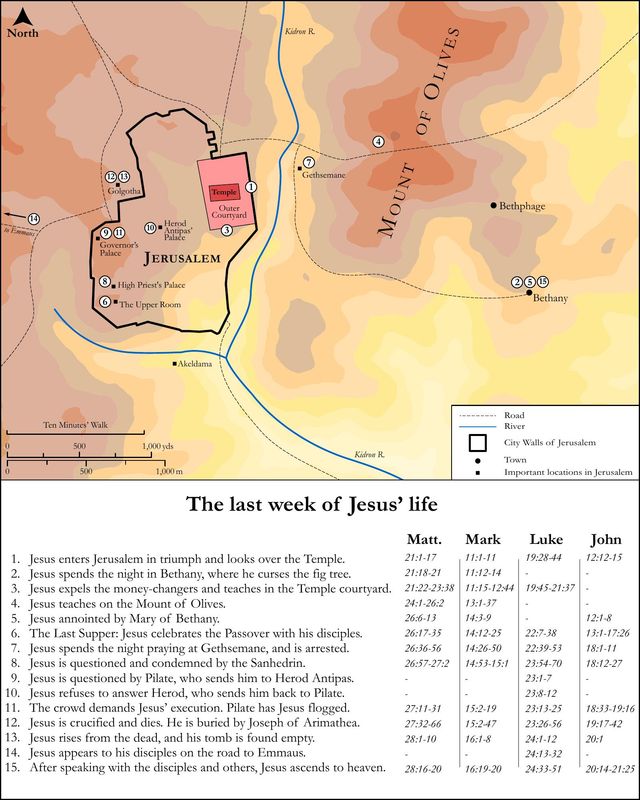
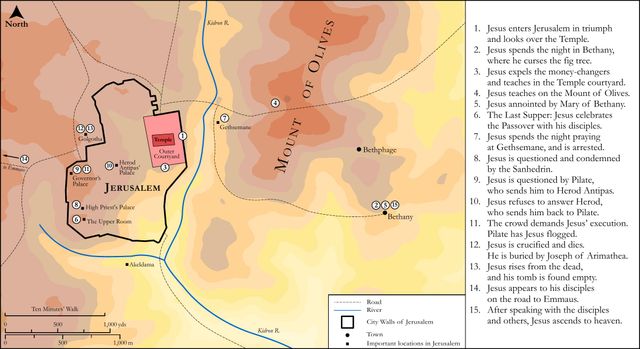
See on the biblical-era map

Study this verse
Historical interpretation
Six Centuries of Reception
8 surviving comments on this verse. Each one is dated, so this reads as a timeline rather than a list.
Select a marker to jump to its quote. Markers stagger vertically where authors wrote within a few decades of each other.
Having commanded Peter to put up his sword, which was an instance of patience, and having (as another Evangelist writes [Luke 22:51.]) healed the ear that was cut off, which was an instance of the greatest mercy, and of Divine power, it now follows, In that hour said Jesus to the multitudes, to the end that if they could not remember His past goodness, they might at least confess His present,) Are ye come out as against a thief with swords and staves for to take me?
They did not lay hands on Him in the temple because they feared the multitude, therefore also the Lord went forth that He might give them place and opportunity to take Him. This then teaches them, that if He had not suffered them of His own free choice, they would never have had strength to take Him. Then the Evangelist assigns the reason why the Lord was willing to be taken, adding, All this was done that the Scriptures of the Prophets might be fulfilled.
The disciples who had remained when the Lord was apprehended, fled when He spoke these things to the multitudes, Then all the disciples forsook him and fled; for they then understood that He could not escape but rather gave Himself up voluntarily.
Great was the zeal of Peter, who fled not when He saw the others fly, but remained, and entered in. For though John also went in, yet he was known to the Chief Priest. He followed afar off, because he was about to deny his Lord.
And to His disciples He saith these things; but to the others, "Are ye come out as against a thief with swords and staves for to take me? I sat daily teaching in the temple, and ye laid no hold on me."
See how many things He doeth that might awaken them. He cast them to the ground, He healed the servant's ear, He threatened them with being slain; "For they shall perish with the sword," He saith, "who take the sword." By the healing of the ear, He gave assurance of these things also; from every quarter, both from the things present, and from the things to come, manifesting His power, and showing that it was not a work of their strength to seize Him. Wherefore He also adds, "I was daily with you, and sat teaching, and ye laid no hold on me;" by this also making it manifest, that the seizure was of His permission. He passed over the miracles, and mentions the teaching, that He might not seem to boast.
When I taught, ye laid no hold on me; when I held my peace, did ye come against me? I was in the temple, and no one seized me, and now do ye come upon me late and at midnight with swords and staves? What need was there of these weapons against Him, who was with you always? by these things teaching them, that unless He had voluntarily yielded, not even then would they have succeeded. For neither could they (who were not able to hold Him when in their hands, and who, when they had got Him in the midst of them, had not prevailed) even then have succeeded, unless He had been willing.
And to His disciples He saith these things; but to the others, "Are ye come out as against a thief with swords and staves for to take me? I sat daily teaching in the temple, and ye laid no hold on me."
See how many things He doeth that might awaken them. He cast them to the ground, He healed the servant's ear, He threatened them with being slain; "For they shall perish with the sword," He saith, "who take the sword." By the healing of the ear, He gave assurance of these things also; from every quarter, both from the things present, and from the things to come, manifesting His power, and showing that it was not a work of their strength to seize Him. Wherefore He also adds, "I was daily with you, and sat teaching, and ye laid no hold on me;" by this also making it manifest, that the seizure was of His permission. He passed over the miracles, and mentions the teaching, that He might not seem to boast.
When I taught, ye laid no hold on me; when I held my peace, did ye come against me? I was in the temple, and no one seized me, and now do ye come upon me late and at midnight with swords and staves? What need was there of these weapons against Him, who was with you always? by these things teaching them, that unless He had voluntarily yielded, not even then would they have succeeded. For neither could they (who were not able to hold Him when in their hands, and who, when they had got Him in the midst of them, had not prevailed) even then have succeeded, unless He had been willing.
After this, He solves also the difficulty why He willed it then. For, "this was done," He saith, "that the Scriptures of the prophets might be fulfilled." See how even up to the last hour, and in the very act of being betrayed, He did all things for their amendment, healing, prophesying, threatening. "For," He saith, "they shall perish by the sword." To show that He is suffering voluntarily, He saith, "I was daily with you teaching;" to manifest His accordance with the Father, He adds, "That the Scriptures of the prophets might be fulfilled."
But wherefore did they not lay hold on Him in the temple? Because they would not have dared in the temple, on account of the people. Wherefore also He went forth without, both by the place and by the time giving them security, and even to the last hour taking away their excuse. For He who, in order that He might obey the prophets, gave up even Himself, how did He teach things contrary to them?
"Then all His disciples," it is said, "forsook Him, and fled." For when He was seized, they remained; but when He had said these things to the multitudes, they fled. For thenceforth they saw that escape was no longer possible, when He was giving Himself up to them voluntarily, and saying, that this was done according to the Scriptures.
And when these were fled, "they lead Him away to Caiaphas; but Peter followed, and entered in to see what the end should be."
Great was the fervor of the disciple; neither did he fly when he saw them flying, but stood his ground, and went in with Him. And if John did so too, yet he was "known to the high priest."
And why did they lead Him away there where they were all assembled? That they might do all things with consent of the chief priests. For he was then high priest, and all were waiting for Christ there, to such a degree did they spend the whole night, and give up their sleep for this object. For neither did they then eat the passover, but watched for this other purpose. For John, when he had said that "it was early," added, "they entered into the judgment hall, lest they should be defiled, but that they might eat the passover."
What must we say then? That they ate it on another day, and broke the law, on account of their eager desire about this murder. For Christ would not have transgressed as to the time of the passover, but they who were daring all things, and trampling under foot a thousand laws. For since they were exceedingly boiling with rage, and having often attempted to seize Him, had not been able; having then taken Him unexpectedly, they chose even to pass by the passover, for the sake of satiating their murderous lust.
(Verse 55.) At that hour Jesus said to the crowds: Are you coming out with swords and clubs to arrest me like a robber? Every day I was sitting in the temple teaching, and you did not seize me. It is foolish, he said, to seek him with swords and clubs, who willingly surrenders himself to your hands, and to search for him like a lurking fugitive in the night, and to investigate him through a betrayer, who teaches in the temple every day. But you are gathering against me in the darkness, because your power is in darkness.
This speech shows a mind willing to suffer; vainly would the Prophets have prophesied truly, unless the Lord asserts their truth by His suffering.
It is folly then to seek with swords and staves Him who offers Himself to your hands, and with a traitor to hunt out, as though lurking under cover of night, one who is daily teaching in the temple.
They pierced my hands and my feet; (Ps. 22:16.) and in another place, He is led as a sheep to the slaughter; (Is. 53:7, 8.) and, By the iniquities of my people was He led to death.
But Josephus writesu, that this Caiaphas had purchased the priesthood of a single year, notwithstanding that Moses, at God's command, had directed that High Priests should succeed hereditarily, and that in the Priests likewise succession by birth should be followed up. No wonder then that an unrighteous High Priest should judge unrighteously.
He went in, either out of the attachment of a disciple, or natural curiosity, seeking to know what sentence the High Priest would pass, whether death, or scourging.
As much as to say, Robbers assault and study concealment; I have injured no one, but have healed many, and have ever taught in your synagogues.
For because all the Prophets had foretold Christ's Passion, he does not cite any particular place, but says generally that the prophecies of all the Prophets were being fulfilled.
In this act is shown the Apostles' frailty; in the first ardour of their faith they had promised to die with Him, but in their fear they forgot their promise and fled. The same we may see in those who undertake to do great things for the love of God, but fail to fulfil what they undertake; they ought not to despair, but to rise again with the Apostles, and recover themselves by penitence.
For had he kept close to his Lord's side, he could never have denied Him. This also shows that Peter should follow his Lord's Passion, that is, imitate it.
Mystically, As Peter, who by tears washed away the sin of his denial, figures the recovery of those who lapse in time of martyrdom; so the flight of the other disciples suggests the precaution of flight to such as feel themselves unfit to endure torments.
And the action suits his name; Caiaphas, i. e. 'contriving,' or, 'politic,' to execute his villainy; or 'vomiting from his mouth,' because of his audacity in uttering a lie, and bringing about the murder. They took Jesus thither, that they might do all advisedly; as it follows, Where the Scribes and the Elders were assembled.
Continue studying Matthew 26:55 across the web’s major study libraries — every link below opens this exact verse, chapter, or book on the destination site.
Read & Compare
 BibleGatewayThis verse in more than 200 translations and 70 languages.
 Bible.comThe YouVersion reader — hundreds of translations, reading plans, and highlights.
 ESV.orgCrossway's official English Standard Version reader.
 NET BibleThe NET translation with 60,000+ translators' notes on every rendering decision.
 STEP BibleTyndale House's free study tool — original text, vocabulary, and scholarly resources.
 BibliaLogos Bible Software's free web reader.
 USCCBThe New American Bible (Revised Edition) with the U.S. bishops' study notes.
Commentaries
 BibleHub CommentariesDozens of classic commentaries on this verse, gathered on one page.
 StudyLightMore than 100 commentary sets — the largest collection on the web.
 BibleRefPlain-English commentary on what this verse means, verse by verse.
 Enduring WordDavid Guzik's free commentary on this chapter, widely used by Bible teachers.
 Bible Study ToolsVerse commentary alongside Greek and Hebrew study aids.
Original Language & Research
- BibleHub InterlinearThe verse word by word — original language, transliteration, and English.
- BibleHub LexiconEvery word's original-language definition and Strong's entry.
 Blue Letter BibleDeep-study tools — Strong's numbers, concordance, and word studies.
 CNTR CollationThe earliest Greek manuscripts of this verse, collated letter by letter.
Sermons, Hymns & Audio


TrulyRandomVerse is not affiliated with these sites and doesn’t control their content. They’re linked because they’re genuinely useful.
Summary
Matthew 26:55 captures Jesus' poignant confrontation with the armed multitude sent to arrest Him in Gethsemane. He challenges the hypocrisy of their approach, questioning why they treat Him like a dangerous criminal with swords and clubs, when He had openly and peacefully taught among them daily in the temple without resistance. This rhetorical question underscores the stark contrast between His public ministry and the clandestine, violent manner of His apprehension, highlighting the injustice of their actions and the divine timing of His surrender.
Context
ShowHideLiterary Context
This verse is situated at a pivotal moment in the Passion narrative, immediately following Judas Iscariot's betrayal kiss (Matthew 26:49) and the disciples' inability to remain watchful with Jesus in Gethsemane (Matthew 26:36-46). The arrival of the "multitudes" with "swords and staves" signifies the escalation from private agony to public confrontation, marking the beginning of Jesus' formal arrest and trial. His subsequent words in Matthew 26:56 explicitly state that these events are unfolding "that the scriptures of the prophets might be fulfilled," placing this immediate scene within the broader divine plan.
Historical & Cultural Context
Jesus' arrest by a large, armed group reflects the authorities' fear of His popular influence and their determination to apprehend Him without inciting a public uprising. Temple guards, often augmented by Roman soldiers (as implied in John 18:3), were typically dispatched with such weaponry only for dangerous criminals, rebels, or those suspected of sedition. The contrast Jesus draws between this violent, nighttime apprehension and His daily, public teaching in the temple courts (Matthew 21:23) highlights the clandestine and illegitimate nature of their actions. It was culturally unacceptable to seize a respected teacher in such a manner unless he was deemed a serious threat to public order or the ruling powers.
Key Themes
ShowHideMatthew 26:55 contributes significantly to several overarching themes within the Gospel. Firstly, it powerfully illustrates Jesus' Innocence and Dignity in the face of false accusation and unjust treatment. By questioning their methods, Jesus exposes the baselessness of their charges and the indignity of their approach, asserting His true identity as a teacher, not a lawbreaker. Secondly, it reveals the Hypocrisy and Fear of the Authorities. Their reluctance to arrest Him openly during His daily teaching in the temple (Matthew 21:45-46) underscores their cowardice and manipulative tactics, preferring a secret ambush to a public confrontation. Finally, despite the human injustice, the verse subtly points to Divine Sovereignty and the Fulfillment of Prophecy. While Jesus questions the method of His arrest, He does not resist it, acknowledging in the very next verse (Matthew 26:56) that these events are part of God's predetermined plan for the redemption of humanity.
Exposition and Analysis
ShowHideKey Word Analysis
ShowHideThis verb, G2036, signifies to speak or say, often with an authoritative or declarative tone. In this context, Jesus' "saying" is not a plea but a direct, rhetorical challenge to the multitude, asserting His position and exposing their hypocrisy. It implies a deliberate and impactful utterance rather than a mere casual remark.
The word G3027 refers to a brigand, robber, or even a revolutionary. By using this term, Jesus highlights the profound incongruity between His peaceful, public ministry and the violent, armed manner in which they have come to apprehend Him. It underscores the false premise of their actions, treating Him as a dangerous criminal deserving of such a forceful arrest.
G1321 means to teach, instruct, or impart knowledge. Jesus emphasizes His consistent, open role as a teacher in the temple, a stark contrast to the covert and violent arrest. This word reinforces His identity as a spiritual authority and guide, making their current actions appear even more absurd and unjust.
Verse Breakdown
ShowHide"In that same hour said Jesus to the multitudes"
This phrase establishes the immediate temporal context, emphasizing the swift transition from the private agony of Gethsemane to the public confrontation. Jesus directly addresses the large crowd, indicating His clear and conscious engagement with His captors rather than a panicked or submissive reaction.
"Are ye come out as against a thief with swords and staves for to take me?"
This is a powerful rhetorical question. Jesus challenges the legitimacy of their actions, highlighting the disparity between His identity and the methods employed. The "swords and staves" (clubs or cudgels) signify an aggressive, violent approach typically reserved for dangerous criminals, underscoring the false accusation inherent in their arrest.
"I sat daily with you teaching in the temple"
Jesus contrasts their current violent approach with His consistent, public, and peaceful ministry. His daily presence in the temple, the spiritual heart of Jerusalem, implies accessibility and transparency, making their clandestine arrest appear cowardly and unjust. He was readily available, yet they chose not to seize Him then.
"and ye laid no hold on me."
This clause emphasizes the authorities' previous inaction or inability to arrest Jesus during His public ministry. It suggests either a divine restraint that prevented them from seizing Him until the appointed time or their fear of the crowds' reaction if they had attempted to arrest Him openly. This highlights the predetermined nature of the hour of His arrest.
Literary Devices
ShowHideMatthew 26:55 is rich with literary devices that amplify its meaning. The most prominent is the Rhetorical Question ("Are ye come out as against a thief...?"), which Jesus uses not to elicit an answer, but to expose the absurdity and injustice of their actions. This question powerfully highlights the Contrast between Jesus' peaceful, public teaching ("I sat daily with you teaching in the temple") and the violent, clandestine manner of His arrest ("with swords and staves for to take me"). This stark juxtaposition underscores the hypocrisy of the religious authorities and the baselessness of their accusations. Furthermore, there is an element of Irony in their treating Jesus, the bringer of peace and truth, as a dangerous criminal, while simultaneously demonstrating their own fear and deceit by acting under the cover of darkness.
Theological and Thematic Connections
ShowHideMatthew 26:55 profoundly illustrates the tension between human injustice and divine sovereignty. Jesus' calm, rhetorical question in the face of an armed mob reveals His complete control and awareness, even as He is being unjustly seized. This moment is not a failure of His power, but a deliberate submission to the Father's will, fulfilling the prophetic narrative of the suffering servant who would be "numbered with the transgressors." It underscores that the Kingdom of God operates by different principles than earthly powers, where true authority is demonstrated through humility and sacrificial obedience, rather than through force or coercion. The scene foreshadows the ultimate triumph of truth over deceit, and divine purpose over human conspiracy, as Jesus willingly walks the path to the cross for the redemption of humanity.
Reflection and Application
ShowHideJesus' dignified response in Matthew 26:55 offers profound lessons for believers navigating a world often marked by injustice and misunderstanding. His willingness to face false accusations and violent apprehension without resorting to self-defense or retaliation demonstrates a profound trust in God's sovereign plan and the power of truth. For us, this means embracing courage in the face of adversity, standing firm in our convictions even when misunderstood or falsely accused, and refusing to compromise our integrity. It challenges us to consider how we respond when our motives are questioned or our character is maligned. Like Jesus, we are called to embody peace and truth, even when surrounded by hostility, trusting that God's ultimate purposes will prevail. This verse also serves as a poignant reminder that those who oppose the truth often resort to hidden agendas and unjust means, urging us to maintain vigilance and discernment.
Questions for Reflection
ShowHideFAQ
ShowHideWhy did Jesus not resist arrest, especially given His power?
ShowHideJesus' non-resistance was a deliberate act of obedience to God's predetermined plan for human salvation. As He states in the very next verse, Matthew 26:56, His arrest was "that the scriptures of the prophets might be fulfilled." He also tells Peter, who drew a sword, that He could call "more than twelve legions of angels" (Matthew 26:53). His power was not absent but willingly restrained, demonstrating His submission to the Father's will and His mission to become the atoning sacrifice for sin. This aligns with the prophetic vision of the suffering servant who would not open His mouth (Isaiah 53:7).
What is the significance of the "swords and staves"?
ShowHideThe "swords and staves" (clubs or cudgels) signify the aggressive, violent, and intimidating nature of the arresting party. Such weaponry was typically employed when apprehending dangerous criminals, revolutionaries, or those suspected of inciting rebellion. Jesus' rhetorical question highlights the profound incongruity: He was a peaceful teacher, not a violent insurgent. The presence of these weapons underscores the authorities' fear, their intent to overpower Him, and the baselessness of their treating Him as a dangerous threat. It contrasts sharply with His public, unarmed ministry.
What is the significance of Jesus teaching daily in the temple, and why did they not arrest Him then?
ShowHideJesus' daily teaching in the temple (Matthew 21:23) signifies His open, public, and transparent ministry. He was accessible to all, teaching openly in the heart of Jewish religious life. The fact that the authorities "laid no hold" on Him then indicates their fear of the crowds (Matthew 21:46) who regarded Him as a prophet. Their decision to arrest Him at night, away from the public eye and with force, reveals their cowardice, their reliance on deceit, and their desire to avoid public outcry, thereby highlighting the unjust and manipulative nature of their actions. It also points to the divine timing, as Jesus' hour had not yet come until this moment (John 7:30).
Christ-Centered Fulfillment
ShowHideMatthew 26:55, though seemingly a moment of human injustice, is profoundly Christ-centered in its fulfillment of God's redemptive plan. Jesus' rhetorical question, challenging the armed mob for treating Him like a "thief," underscores His absolute innocence and highlights the profound irony that the sinless Son of God was being apprehended as a common criminal. This unjust arrest was not an unforeseen tragedy but a deliberate step in His journey as the suffering servant prophesied in Isaiah 53, who would be "numbered with the transgressors" (Isaiah 53:12). By willingly submitting to this ignominious capture, Jesus perfectly embodied the Lamb of God, who, without resistance, was led to the slaughter to take away the sin of the world (John 1:29). His previous public teaching in the temple, contrasted with this clandestine arrest, emphasizes that His kingdom is not of this world, established by force, but through humble obedience and sacrificial love (John 18:36). Thus, this moment of apparent weakness is, in fact, a powerful demonstration of Christ's perfect obedience to the Father's will, laying down His life freely so that humanity might be reconciled to God (Philippians 2:8).