


Judges 9:56
- וַיָּשֶׁבvai·Ya·shevand he repaidH7725Conj-w ¦ V-Hiphil-ConsecImperf-3msVerb Hiphil Consecutive Imperfect 3rd Singular Masculineוַandיָּשֶׁבhe repaid
- אֱלֹהִים'E·lo·HimGodH430N-mpNoun Plural Masculine Absolute
- אֵת'et<obj.>H853DirObjMParticle Object Indicator
- רָעַתra·'At[the] evil ofH7451N-fscNoun Singular Feminine Construct
- אֲבִימֶלֶךְ'a·vi·Me·lekhAbimelechH40N-proper-mNoun Proper Masculine
- אֲשֶׁר'a·SherwhichH834RelParticle Relative
- עָשָׂה'a·Sahhe had doneH6213V-Qal-Perf-3msVerb Qal Perfect 3rd Singular Masculine
- לְאָבִיוle·'a·Vivto his fatherH1Prep-l ¦ N-msc ¦ 3msNoun Singular Masculine Constructלְtoאָבִיfatherוhis
- לַהֲרֹגla·ha·Rogby killingH2026Prep-l ¦ V-Qal-InfVerb Qal Infinitive Constructלַbyהֲרֹגkilling
- אֶת'et<obj.>H853DirObjMParticle Object Indicator
- שִׁבְעִיםshiv·'ImseventyH7657N-mpNoun Plural Masculine Absolute
- אֶחָיו'e·Chavhis brothersH251N-mpc ¦ 3msNoun Plural Masculine Constructאֶחָיbrothersוhis
English is a literal word-by-word gloss of the Hebrew, not the KJV's wording. Why?
This is the original text the KJV's translators worked from — each Hebrew word with its own literal English meaning in this verse, prepared by scholars at Tyndale House, Cambridge. The KJV translates whole sentences, not word by word, so its wording differs: one Hebrew word can become several English words, and the KJV may choose “the LORD” where the gloss reads “Yahweh”. Both are faithful — they answer different questions. For the KJV's own rendering, switch to the KJV text.
Details
See on the biblical-era map
Study this verse
Public-domain commentary
Matthew Henry
From his Commentary on the Whole Bible. Henry comments on passages, not single verses — this entry covers Judges 9:50–57. His two-level outline is real structure in the source text, so it is rendered as structure.
We have seen the ruin of the Shechemites completed by the hand of Abimelech; and now it comes to his turn to be reckoned with who was their leader in villany. Thebez was a small city, probably not far from Shechem, dependent upon it, and in confederacy with it. Now,
I.Abimelech attempted the destruction of this city (Jdg 9:50), drove all the inhabitants of the town into the castle, or citadel, Jdg 9:51.
When he had them there he did not doubt but he should do the same execution here that he had lately done at the strong-hold of the temple of Baal-berith, not considering that the tower of an idol-temple lay more exposed to divine vengeance than any other tower. He attempted to set fire to this tower, at least to burn down the door, and so force an entrance, Jdg 9:52. Those who have escaped and succeeded well in one desperate attempt are apt to think the like attempt another time not desperate. This instance was long after quoted to show how dangerous it is to come near the call of a besieged city, Sa2 11:20, etc. But God infatuates those whom he will ruin.
II.In the attempt he was himself destroyed, having his brains knocked out with a piece of a millstone, Jdg 9:57.
No doubt this man was a murderer, whom, though he had escaped the dangers of the war with Shechem, yet vengeance suffered not to live, Act 28:4. Evil pursues sinners, and sometimes overtakes them when they are not only secure, but triumphant. Thebez, we may suppose, was a weak inconsiderable place, compared with Shechem. Abimelech, having conquered the greater, makes no doubt of being master of the less without any difficulty, especially when he had taken the city, and had only the tower to deal with; yet he lays his bones by that, and there is all his honour buried. Thus are the mighty things of the world often confounded by the weakest and those things that are most made light of. See here what rebukes those are justly put under many times by the divine providence that are unreasonable in their demands of satisfaction for injuries received. Abimelech had some reason to chastise the Shechemites, and he had done it with a witness; but when he will carry his revenges further, and nothing will serve but that Thebez also must be sacrificed to his rage, he is not only disappointed there, but destroyed; for verily there is a God that judges in the earth. Three circumstances are worthy of observation in the death of Abimelech: - 1. That he was slain with a stone, as he had slain his brethren all upon one stone. 2. That he had his skull broken. Vengeance aimed at that guilty head which had worn the usurped crown. 3. That the stone was cast upon him by a woman, Jdg 9:53. He saw the stone come; it was therefore strange he did not avoid it, but, no doubt, this made it so much the greater mortification to him to see from what hand it came. Sisera died by a woman's hand and knew it not; but Abimelech not only fell by the hand of a woman but knew it, and, when he found himself ready to breathe his last, nothing troubled him so much as this, that it should be said, A woman slew him. See, (1.) His foolish pride, in laying so much to heart this little circumstance of his disgrace. Here was no care taken about his precious soul, no concern what would become of that, no prayer to God for his mercy; but very solicitous he is to patch up his shattered credit, when there is no patching his shattered skull. "O let it never be said that such a mighty man as Abimelech was killed by a woman!" The man was dying, but his pride was alive and strong, and the same vain-glorious humour that had governed him all along appears now at last. Qualis vita, finis ita - As was his life, such was his death. As God punished his cruelty by the manner of his death, so he punished his pride by the instrument of it. (2.) His foolish project to avoid this disgrace; nothing could be more ridiculous; his own servant must run him through, not to rid him the sooner out of his pain, but that men say not, A woman slew him. Could he think that this would conceal what the woman had done, and not rather proclaim it the more? Nay, it added to the infamy of his death, for hereby he became a self-murderer. Better have it said, A woman slew him, than that it should be said, His servant slew him by his own order; yet now both will be said of him to his everlasting reproach. And it is observable that this very thing which Abimelech was in such care to conceal appears to have been more particularly remembered by posterity than most passages of his history; for Joab speaks of it as that which he expected David would reproach him with, for coming so nigh the wall, Sa2 11:21. The ignominy we seek to avoid by sin we do but perpetuate the remembrance of.
III.The issue of all is that Abimelech being slain,
1.Israel's peace was restored, and an end was put to this civil war; for those that followed him departed every man to his place, Jdg 9:55.
2.God's justice was glorified (Jdg 9:56, Jdg 9:57): Thus God punished the wickedness of Abimelech, and of the men of Shechem, and fulfilled Jotham's curse, for it was not a curse causeless. Thus he preserved the honour of his government, and gave warning to all ages to expect blood for blood. The Lord is known by the judgments which he executes, when the wicked is snared in the work of his own hands. Though wickedness may prosper awhile, it will not prosper always.
Continue studying Judges 9:56 across the web’s major study libraries — every link below opens this exact verse, chapter, or book on the destination site.
Read & Compare
 BibleGatewayThis verse in more than 200 translations and 70 languages.
 Bible.comThe YouVersion reader — hundreds of translations, reading plans, and highlights.
 ESV.orgCrossway's official English Standard Version reader.
 NET BibleThe NET translation with 60,000+ translators' notes on every rendering decision.
 STEP BibleTyndale House's free study tool — original text, vocabulary, and scholarly resources.
 BibliaLogos Bible Software's free web reader.
 USCCBThe New American Bible (Revised Edition) with the U.S. bishops' study notes.
Commentaries
 BibleHub CommentariesDozens of classic commentaries on this verse, gathered on one page.
 StudyLightMore than 100 commentary sets — the largest collection on the web.
 BibleRefPlain-English commentary on what this verse means, verse by verse.
 Enduring WordDavid Guzik's free commentary on this chapter, widely used by Bible teachers.
 Bible Study ToolsVerse commentary alongside Greek and Hebrew study aids.
Original Language & Research
- BibleHub InterlinearThe verse word by word — original language, transliteration, and English.
- BibleHub LexiconEvery word's original-language definition and Strong's entry.
 Blue Letter BibleDeep-study tools — Strong's numbers, concordance, and word studies.
 SefariaThe Hebrew text with Rashi and centuries of Jewish commentary.
Sermons, Hymns & Audio


TrulyRandomVerse is not affiliated with these sites and doesn’t control their content. They’re linked because they’re genuinely useful.
Summary
Judges 9:56 delivers a profound theological verdict on the tragic saga of Abimelech, unequivocally stating that God Himself orchestrated the retribution for Abimelech's heinous actions. This verse powerfully asserts divine justice, demonstrating that the severe consequences Abimelech faced, culminating in his ignominious death, were a direct and fitting repayment for the wickedness he perpetrated, most notably the brutal slaughter of his seventy half-brothers. It underscores the active role of God in history, ensuring that evil deeds do not go unpunished and that His moral order ultimately prevails.
Context
ShowHideLiterary Context
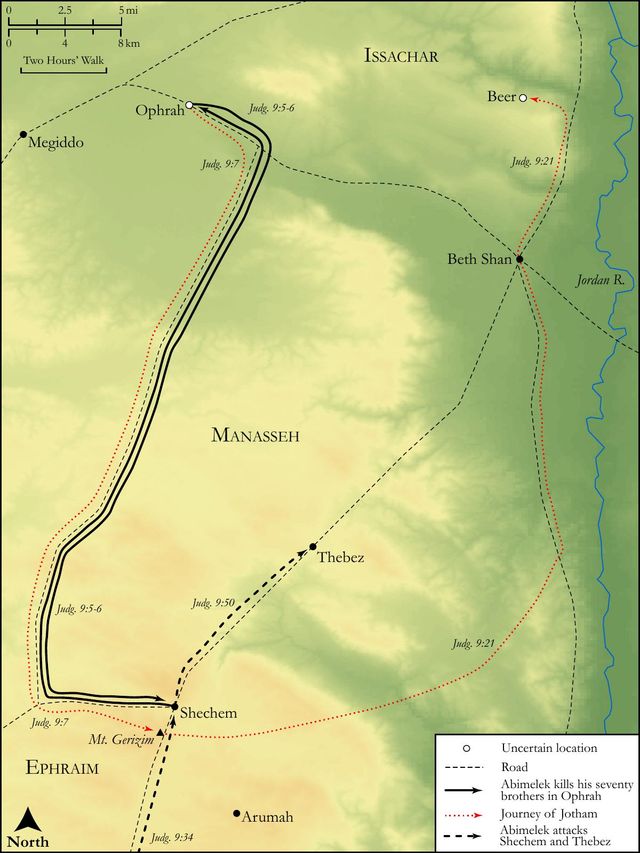
Judges 9:56 appears as the definitive theological conclusion to the entire Abimelech narrative, immediately following the account of his humiliating death at Thebez. The chapter meticulously details Abimelech's ruthless consolidation of power, beginning with the massacre of his seventy half-brothers at Ophrah, from which only Jotham, the youngest, escaped. Jotham's subsequent "parable of the trees" and prophetic curse from Mount Gerizim (Judges 9:7-20) foretold a destructive "fire" that would consume both Abimelech and the citizens of Shechem who had supported his bloody rise to power. The narrative then meticulously tracks the breakdown of trust between Abimelech and Shechem, leading to conflict, the destruction of Shechem, and ultimately Abimelech's fatal wound by a millstone dropped by a woman during his siege of Thebez (Judges 9:53). Verse 56, alongside verse 57, explicitly declares that these events were not mere coincidence but the direct "rendering" of divine justice, bringing the chapter's thematic focus on retribution to a definitive and sobering close.
Historical & Cultural Context
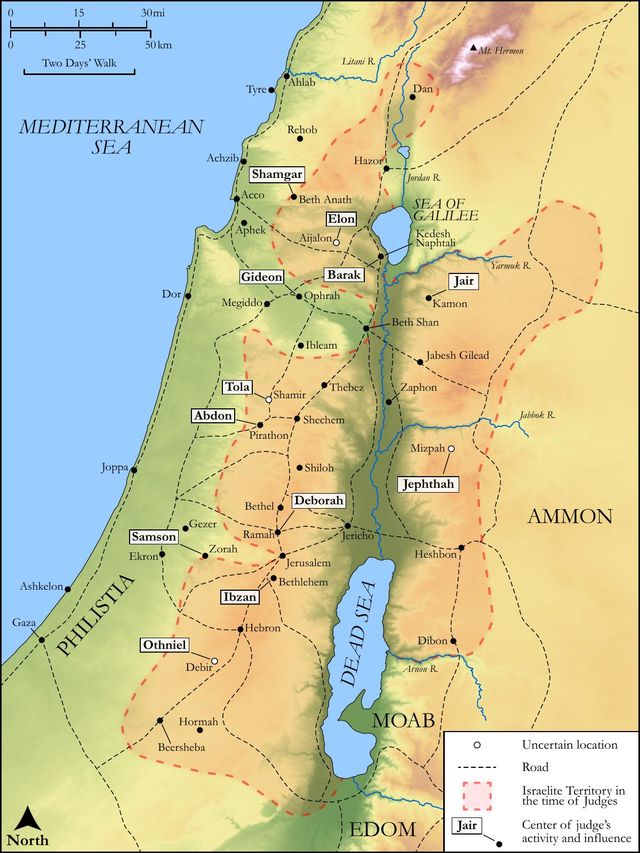
The period of the Judges, characterized by the recurring refrain "In those days there was no king in Israel; everyone did what was right in his own eyes" (Judges 21:25), was marked by profound moral decay, political instability, and a cyclical pattern of apostasy, oppression, and divine deliverance. Abimelech's audacious attempt to establish a monarchy through violence stands in stark contrast to the divine ideal of leadership and highlights the inherent dangers of human ambition unchecked by God's law. The concept of the "father's house" (Hebrew: bet 'av) was central to Israelite society, representing one's lineage, honor, inheritance, and social identity. Abimelech's slaughter of his brothers was an egregious offense against his father Gideon's legacy and the very fabric of the tribal community, a profound act of dishonor, betrayal, and a direct assault on the foundational social unit. The use of a millstone by a woman to kill a warrior was deeply humiliating in ancient warfare, emphasizing the ignominious nature of Abimelech's downfall and serving as a public display of divine contempt for his actions.
Key Themes
ShowHideThe overarching theme in Judges 9:56, and indeed throughout the entire Abimelech narrative, is divine retribution and justice. God is depicted as actively involved in human affairs, ensuring that wickedness is met with appropriate and often fitting consequences. This verse powerfully illustrates the principle of the consequences of sin, demonstrating that Abimelech's ruthless ambition, fratricide, and tyranny directly led to his violent and humiliating demise. His death by a woman's hand, echoing the nature of his crimes and his contempt for others, serves as a deeply ironic and fitting judgment. Furthermore, the verse underscores the fulfillment of prophecy, as Jotham's curse, spoken earlier in the chapter (Judges 9:20), finds its complete and precise realization in Abimelech's downfall and the destruction of Shechem. This reinforces the reliability of God's word and His unwavering commitment to upholding His righteous standards.
Exposition and Analysis
ShowHideKey Word Analysis
ShowHideThis plural noun, used here with a singular verb, refers specifically to the supreme God of Israel. Its presence in this verse is crucial, emphasizing that Abimelech's fate was not mere chance or human consequence, but a direct, deliberate act of the sovereign Lord. It highlights God's active involvement in human history and His role as the ultimate judge who oversees and executes justice.
This verb means "to turn back," "to return," or "to repay." In this context, it signifies that God caused Abimelech's wickedness to "return" or "rebound" upon his own head. It is not a passive observation of consequences but an active, divine act of bringing about justice, ensuring that the evil he sowed was reaped by him. It emphasizes God's direct agency in the unfolding of events, portraying Him as the ultimate arbiter who settles accounts.
This term broadly refers to evil, malice, harm, or calamity. Here, it specifically denotes Abimelech's moral depravity and the heinous acts he committed, particularly the murder of his brothers. The use of this strong word highlights the severity of his sin in God's eyes, not merely as a political maneuver but as an act fundamentally opposed to divine order and human decency.
While Abimelech killed his brothers, not Gideon directly, this term signifies the profound offense against Gideon's legacy, house, and family line. In ancient Israelite culture, the "father's house" was the foundational unit, representing identity, honor, and continuity. By slaughtering Gideon's legitimate sons, Abimelech sought to erase Gideon's heritage and seize power, an act of profound dishonor and betrayal that constituted a direct affront to his father's memory and the very structure of his family.
Verse Breakdown
ShowHide"Thus God rendered"
This opening phrase immediately establishes divine causality and agency. The events that follow are not random occurrences or mere human machinations but are directly orchestrated by God. It asserts God's sovereignty and active involvement in history, particularly in the administration of justice. This "rendering" is a deliberate act of divine judgment, not a passive allowance of natural consequences.
"the wickedness of Abimelech"
This specifies the object of God's rendering—Abimelech's evil deeds. It refers to the sum total of his depraved actions, including his ruthless ambition, treachery, and the brutal violence he employed to gain and maintain power. The text clearly links his downfall to his moral failings, leaving no doubt about the cause-and-effect relationship between his sin and his judgment.
"which he did unto his father"
This clause clarifies the profound nature of Abimelech's offense. It's not just fratricide, but a deep dishonor and destruction aimed at the very foundation of his father Gideon's house and legacy. It underscores the familial and societal impact of his crimes, making them even more heinous in the eyes of God and the community. This act was a direct assault on the honor and continuity of Gideon's lineage.
"in slaying his seventy brethren"
This final clause pinpoints the most egregious act that warranted such divine retribution. The mass murder of his half-brothers was the foundational act of his wickedness, the bloody cornerstone of his tyrannical reign. The number "seventy" emphasizes the scale of the atrocity, highlighting the cold-blooded, calculated nature of his ambition and the extent of his depravity.
Literary Devices
ShowHideThe narrative of Abimelech's rise and fall is rich with Irony. Abimelech, who ruthlessly murdered his seventy brothers to secure power and establish a male-dominated dynasty, ultimately dies a humiliating death at the hands of a woman, struck down by a common millstone, a tool of domesticity rather than warfare. This ignominious end stands in stark contrast to his violent ambition and fulfills the Prophecy Fulfillment of Jotham's curse, where "fire" would come out from Abimelech and consume the people of Shechem, and fire would come out from Shechem and consume Abimelech (Judges 9:20). The entire account serves as a powerful example of Retribution Theology, where the consequences of sin are shown to be a direct and fitting repayment from God, often mirroring the nature of the offense. The narrative structure itself demonstrates clear Cause and Effect, meticulously detailing Abimelech's wicked actions and then showing their inevitable, divinely ordained consequences.
Theological and Thematic Connections
ShowHideJudges 9:56 powerfully articulates a fundamental principle of biblical theology: God is a righteous judge who actively intervenes in human history to ensure that wickedness does not go unpunished. This verse is not merely a historical summary but a profound theological statement about divine justice, demonstrating that God holds individuals accountable for their actions. Abimelech's story serves as a stark reminder that while the wicked may prosper for a time, God's justice will ultimately prevail, often with consequences that fittingly reflect the nature of the sin committed. This divine rendering is a testament to God's moral governance of the world, assuring believers that He is sovereign over all events, even in times of chaos and moral decline, and that His character demands that sin be addressed.
Reflection and Application
ShowHideJudges 9:56 serves as a profound and sobering reminder of God's unwavering commitment to justice and the inevitable consequences of sin. It teaches us that no act of wickedness, however seemingly successful or hidden, escapes the notice of the Almighty. Abimelech's story is a cautionary tale against ruthless ambition, the pursuit of power through immoral means, and the disregard for human life and divine law. It encourages us to live with integrity, knowing that our actions have eternal weight and that God is ultimately the one who "renders" justice. In a world where evil often appears to triumph, this verse offers comfort and assurance that God is sovereign, and His moral order will ultimately be upheld. It calls us to trust in His perfect timing and to align our lives with His righteous standards, rather than pursuing selfish desires that lead to destruction. It also reminds us that while we may not always see immediate justice, God's ultimate judgment is certain and perfectly righteous.
Questions for Reflection
ShowHideFAQ
ShowHideWhy does Judges 9:56 state that Abimelech's wickedness was "unto his father" when he killed his seventy brothers, not Gideon directly?
ShowHideThe phrase "unto his father" (Hebrew: 'el 'abîw) in this context signifies a profound offense against Gideon's legacy, honor, and family line, rather than a direct physical act against Gideon himself. In ancient Israelite society, the "father's house" (Hebrew: bet 'av) was the foundational unit of identity, inheritance, and social standing. By systematically slaughtering his seventy half-brothers—Gideon's legitimate sons—Abimelech sought to eradicate Gideon's lineage and seize power for himself, effectively dishonoring and destroying his father's house and memory. This act was a betrayal of his familial duty and a direct assault on the very fabric of his father's heritage, making it a profound "wickedness... unto his father." This interpretation is crucial for understanding the depth of Abimelech's sin and the fitting nature of God's judgment, as God's justice often addresses the full scope of an offense, including its impact on family and legacy, as seen throughout the narrative of Judges 9.
Christ-Centered Fulfillment
ShowHideWhile Judges 9:56 speaks of God's direct retribution for Abimelech's wickedness, the ultimate and perfect "rendering" of justice, coupled with profound mercy, is found in Jesus Christ. The Old Testament's demonstrations of divine judgment, like Abimelech's fate, foreshadow the absolute righteousness of God and the certainty that sin will be judged. However, unlike Abimelech, whose wickedness was repaid upon himself, Christ perfectly bore the wickedness of humanity upon the cross. He became the ultimate recipient of God's righteous wrath against sin, so that all who believe in Him might be spared. The principle of "sowing and reaping" (Galatians 6:7) is fulfilled in Christ in a redemptive way: He, who knew no sin, became sin for us, so that in Him we might become the righteousness of God (2 Corinthians 5:21). Thus, while Abimelech's story highlights the terrifying justice of God, the gospel reveals that same justice satisfied in the person of Jesus, who offers reconciliation and forgiveness to all who turn from their own wickedness and trust in His atoning sacrifice (Romans 3:23-26). He is the true Judge who will one day return to render final justice (Revelation 20:11-15), but also the Lamb of God who takes away the sin of the world (John 1:29), offering a path to escape the judgment that Abimelech so justly received.