


Judges 5:25
Bible text: King James Version (1769 Blayney text) · Public domain
Bible text: Berean Standard Bible · Public domain
Bible text: American Standard Version (1901) · Public domain
Bible text: World English Bible, Messianic edition · Public domain
Bible text: Geneva Bible (1599) · Public domain
Bible text: Young's Literal Translation · Public domain
- מַיִםMa·yimwaterH4325N-mpNoun Plural Masculine Absolute
- שָׁאַלsha·'Alhe askedH7592V-Qal-Perf-3msVerb Qal Perfect 3rd Singular Masculine
- חָלָבcha·LavmilkH2461N-msNoun Singular Masculine Absolute
- נָתָנָהna·Ta·nahshe gaveH5414V-Qal-Perf-3fsVerb Qal Perfect 3rd Singular Feminine
- בְּסֵפֶלbe·Se·felin a bowl ofH5602Prep-b ¦ N-mscNoun Singular Masculine Constructבְּinסֵפֶלa bowl of
- אַדִּירִים'a·di·RimnoblesH117Adj-mpAdjective Plural Masculine Absolute
- הִקְרִיבָהhik·Ri·vahshe brought nearH7126V-Hiphil-Perf-3fsVerb Hiphil Perfect 3rd Singular Feminine
- חֶמְאָהchem·'Ahcurd<s>H2529N-fsNoun Singular Feminine Absolute
English is a literal word-by-word gloss of the Hebrew, not the KJV's wording. Why?
This is the original text the KJV's translators worked from — each Hebrew word with its own literal English meaning in this verse, prepared by scholars at Tyndale House, Cambridge. The KJV translates whole sentences, not word by word, so its wording differs: one Hebrew word can become several English words, and the KJV may choose “the LORD” where the gloss reads “Yahweh”. Both are faithful — they answer different questions. For the KJV's own rendering, switch to the KJV text.
Details
See on the biblical-era maps

Study this verse
Public-domain commentary
Matthew Henry
From his Commentary on the Whole Bible. Henry comments on passages, not single verses — this entry covers Judges 5:24–31. His four-level outline is real structure in the source text, so it is rendered as structure.
Deborah here concludes this triumphant song,
I.With the praises of Jael, her sister-heroine, whose valiant act had completed and crowned the victory.
She had mentioned her before (Jdg 5:6) as one that would have served her country if it had been in her power; now she applauds her as one that did serve it admirably well when it was in her power. Her poetry is finest and most florid here in the latter end of the song. How honourably does she speak of Jael (Jdg 5:24), who preferred her peace with the God of Israel before her peace with the king of Canaan, and though not a native of Israel (for aught that appears) yet heartily espoused the cause of Israel in this critical conjuncture, jeoparded her life as truly as if she had been in the high places of the field, and bravely fought for those whom she saw God fought for! Blessed shall she be above women in the tent. Note, Those whose lot is cast in the tent, in a very low and narrow sphere of activity, if they serve God in that according to their capacity, shall in no wise lose their reward. Jael in the tent wins as rich a blessing as Barak in the field. Nothing is more confounding, grievous, and shameful, than disappointment, and Deborah here does most elegantly describe two great disappointments, the shame of which was typical of sinners' everlasting shame.
1.Sisera found a fatal enemy where he expected a firm and faithful friend.
(1.)Jael showed him the kindness of a friend, and perhaps at that time intended no other than kindness, until God, by an immediate impulse upon her mind (which impulses then were to be regarded, and carried so much of their own evidence with them that they might be relied upon, but cannot now be pretended to), directed her to do otherwise, Jdg 5:25. He asked only for fair water to quench his thirst, but she, not only to show her housewifery and good housekeeping, but to express her respect to him, gave him milk and brought forth butter, that is (say some interpreters), milk which had the butter taken from it; we call it butter-milk. No (say others), it was milk that had the butter still in it; we call it cream. Whichsoever it was, it was probably the best her house afforded; and, to set it off, she brought it in a lordly dish, such as she called so, the finest she had, and better than she ordinarily used at her town table. This confirmed Sisera's opinion of her friendship, and made him sleep the faster and the more secure. But,
(2.)She proved his mortal enemy, gave him his death's stroke: it is curiously described, Jdg 5:26, Jdg 5:27.
[1.]How great does Jael look, hammering Sisera, as it is in the margin, mauling that proud man who had been so long the terror of the mighty, and sending him down slain to the pit with his iniquities upon his bones! Eze 32:27. She seems to have gone about it with no more terror nor concern than if she had been going to nail one of the boards or bars of her tent, so confident was she of divine aid and protection. We read it she smote off his head, probably with his own sword, which, now that his head was nailed through, she durst take from his side, but not before, for fear of waking him. But because there was no occasion for cutting off his head, nor was it mentioned in the history, many think it should be read, she struck through his head. That head which had been proudly lifted up against God and Israel, and in which had been forged bloody designs for the destruction of God's people, Jael finds a soft place in, and into that with a good will strikes her nail.
[2.]How mean does Sisera look, fallen at Jael's feet! Jdg 5:27. At the feet of this female executioner he bowed, he fell; all his struggles for life availed not; she followed her blow until he fell down dead. There lies extended the deserted carcase of that proud man, not on the bed of honour, not in the high places of the field, not having any glorious wound to show from a glittering sword, or a bow of steel, but in the corner of a tent, at the feet of a woman, with a disgraceful wound by a sorry nail struck through his head. Thus is shame the fate of proud men. And this is a very lively representation of the ruin of those sinners whose prosperity slays them; it flatters and caresses them with milk and butter in a lordly dish, as if it would make them easy and happy, but it nails their heads and hearts too to the ground in earthly-mindedness, and pierces them through with many sorrows; its flatteries are fatal, and sink them at last into destruction and perdition, Ti1 6:9, Ti1 6:10.
2.Sisera's mother had the tidings brought her of her son's fall and ruin when she was big with expectation of his glorious and triumphant return, Jdg 5:28-30, where we have,
(1.)Her fond desire to see her son come back in triumph: Why is his chariot so long in coming? She speaks this, not so much out of a concern for his safety, or any jealousy of his having miscarried (she had no fear of that, so confident was she of his success), but out of a longing for his glory, which with a feminine weakness she was passionately impatient to see, chiding the lingering chariot, and expostulating concerning the delays of it, little thinking that her unhappy son had been, before this, forced to quit that chariot which they were so proud of, and which she thought came so slowly. The chariots of his glory had now become the shame of his house, Isa 22:18. Let us take heed of indulging such desires as these towards any temporal good thing, particularly towards that which cherishes vain-glory, for this was what she here doted on. Eagerness and impatience in our desires do us a great deal of prejudice, and make it intolerable to us to be crossed. But towards the second coming of Jesus Christ, and the glories of that day, we should thus stand affected (Come, Lord Jesus, come quickly), for here we cannot be disappointed.
(2.)Her foolish hope and confidence that he would come at last in so much the greater pomp. Her wise ladies answered her, and thought they gave a very good account of the delay; yea, she (in her wisdom, says the Chaldee) tauntingly made answer to herself, "Have they not sped? No doubt they have, and that which delays them is that they are dividing the prey, which is so much that it is a work of time to make a distribution of it." In the spoil they pleased themselves with the thought of, observe,
[1.]How impudently, and to the reproach and scandal of their sex, these ladies boast of the multitude of damsels which the soldiers would have the abusing of.
[2.]How childishly they pleased themselves with the hope of seeing Sisera himself in a gaudy mantle of divers colours; how charmingly would it look! of divers colours of needle-work, plundered out of the wardrobe of some Israelitish lady; it is repeated again, as that which pleased their fancy above any thing, of divers colours of needle-work on both sides, and therefore very rich; such pieces of embroidery they hoped Sisera would have to present his mother and the ladies with. Thus apt are we to deceive ourselves with great expectations and confident hopes of honour, and pleasure, and wealth in this world, by which we prepare for ourselves the shame and grief of a disappointment. And thus does God often bring ruin on his enemies when they are most elevated.
II.She concludes all with a prayer to God,
1.For the destruction of all his foes: "So, so shamefully, so miserably, let all thy enemies perish, O Lord; let all that hope to triumph in Israel's ruin be thus disappointed and triumphed over. Do to them all as unto Sisera," Psa 83:9. Though our enemies are to be prayed for, God's enemies, as such, are to be prayed against; and, when we see some of God's enemies remarkably humbled and brought down, this is an encouragement to us to pray for the downfall of all the rest. Deborah was a prophetess, and this prayer was a prediction that in due time all God's enemies shall perish, Psa 92:9. None ever hardened his heart against God and prospered.
2.For the exaltation and comfort of all his friends. "But let those that love him, and heartily wish well to his kingdom among men, be as the sun when he goeth forth in his strength; let them shine so bright, appear so glorious in the eye of the world, cast such benign influences, be as much out of the reach of their enemies, who curse the rising sun because it scorches them; let them rejoice as a strong man to run a race, Psa 19:5. Let them, as burning and shining lights in their places, dispel the mists of darkness, and shine with more and more lustre and power unto the perfect day." Pro 4:18. Such shall be the honour, and such the joy, of all that love God in sincerity, and for ever they shall shine as the sun in the firmament of our Father.
The victory here celebrated with this song was of such happy consequence to Israel that for the best part of one age they enjoyed the peace which it opened the way to: The land had rest forty years, that is, so long it was from this victory to the raising up of Gideon. And well would it have been if, when the churches and the tribes had rest, they had been edified, and had walked in the fear of the Lord.
Continue studying Judges 5:25 across the web’s major study libraries — every link below opens this exact verse, chapter, or book on the destination site.
Read & Compare
 BibleGatewayThis verse in more than 200 translations and 70 languages.
 Bible.comThe YouVersion reader — hundreds of translations, reading plans, and highlights.
 ESV.orgCrossway's official English Standard Version reader.
 NET BibleThe NET translation with 60,000+ translators' notes on every rendering decision.
 STEP BibleTyndale House's free study tool — original text, vocabulary, and scholarly resources.
 BibliaLogos Bible Software's free web reader.
 USCCBThe New American Bible (Revised Edition) with the U.S. bishops' study notes.
Commentaries
 BibleHub CommentariesDozens of classic commentaries on this verse, gathered on one page.
 StudyLightMore than 100 commentary sets — the largest collection on the web.
 BibleRefPlain-English commentary on what this verse means, verse by verse.
 Enduring WordDavid Guzik's free commentary on this chapter, widely used by Bible teachers.
 Bible Study ToolsVerse commentary alongside Greek and Hebrew study aids.
Original Language & Research
- BibleHub InterlinearThe verse word by word — original language, transliteration, and English.
- BibleHub LexiconEvery word's original-language definition and Strong's entry.
 Blue Letter BibleDeep-study tools — Strong's numbers, concordance, and word studies.
 SefariaThe Hebrew text with Rashi and centuries of Jewish commentary.
Sermons, Hymns & Audio


TrulyRandomVerse is not affiliated with these sites and doesn’t control their content. They’re linked because they’re genuinely useful.
Summary
Judges 5:25, a pivotal verse within the ancient "Song of Deborah and Barak," vividly recounts Jael's deceptive act of hospitality towards Sisera, the routed Canaanite general. Sisera, seeking basic refreshment in the form of water, is instead offered rich, curdled milk and a substantial dairy product, presented in a dish befitting nobility. This seemingly generous welcome was a calculated ruse, designed to lull the exhausted Sisera into a deep, vulnerable sleep, thereby setting the stage for his dramatic and ignominious death at Jael's hand, which secured a decisive and divinely orchestrated victory for Israel.
Context
ShowHideLiterary Context
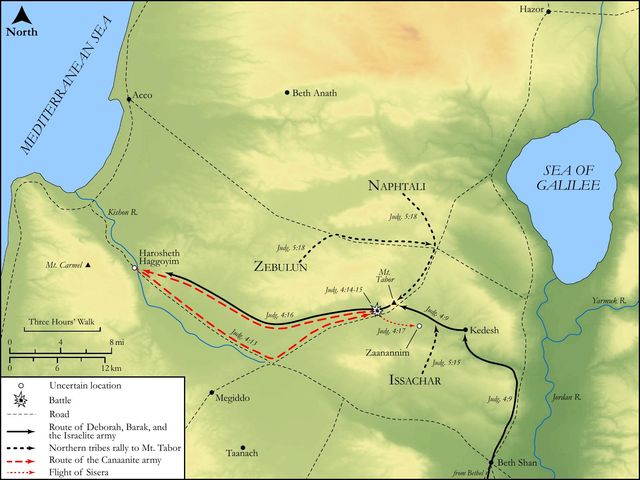
Judges 5:25 is situated within the profound poetic celebration known as the "Song of Deborah and Barak" (Judges 5), which serves as a theological and emotional commentary on the prose narrative of Israel's victory over the Canaanites in Judges 4. The song meticulously recounts the key moments of the battle and its aftermath, attributing the triumph to divine intervention and highlighting the roles of unexpected heroes. Jael's actions, culminating in Sisera's death, are presented as the climactic fulfillment of Deborah's earlier prophecy that Sisera would be delivered into the hands of a woman (Judges 4:9). This verse immediately precedes the graphic description of Jael's fatal blow, emphasizing the strategic and deceptive nature of her hospitality as a crucial prelude to the decisive act of deliverance.
Historical & Cultural Context
The period of the Judges (approximately 12th-11th centuries BC) was a tumultuous era for Israel, marked by cycles of spiritual apostasy, foreign oppression, and God's raising up of "judges" or deliverers. At this time, Israel was under the harsh dominion of King Jabin of Hazor, whose formidable army was commanded by Sisera. Jael belonged to the Kenites, a nomadic clan known for their metalworking skills, who had historically maintained peaceful relations, and sometimes treaties, with both the Israelites and certain Canaanite groups, including King Jabin. In that day, the offering of hospitality, particularly to a weary traveler or one seeking refuge, was a deeply sacred and binding social custom. To violate this trust was considered a grave offense, often inviting divine retribution. Sisera, exhausted and desperate after the rout of his army, sought sanctuary in Jael's tent, relying on the perceived neutrality of the Kenites and the inviolable sanctity of the tent as a safe haven. Jael's actions, therefore, represent a profound and calculated subversion of these cultural norms, strategically employed for the divine deliverance of Israel.
Key Themes
ShowHideThis verse, and Jael's narrative within the broader story of Deborah and Barak, powerfully illustrates several foundational biblical themes. Firstly, it underscores Divine Deliverance, demonstrating God's sovereign ability to use unconventional and often unexpected agents—in this instance, a non-Israelite woman—to accomplish His purposes and liberate His people from oppression. This aligns with the recurring motif in the book of Judges of God raising up "deliverers" in times of crisis, as seen with figures like Othniel (Judges 3:9). Secondly, it highlights the theme of Deceptive Hospitality, where a culturally revered act of welcome is strategically manipulated to disarm an enemy and facilitate his downfall. This subversion of expectation is a powerful motif in biblical narratives, often showcasing God's ironic justice. Finally, Jael's prominent role emphasizes Feminine Courage and Agency, celebrating a woman who acts with remarkable decisiveness and boldness, fulfilling prophecy and playing a pivotal role in Israel's salvation, even in contrast to the initial hesitation of male leaders like Barak (Judges 4:8).
Exposition and Analysis
ShowHideKey Word Analysis
ShowHideWhile literally referring to milk, in this context, it likely signifies a richer, more substantial form of dairy, possibly fermented or curdled milk, which would be more filling and potentially more soporific than plain water. This was a common and nourishing drink in Canaan, often offered as a sign of hospitality. Its offering here, instead of water, signals an elevated form of welcome, subtly designed to disarm Sisera.
The KJV translation "butter" is less precise. The Hebrew term more accurately denotes a thick, curdled milk product, akin to yogurt, clotted cream, or a soft cheese. This substance would be even more substantial and potentially more sleep-inducing than the "milk" previously mentioned, contributing significantly to Sisera's deep slumber. It represents a further escalation of Jael's deceptive generosity, designed to increase Sisera's vulnerability.
This word, meaning "wide" or "large," figuratively describes something powerful, excellent, famous, or noble. When applied to the "dish" (H5602, çêphel), it signifies that the vessel was not an ordinary drinking cup but a significant, perhaps ornate or ceremonial, bowl suitable for a person of high status or a distinguished guest. This detail amplifies the deceptive nature of Jael's hospitality, as it conveyed honor and security to Sisera, making his subsequent betrayal and death all the more shocking and ironic.
Verse Breakdown
ShowHide"He asked water"
This opening clause immediately establishes Sisera's desperate state and vulnerability. Having fled on foot from a devastating military defeat, he is utterly exhausted and parched. His request for water is a basic, desperate plea for survival and refreshment, implying a trust in Jael's hospitality and the sanctuary of her tent, which he perceived as neutral ground.
"and she gave him milk"
This clause introduces the crucial element of Jael's deception. Rather than providing the simple water requested, she offers something seemingly superior and more generous. This act, while appearing genuinely hospitable, is the first calculated step in disarming Sisera, providing him with a richer, more satisfying drink that would begin to induce drowsiness and a false sense of security.
"she brought forth butter in a lordly dish"
This final clause escalates the deceptive hospitality to its climax. The "butter" (more accurately, a thick, curdled dairy product) is even more substantial than the milk, and its presentation in a "lordly dish" further enhances the illusion of honor and security. This elaborate offering is meticulously designed to make Sisera feel completely safe, valued, and well-provided for, ensuring he would consume enough to become deeply drowsy and fall into a profound sleep, thereby rendering him utterly vulnerable to Jael's subsequent, fatal action.
Literary Devices
ShowHideJudges 5:25 is replete with Irony. Sisera, a mighty general, seeks refuge and simple refreshment, only to be offered the very means of his undoing. The "lordly dish" is particularly ironic, as it conveys honor and status to a man who is about to suffer an ignoble and humiliating death at the hands of a woman, directly contradicting the expected outcome of such a grand gesture. There is also a strong sense of Contrast between Sisera's expectation of safety and Jael's hidden, malevolent intent. The seemingly generous act of hospitality stands in stark contrast to the violent betrayal that immediately follows. The provision of rich, soporific dairy products subtly functions as Foreshadowing, hinting at Sisera's impending deep sleep and extreme vulnerability. The narrative also employs Understatement in describing Jael's actions; the verse simply states what she gave him, allowing the reader to infer the strategic and deceptive nature of her hospitality, which is then dramatically revealed in the subsequent verses describing Sisera's death.
Theological and Thematic Connections
ShowHideJael's act, as powerfully celebrated in Judges 5:25, serves as a profound testament to God's sovereign hand in delivering His people, often through unexpected means and agents. While morally complex by modern standards of ethics, within the biblical narrative, her actions are unequivocally lauded as a righteous fulfillment of divine judgment against an oppressive enemy. This narrative demonstrates that God is not limited by human conventions, societal power structures, or even gender, using a non-Israelite woman's cunning and courage to achieve His redemptive purposes. This account underscores the recurring biblical theme that the wicked often fall into the very traps they set or are undone by their own misplaced sense of security and pride. God's justice can manifest in surprising and often ironic ways, turning the expectations of the powerful on their head and revealing His ultimate control over all circumstances.
Reflection and Application
ShowHideJael's story in Judges 5:25, while deeply embedded in a specific historical and cultural context of ancient warfare and divine judgment, offers profound insights for contemporary believers. It serves as a powerful reminder that God is utterly sovereign and can strategically use anyone, regardless of their background, gender, or conventional social status, to accomplish His divine will. Her decisive and courageous action, though ethically challenging to our modern sensibilities concerning hospitality and violence, is unequivocally celebrated in the biblical text as instrumental in securing deliverance for Israel. For us today, this narrative can be a call to cultivate spiritual discernment, to recognize God's hand at work in unexpected places, and to remain open to His leading in unconventional ways. It challenges us to consider what it truly means to act with courage, conviction, and faithfulness when faced with spiritual, social, or personal oppression, trusting that God can work through our obedience, even when circumstances seem overwhelming or the path forward appears morally complex. While we are not called to emulate Jael's specific method of violence, her story inspires us to be bold instruments of God's justice and deliverance in our own spheres of influence, relying on His power and wisdom.
Questions for Reflection
ShowHideFAQ
ShowHideWas Jael's act morally justifiable?
ShowHideFrom the perspective of the "Song of Deborah" and the broader narrative of Judges, Jael's act is presented as a righteous and divinely sanctioned deed, celebrated as instrumental in Israel's deliverance from oppression. In the context of the warfare of that day, where treachery against an enemy was often lauded, and given Deborah's prophecy that Sisera would fall by the hand of a woman (Judges 4:9), Jael's action is portrayed as a heroic fulfillment of God's judgment. While modern ethical frameworks might question the deceptive nature of her hospitality, the biblical text unequivocally celebrates her as "most blessed of tent-dwelling women" (Judges 5:24).
Why did Jael offer milk and "butter" instead of water?
ShowHideJael's choice to offer milk and "butter" (likely a thick, curdled milk product or yogurt) instead of the requested water was a highly strategic and deceptive act of elevated hospitality. Water would have merely quenched Sisera's thirst. The richer dairy products, however, were far more substantial and nourishing, likely inducing a deeper sense of comfort, security, and physical satiety. Furthermore, such rich foods could have had a soporific effect, making Sisera drowsy and more susceptible to falling into a deep sleep, thereby rendering him utterly vulnerable to Jael's subsequent actions. It was a calculated move designed to disarm him both physically and psychologically.
What is the significance of the "lordly dish"?
ShowHideThe "lordly dish" (or "bowl of nobles") is highly significant because it further amplifies the deceptive nature of Jael's hospitality. By serving Sisera in a vessel fit for a person of high status or a distinguished guest, Jael underscored the illusion that he was being treated with utmost honor and respect. This gesture would have reinforced Sisera's sense of security and trust, causing him to completely let down his guard. The use of such a dish heightens the irony of the situation, as the mighty general who expected a noble reception was about to meet an ignoble and humiliating end at the hands of the very person who appeared to honor him.
Christ-Centered Fulfillment
ShowHideThe dramatic account of Jael's deceptive hospitality leading to Sisera's demise, powerfully celebrated in Judges 5:25, finds its ultimate fulfillment and profound reversal in the person and redemptive work of Jesus Christ. Jael's act delivered Israel from a temporal oppressor through cunning and a violation of trust, leading to the death of an enemy. In stark contrast, Jesus, the true and ultimate Deliverer, conquers humanity's greatest enemies—sin, death, and the devil—not through deception or betrayal, but through perfect truth, self-sacrificial love, and profound, genuine hospitality. He is the Lamb of God who takes away the sin of the world, offering His own body and blood as the ultimate "meal" of salvation, a true and life-giving hospitality in the Eucharist, leading to eternal life, not physical death. Where Jael's "lordly dish" led to a general's ignominious demise, Christ's table offers spiritual nourishment and victory over death itself for all who partake (Hebrews 2:14-15). He disarmed the spiritual powers and authorities, making a public spectacle of them by triumphing over them in the cross (Colossians 2:15), not by lulling them into a false sense of security, but by confronting them directly and decisively through His perfect obedience and atoning sacrifice. Jael's victory was a shadow of the eternal victory achieved by Christ, who will ultimately return as the victorious King, conquering all His enemies with righteousness and truth (Revelation 19:11-16).