


Judges 4:19
Bible text: King James Version (1769 Blayney text) · Public domain
Bible text: King James Version with Strong's numbers · Public domain
Bible text: Berean Standard Bible · Public domain
Bible text: American Standard Version (1901) · Public domain
Bible text: World English Bible, Messianic edition · Public domain
Bible text: Geneva Bible (1599) · Public domain
Bible text: Young's Literal Translation · Public domain
- וַיֹּאמֶרvai·Yo·merand he saidH559Conj-w ¦ V-Qal-ConsecImperf-3msVerb Qal Consecutive Imperfect 3rd Singular Masculineוַandיֹּאמֶרhe said
- אֵלֶיהָ'e·Lei·hato herH413Prep ¦ 3fsPreposition Definiteאֵלֶיtoהָher
- הַשְׁקִינִיhash·ki·nigive to drink meH8248V-Hiphil-Imp-2fs ¦ 1csVerb Hiphil Imperative 2nd Singular Feminineהַשְׁקִיgive to drinkנִיme
- נָאna'pleaseH4994PrtParticle Interjection
- מְעַטme·'ata little ofH4592N-mscNoun Singular Masculine Construct
- מַיִםMa·yimwaterH4325N-mpNoun Plural Masculine Absolute
- כִּיkiforH3588PrtParticle Conditional
- צָמֵאתִיtza·Me·tiI am thirstyH6770V-Qal-Perf-1csVerb Qal Perfect 1st Singular common gender
- וַתִּפְתַּחva·tif·Tachand she openedH6605Conj-w ¦ V-Qal-ConsecImperf-3fsVerb Qal Consecutive Imperfect 3rd Singular Feminineוַandתִּפְתַּחshe opened
- אֶת'et<obj.>H853DirObjMParticle Object Indicator
- נֹאודNod[the] skin-bottle ofH4997N-mscNoun Singular Masculine Construct
- הֶחָלָבhe·cha·Lav<the> milkH2461Art ¦ N-msNoun Singular Masculine Absoluteהֶ<the>חָלָבmilk
- וַתַּשְׁקֵהוּva·tash·Ke·huand she gave a drink himH8248Conj-w ¦ V-Hiphil-ConsecImperf-3fs ¦ 3msVerb Hiphil Consecutive Imperfect 3rd Singular Feminineוַandתַּשְׁקֵshe gave a drinkהוּhim
- וַתְּכַסֵּהוּva·te·kha·Se·huand she covered himH3680Conj-w ¦ V-Piel-ConsecImperf-3fs ¦ 3msVerb Piel Consecutive Imperfect 3rd Singular Feminineוַandתְּכַסֵּshe coveredהוּhim
English is a literal word-by-word gloss of the Hebrew, not the KJV's wording. Why?
This is the original text the KJV's translators worked from — each Hebrew word with its own literal English meaning in this verse, prepared by scholars at Tyndale House, Cambridge. The KJV translates whole sentences, not word by word, so its wording differs: one Hebrew word can become several English words, and the KJV may choose “the LORD” where the gloss reads “Yahweh”. Both are faithful — they answer different questions. For the KJV's own rendering, switch to the KJV text.
Details
See on the biblical-era maps
Study this verse
Public-domain commentary
Matthew Henry
From his Commentary on the Whole Bible. Henry comments on passages, not single verses — this entry covers Judges 4:17–24. His four-level outline is real structure in the source text, so it is rendered as structure.
We have seen the army of the Canaanites totally routed. It is said (Psa 83:9, Psa 83:10, where the defeat of this army is pleaded as a precedent for God's doing the like in after times) that they became as dung for the earth. Now here we have,
I.The fall of their general, Sisera, captain of the host, in whom, it is likely, Jabin their king put an entire confidence, and therefore was not himself present in the action. Let us trace the steps of this mighty man's fall.
1.He quitted his chariot, and took to his feet, Jdg 4:15, Jdg 4:17. His chariots had been his pride and his confidence; and we may suppose he had therefore despised and defied the armies of the living God, because they were all on foot, and had neither chariot nor horse, as he had. Justly therefore is he thus made ashamed of his confidence, and forced to quit it, and thinks himself then most safe and easy when he has got clear of his chariot, though we may well suppose it the best made, and best drawn, of any of them. Thus are those disappointed who rest on the creature; like a broken reed, it not only breaks under them, but runs into their hand, and pierceth them with many sorrows. The idol may quickly become a burden (Isa 46:1), and what we were sick for God can make us sick of. How miserable doth Sisera look now he is dismounted! It is hard to say whether he blusheth or trembleth more. Put not your trust in princes, if they may so soon be brought to this, if he who but lately trusted to his arms with so much assurance must now trust to his heels only with so little.
2.He fled for shelter to the tents of the Kenites, having no strong-hold, nor any place of is own in reach to retire to. The mean and solitary way of the Kenites' living, perhaps, he had formerly despised and ridiculed, and the more because religion was kept up among them; yet now he is glad to put himself under the protection of one of these tents: and he chooses the wife's tent or apartment, either because less suspected, or because it happened to be next to him, and the first he came to, Jdg 4:17. And that which encouraged him to go thither was that at this time there was peace between his master and the house of Heber: not that there was any league offensive and defensive between them, only at present there were no indications of hostility. Jabin did them no harm, did not oppress them as he did the Israelites, their plain, quiet, harmless way of living making them not suspected nor feared, and perhaps God so ordering it as a recompence for their constant adherence to the true religion. Sisera thought he might therefore be safe among them; not considering that, though they themselves suffered not by Jabin's power, they heartily sympathized with the Israel of God that did.
3.Jael invited him in, and bade him very welcome. Probably she stood at the tent door, to enquire what news from the army, and what the success of the battle which was fought not far off.
(1.)She invited him in. Perhaps she stood waiting for an opportunity to show kindness to any distressed Israelite, if there should be occasion for it; but seeing Sisera come in great haste, panting and out of breath, she invited him to come and repose himself in her tent, in which, while she seemed to design the relieving of his fatigue, perhaps she really intended the retarding of his flight, that he might fall into the hands of Barak, who was not in a hot chase after him (Jdg 4:18), and it may well questioned whether she had at first any thought of taking away his life, but rather God afterwards put it into her heart.
(2.)She made very much of him, and seemed mighty careful to have him easy, as her invited guest. Was he weary? she finds him a very convenient place to repose himself in, and recruit his strength. Was he thirsty? well he might. Did he want a little water to cool his tongue? the best liquor her tent afforded was at his service, and that was milk (Jdg 4:19), which, we may suppose, he drank heartily of, and, being refreshed with it, was the better disposed to sleep. Was he cold, or afraid of catching cold? or did he desire to be hid from the pursuers, if they should search that tent? she covered him with a mantle, Jdg 4:18. All expressions of care for his safety. Only when he desired her to tell a lie for him, and to say he was not there, she declined making any such promise, Jdg 4:20. We must not sin against God, no, not to oblige those we would show ourselves most observant of. Lastly, We must suppose she kept her tent as quiet as she could, and free from noise, that he might sleep the sooner and the faster. And now was Sisera least safe when he was most secure. How uncertain and precarious is human life! and what assurance can we have of it, when it may so easily be betrayed by those with whom it is trusted, and those may prove its destroyers who we hoped would be its protectors! It is best making God our friend, for he will not deceive us.
4.When he lay fast asleep she drove a long nail through his temples, so fastened his head to the ground, and killed him, Jdg 4:21. And, though this was enough to do the business, yet, to make sure work (if we translate it rightly, Jdg 5:26), she cut off his head, and left it nailed there. Whether she designed this or no when she invited him into her tent does not appear; probably the thought was darted into her mind when she saw him lie so conveniently to receive such a fatal blow; and, doubtless, the thought brought with it evidence sufficient that it came not from Satan as a murderer and destroyer, but from God as a righteous judge and avenger, so much of brightness and heavenly light did she perceive in the inducements to it that offered themselves, the honour of God and the deliverance of Israel, and nothing of the blackness of malice, hatred, or personal revenge.
(1.)It was a divine power that enabled her to do it, and inspired her with a more than manly courage. What if her hand should shake, and she should miss her blow? What if he should awake when she was attempting it? Or suppose some of his own attendants should follow him, and surprise her in the face, how dearly would she and all hers be made to pay for it? Yet, obtaining help of God, she did it effectually.
(2.)It was a divine warrant that justified her in the doing of it; and therefore, since no such extraordinary commissions can now be pretended, it ought not in any case to be imitated. The laws of friendship and hospitality must be religiously observed, and we must abhor the thought of betraying any whom we have invited and encouraged to put a confidence in us. And, as to this act of Jael (like that of Ehud in the chapter before), we have reason to think she was conscious of such a divine impulse upon her spirit to do it as did abundantly satisfy herself (and it ought therefore to satisfy us) that it was well done. God's judgments are a great deep. The instrument of this execution was a nail of the tent, that is, one of the great pins with which the tent, or the stakes of it, were fastened. They often removing their tents, she had been used to drive these nails, and therefore knew how to do it the more dexterously on this great occasion. he that thought to destroy Israel with his many iron chariots is himself destroyed with one iron nail. Thus do the weak things of the world confound the mighty. See here Jael's glory and Sisera's shame. The great commander dies,
[1.]In his sleep, fast asleep, and weary. It comes in as a reason why he stirred not, to make resistance. So fettered was he in the chains of sleep that he could not find his hands. Thus the stout-hearted are spoiled at thy rebuke, O God of Jacob! they are cast into a dead sleep, and so are made to sleep their last, Psa 76:5, Psa 76:6. Let not the strong man then glory in his strength; for when he sleeps where is it? It is weak, and he can do nothing; a child may insult him then, and steal his life from him; and yet if he sleep not he is soon spent and weary, and can do nothing either. Those words which we here put in a parenthesis (for he was weary) all the ancient versions read otherwise: he struggled (or started, as we say) and died, so the Syriac and Arabic, Exagitans ses mortuus est. He fainted and died, so the lxx. Consocians morte soporem, so the vulgar Latin, joining sleep and death together, seeing they are so near akin. He fainted and died. He dies,
[2.]With his head nailed to the ground, an emblem of his earthly-mindedness. O curve in terram animoe! His ear (says bishop Hall) was fastened close to the earth, as if his body had been listening what had become of his soul. He dies,
[3.]By the hand of a woman. This added to the shame of his death before men; and had he but known it, as Abimelech (Jdg 9:54), we may well imagine how much it would have added to the vexation of his own heart.
II.The glory and joy of Israel hereupon.
1.Barak their leader finds his enemy dead, (Jdg 4:22), and no doubt, he was very well pleased to find his work done so well to his hand, and so much to the glory of God and the confusion of his enemies. had he stood too nicely upon a point of honour, he would have resented it as an affront to have the general slain by any hand but his; but now he remembered that this diminution of his honour he was sentenced to undergo, for insisting upon Deborah's going with him (the Lord shall sell Sisera into the hand of a woman), though then it was little thought that the prediction would be fulfilled in such a way as this.
2.Israel is completely delivered out of the hands of Jabin king of Canaan, Jdg 4:23, Jdg 4:24. They not only shook off his yoke by this day's victory, but they afterwards prosecuted the war against him, till they had destroyed him, he and his nation being by the divine appointment devoted to ruin and not to be spared. The Israelites, having soundly smarted for their foolish pity in not doing it before, resolved now it is in their power to indulge them no longer, but to make a thorough riddance of them, as a people to whom to show mercy was as contrary to their own interest as it was to God's command; and probably it is with an eye to the sentence they were under that this enemy is named three times here in these last two verses, and called king of Canaan; for as such he was to be destroyed; and so thoroughly was he destroyed that I do not remember to read of the kings of Canaan any more after this. The children of Israel would have prevented a great deal of mischief if they had sooner destroyed these Canaanites, as God had both commanded and enabled them; but better be wise late, and buy wisdom by experience, than never wise.
Continue studying Judges 4:19 across the web’s major study libraries — every link below opens this exact verse, chapter, or book on the destination site.
Read & Compare
 BibleGatewayThis verse in more than 200 translations and 70 languages.
 Bible.comThe YouVersion reader — hundreds of translations, reading plans, and highlights.
 ESV.orgCrossway's official English Standard Version reader.
 NET BibleThe NET translation with 60,000+ translators' notes on every rendering decision.
 STEP BibleTyndale House's free study tool — original text, vocabulary, and scholarly resources.
 BibliaLogos Bible Software's free web reader.
 USCCBThe New American Bible (Revised Edition) with the U.S. bishops' study notes.
Commentaries
 BibleHub CommentariesDozens of classic commentaries on this verse, gathered on one page.
 StudyLightMore than 100 commentary sets — the largest collection on the web.
 BibleRefPlain-English commentary on what this verse means, verse by verse.
 Enduring WordDavid Guzik's free commentary on this chapter, widely used by Bible teachers.
 Bible Study ToolsVerse commentary alongside Greek and Hebrew study aids.
Original Language & Research
- BibleHub InterlinearThe verse word by word — original language, transliteration, and English.
- BibleHub LexiconEvery word's original-language definition and Strong's entry.
 Blue Letter BibleDeep-study tools — Strong's numbers, concordance, and word studies.
 SefariaThe Hebrew text with Rashi and centuries of Jewish commentary.
Sermons, Hymns & Audio


TrulyRandomVerse is not affiliated with these sites and doesn’t control their content. They’re linked because they’re genuinely useful.
Summary
Judges 4:19 captures a pivotal and deeply ironic moment in the narrative of Sisera's flight and ultimate demise. Exhausted and desperately thirsty after the catastrophic defeat of his army, the formidable Canaanite general seeks refuge and refreshment from Jael, the wife of Heber the Kenite. His humble plea for water is met by Jael's seemingly generous offering of milk, followed by her act of covering him, which together create a deceptive tableau of hospitality. This seemingly innocuous exchange meticulously sets the stage for a calculated act of betrayal, lulling Sisera into a false sense of security and deep slumber, leading directly to his death and serving as a decisive turning point in Israel's divinely orchestrated deliverance from Canaanite oppression.
Context
ShowHideLiterary Context
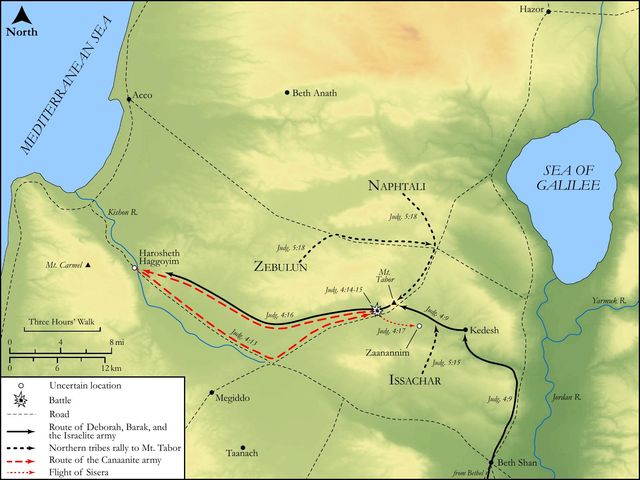
This verse is strategically placed immediately following the dramatic and divinely assisted rout of King Jabin's Canaanite army, led by Sisera, at the Kishon River. The preceding verses vividly portray the overwhelming defeat of Sisera's formidable nine hundred iron chariots, rendered useless by a torrential downpour that turned the battlefield into a treacherous quagmire. Sisera, the once-mighty commander, is reduced to a desperate fugitive, fleeing on foot. He seeks asylum in the tent of Jael, whose husband, Heber the Kenite, maintained a peace treaty with King Jabin. This narrative shift, from the grand scale of national warfare to the intimate, seemingly safe confines of a woman's tent, heightens the dramatic tension. Judges 4:19 marks the critical transition where Sisera's physical vulnerability and trust are exploited, leading inexorably to Jael's decisive and violent act detailed in Judges 4:21. The verse is a masterful literary device, building suspense and setting the scene for the fulfillment of Deborah's prophecy.
Historical & Cultural Context
The book of Judges chronicles a tumultuous era in Israel's history, characterized by a recurring cycle of apostasy, foreign oppression, and divine deliverance through charismatic leaders known as "judges." The Canaanites, with their superior military technology, particularly their iron chariots, posed a significant and persistent threat to the fledgling Israelite tribal confederacy. In that day, hospitality was a sacred and deeply ingrained cultural obligation, especially towards a weary traveler or refugee. Seeking shelter and refreshment in a woman's tent, particularly one whose husband had a treaty with his king, would have been considered a secure and honorable course of action for Sisera. Jael's actions, while appearing to embody this sacred cultural norm, were in fact a profound and subversive betrayal of it, driven by a higher loyalty or divine impulse. The Kenites, though not ethnically Israelite, were descendants of Moses' father-in-law, Jethro, and often maintained a distinct, sometimes neutral, relationship with surrounding peoples, making Heber's treaty with Jabin plausible and adding a layer of complexity to Jael's allegiance.
Key Themes
ShowHideJudges 4:19 significantly contributes to several profound theological and narrative themes within the broader book of Judges. It powerfully illustrates Divine Reversal and Unexpected Agents, showcasing God's sovereign ability to bring low the proud and mighty through the most unlikely of instruments. Sisera, the formidable military commander, is utterly undone not by a male warrior on the battlefield, but by a woman in the domestic sphere, fulfilling Deborah's prophecy in Judges 4:9 that the Lord would deliver Sisera into the hand of a woman. This highlights the theme of God's Use of the Overlooked, demonstrating that divine power is not limited by human conventions of strength or status. Furthermore, the verse is a prime example of Deceptive Hospitality, where a sacred cultural norm is subverted for a strategic, divinely-sanctioned purpose. Jael's seemingly benevolent actions lull Sisera into a false sense of security, emphasizing the theme of Vulnerability and Trust Betrayed, as Sisera's desperate reliance on Jael ultimately seals his fate. This moment of extreme vulnerability starkly contrasts with his former power, underscoring the dramatic reversal orchestrated by divine intervention.
Exposition and Analysis
ShowHideKey Word Analysis
ShowHideSisera requested water (H4325, mayim), but Jael offered milk. This substitution, derived from the same root as "fatness" or "richness," is crucial. In that day, milk, especially fermented or curdled milk (which would be common for storage in a skin-bottle), was more substantial than water and could have a mildly soporific or tranquilizing effect. This choice was not merely a hospitable upgrade but a strategic one, designed to induce drowsiness and facilitate Sisera's deep sleep, making him vulnerable to Jael's subsequent actions.
This term refers to a skin-bottle, typically crafted from an animal skin (such as a goat or sheep) and commonly used for carrying various liquids like water, wine, or milk. The use of a "bottle" implies a substantial quantity of liquid, far more than a simple cup, suggesting Jael was prepared to offer significant and sustained refreshment. This reinforces the outward appearance of generous hospitality, further lulling Sisera into a false sense of security.
From a primitive root meaning "to plump" or "fill up hollows," and by implication, "to cover" (for clothing or secrecy). Jael's act of covering Sisera after giving him milk reinforces the sense of security and rest she intended to convey. In a tent, covering someone might signify protection from the elements or a gesture of care to ensure warmth and privacy for sleep. However, in this context, it is a profoundly deceptive act, ensuring his complete relaxation and obscuring him from potential view, thereby rendering him an utterly defenseless target for her impending attack.
Verse Breakdown
ShowHide"And he said unto her, Give me, I pray thee, a little water to drink; for I am thirsty."
This opening clause immediately establishes Sisera's extreme vulnerability and desperation. The once-mighty general, accustomed to issuing commands to vast armies, is now reduced to humbly begging a woman for a basic necessity. His request for "a little water" underscores his utter exhaustion and immediate physical need after fleeing the battlefield on foot. The deferential phrase "I pray thee" (literally, "please") highlights his abject state and complete reliance on Jael's mercy and hospitality, a stark reversal of his former power.
"And she opened a bottle of milk, and gave him drink,"
Jael's response is outwardly one of profound generosity, surpassing Sisera's simple request for water by offering milk. This act appears to be the epitome of hospitality in that day, providing a more substantial and perhaps more soothing drink. However, this seemingly benevolent gesture is imbued with a deceptive, strategic purpose, as the milk, likely fermented or soured, would contribute to his drowsiness and subsequent deep sleep, preparing him for the impending act.
"and covered him."
This final action in the verse solidifies the deceptive hospitality and sets the stage for the climax. By covering Sisera, Jael creates an illusion of safety, warmth, and protection, inducing a sense of profound security that encourages him to rest deeply and without suspicion. This act, while appearing nurturing and solicitous, is a calculated maneuver designed to ensure his complete vulnerability and prepare him for the fatal blow that swiftly follows.
Literary Devices
ShowHideThe narrative of Judges 4:19 is rich with literary devices that amplify its dramatic impact, moral complexity, and theological significance. Irony pervades the scene, as Sisera, the formidable commander of 900 iron chariots, is ultimately defeated not by a male warrior in open battle, but by a woman in the intimate, domestic setting of her tent, through an act of deceptive hospitality. The request for water, a universal symbol of life and refreshment, is met with milk, which, while seemingly more nourishing, directly contributes to his demise. Foreshadowing is subtly yet powerfully woven throughout Jael's seemingly benign actions; the offering of milk and the act of covering him, while appearing hospitable, subtly hint at a deeper, more sinister intent. The audience, aware of Deborah's prophecy in Judges 4:9 that Sisera would be delivered into the hand of a woman, perceives the underlying tension and the impending doom. There is also a strong Contrast between Sisera's former military might and his current state of utter helplessness and vulnerability, emphasizing the dramatic reversal orchestrated by divine providence. Finally, the scene masterfully employs Deceptive Hospitality, where the sacred cultural norm of welcoming and protecting a guest is subverted and exploited to achieve a strategic military and divine objective, making Jael a complex and pivotal figure in Israel's deliverance.
Theological and Thematic Connections
ShowHideJudges 4:19, while a seemingly simple exchange, is deeply woven into the theological tapestry of the book of Judges and the broader biblical narrative. It powerfully illustrates God's sovereign hand at work, often through unexpected and unconventional means. The defeat of Sisera, the mighty oppressor, at the hands of a woman—a figure generally outside the realm of military leadership in that culture—underscores God's ability to use the weak, the lowly, and the seemingly insignificant to accomplish His grand purposes. This subversion of conventional power dynamics reveals a God who is not limited by human expectations, societal norms, or military might, but who orchestrates events to bring about justice and deliverance for His people. It challenges the reader to look beyond human strength and instead recognize divine power at work in surprising places, affirming that victory belongs to the Lord and can come through the most unlikely of agents.
Reflection and Application
ShowHideThe narrative of Judges 4:19, culminating in Jael's dramatic act, invites profound reflection on the nature of divine providence and human agency. It reminds us that God's plans are often unfolded through individuals and circumstances that defy our expectations and conventional wisdom. In our own lives, we may be tempted to rely on established power structures, our own perceived strengths, or only those who seem "qualified" to navigate challenges or achieve significant outcomes. However, this passage encourages us to cultivate a posture of humility and openness to how God might work through unexpected channels, including ourselves, even when we feel ill-equipped, overlooked, or called to unconventional action. It challenges us to consider whether we are truly attuned to God's leading, even when it calls for a radical re-evaluation of what constitutes "strength" or "success" in His kingdom. While Jael's specific actions are rooted in a unique historical context of warfare and divine judgment against an oppressor, the broader principle remains: God is sovereign, and He can use anyone, anywhere, to advance His kingdom purposes. Our call is to be faithful, available, and discerning, trusting that His power is often made perfect in weakness, and that He delights in confounding the wise by means of the foolish.
Questions for Reflection
ShowHideFAQ
ShowHideWas Jael's act of deception and killing morally justifiable?
ShowHideFrom a purely human ethical standpoint, Jael's actions in Judges 4:19 and the subsequent killing of Sisera in Judges 4:21 involve deception and a profound breach of the sacred custom of hospitality, which would typically be condemned. However, within the biblical narrative, her act is presented as divinely sanctioned and celebrated, particularly in the Song of Deborah and Barak in Judges 5:24-27. This highlights a complex theological issue: God sometimes uses human agents, operating within the brutal realities of ancient warfare and divine judgment against oppressive powers, to achieve His redemptive purposes for His people. Jael's act is not presented as a universal moral template for individual behavior in all circumstances, but as a specific, divinely-ordained instance of God's sovereign intervention to deliver His people from a cruel oppressor, fulfilling a prophecy and demonstrating His power over the mighty. It underscores that God's justice can manifest in ways that challenge human ethical frameworks, particularly in the context of holy war and the defeat of those who defy Him and oppress His chosen ones.
Christ-Centered Fulfillment
ShowHideThe narrative of Jael's deceptive hospitality and Sisera's dramatic demise, initiated in Judges 4:19, finds its ultimate Christ-centered fulfillment in the triumph of the seemingly "weak" over overwhelming power, echoing the paradoxical nature of God's kingdom. Sisera, the mighty commander, is brought low by a woman through an act that exploits his vulnerability and trust, foreshadowing how God's greatest victory would come through the ultimate act of vulnerability and "weakness" on the cross. Jesus, the true Lamb of God who takes away the sin of the world, appeared not as a conquering king with chariots, but as a humble servant, entering Jerusalem on a donkey (Matthew 21:5). It was through His apparent defeat and death, His ultimate act of self-emptying and humiliation (Philippians 2:7-8), that He decisively conquered sin, death, and the devil—the true oppressors of humanity. Just as Jael's seemingly insignificant and unconventional act brought deliverance for Israel, Christ's sacrificial death, viewed as weakness and foolishness by the world, was revealed as the very power of God for salvation (1 Corinthians 1:18). He disarmed the spiritual powers and authorities, triumphing over them on the cross (Colossians 2:15), much like Sisera's power was utterly neutralized. Thus, Judges 4:19, with its theme of the mighty falling by unexpected means and the seemingly weak being God's instruments, points forward to the cross where God's ultimate victory was secured not by force or conventional warfare, but by sacrificial love, divine wisdom, and profound cunning over the forces of evil.