


Judges 17:8
Bible text: King James Version (1769 Blayney text) · Public domain
Bible text: King James Version with Strong's numbers · Public domain
Bible text: Berean Standard Bible · Public domain
Bible text: American Standard Version (1901) · Public domain
Bible text: World English Bible, Messianic edition · Public domain
Bible text: Geneva Bible (1599) · Public domain
Bible text: Young's Literal Translation · Public domain
- וַיֵּלֶךְvai·Ye·lekhand he wentH1980Conj-w ¦ V-Qal-ConsecImperf-3msVerb Qal Consecutive Imperfect 3rd Singular Masculineוַandיֵּלֶךְhe went
- הָאִישׁha·'Ishthe manH376Art ¦ N-msNoun Singular Masculine Absoluteהָtheאִישׁman
- מֵהָעִירme·ha·'Irfrom the cityH5892Prep-m ¦ Art ¦ N-fsNoun Singular Feminine Absoluteמֵfromהָtheעִירcity
- מִבֵּיתmi·Beitfrom Beth-H1035Prep-m ¦ N-properNoun Proper LocationמִfromבֵּיתBeth-
- לֶחֶםle·chem-lehemH1035N-properNoun Proper Location
- יְהוּדָהye·hu·DahJudahH3063N-properNoun Proper Location
- לָגוּרla·Gurto sojournH1481Prep-l ¦ V-Qal-InfVerb Qal Infinitive Constructלָtoגוּרsojourn
- בַּאֲשֶׁרba·'a·Sherin whereH834Prep-b ¦ RelParticle Relativeבַּinאֲשֶׁרwhere
- יִמְצָאyim·Tza'he will findH4672V-Qal-Imperf-3msVerb Qal Imperfect 3rd Singular Masculine
- וַיָּבֹאvai·ya·Vo'and he cameH935Conj-w ¦ V-Qal-ConsecImperf-3msVerb Qal Consecutive Imperfect 3rd Singular Masculineוַandיָּבֹאhe came
- הַרhar[the] hill country ofH2022N-mscNoun Singular Masculine Construct
- אֶפְרַיִם'ef·Ra·yimEphraimH669N-proper-mNoun Proper Masculine
- עַד'adtoH5704PrepPreposition
- בֵּיתbeit[the] house ofH1004N-mscNoun Singular Masculine Construct
- מִיכָהmi·KhahMicahH4318N-proper-mNoun Proper Masculine
- לַעֲשׂוֹתla·'a·Sotto makeH6213Prep-l ¦ V-Qal-InfVerb Qal Infinitive Constructלַtoעֲשׂוֹתmake
- דַּרְכּוֹdar·Kohis journeyH1870N-csc ¦ 3msNoun Singular common gender Constructדַּרְכּjourneyוֹhis
English is a literal word-by-word gloss of the Hebrew, not the KJV's wording. Why?
This is the original text the KJV's translators worked from — each Hebrew word with its own literal English meaning in this verse, prepared by scholars at Tyndale House, Cambridge. The KJV translates whole sentences, not word by word, so its wording differs: one Hebrew word can become several English words, and the KJV may choose “the LORD” where the gloss reads “Yahweh”. Both are faithful — they answer different questions. For the KJV's own rendering, switch to the KJV text.
Details
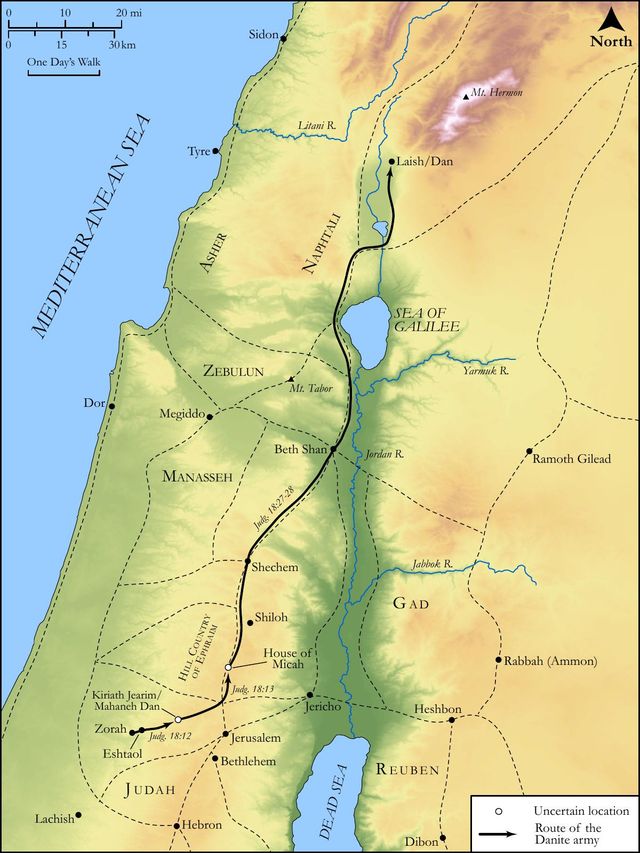
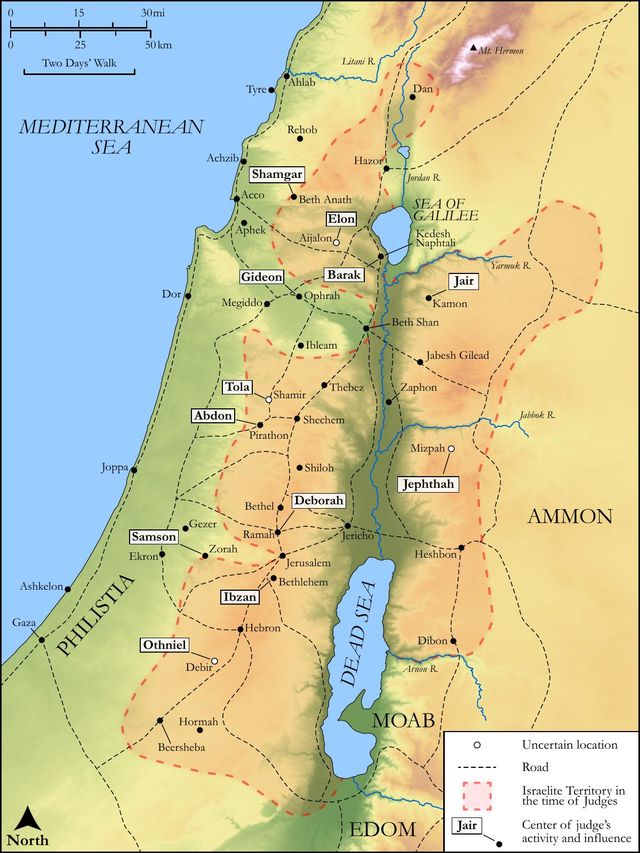
See on the biblical-era maps
Study this verse
Public-domain commentary
Matthew Henry
From his Commentary on the Whole Bible. Henry comments on passages, not single verses — this entry covers Judges 17:7–13. His two-level outline is real structure in the source text, so it is rendered as structure.
We have here an account of Micah's furnishing himself with a Levite for his chaplain, either thinking his son, because the heir of his estate, too good to officiate, or rather, because not of God's tribe, not good enough. Observe,
I.What brought this Levite to Micah.
By his mother's side he was of the family of Judah, and lived at Bethlehem among his mother's relations (for that was not a Levites' city), or, upon some other account, as a stranger or inmate, sojourned there, Jdg 17:7. Thence he went to sojourn where he could find a place, and in his travels came to the house of Micah in Mount Ephraim, Jdg 17:8. Now,
1.Some think it was his unhappiness that he was under a necessity of removing, either because he was persecuted and abused, or rather neglected and starved, at Bethlehem. God had made plentiful provision for the Levites, but the people withheld their dues, and did not help them into the possession of the cities assigned to them; so that they were reduced to straits, and no care was taken for their relief. Israel's forsaking God began with forsaking the Levites, which therefore they are warned against, Deu 12:19. It is a sign religion is going to decay when good ministers are neglected and at a loss for a livelihood. But,
2.It seems rather to have been his fault and folly, that he loved to wander, threw himself out where he was, and forfeited the respect of his friends, and, having a roving head, would go to seek his fortune, as we say. We cannot conceive that things had yet come to such a pass among them that a Levite should be poor, unless it was his own fault. As those are fit to be pitied that would fix but may not, so those are fit to be punished that might fix but will not. Unsettledness being, one would think, a constant uneasiness, it is strange that any Israelite, especially any Levite, should affect it.
II.What bargain Micah made with him.
Had he not been well enough content with his son for his priest, he would have gone or sent abroad to enquire out a Levite, but now he only takes hold of one that drops into his hands, which showed that he had no great zeal in the matter. It is probable that this rambling Levite had heard, in the country, of Micah's house of gods, his graven and molten image, which, if he had had any thing of the spirit of a Levite in him, would have brought him thither to reprove Micah for his idolatry, to tell how directly contrary it was to the law of God, and how it would bring the judgments of God upon him; but instead of this, like a base and degenerate branch of that sacred tribe, thither he goes to offer his service, with, Have you any work for a Levite? for I am out of business, and go to sojourn where I may find a place; all he aimed at was to get bread, not to do good, Jdg 17:9. Micah courts him into his family (v. 10), and promises him,
1.Good preferment: Be unto me a father and a priest. Though a young man, and taken up at the door, yet, if he take him for a priest, he will respect him as a father, so far is he from setting him among his servants. He asks not for his credentials, takes no time to enquire how he behaved in the place of his last settlement, considers not whether, though he was a Levite, yet he might not be of such a bad character as to be a plague and scandal to his family, but thinks, though he should be ever so great a rake, he might serve for a priest to a graven image, like Jeroboam's priest of the lowest of the people, Kg1 12:31. No marvel if those who can make any thing serve for a god can also make any thing serve for a priest.
2.A tolerable maintenance. He will allow him meat, and drink, and clothes, a double suit, so the word is in the margin, a better and a worse, one for every day's wear and one for holy days, and ten shekels, about twenty-five shillings, a year for spending money - a poor salary in comparison of what God provided for the Levites that behaved well; but those that forsake God's service will never better themselves, nor find a better master. The ministry is the best calling but the worst trade in the world.
III.The Levite's settlement with him (Jdg 17:11):
He was content to dwell with the man; though his work was superstitious and his wages were scandalous, he objected against neither, but thought himself happy that he had lighted on so good a house. Micah, thinking himself holier than any of his neighbours, presumed to consecrate this Levite, v. 12. As if his building, furnishing, and endowing this chapel authorized him, not only to appoint the person that should officiate there, but to confer those orders upon him which he had no right to give nor the other to receive. And now he shows him respect as a father and tenderness as a son, and is willing thus to make up the deficiency of the coin he gave him.
IV.Micah's satisfaction in this (Jdg 17:13):
Now know I that the Lord will do me good (that is, he hoped that his new establishment would gain reputation among his neighbours, which would turn to his advantage, for he would share in the profit of his altar; or, rather, he hoped that God would countenance and bless him in all he put his hand unto) because I have a Levite to be my priest.
1.He thought it was a sign of God's favour to him and his images that he had so opportunely sent a Levite to his door. Thus those who please themselves with their own delusions, if Providence unexpectedly bring any thing to their hands that furthers them in their evil way, are too apt to infer thence that God is pleased with them.
2.He thought now that the error of his priesthood was amended all was well, though he still retained his graven and molten image. Note, Many deceive themselves into a good opinion of their state by a partial reformation. They think they are as good as they should be, because, in some one particular instance, they are not so bad as they have been, as if the correcting of one fault would atone for their persisting in all the rest.
3.He thought the making of a Levite into a priest was a very meritorious act, which really was a presumptuous usurpation, and every provoking to God. Men's pride, and ignorance, and self-flattery, will undertake, not only to justify, but magnify and sanctify, the most daring impieties and invasions upon the divine prerogatives. With much reason might Micah have said, "Now may I fear that God will curse me, because I have debauched one of his own tribe, and drawn him into the worship of a graven image;" yet for this he hopes God will do him good.
4.He thought that having a Levite in the house with him would of course entitle him to the divine favour. Carnal hearts are apt to build too much upon their external privileges, and to conclude that God will certainly do them good because they are born of godly parents, dwell in praying families, are linked in society with those that are very good, and sit under a lively ministry; whereas all this is but like having a Levite to be their priest, which amounts to no security at all that God will do them good, unless they be good themselves, and make a good use of these advantages.
Continue studying Judges 17:8 across the web’s major study libraries — every link below opens this exact verse, chapter, or book on the destination site.
Read & Compare
 BibleGatewayThis verse in more than 200 translations and 70 languages.
 Bible.comThe YouVersion reader — hundreds of translations, reading plans, and highlights.
 ESV.orgCrossway's official English Standard Version reader.
 NET BibleThe NET translation with 60,000+ translators' notes on every rendering decision.
 STEP BibleTyndale House's free study tool — original text, vocabulary, and scholarly resources.
 BibliaLogos Bible Software's free web reader.
 USCCBThe New American Bible (Revised Edition) with the U.S. bishops' study notes.
Commentaries
 BibleHub CommentariesDozens of classic commentaries on this verse, gathered on one page.
 StudyLightMore than 100 commentary sets — the largest collection on the web.
 BibleRefPlain-English commentary on what this verse means, verse by verse.
 Enduring WordDavid Guzik's free commentary on this chapter, widely used by Bible teachers.
 Bible Study ToolsVerse commentary alongside Greek and Hebrew study aids.
Original Language & Research
- BibleHub InterlinearThe verse word by word — original language, transliteration, and English.
- BibleHub LexiconEvery word's original-language definition and Strong's entry.
 Blue Letter BibleDeep-study tools — Strong's numbers, concordance, and word studies.
 SefariaThe Hebrew text with Rashi and centuries of Jewish commentary.
Sermons, Hymns & Audio


TrulyRandomVerse is not affiliated with these sites and doesn’t control their content. They’re linked because they’re genuinely useful.
Summary
Judges 17:8 introduces a Levite from Bethlehemjudah who, driven by the need for sustenance and a place to settle, embarks on a journey that leads him to the house of Micah in Mount Ephraim. This seemingly incidental encounter is a pivotal moment in the narrative, serving as a poignant illustration of the profound spiritual and moral decay pervasive in Israel during the period of the Judges, where personal expediency and convenience superseded divine law and established order. The Levite's aimless wandering and his subsequent opportunistic employment by Micah underscore the breakdown of the Levitical system and the broader societal chaos characterized by the absence of a king and the prevalence of individualistic self-rule.
Context
ShowHideLiterary Context
Judges 17:8 is strategically placed within the first of two appendices (chapters 17-18 and 19-21) that conclude the book of Judges, serving as a vivid and tragic illustration of the era's spiritual and moral anarchy. These concluding chapters are framed by the recurring and ominous refrain, "In those days there was no king in Israel; everyone did what was right in his own eyes" found in Judges 17:6 and Judges 21:25. Immediately preceding this verse, the narrative details Micah's establishment of a private shrine, complete with an ephod, teraphim, and consecrated silver, and his initial appointment of one of his own sons as priest (Judges 17:1-5). The arrival of the wandering Levite in verse 8 provides Micah with what he perceives as a more legitimate priestly figure, setting the stage for the subsequent events where the tribe of Dan appropriates both Micah's idols and his priest, leading to further widespread idolatry (Judges 18).
Historical & Cultural Context
The period of the Judges (roughly 14th-11th centuries BC) was characterized by a lack of centralized political and religious authority following the conquest of Canaan. The tribal confederacy struggled with internal cohesion and external threats, leading to cycles of apostasy, oppression, and deliverance. The Levites, who were not allocated a tribal land inheritance but were to be supported by tithes and offerings from the other tribes and reside in designated cities (Numbers 35:6-8), often found themselves in precarious economic situations when the covenant obligations were neglected. This Levite's journey from Bethlehemjudah (a town in Judah, not a designated Levite city) "to sojourn where he could find [a place]" reflects this pervasive breakdown. It highlights a society where even those dedicated to religious service were forced to seek livelihood outside of God's prescribed order, often leading to compromise and opportunism, showcasing the dire consequences of Israel's failure to uphold the Mosaic covenant.
Key Themes
ShowHideThis verse powerfully contributes to several overarching themes in Judges, vividly illustrating the book's central message of Israel's spiritual decline. Firstly, it exemplifies Spiritual Drifting and Aimlessness, as the Levite's journey is not a divinely directed mission but a pragmatic search for sustenance, reflecting a broader spiritual malaise in Israel where God's purposes were neglected. Secondly, it underscores the theme of Decentralized Authority and Moral Relativism, where the absence of a king and true adherence to God's law meant individuals, even a Levite, made decisions based on personal convenience rather than divine command, echoing the pervasive problem described in Judges 17:6. Lastly, the "coincidence" of the Levite's arrival at Micah's house introduces the theme of Opportunistic Syncretism, where both parties find a mutually beneficial arrangement detached from genuine worship or God's will, setting the stage for the further corruption of Israelite religion as seen in the actions of the tribe of Dan in Judges 18.
Exposition and Analysis
ShowHideKey Word Analysis
ShowHideThis primitive root (H3212) means "to walk" or "to go" (literally or figuratively), and causatively, "to carry." In this context, it signifies the Levite's active movement away from his previous location. While seemingly neutral, the act of "departing" here is not presented as a divinely commissioned journey but as a personal initiative driven by necessity, setting a tone of self-reliance rather than reliance on God's provision or direction.
This primitive root (H1481) properly means "to turn aside from the road (for a lodging or any other purpose), i.e., sojourn (as a guest)." It also carries connotations of fear (as in a strange place) or gathering for hostility. Here, it highlights the Levite's rootless and unsettled status. Unlike the Levites who were meant to have designated cities and support, this individual is an itinerant, seeking temporary lodging and livelihood wherever he might find it. This speaks volumes about the breakdown of the Levitical system and the general disorder in Israel.
This primitive root (H4672) means "to come forth to, i.e., appear or exist," and transitively, "to attain, i.e., find or acquire." The phrase "where he could find [a place]" indicates a search driven by personal need and convenience, rather than a quest for a divinely appointed location or purpose. The Levite is not seeking God's will for his dwelling but merely a suitable and economically viable place to settle, reflecting the pragmatic and self-serving spirit of the age.
Verse Breakdown
ShowHide"And the man departed out of the city from Bethlehemjudah"
This clause identifies the individual as "the man" (who will be revealed as a Levite in the subsequent verse) and specifies his point of origin as Bethlehemjudah, a town located in the territory of Judah. The fact that a Levite is "from" Bethlehemjudah, rather than one of the Levitical cities designated for their residence and support, immediately signals a deviation from the established Mosaic order for the tribe of Levi. His departure indicates a deliberate search for a new dwelling and livelihood.
"to sojourn where he could find [a place]:"
This clause reveals the Levite's motivation and the aimlessness of his journey. He is not on a divine mission or seeking to fulfill a specific Levitical duty in a new location. Instead, he is a wanderer, seeking temporary residence and a means of living wherever opportunity might present itself. This highlights the economic and spiritual instability of the time, where even those from the priestly tribe were reduced to seeking employment out of necessity, driven by personal convenience rather than covenant faithfulness.
"and he came to mount Ephraim to the house of Micah, as he journeyed."
This describes the seemingly random destination of his wandering. Mount Ephraim is Micah's territory, and the Levite's arrival at Micah's specific house is presented as a chance encounter. This "coincidence" is crucial to the narrative, as it brings together two individuals—the opportunistic Levite and the idolatrous Micah—whose actions will further illustrate the moral and religious decline of Israel, ultimately impacting the entire tribe of Dan and setting a precedent for widespread apostasy.
Literary Devices
ShowHideThe verse employs several literary devices to convey its meaning and foreshadow future events. Irony is prominent, as a Levite, who should be a beacon of God's law and order, a guardian of the covenant, is depicted as aimlessly wandering, seeking personal gain rather than divine service. This contrasts sharply with the intended role of the Levites as custodians of the covenant and teachers of God's statutes. Foreshadowing is also powerfully at play; the seemingly chance encounter between the wandering Levite and Micah's idolatrous household sets the stage for the significant spiritual declension that will engulf the tribe of Dan in the subsequent chapter. This illustrates how small compromises and opportunistic alliances can lead to widespread apostasy and national spiritual decay. Furthermore, the narrative uses Contrast by juxtaposing the Levite's personal quest for comfort and livelihood with the divine mandate for the Levites to serve the Lord and teach His statutes, highlighting the pervasive moral relativism and self-serving spirit of the era.
Theological and Thematic Connections
ShowHideJudges 17:8 serves as a stark illustration of the theological consequences when a society, and even its religious leaders, abandon divine instruction and operate according to personal expediency. The Levite's aimless wandering and his readiness to serve an idolatrous shrine for personal gain underscore the deep spiritual void that permeated Israel "when there was no king." This narrative highlights the dangers of moral relativism and the breakdown of covenant faithfulness, where the sacred office of the Levite is debased into a mere profession, driven by economic necessity rather than spiritual calling. It implicitly poses the fundamental question of true authority and the source of moral guidance, demonstrating the chaos and spiritual corruption that inevitably ensue when God's law is disregarded and individuals do "what is right in their own eyes."
Reflection and Application
ShowHideThe narrative of the wandering Levite in Judges 17:8 offers a profound cautionary tale for believers today, challenging us to examine the motivations behind our life's journey and decisions. Are we, like the Levite, primarily driven by the search for personal comfort, security, or "a place" that is convenient and provides for our needs, even if it means compromising our spiritual integrity or aligning with practices that are not fully aligned with God's Word? Or are we earnestly seeking God's specific direction and purpose for our lives, trusting that He will provide for us within His will and according to His divine design? This verse reminds us that true spiritual leadership and personal faithfulness are not about what "seems right in our own eyes" or what offers the most immediate benefit, but about unwavering commitment to God's revealed truth and His kingdom. It compels us to reflect on the dangers of spiritual aimlessness and the importance of anchoring our lives in the unchanging truth of God, rather than the shifting sands of personal expediency or cultural convenience. Our ultimate "place" is found in obedience and devotion to Him.
Questions for Reflection
ShowHideFAQ
ShowHideWhy was a Levite from Bethlehemjudah, and why was he wandering?
ShowHideThe Levites were not given a tribal land inheritance but were to be supported by the other tribes through tithes and offerings, and they were assigned to live in 48 specific cities scattered throughout Israel (Numbers 35:6-8). Bethlehemjudah was a town in the territory of Judah, not one of the designated Levitical cities. The fact that this Levite was "from" Bethlehemjudah and "wandering to sojourn where he could find [a place]" indicates a severe breakdown in the covenantal system and societal order during the period of the Judges. The tribes were not consistently providing for the Levites as commanded by the Law, forcing many Levites to seek livelihood independently. This often led to spiritual compromise and a departure from their intended roles as teachers of the Law and guardians of the sanctuary. His wandering highlights the economic and spiritual instability of the era, where even those dedicated to religious service were left to their own devices, reflecting the pervasive moral decay.
Christ-Centered Fulfillment
ShowHideThe aimless wandering of the Levite in Judges 17:8, seeking a place of sustenance and rest outside of God's prescribed order, finds its ultimate contrast and fulfillment in Jesus Christ. Unlike this Levite who sought an opportunistic dwelling for personal gain, Jesus is the true and eternal dwelling place for humanity, the Lamb of God who takes away the sin of the world. While the Levite was a priest by lineage, Jesus is the Great High Priest forever according to the order of Melchizedek. He did not wander in search of a place or livelihood, but willingly laid down His life, proclaiming that He has nowhere to lay His head in His earthly ministry, demonstrating complete reliance on the Father and a singular focus on His redemptive mission. He is the one who provides true rest for the weary and burdened (Matthew 11:28), offering a secure and eternal home not based on human convenience or compromise, but on His perfect sacrifice and resurrection. In Christ, the aimless wandering of humanity finds its divine purpose, and the brokenness of the Levitical system is superseded by the perfect and eternal priesthood that truly mediates between God and man (Hebrews 7:23-28). He is the King who brings true order and righteousness, ensuring that those who follow Him find their true place and purpose in God's eternal kingdom (John 14:1-3).