


Nehemiah 13:10
Bible text: King James Version (1769 Blayney text) · Public domain
Bible text: King James Version with Strong's numbers · Public domain
Bible text: Berean Standard Bible · Public domain
Bible text: American Standard Version (1901) · Public domain
Bible text: World English Bible, Messianic edition · Public domain
Bible text: Geneva Bible (1599) · Public domain
Bible text: Young's Literal Translation · Public domain
- וָאֵדְעָהva·'E·de·'Ahand I perceived !H3045Conj-w ¦ V-Qal-ConsecImperf-1cs ¦ SfxVerb Qal Consecutive Imperfect 1st Singular common genderוָandאֵדְעָI perceivedה!
- כִּיkithatH3588PrtParticle Conditional
- מְנָיוֹתme·na·Yot[the] portions ofH4521N-fpcNoun Plural Feminine Construct
- הַלְוִיִּםhal·vi·Yimthe LevitesH3881Art ¦ N-mpNoun Gentilic Plural Masculine AbsoluteהַtheלְוִיִּםLevites
- לֹאlo'notH3808NegParticle Negative
- נִתָּנָהni·Ta·nahit had been givenH5414V-Niphal-Perf-3fsVerb Niphal Perfect 3rd Singular Feminine
- וַיִּבְרְחוּvai·yiv·re·Chuand they had fledH1272Conj-w ¦ V-Qal-ConsecImperf-3mpVerb Qal Consecutive Imperfect 3rd Plural Masculineוַandיִּבְרְחוּthey had fled
- אִישׁ'isheach oneH376N-msNoun Singular Masculine Absolute
- לְשָׂדֵהוּle·sa·De·huto his own fieldH7704Prep-l ¦ N-msc ¦ 3msNoun Singular Masculine Constructלְtoשָׂדֵown fieldהוּhis
- הַלְוִיִּםhal·vi·Yimthe LevitesH3881Art ¦ N-mpNoun Gentilic Plural Masculine AbsoluteהַtheלְוִיִּםLevites
- וְהַמְשֹׁרְרִיםve·ham·sho·re·Rimand the singersH7891Conj-w ¦ Art ¦ V-Piel-Prtcpl-mpVerb Piel Participle Plural Masculine Absoluteוְandהַtheמְשֹׁרְרִיםsingers
- עֹשֵׂי'o·Sei[who] didH6213V-Qal-Prtcpl-mpVerb Qal Participle Plural Masculine Construct
- הַמְּלָאכָהha·me·la·Khah<of> the workH4399Art ¦ N-fsNoun Singular Feminine Absoluteהַ<of> theמְּלָאכָהwork
English is a literal word-by-word gloss of the Hebrew, not the KJV's wording. Why?
This is the original text the KJV's translators worked from — each Hebrew word with its own literal English meaning in this verse, prepared by scholars at Tyndale House, Cambridge. The KJV translates whole sentences, not word by word, so its wording differs: one Hebrew word can become several English words, and the KJV may choose “the LORD” where the gloss reads “Yahweh”. Both are faithful — they answer different questions. For the KJV's own rendering, switch to the KJV text.
Details
See on the biblical-era map
Study this verse
Public-domain commentary
Matthew Henry
From his Commentary on the Whole Bible. Henry comments on passages, not single verses — this entry covers Nehemiah 13:10–14. His two-level outline is real structure in the source text, so it is rendered as structure.
Here is another grievance redressed by Nehemiah.
I.The Levites had been wronged.
This was the grievance: their portions had not been given them, Neh 13:10. Perhaps Tobiah, when he took possession of the store-chambers, seized the stores too, and, by the connivance of Eliashib, converted them to his own use. The complaint is not that they were not collected from the people, but that they were not given to the Levites, and the Levites were so modest as not to sue for them; for the Levites and singers fled every one to his field. This comes in as a reason either, (1.) Why their payments were withheld. The Levites were non-residents: when they should have been doing their work about the temple, they were at their farms in the country; and therefore the people were little inclined to give them their maintenance. If ministers have not the encouragement they should have, let them consider whether they themselves be not accessory to the contempt they are under, by the neglect of their business. Or rather, (2.) It is the reason why Nehemiah soon perceived that their dues had been denied them, because he missed them from their posts. "Where are the singers" (said Nehemiah); "why do not they attend according to their office, to praise God?" "Why, truly, they have gone every one to his country seat, to get a livelihood for themselves and their families out of their grounds; for their profession would not maintain them." A scandalous maintenance makes a scandalous ministry. The work is neglected because the workmen are. It was not long since the payment of the salaries appointed for the singers was put into a very good method (Neh 12:47); and yet how soon did it fail for want of being looked after!
II.Nehemiah laid the fault upon the rulers, who should have taken care that the Levites minded their business and had all due encouragement therein. This is required from Christian magistrates, that they use their power to oblige ministers to do their duty, and people to do theirs. Nehemiah began with the rulers, and called them to an account: "Why is the house of God forsaken? Neh 13:11. Why are the Levites starved out of it? Why did not you take notice of this and prevent it?" The people forsook the Levites, which was expressly forbidden (Deu 12:19; Deu 14:27); and then the Levites forsook their post in the house of God. Both ministers and people who forsake religion and the services of it, and magistrates too who do not what they can to keep them to it, will have a great deal to answer for.
III.He delayed not to bring the dispersed Levites to their places again, and set them in their stations (as the word is), Neh 13:11.
A Levite in his field (clericus in foroa minister keeping the market) is out of his station. God's house is his place, and there let him be found. Many that are careless would do much better than they do if they were but called upon. Say to Archippus, Take heed to thy ministry.
IV.He obliged the people to bring in their tithes, Neh 13:12.
His zeal provoked theirs; and, when they saw the Levites at their work, they could not for shame withhold their wages any longer, but honestly and cheerfully brought them in. The better church-work is done the better will church-dues be paid.
V.He provided that just and prompt payment should be made of the Levites' stipends.
Commissioners were appointed to see to this (Neh 13:13), and they were such as were accounted faithful, that is, had approved themselves so in other trusts committed to them, and so had purchased to themselves this good degree, Ti1 3:13. Let men be tried first and then trusted, tried in the less and then trusted with more. Their office was to receive and pay, to distribute to their brethren in due season and due proportions.
VI.Having no recompence (it is a question whether he had thanks) from those for whom he did these good services, he looks up to God as his paymaster (Neh 13:14): Remember me, O my God! concerning this. Nehemiah was a man much in pious ejaculations; on every occasion he looked up to God, and committed himself and his affairs to him.
1.He here reflects with comfort and much satisfaction upon what he had done for the house of God and the offices thereof; it pleased him to think that he had been any way instrumental to revive and support religion in his country and to reform what was amiss. What kindness any show to God's ministers, thus shall it be returned into their own bosoms, in the secret joy they shall have there, not only in having done well, but in having done good, good to many, good to souls.
2.He here refers it to God to consider him for it, not in pride, or as boasting of what he had done, much less depending upon it as his righteousness, or as if he thought he had made God a debtor to him, but in a humble appeal to him concerning his integrity and honest intention in what he had done, and a believing expectation that he would not be unrighteous to forget his work and labour of love, Heb 6:10. Observe how modest he is in his requests. He only prays, Remember me, not Reward me - Wipe not out my good deeds, not Publish them, Record them. Yet he was rewarded and his good deeds were recorded; for God does more than we are able to ask. Note, Deeds done for the house of God and the offices of it, for the support of religion and the encouragement of it, are good deeds. There is both righteousness and godliness in them, and God will certainly remember them, and not wipe them out; they shall in no wise lose their reward.
Continue studying Nehemiah 13:10 across the web’s major study libraries — every link below opens this exact verse, chapter, or book on the destination site.
Read & Compare
 BibleGatewayThis verse in more than 200 translations and 70 languages.
 Bible.comThe YouVersion reader — hundreds of translations, reading plans, and highlights.
 ESV.orgCrossway's official English Standard Version reader.
 NET BibleThe NET translation with 60,000+ translators' notes on every rendering decision.
 STEP BibleTyndale House's free study tool — original text, vocabulary, and scholarly resources.
 BibliaLogos Bible Software's free web reader.
 USCCBThe New American Bible (Revised Edition) with the U.S. bishops' study notes.
Commentaries
 BibleHub CommentariesDozens of classic commentaries on this verse, gathered on one page.
 StudyLightMore than 100 commentary sets — the largest collection on the web.
 BibleRefPlain-English commentary on what this verse means, verse by verse.
 Enduring WordDavid Guzik's free commentary on this chapter, widely used by Bible teachers.
 Bible Study ToolsVerse commentary alongside Greek and Hebrew study aids.
Original Language & Research
- BibleHub InterlinearThe verse word by word — original language, transliteration, and English.
- BibleHub LexiconEvery word's original-language definition and Strong's entry.
 Blue Letter BibleDeep-study tools — Strong's numbers, concordance, and word studies.
 SefariaThe Hebrew text with Rashi and centuries of Jewish commentary.
Sermons, Hymns & Audio


TrulyRandomVerse is not affiliated with these sites and doesn’t control their content. They’re linked because they’re genuinely useful.
Summary
Nehemiah 13:10 vividly portrays Nehemiah's profound dismay upon his return to Jerusalem, as he uncovers a critical pervasive failure: the essential provisions for the Levites and temple singers, mandated by divine law for their sacred service, had been withheld. This severe neglect compelled these dedicated ministers to abandon their posts in the temple and return to their agricultural fields, seeking basic sustenance for themselves and their families. This abandonment revealed a deep spiritual apathy and administrative decay that had permeated the community during Nehemiah's absence, directly undermining the functioning of temple worship and the spiritual vitality of the nation.
Context
ShowHideLiterary Context
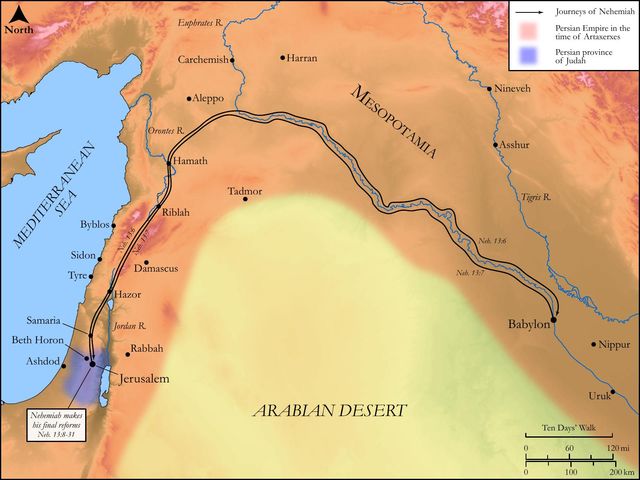
This verse is situated within the final chapter of Nehemiah, which details the governor's second term in Jerusalem following his return from Babylon, as implied by Nehemiah 13:6. Upon his arrival, Nehemiah immediately confronts a series of egregious covenant violations and administrative breakdowns that had proliferated in his absence. These include the high priest Eliashib's unauthorized alliance with Tobiah the Ammonite, leading to the desecration of temple chambers (Nehemiah 13:4-5), the widespread neglect of the Sabbath (Nehemiah 13:15-22), and the reemergence of mixed marriages (Nehemiah 13:23-27). Nehemiah 13:10 specifically addresses one of the most fundamental issues: the failure to provide the divinely ordained support for the Levites. This neglect directly impacted the continuity of temple worship and the spiritual instruction of the community, setting the stage for Nehemiah's decisive and zealous actions to restore order, covenant faithfulness, and the integrity of God's house.
Historical & Cultural Context
Following the return from Babylonian exile, the Jewish community in Jerusalem was engaged in the monumental task of rebuilding not only the city walls and temple but also its national and religious identity according to the Mosaic Law. Central to this re-establishment was the functioning of the temple and the support of its ministers. The Law explicitly stipulated that the Levites, who received no tribal land inheritance, were to be sustained by the tithes and offerings of the other tribes (Numbers 18:21-24). This system was designed to enable them to dedicate themselves fully to their sacred duties—temple service, teaching the Law, and maintaining the spiritual life of the nation—without the necessity of engaging in secular labor. Culturally, this communal support was a fundamental expression of Israel's covenant relationship with God and their commitment to His worship. The failure to provide these "portions" indicates a severe breakdown in both religious commitment and social responsibility, reflecting a widespread spiritual apathy that had developed during Nehemiah's absence, possibly exacerbated by economic hardship, a lack of strong, consistent leadership, or a general decline in reverence for God's commands.
Key Themes
ShowHideThis verse powerfully illustrates several key themes prevalent in the book of Nehemiah and the broader post-exilic period. First, it highlights Spiritual Neglect and Apathy, demonstrating how a lack of commitment to God's commands directly undermines the functioning of His house and the spiritual well-being of His people. The withholding of tithes and offerings reflects a diminished reverence for God and His established order, a pattern of disobedience seen throughout Israel's history (Malachi 3:8-10). Second, it underscores the Consequences of Disobedience, showing how the neglect of divine mandates (like supporting the Levites) leads to tangible disruptions, such as the cessation of temple worship and the scattering of its ministers. This emphasizes the interconnectedness of obedience and communal flourishing. Finally, it reinforces the Importance of Supporting Ministry, reiterating the biblical principle that those dedicated to spiritual service should be sustained by the community, allowing them to focus on their divine calling (a principle echoed in the New Testament, such as 1 Corinthians 9:13-14). Nehemiah's response also exemplifies the theme of Zealous Leadership in confronting such spiritual decay.
Exposition and Analysis
ShowHideKey Word Analysis
ShowHideThis verb signifies more than mere observation; it denotes a deep knowing, understanding, or discerning through careful consideration. Nehemiah didn't just notice a surface problem; he "perceived" the underlying pervasive failure and its profound spiritual and administrative implications. It suggests a keen, intuitive grasp of the spiritual decay at play, characteristic of his insightful and proactive leadership. His knowledge was not superficial but a comprehensive awareness of the situation's gravity.
This term refers to an "allotment" or "portion" specifically designated by divine law for the sustenance of the Levites and priests. These were the tithes, offerings, and firstfruits from the people, mandated by the Mosaic Law (e.g., Numbers 18:21-24) as their means of livelihood. The withholding of these "portions" was not merely an administrative oversight but a direct violation of God's covenant, crippling the ability of the temple ministers to perform their divinely appointed duties.
This verb describes a hasty departure or escape, often driven by necessity, fear, or urgency. It conveys the desperate situation of the Levites and singers. They did not simply leave their posts; they "fled" from their sacred duties, indicating that their need for basic sustenance was so dire that they were compelled to abandon their divinely appointed roles and seek survival by returning to their fields. This highlights the severity of the community's neglect and its immediate, disruptive impact on temple service.
Verse Breakdown
ShowHide"And I perceived that the portions of the Levites had not been given [them]:"
Upon his return, Nehemiah did not just observe a problem but "perceived" (understood deeply) that the foundational system for supporting the temple ministers had collapsed. The "portions" were the divinely mandated tithes and offerings from the people, essential for the Levites' livelihood. Their absence signified a widespread failure in the community's commitment to God's law and the upkeep of His house, indicating a profound spiritual decline and a disregard for sacred obligations.
"for the Levites and the singers, that did the work, were fled every one to his field."
This clause provides the direct and severe consequence of the withheld provisions. The Levites and singers, whose sacred duties included maintaining temple worship, teaching the Law, and leading praise, were forced by economic necessity to abandon their posts. They "fled" back to their ancestral fields, the traditional means of sustenance for most Israelites, highlighting the dire situation and the complete disruption of temple service. Their departure underscored the gravity of the people's negligence and its direct impact on the spiritual life and communal worship of the nation.
Literary Devices
ShowHideThe verse employs Cause and Effect to powerfully illustrate the tangible consequences of spiritual neglect. The cause is the community's failure to provide the Levites' designated "portions," and the direct, immediate effect is their forced abandonment of temple service, as they "fled every one to his field." This stark relationship highlights how disobedience to divine mandates directly impacts the functional and spiritual life of the community. Furthermore, the phrase "fled every one to his field" functions as a form of Metonymy, where "field" represents not merely a physical location but the secular pursuit of livelihood and survival, contrasting sharply with their sacred duties in the temple. This also carries a strong sense of Pathos, evoking sympathy for the Levites who, despite their dedication to divine service, were compelled by dire necessity to leave their calling due to the community's negligence. Nehemiah's act of "perceiving" also emphasizes his Insight as a leader, demonstrating his ability to see beyond superficial issues to the spiritual root of the problem.
Theological and Thematic Connections
ShowHideThis verse is a poignant illustration of the interconnectedness of covenant faithfulness, communal responsibility, and the flourishing of spiritual life. The withholding of the Levites' portions was not merely an administrative oversight but a profound theological failure, demonstrating a pervasive lack of reverence for God's commands and a disregard for the sacred. It underscores the timeless biblical principle that the spiritual health of a nation or community is intrinsically linked to its obedience in supporting those dedicated to ministry, ensuring that divine worship, instruction, and spiritual guidance can continue unimpeded. The breakdown of this divinely ordained system reveals a society where material concerns and self-interest had eclipsed spiritual priorities, leading to the decay of the very institutions designed to foster their relationship with God and maintain covenant integrity.
Reflection and Application
ShowHideNehemiah 13:10 serves as a powerful mirror for contemporary believers and communities, challenging us to honestly assess our commitment to supporting those who dedicate their lives to spiritual ministry. The Levites' forced departure highlights the tangible and detrimental consequences when a community neglects its responsibility to provide for those serving God. This isn't solely about financial giving; it's fundamentally about valuing spiritual work, upholding the dignity of those called to it, and recognizing that their ability to serve directly impacts the spiritual vitality and health of the entire body of Christ. A healthy church or spiritual community understands that consistent, faithful support—whether through tithes, offerings, prayer, or practical assistance—is not merely charity but an act of worship and an essential investment in the ongoing work of God's kingdom. Nehemiah's decisive action to rectify this profound wrong also models the necessity for spiritual leaders to vigilantly identify and courageously address pervasive issues that hinder God's work, compromise the integrity of His people, and diminish the reverence due to His house.
Questions for Reflection
ShowHideFAQ
ShowHideWhy were the Levites and singers so important that their absence was a crisis?
ShowHideThe Levites and singers were absolutely crucial for the proper functioning of temple worship and the spiritual life of Israel. As ordained by God in the Mosaic Law (e.g., Numbers 3:5-10), they were responsible for maintaining the temple, assisting the priests in their duties, leading musical worship, teaching the Law to the people, and overseeing various aspects of the sacrificial system. Unlike other tribes, they received no tribal land inheritance, being designated as God's own portion (e.g., Numbers 18:20). Their sustenance was meant to come directly from the tithes and offerings of the other tribes, a system designed to allow them to dedicate themselves fully and exclusively to their sacred duties. When their portions were withheld, they could not perform their work, leading directly to the cessation of temple services, a decline in spiritual instruction, and a general collapse of the communal worship life, which was central to Israel's covenant identity. Their absence was a crisis because it signified a direct affront to God's established order, a severe spiritual decay within the community, and the disruption of the very heart of Israel's relationship with Yahweh.
Christ-Centered Fulfillment
ShowHideNehemiah 13:10, while detailing a profound failure in the Old Covenant system of supporting temple ministry, profoundly points to the ultimate and perfect provision found in Christ. The Levites' desperate need for earthly sustenance and the people's failure to provide it highlight the inherent limitations of a system dependent on imperfect human faithfulness. In stark contrast, Jesus Christ is the ultimate High Priest (as described in Hebrews 4:14-16), who perfectly fulfills the Levitical ministry, not by receiving portions, but by offering Himself as the once-for-all, perfect sacrifice for sin (Hebrews 10:10-14). Furthermore, in the New Covenant, the support for ministry shifts from a rigid, legalistic tithe to a joyful, Spirit-led generosity (2 Corinthians 9:7), where believers are empowered by Christ's own self-giving to sacrificially provide for those who preach the gospel (1 Corinthians 9:14). The failure to support the Levites resulted in a disrupted temple service, but through Christ, believers become living temples (1 Corinthians 6:19-20), indwelt by the Holy Spirit, and called to participate in His ongoing mission, not out of obligation to a legalistic system, but out of gratitude for His abundant and unfailing provision. He is the true "portion" and inheritance of His people (Psalm 16:5), ensuring that His spiritual work and the ministry of His church will never ultimately fail due to human neglect, for He Himself sustains it.