


Judges 10:3
Bible text: King James Version (1769 Blayney text) · Public domain
Bible text: Berean Standard Bible · Public domain
Bible text: American Standard Version (1901) · Public domain
Bible text: World English Bible, Messianic edition · Public domain
Bible text: Geneva Bible (1599) · Public domain
Bible text: Young's Literal Translation · Public domain
- וַיָּקָםvai·Ya·komand he aroseH6965Conj-w ¦ V-Qal-ConsecImperf-3msVerb Qal Consecutive Imperfect 3rd Singular Masculineוַandיָּקָםhe arose
- אַחֲרָיו'a·cha·Ravafter himH310Adj-mpc ¦ 3msAdjective Numerical Plural Masculine Constructאַחֲרָיafterוhim
- יָאִירya·'IrJairH2971N-proper-mNoun Proper Masculine
- הַגִּלְעָדִיha·gil·'a·Dithe GileaditeH1569Art ¦ N-msNoun Gentilic Singular Masculine AbsoluteהַtheגִּלְעָדִיGileadite
- וַיִּשְׁפֹּטvai·yish·Potand he judgedH8199Conj-w ¦ V-Qal-ConsecImperf-3msVerb Qal Consecutive Imperfect 3rd Singular Masculineוַandיִּשְׁפֹּטhe judged
- אֶת'et<obj.>H853DirObjMParticle Object Indicator
- יִשְׂרָאֵלYis·ra·'ElIsraelH3478N-properNoun Proper Location
- עֶשְׂרִים'es·RimtwentyH6242N-mpNoun Plural Masculine Absolute
- וּשְׁתַּיִםu·she·Ta·yimand twoH8147Conj-w ¦ N-fdNoun Dual Feminine Absoluteוּandשְׁתַּיִםtwo
- שָׁנָהsha·Nahyear[s]H8141N-fsNoun Singular Feminine Absolute
English is a literal word-by-word gloss of the Hebrew, not the KJV's wording. Why?
This is the original text the KJV's translators worked from — each Hebrew word with its own literal English meaning in this verse, prepared by scholars at Tyndale House, Cambridge. The KJV translates whole sentences, not word by word, so its wording differs: one Hebrew word can become several English words, and the KJV may choose “the LORD” where the gloss reads “Yahweh”. Both are faithful — they answer different questions. For the KJV's own rendering, switch to the KJV text.
Details
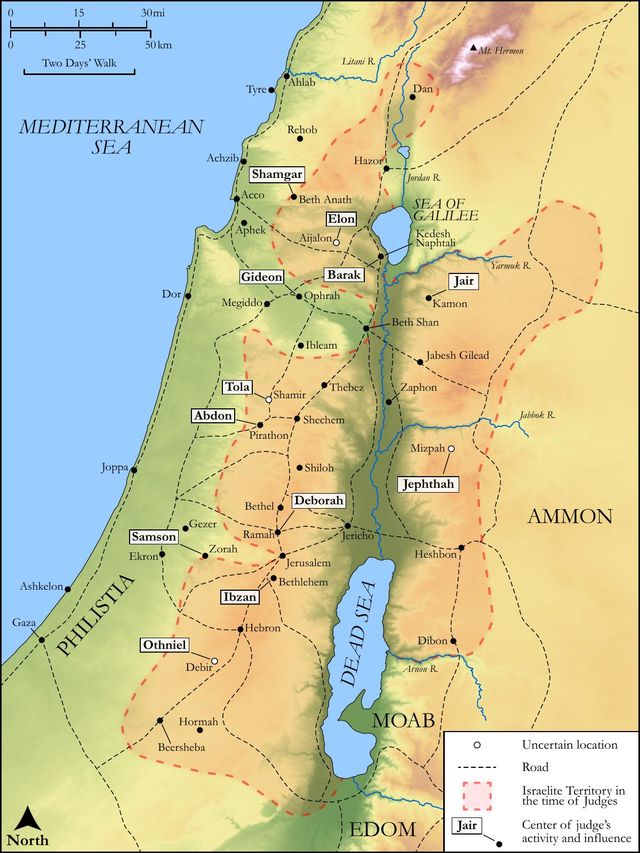
See on the biblical-era maps
Study this verse
Public-domain commentary
Matthew Henry
From his Commentary on the Whole Bible. Henry comments on passages, not single verses — this entry covers Judges 10:1–5.
Quiet and peaceable reigns, though the best to live in, are the worst to write of, as yielding least variety of matter for the historian to entertain his reader with; such were the reigns of these two judges, Tola and Jair, who make but a small figure and take up but a very little room in this history. But no doubt they were both raised up of God to serve their country in the quality of judges, not pretending, as Abimelech had done, to the grandeur of kings, nor, like him, taking the honour they had to themselves, but being called of God to it. 1. Concerning Tola it is said that he arose after Abimelech to defend Israel, Jdg 10:1. After Abimelech had debauched Israel by his wickedness, disquieted and disturbed them by his restless ambition, and, by the mischiefs he brought on them, exposed them to enemies from abroad, God animated this good man to appear for the reforming of abuses, the putting down of idolatry, the appeasing of tumults, and the healing of the wounds given to the state by Abimelech's usurpation. Thus he saved them from themselves, and guarded them against their enemies. He was of the tribe of Issachar, a tribe disposed to serve, for he bowed his shoulder to bear (Gen 49:14, Gen 49:15), yet one of that tribe is here raised up to rule; for those that humble themselves shall be exalted. He bore the name of him that was ancestor to the first family of that tribe; of the sons of Issachar Tola was the first, Gen 46:13; Num 26:23. It signifies a worm, yet, being the name of his ancestor, he was not ashamed of it. Though he was of Issachar, yet, when he was raised up to the government, he came and dwelt in Mount Ephraim, which was more in the heart of the country, that the people might the more conveniently resort to him for judgment. He judged Israel twenty-three years (Jdg 10:2), kept things in good order, but did not any thing very memorable. 2. Jair was a Gileadite, so was his next successor Jephthah, both of that half tribe of the tribe of Manasseh which lay on the other side Jordan; though they seemed separated from their brethren, yet God took care, while the honour of the government was shifted from tribe to tribe and before it settled in Judah, that those who lay remote should sometimes share in it, putting more abundant honour on that part which lacked. Jair bore the name of a very famous man of the same tribe who in Moses's time was very active in reducing this country, Num 32:41; Jos 13:30. That which is chiefly remarkable concerning this Jair is the increase and honour of his family: He had thirty sons, Jdg 10:4. And, (1.) They had good preferments, for they rode on thirty ass colts; that is, they were judges itinerant, who, as deputies to their father, rode from place to place in their several circuits to administer justice. We find afterwards that Samuel made his sons judges, though he could not make them good ones, Sa1 8:1-3. (2.) They had good possessions, every one a city, out of those that were called, from their ancestor of the same name with their father, Havoth-jair - the villages of Jair; yet they are called cities, either because those young gentlemen to whom they were assigned enlarged and fortified them, and so improved them into cities, or because they were as well pleased with their lot in those country towns as if they had been cities compact together and fenced with gates and bars. Villages are cities to a contented mind.
Continue studying Judges 10:3 across the web’s major study libraries — every link below opens this exact verse, chapter, or book on the destination site.
Read & Compare
 BibleGatewayThis verse in more than 200 translations and 70 languages.
 Bible.comThe YouVersion reader — hundreds of translations, reading plans, and highlights.
 ESV.orgCrossway's official English Standard Version reader.
 NET BibleThe NET translation with 60,000+ translators' notes on every rendering decision.
 STEP BibleTyndale House's free study tool — original text, vocabulary, and scholarly resources.
 BibliaLogos Bible Software's free web reader.
 USCCBThe New American Bible (Revised Edition) with the U.S. bishops' study notes.
Commentaries
 BibleHub CommentariesDozens of classic commentaries on this verse, gathered on one page.
 StudyLightMore than 100 commentary sets — the largest collection on the web.
 BibleRefPlain-English commentary on what this verse means, verse by verse.
 Enduring WordDavid Guzik's free commentary on this chapter, widely used by Bible teachers.
 Bible Study ToolsVerse commentary alongside Greek and Hebrew study aids.
Original Language & Research
- BibleHub InterlinearThe verse word by word — original language, transliteration, and English.
- BibleHub LexiconEvery word's original-language definition and Strong's entry.
 Blue Letter BibleDeep-study tools — Strong's numbers, concordance, and word studies.
 SefariaThe Hebrew text with Rashi and centuries of Jewish commentary.
Sermons, Hymns & Audio


TrulyRandomVerse is not affiliated with these sites and doesn’t control their content. They’re linked because they’re genuinely useful.
Summary
Judges 10:3 introduces Jair, a Gileadite, as the next divinely appointed leader who "judged Israel" for twenty-two years. This concise verse underscores God's persistent faithfulness in raising up individuals to provide stability and maintain order among His people, even during the turbulent and often spiritually compromised era of the Judges. Jair's remarkably long tenure, though lacking detailed narratives of military exploits or significant reforms, signifies a period of relative peace and continued divine oversight, serving as a quiet interlude before the narrative shifts to renewed apostasy and severe oppression.
Context
ShowHideLiterary Context
This verse immediately follows the brief account of Tola, another "minor judge," in Judges 10:1-2. The sequential introduction of these less-detailed judges (Tola, then Jair) serves as a transitional bridge within the book of Judges, providing a momentary respite from the more dramatic cycles of sin, oppression, and deliverance that characterize the book. Their quiet tenures offer a stark contrast to the tumultuous periods initiated by Israel's apostasy. However, this period of relative calm is quickly shattered, as the narrative immediately transitions in Judges 10:6 to a renewed and intensified apostasy, leading to severe oppression by the Ammonites and Philistines, which then sets the stage for the rise of Jephthah. The brevity of Jair's account, like Tola's, highlights the book's selective focus, emphasizing key deliverances and the overarching pattern of Israel's spiritual decline and God's enduring patience, as articulated in the recurring cycle of sin, servitude, supplication, and salvation.
Historical & Cultural Context
The period of the Judges (roughly 1200-1000 BC) was characterized by a decentralized tribal confederacy in Israel, lacking a central monarchy. Leadership emerged charismatically, often in response to specific crises or as local administrators. The term "judge" (Hebrew: shaphat) encompassed more than legal arbitration; it referred to a leader who delivered, governed, and maintained order, often combining military, administrative, and judicial functions. Jair's identification as a "Gileadite" places him in the Transjordan region, east of the Jordan River. This highlights the geographical diversity of Israel's leadership and the tribal autonomy that persisted. The mention of his thirty sons, thirty ass colts, and thirty cities in the subsequent verse (Judges 10:4) further indicates a man of considerable wealth, status, and influence, suggesting a period of stability and prosperity under his rule, particularly within his regional sphere.
Key Themes
ShowHideJair's account, though brief, contributes to several overarching themes in Judges. First, it underscores Divine Providence in Leadership, demonstrating God's continued faithfulness to His covenant people by raising up leaders, even those not involved in dramatic military deliverances, to provide guidance and maintain a measure of order. This echoes the broader pattern of God's provision seen throughout the book, such as when He raised up judges who saved them out of the hand of those who plundered them. Second, it illustrates The Multifaceted Nature of a "Judge", showing that the role extended beyond military deliverance to include long-term governance and administration, indicating periods of internal stability. Third, the very presence of judges like Jair, regardless of the narrative detail, reinforces the Continuity of God's Covenant with Israel. Despite their recurring unfaithfulness, God consistently provided leadership and a framework for their national existence, preventing complete societal collapse and preserving the lineage through which His redemptive plan would ultimately unfold, even as the people often did what was right in their own eyes.
Exposition and Analysis
ShowHideKey Word Analysis
ShowHideThis primitive root signifies "to rise" or "to stand (up)." In the context of the Judges, it often carries the nuance of God "raising up" or "causing to stand," implying divine initiative in establishing leadership. While it can simply mean "to appear," here it suggests a divinely appointed emergence of a leader in response to Israel's needs, even if the specific call is not detailed, reflecting God's ongoing provision.
Derived from a root meaning "enlightener" or "he gives light." This name, while not explicitly commented on in the text, could subtly allude to his role in bringing a period of clarity, stability, or perhaps even spiritual insight to Israel, or it may simply be a common name of the era. Regardless, his name stands as a marker for this specific period of governance.
This crucial term is central to understanding the role of the Judges. It encompasses far more than merely rendering legal decisions. Shaphat refers to the comprehensive act of governing, delivering, administering justice, and leading the people. It implies exercising authority, maintaining order, and often, though not always, leading in military defense. Jair's "judging" for twenty-two years suggests a period of established governance and relative peace, rather than a single, dramatic act of deliverance, highlighting the administrative aspect of the judge's role.
Verse Breakdown
ShowHide"And after him arose Jair"
This phrase directly links Jair's leadership to that of Tola, the preceding judge mentioned in Judges 10:1-2. The verb "arose" (Hebrew: qum) can imply God's initiative in raising up this leader, even if the text does not explicitly state a divine call or a specific crisis that necessitated his emergence. It signifies a continuation of the pattern of God providing leadership for Israel, demonstrating His ongoing care despite the nation's spiritual inconsistencies.
"a Gileadite"
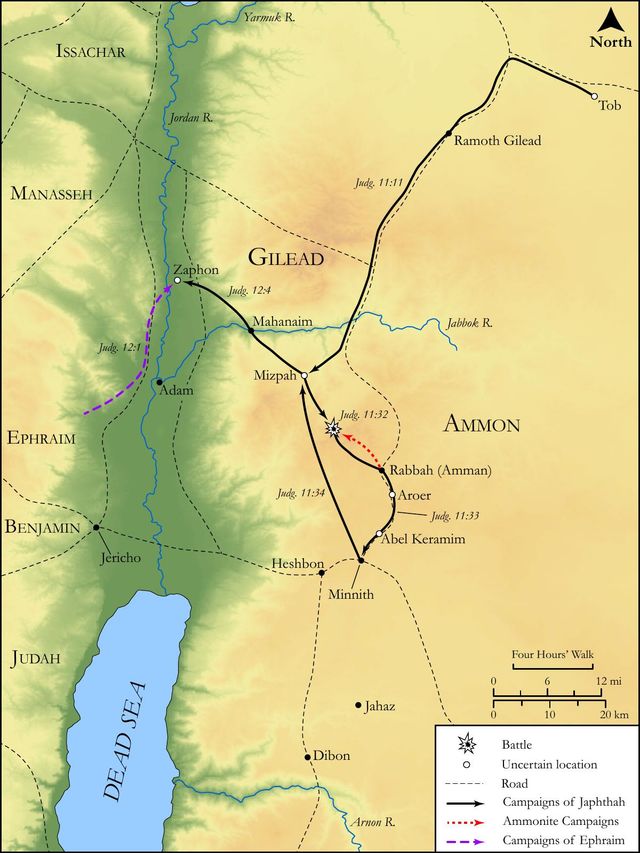
This identifies Jair's tribal and geographical origin. Gilead was a significant region east of the Jordan River, primarily inhabited by the tribes of Gad and Manasseh. His origin highlights the decentralized nature of Israelite society during the Judges period, where leaders could emerge from various tribes and regions, exercising authority over their local areas and, by extension, over broader Israel. It also sets the stage for the subsequent narrative concerning the Ammonite oppression, which heavily impacted the Transjordanian tribes, and the rise of Jephthah, who was also a Gileadite from this region.
"and judged Israel twenty and two years"
This clause indicates the duration and nature of Jair's leadership. The verb "judged" (Hebrew: shaphat) signifies that he exercised a comprehensive form of leadership, encompassing governance, administration, and the maintenance of justice, not necessarily military deliverance. His remarkably long tenure of twenty-two years suggests a period of significant stability and order, contrasting with the shorter, more crisis-driven terms of some other judges. This period of quiet leadership is a testament to God's ongoing provision for His people, even when the narrative is sparse on dramatic details, underscoring His commitment to preventing complete societal collapse.
Literary Devices
ShowHideThe account of Jair in Judges 10:3, along with the subsequent verse, primarily employs Conciseness and Understatement. The extreme brevity of the description for Jair (and Tola before him) is striking, especially when compared to the detailed narratives of major judges like Gideon or Samson. This Conciseness serves to highlight the book's selective focus, emphasizing that not every period of leadership or every leader's story requires extensive elaboration to convey God's overarching faithfulness and the cyclical nature of Israel's history. The Understatement of Jair's role, despite his long tenure and apparent wealth and influence (as indicated in Judges 10:4), subtly communicates that even seemingly "minor" figures play a vital part in God's larger redemptive narrative. Their quiet, administrative work contributed to national stability, preventing complete chaos. There is also an element of Repetition in the phrase "judged Israel," which is a recurring formula throughout the book, reinforcing the consistent pattern of God raising up leaders and the enduring nature of the judge's office.
Theological and Thematic Connections
ShowHideJair's brief mention in Judges 10:3, while lacking the dramatic flair of other judges, profoundly illustrates God's unwavering commitment to His covenant people. Even in periods of spiritual lukewarmness or relative peace, God continued to provide leadership and maintain a measure of order within Israel. This demonstrates divine sovereignty and meticulous care, showing that God works through various individuals, some prominently featured and others serving in less visible capacities, to fulfill His overarching purposes. Jair's long tenure, though undetailed, speaks to God's provision of stability and governance, preventing complete societal fragmentation during a chaotic era. It reminds us that God's faithfulness is not contingent on Israel's perfect obedience or on grand, miraculous interventions, but on His own character and covenant promises, ensuring that His plan for redemption continually moves forward despite human failings.
Reflection and Application
ShowHideJair's story, or rather the lack of extensive detail about it, offers a powerful lesson for contemporary believers: God uses all kinds of leaders and all forms of service. Not every act of faithfulness or period of leadership is marked by dramatic miracles or recorded in extensive detail, yet each contributes to God's ongoing work in the world. Jair's twenty-two years of "judging" suggest a steady, perhaps administrative, presence that maintained order and justice, allowing the nation to function. This reminds us that faithfulness in quiet, consistent, and less celebrated roles is just as vital to God's kingdom as the more visible, crisis-driven ministries. It challenges us to value and engage in the mundane, the administrative, and the long-term work of building God's community, trusting that God's hand is present and purposeful in every season and through every faithful servant. Our call is to serve where we are, with the gifts we have, for as long as God wills, recognizing that true significance is found in obedience and humble stewardship, not in public acclaim or dramatic narrative.
Questions for Reflection
ShowHideFAQ
ShowHideWho was Jair, and why is so little said about him?
ShowHideJair was one of the "minor judges" of Israel, a leader who "judged Israel" for twenty-two years, as mentioned in Judges 10:3. The Bible provides very little detail about his specific actions or achievements, beyond mentioning his origin as a Gileadite and his family's wealth and influence in Judges 10:4. The brevity of his account, similar to that of Tola in Judges 10:1-2, suggests that the book of Judges is not a comprehensive historical record of every leader. Instead, it focuses on specific narratives that illustrate the recurring cycle of Israel's apostasy, oppression, repentance, and God's deliverance, emphasizing God's faithfulness despite Israel's failures. Jair's inclusion highlights God's continuous provision of leadership, even during periods of relative quiet or when the leader's role was more administrative than military, preventing complete societal collapse.
What does "judged Israel" mean in this context?
ShowHideIn the book of Judges, the term "judged" (Hebrew: shaphat) signifies a comprehensive leadership role rather than solely legal arbitration. A judge in ancient Israel was a charismatic leader who often combined military, administrative, and judicial functions. They were responsible for delivering Israel from oppression, maintaining justice, governing the people, and preserving order. For someone like Jair, who "judged Israel twenty and two years," it implies a long period of stable governance and administration, maintaining peace and justice within the tribal confederacy, even if no specific military campaigns are recorded. This aligns with the broader understanding of God "raising up judges" to deliver and lead His people, as seen in Judges 2:16. It underscores that God's provision extends beyond dramatic deliverances to include the steady, often unseen, work of maintaining order.
What is the significance of Jair being a "Gileadite"?
ShowHideJair's identification as a "Gileadite" is significant for several reasons. Gilead was a region east of the Jordan River, indicating that leadership in Israel was not confined to the western tribes. This highlights the decentralized nature of Israelite society during the Judges period, where leaders emerged from various regions and tribes, exercising authority over their local areas and, by extension, over broader Israel. Furthermore, the Transjordanian tribes, including Gilead, would later suffer severe oppression from the Ammonites, leading to the rise of another Gileadite judge, Jephthah, in Judges 10:6 and following. Jair's Gileadite origin therefore subtly foreshadows the regional focus of the subsequent narrative and underscores the diverse geographical scope of God's provision of leaders, demonstrating that His care extends to all parts of His people.
Christ-Centered Fulfillment
ShowHideThe period of the Judges, characterized by cyclical failure and God's consistent raising of deliverers, points forward to the ultimate and perfect Deliverer, Jesus Christ. While judges like Jair provided temporary stability and administered justice, their leadership was always limited, imperfect, and ultimately unable to break Israel's cycle of sin. Jair's long tenure, though undetailed, represents God's faithful provision of human leaders to maintain order and guide His people, a pattern that culminates in the coming of the Messiah. Jesus is the true and eternal Judge, not merely of Israel, but of all humanity, who fully embodies the shaphat role by delivering His people from the ultimate oppression of sin and death. He is the Wonderful Counselor, Mighty God, Everlasting Father, Prince of Peace, who not only judges righteously but also offers perfect salvation. Unlike the judges who merely administered a temporary peace, Christ establishes an everlasting kingdom of righteousness and peace, as prophesied in Daniel 7:14. He is the one whom the Father has appointed to judge the living and the dead, yet He also serves as our great high priest who sympathizes with our weaknesses. The consistent raising of judges, even minor ones like Jair, foreshadows God's ultimate act of sending His Son, who perfectly fulfills all the roles of a deliverer, king, and judge, establishing a covenant that is not dependent on human faithfulness but on His own divine grace and power, ultimately judging the world in righteousness and bringing about eternal redemption.