


Numbers 32:41
Bible text: King James Version (1769 Blayney text) · Public domain
Bible text: Berean Standard Bible · Public domain
Bible text: American Standard Version (1901) · Public domain
Bible text: World English Bible, Messianic edition · Public domain
Bible text: Geneva Bible (1599) · Public domain
Bible text: Young's Literal Translation · Public domain
- וְיָאִירve·ya·'Irand JairH2971Conj-w ¦ N-proper-mNoun Proper MasculineוְandיָאִירJair
- בֶּןben[the] son ofH1121N-mscNoun Singular Masculine Construct
- מְנַשֶּׁהme·na·ShehManassehH4519N-proper-mNoun Proper Masculine
- הָלַךְha·Lakhhe wentH1980V-Qal-Perf-3msVerb Qal Perfect 3rd Singular Masculine
- וַיִּלְכֹּדvai·yil·Kodand he capturedH3920Conj-w ¦ V-Qal-ConsecImperf-3msVerb Qal Consecutive Imperfect 3rd Singular Masculineוַandיִּלְכֹּדhe captured
- אֶת'et<obj.>H853DirObjMParticle Object Indicator
- חַוֹּתֵיהֶםcha·vo·tei·Hemtheir villagesH2333N-fpc ¦ 3mpNoun Plural Feminine Constructחַוֹּתֵיvillagesהֶםtheir
- וַיִּקְרָאvai·yik·Ra'and he calledH7121Conj-w ¦ V-Qal-ConsecImperf-3msVerb Qal Consecutive Imperfect 3rd Singular Masculineוַandיִּקְרָאhe called
- אֶתְהֶן'et·Hen<obj.> themH853DirObjM ¦ 3fpParticle Object Indicatorאֶתְ<obj.>הֶןthem
- חַוֹּתcha·VotHavvothH2334N-fpcNoun Plural Feminine Construct
- יָאִירya·'IrJairH2334N-properNoun Proper Location
English is a literal word-by-word gloss of the Hebrew, not the KJV's wording. Why?
This is the original text the KJV's translators worked from — each Hebrew word with its own literal English meaning in this verse, prepared by scholars at Tyndale House, Cambridge. The KJV translates whole sentences, not word by word, so its wording differs: one Hebrew word can become several English words, and the KJV may choose “the LORD” where the gloss reads “Yahweh”. Both are faithful — they answer different questions. For the KJV's own rendering, switch to the KJV text.
Details
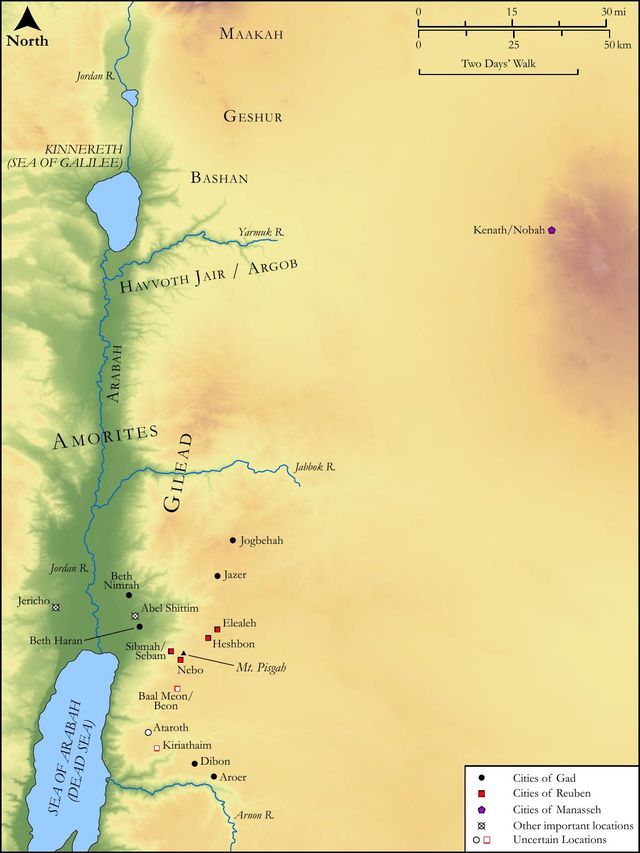
See on the biblical-era map
Study this verse
Continue studying Numbers 32:41 across the web’s major study libraries — every link below opens this exact verse, chapter, or book on the destination site.
Read & Compare
 BibleGatewayThis verse in more than 200 translations and 70 languages.
 Bible.comThe YouVersion reader — hundreds of translations, reading plans, and highlights.
 ESV.orgCrossway's official English Standard Version reader.
 NET BibleThe NET translation with 60,000+ translators' notes on every rendering decision.
 STEP BibleTyndale House's free study tool — original text, vocabulary, and scholarly resources.
 BibliaLogos Bible Software's free web reader.
 USCCBThe New American Bible (Revised Edition) with the U.S. bishops' study notes.
Commentaries
 BibleHub CommentariesDozens of classic commentaries on this verse, gathered on one page.
 StudyLightMore than 100 commentary sets — the largest collection on the web.
 BibleRefPlain-English commentary on what this verse means, verse by verse.
 Enduring WordDavid Guzik's free commentary on this chapter, widely used by Bible teachers.
 Bible Study ToolsVerse commentary alongside Greek and Hebrew study aids.
Original Language & Research
- BibleHub InterlinearThe verse word by word — original language, transliteration, and English.
- BibleHub LexiconEvery word's original-language definition and Strong's entry.
 Blue Letter BibleDeep-study tools — Strong's numbers, concordance, and word studies.
 SefariaThe Hebrew text with Rashi and centuries of Jewish commentary.
Sermons, Hymns & Audio


TrulyRandomVerse is not affiliated with these sites and doesn’t control their content. They’re linked because they’re genuinely useful.
Summary
Numbers 32:41 precisely records the decisive action of Jair, a descendant from the tribe of Manasseh, in conquering and subsequently naming a cluster of settlements in the Transjordan region. This specific act of territorial acquisition serves as a tangible demonstration of the fulfillment of the conditional agreement established between Moses and the tribes of Reuben, Gad, and the half-tribe of Manasseh, who had sought to settle east of the Jordan River prior to assisting the other tribes in the conquest of Canaan. Jair's initiative marks a significant step in Israel's early settlement phase and the establishment of tribal legacies within their divinely allotted inheritance.
Context
ShowHideLiterary Context
Numbers 32:41 is situated within the narrative detailing the unique request and subsequent agreement concerning the Transjordan tribes. Chapters 32 recounts the negotiations between Moses and the tribes of Reuben and Gad, later joined by a portion of Manasseh, who recognized the rich pasturelands of Gilead and Bashan as ideal for their extensive livestock. Moses initially expressed apprehension, fearing their desire might demoralize the other tribes, reminiscent of the failure at Kadesh Barnea. However, he ultimately consented to their settlement east of the Jordan on the strict condition that they would first arm themselves and fight alongside their brethren until the entire land west of the Jordan was conquered and possessed. Jair's conquest and naming of Havothjair, alongside similar actions by other tribal leaders such as Machir (recorded in Numbers 32:39-40) and Nobah (mentioned in Numbers 32:42), serve as concrete examples of these tribes upholding their part of the covenant, thereby demonstrating their commitment and active participation in the broader conquest narrative.
Historical & Cultural Context
The events described in Numbers 32 unfold as the Israelites stand at the threshold of the Promised Land, having concluded their forty years of wilderness wandering. The Transjordan region, particularly the fertile plains of Gilead and Bashan, was highly prized for its abundant pasturelands, making it exceptionally desirable for tribes with large flocks and herds. The act of conquering and subsequently naming towns, as exemplified by Jair, was a widespread practice among the nations. This practice served multiple purposes: to assert definitive ownership, to commemorate significant achievements, and to establish a lasting legacy for individuals, clans, or tribes. These "small towns" or "tent villages" (as the Hebrew term suggests) likely represented less fortified, possibly nomadic or semi-nomadic settlements, rendering them more susceptible to initial conquest. The meticulous recording of such acts underscores the paramount importance of land inheritance and the precise definition of tribal boundaries within Israelite society, reflecting God's unwavering faithfulness in providing a land for His chosen people.
Key Themes
ShowHideNumbers 32:41 contributes significantly to several overarching themes woven throughout the book of Numbers and the Pentateuch. Firstly, it powerfully illustrates the theme of Fulfillment of Divine Promise and Covenant. Jair's action is a direct consequence of the agreement made with Moses regarding the Transjordan settlement, demonstrating the active participation and obedience required to inherit God's promises, as detailed in Numbers 32:20-22. Secondly, the verse underscores the pivotal theme of Inheritance and Possession of the Land. It provides a tangible example of the Israelites beginning to take possession of the territory God had solemnly promised to Abraham's descendants (compare with Genesis 12:7). Thirdly, the act of naming "Havothjair" speaks directly to the theme of Legacy and Identity. By naming the captured towns after himself, Jair solidified his claim and established an enduring mark, reflecting the ancient practice of associating individuals with the lands they settled or conquered, a practice also noted in Deuteronomy 3:14. This act of naming reinforces tribal identity and preserves the historical memory of those who contributed to the establishment of Israel's territorial claims.
Exposition and Analysis
ShowHideKey Word Analysis
ShowHideThe name Jair (H2971), meaning "enlightener," is fitting for an individual who takes proactive initiative in establishing new territory. While the etymology does not directly describe his actions, it hints at a leading and perhaps visionary role. As "the son of Manasseh" (H4519), more accurately a prominent descendant generations removed from the patriarch, Jair represents the commitment of his tribal segment to the collective effort of land acquisition. His individual action, though part of a larger tribal movement, is specifically highlighted, emphasizing personal responsibility and contribution within the communal endeavor.
The verb "took" (H3920, lâkad), a primitive root meaning "to catch (in a net, trap or pit); generally, to capture or occupy; also to choose (by lot); figuratively, to cohere," signifies a forceful or military acquisition. Jair's action was not a peaceful settlement but an act of conquest, implying the overcoming of existing inhabitants or their resistance. This term underscores the active, often combative, nature of taking possession of the promised land, a theme prevalent throughout the narratives of Israel's entry into Canaan.
This compound name (H2334) translates literally to "hamlets of Jair" or "tent villages of Jair." The term chavvâh (H2333), meaning "an encampment or village," is crucial as it suggests that the "small towns" (KJV translation) were not necessarily fortified cities but rather clusters of temporary or semi-permanent dwellings, indicative of a more pastoral or nomadic population. By renaming them "Havothjair," Jair not only asserted his definitive ownership and influence over the area but also established a lasting memorial, ensuring that future generations would remember his pioneering act of settlement and conquest. This naming convention served as a legal and historical marker of possession.
Verse Breakdown
ShowHide"And Jair the son of Manasseh went"
This initial clause establishes Jair's agency and lineage. As a descendant of Manasseh, his actions directly contribute to the tribal inheritance of the half-tribe of Manasseh in the Transjordan. The verb "went" (H1980, hâlak) implies a deliberate movement and initiative, signifying his active participation in the territorial expansion. This was not a passive inheritance but an active taking of possession, demonstrating his personal commitment to the tribal agreement.
"and took the small towns thereof"
This phrase describes the act of conquest. The verb "took" (H3920, lâkad) implies capturing or seizing, indicating a military or forceful acquisition. As discussed in "Key Word Analysis," "small towns" translates chavvâh (H2333), meaning "encampment" or "village." This suggests that Jair's conquest involved securing these smaller, possibly less fortified, settlements, which were likely strategic points for controlling pasturelands or trade routes. This act was a tangible step in securing the promised land, demonstrating the practical fulfillment of the tribal pledge.
"and called them Havothjair"
The act of renaming the captured settlements "Havothjair" is deeply significant. It signifies a complete change of ownership and identity. Among the nations, renaming was an authoritative act, asserting dominion and establishing a lasting legacy. By attaching his own name to these settlements, Jair ensured his indelible mark on the landscape and in the historical memory of Israel, solidifying his claim and commemorating his achievement for generations to come. This act transformed foreign territory into Israelite inheritance, marking a new era of possession.
Literary Devices
ShowHideNumbers 32:41 effectively employs several literary devices. Eponymous Naming is prominently featured, where a place is named after a person, in this case, "Havothjair" after Jair. This device serves to commemorate the individual's achievement, establish a clear claim of ownership, and embed their legacy within the geographical and historical narrative of the people of Israel. The Conciseness of the verse is also noteworthy; in a single, declarative sentence, it efficiently conveys a significant act of territorial acquisition, highlighting the directness and effectiveness of Jair's actions without unnecessary elaboration. Furthermore, the verse contributes to the overall Narrative Progression of the book of Numbers, specifically within the account of the Transjordan settlement. It provides a concrete example of the fulfillment of the tribal agreement, moving the story forward from negotiation and promise to actual possession, thereby demonstrating the faithfulness of the tribes in honoring their word to Moses and, by extension, to God.
Theological and Thematic Connections
ShowHideNumbers 32:41, though a brief historical record, carries significant theological weight, underscoring the profound principle that divine promises often necessitate human action and faithfulness for their realization. Jair's initiative in taking possession of the land reflects the broader call for Israel to actively "take possession" of the inheritance God had promised them, not merely to passively receive it. This act of conquest and naming is a testament to the half-tribe of Manasseh's commitment to their covenantal obligations, illustrating that obedience to God's directives and faithfulness to communal agreements are vital for the flourishing and security of God's people. It highlights God's unwavering faithfulness in providing the land and the people's corresponding responsibility to step into that provision through courageous and obedient action. This verse reminds us that while God provides the way and the means, we are called to walk in it, actively engaging with the opportunities and responsibilities He places before us with diligence and trust.
Reflection and Application
ShowHideJair's actions in Numbers 32:41 offer profound and enduring lessons for believers today, emphasizing the critical importance of active faith and diligent stewardship in our spiritual lives. Just as Jair took concrete steps to claim and name physical territory, we are called to actively "take possession" of the spiritual inheritance and abundant promises God has graciously given us in Christ Jesus. This involves far more than passive reception; it requires intentional obedience, courageous action in the face of challenges, and unwavering faithfulness in fulfilling our commitments—whether to God, our families, our local church, or our broader communities. Jair's legacy, indelibly marked by the naming of Havothjair, challenges each of us to consider what kind of spiritual legacy we are diligently building. Are we making a lasting, positive impact for God's kingdom, actively claiming "territory" for His glory through our integrity, compassionate service, and bold witness? This verse powerfully encourages us to be proactive and intentional in our faith, demonstrating our profound trust in God's promises through our diligent efforts and unwavering commitment to His sovereign will.
Questions for Reflection
ShowHideFAQ
ShowHideWhat is the significance of the name "Havothjair"?
ShowHideThe name "Havothjair" (H2334, Chavvôwth Yâʻîyr) literally translates to "tent villages of Jair" or "hamlets of Jair." The term chavvâh (H2333) refers to temporary or semi-permanent encampments, suggesting that the settlements Jair conquered were not necessarily fortified cities but rather clusters of dwellings, indicative of a pastoral or nomadic lifestyle. By naming these places after himself, Jair solidified his claim and established a lasting memorial to his act of conquest and settlement. This practice was common among the nations as a way to assert ownership, commemorate achievements, and embed a personal or clan legacy within the geographical landscape, ensuring historical remembrance.
How does Jair's action fit into the broader narrative of Israel's conquest of the Promised Land?
ShowHideJair's action in Numbers 32:41 represents a specific fulfillment of the agreement made between Moses and the Transjordan tribes (Reuben, Gad, and the half-tribe of Manasseh). These tribes desired to settle east of the Jordan River but pledged to assist the other tribes in conquering the land west of the Jordan first. Jair's conquest of Havothjair, along with similar acts by other Manassite leaders, demonstrates their commitment to this agreement. It marks an early, tangible step in the process of Israel taking possession of their promised inheritance, showcasing tribal initiative and collective responsibility even before the main campaigns under Joshua began. It highlights that the process of inheriting the land was multifaceted, involving both large-scale military campaigns and individual acts of settlement and claiming. For a full understanding of this agreement, see the comprehensive account in Numbers 32.
Is this Jair the same as other individuals named Jair in the Bible?
ShowHideNo, the Jair mentioned in Numbers 32:41 is distinct from other individuals bearing the same name in the Bible. This Jair is a descendant of Manasseh, active during the initial settlement of the Transjordan. Another prominent Jair is the judge of Israel mentioned in Judges 10:3-5, who lived much later during the tumultuous period of the Judges and was also from Gilead, a region within the territory of Manasseh. While they share a common name and tribal affiliation, they are separated by generations and distinct historical roles and contributions to Israel's history.
Christ-Centered Fulfillment
ShowHideThe historical account of Jair taking possession of "tent villages" and naming them "Havothjair" serves as a profound foreshadowing of the ultimate and spiritual inheritance secured through the redemptive work of Jesus Christ. Just as Jair actively claimed a physical territory for his lineage, Christ, as the true Son of God and the ultimate heir of all things, has fully taken possession of all creation, establishing His eternal and unshakable kingdom. Our spiritual inheritance, far surpassing any earthly land, is a glorious participation in Christ's own divine inheritance and the boundless spiritual blessings found exclusively in Him (Ephesians 1:11). Through His sacrificial death on the cross and His triumphant resurrection, Jesus has decisively conquered the spiritual "territory" of sin, death, and the powers of darkness, thereby providing believers with an eternal dwelling place and a secure identity as co-heirs with Him (Colossians 1:12). The "rest" that Israel earnestly sought in the physical Promised Land finds its ultimate and perfect fulfillment in Christ, who graciously invites all who are weary and burdened to find true rest for their souls in Him (Matthew 11:28-30). Thus, Jair's historical act of claiming a physical inheritance points forward to the infinitely greater spiritual inheritance, secure dwelling, and eternal rest that Christ provides for all who believe, a fulfillment of God's promises that transcends any earthly territory (Hebrews 4:8-10).