


Judges 1:26
Bible text: King James Version (1769 Blayney text) · Public domain
Bible text: Berean Standard Bible · Public domain
Bible text: American Standard Version (1901) · Public domain
Bible text: World English Bible, Messianic edition · Public domain
Bible text: Geneva Bible (1599) · Public domain
Bible text: Young's Literal Translation · Public domain
- וַיֵּלֶךְvai·Ye·lekhand he wentH1980Conj-w ¦ V-Qal-ConsecImperf-3msVerb Qal Consecutive Imperfect 3rd Singular Masculineוַandיֵּלֶךְhe went
- הָאִישׁha·'Ishthe manH376Art ¦ N-msNoun Singular Masculine Absoluteהָtheאִישׁman
- אֶרֶץ'E·retz[the] land ofH776N-fscNoun Singular Feminine Construct
- הַחִתִּיםha·chi·Timthe HittitesH2850Art ¦ N-mpNoun Gentilic Plural Masculine AbsoluteהַtheחִתִּיםHittites
- וַיִּבֶןvai·Yi·venand he builtH1129Conj-w ¦ V-Qal-ConsecImperf-3msVerb Qal Consecutive Imperfect 3rd Singular Masculineוַandיִּבֶןhe built
- עִיר'Ira cityH5892N-fsNoun Singular Feminine Absolute
- וַיִּקְרָאvai·yik·Ra'and he calledH7121Conj-w ¦ V-Qal-ConsecImperf-3msVerb Qal Consecutive Imperfect 3rd Singular Masculineוַandיִּקְרָאhe called
- שְׁמָהּshe·Mahits nameH8034N-msc ¦ 3fsNoun Singular Masculine Constructשְׁמָnameהּits
- לוּזLuzLuzH3870N-properNoun Proper Location
- הוּאhu'thatH1931Pro-3msPronoun Personal 3rd Singular Masculine
- שְׁמָהּshe·Mah[is] its nameH8034N-msc ¦ 3fsNoun Singular Masculine Constructשְׁמָ[is] nameהּits
- עַד'aduntilH5704PrepPreposition
- הַיּוֹםhai·Yomthe dayH3117Art ¦ N-msNoun Singular Masculine Absoluteהַtheיּוֹםday
- הַזֶּהha·Zeh<the> thisH2088Art ¦ PrtParticle Demonstrativeהַ<the>זֶּהthis
English is a literal word-by-word gloss of the Hebrew, not the KJV's wording. Why?
This is the original text the KJV's translators worked from — each Hebrew word with its own literal English meaning in this verse, prepared by scholars at Tyndale House, Cambridge. The KJV translates whole sentences, not word by word, so its wording differs: one Hebrew word can become several English words, and the KJV may choose “the LORD” where the gloss reads “Yahweh”. Both are faithful — they answer different questions. For the KJV's own rendering, switch to the KJV text.
Details
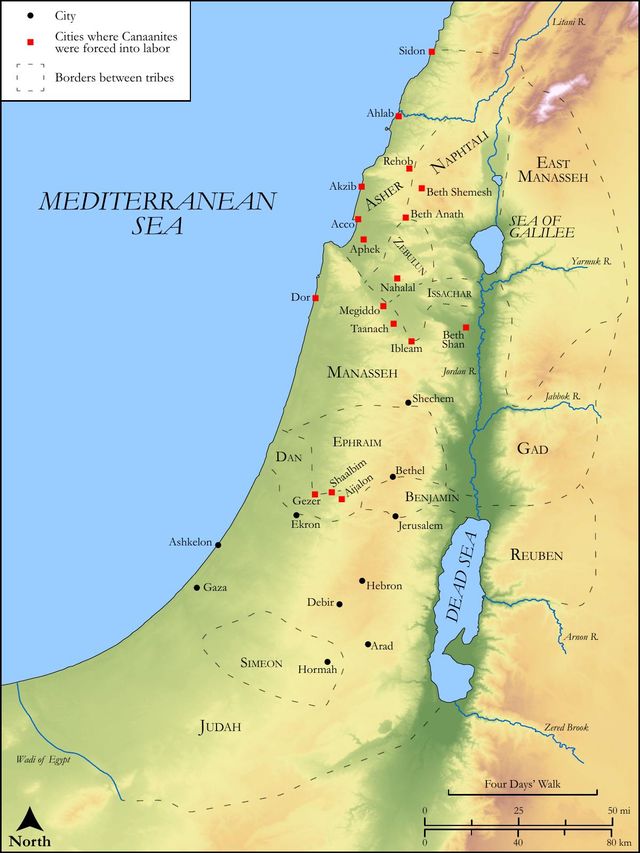
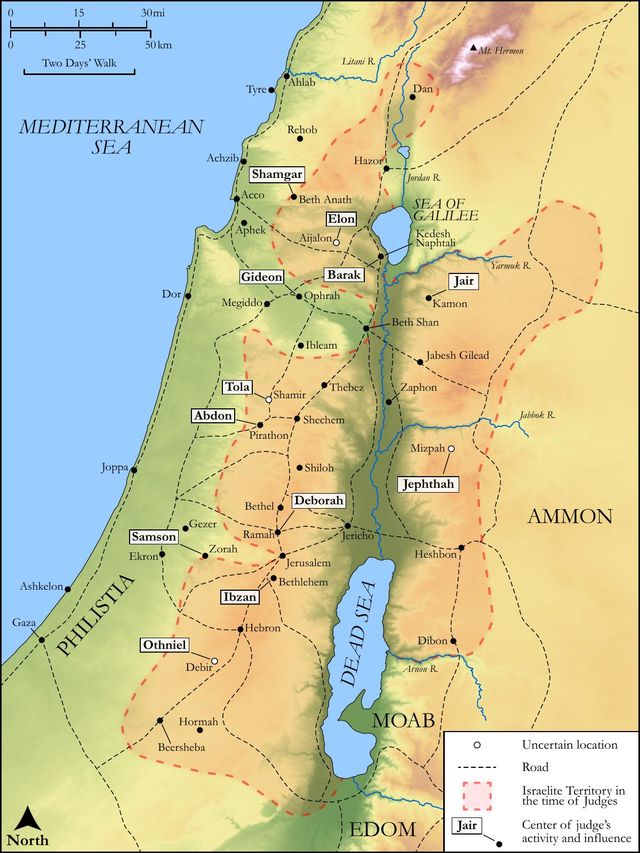
See on the biblical-era maps
Study this verse
Public-domain commentary
Matthew Henry
From his Commentary on the Whole Bible. Henry comments on passages, not single verses — this entry covers Judges 1:21–36. His four-level outline is real structure in the source text, so it is rendered as structure.
We are here told upon what terms the rest of the tribes stood with the Canaanites that remained.
I.Benjamin neglected to drive the Jebusites out of that part of the city of Jerusalem which fell to their lot, Jdg 1:21.
Judah had set them a good example, and gained them great advantages by what they did (Jdg 1:9), but they did not follow the blow for want of resolution.
II.The house of Joseph,
1.Bestirred themselves a little to get possession of Beth-el, Jdg 1:22. That city is mentioned in the tribe of Benjamin, Jos 18:22. Yet it is spoken of there (Jdg 1:13) as a city in the borders of that tribe, and, it should seem, the line went through it, so that one half of it only belonged to Benjamin, the other half to Ephraim; and perhaps the activity of the Ephraimites at this time, to recover it from the Canaanites, secured it entirely to them henceforward, or at least the greatest part of it, for afterwards we find it so much under the power of the ten tribes (and Benjamin was none of them) that Jeroboam set up one of his calves in it. In this account of the expedition of the Ephraimites against Beth-el observe,
(1.)Their interest in the divine favour: The Lord was with them, and would have been with the other tribes if they would have exerted their strength. The Chaldee reads it here, as in many other places, The Word of the Lord was their helper, namely, Christ himself, the captain of the Lord's host, now that they acted separately, as well as when they were all in one body.
(2.)The prudent measures they took to gain the city. They sent spies to observe what part of the city was weakest, or which way they might make their attack with most advantage, Jdg 1:23. These spies got very good information from a man they providentially met with, who showed them a private way into the town, which was left unguarded because, being not generally known, no danger was suspected on that side. And here,
[1.]He is not to be blamed for giving them this intelligence if he did it from a conviction that the Lord was with them, and that by his donation the land was theirs of right, any more than Rahab was for entertaining those whom she knew to be enemies of her country, but friends of God. Nor,
[2.]Are those to be blamed who showed him mercy, gave him and his family not only their lives, but liberty to go wherever they pleased: for one good turn requires another. But, it seems, he would not join himself to the people of Israel, he feared them rather than loved them, and therefore he removed after a colony of the Hittites, which, it should seem, had gone into Arabia and settled there upon Joshua's invasion of the country; with them this man chose to dwell, and among them he built a city, a small one, we may suppose, such as planters commonly build, and in the name of it preserved the ancient name of his native city, Luz, an almond-tree, preferring this before its new name, which carried religion in it, Bethel - the house of God.
(3.)Their success. The spies brought or sent notice of the intelligence they had gained to the army, which improved their advantages, surprised the city, and put them all to the sword, v. 25. But,
2.Besides this achievement, it seems, the children of Joseph did nothing remarkable (1.) Manasseh failed to drive out the Canaanites from several very considerable cities in their lot, and did not make any attempt upon them, Jdg 1:27. But the Canaanites, being in possession, were resolved not to quit it; they would dwell in that land, and Manasseh had not resolution enough to offer to dispossess them; as if there was no meddling with them unless they were willing to resign, which it was not to be expected they ever would be. Only as Israel got strength they got ground, and served themselves, both by their contributions and by their personal services, Jdg 1:28, Jdg 1:35. (2.) Ephraim likewise, though a powerful tribe, neglected Gezer a considerable city, and suffered the Canaanites to dwell among them (Jdg 1:29), which, some think, intimates their allowing them a quiet settlement, and indulging them with the privileges of an unconquered people, not so much as making them tributaries.
III.Zebulun, perhaps inclining to the sea-trade, for it was foretold that it should be a haven for ships, neglected to reduce Kitron and Nahalol (Jdg 1:30), and only made the inhabitants of those places tributaries to them.
IV.Asher quitted itself worse than any of the tribes (Jdg 1:31, Jdg 1:32), not only in leaving more towns than any of them in the hands of the Canaanites, but in submitting to the Canaanites instead of making them tributaries; for so the manner of expression intimates, that the Asherites dwelt among the Canaanites, as if the Canaanites were the more numerous and the more powerful, would still be lords of the country, and the Israelites must be only upon sufferance among them.
V.Naphtali also permitted the Canaanites to live among them (Jdg 1:33), only by degrees they got them so far under as to exact contributions from them.
VI.Dan was so far from extending his conquests where his lot lay that, wanting spirit to make head against the Amorites, he was forced by them to retire into the mountains and inhabit the cities there, but durst not venture into the valley, where, it is probable, the chariots of iron were, Jdg 1:34. Nay, and some of the cities in the mountains were kept against them, Jdg 1:35. Thus were they straitened in their possessions, and forced to seek for more room at Laish, a great way off, Jdg 18:1, etc. In Jacob's blessing Judah is compared to a lion, Dan to a serpent; now observe how Judah with his lion-like courage prospered and prevailed, but Dan with all his serpenting subtlety could get no ground; craft and artful management do not always effect the wonders they pretend to. What Dan came short of doing, it seems, his neighbours the Ephraimites in part did for him; they put the Amorites under tribute, Jdg 1:35.
Upon the whole matter it appears that the people of Israel were generally very careless both of their duty and interest in this thing; they did not what they might have done to expel the Canaanites and make room for themselves. And, 1. It was owing to their slothfulness and cowardice. They would not be at the pains to complete their conquests; like the sluggard, that dreamed of a lion in the way, a lion in the streets, they fancied insuperable difficulties, and frightened themselves with winds and clouds from sowing and reaping. 2. It was owing to their covetousness; the Canaanites' labour and money would do them more good (they thought) than their blood, and therefore they were willing to let them live among them, that they might make a hand of them. 3. They had not that dread and detestation of idolatry which they ought to have had; they thought it a pity to put these Canaanites to the sword, though the measure of their iniquity was full, thought it would be no harm to let them live among them, and that they should be in no danger from them. 4. The same thing that kept their fathers forty years out of Canaan kept them now out of the full possession of it, and that was unbelief. Distrust of the power and promise of God lost them their advantages, and ran them into a thousand mischiefs.
Continue studying Judges 1:26 across the web’s major study libraries — every link below opens this exact verse, chapter, or book on the destination site.
Read & Compare
 BibleGatewayThis verse in more than 200 translations and 70 languages.
 Bible.comThe YouVersion reader — hundreds of translations, reading plans, and highlights.
 ESV.orgCrossway's official English Standard Version reader.
 NET BibleThe NET translation with 60,000+ translators' notes on every rendering decision.
 STEP BibleTyndale House's free study tool — original text, vocabulary, and scholarly resources.
 BibliaLogos Bible Software's free web reader.
 USCCBThe New American Bible (Revised Edition) with the U.S. bishops' study notes.
Commentaries
 BibleHub CommentariesDozens of classic commentaries on this verse, gathered on one page.
 StudyLightMore than 100 commentary sets — the largest collection on the web.
 BibleRefPlain-English commentary on what this verse means, verse by verse.
 Enduring WordDavid Guzik's free commentary on this chapter, widely used by Bible teachers.
 Bible Study ToolsVerse commentary alongside Greek and Hebrew study aids.
Original Language & Research
- BibleHub InterlinearThe verse word by word — original language, transliteration, and English.
- BibleHub LexiconEvery word's original-language definition and Strong's entry.
 Blue Letter BibleDeep-study tools — Strong's numbers, concordance, and word studies.
 SefariaThe Hebrew text with Rashi and centuries of Jewish commentary.
Sermons, Hymns & Audio


TrulyRandomVerse is not affiliated with these sites and doesn’t control their content. They’re linked because they’re genuinely useful.
Summary
Judges 1:26 concludes the narrative of an unnamed man from Bethel who, having betrayed his city to the "house of Joseph" (the tribes of Ephraim and Manasseh) in exchange for his life, departed into the land of the Hittites. There, he established a new city, naming it "Luz," which was the original, pre-Israelite name of Bethel. This name, the text notes, persisted "unto this day," highlighting the enduring presence of foreign peoples and ancient place names within the promised land, and implicitly underscoring the partial and incomplete nature of Israel's conquest.
Context
ShowHideLiterary Context
This verse serves as the concluding resolution to a specific, albeit brief, subplot within the broader introductory chapter of Judges. Judges 1 meticulously details the initial, often fragmented and incomplete, efforts of various Israelite tribes to dispossess the Canaanite inhabitants of the promised land after Joshua's death. The preceding verses, Judges 1:22-25, describe how the "house of Joseph" (comprising the tribes of Ephraim and Manasseh) successfully besieged Bethel. An unnamed man from the city, in a pragmatic act of self-preservation, showed them a secret entrance in exchange for his life and the lives of his family. Judges 1:26 then recounts the fate of this individual, who, rather than integrating into Israelite society or returning to his original home, chose to establish a new life among a foreign people. This individual narrative subtly reinforces the overarching theme of the chapter: the partial success and significant failures of the conquest, thereby setting the stage for the recurring cycles of apostasy, oppression, and deliverance that characterize the entire Book of Judges.
Historical & Cultural Context
The mention of the "land of the Hittites" is historically and culturally significant. While the great Hittite Empire of Anatolia had collapsed by the time of the Israelite conquest (roughly 1200 BCE), various Neo-Hittite city-states and smaller, independent groups continued to exist in northern Syria and parts of Canaan. Their presence in this verse underscores the reality that Canaan was not a vacant land but a region densely populated by diverse ethnic groups, including those explicitly listed in the Abrahamic covenant as inhabitants whose land was to be given to Israel (e.g., Genesis 15:19-21). The practice of naming cities was a common custom, as when Nobah "called it Nobah, after his own name," often reflecting historical events, geographical features, or continuity with older traditions. The phrase "unto this day" is a common editorial gloss found throughout the historical books of the Old Testament (e.g., Joshua 4:9), indicating that the named place or custom persisted from the time of the event until the time of the narrator or compiler of the text, thereby lending historical weight and authenticity to the account for the original audience.
Key Themes
ShowHideJudges 1:26 contributes to several key themes prevalent in the book and the broader Deuteronomistic History. Foremost is the theme of incomplete conquest and tribal failure. The man's ability to establish a city among the Hittites highlights Israel's failure to fully drive out the inhabitants as commanded by God (e.g., Deuteronomy 7:1-5). This failure is a foundational theme of Judges 1, with repeated instances of tribes failing to dispossess the Canaanites (e.g., Judges 1:21, Judges 1:27-36). This incomplete obedience leads directly to the recurring cycles of idolatry, oppression, and divine judgment detailed in Judges 2:1-3). Another theme is identity and new beginnings. The man, a betrayer of his former home, finds a new life and establishes a new community. His choice to name his new city "Luz" (the original name of Bethel) subtly speaks to the enduring power of heritage and the complexities of identity in displacement, even as he moves outside the covenant community. The verse also touches on divine providence which, though not explicitly stated, is implicitly at work even amidst human choices and failures, as the narrative unfolds according to God's broader plan for Israel and the nations, allowing for the consequences of their disobedience to manifest.
Exposition and Analysis
ShowHideKey Word Analysis
ShowHideThis term (H376) refers to a male person or an individual. In this context, it emphasizes the singular, unnamed individual whose actions are central to this brief narrative. The anonymity of the man highlights that his story is not about his personal renown, but rather about the consequences of his actions and their broader implications for the incomplete conquest of Canaan.
The verb (H1129) means "to build," both literally and figuratively. Here, it denotes the physical construction of a city, signifying the man's agency and success in establishing a new settlement. This act of building implies permanence, organization, and the creation of a new community, demonstrating his capacity to thrive even after being displaced.
This proper noun (H3870) is the original, pre-Israelite name for the city that Jacob later renamed "Bethel" (meaning "House of God") after his profound dream and encounter with God (see Genesis 28:19). By naming his new city Luz, the man from Bethel deliberately invoked this ancient, pre-Israelite identity, perhaps signifying a connection to its original heritage, or a subtle rejection of the Israelite, covenantal name of his former home.
This word (H3117) refers to a day, either literal or figurative (a space of time). In the phrase "unto this day," it functions as a common editorial marker, affirming that the named place or custom persisted from the time of the event until the time of the narrator/compiler. It lends historical weight and continuity to the account, assuring the original audience of the veracity and enduring nature of the new city's name.
Verse Breakdown
ShowHide"And the man went into the land of the Hittites"
This clause describes the immediate consequence of the unnamed man's betrayal of Bethel. Having secured his life and family's safety from the Israelites, he chooses to leave the territory being conquered by Israel and seeks refuge among a foreign people. This indicates his complete separation from Israelite society and highlights the reality that significant portions of the land remained under non-Israelite control, a key theme of Judges 1.
"and built a city"
This demonstrates the man's resourcefulness, resilience, and capacity for leadership. Despite being displaced, he successfully establishes a new settlement, indicating not just survival but the ability to thrive and create a new community outside his original context. This act of building a city implies a degree of permanence and a new beginning, reflecting a common response to displacement, as with Cain in the land of Nod.
"and called the name thereof Luz"
This is a highly symbolic and significant act. By naming his new city "Luz," the man intentionally connects it to the ancient, pre-Israelite name of his former home, Bethel. This choice could reflect a deep desire to retain a piece of his heritage, a subtle rejection of the Israelite identity of "Bethel" (House of God) in favor of a more ancient or neutral name, or simply a pragmatic nod to an older, more universally recognized name in the region. It underscores the deep historical layers of place names in Canaan and the complex interplay of old and new identities.
"which [is] the name thereof unto this day"
This common editorial note, frequently found in the Deuteronomistic History (Joshua, Judges, Samuel, Kings), serves to affirm the historical veracity and enduring nature of the new city's name. It indicates that at the time the Book of Judges was compiled or written, this new settlement was still known by the name "Luz," lending credibility and historical depth to the narrative for the original audience. It also subtly emphasizes the long-term consequences of Israel's partial conquest, as foreign elements and their traditions persisted.
Literary Devices
ShowHideJudges 1:26 employs several literary devices to enrich its meaning and impact. There is a subtle Irony in the man, who aided Israel in conquering a city named "Bethel" (House of God), then going to establish a new city named "Luz," the pre-Israelite name of that very city. This choice suggests a detachment from the Israelite, covenantal significance of "Bethel" and a return to a more ancient, perhaps even pagan, identity. The narrative also uses Toponymy, the study of place names, to convey deeper meaning; the persistence of "Luz" as a name highlights the enduring non-Israelite presence and the incomplete nature of the conquest. Furthermore, the final phrase, "which is the name thereof unto this day," functions as a Historical Marker or Aetiological Note, grounding the narrative in a contemporary reality for the original audience and affirming the historical continuity of the named place. This brief account also serves as a subtle Foreshadowing of the ongoing challenges Israel would face throughout the period of the Judges due to their failure to fully dispossess the inhabitants of the land, leading to cycles of apostasy and oppression.
Theological and Thematic Connections
ShowHideJudges 1:26, though a seemingly minor detail within the broader narrative, contributes significantly to the theological landscape of the Book of Judges. It illustrates the pervasive reality of Israel's incomplete obedience to God's command to dispossess the Canaanites. The man's ability to not only find refuge but also establish a thriving city among the Hittites underscores that foreign peoples continued to inhabit and even flourish within the promised land, a direct consequence of Israel's tribal failures documented throughout the chapter. This failure sets the stage for the subsequent cycles of apostasy, oppression, and deliverance that define the period of the Judges, as these remaining nations would become "thorns in your sides" and their gods "a snare to you" (Judges 2:3). Theologically, it highlights God's sovereignty even amidst human choices and failures; His overarching plan for Israel's testing and discipline unfolds through these complex interactions. It also subtly questions the nature of true belonging and identity, as the man, though spared by Israel, chooses to forge a new life outside the covenant community, yet still carrying a piece of his former identity in the name "Luz," a reminder that human efforts and loyalties are often divided.
Reflection and Application
ShowHideThe narrative of the unnamed man from Bethel, though morally ambiguous in his initial betrayal, offers a compelling glimpse into human resilience and the capacity for new beginnings. In moments of profound upheaval, whether brought on by personal choices, external forces, or societal shifts, this verse reminds us that life can continue, and new foundations can be laid. The man's act of building a city and naming it "Luz" speaks to the enduring human desire for continuity and identity, even when physically separated from one's origins. It challenges us to consider how we carry our heritage and past experiences into new circumstances, and what aspects of our identity we choose to preserve or redefine. Spiritually, this passage, set within the broader context of Judges, serves as a poignant reminder that God's sovereign plan often unfolds through unexpected avenues, sometimes even through the actions of individuals operating outside the direct covenant community. It compels us to reflect on the complexities of human agency within divine providence and the opportunities for growth and re-establishment that can arise from displacement or change, urging us to seek God's guidance even in the midst of life's most challenging transitions.
Questions for Reflection
ShowHideFAQ
ShowHideWho were the Hittites mentioned in this verse, and why is their presence significant?
ShowHideThe Hittites, the children of Heth, were a major people, known for their powerful empire in Anatolia (modern Turkey). By the time of the Israelite conquest, their empire had collapsed, but various Neo-Hittite city-states and smaller groups continued to exist in northern Syria and parts of Canaan. In the biblical context, they are listed as one of the groups inhabiting the land promised to Israel (e.g., Genesis 15:20). Their presence here in Judges 1:26 is significant because it highlights the incomplete nature of the Israelite conquest. Despite God's command to drive out all the inhabitants, these foreign groups, including the Hittites, continued to occupy significant territories. This failure to fully dispossess the land's inhabitants would become a recurring problem for Israel, leading to future conflicts, cultural assimilation, and idolatry, as described in Judges 2:1-3).
Why is the name "Luz" significant in this context?
ShowHide"Luz" was the original name of the city that Jacob later renamed "Bethel" (meaning "House of God") after his profound dream and encounter with God there (see Genesis 28:19). The man in Judges 1:26 naming his new city "Luz" is highly significant because it deliberately harks back to this older, pre-Israelite name. This choice can be interpreted in several ways: it might signify a desire to maintain a connection to his heritage and the original identity of his former home; it could be a subtle rejection of the Israelite, covenantal name "Bethel," choosing instead a more neutral or ancient identity for his new settlement; or it could simply reflect the common practice of carrying familiar names to new locations. Regardless of the precise motivation, it underscores the deep historical layers of place names in the region and the complex interplay of old and new identities in the land of Canaan, further emphasizing the incomplete transformation of the land into a purely Israelite territory.
Christ-Centered Fulfillment
ShowHideWhile Judges 1:26 describes an individual's pragmatic choice to establish a new life outside the direct covenant community, it subtly points to the broader narrative of God's redemptive plan unfolding amidst human failure and displacement. The man's search for a new home and identity, though imperfect and born of compromise, echoes humanity's deeper longing for true rest and belonging, a longing ultimately fulfilled in Christ. Jesus is the ultimate "new beginning" for all who are displaced by sin, offering a new identity not based on earthly lineage or geographical location, but on spiritual adoption into God's family (as seen in Galatians 3:28 and 2 Corinthians 5:17). He builds a new city, the New Jerusalem, a spiritual dwelling place where all peoples, not just a select few, find their true home and rest. This stands in stark contrast to the partial and often failed earthly conquests of Judges, which left foreign peoples like the Hittites still occupying the land. In Christ, the scattering of peoples and the incomplete conquest find their ultimate resolution, as He gathers all nations into His eternal kingdom, fulfilling the promise of a land that is not just physical but spiritual and everlasting (Hebrews 11:10). The man's new "Luz" was a temporary, earthly dwelling, but Christ offers an eternal, heavenly city for all who believe, where there is no more curse and God dwells with His people (Revelation 21:3-4).