


Joshua 4:24
Bible text: King James Version (1769 Blayney text) · Public domain
Bible text: Berean Standard Bible · Public domain
Bible text: American Standard Version (1901) · Public domain
Bible text: World English Bible, Messianic edition · Public domain
Bible text: Geneva Bible (1599) · Public domain
Bible text: Young's Literal Translation · Public domain
- לְמַעַןLe·ma·'anso asH4616PrtParticle Conditional
- דַּעַתDa·'atto knowH3045V-Qal-InfVerb Qal Infinitive Construct
- כָּלkolallH3605N-mscNoun Singular Masculine Construct
- עַמֵּי'a·Mei[the] peoples ofH5971N-mpcNoun Plural Masculine Construct
- הָאָרֶץha·'A·retzthe earthH776Art ¦ N-fsNoun Singular Feminine Absoluteהָtheאָרֶץearth
- אֶת'et<obj.>H853DirObjMParticle Object Indicator
- יַדyad[the] hand ofH3027N-cscNoun Singular common gender Construct
- יְהוָהYah·wehYahwehH3068N-properNoun Proper Title
- כִּיkithatH3588PrtParticle Conditional
- חֲזָקָהcha·za·Kah[is] mightyH2389Adj-fsAdjective Singular Feminine Absolute
- הִיאHi'itH1931Pro-3fsPronoun Personal 3rd Singular Feminine
- לְמַעַןle·Ma·'anso thatH4616PrtParticle Conditional
- יְרָאתֶםye·ra·Temyou may fearH3372V-Qal-Perf-2mpVerb Qal Perfect 2nd Plural Masculine
- אֶת'et<obj.>H853DirObjMParticle Object Indicator
- יְהוָהYah·wehYahwehH3068N-properNoun Proper Title
- אֱלֹהֵיכֶם'e·lo·hei·Khemyour GodH430N-mpc ¦ 2mpNoun Plural Masculine ConstructאֱלֹהֵיGodכֶםyour
- כָּלkolallH3605N-mscNoun Singular Masculine Construct
- הַיָּמִיםhai·ya·Mimthe daysH3117Art ¦ N-mpNoun Plural Masculine Absoluteהַtheיָּמִיםdays
English is a literal word-by-word gloss of the Hebrew, not the KJV's wording. Why?
This is the original text the KJV's translators worked from — each Hebrew word with its own literal English meaning in this verse, prepared by scholars at Tyndale House, Cambridge. The KJV translates whole sentences, not word by word, so its wording differs: one Hebrew word can become several English words, and the KJV may choose “the LORD” where the gloss reads “Yahweh”. Both are faithful — they answer different questions. For the KJV's own rendering, switch to the KJV text.
Details
See on the biblical-era map
Study this verse
Public-domain commentary
Matthew Henry
From his Commentary on the Whole Bible. Henry comments on passages, not single verses — this entry covers Joshua 4:20–24. His three-level outline is real structure in the source text, so it is rendered as structure.
The twelve stones which were laid down in Gilgal (Jos 4:8) are here set up either one upon another, yet so as that they might be distinctly counted, or one by another in rows; for after they were fixed they ar not call a heap of stones, but these stones.
I.It is here taken for granted that posterity would enquire into the meaning of them, supposing them intended for a memorial:
Your children shall ask their fathers (for who else should they ask?) What mean these stones? Notes, Those that will be wise when they are old must be inquisitive when they are young. Our Lord Jesus, though he had in himself the fulness of knowledge, has by his example taught children and young people to hear and ask questions, Luk 2:46. Perhaps when John was baptizing in Jordan at Bethabara (the house of passage, where the people passed over) he pointed at these very stones, while saying (Mat 3:9) God is able of these stones (which were at first set up by the twelve tribes) to raise up children unto Abraham. The stones being the memorial of the miracle, the children's question gave occasion for the improvement of it; but our Saviour says (Luk 10:40), If the children should hold their peace, the stones would immediately cry out; for one way or other the Lord will be glorified in his works of wonder.
II.The parents are here directed what answer to give to this enquiry (Jos 4:22):
"You shall let your children know that which you have yourselves learned from the written word and from your fathers." Note, It is the duty of parents to acquaint their children betimes with the word and works of God, that they may be trained up in the way they should go.
1.They must let their children know that Jordan was driven back before Israel, who went through it upon dry land, and that this was the very place where they passed over. They saw how deep and strong a stream Jordan now was, but the divine power put a stop to it, even when it overflowed all its banks - "and this for you, that live so long after." Note, God's mercies to our ancestors were mercies to us; and we should take all occasions to revive the remembrance of the great things God did for our fathers in the days of old. The place thus marked would be a memorandum to them: Israel came over this Jordan. A local memory would be of use to them, and the sight of the place remind them of that which was done there; and not only the inhabitants of that country, but strangers and travellers, would look upon these stones and receive instruction. Many, upon the sight of the stones, would go to their Bibles, and there read the history of this wondrous work; and some perhaps, upon reading the history, though living at a distance, would have the curiosity to go and see the stones.
2.They must take that occasion to tell their children of the drying up of the Red Sea forty years before: As the Lord your God did to the Red Sea. Note.
(1.)It greatly magnifies later mercies to compare them with former mercies, for, by making the comparison, it appears that god is the same yesterday, today, and for ever.
(2.)Later mercies should bring to remembrance former mercies, and revive our thankfulness for them.
3.They must put them in the way of making a good use of these works of wonder, the knowledge whereof was thus carefully transmitted to them, Jos 4:24.
(1.)The power of God was hereby magnified. All the world was or might be convinced that the hand of the Lord is mighty, that nothing is too hard for God to do; nor can any power, no, not that of nature itself, obstruct what God will effect. The deliverances of God's people are instructions to all people, and fair warnings not to contend with Omnipotence.
(2.)The people of God were engaged and encouraged to persevere in his service "That you might fear the Lord your God, and consequently do your duty to him, and this for ever," or all days (margin), "every day, all the days of your lives, and your seed throughout your generations." The remembrance of this wonderful work should effectually restrain them from the worship of other gods, and constrain them to abide and abound in the service of their own God. Note, In all the instructions and informations parents give their children, they should have this chiefly in their eye, to teach and engage them to fear God for ever. Serious godliness is the best learning.
Continue studying Joshua 4:24 across the web’s major study libraries — every link below opens this exact verse, chapter, or book on the destination site.
Read & Compare
 BibleGatewayThis verse in more than 200 translations and 70 languages.
 Bible.comThe YouVersion reader — hundreds of translations, reading plans, and highlights.
 ESV.orgCrossway's official English Standard Version reader.
 NET BibleThe NET translation with 60,000+ translators' notes on every rendering decision.
 STEP BibleTyndale House's free study tool — original text, vocabulary, and scholarly resources.
 BibliaLogos Bible Software's free web reader.
 USCCBThe New American Bible (Revised Edition) with the U.S. bishops' study notes.
Commentaries
 BibleHub CommentariesDozens of classic commentaries on this verse, gathered on one page.
 StudyLightMore than 100 commentary sets — the largest collection on the web.
 BibleRefPlain-English commentary on what this verse means, verse by verse.
 Enduring WordDavid Guzik's free commentary on this chapter, widely used by Bible teachers.
 Bible Study ToolsVerse commentary alongside Greek and Hebrew study aids.
Original Language & Research
- BibleHub InterlinearThe verse word by word — original language, transliteration, and English.
- BibleHub LexiconEvery word's original-language definition and Strong's entry.
 Blue Letter BibleDeep-study tools — Strong's numbers, concordance, and word studies.
 SefariaThe Hebrew text with Rashi and centuries of Jewish commentary.
Sermons, Hymns & Audio


TrulyRandomVerse is not affiliated with these sites and doesn’t control their content. They’re linked because they’re genuinely useful.
Summary
Joshua 4:24 serves as the profound theological capstone to the miraculous crossing of the Jordan River, articulating God's dual purpose for His powerful intervention and the subsequent erection of memorial stones at Gilgal. It reveals God's universal intent for all humanity to recognize His unparalleled might and His specific desire for Israel to live in perpetual, reverent awe and obedience, thereby establishing a lasting legacy of divine power and covenant faithfulness for generations.
Context
ShowHideLiterary Context
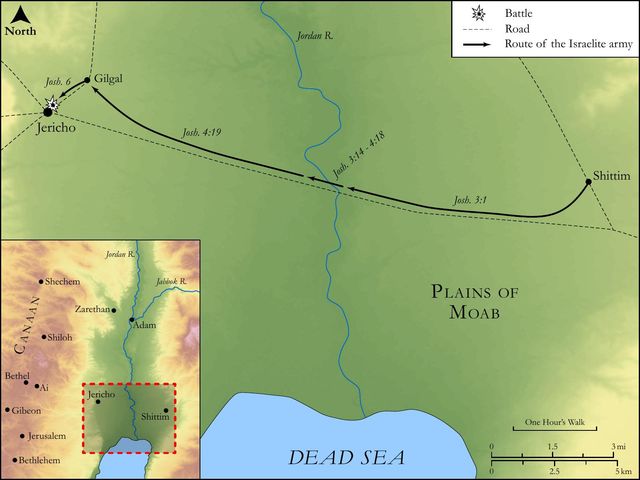
This verse concludes the dramatic narrative of Israel's entry into the Promised Land, following the miraculous parting of the Jordan River. Chapters 3 and 4 meticulously detail this pivotal event, emphasizing the central role of the Ark of the Covenant, carried by the priests, in leading the nation. Just prior to verse 24, Joshua commands the twelve tribal representatives to take stones from the riverbed, where the priests stood firm, and set them up as a permanent memorial at Gilgal. This act of remembrance, detailed in Joshua 4:1-9, is explicitly linked to the pedagogical purpose outlined in verse 24. The entire passage underscores God's active presence, His unwavering leadership in bringing His people into their inheritance, and His desire for these mighty acts to be remembered and understood by future generations who would inquire about the stones' meaning, as highlighted in Joshua 4:6-7.
Historical & Cultural Context
The crossing of the Jordan marked the definitive end of Israel's forty years of wilderness wandering and the culmination of the Exodus generation's journey, ushering the new generation into the Promised Land. This event was a direct and powerful fulfillment of God's covenant promise to Abraham, Isaac, and Jacob to give their descendants the land of Canaan, as recorded in Genesis 12:7. Historically, this miracle solidified Israel's identity as a nation under God's direct sovereignty, distinct from the pagan nations around them who worshipped various deities. Culturally, the erection of memorial stones was a common practice from the days of the patriarchs to commemorate significant events, covenants, or divine interventions, as when Jacob set up a pillar at Bethel. However, Israel's memorial was unique in its explicit didactic purpose: to teach about Yahweh's unparalleled power and His covenant faithfulness, contrasting sharply with the often-capricious gods of their neighbors. The timing, at the Jordan's flood stage during the harvest season, further amplified the miraculous nature of God's intervention, demonstrating His absolute control over creation and His ability to overcome natural obstacles, echoing the earlier deliverance at the Red Sea.
Key Themes
ShowHideJoshua 4:24 powerfully encapsulates several overarching themes central to the book of Joshua and the broader Old Testament narrative. Divine Power and Sovereignty is paramount, as God's ability to halt the swollen Jordan River unequivocally demonstrates His absolute control over nature and His unwavering capacity to fulfill His promises, echoing the earlier miracle of the Red Sea crossing. This act serves as a Universal Witness, highlighting God's desire for His glory and power to be recognized not only by Israel but also by "all the people of the earth," signaling His ultimate redemptive plan for all nations, a theme later developed by prophets like Isaiah in Isaiah 49:6. For Israel, the primary response to this display of might is Reverent Fear and Obedience, a deep, awe-filled respect for God that leads to faithful adherence to His covenant commands, as often emphasized throughout Deuteronomy, such as in Deuteronomy 6:24. Finally, the entire event powerfully reaffirms God's Covenant Faithfulness, demonstrating His reliability and commitment to bringing His people into the land He promised their forefathers, thereby establishing His enduring presence among them and validating Joshua's leadership, as seen in Joshua 3:7.
Exposition and Analysis
ShowHideKey Word Analysis
ShowHideA primitive word referring to the open hand, indicating power, means, or direction. In this context, "the hand of the LORD" is a pervasive biblical idiom (anthropomorphism) signifying God's active power, direct intervention, and authority. It is not merely a physical appendage but a metaphorical representation of His tangible involvement in human affairs. Here, it emphasizes divine agency and the irresistible might demonstrated in the miraculous parting of the Jordan.
From a root meaning to be strong. This word conveys strength, firmness, and power. When applied to God, as here, châzâq underscores the overwhelming, undeniable, and enduring nature of His power. It implies a strength that is robust, unyielding, and capable of overcoming any obstacle, leaving no doubt about the divine origin of the Jordan miracle. This "might" is not merely impressive but foundational to God's character and His ability to fulfill His promises.
A primitive root meaning to fear, morally to revere, or causatively to frighten. While yârêʼ can denote terror, particularly in the face of divine judgment, in this context, when directed towards God by His people, it signifies a profound reverence, awe, and respect that inspires obedience and worship. It is a positive, foundational response to God's holiness, majesty, and power, leading to a life of devotion and faithfulness. This "fear" is not paralyzing dread but a humble recognition of God's supreme authority and goodness, often linked to wisdom and true devotion.
Verse Breakdown
ShowHide"That all the people of the earth might know the hand of the LORD"
This opening clause reveals God's universal, outward-looking purpose for the Jordan miracle. It signifies that God's powerful acts are not exclusively for Israel's benefit but are also intended as a global witness. The phrase "all the people of the earth" indicates a desire for His fame and power to extend beyond Israel's borders, serving as a testimony to surrounding nations and future generations about the unique, incomparable might of Yahweh, the one true God. This demonstrates God's sovereign intent to reveal Himself to all humanity.
"that it [is] mighty"
This clause clarifies what "all the people of the earth" are to know about "the hand of the LORD"—namely, its overwhelming and undeniable strength. The Jordan miracle was a demonstration of power so immense and unequivocal that its divine origin could not be denied by any observer. It served as irrefutable evidence of God's omnipotence, establishing His supremacy over all creation and all other gods worshipped by the nations. This is a declaration of God's inherent, unchallengeable power.
"that ye might fear the LORD your God for ever"
This second, inward-looking purpose is directed specifically at Israel, the covenant community. The "ye" refers to the Israelites, emphasizing that the miracle was also for their spiritual formation and ongoing relationship with God. The "fear" here is not terror but reverential awe, profound respect, and worship that leads to faithful obedience and covenant fidelity. The phrase "for ever" underscores the enduring nature of this proper response, indicating that the memory of God's mighty act should cultivate a perpetual attitude of devotion and fidelity within the covenant community across all generations, ensuring their lasting identity as God's people.
Literary Devices
ShowHideJoshua 4:24 employs several significant Literary Devices to convey its profound message. The phrase "the hand of the LORD" is a clear example of Anthropomorphism, attributing a human characteristic (a hand) to God to make His active power and intervention more comprehensible and relatable. This device emphasizes God's direct agency and tangible involvement in the miracle. The verse also functions as a Purpose Clause, introduced by "that" (or "in order that"), explicitly stating the divine intentions behind the Jordan crossing and the memorial stones. There are two distinct, yet complementary, purposes: one universal ("that all the people of the earth might know") and one particular ("that ye might fear the LORD your God"). This Dual Purpose highlights both God's global redemptive plan and His specific covenant relationship with Israel. Furthermore, the verse is deeply Didactic, serving as a teaching moment for both the present generation of Israelites and all future generations, ensuring the memory and meaning of God's mighty acts are preserved and passed down. The repetition of the concept of "knowing" (for the nations) and "fearing" (for Israel) reinforces the central lessons God desires to impart, creating a powerful Chiasm or parallel structure that emphasizes the reciprocal nature of divine revelation and human response.
Theological and Thematic Connections
ShowHideJoshua 4:24 stands as a theological cornerstone, linking God's historical acts of power to His overarching purposes for humanity and His covenant people. It articulates the principle that divine intervention is not merely for immediate deliverance but serves as a profound revelation of God's character and an impetus for proper human response. The miracle at the Jordan, like the parting of the Red Sea, underscores God's absolute sovereignty over creation and His unwavering faithfulness to His promises. This dual emphasis—God's global witness and Israel's reverent obedience—is a recurring motif throughout redemptive history, pointing to a God who reveals Himself powerfully to all nations while simultaneously calling His chosen people into a deeper, lasting relationship of awe and worship, grounded in His mighty deeds.
Reflection and Application
ShowHideJoshua 4:24 offers timeless lessons for believers today. It reminds us that God's powerful acts in history, and indeed in our personal lives, are not random occurrences but are imbued with profound divine purpose. We are called to be both humble recipients of God's grace and faithful witnesses to His power. Just as the memorial stones at Gilgal served as a tangible reminder, we too should cultivate practices of remembrance—recalling God's faithfulness in our past, sharing our testimonies with integrity, and diligently teaching future generations about His unchanging character and mighty deeds. Our lives, transformed by His mighty hand, should serve as a living testament to His power, drawing others to acknowledge and glorify Him. Furthermore, the call to "fear the LORD your God for ever" is a perpetual summons to live in reverent awe, acknowledging His sovereignty in every aspect of our existence, allowing this awe to shape our obedience, deepen our worship, and inspire our trust, ensuring our faith is not fleeting but enduring across all seasons of life.
Questions for Reflection
ShowHideFAQ
ShowHideWhat is the significance of "the hand of the LORD" in this verse?
ShowHide"The hand of the LORD" is a powerful anthropomorphism, a figure of speech that attributes a human characteristic (a hand) to God. In Joshua 4:24, it signifies God's active, irresistible power and direct intervention. It emphasizes that the miraculous parting of the Jordan River was not a natural phenomenon or a coincidence, but a deliberate and mighty act of God. This idiom is used throughout the Old Testament to denote God's strength, authority, and ability to accomplish His will, whether in judgment or salvation, as seen in the plagues of Egypt in Exodus 9:3 or the Philistines' affliction in 1 Samuel 5:6. It underscores God's personal and effective involvement in human history.
Why was it important for "all the people of the earth" to know God's power?
ShowHideThis highlights God's universal redemptive purpose, demonstrating that His plan extends beyond Israel. While Israel was His chosen covenant people, God's ultimate desire was for His glory and power to be recognized by all nations. The miracles performed for Israel, such as the Jordan crossing, served as a testimony to surrounding pagan nations, demonstrating that Yahweh was the one true God, superior to all their idols. This universal witness prepared the way for the eventual revelation of God's salvation to all peoples through Christ, a theme powerfully articulated by prophets like Isaiah in Isaiah 49:6 and echoed in the Great Commission in Matthew 28:19.
What does it mean to "fear the LORD your God for ever," and how is it related to God's mighty acts?
ShowHideTo "fear the LORD" in this context means to hold Him in profound reverence, awe, and respect, rather than mere terror or dread. It is a response of humble submission and worship to His holiness, power, and goodness. God's mighty acts, like the Jordan miracle, are intended to cultivate this reverential fear, leading to faithful obedience and devotion within the covenant relationship. The phrase "for ever" emphasizes that this attitude should be perpetual, a foundational and enduring characteristic of Israel's relationship with God, passed down through generations. This concept is central to the covenant relationship and is often linked to wisdom and true life, as articulated in Psalm 111:10 and Deuteronomy 6:2.
Christ-Centered Fulfillment
ShowHideJoshua 4:24, with its dual purpose of revealing God's mighty hand to all the earth and cultivating reverent fear in His people, finds its ultimate and most profound fulfillment in Jesus Christ. The "hand of the LORD" that miraculously parted the Jordan River, demonstrating divine control over creation, foreshadows the even greater power of God displayed in the incarnation, life, death, and resurrection of Jesus. Through Christ, God's power is revealed not merely in controlling natural elements, but in conquering sin and death itself, offering eternal life to "all the people of the earth" who believe (John 3:16). Jesus is the ultimate "sign" and "memorial," embodying God's very presence among humanity, just as the Ark of the Covenant stood in the Jordan. His sacrifice on the cross is the supreme demonstration of God's mighty hand, not just to deliver from physical enemies but from spiritual bondage and the power of darkness (Colossians 2:13-15). Therefore, the call to "fear the LORD your God for ever" is transformed and deepened in the New Covenant; it becomes a call to worship and obey Jesus, the Son of God, who perfectly reveals the Father (John 14:9) and through whom we receive grace and truth (John 1:17). Our response to Christ's saving work is one of awe-filled reverence and faithful obedience, a perpetual worship of the One through whom God's mighty hand has accomplished the greatest salvation for all humanity, drawing us into an eternal covenant relationship with Him (Hebrews 9:11-12).