


Job 34:12
- אַף'afalsoH637PrtParticle Interjection
- אָמְנָם'a·me·NamtrulyH551AdvAdverb
- אֵל'elGodH410N-msNoun Singular Masculine Absolute
- לֹאlo'notH3808NegParticle Negative
- יַרְשִׁיעַyar·Shi·a'he acts wickedlyH7561V-Hiphil-Imperf-3msVerb Hiphil Imperfect 3rd Singular Masculine
- וְשַׁדַּיve·sha·Daiand [the] AlmightyH7706Conj-w ¦ N-properNoun Proper Titleוְandשַׁדַּי[the] Almighty
- לֹאlo'notH3808NegParticle Negative
- יְעַוֵּתye·'a·Vethe pervertsH5791V-Piel-Imperf-3msVerb Piel Imperfect 3rd Singular Masculine
- מִשְׁפָּטmish·PatjusticeH4941N-msNoun Singular Masculine Absolute
English is a literal word-by-word gloss of the Hebrew, not the KJV's wording. Why?
This is the original text the KJV's translators worked from — each Hebrew word with its own literal English meaning in this verse, prepared by scholars at Tyndale House, Cambridge. The KJV translates whole sentences, not word by word, so its wording differs: one Hebrew word can become several English words, and the KJV may choose “the LORD” where the gloss reads “Yahweh”. Both are faithful — they answer different questions. For the KJV's own rendering, switch to the KJV text.
Details
See on the biblical-era map
Study this verse
Public-domain commentary
Matthew Henry
From his Commentary on the Whole Bible. Henry comments on passages, not single verses — this entry covers Job 34:10–15. His three-level outline is real structure in the source text, so it is rendered as structure.
The scope of Elihu's discourse to reconcile Job to his afflictions and to pacify his spirit under them. In order to this he had shown, in the foregoing chapter, that God meant him no hurt in afflicting him, but intended it for his spiritual benefit. In this chapter he shows that he did him no wrong in afflicting him, nor punished him more than he deserved. If the former could not prevail to satisfy him, yet this ought to silence him. In these verses he directs his discourse to all the company: "Hearken to me, you men of understanding (Job 34:10), and show yourselves to be intelligent by assenting to this which I say." And this is that which he says, That the righteous God never did, nor ever will do, any wrong to any of his creatures, but his ways are equal, ours are unequal. The truth here maintained respects the justice of equity of all God's proceedings. Now observe in these verses,
I.How plainly this truth is laid down, both negatively and positively.
1.He does wrong to none: God cannot do wickedness, nor the Almighty commit iniquity, Job 34:10. It is inconsistent with the perfection of his nature, and so it is also with the purity of his will (Job 34:12): God will not do wickedly, neither will the Almighty pervert judgment. He neither can nor will do a wrong thing, nor deal hardly with any man. He will never inflict the evil of punishment but where he finds the evil of sin, nor in any undue proportion, for that would be to commit iniquity and do wickedly. If appeals be made to him, or he be to give a definitive sentence, he will have an eye to the merits of the cause and not respect the person, for that were to pervert judgment. He will never either do any man wrong or deny any man right, but the heavens will shortly declare his righteousness. Because he is God, and therefore is infinitely perfect and holy, he can neither do wrong himself nor countenance it in others, nay more than he can die, or lie, or deny himself. Though he be Almighty, yet he never uses his power, as mighty men often do, for the support of injustice. He is Shaddai - God all-sufficient, and therefore he cannot be tempted with evil (Jam 1:13), to do an unrighteous thing.
2.He ministers justice to all (Job 34:11): The work of a man shall he render unto him. Good works shall be rewarded and evil works either punished or satisfied for; so that sooner or later, in this world or in that to come, he will cause every man to find according to his ways. This is the standing rule of distributive justice, to give to every man according to his work. Say to the righteous, it shall be well with them; woe to the wicked, it shall be ill with them. If services persevered in now go unrewarded, and sins persisted in now go unpunished, yet there is a day coming when God will fully render to every man according to his works, with interest for the delay.
II.How warmly it is asserted,
1.With an assurance of the truth of it: Yea, surely, Job 34:12. It is a truth which none can deny or call in question; it is what we may take for granted and are all agreed in, That God will not do wickedly.
2.With an abhorrence of the very thought of the contrary (Job 34:10): Far be it from God that he should do wickedness, and from us that we should entertain the least suspicion of it or say any thing that looks like charging him with it.
III.How evidently it is proved by two arguments:
1.His independent absolute sovereignty and dominion (Job 34:13): Who has given him a charge over the earth and deputed him to manage the affairs of men upon the earth? Or, Who besides has disposed the whole world of mankind? He has the sole administration of the kingdoms of men, and has it of himself, nor is he entrusted with it by or for any other.
(1.)It is certain that the government is his, and he does according to his will in all the hosts both of heaven and earth; and therefore he is not to be charged with injustice; for shall not the Judge of all the earth do right? Gen 18:25. How shall God either rule or judge the world if there be, or could be, any unrighteousness with him? Rom 3:5, Rom 3:6. He that is entitled to such unlimited power most certainly have in himself unspotted purity. This is also a good reason why we should acquiesce in all God's dealings with us. Shall not he that disposes of the whole world dispose of us and our concerns?
(2.)It is as certain that he does not derive his power from any, nor is it a dispensation that is committed to him, but his power is original, and, like his being, of himself; and therefore, if he were not perfectly just, all the world and the affairs of it would soon be in the utmost confusion. The highest powers on earth have a God above them, to whom they are accountable, because it is not far from them to do iniquity. But therefore God has none above him, because it is not possible that he should do any thing (such is the perfection of his nature) that should need to be controlled. And, if he be an absolute sovereign, we are bound to submit to him, for there is no higher power to which we may appeal, so that the virtue is a necessity.
2.His irresistible power (Job 34:14): If he set his heart upon man, to contend with him, much more if (as some read it) he set his heart against man, to ruin him, if he should deal with man either by summa potestas - mere sovereignty, or by summum jus - strict justice, there were no standing before him; man's spirit and breath would soon be gone and all flesh would perish together, Job 34:15. Many men's honesty is owing purely to their impotency; they do not do wrong because they cannot support it when it is done, or it is not in their power to do it. But God is able to crush any man easily and suddenly, and yet does not by arbitrary power crush any man, which therefore must be attributed to the infinite perfection of his nature, and that is immutable. See here,
(1.)What God can do with us. He can soon bring us to dust; there needs not any positive act of his omnipotence to do it; if he do but withdraw that concurrence of his providence by which we live, if he gather unto himself that spirit and breath which was from his hand at first and is still in his hand, we expire immediately, like an animal in an air-pump when the air is exhausted.
(2.)What he may do with us without doing us wrong. He may recall the being he gave, of which we are but tenants at will, and which also we have forfeited; and therefore, as long as that is continued of his mere favour, we have no reason to cry out of wrong, whatever other comforts are removed.
Historical interpretation
Historical reception
1 surviving comment on this verse from the historical church.
The Lord said to the devil, “You have moved me against him to afflict him without cause.” But Elihu says, “That the Lord will not condemn without cause.” A statement that is believed to be at variance with the words of Truth, unless weighed with careful consideration. To condemn is one thing, to afflict another. He afflicts therefore in some respect without cause but does not condemn without cause. Had he not afflicted Job in some respect without cause; since sin was not blotted out, how could his merit be increased by it? For he cannot condemn without reason, inasmuch as condemnation cannot partly take place for a certain purpose, since it punishes at the end all the ungodliness that anyone has here committed. Nor does almighty God subvert judgment, because, although our sufferings seem to be unjust, yet they are rightly inflicted in his secret judgment. It follows, “Whom else has he appointed over the earth, or whom has he placed over the world which he has made?” In order, namely, that you may understand, “No one.” For he governs indeed by himself the world that he created by himself, nor does he need the aid of others in governing, who needed it not for creating. These points are brought together in order that he might plainly point out that if almighty God does not neglect to govern by himself the world which he created, he most certainly governs correctly that which he created correctly. He does not order in heartlessness that which he fashioned in mercy. And he who provided for their being before they were made does not forsake them after their creation. He who was the first cause at their creation is present to rule. He, therefore, does not omit to take care of us.
Continue studying Job 34:12 across the web’s major study libraries — every link below opens this exact verse, chapter, or book on the destination site.
Read & Compare
 BibleGatewayThis verse in more than 200 translations and 70 languages.
 Bible.comThe YouVersion reader — hundreds of translations, reading plans, and highlights.
 ESV.orgCrossway's official English Standard Version reader.
 NET BibleThe NET translation with 60,000+ translators' notes on every rendering decision.
 STEP BibleTyndale House's free study tool — original text, vocabulary, and scholarly resources.
 BibliaLogos Bible Software's free web reader.
 USCCBThe New American Bible (Revised Edition) with the U.S. bishops' study notes.
Commentaries
 BibleHub CommentariesDozens of classic commentaries on this verse, gathered on one page.
 StudyLightMore than 100 commentary sets — the largest collection on the web.
 BibleRefPlain-English commentary on what this verse means, verse by verse.
 Enduring WordDavid Guzik's free commentary on this chapter, widely used by Bible teachers.
 Bible Study ToolsVerse commentary alongside Greek and Hebrew study aids.
Original Language & Research
- BibleHub InterlinearThe verse word by word — original language, transliteration, and English.
- BibleHub LexiconEvery word's original-language definition and Strong's entry.
 Blue Letter BibleDeep-study tools — Strong's numbers, concordance, and word studies.
 SefariaThe Hebrew text with Rashi and centuries of Jewish commentary.
Sermons, Hymns & Audio


TrulyRandomVerse is not affiliated with these sites and doesn’t control their content. They’re linked because they’re genuinely useful.
Summary
Job 34:12, spoken by Elihu, stands as an emphatic declaration of God's absolute righteousness and the unblemished integrity of His judgment. Amidst Job's profound suffering and questioning of divine justice, Elihu asserts that the Creator is inherently incapable of wickedness or perverting what is right. This verse serves as a foundational theological statement, affirming God's moral perfection and the infallibility of His governance over creation, providing an anchor for trust even when His ways are mysterious to human understanding.
Context
ShowHideLiterary Context
Job 34:12 is situated within Elihu's first speech (chapters 34-37), which marks a distinct phase in the dialogue of the Book of Job. Elihu, a younger man, steps in after the three friends have exhausted their arguments and Job has continued to maintain his innocence while questioning God's justice. Unlike Eliphaz, Bildad, and Zophar, who largely adhered to a rigid retribution theology (suffering equals sin), Elihu offers a more nuanced perspective. He defends God's character not by accusing Job of specific sins, but by emphasizing God's absolute sovereignty, wisdom, and righteousness. In chapter 34, Elihu directly challenges Job's implicit accusations that God has dealt unjustly with him (e.g., Job 33:10-11). Elihu's argument is that God is too great to be unjust; His power is always exercised with perfect equity, making any notion of divine wickedness or corrupted judgment utterly impossible. This verse is a cornerstone of Elihu's defense, establishing God's moral perfection as an unassailable truth.
Historical & Cultural Context
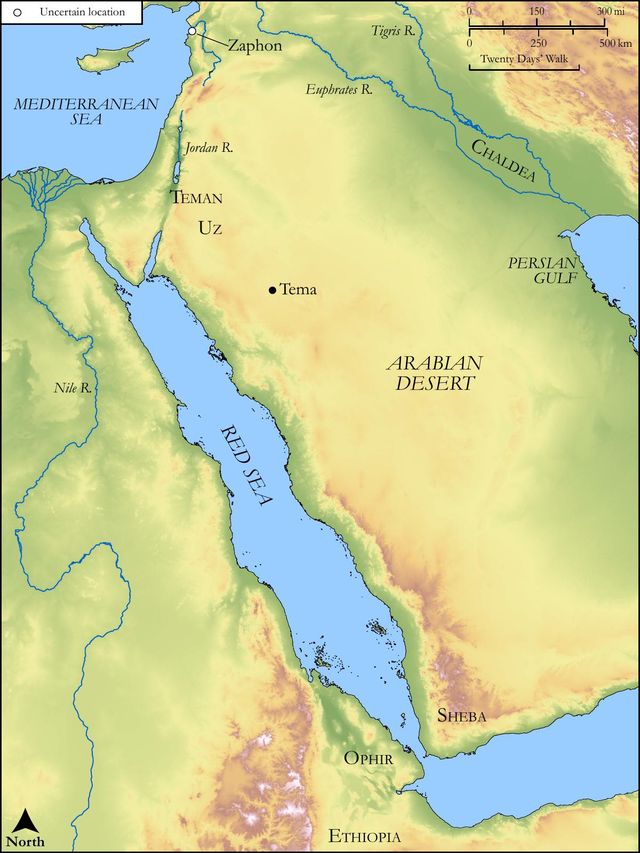
The Book of Job is set in the patriarchal period, likely in the land of Uz, suggesting a non-Israelite but God-fearing context. In the ancient Near East (ANE), the concept of divine justice was often intertwined with the power and caprice of the gods. While some ANE texts explored the problem of suffering, they rarely posited a god who was absolutely righteous and incapable of injustice in the way the God of Israel is presented. The Israelite understanding, however, rooted in the covenant and the Law, emphasized Yahweh's unique moral character, His faithfulness, and His unwavering commitment to justice (Deuteronomy 32:4). Elihu's declaration in Job 34:12 aligns with this distinct biblical theology, asserting a God whose very nature precludes any form of unrighteousness or perversion of judgment. This stands in stark contrast to the often arbitrary and self-serving actions attributed to deities in surrounding cultures, highlighting the unique moral perfection of the God of Abraham, Isaac, and Jacob.
Key Themes
ShowHideJob 34:12 contributes significantly to several overarching themes within the Book of Job and biblical theology generally. Foremost is the Impeccable Justice and Righteousness of God. Elihu's statement is an emphatic assertion that God is morally perfect, incapable of evil or injustice, which directly refutes Job's despairing questions about God's treatment. This leads to the theme of Divine Sovereignty and Integrity, where God's omnipotence ("the Almighty") is inextricably linked with His moral perfection; His power is always exercised righteously. The verse also underscores the Infallibility of God's Judgment, meaning His decisions are always true, fair, and untainted by error or malice, even when human understanding fails to grasp them. This concept is vital for the book's broader exploration of suffering and the limits of human wisdom in comprehending divine ways (Job 11:7-9). Ultimately, Job 34:12 provides a Foundation for Trust in God's character, offering a theological anchor for those grappling with suffering and the apparent anomalies of life, reminding them that God remains inherently good and just, regardless of circumstances.
Exposition and Analysis
ShowHideKey Word Analysis
ShowHideThe Hebrew word רָשַׁע (râshaʻ) means "to be (causatively, do or declare) wrong," "to be guilty," or "to act wickedly." It denotes a state of moral depravity or an act of unrighteousness, often implying a violation of divine or human law. When Elihu declares that God "will not do wickedly," he is asserting God's absolute freedom from any moral fault, guilt, or malicious intent. This is not merely a statement about God's actions but about His very nature – He is inherently righteous and incapable of unrighteousness.
The term שַׁדַּי (Shadday), often translated "Almighty," is a significant divine name used frequently in the Book of Job (e.g., Job 6:4). It emphasizes God's power, might, and all-sufficiency. By linking "the Almighty" with the inability to "pervert judgment," Elihu underscores that God's immense power is never wielded arbitrarily or unjustly. His omnipotence is always perfectly aligned with His perfect righteousness, ensuring that His governance is both powerful and morally pure.
This phrase combines two key Hebrew words: עָוַת (ʻâvath), meaning "to wrest," "to make crooked," or "to distort," and מִשְׁפָּט (mishpâṭ), meaning "judgment," "justice," "right," or "formal decree." The combination emphatically declares that God's justice is never twisted, corrupted, or made crooked. His decisions are always straight, true, and perfectly righteous. It speaks to the integrity and infallibility of His moral administration of the universe, assuring that His rulings are always equitable and untainted by error, bias, or malice.
Verse Breakdown
ShowHide"Yea, surely God will not do wickedly"
This opening clause is a strong, emphatic negation. The "Yea, surely" (אָ֭כֵן, ʾāḵēn) serves as an affirmation of certainty, making the declaration absolute. Elihu asserts that it is an undeniable truth that God (אֵל, ʾēl, a general term for deity, but here referring to the one true God) is utterly incapable of acting in a way that is morally corrupt, unrighteous, or malicious. This establishes God's inherent moral perfection as foundational.
"neither will the Almighty pervert judgment"
This second clause functions in synonymous parallelism with the first, reinforcing and elaborating on the same truth. It shifts from God's general moral character ("not do wickedly") to His specific actions in governance and decision-making ("pervert judgment"). By using "the Almighty" (שַׁדַּי, Shadday), Elihu connects God's supreme power and authority with His unblemished justice. This means that God's exercise of power will never result in a twisted, corrupted, or unfair outcome. His judgments are always straight, true, and perfectly righteous, regardless of how they may appear to limited human understanding.
Literary Devices
ShowHideJob 34:12 employs several literary devices that enhance its impact and meaning. The most prominent is Synonymous Parallelism, where the second clause ("neither will the Almighty pervert judgment") essentially repeats and reinforces the meaning of the first clause ("Yea, surely God will not do wickedly") using different but related terms. This repetition serves to emphasize the absolute certainty and immutability of God's perfect justice. Elihu also uses Rhetorical Assertion, delivering a strong, declarative statement that leaves no room for doubt or debate, characteristic of his confident and authoritative tone throughout his speeches. Furthermore, the verse utilizes Divine Epithets, employing both "God" (אֵל, ʾēl) and "the Almighty" (שַׁדַּי, Shadday). The use of these distinct names for God not only adds poetic variety but also subtly highlights different aspects of His character—His divine nature and His supreme power—both of which are intrinsically linked to His unblemished righteousness.
Theological and Thematic Connections
ShowHideElihu's bold declaration in Job 34:12 is a cornerstone for understanding the biblical doctrine of God's character. It asserts God's absolute moral purity and His unwavering commitment to justice, forming the bedrock of all trust in Him. This truth stands in stark contrast to human fallibility and the pervasive injustice of the world. It means that even when suffering seems inexplicable, or divine actions appear mysterious, God's nature remains perfectly good and righteous. This theological certainty provides an anchor for faith, reminding believers that the ultimate judge is not only omnipotent but also impeccably just, and His ways, though often beyond human comprehension, are always perfect. This understanding is crucial for navigating the problem of evil and suffering, as it shifts the focus from questioning God's character to trusting His sovereign wisdom and ultimate purposes.
Reflection and Application
ShowHideJob 34:12 offers profound comfort and a powerful challenge for believers navigating a world often marked by injustice, suffering, and seemingly arbitrary events. In moments of doubt or despair, this verse serves as a crucial theological anchor: God Himself is perfectly just and good, incapable of wrongdoing or perverting judgment. This truth invites us to cultivate a deeper trust in His character, even when circumstances are confusing or painful, understanding that our limited perspective does not negate His righteousness. It also provides a robust hope for ultimate justice; because God will not pervert judgment, we can be assured that in His perfect timing and way, all wrongs will be made right, and His righteous purposes will be fulfilled. This divine certainty should not only comfort us but also compel us to align our own lives with His character, inspiring us to pursue justice, righteousness, and integrity in our personal conduct and in our communities, reflecting His perfect nature to a broken world.
Questions for Reflection
ShowHideFAQ
ShowHideIf God is perfectly just, why does He allow evil and suffering in the world?
ShowHideThis is one of the most profound questions in theology, often called the "problem of evil." Job 34:12 asserts God's perfect justice and inability to do wickedly, which means He is never the author of evil, nor does He act unjustly in allowing it. The biblical narrative suggests that evil and suffering entered the world through human sin and rebellion against God's perfect design (Genesis 3). While God does not cause evil, His sovereignty means He permits it, often for purposes beyond human comprehension, such as to refine character (Romans 5:3-5), to demonstrate His glory, or to bring about a greater good. The Book of Job itself grapples with this, ultimately affirming God's wisdom and sovereignty over all things, even when His reasons are not fully disclosed to humanity (Job 38-41). The ultimate answer to suffering is found not in a full explanation of its cause, but in the person of Jesus Christ, who entered into human suffering and conquered sin and death.
Christ-Centered Fulfillment
ShowHideThe profound truth declared in Job 34:12—that God will not do wickedly nor pervert judgment—finds its ultimate and most glorious fulfillment in the person and work of Jesus Christ. While Elihu asserts God's perfect justice, the New Testament reveals how this justice is perfectly upheld and yet mercifully extended through the Son. Jesus, being God incarnate, is the very embodiment of divine righteousness; He lived a life entirely without sin, never doing wickedly (1 Peter 2:22). On the cross, God's perfect justice was fully satisfied as Christ, the just, suffered for the unjust (1 Peter 3:18). Here, the "Almighty" did not pervert judgment but perfectly executed it upon sin, while simultaneously providing a way for sinners to be declared righteous through faith in Christ's atoning sacrifice (Romans 3:25-26). Furthermore, Jesus is appointed by God to be the righteous judge of all humanity, ensuring that His final judgment will be absolutely perfect and untainted by error or bias (John 5:22; Acts 17:31). Thus, Job 34:12 points forward to the cross, where God's unwavering justice and boundless love converge, and to the future, when Christ will perfectly administer God's righteous judgment over all creation.