


Job 15:23
Bible text: King James Version (1769 Blayney text) · Public domain
Bible text: Berean Standard Bible · Public domain
Bible text: American Standard Version (1901) · Public domain
Bible text: World English Bible, Messianic edition · Public domain
Bible text: Geneva Bible (1599) · Public domain
Bible text: Young's Literal Translation · Public domain
- נֹדֵדno·Ded[is] wanderingH5074V-Qal-Prtcpl-msVerb Qal Participle Singular Masculine Absolute
- הוּאhu'heH1931Pro-3msPronoun Personal 3rd Singular Masculine
- לַלֶּחֶםla·Le·chemfor <the> foodH3899Prep-l ¦ N-msNoun Singular Masculine Absoluteלַfor <the>לֶּחֶםfood
- אַיֵּה'ai·Yehwhere?H346InterrogParticle Interrogative
- יָדַעya·Da'he knowsH3045V-Qal-Perf-3msVerb Qal Perfect 3rd Singular Masculine
- כִּיkithatH3588PrtParticle Conditional
- נָכוֹןna·Khon[has been] preparedH3559V-Niphal-Prtcpl-msVerb Niphal Participle Singular Masculine Absolute
- בְּיָדוֹbe·ya·Doin his handH3027Prep-b ¦ N-csc ¦ 3msNoun Singular common gender Constructבְּinיָדhandוֹhis
- יוֹםyoma day ofH3117N-mscNoun Singular Masculine Construct
- חֹשֶׁךְCho·shekhdarknessH2822N-msNoun Singular Masculine Absolute
English is a literal word-by-word gloss of the Hebrew, not the KJV's wording. Why?
This is the original text the KJV's translators worked from — each Hebrew word with its own literal English meaning in this verse, prepared by scholars at Tyndale House, Cambridge. The KJV translates whole sentences, not word by word, so its wording differs: one Hebrew word can become several English words, and the KJV may choose “the LORD” where the gloss reads “Yahweh”. Both are faithful — they answer different questions. For the KJV's own rendering, switch to the KJV text.
Details
See on the biblical-era map
Study this verse
Public-domain commentary
Matthew Henry
From his Commentary on the Whole Bible. Henry comments on passages, not single verses — this entry covers Job 15:17–35. His four-level outline is real structure in the source text, so it is rendered as structure.
Eliphaz, having reproved Job for his answers, here comes to maintain his own thesis, upon which he built his censure of Job. His opinion is that those who are wicked are certainly miserable, whence he would infer that those who are miserable are certainly wicked, and that therefore Job was so. Observe,
I.His solemn preface to this discourse, in which he bespeaks Job's attention, which he had little reason to expect, he having given so little heed to and put so little value upon what Job had said (Job 15:17): "I will show thee that which is worth hearing, and not reason, as thou dost, with unprofitable talk." Thus apt are men, when they condemn the reasonings of others, to commend their own. He promises to teach him,
1.From his own experience and observation: "That which I have myself seen, in divers instances, I will declare." It is of good use to take notice of the providences of God concerning the children of men, from which many a good lesson may be learned. What good observations we have made, and have found benefit by ourselves, we should be ready to communicate for the benefit of others; and we may speak boldly when we declare what we have seen.
2.From the wisdom of the ancients (Job 15:18): Which wise men have told from their fathers. Note, The wisdom and learning of the moderns are very much derived from those of the ancients. Good children will learn a good deal from their good parents; and what we have learned from our ancestors we must transmit to our posterity and not hide from the generations to come. See Psa 78:3-6. If the thread of the knowledge of many ages be cut off by the carelessness of one, and nothing be done to preserve it pure and entire, all that succeed fare the worse. The authorities Eliphaz vouched were authorities indeed, men of rank and figure (Job 15:19), unto whom alone the earth was given, and therefore you may suppose them favourites of Heaven and best capable of making observations concerning the affairs of this earth. The dictates of wisdom come with advantage from those who are in places of dignity and power, as Solomon; yet there is a wisdom which none of the princes of this world knew, Co1 2:7, Co1 2:8.
II.The discourse itself. He here aims to show,
1.That those who are wise and good do ordinarily prosper in this world. This he only hints at (Job 15:19), that those of whose mind he was were such as had the earth given to them, and to them only; they enjoyed it entirely and peaceably, and no stranger passed among them, either to share with them or give disturbance to them. Job had said, The earth is given into the hand of the wicked, Job 9:24. "No," says Eliphaz, "it is given into the hands of the saints, and runs along with the faith committed unto them; and they are not robbed and plundered by strangers and enemies making inroads upon them, as thou art by the Sabeans and Chaldeans." But because many of God's people have remarkably prospered in this world, as Abraham, Isaac, and Jacob, it does not therefore follow that those who are crossed and impoverished, as Job, are not God's people.
2.That wicked people, and particularly oppressors and tyrannizing rulers, are subject to continual terrors, live very uncomfortably, and perish very miserably. On this head he enlarges, showing that even those who impiously dare God's judgments yet cannot but dread them and will feel them at last. He speaks in the singular number - the wicked man, meaning (as some think) Nimrod; or perhaps Chedorlaomer, or some such mighty hunter before the Lord. I fear he meant Job himself, whom he expressly charges both with the tyranny and with the timorousness here described, Job 22:9, Job 22:10. Here he thinks the application easy, and that Job might, in this description, as in a glass, see his own face. Now,
(1.)Let us see how he describes the sinner who lives thus miserably. He does not begin with that, but brings it in as a reason of his doom, Job 15:25-28. It is no ordinary sinner, but one of the first rate, an oppressor (Job 15:20), a blasphemer, and a persecutor, one that neither fears God nor regards man.
[1.]He bids defiance to God, and to his authority and power, Job 15:25. Tell him of the divine law, and its obligations; he breaks those bonds asunder, and will not have, no, not him that made him, to restrain him or rule over him. Tell him of the divine wrath, and its terrors; he bids the Almighty do his worst, he will have his will, he will have his way, in spite of him, and will not be controlled by law, or conscience, or the notices of a judgment to come. He stretches out his hand against God, in defiance of him and of the power of his wrath. God is indeed out of his reach, but he stretches out his hand against him, to show that, if it were in his power, he would ungod him. This applies to the audacious impiety of some sinners who are really haters of God (Rom 1:30), and whose carnal mind is not only an enemy to him, but enmity itself, Rom 8:7. But, alas! the sinner's malice is as impotent as it is impudent; what can he do? He strengthens himself (he would be valiant, so some read it) against the Almighty. He thinks with his exorbitant despotic power to change times and laws (Dan 7:25), and, in spite of Providence, to carry the day for rapine and wrong, clear of the check of conscience. Note, It is the prodigious madness of presumptuous sinners that they enter the lists with Omnipotence. Woe unto him that strives with his Maker. That is generally taken for a further description of the sinner's daring presumption (Job 15:26): He runs upon him, upon God himself, in a direct opposition to him, to his precepts and providences, even upon his neck, as a desperate combatant, when he finds himself an unequal match for his adversary, flies in his face, though, at the same time, he falls on his sword's point, or the sharp spike of his buckler. Sinners, in general, run from God; but the presumptuous sinner, who sins with a high hand, runs upon him, fights against him, and bids defiance to him; and it is easy to foretel what will be the issue.
[2.]He wraps himself up in security and sensuality (Job 15:27): He covers his face with his fatness. This signifies both the pampering of his flesh with daily delicious fare and the hardening of his heart thereby against the judgments of God. Note, The gratifying of the appetites of the body, feeding and feasting that to the full, often turns to the damage of the soul and its interests. Why is God forgotten and slighted, but because the belly is made a god of and happiness placed in the delights of sense? Those that fill themselves with wine and strong drink abandon all that is serious and flatter themselves with hopes that tomorrow shall be as this day, Isa 56:12. Woe to those that are thus at ease in Zion, Amo 6:1, Amo 6:3, Amo 6:4; Luk 12:19. The fat that covers his face makes him look bold and haughty, and that which covers his flanks makes him lie easy and soft, and feel little; but this will prove poor shelter against the darts of God's wrath.
[3.]He enriches himself with the spoils of all about him, Job 15:28. He dwells in cities which he himself has made desolate by expelling the inhabitants out of them, that he might be placed alone in them, Isa 5:8 Proud and cruel men take a strange pleasure in ruins, when they are of their own making, in destroying cities (Psa 9:6) and triumphing in the destruction, since they cannot make them their own but by making them ready to become heaps, and frightening the inhabitants out of them. Note, Those that aim to engross the world to themselves, and grasp at all, lose the comfort of all, and make themselves miserable in the midst of all. How does this tyrant gain his point, and make himself master of cities that have all the marks of antiquity upon them? We are told (Job 15:35) that he does it by malice and falsehood, the two chief ingredients of his wickedness who was a liar and a murderer from the beginning, They conceive mischief, and then they effect it by preparing deceit, pretending to protect those whom they design to subdue, and making leagues of peace the more effectually to carry on the operations of war. From such wicked men God deliver all good men.
(2.)Let us see now what is the miserable condition of this wicked man, both in spiritual and temporal judgments.
[1.]His inward peace is continually disturbed. He seems to those about him to be easy, and they therefore envy him and wish themselves in his condition; but he who knows what is in men tells us that a wicked man has so little comfort and satisfaction in his own breast that he is rather to be pitied than envied. First, His own conscience accuses him, and with the pangs and throes of that he travaileth in pain all his days, Job 15:20. He is continually uneasy at the thought of the cruelties he as been guilty of and the blood in which he has imbrued his hands. His sins stare him in the face at every turn. Diri conscia facti mens habet attonitos - Conscious guilt astonishes and confounds. Secondly, He is vexed at the uncertainty of the continuance of his wealth and power: The number of years is hidden to the oppressor. He knows, whatever he pretends, that they will not last always, and has reason to fear that they will not last long and this he frets at. Thirdly, He is under a certain fearful expectation of judgment and fiery indignation (Heb 10:27), which puts him into, and keeps him in, a continual terror and consternation, so that he dwells with Cain in the land of Nod, or commotion (Gen 4:16), and is made like, Pashur, Magor-missabib - a terror round about, Jer 20:3, Jer 20:4. A dreadful sound is in his ears, Job 15:21. He knows that both heaven and earth are incensed against him, that God is angry with him and that all the world hates him; he has done nothing to make his peace with either, and therefore he thinks that every one who meets him will slay him, Gen 4:14. Or he is like a man absconding for debt, who thinks every man a bailiff. Fear came in, at first, with sin (Gen 3:10) and still attends it. Even in prosperity he is apprehensive that the destroyer will come upon him, either some destroying angel sent of God to avenge his quarrel or some of his injured subjects who will be their own avengers. Those who are the terror of the mighty in the land of the living usually go down slain to the pit (Eze 32:25), the expectation of which makes them a terror to themselves. This is further set forth (Job 15:22): He is, in his own apprehension, waited for of the sword; for he knows that he who killeth with the sword must be killed with the sword, Rev 13:10. A guilty conscience represents to the sinner a flaming sword turning every way (Gen 3:24) and himself inevitably running on it. Again (Job 15:23): He knows that the day of darkness (or the night of darkness rather) is ready at his hand, that it is appointed to him and cannot be put by, that it is hastening on apace and cannot be put off. This day of darkness is something beyond death; it is that day of the Lord which to all wicked people will be darkness and not light and in which they will be doomed to utter, endless, darkness. Note, Some wicked people, though they seem secure, have already received the sentence of death, eternal death, within themselves, and plainly see hell gaping for them. No marvel that it follows (Job 15:24), Trouble and anguish (that inward tribulation and anguish of soul spoken of Rom 2:8, Rom 2:9, which are the effect of God's indignation and wrath fastening upon the conscience) shall make him afraid of worse to come. What is the hell before him if this be the hell within him? And though he would fain shake off his fears, drink them away, and jest them away, it will not do; they shall prevail against him, and overpower him, as a king ready to the battle, with forces too strong to be resisted. He that would keep his peace, let him keep a good conscience. Fourthly, If at any time he be in trouble, he despairs of getting out (Job 15:22): He believeth not that he shall return out of darkness, but he gives himself up for gone and lost in an endless night. Good men expect light at evening time, light out of darkness; but what reason have those to expect that they shall return out of the darkness of trouble who would not return from the darkness of sin, but went on in it? Psa 82:5. It is the misery of damned sinners that they know they shall never return out of that utter darkness, nor pass the gulf there fixed. Fifthly, He perplexes himself with continual care, especially if Providence ever so little frown upon him, Job 15:23. Such a dread he has of poverty, and such a waste does he discern upon his estate, that he is already, in his own imagination, wandering abroad for bread, going a begging for a meal's meat, and saying, Where is it? The rich man, in his abundance, cried out, What shall I do? Luk 12:17. Perhaps he pretends fear of wanting, as an excuse of his covetous practices; and justly may he be brought to this extremity at last. We read of those who were full, but have hired out themselves for bread (Sa1 2:5), which this sinner will not do. He cannot dig; he is too fat (Job 15:27): but to beg he may well be ashamed. See Psa 109:10. David never saw the righteous so far forsaken as to beg their bread; for, verily, they shall be fed by the charitable unasked, Psa 37:3, Psa 37:25. But the wicked want it, and cannot expect it should be readily given them. How should those find mercy who never showed mercy?
[2.]His outward prosperity will soon come to an end, and all his confidence and all his comfort will come to an end with it. How can he prosper when God runs upon him? so some understand that, Job 15:26. Whom God runs upon he will certainly run down; for when he judges he will overcome. See how the judgments of God cross this worldly wicked man in all his cares, desires, and projects, and so complete his misery. First, He is in care to get, but he shall not be rich, Job 15:29. His own covetous mind keeps him from being truly rich. He is not rich that has not enough, and he has not enough that does not think he has. It is contentment only that is great gain. Providence remarkably keeps some from being rich, defeating their enterprises, breaking their measures, and keeping them always behind-hand. Many that get much by fraud and injustice, yet do not grow rich: it goes as it comes; it is got by one sin and spent upon another. Secondly, He is in care to keep what he has got, but in vain: His substance shall not continue; it will dwindle and come to nothing. God blasts it, and what came up in a night perishes in a night. Wealth gotten by vanity will certainly be diminished. Some have themselves lived to see the ruin of those estates which have been raised by oppression; but, where this is not the case, that which is left goes with a curse to those who succeed. De male quaesitis vix gaudet tertius haeres - Ill-gotten property will scarcely be enjoyed by the third generation. He purchases estates to him and his heirs for ever; but to what purpose? He shall not prolong the perfection thereof upon the earth; neither the credit nor the comfort of his riches shall be prolonged; and, when those are gone, where is the perfection of them? How indeed can we expect the perfection of any thing to be prolonged upon the earth, where every thing is transitory, and we soon see the end of all perfection? Thirdly, He is in care to leave what he has got and kept to his children after him. But in this he is crossed; the branches of his family shall perish, in whom he hoped to live and flourish and to have the reputation of making them all great men. They shall not be green, Job 15:32. The flame shall dry them up, Job 15:30. he shall shake them off as blossoms that never knit, or as the unripe grape, Job 15:33. They shall die in the beginning of their days and never come to maturity. Many a man's family is ruined by his iniquity. Fourthly, He is in care to enjoy it a great while himself; but in that also he is crossed. 1. He may perhaps be taken from it (Job 15:30): By the breath of God's mouth shall he go away, and leave his wealth to others; that is, by God's wrath, which, like a stream of brimstone, kindles the fire that devours him (Isa 30:33), or by his word; he speaks, and it is done immediately. This night thy soul shall be required of thee; and so the wicked is driven away in his wickedness, the worldling in his worldliness. 2. It may perhaps be taken from him, and fly away like an eagle towards heaven: It shall be accomplished (or cut off) before his time (Job 15:32); that is, he shall survive his prosperity, and see himself stripped of it. Fifthly, He is in care, when he is in trouble, how to get out of it (not how to get good by it); but in this also he is crossed (Job 15:30): He shall not depart out of darkness. When he begins to fall, like Haman, all men say, "Down with him." It was said of him (Job 15:22), He believeth not that he shall return out of darkness. He frightened himself with the perpetuity of his calamity, and God also shall choose his delusions and bring his fears upon him (Isa 66:4), as he did upon Israel, Num 14:28. God says Amen to his distrust and despair. Sixthly, He is in care to secure his partners, and hopes to secure himself by his partnership with them; but that is in vain too, Job 15:34, Job 15:35. The congregation of them, the whole confederacy, they and all their tabernacles, shall be desolate and consumed with fire. Hypocrisy and bribery are here charged upon them; that is, deceitful dealing both with God and man - God affronted under colour of religion, man wronged under colour of justice. It is impossible that these should end well. Though hand join in hand for the support of these perfidious practices, yet shall not the wicked go unpunished. (3.) The use and application of all this. Will the prosperity of presumptuous sinners end thus miserably? Then (Job 15:31) let not him that is deceived trust in vanity. Let the mischiefs which befal others be our warnings, and let not us rest on that broken reed which always failed those who leaned on it. [1.] Those who trust to their sinful ways of getting wealth trust in vanity, and vanity will be their recompence, for they shall not get what they expected. Their arts will deceive them and perhaps ruin them in this world. [2.] Those who trust to their wealth when they have gotten it, especially to the wealth they have gotten dishonestly, trust in vanity; for it will yield them no satisfaction. The guilt that cleaves to it will ruin the joy of it. They sow the wind, and will reap the whirlwind, and will own at length, with the utmost confusion, that a deceived heart turned them aside, and that they cheated themselves with a lie in their right hand.
Historical interpretation
Two Centuries of Reception
3 surviving comments on this verse. Each one is dated, so this reads as a timeline rather than a list.
Select a marker to jump to its quote. Markers stagger vertically where authors wrote within a few decades of each other.
This means that pain and anguish catches [the wicked] in the middle, just like in a field where on one side a king threatens with inimical banners and on the other side pillaging robbers impend, so that his mind and soul cannot be at rest.
Eliphaz adds, “No stranger marched against them,” that is, the wise are those who enjoy peace and transmit it to their descendants. “No stranger marched against them.” This means they made no war nor saw any fight nor knew any revolt, but they stood with nobility and bravery. They did not only survive but also possessed great force and power and enjoyed a profound peace. “All the life of the ungodly,” he says, “is spent in anguish,” and when they experience peace, their conscience will know this anguish. “The years granted to the oppressors,” who are unjust, “are numbered,” he says, because the tyrants are ephemeral. “Just when he seems to be at peace, his overthrow will come.” Here Job learns that war comes from above, and there will be no change in his misfortunes. “He has been appointed to be food for vultures.” “He has already been given over to the power of the sword.” Notice this again. His death is pitiful. It is not conformed to the common law of nature but is the result of violence, war and battle. After his death, he will not have a burial or a funeral and will not only be deprived of a tomb but will also be “food for vultures.” “He knows within himself that he is doomed to be a carcass.” The foreboding of these events makes them even more painful for Job when they are predicted to him and announced beforehand.
46. For ‘bread’ is the wages of the present life, and ‘the day of darkness’ is taken for the time of vengeance. And so in the course of his conduct, the wicked man at times weighs well the present wrath of the Judge Above, but he is not diverted from wickedness, so that it too should be itself diverted from his destruction. But his conscience accusing him, he fears to be smitten, yet be is ever increasing that whereby he should be smitten. He makes slight of his return, he despairs of pardon, he carries himself high in sin, yet he has fear within, a witness of his wickedness. And though he seem outwardly to be doing wicked things with a bold front, yet for these in his own heart he is untrained to tremble. Whence it is written; For whereas wickedness is timorous, she gives witness to condemnation. [Wisd. 17, 11] For when a man does unlawful things, he is in dread of the thing that he does; and the open witness for his condemning is the very fearfulness of wickedness itself, in that both the thing that is done is feared, and yet the evil that is feared is not overcome.
Continue studying Job 15:23 across the web’s major study libraries — every link below opens this exact verse, chapter, or book on the destination site.
Read & Compare
 BibleGatewayThis verse in more than 200 translations and 70 languages.
 Bible.comThe YouVersion reader — hundreds of translations, reading plans, and highlights.
 ESV.orgCrossway's official English Standard Version reader.
 NET BibleThe NET translation with 60,000+ translators' notes on every rendering decision.
 STEP BibleTyndale House's free study tool — original text, vocabulary, and scholarly resources.
 BibliaLogos Bible Software's free web reader.
 USCCBThe New American Bible (Revised Edition) with the U.S. bishops' study notes.
Commentaries
 BibleHub CommentariesDozens of classic commentaries on this verse, gathered on one page.
 StudyLightMore than 100 commentary sets — the largest collection on the web.
 BibleRefPlain-English commentary on what this verse means, verse by verse.
 Enduring WordDavid Guzik's free commentary on this chapter, widely used by Bible teachers.
 Bible Study ToolsVerse commentary alongside Greek and Hebrew study aids.
Original Language & Research
- BibleHub InterlinearThe verse word by word — original language, transliteration, and English.
- BibleHub LexiconEvery word's original-language definition and Strong's entry.
 Blue Letter BibleDeep-study tools — Strong's numbers, concordance, and word studies.
 SefariaThe Hebrew text with Rashi and centuries of Jewish commentary.
Sermons, Hymns & Audio


TrulyRandomVerse is not affiliated with these sites and doesn’t control their content. They’re linked because they’re genuinely useful.
Summary
Job 15:23 captures Eliphaz the Temanite's severe and condemning portrayal of the wicked, depicting them as perpetually restless, desperate for sustenance, and acutely aware of an inescapable, terrifying doom. This verse encapsulates his rigid conviction that profound suffering is a direct and inevitable consequence of unrighteousness, a belief he implicitly but firmly applies to Job in his second, more aggressive discourse.
Context
ShowHideLiterary Context
This verse is situated within Eliphaz's second and more confrontational speech to Job, specifically found in Job 15. Following Job's renewed lamentations and persistent assertions of innocence in Job 14, Eliphaz responds with heightened severity and a marked decrease in empathy compared to his initial address. His primary objective is to refute Job's claims by vehemently reasserting the traditional doctrine of divine retribution, arguing that only the profoundly wicked experience such intense and prolonged suffering. Verse 23 forms a crucial part of a larger section (verses 20-35) where Eliphaz vividly describes the terrors, anxieties, and miseries that relentlessly plague the ungodly, painting a stark picture of a life utterly devoid of peace, security, and hope, inevitably culminating in a catastrophic end. His words are strategically designed to persuade Job that his inexplicable suffering must, by logical extension of this theology, be a direct result of hidden sin, despite Job's fervent protestations of blamelessness.
Historical & Cultural Context
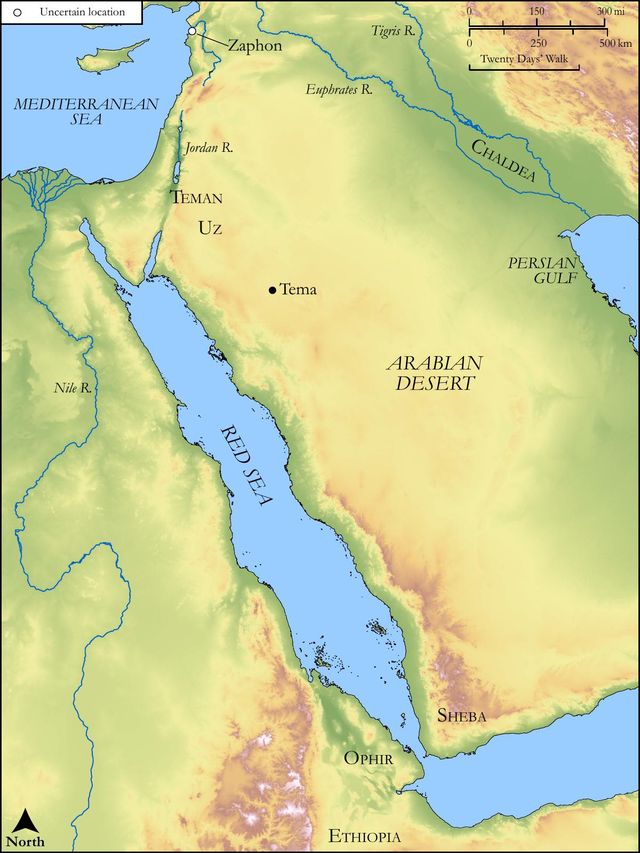
The narrative of the Book of Job is set in the patriarchal period, likely in the land of Uz, a region situated outside the geographical boundaries of Israel, among the men of the east. Within this historical and cultural milieu, a deeply ingrained understanding of divine justice prevailed: prosperity, health, and well-being were widely perceived as tangible blessings bestowed upon the righteous, while suffering, misfortune, and calamity were almost universally interpreted as direct divine punishment for sin. This "retribution theology" was a dominant framework for understanding God's interaction with humanity and the order of creation. Eliphaz, along with his companions Bildad and Zophar, embodies and articulates this conventional wisdom. Their arguments, while containing elements of truth regarding God's ultimate justice, fundamentally fail to account for the profound complexities of suffering, particularly the suffering of the innocent. Consequently, they misapply their rigid theological framework to Job's unique and inexplicable situation. Their perspective reflects a pervasive societal expectation that outward circumstances directly and transparently mirror an individual's spiritual standing and moral rectitude before God.
Key Themes
ShowHideJob 15:23 powerfully contributes to several overarching themes within the Book of Job. Firstly, it starkly illustrates The Destitution and Insecurity of the Wicked, emphasizing their perpetual struggle for even the most basic necessities ("He wandereth abroad for bread, [saying], Where [is it]?"). This imagery stands in sharp contrast to the biblical promise of divine provision and security for the righteous, as articulated in passages like Psalm 34:10. Secondly, the verse underscores the theme of Impending Judgment and Despair, as the wicked person "knoweth that the day of darkness is ready at his hand." The "day of darkness" is a potent and recurring biblical idiom frequently employed in prophetic literature to denote a time of severe divine judgment, tribulation, or the onset of death, as vividly exemplified by the "day of the Lord" described in Amos 5:18 or Zephaniah 1:15. Finally, and most critically for the book's overarching message, this verse serves as a prime example of Eliphaz's Flawed Theology of Retribution. While the broader biblical narrative affirms that sin indeed has profound consequences, the Book of Job profoundly challenges the simplistic and rigid notion that all suffering is a direct, immediate, and punitive consequence of specific wrongdoing. Job's eventual vindication and restoration, culminating in Job 42:10, powerfully demonstrate the inadequacy and limitations of the friends' rigid theological framework.
Exposition and Analysis
ShowHideKey Word Analysis
ShowHideThis verb fundamentally means "to wave to and fro," but figuratively it denotes to "rove, flee, or (causatively) to drive away." In the context of Job 15:23, it vividly portrays a restless, aimless, and unstable movement, suggesting a life utterly devoid of security, peace, or a settled existence. It emphasizes a desperate, unceasing search for sustenance that is never truly satisfied, highlighting the profound insecurity and lack of rootedness that Eliphaz attributes to the wicked.
This term literally refers to "food (for man or beast), especially bread, or grain (for making it)." In this verse, "bread" functions as a synecdoche, representing all necessary provisions and basic sustenance. The phrase "wandereth abroad for bread" thus signifies a desperate and futile search for the very basics of survival, underscoring a state of extreme poverty, hunger, and a complete lack of divine or human provision. It depicts utter destitution and vulnerability.
This word primarily means "the dark," but figuratively it encompasses "misery, destruction, death, ignorance, sorrow, wickedness, night, obscurity." When combined with "day" (yôwm, H3117, meaning a literal day or a defined space of time), the "day of darkness" becomes a powerful metaphor used throughout Scripture. It signifies a time of severe distress, calamity, judgment, or even the onset of death. The wicked person's "knowing" that this day is "ready at his hand" conveys a profound and constant dread, an acute awareness of an inescapable, ominous fate that looms imminently, devoid of hope or light.
Verse Breakdown
ShowHide"He wandereth abroad for bread, [saying], Where [is it]?"
This initial clause paints a vivid and distressing picture of the wicked person's desperate condition. The verb "wandereth abroad" (Hebrew nādad) conveys a restless, aimless, and insecure existence, suggesting a life of constant searching without finding. The object of this desperate search, "bread" (leḥem), represents the most fundamental necessities for survival, indicating a state of extreme poverty and perpetual hunger. The parenthetical "[saying], Where [is it]?" further amplifies the futility and desperation of this quest; it is a cry of perpetual need and unfulfilled longing, highlighting a life of unending struggle and profound lack. Eliphaz employs this imagery to depict the wicked as utterly destitute, abandoned, and without any reliable source of provision.
"he knoweth that the day of darkness is ready at his hand."
This second clause shifts from physical destitution to intense psychological torment and the certainty of impending doom. The wicked person possesses a chilling and inescapable awareness ("he knoweth," from Hebrew yāḏaʿ, to ascertain by seeing, to be aware) of their future. The "day of darkness" (Hebrew yōm ḥōšek) is a potent biblical metaphor for a time of severe judgment, overwhelming calamity, or even death itself. The phrase "ready at his hand" (from Hebrew kûwn and yāḏ) signifies its absolute imminence and inevitability; it is not a distant threat but a present, looming reality that constantly haunts and terrifies the individual. This clause emphasizes the wicked's profound lack of peace, their constant dread, and the certainty of their impending destruction, all presented as direct consequences within Eliphaz's rigid theological framework.
Literary Devices
ShowHideEliphaz employs several potent literary devices in Job 15:23 to convey his grim assessment of the wicked. Imagery is central, particularly the vivid picture of someone "wandering abroad for bread, [saying], Where [is it]?" This evokes a powerful sense of utter destitution, homelessness, and desperate hunger, designed to elicit a strong emotional response and firmly associate wickedness with extreme suffering and perpetual lack. The phrase "day of darkness" functions as a powerful Metaphor, representing not merely a literal absence of light but a time of severe divine judgment, overwhelming calamity, and profound despair. This metaphorical language adds a layer of theological weight and ominous foreboding to the wicked person's inevitable fate. Furthermore, Eliphaz's entire description of the wicked's plight, especially when implicitly applied to Job, borders on Hyperbole. He exaggerates the immediate, relentless, and all-encompassing suffering of the wicked to bolster his argument, presenting a simplistic and absolute correlation between sin and misfortune that the book itself ultimately challenges. Finally, there is a subtle Irony at play, as Eliphaz's confident and dogmatic pronouncements about the wicked's fate are tragically misapplied to Job, whose suffering is clearly not due to hidden sin, thereby exposing the profound limitations and flaws of the friends' conventional wisdom.
Theological and Thematic Connections
ShowHideJob 15:23, while spoken by Eliphaz and ultimately misapplied to Job, touches upon profound theological themes concerning divine justice, the nature of suffering, and the human condition. It reflects a widespread belief, often echoed in the wisdom books, that God's justice operates through a direct system of retribution, where righteousness leads to prosperity and wickedness to suffering. This verse, therefore, serves as a stark reminder of the potential consequences of a life lived in opposition to God's ways, echoing the warnings found throughout the Old Testament. However, the very context of the Book of Job profoundly challenges the simplistic, rigid application of this principle, demonstrating that suffering is not always a direct punitive measure for specific sin. The verse invites us to grapple with the complexities of God's sovereignty and justice, acknowledging that while sin does indeed have consequences, not all hardship is a result of personal transgression. It prompts a deeper reflection on the nature of true security and peace, which are not found merely in the absence of hardship, but in a right and trusting relationship with God that transcends circumstances.
Reflection and Application
ShowHideEliphaz's words in Job 15:23, though ultimately misdirected at Job, serve as a powerful, albeit flawed, reminder of the potential consequences of a life lived without God's wisdom and guidance. The vivid imagery of "wandering abroad for bread" and facing an inevitable "day of darkness" can prompt us to reflect on the true sources of security, satisfaction, and peace in our own lives. A life detached from God's provision and divine purpose can indeed feel like a perpetual, restless search for fulfillment that remains elusive, haunted by the specter of despair and an unknown, ominous future. However, the primary and most crucial application for us today lies not in judging others based on their suffering, but in cultivating profound humility and deep empathy. The Book of Job powerfully demonstrates that not all suffering is a direct result of personal sin or a clear indicator of God's displeasure. Therefore, this verse cautions us against embracing simplistic theological frameworks that quickly condemn or explain away the hardships faced by others. Instead, it should inspire genuine compassion for those experiencing destitution, anxiety, and despair, prompting us to offer grace, practical support, and comfort rather than hasty judgment or unhelpful platitudes. It also calls each of us to examine our own lives, seeking the lasting peace, true provision, and eternal hope that come only from a trusting, obedient relationship with God, rather than relying on fleeting worldly comforts or a naive expectation of a problem-free existence.
Questions for Reflection
ShowHideFAQ
ShowHideWas Eliphaz entirely wrong in his assessment of the wicked in Job 15:23?
ShowHideWhile Eliphaz's words contain elements of truth about the consequences of sin, his fundamental error was in applying this rigid retribution theology directly and simplistically to Job's suffering. The Bible does teach that a life lived in rebellion against God's ways can indeed lead to negative outcomes and that a life apart from divine wisdom can be marked by struggle, insecurity, and despair. Proverbs, for instance, frequently contrasts the path of the righteous with that of the wicked, often associating the latter with ruin, lack, and a bleak future (Proverbs 13:25 or Proverbs 10:27). However, Eliphaz's mistake, and that of Job's other friends, was to assume a direct, immediate, and universal causal link between specific sin and all suffering, ignoring the possibility of innocent suffering, tests of faith, or suffering for redemptive purposes. The Book of Job ultimately refutes this simplistic equation, demonstrating that God's ways are more complex, mysterious, and multifaceted than human wisdom can fully grasp. So, while his description of the wicked's fate might hold some general truth about the ultimate trajectory of unrighteousness, his application of it to Job was profoundly wrong, unhelpful, and unjust.
What is the significance of the "day of darkness" mentioned in this verse?
ShowHideThe "day of darkness" (Hebrew yom choshek) is a potent and recurring biblical metaphor that carries significant theological weight. It signifies a time of severe calamity, tribulation, divine judgment, or even death itself. In prophetic literature, it often refers to the "Day of the Lord," a decisive time when God intervenes in history, bringing judgment upon the wicked and, conversely, salvation to the righteous. Examples abound in the prophets, such as Joel 2:2 ("a day of darkness and gloom, a day of clouds and thick darkness") and Amos 5:18 ("Woe to you who desire the day of the Lord! Why would you have the day of the Lord? It is darkness, and not light"). In Job 15:23, Eliphaz uses this imagery to emphasize the inescapable and terrifying fate awaiting the wicked. It suggests not just a physical absence of light, but a spiritual and existential darkness—a life devoid of hope, peace, and God's favor, culminating in a terrifying end. The wicked person's "knowing" that this day is "ready at his hand" underscores their constant dread, their acute awareness of the imminence of their doom, and a state of perpetual anxiety and fear.
Christ-Centered Fulfillment
ShowHideJob 15:23, with its stark imagery of wandering for bread and facing an inevitable "day of darkness," finds profound Christ-centered fulfillment in the person and redemptive work of Jesus. The verse describes a life of spiritual destitution and impending doom, a picture that perfectly encapsulates the universal human condition apart from God, lost in the wilderness of sin and facing the ultimate "day of darkness"—the righteous judgment of God. Yet, Jesus, the Son of God, willingly enters this very darkness. He is the true "bread of life," as He Himself declared in John 6:35, providing spiritual sustenance for those who wander in hunger and despair. Unlike the wicked who desperately search for bread and find none, Christ offers Himself as the satisfying provision, assuring us that "whoever comes to me will never go hungry, and whoever believes in me will never be thirsty." Furthermore, while the wicked "knoweth that the day of darkness is ready at his hand," Christ willingly entered the ultimate darkness on the cross, bearing the full weight of the judgment and separation from God that humanity deserved (Matthew 27:45). Through His sacrificial death and glorious resurrection, He decisively conquered the power of darkness, sin, and death, offering light and eternal life to all who believe. He transforms the "day of darkness" from an inescapable doom into a pathway to glorious redemption, fulfilling the promise that those who follow Him "will not walk in darkness, but will have the light of life" (John 8:12). Thus, Job 15:23, though spoken in a context of flawed human judgment, ultimately points to Christ as the one who delivers us from spiritual destitution and the terror of divine judgment, offering true, eternal sustenance and the radiant light of life.