


Jeremiah 52:16
Bible text: King James Version (1769 Blayney text) · Public domain
Bible text: King James Version with Strong's numbers · Public domain
Bible text: Berean Standard Bible · Public domain
Bible text: American Standard Version (1901) · Public domain
Bible text: World English Bible, Messianic edition · Public domain
Bible text: Geneva Bible (1599) · Public domain
Bible text: Young's Literal Translation · Public domain
- וּמִדַּלּוֹתu·mi·da·Lotand some of [the] poor people ofH1803Conj-w ¦ Prep-m ¦ N-fpcNoun Plural Feminine Constructוּandמִsome ofדַּלּוֹת[the] poor people of
- הָאָרֶץha·'A·retzthe landH776Art ¦ N-fsNoun Singular Feminine Absoluteהָtheאָרֶץland
- הִשְׁאִירhish·'Irhe left behindH7604V-Hiphil-Perf-3msVerb Hiphil Perfect 3rd Singular Masculine
- נְבוּזַרְאֲדָןne·vu·zar·'a·DanNebuzaradanH5018N-proper-mNoun Proper Masculine
- רַבrav[the] chief ofH7227N-mscNoun Singular Masculine Construct
- טַבָּחִיםta·ba·Chim[the] bodyguardsH2876N-mpNoun Plural Masculine Absolute
- לְכֹרְמִיםle·kho·re·Mimto vinedressersH3755Prep-l ¦ N-mpNoun Plural Masculine Absoluteלְtoכֹרְמִיםvinedressers
- וּלְיֹגְבִיםu·le·yo·ge·Vimand to ploughmenH3009Conj-w ¦ Prep-l ¦ V-Qal-Prtcpl-mpVerb Qal Participle Plural Masculine Absoluteוּandלְtoיֹגְבִיםploughmen
English is a literal word-by-word gloss of the Hebrew, not the KJV's wording. Why?
This is the original text the KJV's translators worked from — each Hebrew word with its own literal English meaning in this verse, prepared by scholars at Tyndale House, Cambridge. The KJV translates whole sentences, not word by word, so its wording differs: one Hebrew word can become several English words, and the KJV may choose “the LORD” where the gloss reads “Yahweh”. Both are faithful — they answer different questions. For the KJV's own rendering, switch to the KJV text.
Details
See on the biblical-era map
Study this verse
Public-domain commentary
Matthew Henry
From his Commentary on the Whole Bible. Henry comments on passages, not single verses — this entry covers Jeremiah 52:12–23.
We have here an account of the woeful havoc that was made by the Chaldean army, a month after the city was taken, under the command of Nebuzaradan, who was captain of the guard, or general of the army, in this action. In the margin he is called the chief of the slaughter-men, or executioners; for soldiers are but slaughter-men, and God employs them as executioners of his sentence against a sinful people. Nebuzaradan was chief of those soldiers, but, in the execution he did, we have reason to fear he had no eye to God, but he served the king of Babylon and his own designs, now that he came into Jerusalem, into the very bowels of it, as captain of the slaughter-men there. And, 1. He laid the temple in ashes, having first plundered it of every thing that was valuable: He burnt the house of the Lord, that holy and beautiful house, where their fathers praised him, Isa 64:11. 2. He burnt the royal palace, probably that which Solomon built after he had built the temple, which was, ever since, the king's house. 3. He burnt all the houses of Jerusalem, that is, all the houses of the great men, or those particularly; if any escaped, it was only some sorry cottages for the poor of the land. 4. He broke down all the walls of Jerusalem, to be revenged upon them for standing in the way of his army so long. Thus, of a defenced city, it was made a ruin, Isa 25:2. 5. He carried away many into captivity (Jer 52:15); he took away certain of the poor of the people, that is, of the people in the city, for the poor of the land (the poor of the country) he left for vine-dressers and husbandmen. He also carried off the residue of the people that remained in the city, that had escaped the sword and famine, and the deserters, such as he thought fit, or rather such as God thought fit; for he had already determined some for the pestilence, some for the sword, some for famine, and some for captivity, Jer 15:2. But, 6. Nothing is more particularly and largely related here than the carrying away of the appurtenances of the temple. All that were of great value were carried away before, the vessels of silver and gold, yet some of that sort remained, which were now carried away, Jer 52:19. But most of the temple-prey that was now seized was of brass, which, being of less value, was carried off last. When the gold was gone, the brass soon went after it, because the people repented not, according to Jeremiah's prediction, Jer 27:19, etc. When the walls of the city were demolished, the pillars of the temple were pulled down too, and both in token that God, who was the strength and stay both of their civil and their ecclesiastical government, had departed from them. No walls can protect those, nor pillars sustain those, from whom God withdraws. These pillars of the temple were not for support (for there was nothing built upon them), but for ornament and significancy. They were called Jachin - He will establish; and Boaz - In him is strength; so that the breaking of these signified that God would no longer establish his house nor be the strength of it. These pillars are here very particularly described (Jer 52:21-23, from Kg1 7:15), that the extraordinary beauty and stateliness of them may affect us the more with the demolishing of them. All the vessels that belonged to the brazen altar were carried away; for the iniquity of Jerusalem, like that of Eli's house, was not to be purged by sacrifice or offering, Sa1 3:14. It is said (Jer 52:20), The brass of all these vessels was without weight; so it was in the making of them (Kg1 7:47), the weight of the brass was not then found out (Ch2 4:18), and so it was in the destroying of them. Those that made great spoil of them did not stand to weigh them, as purchasers do, for, whatever they weighted, it was all their own.
Historical interpretation
Historical reception
1 surviving comment on this verse from the historical church.
And as Isaiah said before, “Except the Lord of Sabaoth had left us a seed, we would have been as Sodom and would have been made like to Gomorrah.” Here again he shows another thing, that not even those few were saved by their own resources. They too would have perished and met with Sodom’s fate, that is, they would have had to undergo utter destruction. They (of Sodom) were destroyed root and branch and left not even the slightest remnant of themselves. They too, he means, would have been like these, unless God had used much kindness to them and had saved them by faith. This happened also in the case of the visible captivity, the majority having been taken away captive and perished and some few only being saved.
Continue studying Jeremiah 52:16 across the web’s major study libraries — every link below opens this exact verse, chapter, or book on the destination site.
Read & Compare
 BibleGatewayThis verse in more than 200 translations and 70 languages.
 Bible.comThe YouVersion reader — hundreds of translations, reading plans, and highlights.
 ESV.orgCrossway's official English Standard Version reader.
 NET BibleThe NET translation with 60,000+ translators' notes on every rendering decision.
 STEP BibleTyndale House's free study tool — original text, vocabulary, and scholarly resources.
 BibliaLogos Bible Software's free web reader.
 USCCBThe New American Bible (Revised Edition) with the U.S. bishops' study notes.
Commentaries
 BibleHub CommentariesDozens of classic commentaries on this verse, gathered on one page.
 StudyLightMore than 100 commentary sets — the largest collection on the web.
 BibleRefPlain-English commentary on what this verse means, verse by verse.
 Enduring WordDavid Guzik's free commentary on this chapter, widely used by Bible teachers.
 Bible Study ToolsVerse commentary alongside Greek and Hebrew study aids.
Original Language & Research
- BibleHub InterlinearThe verse word by word — original language, transliteration, and English.
- BibleHub LexiconEvery word's original-language definition and Strong's entry.
 Blue Letter BibleDeep-study tools — Strong's numbers, concordance, and word studies.
 SefariaThe Hebrew text with Rashi and centuries of Jewish commentary.
Sermons, Hymns & Audio


TrulyRandomVerse is not affiliated with these sites and doesn’t control their content. They’re linked because they’re genuinely useful.
Summary
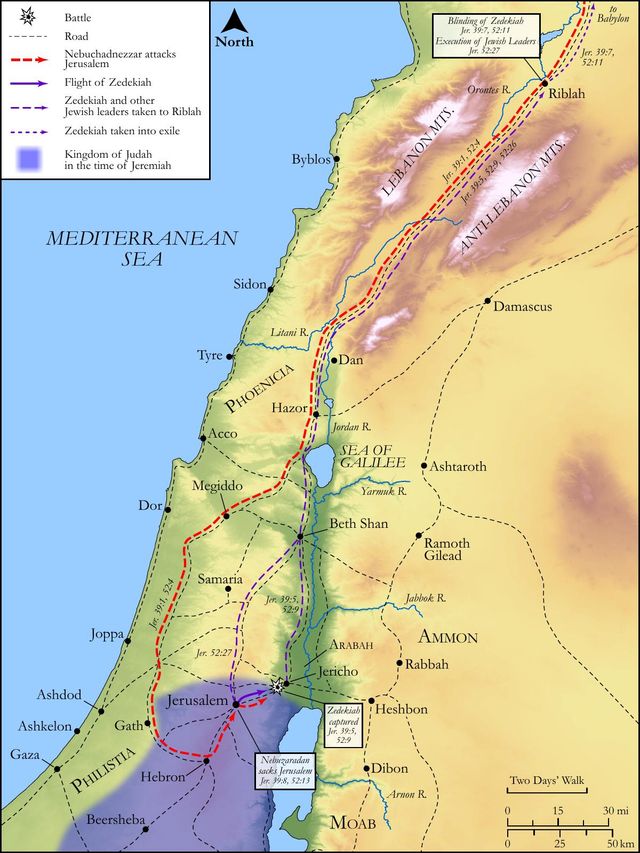
Jeremiah 52:16 provides a crucial detail regarding the aftermath of Jerusalem's fall in 586 BC, revealing the calculated decision of Nebuzaradan, the Babylonian captain of the guard, to leave a specific segment of the Judean population—the impoverished—behind in the devastated land. These individuals were designated to serve as vinedressers and husbandmen, a strategic move by the conquering empire to ensure the continued agricultural productivity of Judah, even as the majority of its inhabitants, particularly the elite and skilled, were forcibly exiled to Babylon.
Context
ShowHideLiterary Context
Jeremiah 52 functions as a historical appendix to the prophetic book, largely recapitulating the events of Jerusalem's final siege and destruction, as also chronicled in 2 Kings 25. The preceding verses in Jeremiah 52 vividly describe the brutal siege, the ensuing famine, the capture of King Zedekiah, the systematic plundering and burning of the Temple and royal palace, and the mass deportation of the populace. Verse 16, therefore, offers a vital counterpoint to this widespread devastation, detailing the exceptions to the general exile. It immediately follows the account of the general deportation of the people, including skilled workers and military personnel (Jeremiah 52:15), thereby emphasizing the deliberate and strategic nature of leaving the poor behind, rather than an oversight. This detail underscores the comprehensive yet calculated nature of Babylonian policy.
Historical & Cultural Context
The fall of Jerusalem in 586 BC marked the definitive end of the Kingdom of Judah and a transformative period in Israelite history. The Neo-Babylonian Empire, under King Nebuchadnezzar, was the preeminent superpower among the nations of that day, renowned for its formidable military campaigns and sophisticated administrative strategies for consolidating conquered territories. Their standard policy towards subjugated nations often involved the deportation of the elite, skilled laborers, and military personnel to prevent future rebellions, assimilate them into the imperial workforce, and enrich the empire. Conversely, leaving the poorest and least influential behind was a pragmatic decision to maintain agricultural production and prevent the land from becoming entirely desolate. Judah, as an agrarian society, relied heavily on its land for sustenance and economic stability. By preserving "vinedressers and husbandmen," the Babylonians ensured that the land would continue to yield produce, which could then be collected as tribute or used to support Babylonian garrisons, thereby serving the empire's long-term economic interests.
Key Themes
ShowHideThis verse significantly contributes to several overarching themes within the book of Jeremiah and the broader biblical narrative. Firstly, it powerfully underscores the theme of Judgment and Exile, a central prophetic message of Jeremiah, demonstrating the devastating consequences of Judah's persistent disobedience and idolatry, as foretold by the prophet (e.g., Jeremiah 25:8-11). Secondly, it introduces a nuanced aspect of the Remnant theme, illustrating that even amidst comprehensive destruction and deportation, a portion of the people was preserved within the land. While this immediate preservation was driven by pragmatic Babylonian interests, it subtly foreshadows God's larger redemptive plan for a future return and restoration, a hope frequently articulated by Jeremiah (e.g., Jeremiah 29:10-14). Finally, it highlights the profound Sovereignty of God even amidst the actions of pagan empires; though Nebuzaradan acted according to Babylonian imperial policy, his decisions ultimately served God's broader purposes for the land and its people, preventing complete desolation and preserving a "seed" for future rebuilding and the eventual re-establishment of the covenant community, as promised in passages like Jeremiah 31:31-34).
Exposition and Analysis
ShowHideKey Word Analysis
ShowHideVerse Breakdown
ShowHide"But Nebuzaradan the captain of the guard left"
This clause introduces the primary agent of the action and the nature of his significant authority. As the chief military and administrative officer of Nebuchadnezzar in Judah, Nebuzaradan possessed the power to determine the fate of the remaining population. His act of "leaving" implies a deliberate, authoritative decision, signifying a calculated policy rather than an accidental omission.
"[certain] of the poor of the land"
This specifies the particular demographic group chosen to remain. The "poor" (Hebrew: dallâh) were the most vulnerable and least influential members of Judean society, likely those without significant property, specialized skills, or political connections. Their selection was pragmatic from the Babylonian perspective; they posed no threat, were expendable for exile, yet were essential for basic agricultural labor.
"for vinedressers and for husbandmen"
This final clause explains the explicit purpose for which these impoverished individuals were left behind. "Vinedressers" (Hebrew: kôrêm) specialized in viticulture, a vital component of Judah's agricultural economy. "Husbandmen" (Hebrew: yâgab) refers to general farmers or agricultural laborers. By preserving these individuals, the Babylonians ensured that the land, though conquered and devastated, would not become completely barren but would continue to produce food and resources, serving the economic and strategic interests of the conquering empire.
Literary Devices
ShowHideThe verse employs Contrast by implicitly setting the fate of the "poor of the land" against the mass deportation of the elite, skilled, and influential members of Judean society described in preceding verses. This highlights the selective and strategic nature of Babylonian policy. There is also a subtle Irony in the fact that a pagan conqueror's pragmatic decision to leave behind the most overlooked members of society inadvertently serves to preserve a physical presence of God's people in the land, preventing its complete desolation. This act, though driven by imperial self-interest, aligns with the broader biblical theme of God preserving a Remnant, even through unexpected and humanly driven means. The very terms "vinedressers" and "husbandmen" function as Metonymy, where these specific roles stand in for the entire class of agricultural laborers, emphasizing their essential function in maintaining the land's productivity rather than focusing on their individual identities.
Theological and Thematic Connections
ShowHideJeremiah 52:16, though seemingly a minor historical detail, carries profound theological weight. It speaks to the enduring theme of God's sovereign preservation even in the midst of severe judgment. While the Babylonians acted out of pragmatic self-interest, their decision to leave the poor behind prevented the complete depopulation of the land, thereby maintaining a physical link to the covenant promises and setting the stage for future restoration. This "remnant" in the land, however humble and seemingly insignificant, ensured that the land itself—central to Israel's identity and covenant relationship with God—was not entirely abandoned, thus preserving a "seed" for the future. It demonstrates that even in the darkest hours of national catastrophe, God's ultimate purposes for His people and land cannot be thwarted, and His faithfulness endures beyond human failure, working through both divine intervention and the seemingly mundane actions of human powers.
Reflection and Application
ShowHideThis verse, nestled within the bleak narrative of Jerusalem's destruction, offers a subtle yet powerful message of resilience and divine preservation. It reminds us that even when our lives or communities experience profound loss, devastation, or exile—whether literal or metaphorical—God often preserves a "remnant" or a "seed" of hope. Just as the land of Judah, though ravaged, was not left entirely desolate, so too in our personal trials, there is often a core that endures, a foundation upon which new growth can eventually occur. This calls us to recognize God's hand at work even in the most unlikely circumstances, finding purpose in the fragments that remain. It encourages us to be "vinedressers and husbandmen" of whatever God has left us with, diligently tending to the small beginnings, trusting that He can bring forth life and fruit even from seemingly barren ground. It fosters a perspective of hope and active stewardship, even when circumstances seem overwhelmingly negative, reminding us that God often uses the humble and overlooked to accomplish His greater purposes.
Questions for Reflection
ShowHideFAQ
ShowHideWho was Nebuzaradan and what was his role in the fall of Jerusalem?
ShowHideNebuzaradan was the "captain of the guard" (or chief executioner/commander of the imperial guard) under King Nebuchadnezzar of Babylon. He was a high-ranking military official entrusted with executing the king's orders during the conquest of Judah. His role was crucial in the final destruction of Jerusalem in 586 BC, as he oversaw the plundering and burning of the Temple, the royal palace, and the city's houses, as well as the dismantling of its walls. He was also responsible for the mass deportation of the Judean population to Babylon, as detailed in Jeremiah 52:12-15. His actions in Jeremiah 52:16 to leave certain poor individuals behind were part of a calculated Babylonian strategy to maintain agricultural productivity in the conquered territory, ensuring the land could still yield resources for the empire.
Christ-Centered Fulfillment
ShowHideJeremiah 52:16, with its focus on a preserved "remnant" amidst overwhelming judgment, finds profound Christ-centered fulfillment in the New Testament. While the poor of the land were left to tend the physical soil of Judah, Christ Himself is the ultimate "seed" and "remnant" through whom God's promises are truly preserved and fulfilled. The Old Testament's recurring theme of a remnant, whether those preserved from judgment (as here) or those faithful to God, ultimately points to Jesus. He is the faithful Israelite, the true Israel, who perfectly embodies God's covenant and fulfills all righteousness (Matthew 3:15). In His life, death, and resurrection, He became the "firstfruits" (e.g., 1 Corinthians 15:20) of a new creation, providing a way for a spiritual remnant—the church—to be preserved from the ultimate judgment of sin. Just as the land was not entirely abandoned, so humanity, though fallen, is not utterly forsaken, for God, through Christ, has cultivated a new people. The work of the vinedressers and husbandmen foreshadows Christ's own work as the true vine (e.g., John 15:1), tending His people and bringing forth spiritual fruit. The preservation of the physical land and a people on it, however humble, ultimately points to the spiritual preservation and restoration offered through the Lamb of God, who takes away the sin of the world (e.g., John 1:29), establishing a new and eternal kingdom where the true "poor in spirit" inherit the earth (e.g., Matthew 5:3), not through their own strength but through His redemptive work.