


Genesis 41:33
Bible text: King James Version (1769 Blayney text) · Public domain
Bible text: Berean Standard Bible · Public domain
Bible text: American Standard Version (1901) · Public domain
Bible text: World English Bible, Messianic edition · Public domain
Bible text: Geneva Bible (1599) · Public domain
Bible text: Young's Literal Translation · Public domain
- וְעַתָּהve·'a·Tahand thereforeH6258Conj-w ¦ AdvAdverbוְandעַתָּהtherefore
- יֵרֶאye·Re'let him seeH7200V-Qal-Imperf-3msVerb Qal Imperfect 3rd Singular Masculine
- פַרְעֹהfar·'OhPharaohH6547N-msNoun Title Singular Masculine Absolute
- אִישׁ'isha manH376N-msNoun Singular Masculine Absolute
- נָבוֹןna·VondiscerningH995V-Niphal-Prtcpl-msVerb Niphal Participle Singular Masculine Absolute
- וְחָכָםve·cha·Khamand wiseH2450Conj-w ¦ Adj-msAdjective Singular Masculine Absoluteוְandחָכָםwise
- וִישִׁיתֵהוּvi·shi·Te·huand let him set himH7896Conj-w ¦ V-Qal-ConjImperf-3ms ¦ 3msVerb Qal Conjunction+Imperfect 3rd Singular Masculineוִandישִׁיתֵlet him setהוּhim
- עַל'aloverH5921PrepPreposition
- אֶרֶץ'E·retz[the] land ofH776N-fscNoun Singular Feminine Construct
- מִצְרָיִםmitz·Ra·yimEgyptH4714N-properNoun Proper Location
English is a literal word-by-word gloss of the Hebrew, not the KJV's wording. Why?
This is the original text the KJV's translators worked from — each Hebrew word with its own literal English meaning in this verse, prepared by scholars at Tyndale House, Cambridge. The KJV translates whole sentences, not word by word, so its wording differs: one Hebrew word can become several English words, and the KJV may choose “the LORD” where the gloss reads “Yahweh”. Both are faithful — they answer different questions. For the KJV's own rendering, switch to the KJV text.
Details
See on the biblical-era maps


Study this verse
Public-domain commentary
Matthew Henry
From his Commentary on the Whole Bible. Henry comments on passages, not single verses — this entry covers Genesis 41:33–45. His four-level outline is real structure in the source text, so it is rendered as structure.
Here is, I. The good advice that Joseph gave to Pharaoh, which was, 1. That in the years of plenty he should lay up for the years of famine, buy up corn when it was cheap, that he might both enrich himself and supply the country when it would be dear and scarce. Note, Fair warning should always be followed with good counsel. Therefore the prudent man foresees the evil, that he may hide himself. God has in his word told us of a day of trial and exigence before us, when we shall need all the grace we can get, and all little enough, "Now, therefore, provide accordingly." Note, further, Times of gathering must be diligently improved, because there will come a time of spending. Let us go to the ant, and learn of her this wisdom, Pro 6:6-8. 2. Because that which is everybody's work commonly proves nobody's work, he advises Pharaoh to appoint officers who should make it their business, and to select some one person to preside in the affair, Gen 41:33. Probably, if Joseph had not advised this, it would not have been done; Pharaoh's counsellors could no more improve the dream than his magicians interpret it; therefore it is said of him (Psa 105:22) that he taught the senators wisdom. Hence we may justly infer with Solomon (Ecc 4:13), Better is a poor and a wise child than an old and foolish king.
II.The great honour that Pharaoh did to Joseph.
1.He gave him an honourable testimony: He is a man in whom the Spirit of God is; and this puts a great excellency upon any man; such men ought to be valued, Gen 41:38. He is a nonsuch for prudence: There is none so discreet and wise as thou art, Gen 41:39. Now he is abundantly recompensed for the disgrace that had been done him; and his righteousness is as the morning light, Psa 37:6.
2.He put him into an honourable office; not only employed him to buy up corn, but made him prime-minister of state, comptroller of the household - Thou shalt be over my house, chief justice of the kingdom - according to thy word shall all my people be ruled, or armed, as some read it, and then it bespeaks him general of the forces. Him commission was very ample: I have set thee over all the land of Egypt (Gen 41:41); without thee shall no man life up his hand or foot (Gen 41:44); all the affairs of the kingdom must pass through his hand. Nay (Gen 41:40), only in the throne will I be greater than thou. Note, It is the wisdom of princes to prefer those, and the happiness of people to have those preferred, to places of power and trust, in whom the Spirit of God is. It is probable that there were those about the court who opposed Joseph's preferment, which occasioned Pharaoh so often to repeat the grant, and with that solemn sanction (Gen 41:44), I am Pharaoh. When the proposal was made that there should be a corn-master-general nominated, it is said (Gen 41:37), Pharaoh's servants were all pleased with the proposal, each hoping for the place; but when Pharaoh said to them, "Joseph shall be the man," we do not read that they made him any answer, being uneasy at it, and acquiescing only because they could not help it. Joseph had enemies, no doubt, archers that shot at him, and hated him (Gen 49:23), as Daniel, Dan 6:4.
3.He put upon him all the marks of honour imaginable, to recommend him to the esteem and respect of the people as the king's favourite, and one whom he delighted to honour.
(1.)He gave him his own ring, as a ratification of his commission, and in token of peculiar favour; or it was like delivering him the great seal.
(2.)He put fine clothes upon him, instead of his prison garments. For those that are in kings' palaces must wear soft clothing; he that, in the morning, was dragging his fetters of iron, before night was adorned with a chain of gold.
(3.)He made him ride in the second chariot to his own, and ordered all to do homage to him: "Bow the knee, as to Pharaoh himself." (4.) He gave him a new name, to show his authority over him, and yet such a name as bespoke the value he had for him, Zaphnathpaaneah - A revealer of secrets. (5.) He married him honourably to a prince's daughter. Where God had been liberal in giving wisdom and other merits, Pharaoh was not sparing in conferring honours. Now this preferment of Joseph was,
[1.]An abundant recompense for his innocent and patient suffering, a lasting instance of the equity and goodness of Providence, and an encouragement to all good people to trust in a good God.
[2.]It was typical of the exaltation of Christ, that great revealer of secrets (Joh 1:18), or, as some translate Joseph's new name, the Saviour of the world. The brightest glories of the upper world are put upon him, the highest trust is lodged in his hand, and all power is given to him both in heaven and earth. He is gatherer, keeper, and disposer, of all the stores of divine grace, and chief ruler of the kingdom of God among men. The work of minsters is to cry before him, "Bow the knee; kiss the Son."
Historical interpretation
Historical reception
1 surviving comment on this verse from the historical church.
When Joseph said, “Let Pharaoh select a man,” he spoke about himself. Joseph, out of modesty, did not say it openly in his own name, but he would not give it to another, for he knew that no one else would be able to make suitable provision for the great scourge that was coming upon them. Joseph became great in the eyes of Pharaoh through his interpretation of Pharaoh’s dreams but even more through the beneficial counsel that his mind had devised.
Continue studying Genesis 41:33 across the web’s major study libraries — every link below opens this exact verse, chapter, or book on the destination site.
Read & Compare
 BibleGatewayThis verse in more than 200 translations and 70 languages.
 Bible.comThe YouVersion reader — hundreds of translations, reading plans, and highlights.
 ESV.orgCrossway's official English Standard Version reader.
 NET BibleThe NET translation with 60,000+ translators' notes on every rendering decision.
 STEP BibleTyndale House's free study tool — original text, vocabulary, and scholarly resources.
 BibliaLogos Bible Software's free web reader.
 USCCBThe New American Bible (Revised Edition) with the U.S. bishops' study notes.
Commentaries
 BibleHub CommentariesDozens of classic commentaries on this verse, gathered on one page.
 StudyLightMore than 100 commentary sets — the largest collection on the web.
 BibleRefPlain-English commentary on what this verse means, verse by verse.
 Enduring WordDavid Guzik's free commentary on this chapter, widely used by Bible teachers.
 Bible Study ToolsVerse commentary alongside Greek and Hebrew study aids.
Original Language & Research
- BibleHub InterlinearThe verse word by word — original language, transliteration, and English.
- BibleHub LexiconEvery word's original-language definition and Strong's entry.
 Blue Letter BibleDeep-study tools — Strong's numbers, concordance, and word studies.
 SefariaThe Hebrew text with Rashi and centuries of Jewish commentary.
Sermons, Hymns & Audio


TrulyRandomVerse is not affiliated with these sites and doesn’t control their content. They’re linked because they’re genuinely useful.
Summary
In Genesis 41:33, Joseph transitions from merely interpreting Pharaoh's prophetic dreams to offering divinely inspired, strategic counsel for national survival. He urges Pharaoh to identify and appoint a "discreet and wise" man to manage the impending crisis of famine, thereby outlining a proactive and comprehensive plan for resource management during the preceding years of abundance. This counsel is a pivotal moment, demonstrating Joseph's profound wisdom and God's providential care for Egypt and, ultimately, for His covenant people.
Context
ShowHideLiterary Context
This verse immediately follows Joseph's divinely granted interpretation of Pharaoh's two disturbing dreams, which foretold seven years of abundant harvest followed by seven years of severe famine across Egypt (see Genesis 41:25-32). Joseph does not stop at revelation but immediately pivots to practical, actionable advice. His counsel in Genesis 41:33-36 is a direct, logical extension of the dream's meaning, demonstrating that divine insight often necessitates human responsibility and strategic planning. This counsel is so compelling that it leads directly to Joseph's own elevation to a position of unparalleled authority in Egypt.
Historical & Cultural Context
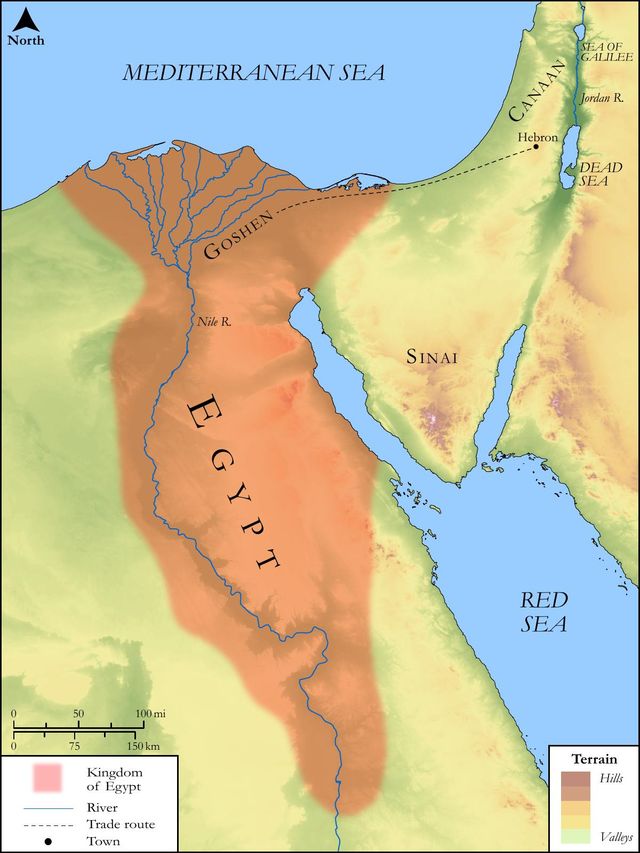
Ancient Egypt's prosperity was entirely dependent on the annual flooding of the Nile River. Fluctuations in the Nile's inundation could lead to either abundant harvests or devastating famines. Pharaoh was considered a divine king, and his dreams were often seen as omens or divine messages, requiring interpretation by wise men or priests. The concept of a vizier, a chief minister or administrator, was well-established in Egyptian society, serving as the highest official under the pharaoh. Joseph's advice to appoint a "discreet and wise" man would have resonated within this cultural framework, as such an individual would effectively function as a national vizier, tasked with the immense responsibility of managing the entire nation's agricultural output and distribution, a role critical for the survival of millions.
Key Themes
ShowHideGenesis 41:33 contributes significantly to several overarching themes in the book of Genesis and the broader biblical narrative. It highlights the theme of Divine Wisdom at work through human agents, as Joseph's counsel is explicitly presented as God-given, providing a solution beyond human foresight. It underscores the importance of Stewardship and Preparedness, advocating for diligent management of resources during times of plenty to mitigate future hardship, a principle echoed in Proverbs 6:6-8. The verse also emphasizes the critical role of Competent and Godly Leadership, demonstrating that effective governance requires not just power, but discernment, integrity, and practical skill. Ultimately, it showcases God's Providence, revealing how God orchestrates events, even through a pagan ruler and a Hebrew slave, to preserve life and advance His redemptive purposes, particularly for the nascent nation of Israel, as seen in the broader narrative of Genesis 42.
Exposition and Analysis
ShowHideFollowing his accurate and unsettling interpretation of Pharaoh's dreams, Joseph does not merely conclude his explanation but immediately pivots to practical, divinely guided counsel. The directive, "Now therefore let Pharaoh look out a man discreet and wise, and set him over the land of Egypt," marks a pivotal moment, showcasing Joseph's discernment and God's wisdom working through him not just for revelation, but for effective governance and national preservation.
Key Word Analysis
ShowHideMeaning "a man as an individual or a male person." Joseph's emphasis on "a man" highlights the need for a specific, singular individual to take on this immense responsibility, rather than a committee or a general directive. It underscores the personal qualities required for such a critical leadership role.
Meaning "to separate mentally (or distinguish), i.e. (generally) understand." This term denotes intellectual acumen, discernment, and keen insight. The chosen individual must possess the ability to grasp complex situations, understand underlying implications, and make sound judgments. It speaks to mental acuteness and perception, crucial for strategic planning.
Meaning "wise, (i.e. intelligent, skilful or artful)." This refers to practical wisdom, the ability to apply knowledge effectively, to plan strategically, and to execute tasks efficiently. It speaks to practical competence, prudence, and experience in handling affairs, essential for the massive logistical undertaking of managing Egypt's grain supply.
Verse Breakdown
ShowHide"¶ Now therefore"
This transitional phrase signals a shift from interpretation to counsel, indicating that what follows is a logical and necessary consequence of the revealed truth. It implies urgency and the need for immediate action based on the divine foresight.
"let Pharaoh look out a man discreet and wise"
This clause is Joseph's direct recommendation for the type of leader required. "Look out" (H7200, râʼâh) implies a careful, discerning search, not a casual appointment. The qualifications "discreet" (H995, bîyn) and "wise" (H2450, châkâm) are paramount, emphasizing that the chosen individual must possess both intellectual understanding and practical skill in administration.
"and set him over the land of Egypt"
This defines the scope of the appointed individual's authority and responsibility. "Set him over" (H7896, shîyth) indicates placing someone in a position of significant power and oversight. The phrase "the land of Egypt" (H776, ʼerets of H4714, Mitsrayim) signifies national authority, implying control over all resources and affairs related to the impending crisis, a task of immense logistical and administrative complexity.
Literary Devices
ShowHideJoseph's counsel employs several Literary Devices. The most prominent is Pragmatism, as Joseph immediately transitions from a divine revelation to a concrete, actionable plan for national survival, demonstrating that true wisdom is not merely theoretical but intensely practical. There is also an element of Foreshadowing, as Joseph's description of the ideal leader subtly describes himself, hinting at his own future elevation to this very role. The phrase "the land of Egypt" functions as a form of Synecdoche, where the land represents its entire agricultural output, its population, and its economic well-being, all of which would fall under the purview of the appointed leader. Furthermore, the entire narrative arc of Joseph's rise, culminating in this advice, is an example of Divine Providence, illustrating how God orchestrates human events, even through dreams and political appointments, to achieve His ultimate purposes.
Theological and Thematic Connections
ShowHideJoseph's counsel in Genesis 41:33 profoundly illustrates the biblical principle that divine wisdom is not merely for spiritual enlightenment but extends to practical governance and societal well-being. God's revelation often comes with a call to responsible human action and diligent stewardship, demonstrating that faith is not passive but active in addressing real-world challenges. This passage underscores the critical importance of discerning and appointing leaders who possess genuine wisdom, integrity, and practical skill, recognizing that such qualities are essential for effective management and the flourishing of any community or nation.
Reflection and Application
ShowHideJoseph's divinely inspired counsel in Genesis 41:33 offers timeless lessons for individuals, organizations, and nations alike. It underscores the vital importance of seeking and valuing individuals who possess both discernment and practical wisdom in leadership roles, whether in government, business, church, or family. The principle of preparing during times of plenty for future scarcity remains profoundly relevant, encouraging responsible financial planning, diligent resource management, and strategic foresight in all areas of life. Furthermore, Joseph's advice originated from divine revelation, serving as a powerful reminder to actively seek divine wisdom in our own decision-making, especially when confronting significant challenges or opportunities, trusting that God provides both insight and the means for practical solutions. This verse challenges us to consider how we can be proactive stewards of the resources and opportunities God has given us, not just for our own benefit, but for the well-being of those around us and for the glory of God.
Questions for Reflection
ShowHideFAQ
ShowHideWhat does "discreet and wise" signify in this context?
ShowHideThe phrase "discreet and wise" (Hebrew: bîyn and châkâm) signifies a leader who possesses both intellectual acumen and practical administrative capability. "Discreet" (bîyn) refers to someone with deep understanding, discernment, and good judgment, capable of grasping complex situations and their underlying implications. "Wise" (châkâm) refers to practical skill, prudence, and the ability to apply knowledge effectively to manage affairs. Together, these terms describe an individual perfectly suited to the immense task of managing Egypt's resources during the coming fourteen years of plenty and famine, requiring both strategic foresight and logistical competence.
Why did Joseph offer administrative advice beyond just interpreting the dreams?
ShowHideJoseph's offering of administrative advice demonstrates that divine revelation is often given not just for understanding, but for practical action and stewardship. His counsel was not an overreach but a natural extension of God's wisdom, providing a complete solution to Pharaoh's dilemma. It highlights that true wisdom from God leads to tangible, beneficial outcomes for society and demonstrates Joseph's role as a faithful servant of God, concerned with the well-being of the nation. This proactive approach also serves to elevate Joseph's standing, as his counsel is so compelling that Pharaoh immediately recognizes its divine origin and appoints Joseph himself to the very role he described, as detailed in Genesis 41:37-40.
Is the principle of appointing "discreet and wise" leaders only applicable to national governance?
ShowHideWhile directly applied to national governance in Genesis 41:33, the principle of appointing "discreet and wise" leaders is universally applicable. It underscores the importance of selecting individuals with sound judgment, practical skills, and integrity for any position of responsibility—whether in a family, a business, a church, or a community organization. The need for competent and discerning leadership, especially in times of challenge, is a timeless principle for effective management and flourishing in any sphere of life. The New Testament similarly emphasizes the need for wisdom and discernment in church leadership, as seen in passages like Acts 6:3.
Christ-Centered Fulfillment
ShowHideJoseph, in his divinely gifted wisdom and foresight, stands as a profound type of Christ. Just as Joseph, through God's wisdom, provided a means of salvation and sustenance for Egypt and the surrounding nations during a time of great famine, so too does Christ, the ultimate "discreet and wise" leader, provide spiritual and eternal sustenance for humanity. He is the one who, through His perfect wisdom and sacrifice, prepares His people for the future, saving them from the ultimate spiritual famine of sin and death. Christ is the ultimate administrator of God's redemptive plan, the one in whom "are hidden all the treasures of wisdom and knowledge" (Colossians 2:3). He is the Good Shepherd who leads His flock to green pastures and still waters (Psalm 23:2), ensuring that all who trust in Him are provided for and preserved, demonstrating the fullness of divine wisdom and provision for both temporal and eternal needs. His coming was the ultimate preparation for humanity's greatest crisis, offering the "bread of life" (John 6:35) to a spiritually starving world, and His future return will bring the final, perfect administration of God's kingdom (Revelation 11:15).