


Genesis 36:1
Bible text: King James Version (1769 Blayney text) · Public domain
Bible text: King James Version with Strong's numbers · Public domain
Bible text: Berean Standard Bible · Public domain
Bible text: American Standard Version (1901) · Public domain
Bible text: World English Bible, Messianic edition · Public domain
Bible text: Geneva Bible (1599) · Public domain
Bible text: Young's Literal Translation · Public domain
- וְאֵלֶּהve·'E·lehand theseH428Conj-w ¦ PrtParticle Demonstrativeוְandאֵלֶּהthese
- תֹּלְדוֹתto·le·Dot[are] [the] accounts ofH8435N-fpcNoun Plural Feminine Construct
- עֵשָׂו'e·SavEsauH6215N-proper-mNoun Proper Masculine
- הוּאhu'thatH1931Pro-3msPronoun Personal 3rd Singular Masculine
- אֱדוֹם'e·Dom[is] EdomH123N-proper-mNoun Proper Masculine
English is a literal word-by-word gloss of the Hebrew, not the KJV's wording. Why?
This is the original text the KJV's translators worked from — each Hebrew word with its own literal English meaning in this verse, prepared by scholars at Tyndale House, Cambridge. The KJV translates whole sentences, not word by word, so its wording differs: one Hebrew word can become several English words, and the KJV may choose “the LORD” where the gloss reads “Yahweh”. Both are faithful — they answer different questions. For the KJV's own rendering, switch to the KJV text.
Details
See on the biblical-era maps


Study this verse
Public-domain commentary
Matthew Henry
From his Commentary on the Whole Bible. Henry comments on passages, not single verses — this entry covers Genesis 36:1–8.
Observe here, 1. Concerning Esau himself, Gen 36:1. He is called Edom (and again, Gen 36:8), that name by which was perpetuated the remembrance of the foolish bargain he made, when he sold his birthright for that red, that red pottage. The very mention of that name is enough to intimate the reason why his family is turned off with such a short account. Note, If men do a wrong thing they must thank themselves, when it is, long afterwards, remembered against them to their reproach. 2. Concerning his wives, and the children they bore him in the land of Canaan. He had three wives, and, by them all, but five sons: many a one has more by one wife. God in his providence often disappoints those who take indirect courses to build up a family; yet here the promise prevailed, and Esau's family was built up. 3. Concerning his removal to mount Seir, which was the country God had given him for a possession, when he reserved Canaan for the seed of Jacob. God owns it, long afterwards: I gave to Esau mount Seir (Deu 2:5; Jos 24:4), which was the reason why the Edomites must not be disturbed in their possession. Those that have not a right by promise, such as Jacob had, to Canaan, may have a very good title by providence to their estates, such as Esau had to mount Seir. Esau had begun to settle among his wives' relations, in Seir, before Jacob came from Padan-aram, Gen 32:3. Isaac, it is likely, had sent him thither (as Abraham in his life-time had sent the sons of the concubines from Isaac his son into the east country, Gen 25:6), that Jacob might have the clearer way made for him to the possession of the promised land. During the life of Isaac, however, Esau had probably still some effects remaining in Canaan; but, after his death, he wholly withdrew to mount Seir, took with him what came to his share of his father's personal estate, and left Canaan to Jacob, not only because he had the promise of it, but because Esau perceived that if they should continue to thrive as they had begun there would not be room for both. Thus dwelt Esau in Mount Seir, Gen 36:8. Note, Whatever opposition may be made, God's word will be accomplished, and even those that have opposed it will see themselves, some time or other, under a necessity of yielding to it, and acquiescing in it. Esau had struggled for Canaan, but now he tamely retires to mount Seir; for God's counsels shall certainly stand, concerning the times before appointed, and the bounds of our habitation.
Continue studying Genesis 36:1 across the web’s major study libraries — every link below opens this exact verse, chapter, or book on the destination site.
Read & Compare
 BibleGatewayThis verse in more than 200 translations and 70 languages.
 Bible.comThe YouVersion reader — hundreds of translations, reading plans, and highlights.
 ESV.orgCrossway's official English Standard Version reader.
 NET BibleThe NET translation with 60,000+ translators' notes on every rendering decision.
 STEP BibleTyndale House's free study tool — original text, vocabulary, and scholarly resources.
 BibliaLogos Bible Software's free web reader.
 USCCBThe New American Bible (Revised Edition) with the U.S. bishops' study notes.
Commentaries
 BibleHub CommentariesDozens of classic commentaries on this verse, gathered on one page.
 StudyLightMore than 100 commentary sets — the largest collection on the web.
 BibleRefPlain-English commentary on what this verse means, verse by verse.
 Enduring WordDavid Guzik's free commentary on this chapter, widely used by Bible teachers.
 Bible Study ToolsVerse commentary alongside Greek and Hebrew study aids.
Original Language & Research
- BibleHub InterlinearThe verse word by word — original language, transliteration, and English.
- BibleHub LexiconEvery word's original-language definition and Strong's entry.
 Blue Letter BibleDeep-study tools — Strong's numbers, concordance, and word studies.
 SefariaThe Hebrew text with Rashi and centuries of Jewish commentary.
Sermons, Hymns & Audio


TrulyRandomVerse is not affiliated with these sites and doesn’t control their content. They’re linked because they’re genuinely useful.
Summary
Genesis 36:1 serves as the foundational heading for the detailed genealogical record of Esau, also known as Edom, and his extensive descendants. This pivotal verse signals a significant narrative shift, providing a comprehensive account of Esau's family, their settlements in the land of Seir, and the eventual rise of the nation of Edom. This chapter is crucial for understanding the historical origins and subsequent relationship between the Edomites and the Israelites, laying essential groundwork for future biblical narratives and prophecies concerning these two distinct nations.
Context
ShowHideLiterary Context
Genesis 36:1 functions as a "toledoth" (generations) formula, a key structural marker used ten times throughout the book of Genesis to introduce new sections detailing the origins or lineage of a person, family, or historical period. Following the extensive narrative of Jacob's life, including his reconciliation with Esau in Genesis 33:1-17 and the consolidation of his family in Canaan, this chapter abruptly shifts focus. It dedicates an entire chapter to Esau's lineage, demonstrating the meticulous nature of the biblical record and God's sovereign oversight even of those outside the direct covenant line of Abraham through Jacob. This placement underscores that while the primary narrative follows Jacob, Esau's story is also significant in God's broader plan, fulfilling earlier prophecies about the two nations.
Historical & Cultural Context
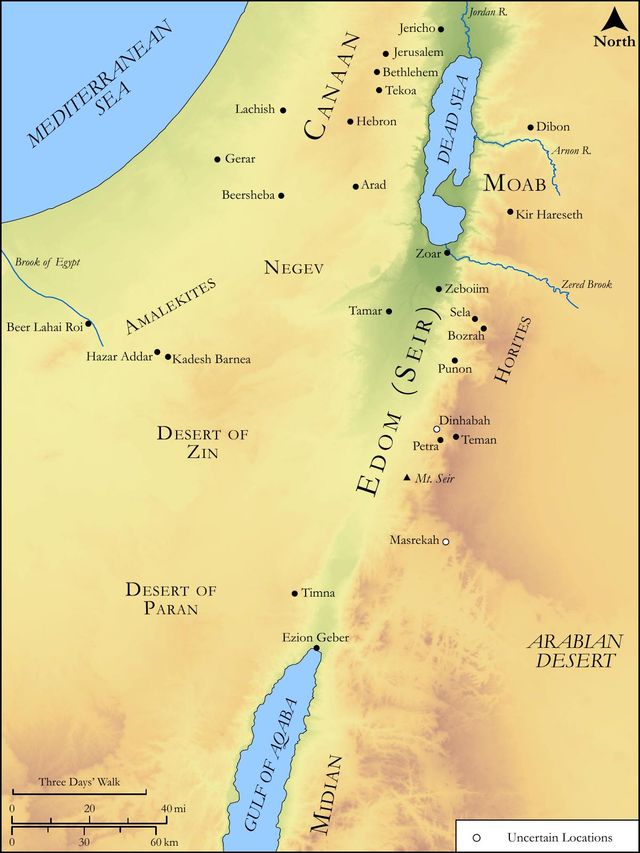
In Scripture, genealogies were not merely lists of names but served vital functions: establishing identity, land claims, political legitimacy, and demonstrating divine blessing or curse. Esau's descendants, the Edomites, settled in the mountainous region of Seir, south and east of the Dead Sea, a strategically important area. Their proximity to Israel meant frequent interactions, often marked by conflict, as seen in later biblical history. The cultural significance of names, particularly those linked to physical characteristics or events (like "red" for Esau/Edom), was profound, shaping identity and destiny. The detailed record of Esau's family, including his wives, sons, and the chiefs of Edom, reflects the formation of a distinct national entity parallel to, yet separate from, the emerging nation of Israel.
Key Themes
ShowHideGenesis 36:1 introduces and contributes to several important themes. Firstly, it highlights Divine Sovereignty and Election, demonstrating that God's plan encompasses all peoples, even as He specifically chooses Jacob's line for the covenant. Secondly, it reinforces the theme of Distinct Destinies and Prophetic Fulfillment, as the separation of two nations from Rebekah's womb (Genesis 25:23) is meticulously documented. Thirdly, it subtly underscores the Consequences of Choices, as Esau's initial disregard for his birthright (Genesis 25:30-34) sets a trajectory for his descendants, contrasting with Jacob's pursuit of spiritual blessing. Finally, this chapter provides crucial Historical Foundation for understanding the complex and often adversarial relationship between Israel and Edom throughout the Old Testament, which is vital for interpreting later prophetic books like Obadiah.
Exposition and Analysis
ShowHideGenesis 36:1, "Now these [are] the generations of Esau, who [is] Edom," serves as a concise yet profoundly significant introductory statement for the entire chapter, signaling a shift in the narrative focus from Jacob's burgeoning family to that of his twin brother, Esau.
Key Word Analysis
ShowHideFrom the root meaning "to bear" or "to beget," this plural noun typically refers to "descent," "family," or "history." In Genesis, tôwlᵉdâh functions as a literary marker, appearing ten times to introduce a new section detailing the origins, descendants, or historical account of a particular person or group. Here, it signifies the beginning of the detailed record concerning Esau's lineage, including his wives, children, and the chiefs and kings who descended from him.
Apparently derived from a root meaning "to handle" or "to make," and interpreted as "rough" or "hairy" (referencing his physical appearance at birth), Esau is the elder twin brother of Jacob. His name is intrinsically linked to his physical characteristics and his impulsive nature, particularly his disregard for his birthright. This name represents the individual who chose immediate gratification over spiritual inheritance.
Derived from the Hebrew word for "red" (ʼāḏōm), this name is applied to Esau due to his reddish complexion at birth (Genesis 25:25) and his infamous trade of his birthright for red lentil stew (Genesis 25:30). "Edom" subsequently becomes the name for his descendants and the territory they inhabit, Idumaea or Edom, signifying a people and land defined by this "red" association and Esau's character.
Verse Breakdown
ShowHide"Now these [are] the generations"
This phrase translates the Hebrew wĕ-'ēlleh tôwlᵉdōt, the standard "toledoth" formula. It acts as a formal heading, indicating that what follows is a comprehensive account of the lineage and history of the person named. In this context, it signals a structured, exhaustive record of Esau's descendants, not merely a casual mention. It underscores the biblical author's intention to provide a complete picture of both covenant and non-covenant lines.
"of Esau"
This identifies the subject of the upcoming genealogical record. After extensive focus on Jacob's family, the narrative pivots to provide a parallel account of his twin brother. This inclusion emphasizes that while the covenant line passes through Jacob, Esau's lineage is also significant in the broader tapestry of God's dealings with humanity and the formation of nations.
"who [is] Edom"
This crucial parenthetical clause explicitly links Esau to his alternative name, Edom. This connection is vital because "Edom" not only refers to the man but also becomes the name of the powerful nation and territory that arose from his descendants. The name itself, meaning "red," serves as a constant reminder of Esau's birth appearance and, more significantly, his impulsive act of selling his birthright for "red pottage," an act that symbolically defined his character and the spiritual trajectory of his lineage.
Literary Devices
ShowHideThe verse primarily employs the Toledoth Formula, a recurring structural device in Genesis. This formula, "These are the generations of...", serves as a clear literary marker, segmenting the book into distinct historical and genealogical units. Its use here signals a deliberate shift in narrative focus from Jacob to Esau, providing a comprehensive account of the latter's lineage. Furthermore, there is significant Symbolism embedded in the name "Edom." Meaning "red," it not only describes Esau's physical appearance at birth but also symbolizes his impulsive, earthly nature, particularly his valuing of immediate gratification (red pottage) over spiritual inheritance (birthright). This symbolic connection foreshadows the character of the Edomite nation. The phrase "who is Edom" also acts as a form of Apposition, providing an immediate and vital identification that links the individual Esau to the collective nation of Edom, establishing the foundation for understanding future interactions between Israel and this neighboring people.
Theological and Thematic Connections
ShowHideGenesis 36:1, though a simple genealogical heading, is rich with theological significance. It underscores God's meticulous record-keeping and His sovereign oversight of all peoples, not exclusively the chosen line of Abraham through Jacob. By dedicating an entire chapter to Esau's lineage, the text demonstrates that even those outside the direct covenant line have their place within God's broader historical and redemptive plan. This inclusion highlights the distinct destinies of the two brothers, prophesied even before their birth, and the enduring consequences of their choices, particularly Esau's disregard for his birthright. The chapter thus provides essential groundwork for understanding the complex and often contentious relationship between Israel and Edom throughout biblical history, serving as a testament to God's comprehensive plan for the nations.
Reflection and Application
ShowHideGenesis 36:1, while seemingly a dry genealogical entry, offers profound lessons for the contemporary believer. It reminds us that God's plan is vast and intricate, encompassing even those narratives that appear peripheral to the main storyline. Every life, every lineage, has a place in God's grand tapestry of history, demonstrating His meticulous attention to detail and His sovereign control over all nations. For us, this means recognizing that God is at work in the lives of all people, not just those we might consider "chosen" or "central" to our own spiritual narrative. It also serves as a poignant reminder of the enduring consequences of choices, as Esau's impulsive disregard for his birthright had lasting implications for his descendants, the Edomites. This encourages us to consider the long-term spiritual impact of our own decisions, prioritizing eternal values over immediate gratification. Ultimately, understanding the origins of Edom helps us appreciate the intricate tapestry of biblical history and the distinct purposes God has for various peoples, even as He works primarily through His covenant people.
Questions for Reflection
ShowHideFAQ
ShowHideWhat is the significance of the term "generations" (toledoth) in Genesis?
ShowHideToledoth (תּוֹלְדֹת) is a crucial Hebrew term used as a structural marker throughout the book of Genesis. Meaning "account of," "descendants," or "history," it introduces major sections detailing the origins or lineage of a person, family, or a new phase of history. Its systematic use, as seen in Genesis 36:1, provides a chronological and thematic framework for the entire book, guiding the reader through the unfolding narrative of creation and the patriarchal history.
Why is Esau also called Edom?
ShowHideEsau received the name Edom (אֱדוֹם), meaning "red," for two primary, interconnected reasons. First, he was born with a distinctive reddish appearance, described as "red, all over like an hairy garment" (Genesis 25:25). Second, and more significantly, he famously sold his birthright to Jacob for a bowl of "red pottage" or lentil stew, exclaiming, "Feed me, I pray thee, with that same red pottage" (Genesis 25:30). This act solidified the name and its association with his impulsive character, and the name Edom subsequently became synonymous with his descendants and the territory they inhabited.
Why does the Bible include such a detailed genealogy of Esau, who is not in the covenant line?
ShowHideThe inclusion of Esau's detailed genealogy serves several important theological and historical purposes. It vividly demonstrates God's sovereignty over all nations, not just the chosen line of Abraham through Jacob. It fulfills the prophecy that "two nations" would come from Rebekah's womb (Genesis 25:23), showing how their distinct destinies unfolded. Furthermore, it provides essential historical and geographical context for understanding the complex and often adversarial interactions, conflicts, and prophecies concerning Israel and Edom throughout the subsequent Old Testament narratives, such as Edom's refusal to allow Israel passage through their land in Numbers 20:14-21.
Christ-Centered Fulfillment
ShowHideWhile Genesis 36:1 details the lineage of Esau, a line distinct from the messianic covenant, its inclusion serves to magnify the sovereign grace and purpose of God that ultimately culminates in Christ. The separation of Esau's lineage from Jacob's, even as both descended from Isaac, underscores God's selective choice and the specific path He ordained for the coming of the Messiah. This divine election, while seemingly exclusive in the Old Testament, ultimately prepares the way for a universal salvation. The existence of nations like Edom, with their own histories and destinies, highlights the universal scope of God's plan, which, though focused on Israel as the conduit for salvation, ultimately embraces all peoples. Christ, as the fulfillment of God's promises, transcends national boundaries and tribal distinctions, breaking down the dividing wall of hostility between Jew and Gentile (Ephesians 2:14). In Him, there is neither Jew nor Gentile, slave nor free, male nor female, for all are one in Christ Jesus (Galatians 3:28), thereby fulfilling the broader implications of God's dominion over all nations, foreshadowed even in the genealogies of those outside the direct covenant line. The very distinction between Esau and Jacob, rooted in God's sovereign choice before their birth (Romans 9:10-13), ultimately points to the greater mystery of God's electing grace that brings diverse peoples into one body through Christ.