


Genesis 27:46
Bible text: King James Version (1769 Blayney text) · Public domain
Bible text: King James Version with Strong's numbers · Public domain
Bible text: Berean Standard Bible · Public domain
Bible text: American Standard Version (1901) · Public domain
Bible text: World English Bible, Messianic edition · Public domain
Bible text: Geneva Bible (1599) · Public domain
Bible text: Young's Literal Translation · Public domain
- וַתֹּאמֶרva·To·merand she saidH559Conj-w ¦ V-Qal-ConsecImperf-3fsVerb Qal Consecutive Imperfect 3rd Singular Feminineוַandתֹּאמֶרshe said
- רִבְקָהriv·KahRebekahH7259N-proper-fNoun Proper Feminine
- אֶל'eltoH413PrepPreposition
- יִצְחָקyitz·ChakIsaacH3327N-proper-mNoun Proper Masculine
- קַצְתִּיKatz·tiI loatheH6973V-Qal-Perf-1csVerb Qal Perfect 1st Singular common gender
- בְחַיַּיve·chai·Yai<in> my lifeH2416Prep-b ¦ N-mpc ¦ 1csNoun Plural Masculine Constructבְ<in>חַיַּlifeיmy
- מִפְּנֵיmi·pe·Nei<from> because ofH6440Prep-m ¦ N-mpcNoun Plural Masculine Constructמִ<from>פְּנֵיbecause of
- בְּנוֹתbe·Not[the] daughters ofH1323N-fpcNoun Plural Feminine Construct
- חֵתChetHethH2845N-proper-mNoun Proper Masculine
- אִם'imifH518PrtParticle Conditional
- לֹקֵחַlo·Ke·ach[is] takingH3947V-Qal-Prtcpl-msVerb Qal Participle Singular Masculine Absolute
- יַעֲקֹבya·'a·koJacobH3290N-proper-mNoun Proper Masculine
- אִשָּׁה'i·Shaha wifeH802N-fsNoun Singular Feminine Absolute
- מִבְּנוֹתmi·be·notfrom [the] daughters ofH1323Prep-m ¦ N-fpcNoun Plural Feminine Constructמִfromבְּנוֹת[the] daughters of
- חֵתchetHethH2845N-proper-mNoun Proper Masculine
- כָּאֵלֶּהka·'E·lehlike theseH428Prep-k ¦ PrtParticle Demonstrativeכָּlikeאֵלֶּהthese
- מִבְּנוֹתmi·be·Notfrom [the] daughters ofH1323Prep-m ¦ N-fpcNoun Plural Feminine Constructמִfromבְּנוֹת[the] daughters of
- הָאָרֶץha·'A·retzthe landH776Art ¦ N-fsNoun Singular Feminine Absoluteהָtheאָרֶץland
- לָמָּהLa·mah<to> why?H4100Prep-l ¦ InterrogPronoun Interrogativeלָ<to>מָּהwhy?
- לִּיli[belongs] to <the> mePrep-l ¦ 1csSuffix Personal 1st Singular common genderלִּ[belongs] to <the>יme
- חַיִּיםchai·YimlifeH2416N-mpNoun Plural Masculine Absolute
English is a literal word-by-word gloss of the Hebrew, not the KJV's wording. Why?
This is the original text the KJV's translators worked from — each Hebrew word with its own literal English meaning in this verse, prepared by scholars at Tyndale House, Cambridge. The KJV translates whole sentences, not word by word, so its wording differs: one Hebrew word can become several English words, and the KJV may choose “the LORD” where the gloss reads “Yahweh”. Both are faithful — they answer different questions. For the KJV's own rendering, switch to the KJV text.
Details
See on the biblical-era maps


Study this verse
Public-domain commentary
Matthew Henry
From his Commentary on the Whole Bible. Henry comments on passages, not single verses — this entry covers Genesis 27:41–46. His three-level outline is real structure in the source text, so it is rendered as structure.
Here is, I. The malice Esau bore to Jacob upon account of the blessing which he had obtained, Gen 27:41. Thus he went in the way of Cain, who slew his brother because he had gained that acceptance with God of which he had rendered himself unworthy. Esau's hatred of Jacob was, 1. A causeless hatred. He hated him for no other reason but because his father blessed him and God loved him. Note, The happiness of saints is the envy of sinners. Whom Heaven blesses, hell curses. 2. It was a cruel hatred. Nothing less would satisfy him than to slay his brother. It is the blood of the saints that persecutors thirst after: I will slay my brother. How could he say that word without horror? How could he call him brother, and yet vow his death? Note, The rage of persecutors will not be tied up by any bonds, no, not the strongest and most sacred. 3. It was a politic hatred. He expected his father would soon die, and then titles must be tried and interests contested between the brothers, which would give him a fair opportunity for revenge. He thinks it not enough to live by his sword himself (Gen 27:40), unless his brother die by it. He is loth to grieve his father while he lives, and therefore puts off the intended murder till his death, not caring how much he then grieved his surviving mother. Note, (1.) Those are bad children to whom their good parents are a burden, and who, upon any account, long for the days of mourning for them. (2.) Bad men are long held in by external restraints from doing the mischief they would do, and so their wicked purposes come to nought. (3.) Those who think to defeat God's purposes will undoubtedly be disappointed themselves. Esau aimed to prevent Jacob, or his seed, from having the dominion, by taking away his life before he was married; but who can disannul what God has spoken? Men may fret at God's counsels, but cannot change them.
II.The method Rebekah took to prevent the mischief.
1.She gave Jacob warning of his danger, and advised him to withdraw for a while, and shift for his own safety. She tells him what she heard of Esau's design, that he comforted himself with the hope of an opportunity to kill his brother, Gen 27:42. Would one think that such a bloody barbarous thought as this could be a comfort to a man? If Esau could have kept his design to himself his mother would not have suspected it; but men's impudence in sin is often their infatuation; and they cannot accomplish their wickedness because their rage is too violent to be concealed, and a bird of the air carries the voice. Observe here,
(1.)What Rebekah feared - lest she should be deprived of them both in one day (Gen 27:45), deprived, not only of the murdered, but of the murderer, who either by the magistrate, or by the immediate hand of God, would by sacrificed to justice, which she herself must acquiesce in, and not obstruct: or, if not so, yet thenceforward she would be deprived of all joy and comfort in him. Those that are lost to virtue are in a manner lost to all their friends. With what pleasure can a child be looked upon that can be looked upon as no other than a child of the devil?
(2.)What Rebekah hoped - that, if Jacob for a while kept out of sight, the affront which his brother resented so fiercely would by degrees go out of mind. The strength of passions is weakened and taken off by the distances both of time and place. She promised herself that his brother's anger would turn away. Note, Yielding pacifies great offences; and even those that have a good cause, and God on their side, must yet use this with other prudent expedients for their own preservation.
2.She impressed Isaac with an apprehension of the necessity of Jacob's going among her relations upon another account, which was to take a wife, Gen 27:46. She would not tell him of Esau's wicked design against the life of Jacob, lest it should trouble him; but prudently took another way to gain her point. Isaac saw as uneasy as he was to Esau's being unequally yoked with Hittites; and therefore, with a very good colour of reason, she moves to have Jacob married to one that was better principled. Note, One miscarriage should serve as a warning to prevent another; those are careless indeed that stumble twice at the same stone. Yet Rebekah seems to have expressed herself somewhat too warmly in the matter, when she said, What good will my life do me if Jacob marry a Canaanite? Thanks be to God, all our comfort is not lodged in one hand; we may do the work of life, and enjoy the comforts of life, though every thing do not fall out to our mind, and though our relations be not in all respects agreeable to us. Perhaps Rebekah spoke with this concern because she saw it necessary, for the quickening of Isaac, to give speedy orders in this matter. Observe, Though Jacob was himself very towardly, and well fixed in his religion, yet he had need to be put out of the way of temptation. Even he was in danger both of following the bad example of his brother and of being drawn into a snare by it. We must not presume too far upon the wisdom and resolution, no, not of those children that are most hopeful and promising; but care must be taken to keep them out of harm's way.
Historical interpretation
Historical reception
1 surviving comment on this verse from the historical church.
Notice how she found a plausible excuse. You see, whenever help from on high comes to support us, problems become simple and difficulties easy. So, since she too had the Lord of all seconding her intention, he put into her mind everything capable of bringing to realization the plan in process for her son’s survival. “I am disgusted with life on account of the daughters of the Hittites. If Jacob takes a wife from the daughters of this land, what meaning would life have for me?” Here there seems to be a reference to the immorality of Esau’s wives and the fact that they proved a source of great disgust to Isaac and Rebekah. Sacred Scripture narrated to us previously, you remember, that Esau took wives from the Hittites and Hivites: “They were at odds with Isaac and Rebekah.” So, wishing to remind him of this, she more or less says to him, “You know how Esau’s wives made life unpleasant for me, and how, on account of their hostility, I am now alienated from all the daughters of the Hittites and hate the lot of them on their account. So if it happens that Jacob takes a wife from among them, what hope of survival would then be left for me? What meaning would life have for me?” I mean, “if we can’t put up with them, if even Jacob goes so far as to marry one of the daughters of this land, life is over for us.”
Continue studying Genesis 27:46 across the web’s major study libraries — every link below opens this exact verse, chapter, or book on the destination site.
Read & Compare
 BibleGatewayThis verse in more than 200 translations and 70 languages.
 Bible.comThe YouVersion reader — hundreds of translations, reading plans, and highlights.
 ESV.orgCrossway's official English Standard Version reader.
 NET BibleThe NET translation with 60,000+ translators' notes on every rendering decision.
 STEP BibleTyndale House's free study tool — original text, vocabulary, and scholarly resources.
 BibliaLogos Bible Software's free web reader.
 USCCBThe New American Bible (Revised Edition) with the U.S. bishops' study notes.
Commentaries
 BibleHub CommentariesDozens of classic commentaries on this verse, gathered on one page.
 StudyLightMore than 100 commentary sets — the largest collection on the web.
 BibleRefPlain-English commentary on what this verse means, verse by verse.
 Enduring WordDavid Guzik's free commentary on this chapter, widely used by Bible teachers.
 Bible Study ToolsVerse commentary alongside Greek and Hebrew study aids.
Original Language & Research
- BibleHub InterlinearThe verse word by word — original language, transliteration, and English.
- BibleHub LexiconEvery word's original-language definition and Strong's entry.
 Blue Letter BibleDeep-study tools — Strong's numbers, concordance, and word studies.
 SefariaThe Hebrew text with Rashi and centuries of Jewish commentary.
Sermons, Hymns & Audio


TrulyRandomVerse is not affiliated with these sites and doesn’t control their content. They’re linked because they’re genuinely useful.
Summary
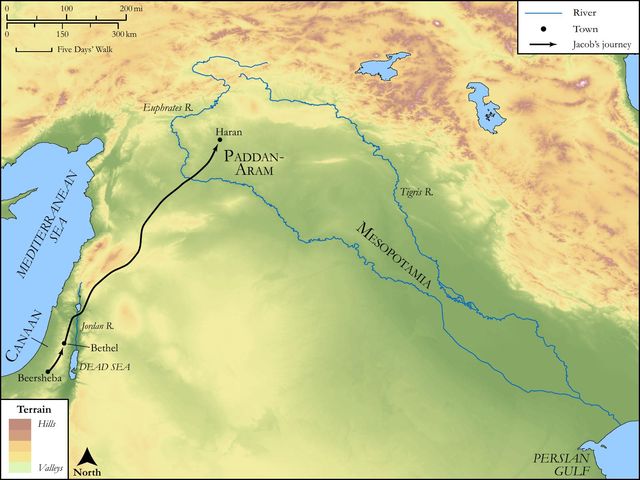
In Genesis 27:46, Rebekah expresses profound personal distress and weariness of life to Isaac, citing the prospect of their son Jacob marrying a Canaanite woman, specifically from the "daughters of Heth." This lament, while reflecting a genuine patriarchal concern for lineage purity, primarily functions as a strategic pretext to persuade Isaac to send Jacob away to Paddan-aram, thereby protecting him from Esau's murderous rage and simultaneously ensuring Jacob secures a wife from their extended family, preserving the covenant line.
Context
ShowHideLiterary Context
Genesis 27:46 unfolds immediately following a pivotal and tumultuous period in the patriarchal narrative. Jacob, at Rebekah's instigation, has just deceitfully secured the patriarchal blessing from his blind father, Isaac, a blessing intended for Esau (Genesis 27:1-29). This act of deception ignites Esau's intense fury, leading him to vow to kill Jacob once their father Isaac had passed away (Genesis 27:41). Upon learning of Esau's murderous intent from a trusted source (Genesis 27:42), Rebekah, ever protective of her favored son, devises a cunning, albeit manipulative, strategy to ensure Jacob's safety. The verse in question reveals her chosen pretext to Isaac: expressing profound concern about Jacob potentially marrying one of the "daughters of Heth," a term referring to Hittite women, a prominent Canaanite people group. This concern, while genuine in its underlying sentiment, serves as a convenient and persuasive argument to send Jacob away, setting the stage for his journey to Paddan-aram.
Historical & Cultural Context
The aversion to intermarriage with Canaanite women was deeply rooted in the Abrahamic covenant's emphasis on a distinct, set-apart people. Historically, the Canaanites were known for their polytheistic idolatry, including Baal worship, and various morally corrupt practices, such as child sacrifice and cultic prostitution, which were anathema to the nascent monotheistic faith of Abraham's descendants. Esau had already married two Hittite women, Judith and Basemath, which had been a significant source of "grief of mind" and bitterness to Isaac and Rebekah (Genesis 26:34-35). This established parental distress provided Rebekah with a culturally acceptable and emotionally resonant reason to propose Jacob's departure. The practice of seeking a spouse from one's own kindred (endogamy) was also a strong cultural norm, ensuring familial continuity, property rights, and the preservation of religious and social traditions, especially for the heir of a patriarchal blessing. Paddan-aram, the destination Rebekah proposes, was the ancestral home of Rebekah's family, offering a suitable pool of eligible women from their own lineage.
Key Themes
ShowHideThis verse contributes significantly to several key themes within Genesis. It powerfully illustrates the theme of Divine Sovereignty Amidst Human Imperfection, where God's purposes for the covenant lineage are advanced despite the pervasive deception and familial dysfunction (Genesis 25-27). The narrative also highlights the critical theme of Lineage and Covenant Purity, emphasizing the importance of maintaining a distinct people through whom God's promises would be fulfilled, thus underscoring the dangers of intermarriage with pagan cultures (Exodus 34:16 and Deuteronomy 7:3-4). Furthermore, it showcases the recurring motif of Deception and its Consequences, as Rebekah's manipulative strategy, while achieving its immediate goal of protecting Jacob, ultimately leads to his long exile and a strained relationship with his family for many years (Genesis 28:10).
Exposition and Analysis
ShowHideRebekah's statement to Isaac in Genesis 27:46 is a masterclass in layered communication, balancing genuine concern with strategic manipulation to achieve her immediate and long-term goals.
Key Word Analysis
ShowHideThis primitive root signifies "to be (causatively, make) disgusted or anxious; abhor, be distressed, be grieved, loathe, vex, be weary." Rebekah's declaration of being "weary" is far more intense than simple fatigue; it conveys a profound sense of revulsion, a deep emotional aversion, or even being utterly fed up with the prospect she describes. It highlights the depth of her perceived distress, making her plea more impactful to Isaac.
This word denotes "alive; hence, raw (flesh); fresh (plant, water, year), strong; also (as noun, especially in the feminine singular and masculine plural) life (or living thing), whether literally or figuratively." By stating she is "weary of my life," Rebekah is expressing that this particular issue (Jacob marrying a Canaanite) is so abhorrent to her that it makes her very existence, her vitality, and her enjoyment of life unbearable. It's an existential complaint, designed to elicit a strong sympathetic response from Isaac.
This term, derived from the root "to build," refers to "a daughter (used in the same wide sense as other terms of relationship, literally and figuratively)." In this context, "daughters of Heth" and "daughters of the land" refer specifically to the women of the indigenous Canaanite peoples, particularly the Hittites. The repetition emphasizes the specific group that is the source of her distress, underscoring their foreignness and the perceived threat they pose to the family's spiritual and cultural integrity.
Verse Breakdown
ShowHide"And Rebekah said to Isaac,"
This opening clause immediately establishes the speaker and the recipient, highlighting a direct, personal communication between wife and husband. The context of their relationship, marked by Isaac's favoritism for Esau and Rebekah's for Jacob, adds a layer of complexity to this dialogue, as Rebekah often acts to influence Isaac.
"I am weary of my life because of the daughters of Heth:"
Rebekah's dramatic declaration of being "weary of my life" (a strong expression of existential distress or loathing) is directly attributed to the "daughters of Heth." This statement taps into a pre-existing source of marital grief for both Isaac and Rebekah, as Esau's Hittite wives had already caused them "grief of mind" (Genesis 26:34-35). This provides a plausible and emotionally resonant reason for her distress, masking her true, urgent motive.
"if Jacob take a wife of the daughters of Heth, such as these [which are] of the daughters of the land,"
This conditional clause presents the specific scenario that causes her such anguish: Jacob marrying a Canaanite woman. The repetition and slight variation ("daughters of Heth," "daughters of the land") serve to emphasize the undesirable nature of these women, reinforcing their foreignness and the perceived threat they pose to the covenant lineage. It also subtly reminds Isaac of Esau's problematic marital choices.
"what good shall my life do me?"
This rhetorical question serves as the climax of Rebekah's plea. It is not a genuine inquiry but a powerful expression of despair, implying that life would be meaningless or unbearable if Jacob were to make such a choice. This dramatic flourish is designed to elicit a strong emotional response from Isaac and compel him to act according to her wishes.
Literary Devices
ShowHideRebekah's speech in this verse employs several potent literary devices. The most prominent is Rhetorical Question, "what good shall my life do me?" This is not a question posed for an answer, but a dramatic declaration of profound distress, intended to manipulate Isaac's emotions and compel his agreement. There is also significant Irony at play; while Rebekah expresses weariness over a potential future marriage, her immediate, unstated weariness is caused by Esau's murderous intent and the need to protect Jacob. Her stated reason is a Pretext, a deceptive justification for sending Jacob away, concealing the true, urgent family crisis. The phrase "daughters of Heth" and "daughters of the land" also functions as Metonymy, where a specific group (Hittites) stands in for the broader category of undesirable Canaanite women, emphasizing the cultural and spiritual threat they represent.
Theological and Thematic Connections
ShowHideGenesis 27:46, while depicting human foibles and familial manipulation, deeply underscores God's unwavering commitment to His covenant purposes, even working through imperfect means. Rebekah's profound aversion to Jacob marrying a Canaanite woman reflects a foundational biblical truth: the critical importance of spiritual purity and distinctiveness for God's chosen people. This concern for lineage was not merely ethnic but theological, aimed at preserving the spiritual integrity of the family through whom the Messiah would ultimately come. Despite the deceit involved, Rebekah's actions, driven by a desire to protect Jacob and ensure the covenant line, inadvertently align with God's broader plan to separate His people from the corrupting influences of the idolatrous nations of Canaan. This passage thus highlights the tension between human agency and divine sovereignty, demonstrating that God can sovereignly achieve His will even amidst human sin and flawed decision-making, ultimately guiding the narrative toward the fulfillment of His promises.
Reflection and Application
ShowHideRebekah's desperate plea, born from a complex mix of genuine concern for lineage and strategic deception to protect her favored son, offers profound lessons for believers today. It vividly illustrates the enduring importance of intentionality in marital choices, particularly regarding shared spiritual values and commitment to God's will. Just as intermarriage with the "daughters of Heth" threatened the spiritual integrity of the Abrahamic line, so too can fundamental disunity in belief and purpose become a source of profound "weariness" and spiritual compromise in contemporary marriages and families. Furthermore, this narrative serves as a poignant reminder of the pervasive and often painful consequences of deception, even when undertaken with seemingly good intentions. Rebekah's manipulation, while achieving Jacob's immediate safety, resulted in years of separation and strained family relationships, illustrating that God's purposes are best pursued through integrity and truth. Ultimately, the passage encourages us to trust in God's sovereign plan, recognizing that He can work through our imperfections and flawed circumstances to accomplish His divine purposes, even as we are called to live with integrity, wisdom, and a deep reliance on His guidance in all our choices, especially those that impact our spiritual legacy.
Questions for Reflection
ShowHideFAQ
ShowHideWhy was intermarriage with the "daughters of Heth" such a significant concern for Rebekah and Isaac?
ShowHideIntermarriage with the "daughters of Heth" (Hittite women, a prominent Canaanite group) was a profound concern for Rebekah and Isaac because it directly threatened the spiritual purity and distinctiveness of the Abrahamic lineage, which was crucial for the fulfillment of God's covenant promises. The Canaanite peoples were deeply entrenched in idolatry, polytheism, and morally corrupt customs, including practices abhorrent to the nascent faith of Abraham's descendants. Such unions were seen as a direct spiritual danger, potentially leading to assimilation into pagan cultures, diluting the family's unique faith, and jeopardizing their role as the vessel through which God's redemptive plan for all nations would unfold (Genesis 12:3). Esau's earlier marriages to Hittite women had already caused Isaac and Rebekah "grief of mind" (Genesis 26:34-35), establishing a precedent for their deep-seated aversion to such unions within the covenant line.
Christ-Centered Fulfillment
ShowHideRebekah's desperate concern for the purity of Jacob's lineage, though rooted in human manipulation and a desire to avoid the "weariness of life" caused by spiritual compromise, profoundly foreshadows the meticulous care God exercised in preserving a holy seed through whom His ultimate redemptive plan would be fulfilled. This careful preservation of a distinct people, free from the corrupting influences of the world, culminates in the person of Jesus Christ, who is the perfect "seed" of Abraham (Galatians 3:16) and the ultimate fulfillment of all God's covenant promises. While Rebekah sought to send Jacob away to secure a pure bride and protect him from Esau's wrath, Christ himself is the one who, through His perfect life and atoning sacrifice, takes away the sin of the world (John 1:29) and offers true rest from the weariness of sin and the curse of a fallen world (Matthew 11:28-30). He establishes a new covenant people, not by bloodline or human effort, but by faith in Him, drawing all nations into a spiritual family that transcends earthly distinctions and perfectly fulfills God's original intent for humanity, becoming the true Israel of God (Galatians 6:16).