


Genesis 2:9
Bible text: King James Version (1769 Blayney text) · Public domain
Bible text: King James Version with Strong's numbers · Public domain
Bible text: Berean Standard Bible · Public domain
Bible text: American Standard Version (1901) · Public domain
Bible text: World English Bible, Messianic edition · Public domain
Bible text: Geneva Bible (1599) · Public domain
Bible text: Young's Literal Translation · Public domain
- וַיַּצְמַחvai·yatz·Machand he made sproutH6779Conj-w ¦ V-Hiphil-ConsecImperf-3msVerb Hiphil Consecutive Imperfect 3rd Singular Masculineוַandיַּצְמַחhe made sprout
- יְהוָהYah·wehYahwehH3068N-properNoun Proper Title
- אֱלֹהִים'E·lo·HimGodH430N-mpNoun Plural Masculine Absolute
- מִןminfromH4480PrepPreposition
- הָאֲדָמָהha·'a·da·Mahthe groundH127Art ¦ N-fsNoun Singular Feminine Absoluteהָtheאֲדָמָהground
- כָּלkoleveryH3605N-mscNoun Singular Masculine Construct
- עֵץ'etztreeH6086N-msNoun Singular Masculine Absolute
- נֶחְמָדnech·MaddesirableH2530V-Niphal-Prtcpl-msVerb Niphal Participle Singular Masculine Absolute
- לְמַרְאֶהle·mar·'Ehto appearanceH4758Prep-l ¦ N-msNoun Singular Masculine Absoluteלְtoמַרְאֶהappearance
- וְטוֹבve·Tovand goodH2896Conj-w ¦ Adj-msAdjective Singular Masculine Absoluteוְandטוֹבgood
- לְמַאֲכָלle·ma·'a·Khalfor foodH3978Prep-l ¦ N-msNoun Singular Masculine Absoluteלְforמַאֲכָלfood
- וְעֵץve·'Etzand [the] tree ofH6086Conj-w ¦ N-mscNoun Singular Masculine Constructוְandעֵץ[the] tree of
- הַחַיִּיםha·chai·Yim<the> lifeH2416Art ¦ N-mpNoun Plural Masculine Absoluteהַ<the>חַיִּיםlife
- בְּתוֹךְbe·Tokh[was] in [the] middle ofH8432Prep-b ¦ N-mscNoun Singular Masculine Constructבְּ[was] inתוֹךְ[the] middle of
- הַגָּןha·Ganthe gardenH1588Art ¦ N-csNoun Singular common gender Absoluteהַtheגָּןgarden
- וְעֵץve·'Etzand [the] tree ofH6086Conj-w ¦ N-mscNoun Singular Masculine Constructוְandעֵץ[the] tree of
- הַדַּעַתha·Da·'atthe knowledgeH1847Art ¦ N-fscNoun Singular Feminine Constructהַtheדַּעַתknowledge
- טוֹבTovgoodH2896Adj-msAdjective Singular Masculine Absolute
- וָרָעva·Ra'and evilH7451Conj-w ¦ Adj-msAdjective Singular Masculine Absoluteוָandרָעevil
English is a literal word-by-word gloss of the Hebrew, not the KJV's wording. Why?
This is the original text the KJV's translators worked from — each Hebrew word with its own literal English meaning in this verse, prepared by scholars at Tyndale House, Cambridge. The KJV translates whole sentences, not word by word, so its wording differs: one Hebrew word can become several English words, and the KJV may choose “the LORD” where the gloss reads “Yahweh”. Both are faithful — they answer different questions. For the KJV's own rendering, switch to the KJV text.
Details
See on the biblical-era maps


Study this verse
Public-domain commentary
Matthew Henry
From his Commentary on the Whole Bible. Henry comments on passages, not single verses — this entry covers Genesis 2:8–15. His four-level outline is real structure in the source text, so it is rendered as structure.
Man consisting of body and soul, a body made out of the earth and a rational immortal soul the breath of heaven, we have, in these verses, the provision that was made for the happiness of both; he that made him took care to make him happy, if he could but have kept himself so and known when he was well off. That part of man by which he is allied to the world of sense was made happy; for he was put in the paradise of God: that part by which he is allied to the world of spirits was well provided for; for he was taken into covenant with God. Lord, what is man that he should be thus dignified - man that is a worm! Here we have,
I.A description of the garden of Eden, which was intended for the mansion and demesne of this great lord, the palace of this prince.
The inspired penman, in this history, writing for the Jews first, and calculating his narratives for the infant state of the church, describes things by their outward sensible appearances, and leaves us, by further discoveries of the divine light, to be led into the understanding of the mysteries couched under them. Spiritual things were strong meat, which they could not yet bear; but he writes to them as unto carnal, Co1 3:1. Therefore he does not so much insist upon the happiness of Adam's mind as upon that of his outward state. The Mosaic history, as well as the Mosaic law, has rather the patterns of heavenly things than the heavenly things themselves, Heb 9:23. Observe,
1.The place appointed for Adam's residence was a garden; not an ivory house nor a palace overlaid with gold, but a garden, furnished and adorned by nature, not by art. What little reason have men to be proud of stately and magnificent buildings, when it was the happiness of man in innocency that he needed none! As clothes came in with sin, so did houses. The heaven was the roof of Adam's house, and never was any roof so curiously ceiled and painted. The earth was his floor, and never was any floor so richly inlaid. The shadow of the trees was his retirement; under them were his dining-rooms, his lodging-rooms, and never were any rooms so finely hung as these: Solomon's, in all their glory, were not arrayed like them. The better we can accommodate ourselves to plain things, and the less we indulge ourselves with those artificial delights which have been invented to gratify men's pride and luxury, the nearer we approach to a state of innocency. Nature is content with a little and that which is most natural, grace with less, but lust with nothing.
2.The contrivance and furniture of this garden were the immediate work of God's wisdom and power. The Lord God planted this garden, that is, he had planted it - upon the third day, when the fruits of the earth were made. We may well suppose to have been the most accomplished place for pleasure and delight that ever the sun saw, when the all-sufficient God himself designed it to be the present happiness of his beloved creature, man, in innocency, and a type and a figure of the happiness of the chosen remnant in glory. No delights can be agreeable nor satisfying to a soul but those that God himself has provided and appointed for it; no true paradise, but of God's planting. The light of our own fires, and the sparks of our own kindling, will soon leave us in the dark, Isa 50:11. The whole earth was now a paradise compared with what it is since the fall and since the flood; the finest gardens in the world are a wilderness compared with what the whole face of the ground was before it was cursed for man's sake: yet that was not enough; God planted a garden for Adam. God's chosen ones shall have distinguishing favours shown them.
3.The situation of this garden was extremely sweet. It was in Eden, which signifies delight and pleasure. The place is here particularly pointed out by such marks and bounds as were sufficient, I suppose, when Moses wrote, to specify the place to those who knew that country; but now, it seems, the curious cannot satisfy themselves concerning it. Let it be our care to make sure a place in the heavenly paradise, and then we need not perplex ourselves with a search after the place of the earthly paradise. It is certain that, wherever it was, it had all desirable conveniences, and (which never any house nor garden on earth was) without any convenience. Beautiful for situation, the joy and the glory of the whole earth, was this garden: doubtless it was earth in its highest perfection.
4.The trees with which this garden was planted.
(1.)It had all the best and choicest trees in common with the rest of the ground. It was beautiful and adorned with every tree that, for its height or breadth, its make or colour, its leaf or flower, was pleasant to the sight and charmed the eye; it was replenished and enriched with every tree that yielded fruit grateful to the taste and useful to the body, and so good for food. God, as a tender Father, consulted not only Adam's profit, but his pleasure; for there is a pleasure consistent with innocency, nay, there is a true and transcendent pleasure in innocency. God delights in the prosperity of his servants, and would have them easy; it is owing to themselves if they be uneasy. When Providence puts us into an Eden of plenty and pleasure, we ought to serve him with joyfulness and gladness of heart, in the abundance of the good things he gives us. But,
(2.)It had two extraordinary trees peculiar to itself; on earth there were not their like.
[1.]There was the tree of life in the midst of the garden, which was not so much a memorandum to him of the fountain and author of his life, nor perhaps any natural means to preserve or prolong life; but it was chiefly intended to be a sign and seal to Adam, assuring him of the continuance of life and happiness, even to immortality and everlasting bliss, through the grace and favour of his Maker, upon condition of his perseverance in this state of innocency and obedience. Of this he might eat and live. Christ is now to us the tree of life (Rev 2:7; Rev 22:2), and the bread of life, Joh 6:48, Joh 6:53.
[2.]There was the tree of the knowledge of good and evil, so called, not because it had any virtue in it to beget or increase useful knowledge (surely then it would not have been forbidden), but, First, Because there was an express positive revelation of the will of God concerning this tree, so that by it he might know moral good and evil. What is good? It is good not to eat of this tree. What is evil? It is evil to eat of this tree. The distinction between all other moral good and evil was written in the heart of man by nature; but this, which resulted from a positive law, was written upon this tree. Secondly, Because, in the event, it proved to give Adam an experimental knowledge of good by the loss of it and of evil by the sense of it. As the covenant of grace has in it, not only Believe and be saved, but also, Believe not and be damned (Mar 16:16), so the covenant of innocency had in it, not only "Do this and live," which was sealed and confirmed by the tree of life, but, "Fail and die," which Adam was assured of by this other tree: "Touch it at your peril;" so that, in these two trees, God set before him good and evil, the blessing and the curse, Deu 30:19. These two trees were as two sacraments.
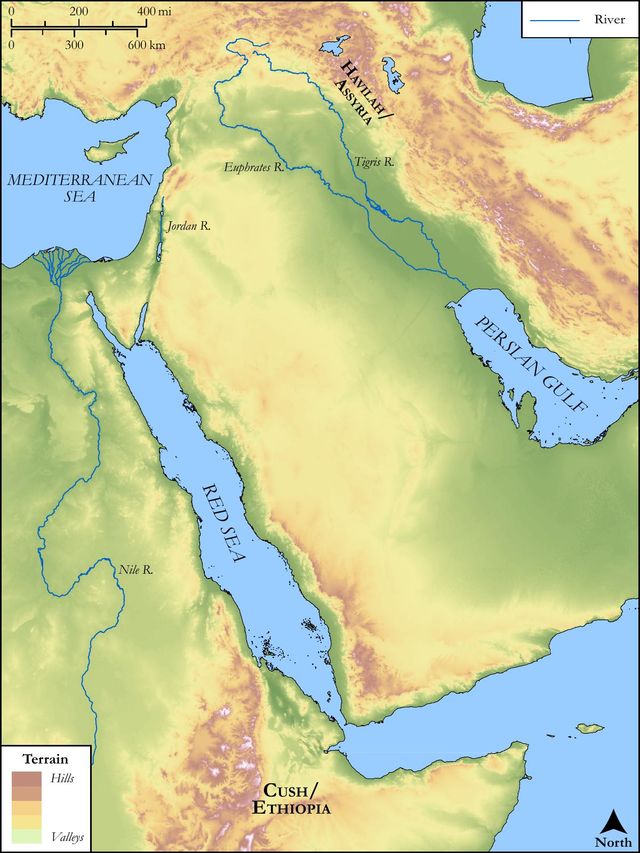
5.The rivers with which this garden was watered, Gen 2:10-14. These four rivers (or one river branched into four streams) contributed much both to the pleasantness and the fruitfulness of this garden. The land of Sodom is said to be well watered every where, as the garden of the Lord, Gen 13:10. Observe, That which God plants he will take care to keep watered. The trees of righteousness are set by the rivers, Psa 1:3. In the heavenly paradise there is a river infinitely surpassing these; for it is a river of the water of life, not coming out of Eden, as this, but proceeding out of the throne of God and of the Lamb (Rev 22:1), a river that makes glad the city of our God, Psa 46:4. Hiddekel and Euphrates are rivers of Babylon, which we read of elsewhere. By these the captive Jews sat down and wept, when they remembered Sion (Psa 137:1); but methinks they had much more reason to weep (and so have we) at the remembrance of Eden. Adam's paradise was their prison; such wretched work has sin made. Of the land of Havilah it is said (Gen 2:12), The gold of that land is good, and there is bdellium and the onyx-stone: surely this is mentioned that the wealth of which the land of Havilah boasted might be as foil to that which was the glory of the land of Eden. Havilah had gold, and spices, and precious stones; but Eden had that which was infinitely better, the tree of life, and communion with God. So we may say of the Africans and Indians: "They have the gold, but we have the gospel. The gold of their land is good, but the riches of ours are infinitely better."
II.The placing of man in this paradise of delight, Gen 2:15, where observe,
1.How God put him in possession of it: The Lord God took the man, and put him into the garden of Eden; so Gen 2:8, Gen 2:15. Note here,
(1.)Man was made out of paradise; for, after God had formed him, he put him into the garden: he was made of common clay, not of paradise-dust. He lived out of Eden before he lived in it, that he might see that all the comforts of his paradise-state were owing to God's free grace. He could not plead a tenant-right to the garden, for he was not born upon the premises, nor had any thing but what he received; all boasting was hereby for ever excluded.
(2.)The same God that was the author of his being was the author of his bliss; the same hand that made him a living soul planted the tree of life for him, and settled him by it. He that made us is alone able to make us happy; he that is the former of our bodies and the Father of our spirits, he, and none but he, can effectually provide for the felicity of both.
(3.)It adds much to the comfort of any condition if we have plainly seen God going before us and putting us into it. If we have not forced providence, but followed it, and taken the hints of direction it has given us, we may hope to find a paradise where otherwise we could not have expected it. See Psa 47:4.
2.How God appointed him business and employment. He put him there, not like Leviathan into the waters, to play therein, but to dress the garden and to keep it. Paradise itself was not a place of exemption from work. Note, here,
(1.)We were none of us sent into the world to be idle. He that made us these souls and bodies has given us something to work with; and he that gave us this earth for our habitation has made us something to work on. If a high extraction, or a great estate, or a large dominion, or perfect innocency, or a genius for pure contemplation, or a small family, could have given a man a writ of ease, Adam would not have been set to work; but he that gave us being has given us business, to serve him and our generation, and to work out our salvation: if we do not mind our business, we are unworthy of our being and maintenance.
(2.)Secular employments will vary well consist with a state of innocency and a life of communion with God. The sons and heirs of heaven, while they are here in this world, have something to do about this earth, which must have its share of their time and thoughts; and, if they do it with an eye to God, they are as truly serving him in it as when they are upon their knees.
(3.)The husbandman's calling is an ancient and honourable calling; it was needful even in paradise. The garden of Eden, though it needed not to be weeded (for thorns and thistles were not yet a nuisance), yet must be dressed and kept. Nature, even in its primitive state, left room for the improvements of art and industry. It was a calling fit for a state of innocency, making provision for life, not for lust, and giving man an opportunity of admiring the Creator and acknowledging his providence: while his hands were about his trees, his heart might be with his God.
(4.)There is a true pleasure in the business which God calls us to, and employs us in. Adam's work was so far from being an allay that it was an addition to the pleasures of paradise; he could not have been happy if he had been idle: it is still a law, He that will not work has no right to eat, Th2 3:10; Pro 27:23.
III.The command which God gave to man in innocency, and the covenant he then took him into.
Hitherto we have seen God as man's powerful Creator and his bountiful Benefactor; now he appears as his Ruler and Lawgiver. God put him into the garden of Eden, not to live there as he might list, but to be under government. As we are not allowed to be idle in this world, and to do nothing, so we are not allowed to be wilful, and do what we please. When God had given man a dominion over the creatures, he would let him know that still he himself was under the government of his Creator.
Historical interpretation
Five Centuries of Reception
7 surviving comments on this verse. Each one is dated, so this reads as a timeline rather than a list.
Select a marker to jump to its quote. Markers stagger vertically where authors wrote within a few decades of each other.
The Church, setting forth the likeness of paradise, includes within her walls fruit-bearing trees, whereof that which does not bring forth good fruit is cut off and is cast into the fire. These trees she waters with four rivers, that is, with the four Gospels, wherewith, by a celestial inundation, she bestows the grace of saving baptism. Can any one water from the Church's fountains who is not within the Church? Can one impart those wholesome and saving draughts of paradise to any one if he is perverted, and of himself condemned, and banished outside the fountains of paradise, and has dried up and failed with the dryness of an eternal thirst?
Now Eden is the land of Paradise. By "of old" Scripture means that He planted it on the third day; it explains this with the words "the Lord caused to sprout from the earth every kind of tree that is beautiful to look upon and good to eat" [ Gen2:9 ] ; and to show that this refers to Paradise, it says, "and the Tree of Life was in the midst of Paradise, and the Tree of Knowledge of good and evil." [ Gen2:9 ]
Christ is brought up to the tree and nailed to it—yet by the tree of life he restores us. Yes, he saves even a thief crucified with him; he wraps all the visible world in darkness.
There was a tree of the knowledge of good and evil in Paradise. This was so because 'God made to grow a tree pleasant to sight and good for food, the tree of life also in the midst of the garden and the tree of the knowledge of good and evil.' [ Gen 2:9 ] We shall see later whether this tree, like the others, was pleasant to sight and good for food. The question will be more fittingly discussed at the point where, on tasting the fruit of this tree, we find that man was deceived. Meantime, we should no[t] reproach ourselves for not being able to know precisely the reasons behind these facts. We should not form a hasty judgment in respect to this product of creation, if it presents to our intellect what seems to us--like the creation of serpents and certain poisonous creatures-difficult and incomprehensible. In fact, we are unable, owing to human weakness, yet to know and understand the reason for the creation of each and every object. Let us, therefore, not criticise in holy Scripture something which we cannot comprehend. There are very many things which must not be subjected to the judgment of our intellect. Rather, these should be surveyed from the lofty heights of Divine Providence and from the intentions of God Himself.
Without prejudice, then, to what we shall say hereafter, set it down as a first principle that the subject of this tree of the knowledge of good and evil is to you a displeasing one. After men had tasted of this tree, they realized that they were naked. [ Gen 3:7 ] Nevertheless, I will state for your benefit that as a consummation of God's creation this tree grew in Paradise and that it was permitted by God, in order that we might be able to know the preeminence of good. How could we learn to know that there was a difference between good and evil, if there existed no knowledge of good and evil? We could not have come to realize that evil was evil, unless there was knowledge of good, and that there could not be knowledge of good, unless there was actual good. Again, we could not have know[n] what in itself was good, unless there was knowledge of evil. Take an example from the nature of the human body. There exists as a matter of fact a certain bitter and poisonous substance which has been discovered to have a general salutary effect on the health of men. Hence, what we regard as evil frequently turns out to be not in every respect evil, but to be advantageous for general use. Just as poison exists in a part of the body but has a beneficial effect on the body as a whole, so God established the knowledge in part of what is good and evil, in order that the whole might be benefitted.
Hence it follows that the serpent in Paradise was certainly not brought into being without the will of God. In the figure of the serpent we see the Devil. That the Devil existed even in Paradise we are informed by the Prophet Ezekiel, who in discussing the Prince of Tyre says: 'Thou wast in the pleasures of the paradise of God.' [ Ezek 28:13 ] We maintain that the Prince of Tyre stands for the Devil. Shall we, therefore, accuse God because we cannot comprehend the treasures-with the exception of those which He has deigned to reveal-of His majesty and wisdom which lie hidden and concealed in Christ? Yet He did reveal to us the fact that the wickedness of the Devil is fruitful for man's salvation. This would not be the Devil's intention, but the Lord makes the wickedness of him who stands in opposition to us contribute something to our salvation. The wickedness of the Devil has caused the virtue and patience of one holy man to shine in a clearer light. The justice of Job was so disciplined and exercised by the wickedness of his opponent that eventually he gained the crown of victory over his adversary, the Devil. No one is crowned 'unless he has competed according to the rules.' [ 2 Tim 2:5 ] Joseph's chastity, too, would never have been recorded for us, if it did not happen that a woman, the wife of his master and friend, incited and goaded by the Devil's allurements, had not played with his affections. [ Gen 39:17 ] This woman finally endeavored to bring about his death. This event added more to the fame of a man who by his continence faced death in defense of chastity. Do you desire to know God's plan? Here is an instance. Through the instrumentality of the Devil there was once an occasion when a just man prepared to perpetrate manslaughter. The situation was one that involved the murder of one's own son. Yet, for all that, the Lord tempted Abraham in this wise. He demanded that Abraham sacrifice his son to Him. By reason of this temptation he was able to prove himself faithful to the Lord, since compliance to his vow and not pity for his beloved son brought about repeal of the order. [ Gen 22:1 ] There was, therefore, in Paradise a tree of knowledge of good and evil which appeared to the eye to be beautiful and to the taste to be edible. It was not actually good to eat, for its fruit appeared to have a harmful effect on man. What is injurious to individuals may nevertheless have a beneficial effect on men as a whole. The Devil, for example, did harm to Judas, [ Luke 22:3 ] but he bestowed the wreath of victory on all the other Apostles, inasmuch as they were able to face and overcome the force of his temptation.
Accordingly, let it not be a subject of reprehension or doubt that the Devil existed in Paradise. As a matter of fact he was powerless to bar from the saints the way of their ascent. As one who had the right of possession, he did not evict the just from their habitation. It may be that he turned away from the occupancy of that high estate some who were in fact slothful and vicious. There is a recorded event that arouses to a much greater degree our regard and our admiration. This is the fact that the Devil was excluded from the prayers of the saints as the result of an event which was to take place: 'I was watching Satan fall as lightning from heaven.' [ Luke 10:18 ] Let us, therefore, not fear one who is so weak that he is destined to fall from heaven. He actually received the power to tempt us but not the competency to subvert us, except when our weak and unassisted will falters because it is powerless to summon aid. For that reason we need to know what was the nature of the deceit inflicted on the first man. We ought to know, too, the method and manner of the Devil's procedure and what in man he thought was subject to temptation, so that we, in knowing this, may proceed to take precautions.
Many people nevertheless are of the opinion that the Devil was not in Paradise, although we read that he stood with the angels in heaven. [ Zech. 3:1 ] These persons interpret the statement of Scripture according to their own fancy. In this way they put aside any objection which they may have to the words of Scripture. We stand by the conviction held by one who preceded us that sin was committed by man because of the pleasure of sense. We maintain that the figure of the serpent stands for enjoyment and the figure of the woman for the emotions of the mind and heart. The latter is called by the Greeks aisthesis . When according to this theory, the senses are aisthesis deceived, the mind, which the Greeks call nous , falls into error. Hence, not without reason the author to whom I refer [Cf. Philo, De opificio mundi 59; Legum allegoriae I 29.] accepts the Greek word nous as a figure of a man and aisthesis as that of a woman. Hence, some have interpreted Adam to mean an earthly nous . In the Gospel the Lord sets forth the parable of the virgins who awaited the coming of the bridegroom with either lighted or extinguished lamps. Thus He exemplifies either the pure emotions of the wise or the impure senses of the unwise. [ Matt 25:1 ] If Eve, that is, the emotions of the first woman, had kept her lamp lighted, she would not have enfolded us in the meshes of her sin. She would not have fallen from the height of immortality which is established as the reward of virtue.
Behold still another form of kindness out of regard for this creature. (109c) You see, since he wanted him to live in the garden, he ordered various trees to come forth from the earth, that could both delight him with their appearance and be pleasing to the taste. "Every tree." it says, "beautiful to behold" that is, in appearance "and good to eat;" in short, they had the ability to please him through their appearance and to provide much pleasure through their taste, and by their great abundance offered considerable good cheer to the one in a position to enjoy them. You see, it says, "Every tree," whatever name you give it, he made come forth. Do you recognize here a life free of any care? Do you see a wonderful existence? Like some an gel, in fact, man lived this way on earth, wearing a body, yet being fortunately rid of any bodily needs; like a king adorned with scepter and crown and wearing his purple robe, (109d) he revelled in this life of freedom and great affluence in the garden.
"The tree of life in the middle of the garden," the text goes on to say, "and the tree for knowing good and evil." After teaching us that, according to the Lord's command, the earth produced every tree, lovely to behold and good to taste, it says next: "The tree of life in the middle of the garden and the tree for knowing good and evil." The good Lord, you see, knowing as creator the harm that would in due time be likely to arise from this condition of great freedom, brought forth the tree of life in the middle of the garden, and the tree for knowing good and evil, since before long he would be imposing on him abstinence from the tree so that man might realize that he owed enjoyment of them to divine love and goodness, and that God was Lord (110a) and creator of his nature as of all visible things. Beforehand, therefore, he made mention of the tree, and next he tells us the names of the rivers and their division, so to say, and that from that source, which irrigated the garden, others led off in four directions and thus marked out the regions of the earth. Perhaps, however, those people who like to talk from their own wisdom do not concede again that these rivers are rivers, or these waters really waters, but propound some different interpretation to people ready to lend them their ears.
Let us, however, I beg you, not be convinced by them, but block our ears against them; let us instead place our credence in Sacred Scripture and heed what is told us there; let it be our concern to lay its sound teachings in our soul and be scrupulously careful about them and about our life, (110b) so that our life may witness to the teachings and the teachings may declare the integrity of our life. After all, it will be of no avail for us to get teachings right if we neglect life; nor will we be able to gain any value for our salvation if we have life but neglect right teachings. It is necessary, you see, if we would wish to avoid hell and reach heaven, to be distinguished for both correctness of doctrine and attention to life. What good, after all, tell me, is a tree reaching to the sky and bearing leaves aplenty if it is devoid of fruit? So, too, with the Christian: correct doctrine is of no benefit unless one attends to the business of living. Accordingly Christ declared such people blessed: "Blessed is the one who does and teaches." [ Matt 5:19 ] I mean, far more dependable and trustworthy than the teaching of words is teaching in action.
Such persons, (110c) in fact, even without uttering a word, or else without being seen, can teach others, in the one case by the silent witness of their appearance and in the other through the sense of hearing; they will enjoy God's goodwill in great measure, promoting as they do the glory of their Lord, not only through their own efforts but also through those who notice them. Such persons raise thanks and praise to the God of all on a thousand tongues and in many mouths; for it is not only those who know them, the witnesses of their life, that will admire them and their Lord, but strangers who hear about it from others, people living far away and distant foreigners, not only friends but foes as well, who will respect the eminence of their virtue. Such is its efficacy, you see, that it stops the mouths of adversaries and bridles their tongue. And just as people with poor sight (110d) flinch from looking at the sun's rays, likewise evil will never be able to confront virtue, but will yield ground, turn away, and admit defeat.
Convinced then of this, let us hold fast to virtue, and pass our lives safely, taking care to avoid the slightest appearance of sin in word or deed. In this way, you see, we will never fall into the worst of sins if we avoid small ones; and with the passage of time we will be able under the influence of help from on high to attain the pinnacle of virtue, escape any future punishment, and gain eternal reward, through the grace and loving kindness of our Lord Jesus Christ, to whom with the Father and the Holy Spirit be glory, power and honor, now and forever, for ages of ages. Amen.
Now if wisdom is the tree of life, Wisdom itself indeed is Christ. You understand now that the man who is blessed and holy is compared to this tree—that is, he is compared to Wisdom. Consequently, you see too that the just man, that blessed man who has not followed the counsel of the wicked—who has not done that but has done this—is like the tree that is planted near running water. He is, in other words, like Christ, inasmuch as he “raised us up together and seated us together in heaven.” You see then that we shall reign together with Christ in heaven. You see too that because this tree has been planted in the garden of Eden, we have all been planted there together with him.
And the Lord God brought forth from the soil every tree that is pleasant to the sight and good for food: the tree of life also in the midst of the garden, and the tree of knowledge of good and evil. This is understood to have been done on the same day on which, at God's command, the earth also brought forth the other fruit-bearing trees. But it is necessarily repeated here so that we could understand the nature of the place of paradise, especially because there needed to be a special reference to the tree of life and the tree of the knowledge of good and evil; in one of which was a sign to man of the obedience he owed, in the other the sacrament of eternal life, which he would merit through this very obedience. And indeed the tree of life was so called because it had this power, as we said, divinely received, that whoever ate from it would have their body strengthened with stable health, never changing for the worse through any infirmity or age, nor even falling into decline; but this was done physically in such a way that it was also a figure of a spiritual sacrament, that is, of our God and Lord Jesus Christ, of whom it is said in the praise of wisdom: "She is a tree of life to those who lay hold of her" (Proverbs 3:18). And in the Apocalypse of Saint John: "To him that overcomes, I will give to eat of the tree of life, which is in the paradise of my God" (Revelation 2:7). Which is openly to say: To him who overcomes the temptation of the ancient serpent, by which Adam was overcome, I will give what I would have given to Adam if he had overcome, so that he may be eternally refreshed by the present vision of the glory of Christ, and thus be touched by no onset of death, because evidently the Lord Christ, the power and wisdom of God the Father, is in the paradise of the heavenly kingdom, whom He also deigned to promise to the thief confessing Him on the cross along with the other saints. And the tree of knowledge of good and evil. Saint Augustine says of this tree: "To me, considering again and again, it cannot be said how much that sentiment pleases, that the tree itself was not harmful for food. For He who had made all things very good had not established anything bad in paradise, but the transgression of the command was evil for man. Nevertheless, it was fitting that man, put under the Lord God, should be prohibited from something, so that his virtue for deserving his Lord was obedience itself, which I can most truly say is the only virtue for every rational creature acting under the power of God; and the first and greatest vice for destruction is the will to use one's own power, which has the supreme name of vice in disobedience. Therefore man could not think or feel that he had a Lord unless something was commanded to him. That tree, therefore, was not evil, but it was called the tree of the knowledge of discerning good and evil; because if after prohibition man should eat from it, in the transgression of the command the man would learn by the experience of punishment what the difference was between the good of obedience and the evil of disobedience. Therefore this should indeed be taken not in a figurative sense, but as a certain real tree, to which the name was not given from the fruit or apple that grew from there, but from the actual matter, which, when touched contrary to the prohibition, was to follow."
Continue studying Genesis 2:9 across the web’s major study libraries — every link below opens this exact verse, chapter, or book on the destination site.
Read & Compare
 BibleGatewayThis verse in more than 200 translations and 70 languages.
 Bible.comThe YouVersion reader — hundreds of translations, reading plans, and highlights.
 ESV.orgCrossway's official English Standard Version reader.
 NET BibleThe NET translation with 60,000+ translators' notes on every rendering decision.
 STEP BibleTyndale House's free study tool — original text, vocabulary, and scholarly resources.
 BibliaLogos Bible Software's free web reader.
 USCCBThe New American Bible (Revised Edition) with the U.S. bishops' study notes.
Commentaries
 BibleHub CommentariesDozens of classic commentaries on this verse, gathered on one page.
 StudyLightMore than 100 commentary sets — the largest collection on the web.
 BibleRefPlain-English commentary on what this verse means, verse by verse.
 Enduring WordDavid Guzik's free commentary on this chapter, widely used by Bible teachers.
 Bible Study ToolsVerse commentary alongside Greek and Hebrew study aids.
Original Language & Research
- BibleHub InterlinearThe verse word by word — original language, transliteration, and English.
- BibleHub LexiconEvery word's original-language definition and Strong's entry.
 Blue Letter BibleDeep-study tools — Strong's numbers, concordance, and word studies.
 SefariaThe Hebrew text with Rashi and centuries of Jewish commentary.
Sermons, Hymns & Audio


TrulyRandomVerse is not affiliated with these sites and doesn’t control their content. They’re linked because they’re genuinely useful.
Summary
Genesis 2:9 meticulously details the LORD God's creative provision and intentional design for humanity within the Garden of Eden. This verse highlights His boundless generosity by causing "every tree that is pleasant to the sight, and good for food" to grow from the ground, while specifically introducing two pivotal trees positioned "in the midst of the garden": the Tree of Life, symbolizing eternal fellowship and sustenance from God, and the Tree of Knowledge of Good and Evil, representing a crucial moral test of humanity's obedience and trust in divine wisdom.
Context
ShowHideLiterary Context
Genesis 2:9 is situated within the second, more detailed account of creation (Genesis 2:4-25), which shifts focus from the sweeping scope of Genesis 1 to the specific creation of humanity and their pristine dwelling. Following the formation of man from the dust of the ground and the breathing of life into him (Genesis 2:7), the LORD God plants a special garden in Eden (Genesis 2:8). Verse 9 then elaborates on the garden's contents, emphasizing not only its abundant provision for sustenance and delight but also introducing the two unique trees that will become central to the unfolding narrative of human choice and the fall. This verse sets the stage for the divine command given in Genesis 2:16-17 and the subsequent temptation and disobedience in Genesis 3.
Historical & Cultural Context
The nations round about Israel often depicted gardens as places of divine presence, abundance, and order, contrasting with the surrounding chaos. While not directly paralleling specific myths, the concept of a sacred garden where deities reside and provide for humanity resonates with the cultural understanding of the time. The idea of specific trees having unique properties or being associated with divine knowledge or life was also present in various ancient mythologies, though the biblical account uniquely frames these trees within a monotheistic framework of a sovereign, benevolent God establishing moral boundaries. The "ground" (Hebrew: ʼădâmâh) from which the trees grow is also significant, as it is the same source from which Adam (Hebrew: ʼādām) was formed, emphasizing a deep connection between humanity and creation, and highlighting God's direct involvement in providing for His creation from the very earth He made.
Key Themes
ShowHideThis verse introduces and contributes to several foundational themes in Genesis and the broader biblical narrative. It underscores the theme of Divine Provision and Generosity, as God creates a garden overflowing with beauty and sustenance, going beyond mere necessity to include delight. It establishes the theme of Human Responsibility and Moral Agency, as the presence of the Tree of Knowledge of Good and Evil presents humanity with a genuine choice, a test of obedience and trust in God's wisdom. This choice is foundational to the concept of the Covenant between God and humanity, where blessings are contingent upon obedience. Furthermore, the "Tree of Life" introduces the theme of Life and Immortality as a gift from God, access to which is tied to relationship and obedience. The eventual loss of access to this tree due to sin in Genesis 3:22-24 highlights the profound consequences of disobedience and foreshadows the need for a means to restore true life.
Exposition and Analysis
ShowHideKey Word Analysis
ShowHideFrom a primitive root meaning "to delight in." This word describes something desirable, beautiful, or precious. Its use here highlights God's intention to provide for humanity's aesthetic pleasure and enjoyment, not just their basic needs. It also subtly foreshadows the serpent's temptation in Genesis 3:6, where the tree is described as "pleasant to the eyes," playing on this inherent human desire for beauty and desirability, but twisting it towards disobedience.
From a root meaning "to be alive." This term encompasses not only physical existence but also vitality, flourishing, and well-being. When applied to the "Tree of Life," it signifies unending, vibrant existence and an unhindered, intimate relationship with God, who is the ultimate source of all life. It represents the blessed, eternal fellowship God intended for humanity.
From the root "to know." This is not merely intellectual awareness but often implies experiential knowledge, understanding, or discernment. In the context of the "Tree of Knowledge of Good and Evil," it refers to the ability to define or determine good and evil for oneself, rather than receiving these definitions from God. This "knowledge" was to be gained through obedience, but was instead sought through disobedience, leading to a painful, experiential understanding of sin and its consequences.
Verse Breakdown
ShowHide"And out of the ground made the LORD God to grow every tree that is pleasant to the sight, and good for food"
This opening clause emphasizes God's direct, active, and benevolent agency in creation. The phrase "the LORD God" (YHWH Elohim) combines God's personal, covenantal name (YHWH) with His majestic, sovereign title (Elohim), underscoring both His intimate involvement with humanity and His ultimate authority as Creator. The description of the trees as "pleasant to the sight" (aesthetically beautiful) and "good for food" (nutritionally sustaining) reveals God's abundant generosity, providing not just for survival but for delight and flourishing in a perfect, harmonious environment.
"the tree of life also in the midst of the garden"
This introduces the first of two unique trees, highlighting its central and accessible position. The "Tree of Life" symbolizes unending, vibrant existence and an unhindered, life-giving relationship with God. Its placement signifies that eternal life and blessed fellowship were readily available to humanity as long as they remained in obedience and communion with their Creator. It is a tangible representation of the divine intention for humanity's perpetual flourishing.
"and the tree of knowledge of good and evil"
This introduces the second unique tree, also centrally located, which serves a distinct purpose. This tree represents God's sovereign right to define what is good and what is evil. It was not inherently evil, but the command associated with it (Genesis 2:17) established a critical test of trust and obedience. Eating from it would signify humanity's desire to determine moral truth independently of God, leading to a knowledge gained through disobedience and the resultant experience of sin and its devastating consequences, rather than through humble reception of divine revelation.
Literary Devices
ShowHideGenesis 2:9 employs several significant literary devices. Symbolism is paramount, as the two trees are not merely botanical specimens but powerful representations of profound theological truths. The Tree of Life symbolizes eternal life, divine sustenance, and unhindered fellowship with God, while the Tree of Knowledge of Good and Evil symbolizes God's sovereign authority, humanity's moral agency, and the boundary of obedience. The phrase "good and evil" is an example of Merism, a literary device where two contrasting parts represent a whole (in this case, the totality of moral discernment). The verse also utilizes Foreshadowing, subtly hinting at the pivotal role these trees will play in the subsequent narrative of humanity's fall and the introduction of sin into the world. The careful juxtaposition of the two trees in the "midst of the garden" creates a sense of Antithesis, setting up the fundamental choice that humanity must make between life in obedience and a self-determined knowledge leading to death.
Theological and Thematic Connections
ShowHideGenesis 2:9 profoundly shapes our understanding of God's character and humanity's original state. It reveals a God of immense generosity who provides abundantly for His creation's well-being and delight, yet also a God of perfect wisdom who establishes clear boundaries for human flourishing. The presence of the two trees highlights humanity's unique position as moral agents, endowed with the capacity for genuine choice and the responsibility to trust God's word over their own desires. True life and flourishing are presented as being contingent upon humble submission to God's revealed will, while the pursuit of independent knowledge of good and evil leads to alienation and death. This foundational narrative sets the stage for the entire biblical drama of sin, judgment, and redemption.
Reflection and Application
ShowHideGenesis 2:9 serves as a timeless reminder of the enduring tension between God's boundless provision and His righteous boundaries. For believers today, this narrative underscores the vital importance of trusting God's wisdom and embracing His revealed will as the pathway to true life and flourishing, rather than seeking to define truth and morality independently. In a world that often champions self-determination and the pursuit of knowledge apart from divine revelation, this verse calls us back to a posture of humble dependence. Our choices, like Adam and Eve's, have profound spiritual implications. Do we truly believe that God's way is always "good for food" and "pleasant to the sight" in the deepest sense, even when it involves limitations or commands that challenge our autonomy? Ultimately, true life is found not in self-definition or the accumulation of forbidden knowledge, but in humble submission to the One who is the source of all life and the perfect arbiter of good and evil.
Questions for Reflection
ShowHideFAQ
ShowHideWhat is the significance of the two unique trees in Genesis 2:9?
ShowHideThe Tree of Life symbolizes eternal life and unhindered fellowship with God, representing the divine intention for humanity's perpetual flourishing and vitality. The Tree of Knowledge of Good and Evil, conversely, represents God's sovereign right to define moral truth and serves as a test of humanity's obedience and trust. Together, they highlight God's abundant provision for life and His establishment of moral boundaries, presenting humanity with a foundational choice between trust and self-determination.
Was the Tree of Knowledge of Good and Evil inherently evil?
ShowHideNo, the tree itself was not evil. Its significance lay entirely in the divine command associated with it. God placed it in the garden as a test of obedience, not as an evil entity. Eating from it was an act of disobedience, signifying humanity's desire to determine good and evil independently of God, which led to the experience of sin and its devastating consequences, as detailed in Genesis 3.
Why is God referred to as "the LORD God" in this verse?
ShowHideThe designation "the LORD God" combines two significant Hebrew names for God: YHWH (rendered "LORD" in English, emphasizing God's personal, covenantal relationship with humanity and His faithful presence) and Elohim (rendered "God," highlighting His majestic, sovereign power as Creator and supreme deity). This combination underscores both God's intimate involvement in creation and His ultimate authority over all He has made, particularly in His direct dealings with humanity in the Garden of Eden and the establishment of the covenant.
Christ-Centered Fulfillment
ShowHideGenesis 2:9, with its introduction of the Tree of Life and the Tree of Knowledge of Good and Evil, profoundly sets the stage for humanity's fall and the subsequent need for redemption. Humanity's disobedience in partaking of the forbidden tree led to expulsion from the Garden and loss of access to the Tree of Life, symbolizing spiritual death and separation from God (Genesis 3:22-24). This narrative implicitly points to Christ as the ultimate fulfillment and solution to the problem introduced by these trees. Jesus, through His perfect obedience to the Father's will—even to the point of death on a tree (the cross)—becomes the true "Tree of Life" (Revelation 22:2) for fallen humanity. He restores access to eternal life and unhindered fellowship with God for all who believe, reversing the consequences of Adam's disobedience (Romans 5:18-19). Unlike Adam, who sought knowledge of good and evil apart from God, Jesus perfectly embodies true knowledge, not through independent determination, but through His complete and perfect alignment with the Father's will, thereby offering a path to life that Adam forfeited. He is the ultimate provision, both "pleasant to the sight" and "good for food" for the soul, satisfying our deepest longings and providing true spiritual sustenance (John 6:35).