


Exodus 25:12
Bible text: King James Version (1769 Blayney text) · Public domain
Bible text: King James Version with Strong's numbers · Public domain
Bible text: Berean Standard Bible · Public domain
Bible text: American Standard Version (1901) · Public domain
Bible text: World English Bible, Messianic edition · Public domain
Bible text: Geneva Bible (1599) · Public domain
Bible text: Young's Literal Translation · Public domain
- וְיָצַקְתָּve·ya·Tzak·taand you will castH3332Conj-w ¦ V-Qal-ConsecPerf-2msVerb Qal Consecutive Perfect 2nd Singular Masculineוְandיָצַקְתָּyou will cast
- לּוֹlofor <the> itPrep-l ¦ 3msSuffix Personal 3rd Singular Masculineלּfor <the>וֹit
- אַרְבַּע'ar·Ba'fourH702Adj-cscAdjective Numerical Singular common gender Construct
- טַבְּעֹתta·be·'Otrings ofH2885N-fpcNoun Plural Feminine Construct
- זָהָבza·HavgoldH2091N-msNoun Singular Masculine Absolute
- וְנָתַתָּהve·Na·ta·Tahand you will put [them]H5414Conj-w ¦ V-Qal-ConsecPerf-2msVerb Qal Consecutive Perfect 2nd Singular Masculineוְandנָתַתָּהyou will put [them]
- עַל'alonH5921PrepPreposition
- אַרְבַּע'ar·Ba'[the] fourH702Adj-cscAdjective Numerical Singular common gender Construct
- פַּעֲמֹתָיוpa·'a·mo·Tavits feetH6471N-fpc ¦ 3msNoun Plural Feminine Constructפַּעֲמֹתָיfeetוits
- וּשְׁתֵּיu·she·Teiand twoH8147Conj-w ¦ Adj-fdcAdjective Numerical Dual Feminine Constructוּandשְׁתֵּיtwo
- טַבָּעֹתta·ba·'OtringsH2885N-fpNoun Plural Feminine Absolute
- עַל'al[will be] onH5921PrepPreposition
- צַלְעוֹtzal·'Oits sideH6763N-fsc ¦ 3msNoun Singular Feminine Constructצַלְעsideוֹits
- הָאֶחָתha·'e·Chat<the> oneH259Art ¦ Adj-fsAdjective Numerical Singular Feminine Absoluteהָ<the>אֶחָתone
- וּשְׁתֵּיu·she·Teiand twoH8147Conj-w ¦ Adj-fdcAdjective Numerical Dual Feminine Constructוּandשְׁתֵּיtwo
- טַבָּעֹתta·ba·'OtringsH2885N-fpNoun Plural Feminine Absolute
- עַל'al[will be] onH5921PrepPreposition
- צַלְעוֹtzal·'Oits sideH6763N-fsc ¦ 3msNoun Singular Feminine Constructצַלְעsideוֹits
- הַשֵּׁנִיתha·she·Nit<the> secondH8145Art ¦ Adj-fsAdjective Numerical Position Singular Feminine Absoluteהַ<the>שֵּׁנִיתsecond
English is a literal word-by-word gloss of the Hebrew, not the KJV's wording. Why?
This is the original text the KJV's translators worked from — each Hebrew word with its own literal English meaning in this verse, prepared by scholars at Tyndale House, Cambridge. The KJV translates whole sentences, not word by word, so its wording differs: one Hebrew word can become several English words, and the KJV may choose “the LORD” where the gloss reads “Yahweh”. Both are faithful — they answer different questions. For the KJV's own rendering, switch to the KJV text.
Details
See on the biblical-era map
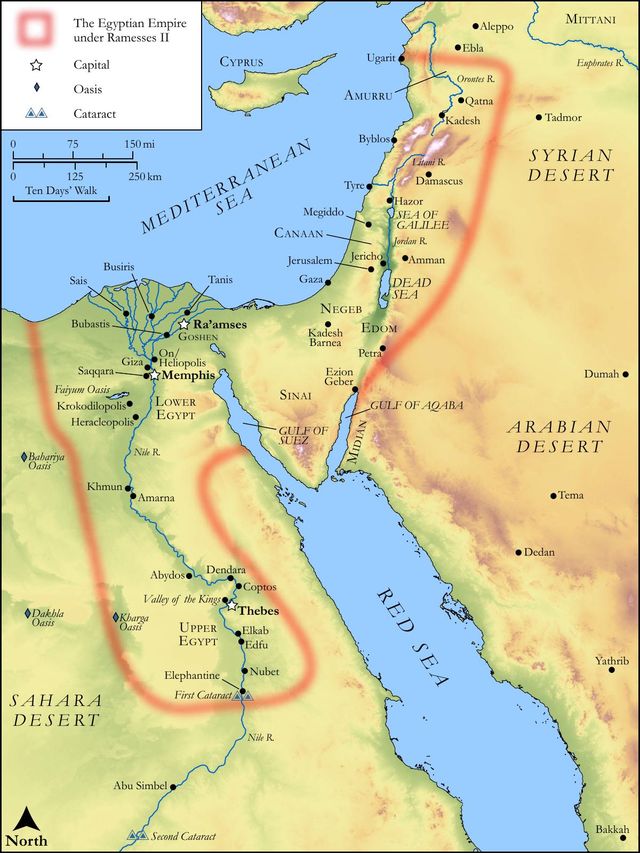
Study this verse
Public-domain commentary
Matthew Henry
From his Commentary on the Whole Bible. Henry comments on passages, not single verses — this entry covers Exodus 25:10–22. His two-level outline is real structure in the source text, so it is rendered as structure.
The first thing which is here ordered to be made is the ark with its appurtenances, the furniture of the most holy place, and the special token of God's presence, for which the tabernacle was erected to be the receptacle.
I.The ark itself was a chest, or coffer, in which the two tables of the law, written with the finger of God, were to be honourably deposited, and carefully kept. The dimensions of it are exactly ordered; if the Jewish cubit was, as some learned men compute, three inches longer than our half-yard (twenty-one inches in all), this chest or cabinet was about fifty-two inches long, thirty-one broad, and thirty-one deep. It was overlaid within and without with thin plates of gold. It had a crown, or cornice, of gold, round it, with rings and staves to carry it with; and in it he must put the testimony, Exo 25:10-16. The tables of the law are called the testimony because God did in them testify his will: his giving them that law was in token of his favour to them; and their acceptance of it was in token of their subjection and obedience to him. This law was a testimony to them, to direct them in their duty, and would be a testimony against them if they transgressed. The ark is called the ark of the testimony (Exo 30:6), and the tabernacle the tabernacle of the testimony (Num 10:11) or witness, Act 7:44. The gospel of Christ is also called a testimony or witness, Mat 24:14. It is observable,
1.That the tables of the law were carefully preserved in the ark for the purpose, to teach us to make much of the word of God, and to hide it in our hearts, in our innermost thoughts, as the ark was placed in the holy of holies. It intimates likewise the care which divine Providence ever did, and ever will, take to preserve the records of divine revelation in the church, so that even in the latter days there shall be seen in his temple the ark of his testament. See Rev 11:19.
2.That this ark was the chief token of God's presence, which teaches us that the first and great evidence and assurance of God's favour is the putting of his law in the heart. God dwells where that rules, Heb 8:10.
3.That provision was made for the carrying of this ark about with them in all their removals, which intimates to us that, wherever we go, we should take our religion along with us, always bearing about with us the love of the Lord Jesus, and his law.
II.The mercy-seat was the covering of the ark or chest, made of solid gold, exactly to fit the dimensions of the ark, Exo 25:17, Exo 25:21.
This propitiatory covering, as it might well be translated, was a type of Christ, the great propitiation, whose satisfaction fully answers the demands of the law, covers our transgressions, and comes between us and the curse we deserve. Thus he is the end of the law for righteousness.
III.The cherubim of gold were fixed to the mercy-seat, and of a piece with it, and spread their wings over it, Exo 25:18.
It is supposed that these cherubim were designed to represent the holy angels, who always attended the shechinah, or divine Majesty, particularly at the giving of the law; not by any effigies of an angel, but some emblem of the angelical nature, probably some one of those four faces spoken of, Eze 1:10. Whatever the faces were, they looked one towards another, and both downward towards the ark, while their wings were stretched out so as to touch one another. The apostle calls them cherubim of glory shadowing the mercy-seat, Heb 9:5. It denotes their attendance upon the Redeemer, to whom they were ministering spirits, their readiness to do his will, their special presence in the assemblies of saints (Psa 68:17; Co1 11:10), and their desire to look into the mysteries of the gospel which they diligently contemplate, Pe1 1:12. God is said to dwell, or sit, between the cherubim, on the mercy-seat (Psa 80:1), and thence he here promises, for the future, to meet with Moses, and to commune with him, Exo 25:22. There he would give law, and there he would give audience, as a prince on his throne; and thus he manifests himself willing to be reconciled to us, and keep up communion with us, in and by the mediation of Christ. In allusion to this mercy-seat, we are said to come boldly to the throne of grace (Heb 4:16); for we are not under the law, which is covered, but under grace, which is displayed; its wings are stretched out, and we are invited to come under the shadow of them, Rut 2:12.
Historical interpretation
Historical reception
1 surviving comment on this verse from the historical church.
What is symbolized by the ark but holy church? The orders are that it is to be provided with four rings of gold in the four corners—obviously because, being extended to the four parts of the world, it is declared to be equipped with the four books of the holy Gospels. And staves of setim wood are made and inserted into these rings for carrying, because strong and persevering teachers, like incorruptible timbers, are to be sought out, who, always adhering to the instructions of the sacred volumes, proclaim the unity of holy church, and, as it were, carry the ark, by their being let into the rings. Indeed, to carry the ark with staves is to bring holy church through preaching to the untutored minds of unbelievers. Furthermore, they are ordered to be overlaid with gold, that when the sound of their preaching goes forth to others, they may themselves shine in the splendor of their way of life.
Continue studying Exodus 25:12 across the web’s major study libraries — every link below opens this exact verse, chapter, or book on the destination site.
Read & Compare
 BibleGatewayThis verse in more than 200 translations and 70 languages.
 Bible.comThe YouVersion reader — hundreds of translations, reading plans, and highlights.
 ESV.orgCrossway's official English Standard Version reader.
 NET BibleThe NET translation with 60,000+ translators' notes on every rendering decision.
 STEP BibleTyndale House's free study tool — original text, vocabulary, and scholarly resources.
 BibliaLogos Bible Software's free web reader.
 USCCBThe New American Bible (Revised Edition) with the U.S. bishops' study notes.
Commentaries
 BibleHub CommentariesDozens of classic commentaries on this verse, gathered on one page.
 StudyLightMore than 100 commentary sets — the largest collection on the web.
 BibleRefPlain-English commentary on what this verse means, verse by verse.
 Enduring WordDavid Guzik's free commentary on this chapter, widely used by Bible teachers.
 Bible Study ToolsVerse commentary alongside Greek and Hebrew study aids.
Original Language & Research
- BibleHub InterlinearThe verse word by word — original language, transliteration, and English.
- BibleHub LexiconEvery word's original-language definition and Strong's entry.
 Blue Letter BibleDeep-study tools — Strong's numbers, concordance, and word studies.
 SefariaThe Hebrew text with Rashi and centuries of Jewish commentary.
Sermons, Hymns & Audio


TrulyRandomVerse is not affiliated with these sites and doesn’t control their content. They’re linked because they’re genuinely useful.
Summary
Exodus 25:12 meticulously details the placement and material of the four gold rings on the Ark of the Covenant. These rings, positioned at the Ark's corners—two on each longer side—were not merely ornamental but served a critical functional and theological purpose: to facilitate the insertion of carrying poles. This divine instruction underscores God's precise design for His sacred dwelling place, ensuring the Ark's reverent portability and symbolizing His dynamic, accompanying presence among His people throughout their wilderness journey.
Context
ShowHideLiterary Context
This verse is deeply embedded within a comprehensive blueprint for the Tabernacle and its sacred furnishings, spanning Exodus 25 through Exodus 31. God, having delivered Israel from Egypt and established His covenant at Sinai, now provides Moses with detailed instructions for a portable sanctuary where He will dwell among them. The Ark of the Covenant is the first and most significant item described, serving as the focal point of the entire Tabernacle and representing God's throne and the locus of His presence. Exodus 25:12 immediately follows the specifications for the Ark's dimensions and its overlaying with pure gold, as outlined in Exodus 25:10-11. The instruction for the rings directly anticipates the need for carrying poles, which are described in the subsequent verses (Exodus 25:13-15), highlighting the functional integration and divine intentionality behind each component. The meticulous detail in this verse, and indeed throughout the Tabernacle instructions, emphasizes God's absolute sovereignty and His desire for worship to be conducted precisely according to His revealed will.
Historical & Cultural Context
The divine directives for the Tabernacle and its components, including the Ark, were given to the Israelites shortly after their liberation from slavery in Egypt and while they were encamped at Mount Sinai. As a people embarking on a nomadic journey through the wilderness, the concept of a portable sanctuary was not merely convenient but essential for their identity and worship. Unlike the fixed temples of the surrounding nations, Israel's God would "tabernacle" or dwell among them in a movable structure, symbolizing His active presence and leadership throughout their travels. The Ark, as the preeminent symbol of God's presence, required a secure and reverent means of transport. The use of rings and poles for carrying sacred objects was a common practice among the nations, ensuring that holy items were not defiled by direct human touch. For Israel, this method of transport, specifically handled by the Levites as detailed in Numbers 4, reinforced the Ark's supreme holiness and the strict separation required when approaching the divine, distinguishing Yahweh from the more accessible deities of pagan nations. This portable dwelling underscored God's dynamic relationship with His people, moving with them rather than being confined to a static shrine.
Key Themes
ShowHideExodus 25:12 contributes significantly to several overarching themes within the book of Exodus and the broader Pentateuch. It highlights the theme of Divine Presence, emphasizing God's desire to dwell among His people, even in their wilderness wanderings. The meticulous instructions reinforce the theme of Divine Order and Holiness, demonstrating that God's presence is not to be approached casually but with strict adherence to His commands, reflecting His absolute purity and distinctness from humanity. The portability of the Ark, facilitated by these rings, speaks to the theme of God's Dynamic Guidance and Companionship, showing that He is a God who journeys with His covenant people, leading them through every stage of their pilgrimage. Furthermore, the use of precious materials like gold points to the Incomparable Value and Glory of God's Dwelling, a theme consistently emphasized in the Tabernacle's construction (Exodus 25:11). This verse, therefore, is not merely architectural detail but a profound theological statement about the nature of God and His relationship with Israel.
Exposition and Analysis
ShowHideKey Word Analysis
ShowHideThis primitive root signifies "to pour out," specifically implying the process of melting and molding metal. In this context, it refers to the skilled craftsmanship required to form the gold rings, indicating a deliberate and precise act of creation. The command to "cast" underscores that these rings were integral, purpose-built components, not merely attached afterthoughts, reflecting the intentionality of God's design.
Derived from a root meaning "to sink into," this term properly refers to a seal or signet, and by extension, any circular band or ring. Here, it denotes the functional attachments on the Ark, specifically designed to receive the carrying poles. The use of "rings" highlights their role as a secure and permanent fixture, ensuring the stability and reverent transport of the Ark. Their circular form suggests completeness and continuity, fitting for an object representing God's eternal covenant.
From an unused root meaning "to shimmer," this word refers to the precious metal, often associated with purity, value, and divinity. The consistent use of "pure gold" for the Ark and its rings signifies the incomparable worth, incorruptibility, and divine nature of God's presence and His covenant with Israel. Its shimmering quality metaphorically points to the radiant glory of God that the Ark represented.
While often translated "corners" in this context, the Hebrew word paʻam literally means "a stroke," and can denote "foot," "step," or "base." This suggests that the rings were not necessarily at the very top edge of the Ark but rather at its lower parts or "feet," making them suitable for the insertion of carrying poles that would lift the Ark off the ground. This placement ensures optimal leverage and stability for the bearers, further emphasizing the practical precision of God's instructions and the secure foundation of His dwelling place.
Verse Breakdown
ShowHide"And thou shalt cast four rings of gold for it"
This initial clause issues a direct divine command to Moses, initiating the creation of these essential components. The verb "cast" implies a meticulous process of molding or pouring, indicating the high level of craftsmanship and intentionality required. The specific number "four rings" immediately highlights the precise quantity needed for balanced and stable transport, while the material "of gold" reiterates the Ark's sacred nature and supreme value, setting it apart as a divine artifact.
"and put [them] in the four corners thereof"
This instruction dictates the precise placement of the rings. The "four corners" (or "feet," as implied by the Hebrew pa'am) ensures that the Ark would be carried symmetrically, distributing its weight evenly among the bearers. This meticulous detail prevents tilting or instability during movement, reinforcing the reverence, order, and divine engineering required in handling God's most sacred object.
"and two rings [shall be] in the one side of it, and two rings in the other side of it"
This final clause clarifies the distribution of the four rings, specifying that two rings are to be on each of the longer sides of the Ark. This arrangement confirms the design for carrying poles to pass through, allowing multiple individuals (specifically the designated Levites) to share the burden and maintain the Ark's horizontal orientation during movement. It reiterates the divine emphasis on balance, order, and functional precision, ensuring both the dignity and practicality of the Ark's transport.
Literary Devices
ShowHideExodus 25:12 employs several significant literary devices that enrich its meaning. The pervasive presence of Divine Instruction is paramount, as the entire passage is a direct, authoritative command from God to Moses, emphasizing God's absolute sovereignty and meticulous design for His dwelling. The precise measurements, material specifications, and placement details contribute to a sense of Blueprint or architectural precision, detailing every component with engineering-like accuracy and leaving no room for human improvisation. The consistent use of Symbolism is also evident: the gold signifies purity, divinity, and the inestimable value of God's presence, while the Ark itself is the ultimate symbol of God's dwelling among His people and the locus of His covenant. Furthermore, the portability facilitated by the rings and poles serves as a subtle Foreshadowing of God's dynamic and accompanying presence, which would later be fully realized in the person of Christ and the indwelling of the Holy Spirit, demonstrating that God is not confined to a static structure but actively journeys with His people.
Theological and Thematic Connections
ShowHideThe seemingly technical detail of the Ark's rings in Exodus 25:12 carries profound theological weight, underscoring fundamental truths about God's nature and His relationship with humanity. It speaks to God's immanence, His desire to dwell among and journey with His people, yet simultaneously affirms His transcendence and absolute holiness, which necessitates a reverent and prescribed approach. The meticulous design reflects God's divine order and precision, demonstrating that He is a God of purpose and intentionality in all His dealings, from the grandest plan for all creation to the smallest detail of His sanctuary. The portability of the Ark, facilitated by these rings, symbolizes God's dynamic presence, not confined to a fixed location but accompanying His covenant people through every wilderness and triumph. This foreshadows the New Covenant reality where God's presence is not limited to a physical structure but indwells believers through the Holy Spirit, making each one a temple of the living God.
Reflection and Application
ShowHideExodus 25:12, though a minute detail in a grand blueprint, offers rich ground for reflection and practical application in our lives today. It reminds us that God is a God of meticulous detail and intentional design. Just as He had a precise plan for the Ark's construction and movement, He has a perfect, often intricate, plan for our lives and for the advancement of His kingdom. This should inspire both profound trust in His sovereign hand, even when we don't understand every particular, and diligent obedience in seeking to align our lives with His revealed will. Furthermore, the portability of the Ark, enabled by these rings, speaks powerfully to the dynamic nature of God's presence. He is not a static deity confined to a building or a past event, but a living God who desires to journey with us through every circumstance, challenge, and triumph. This calls us to cultivate a constant awareness of His ever-present companionship, recognizing that He is with us in our homes, workplaces, and communities. Finally, the reverence and strict protocols surrounding the Ark's handling remind us of the holiness of God. While we now have direct access to Him through Christ, this access should never breed casualness but rather a profound sense of awe, respect, and gratitude for His sacredness and the privilege of His presence in our lives, His Word, and His Church.
Questions for Reflection
ShowHideFAQ
ShowHideWhy were rings specifically mentioned for the Ark but not for other Tabernacle furniture?
ShowHideThe Ark of the Covenant held a uniquely sacred status among all the Tabernacle furnishings. It was not merely an item of furniture but the very throne of God, representing His immediate presence and the covenant relationship with Israel. Its supreme holiness meant it could not be touched directly by human hands, nor could it be carried in a common manner. The rings, specifically designed to hold poles that would remain permanently in them (Exodus 25:15), ensured that the Ark was always handled with the utmost reverence and by the designated Levites, without direct contact. While other items like the Table of Showbread (Exodus 25:27) or the Altar of Incense (Exodus 30:4) also had rings for carrying, the Ark's instructions emphasize its preeminence and the absolute necessity of its specific transport mechanism due to its unparalleled sacredness as the dwelling place of God's glory within the Holy of Holies. The permanent nature of the poles in the Ark's rings further distinguished it, signifying that God's presence was always ready to move with His people.
What is the significance of the rings being made of gold?
ShowHideThe choice of gold for the Ark's rings is deeply significant, reflecting the material's pervasive symbolism throughout the Tabernacle's construction. Gold, particularly "pure gold," consistently represents divinity, purity, supreme value, and incorruptibility. By making the rings of gold, God underscored the Ark's sacredness and His own incomparable worth. This material choice elevates the functional aspect of carrying into a profound theological statement: even the means by which God's presence is transported must reflect His glory and holiness. It signifies that everything associated with God's dwelling, from the largest structure to the smallest ring, is set apart and consecrated to His divine majesty. The use of gold also suggests the eternal and unchanging nature of God's covenant and His promises.
Christ-Centered Fulfillment
ShowHideThe detailed instructions for the Ark's rings and its portability in Exodus 25:12 find their ultimate fulfillment in Jesus Christ. The Ark, with its rings, symbolized God's desire to dwell among His people, accompanying them on their journey through the wilderness. This foreshadows the Incarnation, where God did not merely dwell among us but became one of us in the person of Jesus. John 1:14 profoundly declares that "the Word became flesh and tabernacled among us," signifying that Jesus is the ultimate, living embodiment of God's portable presence. No longer confined to a physical box or a tent, God's glory was seen in the face of Christ (2 Corinthians 4:6). Furthermore, the Ark's journeying with Israel prefigures Christ's earthly ministry, as He walked among humanity, bringing God's presence and kingdom to every town and village, demonstrating that the King and His kingdom are not static but dynamic and active. Through His death and resurrection, Jesus opened the way for God's presence to be even more intimately portable: the Holy Spirit now indwells believers, making each one a temple of God (1 Corinthians 6:19), fulfilling the promise that God would dwell within His people. The reverence required for the Ark is met in Christ's perfect sacrifice, which grants us bold access to God's throne of grace (Hebrews 4:16), fulfilling the Ark's purpose as the meeting place between God and humanity, now through the ultimate High Priest (Hebrews 9:11-12) who entered the true Holy of Holies once for all.