


Exodus 25:27
Bible text: King James Version (1769 Blayney text) · Public domain
Bible text: Berean Standard Bible · Public domain
Bible text: American Standard Version (1901) · Public domain
Bible text: World English Bible, Messianic edition · Public domain
Bible text: Geneva Bible (1599) · Public domain
Bible text: Young's Literal Translation · Public domain
- לְעֻמַּתle·'u·Mat<to> close toH5980Prep-l ¦ N-fscNoun Singular Feminine Constructלְ<to>עֻמַּתclose to
- הַמִּסְגֶּרֶתha·mis·Ge·retthe rimH4526Art ¦ N-fsNoun Singular Feminine Absoluteהַtheמִּסְגֶּרֶתrim
- תִּהְיֶיןָtih·Yei·nathey will becomeH1961V-Qal-Imperf-3fpVerb Qal Imperfect 3rd Plural Feminine
- הַטַּבָּעֹתha·ta·ba·'Otthe ringsH2885Art ¦ N-fpNoun Plural Feminine Absoluteהַtheטַּבָּעֹתrings
- לְבָתִּיםle·va·Tim<into> holdersH1004Prep-l ¦ N-mpNoun Plural Masculine Absoluteלְ<into>בָתִּיםholders
- לְבַדִּיםle·va·Dimfor polesH905Prep-l ¦ N-mpNoun Plural Masculine Absoluteלְforבַדִּיםpoles
- לָשֵׂאתla·Setto carryH5375Prep-l ¦ V-Qal-InfVerb Qal Infinitive Constructלָtoשֵׂאתcarry
- אֶת'et<obj.>H853DirObjMParticle Object Indicator
- הַשֻּׁלְחָןha·shul·Chanthe tableH7979Art ¦ N-msNoun Singular Masculine Absoluteהַtheשֻּׁלְחָןtable
English is a literal word-by-word gloss of the Hebrew, not the KJV's wording. Why?
This is the original text the KJV's translators worked from — each Hebrew word with its own literal English meaning in this verse, prepared by scholars at Tyndale House, Cambridge. The KJV translates whole sentences, not word by word, so its wording differs: one Hebrew word can become several English words, and the KJV may choose “the LORD” where the gloss reads “Yahweh”. Both are faithful — they answer different questions. For the KJV's own rendering, switch to the KJV text.
Details
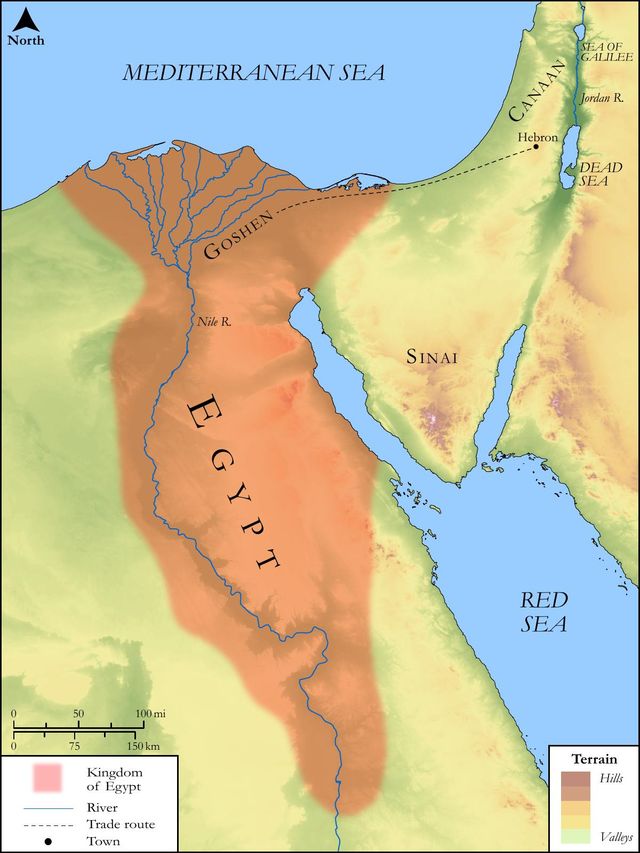
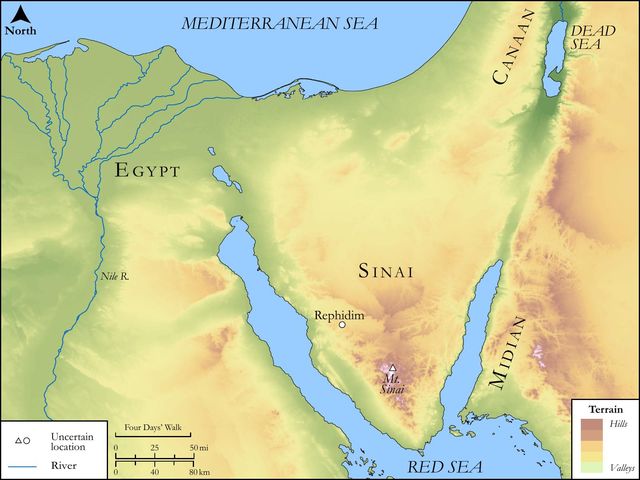
See on the biblical-era maps

Study this verse
Public-domain commentary
Matthew Henry
From his Commentary on the Whole Bible. Henry comments on passages, not single verses — this entry covers Exodus 25:23–30.
Here is, 1. A table ordered to be made of wood overlaid with gold, which was to stand, not in the holy of holies (nothing was in that but the ark with its appurtenances), but in the outer part of the tabernacle, called the sanctuary, or holy place, Heb 9:2, Heb 9:23, etc. There must also be the usual furniture of the sideboard, dishes and spoons, etc., and all of gold, Exo 25:29. 2. This table was to be always spread, and furnished with the show-bread (Exo 25:30), or bread of faces, twelve loaves, one for each tribe, set in two rows, six in a row; see the law concerning them, Lev 24:5, etc. The tabernacle being God's house, in which he was pleased to say that he would dwell among them, he would show that he kept a good house. In the royal palace it was fit that there should be a royal table. Some make the twelve loaves to represent the twelve tribes, set before God as his people and the corn of his floor, as they are called, Isa 21:10. As the ark signified God's being present with them, so the twelve loaves signified their being presented to God. This bread was designed to be, (1.) A thankful acknowledgement of God's goodness to them, in giving them their daily bread, manna in the wilderness, where he prepared a table for them, and, in Canaan, the corn of the land. Hereby they owned their dependence upon Providence, not only for the corn in the field, which they gave thanks for in offering the sheaf of first-fruits, but for the bread in their houses, that, when it was brought home, God did not blow upon it, Hag 1:9. Christ has taught us to pray every day for the bread of the day. (2.) A token of their communion with God. This bread on God's table being made of the same corn with the bread on their own tables, God and Israel did, as it were, eat together, as a pledge of friendship and fellowship; he supped with them, and they with him. (3.) A type of the spiritual provision which is made in the church, by the gospel of Christ, for all that are made priests to our God. In our Father's house there is bread enough and to spare, a loaf for every tribe. All that attend in God's house shall be abundantly satisfied with the goodness of it, Psa 36:8. Divine consolations are the continual feast of holy souls, notwithstanding there are those to whom the table of the Lord, and the meat thereof (because it is plain bread), are contemptible, Mal 1:12. Christ has a table in his kingdom, at which all his saints shall for every eat and drink with him, Luk 22:30.
Continue studying Exodus 25:27 across the web’s major study libraries — every link below opens this exact verse, chapter, or book on the destination site.
Read & Compare
 BibleGatewayThis verse in more than 200 translations and 70 languages.
 Bible.comThe YouVersion reader — hundreds of translations, reading plans, and highlights.
 ESV.orgCrossway's official English Standard Version reader.
 NET BibleThe NET translation with 60,000+ translators' notes on every rendering decision.
 STEP BibleTyndale House's free study tool — original text, vocabulary, and scholarly resources.
 BibliaLogos Bible Software's free web reader.
 USCCBThe New American Bible (Revised Edition) with the U.S. bishops' study notes.
Commentaries
 BibleHub CommentariesDozens of classic commentaries on this verse, gathered on one page.
 StudyLightMore than 100 commentary sets — the largest collection on the web.
 BibleRefPlain-English commentary on what this verse means, verse by verse.
 Enduring WordDavid Guzik's free commentary on this chapter, widely used by Bible teachers.
 Bible Study ToolsVerse commentary alongside Greek and Hebrew study aids.
Original Language & Research
- BibleHub InterlinearThe verse word by word — original language, transliteration, and English.
- BibleHub LexiconEvery word's original-language definition and Strong's entry.
 Blue Letter BibleDeep-study tools — Strong's numbers, concordance, and word studies.
 SefariaThe Hebrew text with Rashi and centuries of Jewish commentary.
Sermons, Hymns & Audio


TrulyRandomVerse is not affiliated with these sites and doesn’t control their content. They’re linked because they’re genuinely useful.
Summary
Exodus 25:27 provides precise divine instructions for the construction of the Table of Showbread, specifically detailing the placement of rings "over against the border" of the table. These rings were meticulously designed to receive the staves, or carrying poles, which would enable the priests to transport the sacred table during Israel's wilderness journeys. This intricate detail underscores God's profound desire for order and reverence in worship, the essential portability of His presence among His people, and the practical provisions necessary for the Tabernacle's function as a dynamic, mobile sanctuary.
Context
ShowHideLiterary Context
This verse is intricately woven into a larger, highly detailed section of divine blueprints for the Tabernacle, commencing in Exodus 25:1. Following the foundational command, "And let them make me a sanctuary; that I may dwell among them" (Exodus 25:8), God systematically outlines the construction of each sacred component. Prior to the Table of Showbread, the instructions for the Ark of the Covenant, the most holy furnishing, were given in Exodus 25:10-22. The immediate preceding verses, Exodus 25:23-26, describe the Table's dimensions, its composition of acacia wood overlaid with pure gold, and its ornamental features, including a golden crown. Verse 27, therefore, marks a crucial transition from the table's static design to its vital functional aspect of mobility, which is further elaborated upon in Exodus 25:28. This sequence demonstrates a logical progression from the overall structure and static features to the specific, practical means for its transport, highlighting the comprehensive nature of God's design.
Historical & Cultural Context
The Israelites, newly liberated from Egyptian bondage, were a nomadic people embarking on a prolonged journey through the wilderness, as vividly recounted from Exodus 12 onwards. Their entire existence was characterized by movement, guided directly by the pillar of cloud by day and the pillar of fire by night (Exodus 13:21-22). Consequently, the Tabernacle, serving as God's tangible dwelling place among them, could not be a stationary temple but had to be entirely portable. The design of rings and staves was not unique to the Table of Showbread; similar provisions were made for the Ark of the Covenant (Exodus 25:12-15) and the Altar of Burnt Offering (Exodus 27:6-7). This consistent design element across the sacred furnishings underscored the practical necessity of a mobile sanctuary for a migrating nation, ensuring that God's presence and the prescribed means of worship could always accompany His people, regardless of their location in the vast desert.
Key Themes
ShowHideExodus 25:27 contributes significantly to several key themes within the book of Exodus and the broader Pentateuch. Firstly, it emphasizes Divine Order and Meticulousness, revealing God as a deity who pays attention to the smallest details, demanding precision in the construction of His dwelling place and the performance of worship. Secondly, it highlights the theme of God's Portable Presence, demonstrating that He is not confined to a fixed location but actively journeys with His covenant people, adapting His dwelling to their nomadic lifestyle. This portability ensures His constant availability and accessibility. Thirdly, the verse underscores Reverence and Sanctity, as the rings and staves provided a means for the holy objects to be transported without direct human contact, preserving their ritual purity and emphasizing the sacredness of God's presence and the elements of worship. Finally, it speaks to Divine Provision and Sustenance, as the Table of Showbread, which held the bread of presence, was designed to be carried, symbolizing God's ongoing provision for His people wherever they might go, a theme central to the wilderness narrative (e.g., Exodus 16).
Exposition and Analysis
ShowHideKey Word Analysis
ShowHideDerived from טָבַע, meaning "to sink." Properly, a seal (as sunk into the wax), i.e., a signet (for sealing); hence (generally) a ring of any kind. In this context, these were not merely decorative but highly functional components. Their purpose was to serve as secure points for the insertion of the carrying poles, essential for the reverent transport of the sacred table. Their precise placement ensured balance and stability, reflecting God's meticulous design for handling holy objects.
Derived from בָּדַד, meaning "separation." Properly, separation; by implication, a part of the body, branch of a tree, bar for carrying. In the Tabernacle, these "bars" were poles, specified elsewhere as made of acacia wood overlaid with gold (Exodus 25:28). These staves were the designated means by which the priests, specifically the Kohathites, were to carry the holy furnishings. Their use ensured that the sacred objects, particularly the Table of Showbread with its holy bread, were never directly handled by unauthorized persons, thereby maintaining their sanctity and preventing ritual defilement during transit.
A primitive root meaning "to lift, in a great variety of applications, literal and figurative, absolute and relative." This verb encompasses actions like carrying, lifting up, supporting, and enduring. Here, it explicitly defines the purpose of the rings and staves: to enable the physical carrying of the Table of Showbread. This highlights the practical necessity of the design for a mobile sanctuary, ensuring that God's presence and the means of worship could accompany Israel throughout their wilderness wanderings, signifying a God who actively journeys with His people and is capable of being "borne" by them in their movements.
Verse Breakdown
ShowHide"Over against the border"
This phrase precisely designates the location for the rings. The "border" (Hebrew: miçgereth, H4526, meaning "something enclosing, a margin") refers to the raised molding, rim, or "crown" that encircled the top of the table, as described in Exodus 25:24-25. Placing the rings "over against" or "alongside" this border indicates they were to be attached directly to or very near this structural element, ensuring they were securely integrated into the table's design and provided a stable, robust point for the staves.
"shall the rings be"
This declarative statement conveys the divine imperative for these rings. Their inclusion was not optional but a mandatory, non-negotiable component of the Table of Showbread's construction. This emphasizes God's meticulous oversight in the design of His dwelling place and the sacred furnishings, highlighting that every detail served a specific, divinely ordained purpose.
"for places of the staves"
This clause explicitly states the functional purpose of the rings: they were designed as receptacles, holders, or sockets for the staves. This design ensured that the staves could be easily inserted and, presumably, removed when the Tabernacle was assembled or disassembled, facilitating the efficient, reverent, and secure transport of the sacred furniture during Israel's encampments and journeys.
"to bear the table"
This final phrase clarifies the ultimate function of the rings and staves: to enable the safe, secure, and proper carrying of the Table of Showbread. This underscores the Tabernacle's inherently mobile nature and God's intention that His presence and the means of worship would consistently accompany Israel throughout their wilderness wanderings, signifying a God who journeys intimately with His covenant people, providing for and sustaining them at every step.
Literary Devices
ShowHideThe meticulous instructions in Exodus 25:27, characteristic of the entire Tabernacle blueprint, primarily employ Precision and Detailed Specification. Every measurement, material, and placement is exact, leaving no room for human improvisation or error. This literary technique reflects God's perfect order, His absolute authority, and His demand for exactness and holiness in worship. There is also a profound element of Symbolism embedded in the portability of the Table. The rings and staves, by facilitating the movement of the Table of Showbread (which held the bread of presence), symbolize God's dynamic, unconfined, and ever-present nature. He is not limited to a fixed location but actively accompanies His people on their journey, providing constant sustenance. This portability subtly foreshadows the future, more accessible, and universal nature of God's presence in Christ. Furthermore, the Repetition of the rings-and-staves design across multiple Tabernacle furnishings (e.g., Ark, Altar, Table) serves as a reinforcing literary device, emphasizing the overarching theme of portability and the consistent divine plan for a mobile sanctuary that could traverse the wilderness with Israel.
Theological and Thematic Connections
ShowHideExodus 25:27, though seemingly a minor architectural detail, is rich with profound theological significance. It speaks volumes about God's meticulous nature, His unwavering concern for order and reverence in worship, and His deep desire to be intimately present with His people. The portability of the Table of Showbread, made possible by these divinely designed rings and staves, profoundly underscores the dynamic and unconfined nature of God's presence. He is not bound by human structures or geographical locations but actively journeys with His covenant people through all circumstances, providing for them and sustaining them. This divine provision, symbolized by the showbread itself, is always accessible because the table, representing God's sustaining presence, can be moved wherever the people go, demonstrating His faithfulness and immanence.
Reflection and Application
ShowHideThe detailed instructions for the rings and staves on the Table of Showbread serve as a powerful reminder that God is a God of order, purpose, and intentionality, even in what might seem to be the smallest details. Just as He meticulously designed the means for His presence to accompany Israel through their wilderness journey, He actively guides, equips, and empowers us for our spiritual journey today. Our faith is not intended to be static, confined to specific places of worship or particular times of devotion, but rather to be portable, dynamic, and integrated into every sphere of our lives. We are called to be bearers of God's truth and presence, equipped by Him to serve and to share the "bread of life" (the Gospel message) wherever we go. This requires intentional preparation, a deep reverence for sacred things, and a willingness to be moved by God's Spirit, allowing Him to direct our paths. We must ensure that our "equipment" – our spiritual gifts, our knowledge of His Word, and our Christ-like character – is properly aligned with God's design, so that we can effectively bear His presence and truth to a world desperately in need.
Questions for Reflection
ShowHideFAQ
ShowHideWhy were the rings and staves so important for the Tabernacle furnishings?
ShowHideThe rings and staves were critically important because they ensured the essential portability of the Tabernacle and its sacred furnishings. As the Israelites were a nomadic people journeying through the wilderness, God's dwelling place among them needed to be mobile. The staves, inserted through the rings, allowed the priests to carry these holy objects (such as the Table of Showbread, the Ark of the Covenant, and the Altar of Burnt Offering) without directly touching them, thus maintaining their sanctity and fulfilling the divine command for reverent handling. This design facilitated the systematic disassembly, transport, and reassembly of the Tabernacle wherever the Israelites encamped, ensuring God's presence always accompanied them. This consistent design is evident in instructions for the Ark in Exodus 25:12-15 and the Altar in Exodus 27:6-7.
What does the "border" mentioned in Exodus 25:27 refer to?
ShowHideThe "border" (Hebrew: miçgereth) refers to a decorative and structural molding or "crown" that ran around the top edge of the Table of Showbread. Exodus 25:24-25 describes this as a "crown of gold round about." The rings were to be placed "over against" or "alongside" this border, meaning they were integrated into or attached directly to this structural element. This precise placement ensured the rings were securely affixed and provided stable points for the staves, maintaining the balance and integrity of the table during transport, especially given the precious nature of the showbread it held.
Christ-Centered Fulfillment
ShowHideExodus 25:27, with its emphasis on the portability of the Table of Showbread, beautifully foreshadows the ultimate and infinitely more profound portability of God's presence in the person of Jesus Christ. The Tabernacle, with its mobile furnishings, served as a temporary dwelling for God among His people, a tangible shadow pointing to the greater spiritual reality to come. Jesus, as "Emmanuel," God with us (Matthew 1:23), is the supreme fulfillment of God's desire to dwell among His people, not confined to a building or a fixed geographical location, but present in human flesh. He is the true "Bread of Life" (John 6:35), who spiritually sustains us and whose presence is not limited by geography, physical structures, or ritualistic constraints. Just as the Table of Showbread was carried by staves, Jesus, through His incarnation, "tabernacled" among us (John 1:14), making God's presence intimately accessible to all who believe, wherever they are. Furthermore, through the indwelling Holy Spirit, believers themselves become the new temple of God (1 Corinthians 6:19), bearing Christ's presence and the "bread of life" (the Gospel message) into the world. This fulfills the portable nature of God's dwelling in a new and profound way, transforming the Church into a mobile sanctuary, empowered by the Spirit to carry the living Christ to the ends of the earth (Acts 1:8).