


Exodus 10:8
Bible text: King James Version (1769 Blayney text) · Public domain
Bible text: Berean Standard Bible · Public domain
Bible text: American Standard Version (1901) · Public domain
Bible text: World English Bible, Messianic edition · Public domain
Bible text: Geneva Bible (1599) · Public domain
Bible text: Young's Literal Translation · Public domain
- וַיּוּשַׁבvai·yu·Shavand he was brought backH7725Conj-w ¦ V-Hophal-ConsecImperf-3msVerb Hophal Consecutive Imperfect 3rd Singular Masculineוַandיּוּשַׁבhe was brought back
- אֶת'et<obj.>H853DirObjMParticle Object Indicator
- מֹשֶׁהmo·ShehMosesH4872N-proper-mNoun Proper Masculine
- וְאֶתve·'Etand <obj.>H853Conj-w ¦ DirObjMParticle Object Indicatorוְandאֶת<obj.>
- אַהֲרֹן'a·ha·RonAaronH175N-proper-mNoun Proper Masculine
- אֶל'eltoH413PrepPreposition
- פַּרְעֹהpar·'OhPharaohH6547N-msNoun Title Singular Masculine Absolute
- וַיֹּאמֶרvai·Yo·merand he saidH559Conj-w ¦ V-Qal-ConsecImperf-3msVerb Qal Consecutive Imperfect 3rd Singular Masculineוַandיֹּאמֶרhe said
- אֲלֵהֶם'a·le·Hemto themH413Prep ¦ 3mpPreposition Definiteאֲלֵtoהֶםthem
- לְכוּle·KhugoH1980V-Qal-Imp-2mpVerb Qal Imperative 2nd Plural Masculine
- עִבְדוּ'iv·DuserveH5647V-Qal-Imp-2mpVerb Qal Imperative 2nd Plural Masculine
- אֶת'et<obj.>H853DirObjMParticle Object Indicator
- יְהוָהYah·wehYahwehH3068N-properNoun Proper Title
- אֱלֹהֵיכֶם'e·lo·hei·Khemyour GodH430N-mpc ¦ 2mpNoun Plural Masculine ConstructאֱלֹהֵיGodכֶםyour
- מִיmiwho?H4310InterrogPronoun Interrogative
- וָמִיva·Miand who?H4310Conj-w ¦ InterrogPronoun Interrogativeוָandמִיwho?
- הַהֹלְכִיםha·ho·le·Khim[are] the [ones] goingH1980Art ¦ V-Qal-Prtcpl-mpVerb Qal Participle Plural Masculine Absoluteהַ[are] theהֹלְכִים[ones] going
English is a literal word-by-word gloss of the Hebrew, not the KJV's wording. Why?
This is the original text the KJV's translators worked from — each Hebrew word with its own literal English meaning in this verse, prepared by scholars at Tyndale House, Cambridge. The KJV translates whole sentences, not word by word, so its wording differs: one Hebrew word can become several English words, and the KJV may choose “the LORD” where the gloss reads “Yahweh”. Both are faithful — they answer different questions. For the KJV's own rendering, switch to the KJV text.
Details
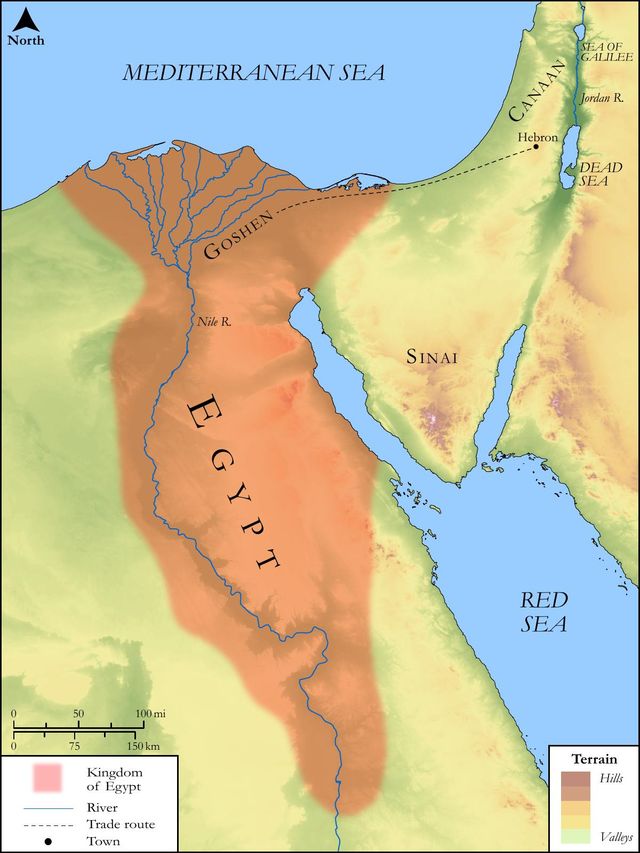
See on the biblical-era maps

Study this verse
Public-domain commentary
Matthew Henry
From his Commentary on the Whole Bible. Henry comments on passages, not single verses — this entry covers Exodus 10:1–11.
Here, I. Moses is instructed. We may well suppose that he, for his part, was much astonished both at Pharaoh's obstinacy and at God's severity, and could not but be compassionately concerned for the desolations of Egypt, and at a loss to conceive what this contest would come to at last. Now here God tells him what he designed, not only Israel's release, but the magnifying of his own name: That thou mayest tell in thy writings, which shall continue to the world's end, what I have wrought in Egypt, Exo 10:1, Exo 10:2. The ten plagues of Egypt must be inflicted, that they may be recorded for the generations to come as undeniable proofs, 1. Of God's overruling power in the kingdom of nature, his dominion over all the creatures, and his authority to use them either as servants to his justice or sufferers by it, according to the counsel of his will. 2. Of God's victorious power over the kingdom of Satan, to restrain the malice and chastise the insolence of his and his church's enemies. These plagues are standing monuments of the greatness of God, the happiness of the church, and the sinfulness of sin, and standing monitors to the children of men in all ages not to provoke the Lord to jealousy nor to strive with their Maker. The benefit of these instructions to the world sufficiently balances the expense.
II.Pharaoh is reproved (Exo 10:3):
Thus saith the Lord God of the poor, despised, persecuted, Hebrews, How long wilt thou refuse to humble thyself before me? Note, It is justly expected from the greatest of men that they humble themselves before the great God, and it is at their peril if they refuse to do it. This has more than once been God's quarrel with princes. Belshazzar did not humble his heart, Dan 5:22. Zedekiah humbled not himself before Jeremiah, Ch2 36:12. Those that will not humble themselves God will humble. Pharaoh had sometimes pretended to humble himself, but no account was made of it, because he was neither sincere nor constant in it.
III.The plague of locusts is threatened, Exo 10:4-6.
The hail had broken down the fruits of the earth, but these locusts should come and devour them: and not only so, but they should fill their houses, whereas the former inroads of these insects had been confined to their lands. This should be much worse than all the calamities of that king which had ever been known. Moses, when he had delivered his message, not expecting any better answer than he had formerly, turned himself and went out from Pharaoh, Exo 10:6. Thus Christ appointed his disciples to depart from those who would not receive them, and to shake off the dust of their feet for a testimony against them; and ruin is not far off from those who are thus justly abandoned by the Lord's messengers, Sa1 15:27, etc.
IV.Pharaoh's attendants, his ministers of state, or privy-counsellors, interpose, to persuade him to come to some terms with Moses, Exo 10:7.
They, as in duty bound, represent to him the deplorable condition of the kingdom (Egypt is destroyed), and advise him by all means to release his prisoners (Let the men go); for Moses, they found, would be a snare to them till it was done, and it were better to consent at first than to be compelled at last. The Israelites had become a burdensome stone to the Egyptians, and now, at length, the princes of Egypt were willing to be rid of them, Zac 12:3. Note, It is a thing to be regretted (and prevented, if possible) that a whole nation should be ruined for the pride and obstinacy of its princes, Salus populi suprema lex - To consult the welfare of the people is the first of laws.
V.A new treaty is, hereupon, set on foot between Pharaoh and Moses, in which Pharaoh consents for the Israelites to go into the wilderness to do sacrifice; but the matter in dispute was who should go, Exo 10:8. 1. Moses insists that they should take their whole families, and all their effects, along with them, Exo 10:9. note, Those that serve God must serve him with all they have. Moses pleads, "We must hold a feast, therefore we must have our families to feast with, and our flocks and herds to feast upon, to the honour of God." 2. Pharaoh will by no means grant this: he will allow the men to go, pretending that this was all they desired, though this matter was never yet mentioned in any of the former treaties; but, for the little ones, he resolves to keep them as hostages, to oblige them to return, Exo 10:10, Exo 10:11. In a great passion he curses them, and threatens that, if they offer to remove their little ones, they will do it at their peril. Note, Satan does all he can to hinder those that serve God themselves from bringing their children in to serve him. He is a sworn enemy to early piety, knowing how destructive it is to the interests of his kingdom; whatever would hinder us from engaging our children to the utmost in God's service, we have reason to suspect the hand of Satan in it. 3. The treaty, hereupon, breaks off abruptly; those that before went out from Pharaoh's presence (Exo 10:6) were now driven out. Those will quickly hear their doom that cannot bear to hear their duty. See Ch2 25:16. Quos Deus destruet eos dementat - Whom God intends to destroy he delivers up to infatuation. Never was man so infatuated to his own ruin as Pharaoh was.
Continue studying Exodus 10:8 across the web’s major study libraries — every link below opens this exact verse, chapter, or book on the destination site.
Read & Compare
 BibleGatewayThis verse in more than 200 translations and 70 languages.
 Bible.comThe YouVersion reader — hundreds of translations, reading plans, and highlights.
 ESV.orgCrossway's official English Standard Version reader.
 NET BibleThe NET translation with 60,000+ translators' notes on every rendering decision.
 STEP BibleTyndale House's free study tool — original text, vocabulary, and scholarly resources.
 BibliaLogos Bible Software's free web reader.
 USCCBThe New American Bible (Revised Edition) with the U.S. bishops' study notes.
Commentaries
 BibleHub CommentariesDozens of classic commentaries on this verse, gathered on one page.
 StudyLightMore than 100 commentary sets — the largest collection on the web.
 BibleRefPlain-English commentary on what this verse means, verse by verse.
 Enduring WordDavid Guzik's free commentary on this chapter, widely used by Bible teachers.
 Bible Study ToolsVerse commentary alongside Greek and Hebrew study aids.
Original Language & Research
- BibleHub InterlinearThe verse word by word — original language, transliteration, and English.
- BibleHub LexiconEvery word's original-language definition and Strong's entry.
 Blue Letter BibleDeep-study tools — Strong's numbers, concordance, and word studies.
 SefariaThe Hebrew text with Rashi and centuries of Jewish commentary.
Sermons, Hymns & Audio


TrulyRandomVerse is not affiliated with these sites and doesn’t control their content. They’re linked because they’re genuinely useful.
Summary
Exodus 10:8 captures Pharaoh's desperate, yet calculated, attempt to negotiate with God by offering a partial concession for Israel's worship, revealing his persistent resistance to God's total demand for liberation. Despite the escalating plagues, Pharaoh's question, "who are they that shall go?", exposes his desire to retain control over a portion of the Israelite community, particularly their future generations, highlighting the fundamental conflict between human will and divine sovereignty and the futility of negotiating with an omnipotent God.
Context
ShowHideLiterary Context
This verse is situated at a critical juncture in the plague narrative, immediately following the devastating seventh plague of hail and preceding the eighth plague of locusts. Moses and Aaron had just been forcefully driven from Pharaoh's presence after the hail plague's cessation, as recorded in Exodus 10:6. However, the immense suffering inflicted by the plagues has pushed Pharaoh's own servants to their breaking point, leading them to urge their king to release Israel, lest Egypt be utterly destroyed, as detailed in Exodus 10:7. Pharaoh's summoning of Moses and Aaron back to his court, as described in our current verse, signals a shift from outright refusal to a reluctant, yet still limited, offer of concession. This sets the stage for Moses's unwavering counter-demand for total liberation in Exodus 10:9 and the subsequent plague.
Historical & Cultural Context
In ancient Egypt, the pharaoh was not merely a king but was considered a divine being, the embodiment of order and justice (Ma'at), and the ultimate authority on earth. To challenge the pharaoh's will was to challenge the divine order itself. The Israelites represented a significant and essential labor force, crucial for Egypt's economy and monumental building projects. Pharaoh's deep-seated reluctance to release them stemmed not only from economic self-interest but also from a profound ideological and theological clash: the God of Israel was directly challenging the authority and divinity of Pharaoh and the entire Egyptian pantheon. Pharaoh's repeated attempts at negotiation, offering partial freedom or worship within Egypt, as seen in Exodus 8:25 and Exodus 8:28, were typical strategies of a powerful ruler attempting to maintain control, save face, and avoid complete capitulation, rather than genuine submission to a superior deity.
Key Themes
ShowHideThis verse powerfully contributes to several major theological and narrative themes within the book of Exodus. It highlights the escalating conflict between divine sovereignty and human will, as Pharaoh continually resists God's absolute demand for the complete liberation of His people. It underscores the theme of God's unwavering faithfulness to His covenant promises to Abraham, Isaac, and Jacob, demonstrating His power to deliver His people from bondage. Furthermore, it emphasizes the nature of true worship and service to God, which requires total dedication and cannot be compartmentalized or limited by human terms. Pharaoh's attempts to control the scope of Israel's departure foreshadow the ongoing challenge for God's people to render Him undivided loyalty, a theme that resonates throughout the Pentateuch, particularly in calls to obedience found in books like Deuteronomy.
Exposition and Analysis
ShowHideKey Word Analysis
ShowHideThis verb (H5647) is central to the conflict. It means "to work," "to labor," "to be a slave," or "to serve," especially God. Pharaoh's use of "serve the LORD your God" is laden with irony. From his perspective, he understands ʻâbad in the context of forced labor, and he is now grudgingly allowing them to "labor" for their own God. However, for God and Israel, ʻâbad implies worship, devotion, and covenantal obedience—a complete dedication of life, not merely a ritual act. Pharaoh's offer to let them "serve" is an attempt to define the terms of their "service," limiting it to a religious ceremony while retaining their economic utility and control over their lives.
This is the sacred, covenantal name of God (H3068), often translated as "Jehovah" or "the LORD" (in all caps) in English Bibles. It signifies "the self-Existent One" or "the Eternal One." Pharaoh's reluctant acknowledgment of "the LORD your God" is a significant shift from his earlier defiance ("Who is the LORD, that I should obey his voice?" Exodus 5:2). While he still attempts to control the terms of worship, he is forced to recognize the existence and power of Israel's God, whose identity is inextricably linked to His covenant faithfulness and power demonstrated through the plagues.
This primitive root (H1980) means "to walk" or "to go" in a wide variety of applications, literally and figuratively. In this context, it refers to the act of departure. Pharaoh's question, "who are they that shall go?", focuses on limiting the scope of this "going." While he grants permission for some to "go" (using yâlak, H3212, in the command "Go, serve..."), his subsequent question about "who are they that shall go?" (using hâlak in the participle form) reveals his intent to restrict the number and demographics of those departing. This highlights his desire to control the extent of their freedom, preventing a full exodus.
Verse Breakdown
ShowHide"And Moses and Aaron were brought again unto Pharaoh:"
This opening phrase indicates a forced summons, not a voluntary return of Moses and Aaron. It signals Pharaoh's growing desperation and the mounting pressure from his own court and the suffering of his people. The dynamic of power is ostensibly still with Pharaoh, but his actions betray his increasing vulnerability and the effectiveness of God's judgments.
"and he said unto them, Go, serve the LORD your God:"
This represents Pharaoh's "concession." He uses the language of permission ("Go") and, for the first time, explicitly acknowledges the Israelites' God ("your God"). This is a significant step for a pharaoh who previously claimed ultimate divine authority and dismissed the LORD. However, this permission is immediately qualified, demonstrating that his "concession" is not born of true repentance but strategic calculation.
"[but] who [are] they that shall go?"
This is the pivotal clause of the verse. The KJV's bracketed "but" accurately captures the adversarial and conditional nature of the question. Pharaoh is not genuinely inquiring; he is setting a strict condition, attempting to dictate the terms of worship and freedom. His aim is to allow only a select group (likely the adult men) to leave for a temporary religious observance, thereby keeping the women, children, and livestock as a guarantee of their return and continued servitude. This reveals his deep-seated resistance to a full and unconditional release, highlighting his desire to maintain control over Israel's future and their labor.
Literary Devices
ShowHideThe passage employs striking irony: Pharaoh, who has enslaved Israel and defiantly resisted their God, now "permits" them to "serve" their God, yet on his own restrictive terms. This highlights the paradox of a powerful ruler attempting to control the worship of the Almighty. There is also a strong sense of negotiation, framed as a power struggle, where Pharaoh continually tries to bargain with God's absolute demand for total liberation. This ongoing back-and-forth illustrates Pharaoh's hardening heart and the ultimate futility of human resistance against divine will. The rhetorical question, "who are they that shall go?", serves as a form of interrogation, designed not for information but to assert control and limit the scope of God's command.
THEOLOGICAL AND THEMATIC CONNECTIONS
ShowHideThis verse powerfully illustrates God's demand for total devotion and the futility of partial obedience. Pharaoh's attempt to compartmentalize Israel's service—allowing a religious act while retaining economic control and human collateral—is a direct affront to the LORD's absolute sovereignty. God desires the whole community, men, women, children, and all their possessions, to be dedicated to His worship and service. This prefigures the covenantal call for Israel's complete obedience and wholehearted love for God, a theme echoed throughout the Torah and the Prophets, emphasizing that true worship is an all-encompassing commitment of life, not a segmented activity.
Reflection and Application
ShowHideExodus 10:8 serves as a potent reminder that God desires our complete surrender, not just partial obedience or convenient concessions. We, like Pharaoh, can be tempted to negotiate with God, offering Him parts of our lives—our Sunday mornings, our tithes, or certain "spiritual" activities—while subtly holding back other areas, such as our careers, relationships, personal ambitions, or even our future plans. True service to God requires the dedication of our whole being, our families, and our resources, recognizing that every aspect of our existence is under His loving and sovereign claim. This verse challenges us to examine where we might be subtly resisting God's full claim on our lives, seeking to control the terms of our faith rather than yielding in complete trust and joyful obedience to His perfect will. It calls us to consider if our "going" to serve the Lord is truly wholehearted, encompassing all generations and all possessions, or if we are still holding back a portion for ourselves.
Questions for Reflection
ShowHideFAQ
ShowHideWhy did Pharaoh keep negotiating instead of just letting them go or refusing outright?
ShowHidePharaoh's repeated negotiations, despite the escalating plagues, demonstrate the hardening of his heart, as prophesied by God in Exodus 4:21. His actions are not rational responses to the plagues but a manifestation of his immense pride, his perceived divine authority, and perhaps a desperate hope to maintain his economic and political power. Each negotiation is a test of wills, a subtle attempt to assert his control over God's absolute command, even as his kingdom crumbles around him. This stubbornness ultimately serves to magnify God's power and glory through the complete destruction of Pharaoh's resistance, as seen in Exodus 14.
Does Pharaoh's question, "who are they that shall go?", imply a distinction between men and women in ancient worship?
ShowHideWhile some nations had gender-specific roles in public life and worship, Pharaoh's question here is primarily driven by economic and strategic concerns, not religious custom. He wanted to retain the women and children as leverage to ensure the men's return, as well as to preserve a future labor force for Egypt. Moses's subsequent insistence in Exodus 10:9 that "our young and our old, our sons and our daughters" must go underscores that God's call to worship and liberation is for the entire community, without exception, highlighting the comprehensive nature of God's redemptive plan for His people.
Christ-Centered Fulfillment
ShowHideExodus 10:8, with its theme of complete liberation and wholehearted service, finds profound fulfillment in the person and work of Jesus Christ. Pharaoh's partial offer mirrors humanity's fallen tendency to offer God conditional obedience or a divided heart, clinging to aspects of our old life even as we seek freedom. Jesus, however, calls for absolute surrender and total devotion, declaring that no one can serve two masters (Matthew 6:24). He liberates us not just from physical slavery but from the spiritual bondage of sin and death, a far greater exodus than that from Egypt (Colossians 1:13-14). Just as God demanded all of Israel—men, women, children, and possessions—to be set free for His worship, so Christ's salvation encompasses our entire being: spirit, soul, and body (1 Thessalonians 5:23). Through His death and resurrection, Jesus provides the means for us to truly "serve the LORD our God" not through coerced labor, but through willing, joyful, and complete devotion as adopted children in His kingdom (Romans 12:1). His call is for a new community, the Church, where all are equally called to worship and serve, regardless of age, gender, or social status, for in Christ "there is neither Jew nor Greek, there is neither bond nor free, there is neither male nor female: for ye are all one in Christ Jesus" (Galatians 3:28).