


Exodus 10:7
Bible text: King James Version (1769 Blayney text) · Public domain
Bible text: King James Version with Strong's numbers · Public domain
Bible text: Berean Standard Bible · Public domain
Bible text: American Standard Version (1901) · Public domain
Bible text: World English Bible, Messianic edition · Public domain
Bible text: Geneva Bible (1599) · Public domain
Bible text: Young's Literal Translation · Public domain
- וַיֹּאמְרוּvai·yo·me·Ruand they saidH559Conj-w ¦ V-Qal-ConsecImperf-3mpVerb Qal Consecutive Imperfect 3rd Plural Masculineוַandיֹּאמְרוּthey said
- עַבְדֵי'av·Dei[the] servants ofH5650N-mpcNoun Plural Masculine Construct
- פַרְעֹהfar·'OhPharaohH6547N-msNoun Title Singular Masculine Absolute
- אֵלָיו'e·Lavto himH413Prep ¦ 3msPreposition Definiteאֵלָיtoוhim
- עַד'aduntilH5704PrepPreposition
- מָתַיma·Taiwhen?H4970InterrogParticle Interrogative
- יִהְיֶהyih·Yehwill he becomeH1961V-Qal-Imperf-3msVerb Qal Imperfect 3rd Singular Masculine
- זֶהzehthis [man]H2088PrtParticle Demonstrative
- לָנוּla·nufor <the> usPrep-l ¦ 1cpSuffix Personal 1st Plural common genderלָfor <the>נוּus
- לְמוֹקֵשׁle·mo·Kesh<into> a snareH4170Prep-l ¦ N-msNoun Singular Masculine Absoluteלְ<into>מוֹקֵשׁa snare
- שַׁלַּחsha·Lachlet goH7971V-Piel-Imp-2msVerb Piel Imperative 2nd Singular Masculine
- אֶת'et<obj.>H853DirObjMParticle Object Indicator
- הָאֲנָשִׁיםha·'a·na·Shimthe peopleH582Art ¦ N-mpNoun Plural Masculine Absoluteהָtheאֲנָשִׁיםpeople
- וְיַעַבְדוּve·ya·'av·Duso they may serveH5647Conj-w ¦ V-Qal-ConjImperf-3mpVerb Qal Conjunction+Imperfect 3rd Plural Masculineוְsoיַעַבְדוּthey may serve
- אֶת'et<obj.>H853DirObjMParticle Object Indicator
- יְהוָהYah·wehYahwehH3068N-properNoun Proper Title
- אֱלֹהֵיהֶם'e·lo·hei·Hemtheir GodH430N-mpc ¦ 3mpNoun Plural Masculine ConstructאֱלֹהֵיGodהֶםtheir
- הֲטֶרֶםha·Te·rem¿ not yetH2962Interrog ¦ Adj-csAdjective Numerical Singular common gender Absoluteהֲ¿טֶרֶםnot yet
- תֵּדַעte·Da'do you knowH3045V-Qal-Imperf-2msVerb Qal Imperfect 2nd Singular Masculine
- כִּיkithatH3588PrtParticle Conditional
- אָבְדָה'a·ve·Dahit will perishH6V-Qal-Perf-3fsVerb Qal Perfect 3rd Singular Feminine
- מִצְרָיִםmitz·Ra·yimEgyptH4714N-properNoun Proper Location
English is a literal word-by-word gloss of the Hebrew, not the KJV's wording. Why?
This is the original text the KJV's translators worked from — each Hebrew word with its own literal English meaning in this verse, prepared by scholars at Tyndale House, Cambridge. The KJV translates whole sentences, not word by word, so its wording differs: one Hebrew word can become several English words, and the KJV may choose “the LORD” where the gloss reads “Yahweh”. Both are faithful — they answer different questions. For the KJV's own rendering, switch to the KJV text.
Details
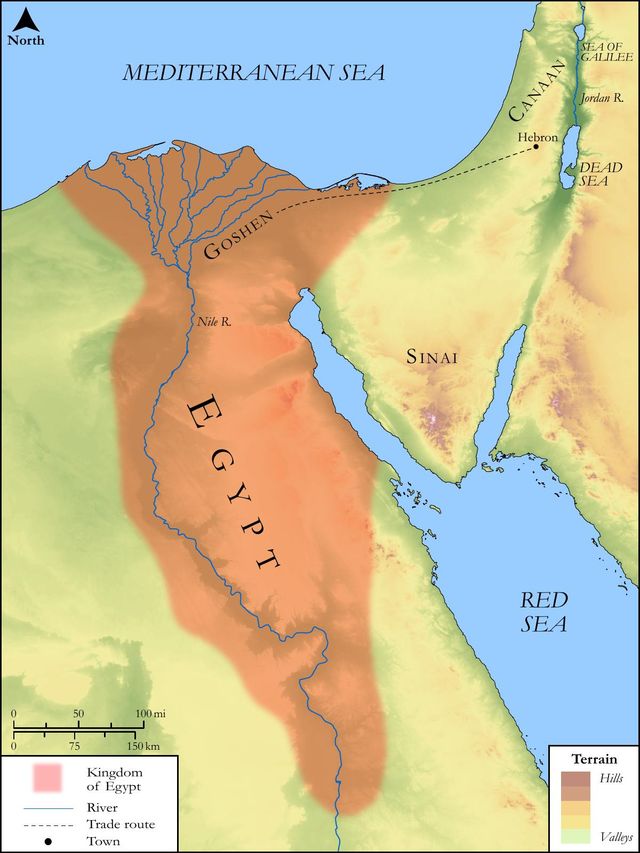
See on the biblical-era maps

Study this verse
Public-domain commentary
Matthew Henry
From his Commentary on the Whole Bible. Henry comments on passages, not single verses — this entry covers Exodus 10:1–11.
Here, I. Moses is instructed. We may well suppose that he, for his part, was much astonished both at Pharaoh's obstinacy and at God's severity, and could not but be compassionately concerned for the desolations of Egypt, and at a loss to conceive what this contest would come to at last. Now here God tells him what he designed, not only Israel's release, but the magnifying of his own name: That thou mayest tell in thy writings, which shall continue to the world's end, what I have wrought in Egypt, Exo 10:1, Exo 10:2. The ten plagues of Egypt must be inflicted, that they may be recorded for the generations to come as undeniable proofs, 1. Of God's overruling power in the kingdom of nature, his dominion over all the creatures, and his authority to use them either as servants to his justice or sufferers by it, according to the counsel of his will. 2. Of God's victorious power over the kingdom of Satan, to restrain the malice and chastise the insolence of his and his church's enemies. These plagues are standing monuments of the greatness of God, the happiness of the church, and the sinfulness of sin, and standing monitors to the children of men in all ages not to provoke the Lord to jealousy nor to strive with their Maker. The benefit of these instructions to the world sufficiently balances the expense.
II.Pharaoh is reproved (Exo 10:3):
Thus saith the Lord God of the poor, despised, persecuted, Hebrews, How long wilt thou refuse to humble thyself before me? Note, It is justly expected from the greatest of men that they humble themselves before the great God, and it is at their peril if they refuse to do it. This has more than once been God's quarrel with princes. Belshazzar did not humble his heart, Dan 5:22. Zedekiah humbled not himself before Jeremiah, Ch2 36:12. Those that will not humble themselves God will humble. Pharaoh had sometimes pretended to humble himself, but no account was made of it, because he was neither sincere nor constant in it.
III.The plague of locusts is threatened, Exo 10:4-6.
The hail had broken down the fruits of the earth, but these locusts should come and devour them: and not only so, but they should fill their houses, whereas the former inroads of these insects had been confined to their lands. This should be much worse than all the calamities of that king which had ever been known. Moses, when he had delivered his message, not expecting any better answer than he had formerly, turned himself and went out from Pharaoh, Exo 10:6. Thus Christ appointed his disciples to depart from those who would not receive them, and to shake off the dust of their feet for a testimony against them; and ruin is not far off from those who are thus justly abandoned by the Lord's messengers, Sa1 15:27, etc.
IV.Pharaoh's attendants, his ministers of state, or privy-counsellors, interpose, to persuade him to come to some terms with Moses, Exo 10:7.
They, as in duty bound, represent to him the deplorable condition of the kingdom (Egypt is destroyed), and advise him by all means to release his prisoners (Let the men go); for Moses, they found, would be a snare to them till it was done, and it were better to consent at first than to be compelled at last. The Israelites had become a burdensome stone to the Egyptians, and now, at length, the princes of Egypt were willing to be rid of them, Zac 12:3. Note, It is a thing to be regretted (and prevented, if possible) that a whole nation should be ruined for the pride and obstinacy of its princes, Salus populi suprema lex - To consult the welfare of the people is the first of laws.
V.A new treaty is, hereupon, set on foot between Pharaoh and Moses, in which Pharaoh consents for the Israelites to go into the wilderness to do sacrifice; but the matter in dispute was who should go, Exo 10:8. 1. Moses insists that they should take their whole families, and all their effects, along with them, Exo 10:9. note, Those that serve God must serve him with all they have. Moses pleads, "We must hold a feast, therefore we must have our families to feast with, and our flocks and herds to feast upon, to the honour of God." 2. Pharaoh will by no means grant this: he will allow the men to go, pretending that this was all they desired, though this matter was never yet mentioned in any of the former treaties; but, for the little ones, he resolves to keep them as hostages, to oblige them to return, Exo 10:10, Exo 10:11. In a great passion he curses them, and threatens that, if they offer to remove their little ones, they will do it at their peril. Note, Satan does all he can to hinder those that serve God themselves from bringing their children in to serve him. He is a sworn enemy to early piety, knowing how destructive it is to the interests of his kingdom; whatever would hinder us from engaging our children to the utmost in God's service, we have reason to suspect the hand of Satan in it. 3. The treaty, hereupon, breaks off abruptly; those that before went out from Pharaoh's presence (Exo 10:6) were now driven out. Those will quickly hear their doom that cannot bear to hear their duty. See Ch2 25:16. Quos Deus destruet eos dementat - Whom God intends to destroy he delivers up to infatuation. Never was man so infatuated to his own ruin as Pharaoh was.
Historical interpretation
Historical reception
1 surviving comment on this verse from the historical church.
And the briefly recorded fact that the heart of Pharaoh experienced a kind of softening when he said, “But you shall not proceed far; you shall go a three days’ journey and leave your wives behind,” and whatever else he spoke when yielding before the marvelous works makes it clear that these signs had some effect even on him, though they did not entirely accomplish their object. Yet not even this would have happened if the idea held by most people about the words, “I will harden Pharaoh’s heart,” rightly represented what was wrought by him, that is, by God.
Continue studying Exodus 10:7 across the web’s major study libraries — every link below opens this exact verse, chapter, or book on the destination site.
Read & Compare
 BibleGatewayThis verse in more than 200 translations and 70 languages.
 Bible.comThe YouVersion reader — hundreds of translations, reading plans, and highlights.
 ESV.orgCrossway's official English Standard Version reader.
 NET BibleThe NET translation with 60,000+ translators' notes on every rendering decision.
 STEP BibleTyndale House's free study tool — original text, vocabulary, and scholarly resources.
 BibliaLogos Bible Software's free web reader.
 USCCBThe New American Bible (Revised Edition) with the U.S. bishops' study notes.
Commentaries
 BibleHub CommentariesDozens of classic commentaries on this verse, gathered on one page.
 StudyLightMore than 100 commentary sets — the largest collection on the web.
 BibleRefPlain-English commentary on what this verse means, verse by verse.
 Enduring WordDavid Guzik's free commentary on this chapter, widely used by Bible teachers.
 Bible Study ToolsVerse commentary alongside Greek and Hebrew study aids.
Original Language & Research
- BibleHub InterlinearThe verse word by word — original language, transliteration, and English.
- BibleHub LexiconEvery word's original-language definition and Strong's entry.
 Blue Letter BibleDeep-study tools — Strong's numbers, concordance, and word studies.
 SefariaThe Hebrew text with Rashi and centuries of Jewish commentary.
Sermons, Hymns & Audio


TrulyRandomVerse is not affiliated with these sites and doesn’t control their content. They’re linked because they’re genuinely useful.
Summary
Exodus 10:7 marks a pivotal moment in the narrative of the plagues, as Pharaoh's own high-ranking officials, witnessing the catastrophic devastation wrought upon Egypt, collectively confront their monarch. They urgently plead for the release of the Israelite men, recognizing Moses and the God he represents as an inescapable "snare" that has plunged their nation into an undeniable state of ruin. This verse vividly portrays the escalating pressure on Pharaoh, the crumbling of his absolute authority, and the dawning, albeit reluctant, acknowledgment within his court of Yahweh's overwhelming power and unwavering purpose to liberate His people.
Context
ShowHideLiterary Context
This verse serves as a dramatic interjection within the escalating conflict between God and Pharaoh. It immediately follows Moses's dire warning of the impending plague of locusts, which would consume any vegetation spared by the previous, devastating hail (see Exodus 10:1-6). The servants' unprecedented plea interrupts Pharaoh's typical pattern of solitary decision-making and signifies a critical internal shift within the Egyptian court. Their desperate appeal directly precedes Pharaoh's attempt at a partial concession, offering to release only the Israelite men, a proposal Moses firmly rejects, leading directly to the implementation of the locust plague (see Exodus 10:8-11). This moment underscores the mounting pressure on Pharaoh from both divine judgment and internal dissent.
Historical & Cultural Context
In ancient Egypt, the Pharaoh was not merely a king but was considered a divine being, a living god, whose authority was absolute and unquestionable. His word was law, and his decisions were rarely, if ever, openly challenged by his advisors or servants, especially on matters of national policy or divine will. For Pharaoh's high-ranking officials to collectively and publicly declare that Egypt was "destroyed" and to openly question his judgment ("How long shall this man be a snare unto us?") was an extraordinary act of desperation and defiance. This unprecedented challenge highlights the immense and crippling impact of the preceding plagues, which had systematically eroded Pharaoh's prestige, the nation's economy, and the very fabric of Egyptian society. The concept of a "snare" (Hebrew: môwqêsh) would have been readily understood in a culture reliant on hunting, implying a fatal trap from which there was no escape, perfectly illustrating Egypt's entanglement in God's judgment.
Key Themes
ShowHideExodus 10:7 powerfully contributes to several overarching themes within the book of Exodus. It emphasizes the theme of God's sovereignty over all creation and human rulers, demonstrating that even the most powerful earthly king is ultimately subject to the will of Yahweh (see Exodus 9:16). The verse also highlights the inevitable consequences of resisting divine will, showing how Pharaoh's hardened heart and stubborn defiance lead not only to personal suffering but to widespread national ruin and devastation (see Exodus 7:3-5). Furthermore, it reinforces the theme of God's unwavering commitment to His covenant people and His redemptive purpose. The plagues, severe as they were, were not arbitrary acts but purposeful judgments designed to liberate Israel so they could fulfill their divine calling to "serve the LORD their God" (see Exodus 4:22-23). The servants' plea, echoing God's own demand, underscores the unstoppable nature of God's plan.
Exposition and Analysis
ShowHideExodus 10:7 captures a moment of profound desperation and dawning realization within Pharaoh's court, revealing the cumulative impact of God's judgments and the breaking point of the Egyptian leadership.
Key Word Analysis
ShowHideMeaning "a noose (for catching animals) (literally or figuratively); by implication, a hook (for the nose); be ensnared, gin, (is) snare(-d), trap." Pharaoh's servants use this term to describe Moses (and by extension, the God he represents) as a destructive trap from which Egypt cannot escape. It implies a fatal entanglement leading to ruin, a situation from which their nation is unable to extricate itself.
Meaning "to know (properly, to ascertain by seeing); used in a great variety of senses, figuratively, literally, euphemistically and inferentially (including observation, care, recognition...)." This verb highlights the servants' exasperation with Pharaoh's apparent blindness or willful ignorance. They are essentially asking, "Are you still unable to perceive the reality of our situation? Have you not yet come to the knowledge or understanding of what is happening?"
Meaning "properly, to wander away, i.e. lose oneself; by implication to perish (causative, destroy); break, destroy(-uction), [phrase] not escape, fail, lose, (cause to, make) perish, spend, [idiom] and surely, take, be undone, [idiom] utterly, be void of, have no way to flee." This word, used by the servants, describes the state of Egypt. While not implying complete annihilation, it signifies a profound and irreversible state of ruin, devastation, and functional collapse—economically, socially, and politically.
Verse Breakdown
ShowHide"And Pharaoh's servants said unto him,"
This opening phrase signifies a dramatic shift in the power dynamic within Pharaoh's court. Up to this point, Pharaoh has maintained absolute control, making all decisions, often in defiance of God's commands. The collective voice of his high-ranking officials, openly addressing him with such urgency, indicates that the cumulative effects of the plagues have created an unbearable crisis, compelling them to break protocol and challenge their divine ruler.
"How long shall this man be a snare unto us?"
This rhetorical question expresses extreme frustration and desperation. The servants no longer view Moses as a mere human adversary but as an instrument of divine judgment, a "snare" or trap that is systematically dismantling their nation. The use of "us" emphasizes that the suffering is widespread, affecting the entire Egyptian populace and leadership, not just Pharaoh personally. They are implicitly asking Pharaoh to recognize the source of their entanglement and release them from this destructive predicament.
"let the men go, that they may serve the LORD their God:"
This is a direct plea for the release of the Israelite men, echoing God's original demand to Pharaoh (see Exodus 7:16). The servants, despite their pagan worldview, have grasped the core theological demand: the Israelites must be allowed to worship their God. The Hebrew word for "serve" (ʻâbad) encompasses both physical labor and spiritual worship, highlighting the Israelites' intended purpose and the reason for their liberation.
"knowest thou not yet that Egypt is destroyed?"
This is a blunt, rhetorical challenge to Pharaoh's perception and judgment, bordering on accusation. The servants are expressing incredulity that Pharaoh still fails to comprehend the gravity of the situation. The declaration that Egypt is "destroyed" (ʼâbad) signifies a state of profound and irreversible damage, economic collapse, and social disarray, rather than literal annihilation. It functions as a hyperbolic statement emphasizing the catastrophic extent of the plagues' impact, implying Pharaoh is either willfully blind or dangerously out of touch with the reality of his kingdom's demise.
Literary Devices
ShowHideExodus 10:7 employs several powerful literary devices to convey the urgency and desperation of the moment. The most prominent are rhetorical questions ("How long shall this man be a snare unto us?" and "knowest thou not yet that Egypt is destroyed?"). These questions are not posed to elicit information but to express the servants' intense frustration, exasperation, and incredulity at Pharaoh's continued stubbornness. They serve to highlight the obviousness of the situation from their perspective and to implicitly challenge Pharaoh's judgment and leadership. The declaration "Egypt is destroyed" functions as hyperbole, an intentional exaggeration not meant to be taken literally (Egypt was not completely wiped off the map) but to emphasize the extreme and devastating extent of the ruin brought upon the land. This vivid overstatement underscores the catastrophic impact of the plagues and the dire state of the nation.
THEOLOGICAL AND THEMATIC CONNECTIONS
ShowHideThis verse profoundly illustrates several enduring theological truths. First, it underscores God's absolute sovereignty over all nations and rulers, demonstrating that even the most powerful human empire and its seemingly invincible leader are ultimately subject to His divine will and judgment. Second, it highlights the inevitable and devastating consequences of resisting divine will. Pharaoh's stubbornness, initially a personal defiance, has cascaded into widespread national ruin, illustrating that rebellion against God brings not only personal suffering but also collective devastation. Third, it reveals God's unwavering commitment to His redemptive purpose for His people. The plagues, though destructive, serve the ultimate goal of liberating Israel so they can fulfill their calling to "serve the LORD their God." The servants' desperate plea, echoing God's own demand, shows that God's purpose will be achieved, even if it means breaking the strongest human resistance and bringing an entire empire to its knees.
Reflection and Application
ShowHideExodus 10:7 offers timeless and profound lessons for contemporary life. It serves as a potent reminder of the inherent dangers of stubbornly resisting clear warnings, whether these warnings come from God's revealed Word, the wise counsel of others, or the natural, undeniable consequences of our own actions. Like Pharaoh, we can become so deeply entrenched in our pride, self-will, or perceived autonomy that we fail to acknowledge or even see the "destruction" our choices are bringing upon ourselves, our relationships, and our spiritual well-being. This verse challenges us to cultivate a posture of humility, a willingness to listen, and the courage to change course, especially when those around us, who may possess a clearer or more objective perspective, point out the ruin we are causing. Furthermore, it offers profound reassurance that God's ultimate purposes will invariably prevail, regardless of the strength or persistence of human opposition. This truth encourages us to align our lives with His divine will, pursuing His purposes with diligence and trust, rather than futilely fighting against the tide of His sovereign plan.
Questions for Reflection
ShowHideFAQ
ShowHideWhy did Pharaoh's servants speak up only now, after so many plagues?
ShowHideThe cumulative effect of the preceding seven plagues had pushed Egypt to an unprecedented breaking point. While earlier plagues were severe, the recent plague of hail (see Exodus 9:18-26) was particularly catastrophic, destroying not only crops and livestock but also killing people in the fields, signaling an unparalleled level of national ruin and economic devastation. The servants' desperate plea reflects the breaking point of the nation's economy, its social fabric, and the very viability of the kingdom, leading them to prioritize survival over Pharaoh's pride or political considerations. They could no longer ignore the undeniable evidence of God's power.
Was Egypt literally "destroyed" as the servants claimed?
ShowHideNo, the Hebrew word ʼâbad (H6), translated as "destroyed," means "ruined," "spoiled," or "devastated," not annihilated or wiped off the map. The servants' statement is an expression of hyperbole, emphasizing the extreme and crippling damage inflicted upon the land, its economy, and its people. While not literally rendered non-existent, Egypt was severely crippled and no longer able to function effectively or maintain its former glory and prosperity. The phrase conveys the depth of their despair and the severity of the national crisis.
Does this verse imply that God uses destruction to achieve His will?
ShowHideYes, in this specific context, God uses severe judgment and "destruction" (meaning ruin or devastation) as a means to break Pharaoh's hardened will and liberate His people. The plagues were not random acts of cruelty but purposeful judgments designed to demonstrate God's power, humble Egypt, and compel Pharaoh to release Israel so they could fulfill their divine purpose (see Exodus 7:4-5). This demonstrates that while God is merciful, He also justly uses judgment to accomplish His redemptive plans, uphold His sovereignty, and bring about His ultimate will for His creation and His covenant people.
Christ-Centered Fulfillment
ShowHideExodus 10:7, though deeply rooted in an Old Testament narrative of physical liberation from earthly bondage, finds profound spiritual fulfillment and amplification in the person and redemptive work of Jesus Christ. Pharaoh's stubborn resistance to God's clear will foreshadows humanity's inherent rebellion against God's righteous reign, a rebellion that brings spiritual "destruction" or ruin upon us, manifesting as separation from God and bondage to sin (see Romans 3:23 and Romans 6:23). Just as Moses was God's chosen instrument to free Israel from the literal "snare" of Egyptian slavery, Jesus is the ultimate Liberator who sets humanity free from the far greater "snare" of sin, spiritual death, and the dominion of Satan (see John 8:36). The "destruction" of Egypt's power and economy through the plagues points to the decisive victory of God's power over all opposing forces through Christ's death and glorious resurrection. Through His atoning sacrifice on the cross, Jesus decisively disarmed the spiritual powers of darkness (see Colossians 2:15), breaking the "snare" that held humanity captive. His mission, like God's ultimate purpose for Israel, is to enable people to "serve the LORD their God," not through physical servitude, but through spiritual worship, obedience, and a life of true freedom and purpose found in the new covenant established through His blood (see Romans 6:22 and Hebrews 9:14).